In 2024, I was less enthused about a lot of the new films coming out, and between that and the lower number of screeners I received during Award Season, I did not stay on top of a lot of the current film slate.
A few I did review throughout the year included Thelma, Wildcat, Evil Does Not Exist, and Sometimes I Think About Dying.
However, even though I’m never a huge Oscar nut, since I have been so behind this year and the end of the cycle is fast approaching, I thought I should at least share the rest of these scattered thoughts — most of them go back to the end of last year:
I’m Still Here
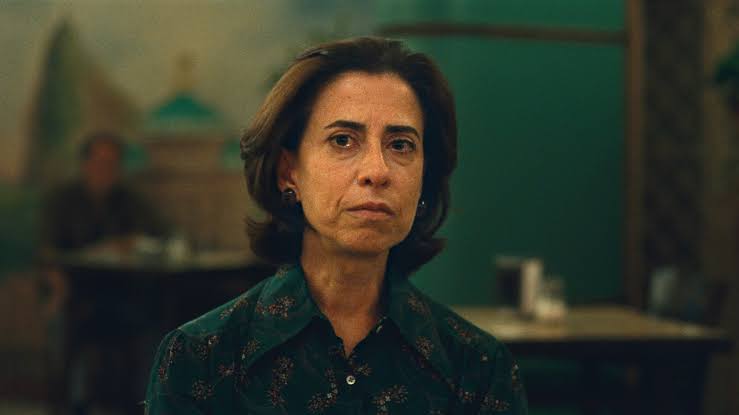
An earlier film like Costa-Gavras’s Missing hints at this pursuit of truth in an endless world of military bureaucracy, fear, and tight lips. But director Walter Salles presents such a remarkable sun-soaked mimesis of ‘70s Brazil, we almost feel as if the girl from Ipanema will saunter across the sand.
From the very beginning, it is a film about family, and we have the opportunity to place ourselves in the mayhem that is this family unit. This is important because their interests and cares become ours. The empathy grows through these moments. Getting a new dog. The eldest daughter going off to London with dreams of finding John Lennon. Father and Son playing foosball in the basement and waking up the whole house. This is important because it gives us a baseline when the anxiety and uncertainty set in. Fernanda Torres offers one of the finest performances of the year for its quiet dignity and tireless spirit. We watch this woman go from wife and mother to sole matriarch and beacon of justice.
It strikes me that another telling would show us all the hoops she jumps through, the heightened emotions, and the indefatigable tenacity on hand, followed by the swelling catharsis. Salles chooses to have not one flashforward but two – the rest of the journey is told through ellipsis. It’s somewhat of a curious choice, but then again, we do not need to see everything. This is a biopic, and this woman’s accomplishments stand on their own. Her relentless pursuit of truth was rewarded, and she does it with such a genial composure. The last thought I was left with was small but important. We must revere our elders, be they parents or others, because whether they’re quiet or unassuming, there are multitudes worthy of being celebrated. Let us not forget them. Let’s share their stories and keep their memories alive.
Nickel Boys
I’m always wary of extended point-of-view shots because they can feel like a gimmicky play for the audience. I had similar feelings about Nickel Boys until making a subtle realization that seems obvious. We’re watching a black family. A little boy is watching the TVs in the shop window playing one of Dr. King’s speeches. In the next moment, he looks down at his arm and the color of his skin. We always talk about empathy – walking in another person’s shoes – but through this film we have the direct opportunity, thanks to director RaMell Ross.
Because it feels as much like a collection of moments giving us a semblance of the time and place as much as it is a concerted story about those times. Ross came to prominence for his documentary Hale County This Morning, This Evening (2018), and here he has successfully transitioned to a document of historical fiction adapted from Colson Whitehead’s novel chronicling the ugly racism in the titular Florida boy’s school. At times it does come off technically onerous, but when it gives us glimpses of life, there’s something revelatory in this cumulative cascade of first-hand impression and experience.
My mind drifts to the intertextual reference to The Defiant Ones and what the images in the film meant to James Baldwin and others. The Nickel Boys feels like a kind of addendum to the Stanley Kramer movie. That was a parable for the sake of the white majority. This is a reality full of warmth and joy and also debilitating cruelty. Tezeta (“Nostalgia”) by Mulatu Astatke plays in the final montages crossing time and space, and it sold the denouement for me. The song has a wistful drone to it, but in a way that I could listen to for hours. The way Ross interrupts his narrative with still images is unsettling at times; it feels like he’s encouraging us to make connections without spoon-feeding us. There is power in this. Because even when the film’s visual experiment takes me out, the emotional resonance brings me back in again and again.
Flow
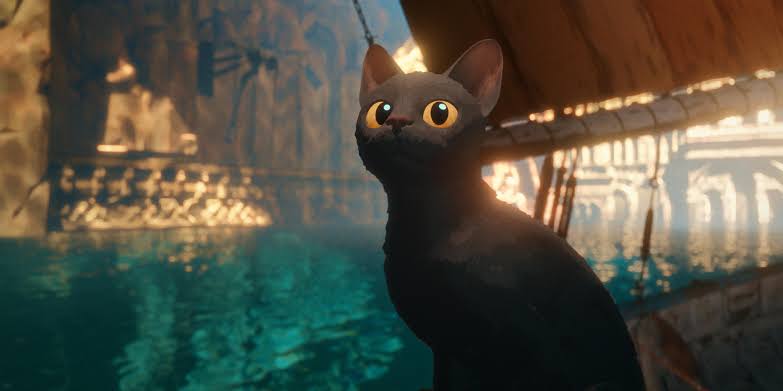
Something about the animation didn’t sit right with me at first – perhaps it felt more like video game graphics than a movie – and yet I tried to get over that and meet Flow on its own terms. It feels like an extraordinary feat of image and sound design under the circumstances. It’s a survival story, wordless – without one human being – and yet it’s packed with all sorts of meaning for our present world. Although there are relics of humanity, it’s a movie primarily about animals. Still, it’s not quite Homeward Bound or Madagascar. Because these animals have no internal monologues or spoken dialogue. All their sounds are natural, and yet they are given traits of emotional resonance and also extra-ordinary abilities, pushing the limits of what we know about our fellow creatures.
A great deal of the drama evokes Noah’s Ark imagery with an inexorable black cat as our primary conduit. Somehow there is something comforting even as we see the perplexing aftermath of a world submerged in water and slowly disappearing on all sides. In its wake, we follow this intrepid band of animals watching out for one another and finding ways to subsist. There will be a day when the cat lies down with the capybara and the lemur. Flow gives us a foretaste of this, and it’s quite a unique experience, especially in the world of animation normally dominated by only a few major players. Other voices are always welcome because they bring something else to the table.
Anora
Anora (Mikey Madison) is an exotic dancer who’s self-assured and capable of taking care of herself because if she doesn’t, no one else will. In the daily rounds of her job, she picks up a 22-year-old Russian whale. They’re put together because he doesn’t speak much English, and at the very least, she can understand a little Russian (thanks to her Grandmother). Once they get going together, we’re privy to all the hedonistic excess you can possibly imagine without a hint of consequence.
He lives above such plebeian concerns as he chooses Anora to be his personal “wife” for the week to make his last hurrah in America one to remember. On Anora’s part, she’s hit the jackpot – all her friends are jealous of her – and yet it also seems like perhaps she’s found something more. Yes, there’s a superficiality, but like anyone, she’s looking for true intimacy, someone who likes her for who she is.
For much of the movie, Ivan disappears off the face of the earth and turns into the MacGuffin (as Hitchcock would call him). It seems a shame to lose his scrawny, narcissistic humor, and yet the movie becomes something else as his demonstrative godfather and a couple of cronies are called upon to bring him back on behalf of his parents. Also, there’s the little detail about their Vegas wedding…
It devolves into a wild, raunchy screwball comedy with a very particular flavor of New York. The sheer momentum and heightened absurdity feel like a present-day incarnation of Billy Wilder or Preston Sturges gems like Ball of Fire or The Palm Beach Story. One memorable moment involves the heavy Igor who subverts expectations; he pulls out the Now, Voyager romantic cigarette move. I thought in the modern age, as smoking has become less couth and more of an acknowledged health risk, the move was extinct. However, Sean Baker proved me wrong and somehow crafted a movie full of genuine pathos even as I felt the desire to skip past some of the more profane portions. These people don’t have the same luxury. It’s all they know. Somehow it’s as uproariously funny as it is bitterly sad.
Seed of The Sacred Fig
In the last few years, some of the most incisive films being made today seem to come out of Iran, and this doesn’t seem like a coincidence. I am so woefully ignorant of the political situation, and yet any time there is duress or the hint of oppression, regardless of agenda, you can be sure there are artists who are speaking into the storm as it were, sometimes at the risk of deep, personal consequence.
The film is slightly more overt in tackling its cultural moment through the protests and crackdowns of the Iranian regime, but watching the Seed of The Sacred Fig, the parallel sense of allegory felt reminiscent of some of the great Czech films of generations past. Director Mohammad Rasoulof joins Spike Lee in his use of video footage spliced into his fiction. It’s one of the ways to explore authoritarian power handed out through fear and paranoia as a perfectly relatable family slowly self-destructs, mirroring the chaos outside their walls. The film drops off a cliff of believability, but it also more than reinforces its main point.
The fact that Rasoulof now lives in Europe in exile feels like case in point. Whether it’s a dangerous film or not – based on the ideas and images it propagates – the incumbent government seems to think so. What strikes me is the very same universality in specificity we see in countless films all over the world across time. We have a shared story. At their best, movies remind us of that fact.
Ghostlight
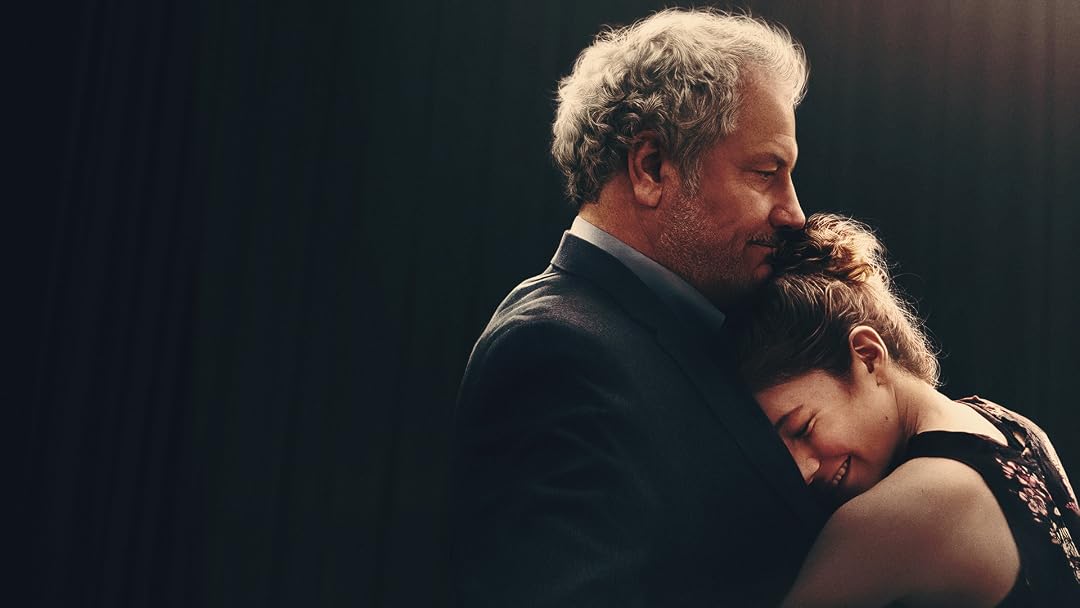
One of the joyous delights of Ghostlight is watching how musical theater can break into the quotidian rhythms of the day. The movie has your typical establishing shot played to the cheery tones of Oklahoma’s “Oh What a Beautiful Morning!” It says so much as we put this urban world of noise pollution, jackhammers, and speeding cars against something so mellifluous. There’s a wonderful posturing to Dan (Keith Kupferer), the blue-collar family man who becomes the center of our story. His life feels like it’s a dark cloud in the wake of his son’s obscured death. His wife and daughter all cope in different ways, though he normally manages by burying the feelings deep.
The first lifeline he receives is from a feisty woman named Rita (Dolly De Leon). She’s part of a cast of amateur thespians and invites this hurting man into their fold. What becomes evident is how he exemplifies a quiet exterior with a vibrant, blooming inner life. As his daughter lets him know, Romeo and Juliet is old, but it’s good. Of course, she’s young and means the version with Leonardo DiCaprio. No matter, the movie uses art as a form of therapy, yes, but also something done in community because it makes life worth living. Dan’s personal struggles might hewn a little too closely to the Bard’s classic, and yet there is so much effulgent joy to be had by the film’s finale, it’s difficult to begrudge this staged movie any of its choices.
All We Imagine As Light
There’s an exchange between our two heroines where one wonders out loud how someone could marry a stranger. It’s the sentiment of someone living in the new world reflecting on the antiquity of the old. Her roommate responds, you might know someone, and they could just as easily turn out to be a stranger… Payal Kapadia’s All We Imagine As Light is a story about the loves, friendships, and daily travails of being a nurse in the big city. They are working girls, and in this way their experience is universal even if they face the unique cultural pitfalls of their own society. The plot as such feels loose, even languishing, but the friendship or at least the relationships, between these women feel worthy of our care and attention. We need more stories like this.
The most striking images are those in line with the title. When the city is at peace, from the rooftops, and you see the various beacons of light glimmering throughout the city. Or when the nurses go together to the movies to see light projected on a screen like magic. They are part of the lineage of the cinema. Likewise, the fireworks blowing up in the night sky, which have some of the wistful inevitability found in the cityscapes of Edward Yang. Modernity marches on. I was expecting the movie to be more than what it was, but perhaps in this day and age, less is more. It’s the isolated moments we need to latch onto and be reminded of, so they might slow us down and help us ruminate on what is in front of us. The movie showcases one scene, in particular, where it breaks free and enters this uncanny state where reality begins to meld and metamorphose into something grander. Watch the movie for yourself to see what I mean.
Here
I assumed Here would have some of the synchronicity or the romantic possibilities of some of Eric Rohmer’s most delightful films. In this sense, it didn’t quite give me the sliver of convention I wanted. At its core, it introduces an intriguing pair of characters. One is a Romanian construction worker. The other is a Chinese-born biologist who studies mosses at the local university. Both are transplants to Brussels; they have a “Meet-Cute” as she helps man the counter at her auntie’s Chinese restaurant. Because of the rain, he decides to eat in.
What the film represents is right in the title. It is about a man who is about to go on holiday, and yet in his current place – right here – he seems to take life on foot, and this allows him a certain immediacy with his surroundings. He cuts vegetables, makes soups, and willfully gives them as gifts. As such, the movie, if it doesn’t feel outright pretentious or bereft of a plot, does offer up the kind of observational, verdant experience rich in sound and texture as much as it is story. In this way, putting the movie up against a viewer probably says as much about the person who is about to receive it as it does the film itself.
It’s as if it’s telling us. Be still. Be present. Be here. I wasn’t quite in the best frame of mind. I found it dragging on, but something tells me I want to see it again when my heart rate has slowed, and my mind is attentive. Maybe I’ll have the same mixed reaction. Maybe it doesn’t matter.

