I compiled some reviews of a handful of the films that stood out to me from this past year. Please enjoy!

Little Amelie or The Character of Rain
I had the opportunity to spend a long summer in England when I was just a year older than Amelie. It’s that time as much as my time living and working in Japan, which makes me appreciate the quotidian beauty of such a movie as this, following the youngest daughter of a transplanted Belgian family.
It is a coming-of-age story, but one assembled around the earliest of recollections, when our memories are hazy and as much myth and dreams passed down through family lore as anything else. Part of me was wondering what it would be like to have a double bill with this film set in Kobe, Japan, 1969, with Richard Linklater’s Apollo 10 1⁄2: A Space Age Childhood.
What’s so striking about this film is how it so vividly represents the bond Amelie forms with her Japanese caregiver, Nishio-san. The greatest testament to the film is how there is joy and benevolence on all sides. She adores this Nishio-san, and yet it’s not to say her parents don’t love her. They are not mutually exclusive, even as these formative relationships take hold so young. Likewise, a brother can tease, a Japanese landlord might seem strict and severe, and even they are shown to be sympathetic figures.
Although I have not read the autobiographical novella, the animation breathes such exhilarating life into the material, and some of the fanciful images, particularly in the montage sequences, take the breath away. The sweeping countryside of Kobe, as well as Amelie’s association with the Japanese word for rain (“ame”), creates such an evocative landscape for childhood wonderment to still bump up against reality.
Little babies might come into the world thinking they are gods, and then a few years of life, experiencing death, pain, and change, remind them soon enough that they are not. And that’s okay. That’s part of what it means to be human.
Souleymane’s Story
Here is a film with some debt to the Dardennes while also sharing some themes with The Bicycle Thief and Dirty Pretty Things. We follow a young Guinean asylum-seeker as he makes ends meet on the days leading up to his immigration appointment. It’s a fast-paced, stressful life where he must live hour to hour and day to day, making food deliveries on his e-bike.
We watch as he’s taken advantage of and also shown charity. It is the small acts of humanity that stand out, like an Asian woman giving him a piece of candy as he picks up an order or a man giving him a drink on the house. These are never the focal point, but they give us some semblance of hope in people. More importantly, they subtly and still powerfully impute him with worth as a fellow human being.
The way the film is set up through flashback is an opportunity to get to know him and understand even a sliver of what he has gone through just to end up in the room for his asylum interview. In the back of my mind, I almost wanted to ask if what we are seeing is manipulative in how it uses the framework of a fiction film. However, this should not be my foremost question. The fact that we get to experience the life of one of the least of these feels like something worth its own weight, and Abdou Sangare gives a performance worth remembering.
This Was Just an Accident
The movie really gets started when an Azerbaijani man, Vahid, kidnaps someone after hitting him with his van’s passenger door. There’s a queasy black comedy to it, almost reminiscent of The Trouble with Harry because as long as they don’t deal with it, everywhere they go there lies the body of this man who may or may not have been a government enforcer with a peg leg who tortured them…Even when he’s not visible, he’s there in the scene, exerting a narrative influence.
Vahid spends most of the movie making his way around town to various people who were in a similar situation to his. Some want to let it go, leave it in the past, but the pain is too great for others to do nothing. It nags at them even as the act exhumes latent pain they tried to bury. We witness this burning desire for retribution, for justice to be doled out. And yet we also see how humanity cannot be disregarded.
Vahid goes from almost burying this man alive to picking up a phone call left by the man’s young daughter. They still haven’t decided what to do with him, but in his absence, his pregnant wife falls unconscious. A show of callousness would be understandable given the circumstances, and yet Vahid is overcome with compassion, even responsibility. There’s a sheepishness to it, defusing the intensity of the hatred just long enough to complicate the feelings at the core of the film.
What a prideful thing it is to use religious rhetoric to justify actions and to lord over others like judge and executioner. Perhaps this is part of the epiphany because the rage and lust for blood hanging over them makes them little different than their enemies.
Although Panahi’s latest film did not strike me as much as No Bears or even his son’s Hit The Road, like last year’s Killing of The Sacred Fig, there is an unequicoable danger I feel watching this contemporary crop of Iranian films. Not just the stakes of the films themselves, but the great risks the filmmakers have taken on in potentially defying their government. But danger is also in the eye of the beholder. Putting these films out into the world feels equally dangerous to the status quo, especially if they speak to our shared humanity and the necessity of connection and grace to cover all our iniquities.

Sentimental Value
One might be quick to try to draw parallels between the familial works of Ingmar Bergman and fellow Scandinavian Joachim Trier’s new family drama. However, after watching it, the films of Olivier Assayas came to mind first. There’s a kinship with the latter’s Summer Hours, as shared family memories are so closely tied to the childhood home. Like Assayas, Trier’s affection for film, along with his co-writer Eskil Vogt, is supremely evident to the point of metaness. Here we see Trier fit a Hollywood actress alongside his typical players (Renate Reinsve and Anders Danielsen Lie), the way Assayas might use a Maggie Cheung, Kristen Stewart, or Chloe Grace Moretz.
Sometimes the film milieu feels convenient, and yet to have it grounded in family makes it mean something more resonant. We cannot get away from how these people are connected, and the film-within-a-film framework cannot dilute the bare essentials of people trying to relate to one another and reconcile past hurts.
Trier refashions the archetypes in ways familiar and somehow rejuvenated and interesting. Stellan Skarsgard plays a distant father who has been consumed by his directorial career and left his two grown daughters (Reinsve and Inga Ibsdotter Lilleaas) feeling discarded. Fanning comes in as a genuine Hollywood starlet who doesn’t quite fit, and yet she knows it’s not right, and has enough humility to recognize this very thing.
Trier also offers us some soulful needle drops, including “Nobody Knows” and “Cannock Chase.” They’re so good I wish they had longer to breathe. But this is a minor qualm in a movie with so much worth celebrating. First, by acknowledging there may be wounds and trauma spanning generations of families – sometimes elements far outside of our control – but we do have control of the moments in front of us. Reaching out a hand, opening up, and fighting for the relationships with family with all the love and capacity for care we can muster.
It is not easy, it is imperfect, and no all-encompassing talk will paper over the wounds. But like that house, we can hold onto the memories and still move forward together. Sometimes we do it through art, and other times it’s simply a matter of being present where there was once absence.
When you think of some of the great filmmakers, they have made relationship movies because human connections are the fundamental building blocks of life as we know it. I will need to see it again and reconsider my misgivings, but it’s still not too early to add Sentimental Value to this age-old conversation reaching down through the annals of cinema. Again, what makes it is not the reflexivity but the family.
Sinners
At the heart of Ryan Coogler’s horror flick Sinners is the history of the Delta Blues. What he offers us is a reimagining of history a la Tarantino, but I find Coogler more generous and somehow grounded in reality. He brings in strains of other cultures from Chinese-Americans to Irish-Americans on top of the vibrant African-American lineage of 1930s Mississippi.
Like a modern genre smuggler, Coogler joins forces with Michael B. Jordan and uses the traditional form to court some fascinating ideas. Because we hear of Jim Crow, lynchings, and there are some references to the Klan around the fringes, but while acknowledging this history, Coogler takes his story somewhere else, allotting ample time for music and joy to go with the melancholy.
There’s a poignant moment when a rising blues guitarist asks a passing woman, “What are you?” He can’t help it, but in Hailee Steinfeld, we recognize this space of the in-between that is not easy to categorize.
The oppressed black community that finds a sliver of jubilation in a local juke joint, nevertheless, is confronted by otherworldly creatures, who come to embody so much more. I was struck by how they offer such a flawed sense of heaven, or rather a sliver of hell: an opportunity to fellowship together forever, but at what cost? Being bloody carcasses of human beings without life or humanity.
I will admit Jordan’s dual role feels like a gimmick until it comes up against the core dramatic question of the movie. In this heightened moment, with or without vampires as dressing, it feels like the world the black community has created of power and expression is a lie about to be razed to the ground. Are they just a threshing floor for the Klan? Are these vampires actually a lot like them?
It’s no coincidence the film is deeply tapped into the mythos of Robert Johnson and the Faustian deal with the devil. In a peturbing baptismal scene in the river, young Sammie is confronted. He is told religion lies about a God above and a devil below, where man has dominion over the beast. But how do we reconcile this with slavery, colonialism, and sharecropping?
The moment is terrifying, only for this evil to be confronted with the dawning of the light and the breaking of a new day. Sammie wanders back into his father’s church, and it hardly feels like a place of refuge. There’s an implication as he leaves the legalism behind with his guitar in tow to pursue his God-given art. 60 years on and he’s Buddy Guy!
But this feels like a false dichotomy between faith and music. It’s the 90s, and Sammie receives an unusual visitation. He’s satisfied with his life and seems unafraid to die. He’s had enough of this existence. He might not be the teacher out of Eccelesiastes, but he’s built up a life of experience. He knows the immorality offered to him once again is a pale imitation and muses that he’s had enough of this place. We cannot know if he has visions of heaven or just something beyond the temporal world.
For me, the final glimpses of a young Sammie playing “This Little Light of Mine” within the four walls of the church give me pause and a visual inkling of hope in a world that seems to pit artistic expression and institutional faith against one another. It’s not a definitive answer, but it certainly colors the conclusions of the entire film up to that point.
The beauty is how it can be interpreted in many ways. Darkness and vampires alike recede in the face of light, but it could also mean it is God and not the religious who bring light into the world.
Sammie, no doubt, was a sinner. All of us have our flaws, but that also leaves the door open for redemption. It’s a battle and a search only God knows, but that’s part of what makes this film mean more than an accumulation of tropes. It’s about our search for meaning, purpose, and community on this side of existence.
The Secret Agent
It occurs to me, The Secret Agent has a sprawling self-confidence in the story it’s telling, which mostly serves it well. Wagner Moura anchors the movie with a calm charisma, but the beauty of a movie with this much runtime is the allowance for so many nooks and crannies to be filled with side characters. The shaggy, disjointed layers of storytelling perfectly mimic the sense of time it’s looking to project.
Armando seeks refuge in a rural safe haven only to get installed in a desk job navigating between an uneasy chemistry with a corrupt local police chief and a hit put out against our protagonist by an old adversary. It hangs over the rest of the picture as we drift in and out of his past and wait with dreaded anticipation for the violent catharsis torquing like a coiled spring.
Against a tableau of 1970s Brazil, there’s a soundscape supplied by Chicago and Donna Summer and a plot that owes a debt to Jaws as much as the American paranoia thrillers of the 70s. However, it functions as much as a thriller as it is a meditation on the nation’s shared historical memory. And in this way, it shares something in common with last year’s I’m Still Here in content if not so much form. Both are reckoning with a nation’s authoritarian past with a point of view supplied by the present. Somehow, it reframes the moment while reminding us of the complexity of stitching together a multifaceted historical narrative.
A Little Prayer
In the opening minutes of A Little Prayer, an unseen woman walks by in the early morning hours, singing her gospel spirituals. For some, she’s a nuisance, but for others who appreciate the quiet moments in between, she captures their imagination.
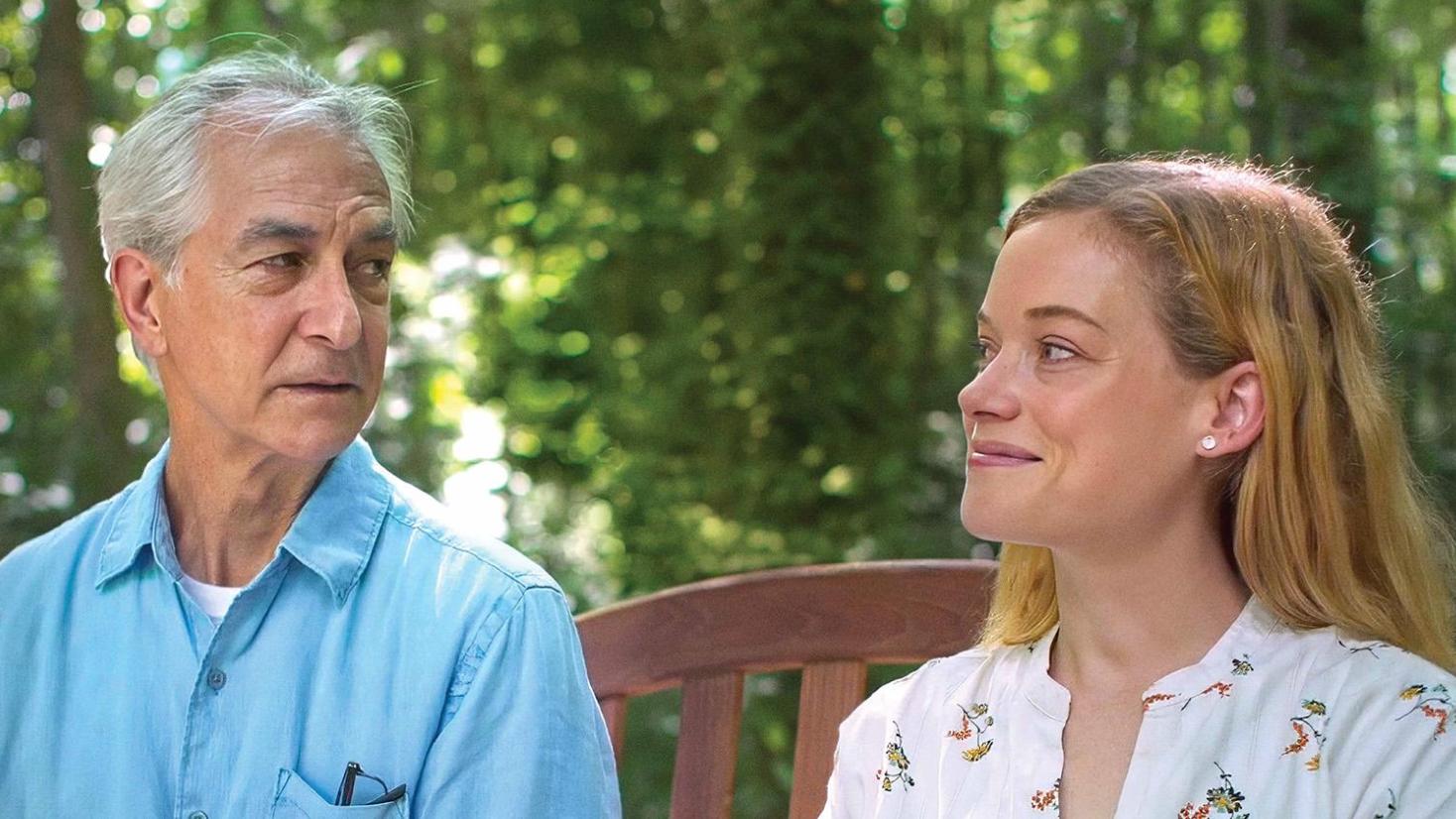
Over the years, I’ve grown to appreciate the career David Straitharn has carved out for himself. He’s not an onstentatious performer, but anyone who has built up a stockpile of his roles in their memory bank no doubt respects him. Because he’s always a steady, reliable presence time and time again.
He sits at the breakfast counter talking with his daughter-in-law before the day’s activities pick up. Although the family’s church attendance has dwindled, he is still drawn to beauty, particularly Christmas carols. In the intervening moments, he sings a few stilted bars of “Bring a Torch Jeanette Isabella” in the original French. It hints at something else in their lives.
Because as life sets in, we see the hardships of small-town existence in the South. Alcoholism, infidelity, and the stress on returning war vets. It’s not a new phenomenon, but each family has stressors they must find ways to weather, even as new members are grafted into their unit.
A man and his daughter-in-law aren’t usually the focal point of a movie, but here it makes sense because of the struggles they both face daily. Amid it all, they go to an art museum together and marvel at the sublime of a panorama on the canvas of the paintings – shards of beauty they can take with them back into their lives to fortify them against the pains of the world.
If you’re like me, the final scenes are deeply moving. Once again, they are seated side by side, and in the quiet, we recognize them for what they are: Kindred spirits who want the best for one another. This is a small movie, difficult to watch at times, but it’s a reminder that if we have the seeing eye, we can witness God’s grace just about anywhere.
One Late Addition: Train Dreams
“The world needs a hermit in the woods as much as a preacher in the pulpit.”
I was considering an irony of late. Going to the movies now is still a form of communal entertainment, but I’ve also found I use it to break up the grind and hubbub of my life. Not with giant spectacles per se, but time and space to be pensive and sit in the dark, taking in a piece of art.
Although it was picked up by Netflix to be viewed from the comforts of home, it was a joy to see Train Dreams on the big screen. Another irony is how it uses an image projected onto a screen to put us in touch with the beauty of a tactile world. How do you begin to describe the movie?
It’s about the life of Robert Grainier (Joel Edgerton). I wondered if we were being treated to a biopic, and we are in a sense. No one knows Robert, and yet his life as a logger in the Pacific Northwest hits many touchpoints of history, from the construction of the Spokane International Railway to the trauma of WWI. He even lives to see a man in outer space.
As might be expected, he finds love with a fine wife (Felicity Jones), and they have a baby girl together. Life away from them is hard as he follows the work, but their reunions are rapturous.
Still, it’s a difficult existence and one stricken by tragedy. Like every man, he must do his best to make sense of it. Having just recently watched Robert Duvall in Tomorrow (1972), it does feel like these characters are kindred. They know what it is to live a humble life, to work with their hands, to find love, and to face personal hardship. It is heartbreaking stuff.
The very understatedness of the performances in this film and thereby the subsequent drama are what make it feel so magical, like a bit of a reprieve. There are minor accents of a Malickian sort, and yet comparisons can be reductive. Consider it a modest compliment. Then, watch the film for yourself.
Bask in the beauty and majesty of nature; relate with the human frailty and the passage of time. It somehow feels so grand and yet intimate and quiet in all the best ways. It feels like an unadulterated meditation and ultimately a celebration of life. Not just of one man but of all of us. Because we are all part of the same fabric stitched together in an extraordinary cathedral of creation.
Thanks for reading!


I’ve only seen Sentimental Value of these, but plan to see a few of the others as well. Thank you for your thoughts and insights.
LikeLiked by 1 person
You’re welcome! Thank you and I hope you enjoy some of them.
LikeLike
Really enjoyed reading about these — I already have Sinners and Sentimental Value on my watchlist, but I will be adding a few more as well!
Karen
LikeLiked by 1 person
Glad to hear it! I hope you can enjoy some of them.
LikeLiked by 1 person