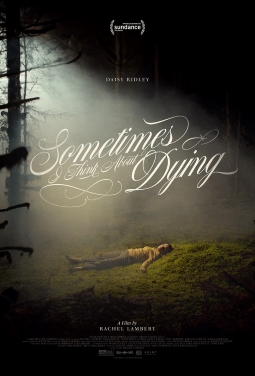
Sometimes I Think About Dying (2023)

Sometimes you start a film and there’s such a specific sense of place, rhythm, and tone you perk up in anticipation. I felt that sensation from the opening credits of this new film starring Daisy Ridley.

The score is replete with a few murmuring voices and a harp, and there’s the muted color palette of a certain sleepy town in the Pacific Northwest. There’s an instant sense of where we are and what end we might be converging on. That is, besides death.

Sometimes I Think About Dying is directed by Rachel Lambert from a screenplay co-written by Kevin Armento, Stefanie Abel Horowitz, and Katy Wright-Mead. It’s easy to pigeon-hole it as a project filling the quirky indie fix and the proof of concept seems littered with a minefield of tropes.

Fran (Ridley) works in an office — the dreaded 9 to 5 desk job — and between emails and spreadsheets her mind will drift away to far off places in her subconscious. It’s also a movie with plenty of inserts of contorted posture. At times it’s uncomfortable watching her exist.

Robert (Dave Merheje) is the new guy. He’s personable and a little dorky in a charming sort of way. Make him a cinephile and you have a perfect movie character. He feels like the Yin to Fran’s Yang and somehow that bodes well.

They don’t so much have chemistry as stunted, awkward interactions. They go see a movie at the local art house theater. They have pie afterward as one does. One wouldn’t label them a couple so much as they’re two people looking for a connection; he’s just moved to town and well, she’s not the most sociable human being.

In this depicted life of dreary and at times surreal isolation, human connection is such a moving balm. They meet up again and she sees his new home, gets the tour, and learns he has his own past; he’s been divorced, not once but twice.

Ridley’s performance does feel like a performance, but the act of playing something so stunted and repressed and yet giving the sense of a charming person just trying to get out is such a meaningful focal point. Because in another movie it would vie to get bigger, but she never allows it to get into a cartoonish heightened reality of indie purgatory.

A distinction must be made. Fran doesn’t hate her life. She’s good at her job and in her own way is a part of the ecosystem in the office. Whereas Excel sheets and requisition forms are soul-crushing for someone like me, Fran seems to thrive in such a regulated environment. But that doesn’t mean she doesn’t also feel the pangs of loneliness. It’s not like they are mutually exclusive; people are nuanced.

Within the context of the film, budding feelings are meager but precious. Her personal hurt and even her greatest transgression are never extended blow outs but these contained moments thoughtfully developed within time and space by the filmmakers.

Fran and Robert get invited to a get together and they both oblige. The subsequent gathering of murder in the dark is a nice evocation on the movie’s primary theme. It’s a visualization of death for a character who does consider its headiness from time to time. The best parts of these scenes is that they feel like a rambunctious good time. That is one of the movie’s strengths: balancing these emotions of warmth and affability with real melancholy.

Robert tells her later in the car, “You’re secretly good at a lot of things. You just don’t let anyone know.” It’s true. Introverted people like this do exist in the world. I feel like I know at least a few of them. On the surface, they seem so taciturn and unassuming but there interior lives or even what they do in their off hours are so vibrant. They offer so much, but they don’t need to tell everyone about it. Selfishly I wish we knew about more of them because we would do well to learn from their example.

My primary critique of the movie initially might have been its opening runway. It felt like for a fairly truncated film, it took a lot of time to get to Robert’s introduction; we even watch as they give a going away party to his predecessor who is set to retire and go on a cruise with her husband.

But even this is paid off when Fran stops by a local coffee shop to get donuts for the office. She’s going through a different kind of pain and regret because she said something regrettable that she cannot take back; she wants to acknowledge her remorse; tell Robert how she feels. But how can she do that if she can barely string two sentences together?

There Fran bumps into her retired co-worker surprised. She was supposed to be on a cruise. Except her husband had a stroke; she couldn’t bear to tell anyone and so now she drinks her coffee alone and looks out the window at the harbor wistfully. Fran could have traded pleasantries and left it at that. There is no personal utility to stick around, and yet she stops and sits down. She makes the decision to listen and her reactions feel real.

Somehow these feelings make her empathy and concern genuine. The action of getting something for her coworkers — a learned altruistic behavior is one thing — but there is also another turn. For one of the first times, we see her sympathy on display for another human being. She connects even if it’s just a little thing.

Later, she asks Robert genuinely, “Do you wish you could unknow me?” What a question, but it comes from such a place of honesty and fear. It fits hand in hand with the hypothetical question, “If you died tomorrow, would anyone care?” Could the lie be true? The voices in our own heads can be vicious.

There’s probably an HR caveat in here somewhere, but a movie is a movie. What lingers is this reverberating optimism. Human connections are worth the risk and effort. I left the film thinking, “Me too, Fran. Me too.” I resonate with this title though not because of some kind of ideation. From dust we come and from dust we will return. 

In the final embrace of the movie, it’s in a copy room. But within seconds it’s transformed into a garden-like greenhouse — a little slice of paradise. The imagery seems only fitting. We were not made to be alone.

3.5/5 Stars
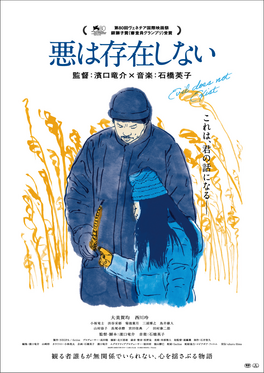
Evil Does Not Exist (2024)

From watching one of director Ryusuke Hamaguchi’s interviews, it’s made clear he started Evil Does Not Exist by using the music of Eiko Ishibashi as inspiration. There’s a swelling breadth to it augmenting everything it touches. At times doleful and then evolving into a plinking intensity looking for release.

It plays against a backdrop of austere forests, trickling streams, and fresh dustings of snow outside the prying eyes of the Tokyo metropolis. The score becomes a viable metaphor for the movie itself.

The film’s relationship with its characters is also distinct. There’s something Bressonian about it. Because the famed French director famously envisioned his actors as models and often cast non-professionals. He wasn’t looking for performances in the conventional sense.

I don’t know Hamaguchi’s filmography all that well, but it doesn’t feel like he has a stock company. Rather he likes to use different actors for what they offer in each distinct context. We spend the opening minutes watching this man named Takumi (crew member Hitoshi Omika) exist and act, though not in the way we normally think of it in film.

It is slow cinema in the sense that we watch him in the paces of his life from collecting stream water to chopping wood. This tells us more about him than any amount of dialogue might, but it also signals to us what kind of movie we’re in for.

Hamaguchi is prepared to steady your heart rate, and I could use much more of this amid the daily grind. However, it is a tightrope because it’s so easy to lose your audience as they grow potentially disillusioned by the pacing and elongated editing schemes. Seeing as Drive My Car was over 3 hours and Happy Hour over 5 hours, there’s something about Evil Does Not Exist that feels, if not economical, at least more contained.

Takumi’s relationship with his quizzical daughter is rather reminiscent of Leave No Trace (2018). So much of their affection and relationship is facilitated through their shared love of nature with the father passing down his knowledge to his girl.

The movie’s dramatic conflict comes with an impending land development. A Tokyo-based talent agency has plans to install a Glamping site, which ostensibly is little more than a ploy to get a coveted tax subsidy.

Like any conscientious Japanese company, they do their due diligence by holding an open forum for the locals to voice their concerns. The subsequent extended community scene is trademark Hamaguchi with a sprawling dialogue exchange. While it’s not a Park and Rec episode, maybe it’s the Japanese alternative.

There’s something tight-knit about this small community rubbing up against the wary encroachment of the Tokyo firm. Their concerns are well-founded and measured. They see through everything with a clarity that no formal Japanese double-speak can totally obfuscate.

Their opposition, if you will, are the archetypes of a veteran salaryman and his deferential associate who hasn’t quite detached from her empathy. The audience I sat with was mostly quiet if attentive, but there was more than one occasion I found myself chuckling to myself, either from a line of Japanese dialogue or an interaction.

I found this section of the movie especially rich with behavioral humor. There’s a youthful rebel in baggy pants who tramples over the typical decorum and has to be held back. The ritualistic bowing is met with contempt and even Takumi is brusque. They want to try to recruit him as an advisor for their glamping endeavor. He has no business card to give them as is customary, nor does he want their token gifts or pleasantries.

These might be subtle, but it’s a pleasure to watch how these locals eschew what feels like traditional norms. Because so much of Japanese life feels like a tug of war between exterior and interior identity. We say don’t judge a book by its cover and here it holds true on more than one occasion. Many of these characters seem perceptive and ultimately nuanced.

One of the other surprises is how Hamaguchi turns the “enemy” into real people over an extended car ride back to the countryside. They know they’re not dealing with idiots, but their superior encourages them to return and ensure they stay on schedule. It feels like an untenable mission. Having seen both sides, we feel for them. Their hearts aren’t in it.

They trade their hopes, aspirations, and dating prospects in a way that you rarely see in Japanese work culture without alcohol as a social lubricant. Despite the modest scope, I’m not sure if others are aware of how radical this feels.

Takumi takes his guests out into the natural world and allows them to walk alongside him in his daily tasks. Later that same evening his daughter disappears and darkness is closing in. There’s something dismal and inevitable about it as the entire population mobilizes to try and find her.

Without drawing it out too much, they do discover the girl as well as a fawn and doe who feel like semiotic creatures. It’s no coincidence there was a movie called The Deer Hunter. He lives on the fringes of the frame here with his bullets flying in a game of offscreen roulette.

The willfully oblique ending is inexplicable, but I could not look away. You can take it one of two ways: either with mystified displeasure or a contentment in not understanding everything. I fit in the latter category. It was like staring at a mesmerizing spell.

Somehow it feels like a pleasure and a privilege to get these moments in time slowed down for us — sequences that are purposefully meditative. I couldn’t help thinking how much of a backward society we live in that it takes a screen in the dark projecting images in front of us to draw a person out of the hubbub and back into nature. Are we so removed that moving pictures are one of the last vestiges of the natural world in the urban jungle? Because it’s not the real thing.

I would find it instructive for the director to expound on his themes at length — that’s what I want — and yet the movie leaves the results up to us. Still, if nothing else, Hamaguchi gives us a reminder of our imperative ties to the natural world lest we forget where we originate. As much as we try, life cannot always be domesticated comfort. There’s wild beauty out there we would do well to remember.

I think we share an appreciation of the natural world. Maybe it’s semantics or a mere positive affirmation, but if evil does not exist, we could also conjecture, like The Deer Hunter, that interpersonal discord, war, and death are natural in a chaotic world. 

However, I would not say that humans nor beasts are inherently good. For the time being, we live in a broken, fallen world and this is just a reality. Our world is full of entropy, but this is not meant to be our resting state.

It’s all the more reason to do our utmost to look after our environments, be kind to our neighbors, and work toward human flourishing. Of course, that’s easier said than done, but like Thomas Aquinas posited I would like to believe that good can exist even without evil. We’re not there yet, but I’m still hopeful.

3.5/5 Stars

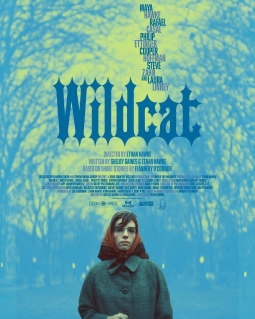
Wildcat (2024)

A version of this article was published in Film Inquiry.

“I am always highly irritated by people who imply that writing fiction is an escape from reality. It is a plunge into reality and it is very shocking to the system.” – Flannery O’Connor

As someone fascinated by story structure the biopic form is often a tough nut to crack. Cradle-to-grave entries in covering the breadth of a life, can either feel like rushed simulacrums or stodgy overlong hagiographies nailed to the floor.

The very best movies of this ilk inevitably evoke the spirit of their protagonist with the very sinews and bones of their structure. Hence a movie on Mishima that’s wild with heavily striking mise en scene. A Brian Wilson story that is empathetic, hallucinatory, and musical to the nth degree.

Director Ethan Hawke and his co-writer Shelby Gaines have found their own way to do service to famed southern Catholic author Flannery O’Connor. Because her life was famously banal — she lived in her Georgia town with her mother writing before her death at 39 — they tackle her formative years through the vivid imagination of her own literary works.

It’s important to note while this movie is full of fanciful and often humorous and grotesque portraits of humanity, it never feels like the escapism the author abhorred (One can imagine she would have choice words for a hothouse melodrama abruptly featured at the outset). O’Connor always was concerned with depicting the life she knew by unorthodox and often startling means. There was nothing conventional about it.

A Good Man is Hard to Find is case and point, one of her startling works where a self-righteous old hag ends up being shot to death by a wanted fugitive and in this precise moment she becomes a gracious person for the first time in her life. In the film when the gun shot goes off, we watch a young O’Connor (played by the director’s daughter Maya Hawke) go flailing backward from behind her typewriter. She feels her stories so profusely.

We watch her life during her early years as a young woman. There are stints at the illustrious Iowa Writer’s Workshop under the tutelage of Cal Lowell (Philip Ettinger). She pays a visit to a publisher who tries to tactfully give her feedback on her first novel Wise Blood. She’s quick to retort that she’s “amenable” to criticism but only if it does not attempt to neutralize her artistic vision.

There are segments of her returning to live with her mother Regina (Laura Linney) in a society where people want her to be the next Margaret Mitchell, penning the next Southern nostalgia lost cause classic like Gone With The Wind. Meanwhile, Flannery seems antithetical to this entire idea.

It’s evident she is a singular mind who will not settle when it comes to her writing. She tells the truth as spiny and ugly as it might be. This is my own experience with her work. I rarely enjoy it. I feel scandalized and assailed by it at every turn.

It’s difficult going and then she turns a story around and uses her characters and the bizarre scenarios to ambush me. Ironically, the saving grace of her stories are how they all revolve around the scandal of grace — our need to recognize and accept it in our own lives.

The threads of the movie’s narrative are tied together with earnest excerpts from her prayer journal and many of her most notable short stories. One that was my introduction to Flannery was “Revelation” where a self-righteous southern woman gets tackled in a waiting room by an indignant girl named Mary Grace. This comes only after a dream where Jesus comes to her and says she can only enter heaven as a negro or white trash. Perish the thought…

The other is “Parker’s Back” where a profligate covered in tattoos marries a devout woman and gets the image of Christ tattooed on his back to please only for his wife to beat him. He’s tossed out of the house, bloody and bruised, brought to the lowest point imaginable. Is this idolatry or as we watch the picture of Christ being bloodied in front of us, what are we to do with it exactly? It feels uncanny and uncomfortable, a perfect evocation of O’Connor’s sensibilities.

Delving into their conversations, it’s apparent Maya and Ethan Hawke have an abiding appreciation for this woman and her writing. There would be no other reason to make a movie like this with so much tender loving care. And so any mild criticism feels like putting kindred spirits under the chopping block. It need not be so. They feel like dear friends.

John Huston’s adaptation of Wise Blood has an intuitive handle on the Southern milieu and the absurd humor found in O’Connor’s work. She’s darkly funny. It seems to thrive while still getting to the perplexing themes at the core of a story that feels scandalizing as she tears through the Southern mentality with her incisive quill.

What Wildcat has is something so often absent from both film and art these days. It’s not squeamish about the tough conversations nor does it skirt over the most prickly issues, not only of America’s legacy but the very essence of the human experience.

There’s a weight and a gravity to it that’s felt in almost every frame. The only reprieves come from O’Connor’s own wit. This is all in service to its subject because Flannery was a young woman sincerely struggling to balance her aspirations to be a great writer and a devout person of faith in communion with God.

So often we are told these creatives and religious life are mutually exclusive. Which of course feels preposterous to O’Connor in the face of her Creator-God. It’s easy to be moved when she sits among her cohort at the writer’s workshop in Iowa — a midwestern institution that nevertheless maintains a reputation for the literati — and she says religion is not an electric blanket; it’s the cross.

It’s so difficult to take stories that live in our mind’s eye and bring them to the screen because then they are tangible and concrete. Endless possibilities of imagination are distilled down to distinct creative choices. Hawke’s film tailors its palette to a tempest-like existence that roils O’Connor’s soul as she seems to battle for life and death with her typewriter as her only weapon.

Is this a bit much? Perhaps and yet anyone who does write and cares about art or has suffered and struggled, recognizes that it doesn’t feel like hyperbole. It feels real and affecting — like something we understand intimately. In O’Connor, we see reflections of our own struggles in our creative endeavors.

Because we believe our words mean something and that life matters and questions of death and religion are not ancillary topics for dinner parties. They are the crux of our entire existence.

Cal, Flannery’s pen pal and hinted love interest, gives her Thomas Merton, and in this reference and watching her tumultuous struggle depicted on film, it’s difficult not to draw lines between Hawke’s performance and her father’s protagonist in First Reformed (Ettinger who plays Cal also had a crucial role in that film).

For that matter, one of the other integral scenes involves a priest played by Liam Neeson. It feels almost like a reprieve after his apostasy in Silence. He pays Flannery a visit as she’s bedridden, stricken with the lupus that killed her father, and currently unable to write.

Here he enters in to provide Flannery comfort and in all her internal struggles remind her of grace and grace abundantly — something given to her through the death and resurrection of the Jesus they believe in. There is immense power in this scene, even in its simplicity.

Because the storm outside her bedroom widow or even the lupus that’s ravaging her body almost feel like outward manifestations of the real struggle going on. Why does hardship often make us more aware of grace and our need for it in our lives whether we want to accept it or not. Pain is not easy. Happy, warm, affable stories are a lot more palatable.

O’Connor would never dare to be so disingenuous about her faith or her storytelling. And judging from her life and premature death, she was more than acquainted with troubles. She had an intimate relationship with them. Certainly this was not the life she had envisioned for herself.

Still, she ran the race of life even if it was on crutches. Perhaps not dissimilar to that hapless chicken walking backward. What’s more, she blessed all of us with her stories — signposts to help us along our own paths — shocking us back to reality.

I couldn’t get the image out of my head — first as Flannery picks up her new peacock from the train station and then the remarkable moment where its tail feathers fan out behind her in a glorious display. If other people saw her as that measly chicken, in the eyes of her Creator she really was that glorious peacock. What a gift it is.

4/5 Stars