
Last Year at Marienbad (1961)

lastmarienbad1As I’ve grown older and, dare I say, more mature, I like to think that I’ve gained a greater appreciation for those moments when I don’t understand, can’t comprehend, and am generally ignorant. Now I am less apt to want to beat myself up and more likely to marvel and try and learn something anew. Thus, Marienbad is not so much maddening as it is fascinating. True, it is a gaudy enigma in form and meaning, but it’s elaborate ornamentation and facades easily elicit awe like a grandiose cathedral or Renaissance painting from one of the masters. It’s a piece of modern art from French director Alain Resnais and it functions rather like a mind palace of memories–a labyrinth of hollowness.

There are figures existing in a defined mise-en-scene without voices or at the most backed by puzzling voice-overs. Almost behaving like specters at times against this backdrop of baroque ornateness. Still, the loose narrative, following a solitary man and aloof woman he’s convinced he met only the year before, is firmly planted in the worlds of architecture, sculpture, and painting in so many ways overlapping and coinciding with this cinematic creation of the moving image. In fact, there is the juxtaposition of images, two figures in the bar, low light only to be contrasted with the gaiety of a girl bathed in sunlight within a bedroom. Later it is followed by a rapid repetition of shots of that same woman.

There’s immense power here, because there is no tie to any narrative strand, allowing complete freedom to go any direction it may so choose. There’s the ambiguity between fantasy, reality, truth, and fiction, all the while backed by the wailing organ music that becomes almost exhausting with its persistence. The camera is constantly tracking, the “story” shifting between time and place with ease.

It’s art at its most unadulterated and audacious, although it does admittedly lack a general geniality or heart. Its predecessor Hiroshima Mon Amour feels imminently more personal and intimate, compared to this truly somber affair. It’s not quite so stiff and stuffy, but Marienbad is still masterclass in other ways.

lastmarienbad2In fact, although this film was shot on estates in and around Munich, I have been on palace grounds similar to the film. There’s something magnificent about the sprawling wide open spaces and immaculate landscaping. But still, that can so easily give way to this sense of isolation, since it becomes so obvious that you are next to nothing in this vast expanse. Marienbad conveys that beauty so exquisitely, while also paradoxically denoting a certain detachment therein.

With some films, it becomes hard to decipher fantasy and reality but there usually is at least some initial dividing line before distinctions get fuzzy. That often holds true for the works of Bergman or Fellini. However, here such a dichotomy seems of little consequence. Instead, images become fascinating, architecture is to be examined, and there is hardly a need to know everything. As an audience that frees us up to be mesmerized and truly entranced by what we are being met with.

lastmarienbad3Do we understand this bit of interaction at this stately chateau? Probably not. In fact, I’m not sure if we are meant to know the particulars about last year in Marienbad. That doesn’t mean we still can’t enjoy it for what it is. Because Alain Resnais is perennially a fascinating director and he continued to be for many years. Whether you think this is a masterpiece or a piece of rubbish at least give it the courtesy and respect it is due. Then you can pass judgment on it, whatever it may be.

I for one am still mesmerized by that mathematical strategy games, but that’s only the half of it. When it is all and said and done, I have no cogent, well-informed answer. The most striking thing that stayed with me is how Last Marienbad is rather like strolling through a gallery of art. Each framed image acting as its own distinct entity, crossing mediums and really engaging with the viewer. While I am all for Film as a purely visceral form of entertainment, there’s seems to be a necessity for such visionary pieces as Resnais’ work here with screenwriter Alain Robbe-Grillet. What they did is extraordinarily remarkable. That’s the best I can do. You need to see it for yourself.

4.5/5 Stars

Advise & Consent (1962)

Advise-&-Consent-(1)This is an Otto Preminger film about politics. That should send off fireworks because such a divisive topic is only going to get more controversial with a man such as Preminger at the helm — a man known for his various run-ins with the Production Code. All that can be said is that he didn’t disappoint this time either.

Who knew a film revolving around the seemingly simple task of passing the president’s nomination for the new Secretary of State could be so complicated and lead to such turmoil?  True, the nomination of Robert Leffingwell (Henry Fonda) might be controversial, but there’s a lot more to it than we initially conceived.

There’s the obvious political angle on Capitol Hill involving a Subcommittee chaired by majority member Brigham Anderson from Utah (Don Murray). Meanwhile, the majority leader is working behind the scenes to gather the necessary support, since he is loyal to the president, despite his share of doubts. However, old curmudgeon Seeb  Cooley (Charles Laughton) is prepared to unleash all his fury and political wiles to stop the nomination in his tracks. Soon it seems to be working well enough.

But that ends up being hardly the half of it. There’s perjury, the aging president (Franchot Tone) is biding his time, and Brig begins to receive threatening telephone calls at home. At first, they seem wholly unsubstantiated, but it seems there really are some dirty little secrets to be drudged up on him. As one who is faithfully looking to uphold their position and do a credible job accessing Leffingwell, it looks like someone really doesn’t want him to reject the nomination. Brig doesn’t end up having time to find out.

And so the day of decision in the Senate Chamber turns out to be an eventful one, bringing old rivals together and resolving the issue of the nomination once and for all. It seems that so much legwork was done all for naught, but that’s politics for you.

Advise & Consent is a fascinating representation of the political system because it involves so many interconnected, intertwining conversations and interactions going on behind the scenes. There’s the pomp & circumstance, the traditions that go with these posts, but it’s actually all the side conversations behind closed doors, in private, where the real work seems to get done. Preminger uses extended shot length to allow his audience the luxury of watching events unfold methodically while using a fluid camera to keep them from being completely stuffy. And his laundry list of stars great and small lend a depth to Capitol Hill.

Although Henry Fonda might be the headliner the film’s focus is wonderfully distributed by the well-balanced cast of players. In fact, you can easily make the case that this is Walter Pidgeon and Don Murray’s film with the decrepit-looking Charles Laughton (who unfortunately passed away months later) falling close behind. Murray is the principled tragic family man, while Pidgeon is wonderfully cast as a veteran white knight of politics. Laughton while beleaguered, still manages a wry performance worthy of his final screen appearance.

Preminger also includes his longtime collaborator Gene Tierney in her return to the screen in a small but crucial role and Lew Ayres as the benevolent V.P. Harley Hudson. Even Peter Lawford is involved in a role supposedly inspired by his real-life brother-in-law incumbent president, John F. Kennedy. Some notable inclusions in the cast include the formerly blacklisted actors Will Geer and Burgess Meredith. One notable part that didn’t end up being cast was Martin Luther King Jr. in a cameo as a Senator from Georgia. Although it truly would have been a lightning rod of a political statement, in reality, Preminger didn’t end up needing it. His film already used words and covered topics hardly touched previously thanks to the watchful eyes of the Production Code. It didn’t need more dynamite.

While Advise & Consent may not be the greatest of political films or the most stirring, it still certainly has its share of riveting moments. Most anything from Otto Preminger is bound to be interesting and this one is no different.

4/5 Stars

L’Eclisse (1962)

leclisse3Two people shouldn’t know each other too well if they want to fall in love. But, then, maybe they shouldn’t fall in love at all.” – Vittoria

When it comes to being aloof, apathetic, and distant Monica Vitti knew no equal, and she works so marvelously against the worlds that Michelangelo Antonioni creates. Her sultry pair of eyes speaks volumes as far as sensuality and charm — making words hardly necessary. When we look at her and how she moves so indifferently through this romantic space with her former lover, it becomes all too obvious. There’s no feeling there. There’s no magic left to be tapped into. That happens with love sometimes, and it’s excruciatingly painful, even to watch.

In these opening minutes, nothing is said yet it’s hardly boring. There’s something tantalizing about sitting and waiting for some piece of exposition to come our way. Besides Antonioni’s extended shot length, a steadily smooth camera, use of mirrors, and a wonderful manipulation of the interior space to frame shots keep us constantly engaged.

leclisse5The initial scene in the stock exchange is gloriously tumultuous and it never lets up. This is the dashing young Piero’s (Alain Delon) domain that he rushes through with lithe business savvy. What this arena becomes is the quintessential Italian marketplace, a hectic theater of business made up of all kinds, involved parties and observers alike. Vittoria (Vitti) is one of those who looks on with mild interest and really throughout the entire film she is a keen observer as much as she is a person of action.

Through the mutual connection of her distraught mother, she and Piero become acquaintances. No more, no less. But we expect there to be more, because how could you waste stars like Vitti and Delon without at least a few romantic interludes? But we are made to wait patiently as they share a little contact, watch the extraction of Piero’s car from its underwater mortuary, and take a long walk.

Again, Antonioni continues with glorious panoramas, a meticulous framing of shots, and exquisite overall composition of mise-en-scene. It makes every image that comes onscreen hold merit and they stay onscreen certainly long enough for you to truly appreciate them. He’s audacious enough not to feel the need to have his figures centered in the frame, and he dances around them, placing them really wherever he pleases, but there’s still something strangely satisfying about it. Doorways, trees, pillars, heads all work nicely.

leclisse1And the narrative becomes perhaps even more tantalizing than love because it’s the prospect of romance that keeps it going. But it never seems fully realized. It’s frustrating, unfulfilling in a sense, like most of his films. Whether it’s an unsolved mystery or the most perplexing conundrum mankind has ever faced romantic attraction, he always leaves us an open-ended denouement.
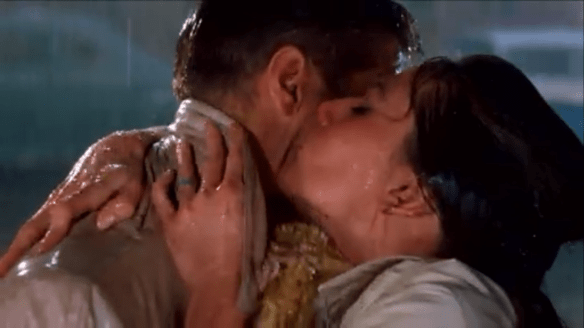
There are laughs and moments of immense satisfaction, but they are transient — invariably lasting for only a very brief instant. In fact, this film’s finale is a dour twist that submerges L’Eclisse even lower than we could ever expect. With a title such as “Eclipse,” there’s a potential for foresight, but there also are very few warning signs. Then, all of a sudden, we are privy to a newspaper dotted with headlines like “nuclear arms race” and “fragile peace.” That is all.

It’s in these final moments that L’Eclisse takes a far more haunting turn than Dr. Strangelove and any of its compatriots. It just stops. No explanation. Not even a sign of our protagonists. Again, it’s that maddening ambiguity that comes with waiting out this lull. But the ultimate joke is that there is nothing after the lull. The frame literally gets darker and quieter and then everything ends altogether. There is nothing more. Enveloped in darkness, it simply ceases to be, another enigmatic visual tour de force from one of Italy’s most fascinating titans.

4.5/5 Stars

Review: Breakfast at Tiffany’s (1961)

breakfastat4

Every time I return to Breakfast at Tiffany’s certain things become more and more evident. Mickey Rooney’s characterization as Mr. Yunioshi is certainly an egregious blot on this film, but if you look around the nooks and crannies, it’s full of quirky sorts who can be described as weak caricatures at best. Buddy Ebsen and Patricia Neal are wonderful actors but for some reason, they feel out of place in this one. I love Martin Balsam too but he’s not quite right either.

Still, all those complaints go away when I see those opening shots. If a film is defined purely by its opening sequence, this would be one of the most sublime films of the 20th century. Because watching Audrey Hepburn walk the silent streets of New York right outside of Tiffany’s is as good as it gets. There’s a perfect cadence to the sequence. We learn so much about the character of Holly Golightly in a few short moments and New York has never been a more magical place — as hushed as it is when her solitary taxi pulls up to the curbside.

Moon River lends a beautiful melancholy to the sequence and it’s absolutely marvelous. But then the illusion is broken when Holly gets home chased by a caricature of a man and accosted by her caricature of a landlord. The yellow face is deeply unfortunate but to a lesser extent so are many of the other portrayals.

Because it’s so easy to care for Holly. Audrey Hepburn makes us care for this woman who doesn’t quite understand what it is to need other people, to love other people, and to be okay with that. She’s scatterbrained in all the best ways. By proxy, we like “Fred, Darling” (George Peppard) because he is a stand-in for the audience as we get to know her better. He’s conflicted but also mesmerized by her like we are. She’s truly something special. And all the affection that we hold for her is because she is Audrey Hepburn. We cannot help but love her — unless I’m just speaking for myself — which easily could be the case.

Still, Truman Capote’s source novel was a very different animal and it could have become a very different film altogether with Marilyn Monroe initially slotted to star. But with her sweet smile and demure image, Hepburn brought something of herself to the role. Still sweet but more extroverted and out there.

It’s easy to peg this as her best performance because it does have so much character and her wardrobe by Givenchy becomes a perfect extension of Holly Golightly. In every sequence, she’s impeccably dressed and even when she’s in her pajamas she looks ready for a night out on the town. But of course, with all of those nights on the town, she’s come to her conclusions about men. They’re all either “rats” or “super rats” only looking out for themselves.

breakfastat11

Holly winds up with her cat and the man who wants to love her, perhaps even the man that she deserves. Anyways he’s probably the closest thing she can achieve in the cinematic landscape at hand. However, it is unfortunate that Breakfast at Tiffany’s is not quite the film that Audrey Hepburn deserved. It rightfully so galvanized her iconic status for the ensuing generations. It’s only a shame that the film is not a greater achievement than it is, settling instead to be a generally light and diverting romcom from  Blake Edwards.

But do yourself a favor and listen to Moon River again and again on repeat. The version doesn’t matter too much whether Mancini, Andy Williams or Hepburn herself. It’s one of the most remarkably mellifluous tunes of all time and truly worthy of Audrey Hepburn’s performance in this one.

4/5 Stars

Stolen Kisses (1968)

stolenkisses7Charles Trenet’s airy melody “I Wish You Love” is our romantic introduction into this comedy-drama. However, amid the constant humorous touches of Truffaut’s film, he makes light of youthful visions of romance, while simultaneously reveling in them. Because there is something about being young that is truly extraordinary. The continued saga of Truffaut’s Antoine Doinel is a perfect place to examine this beautiful conundrum.

To begin with, Doinel is still a bit of a trouble-making vagrant, and his time in the military was mostly spent being AWOL. He gets dishonorably discharged and the first thing he does when he gets out seemingly fits what we know of his character. He scampers across incoming traffic and finds the nearest brothel. What begins after that is an increasingly long list of odd jobs. First as a night clerk, before he unwittingly gets mixed up with a private investigator and a jealous husband which ends up getting him fired. Next, comes his most prolific phase as a detective and he’s such a horrendous tail it’s hilarious. But an old vet takes him under his wing and Doinel learns how to be a true detective. Soon he becomes a plant at the local shoe store of a Mr. Tabard after a fine showing wrapping shoe boxes — something he proves to be absurdly awful at.

stolenkisses3In fact, all in all, if we look at Doinel he doesn’t seem like much. He’s out of the army, obsessed with sex, can’t do anything, and really is a jerk sometimes. Still, he manages to maintain an amicable relationship with the parents of the innocent, wide-eyed beauty Christine (Claude Jade in her spectacular debut). Theirs is an interesting relationship full of turbulence. We don’t know the whole story, but they’ve had a past, and it’s ambiguous whether or not they really are a couple. They’re in the “friend zone” most of the film and really never spend any significant scenes together. Doinel is either busy tailing some arbitrary individual or fleeing pell-mell from the bosses wife who he has a crush on.

If we look at Antoine’s track record and take another look at Christine, there’s no way they should ever, ever be together not in a million years. But Truffaut does bless Doinel with bits of depth even amidst the everyday comic absurdities. He is a young man always running his hand nervously through his hair. He practices English by record trying to improve himself and he’s obviously looking for intimacy like we all are. In one particularly enlightening turn of events, he begins repeating names in front of the mirror to the point that it becomes taxing. But what young person hasn’t stared at themselves in the mirror or nervously talked to themselves? He truly is a young man still trying to figure things out. He’s allowed to have crushes and make mistakes. Perhaps he doesn’t deserve love. Most of us probably don’t, but that cannot stop him from being ever enraptured by it.

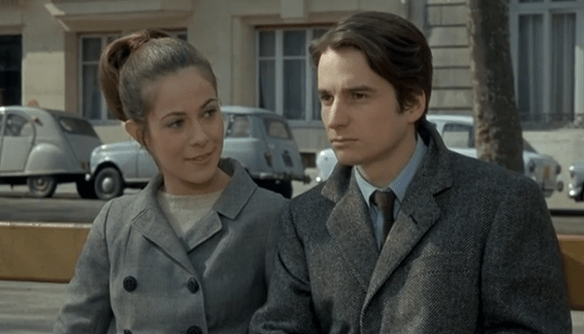
stolenkisses6By the time he’s given up the shoe trade and taken up tv repair he’s already visited another hooker, but Christine isn’t done with him yet. She sets up the perfect meet-cute and the two young lovers finally have the type of connection that we have been expecting. When we look at them in this light, sitting at breakfast, or on a bench, or walking in the park they really do seem made for each other. Their height perfectly suited. Her face glowing with joy, his innately serious. Their steps in pleasant cadence with each other. The hesitant gazes of puppy love.

Before the romantic interludes of the Before Trilogy or the adolescent expanses of Boyhood by Richard Linklater, Francois Truffaut was the master of such topics adeptly mixing drama, comedy, and touches of biography to tell personal, heartfelt tales. Jean-Pierre Leaud continues to make Doinel into a character that is continually watchable, because of the very flaws that we criticize. The days of The 400 Blows seem so long ago now and back then he seemed like such a solitary figure. Thankfully now he has the sweet effervescent beauty of Claude Jade to stand by his side. The eminent Pauline Kael, noted her to be “a less ethereal, more practical Catherine Deneuve.” That is a compliment if I’ve ever heard one, and she is a welcomed addition to Stolen Kisses, a thoroughly riveting journey of young love from one of France’s most accessible masters.

4/5 Stars

Topaz (1969)

topaz1While Hitchcock’s Topaz also finds its roots in the Cold War like its predecessor Torn Curtain (1966), it revolves around more intricate professional espionage which in this case pertains specifically to the Cuban Missile Crisis. The establishing shot of the film makes it clear that we are somewhere, once more, behind the Iron Curtain as we see a waving flag emblazoned with the faces of Lenin, Marx, and Engels. Interestingly enough, although the film begins with a high Russian official fleeing the country with his family and includes the deal he cuts with the Americans, Topaz really focuses on something else entirely. It plays off this idea of a man caught in the middle of the Cold War. Except this is not an everyman, but a specialized agent trained in espionage. Andre Devereaux (Frederick Stafford) is a Frenchmen who should seemingly be outside the fray of the opposing Superpowers.

But as anyone would probably try to explain, such issues of international relations and security are never so cut and dry. There is a lot more ambiguity involved and being an old friend with one of the American agents (John Forsythe), Devereux obliges to get involved with the whole affair in Cuba because he too is interested to see what the Russians are up to.

Agent Devereaux gets fully embroiled in Cold War espionage after making contact with Juanita (Karin Dor), the esteemed widow of a Cuban Revolutionary who now also happens to be a spy. Andre slips her aide a Geiger counter so that he can monitor the surrounding area to see if the Russians have nuclear warheads. And his results are conclusive. When by some lucky break Devereaux actually does get his evidence out of the country, Agent Nordstrom (Forsythe) confirms that the new information matches that from other sources including U2 plane surveillance. While the history stops there with Kennedy’s handling of the Cuban Mission Crisis, the film continues, following Devereaux back to France where he suspects a Russian mole. Since Hitchcock was always more of a showman than a political filmmaker, it makes sense that he grabs hold of the spy thriller thread in one final act. It channels paranoia very similar to The Spy Who Came in From the Cold although it is a glossier affair with intrigue crisscrossed with illicit romance.

topaz2Whereas the previous Torn Curtain was generally concerned with life behind the Iron Curtain, Topaz is decidedly more continental moving swiftly between Russia, France, America, Cuba, including a few pitstops at international embassies. However, the film does end up spending a lot of time focused on Cuba which can very easily be juxtaposed with the East German scenes in the former film. Hitchcock once more creates an illusion of reality using the Universal backlot and the adjoining area to craft Cuba, and he makes into a place of sunshine and romantic verandas, but it also runs rampant with totalitarian militia. It’s perhaps more exotic and welcoming than East Germany, but no less repressed. In both cases, they become a perilous locale for our protagonists. Still, rather unlike the previous film, Topaz lacks a truly A-list star like Paul Newman or Julie Andrews.
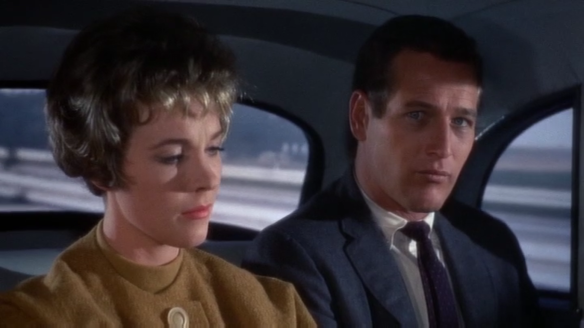
It’s as if Hitch has lost a number of things that made some of his best films, a stellar cast backed by a truly inspired script, carried out with his typical ingenuity. However, this film holds a special place in my heart as my first introduction to Claude Jade. That alone made it a worthy piece of viewing, but it also stands as a historical relic.

3/5 Stars


Torn Curtain (1966)

torncurtain1Torn Curtain was Alfred Hitchcock’s fiftieth feature in an illustrious career. Though he was arguably on a slow decline, the film still channels the Cold War sentiment and the age of the spy thriller, while taking hold of the director’s fascination in the everyman.  The storyline unwinds as Professor Michael Armstrong (Paul Newman) and his assistant and wife-to-be Sarah Sherman (Julie Andrews) are rubbing noses with the best and the brightest physicists in Denmark.  However, unbeknownst to lovely sweetheart, the young professor is looking to defect and live behind the iron curtain. For Armstrong, it’s something that has to be done to gain some vital information from the communists, but for her part, Ms. Sherman does not understand what is going on and so she decides to follow her love who all too quickly began to give her the cold shoulder. But of course, things in a Hitchcock film are never cut and dry.

Armstrong tries to gain the confidence of a high-level Communist scientist who can crack the Cold War wide open with a secret formula. This is crucial, acting as the MacGuffin, a storytelling device Hitchcock used in many of his films, its only purpose being to move the plot forward. Thus, Susan finds out eventually that her fiancée is no traitor, but out of that comes the perilous prospect of getting out of the country. In the end, Newman and Andrews get away and live happily ever after. Like his previous work in North by Northwest, Hitchcock’s focus once more is on your average individual. The difference here is that instead of getting the spy life thrust upon him in middle America, the protagonist willingly dives headfirst into the world of espionage by readily going behind the lines of the Iron Curtain.

The reasons Torn Curtain slightly pales in comparison with his past works has numerous sources. In truth, he came from an earlier age of filmmakers perfectly at home in Classical Hollywood, except it appeared like the days of his rule might be coming to an end.  It was his impetus to make a Cold War thriller, but it was the studio who supplied the stars and ultimately led him to cut ties with one of his greatest collaborators Bernard Hermann. To make matter worse, Hitchcock was completely disgruntled by Paul Newman’s abrasive style. The director was bred during an earlier age, while Newman was a brash young product of Method Acting. Whereas Hitch had wanted to bring back his longtime cohort Cary Grant with a role for Eva Marie Sainte, he was handed two younger stars in high demand. As such, they did not seem to fit with his usual sensibilities, and it truly did seem to suggest that he could not quite change with the times. Although his leads were certainly not his perfect match, being the creative force that he was, Hitchcock interestingly enough counterbalances his stars with a wide array of foreign supporting players. To the American eye, they were nobodies, but when given interesting roles to inhabit they help to give added texture to this Cold War world created on the Universal backlot. It truly is a lusciously constructed façade, although all the pieces do not fit quite so well this time around.

torncurtain2However, when you watch any Hitchcock film you do wait to be dazzled with some twist or trick because he was always one to bring humor and fascinating aesthetic qualities into his films. Torn Curtain has a few such moments that quickly come to mind. The most prominent has to do with the editing of the sequence in the farmhouse. It is here where Gromek is murdered by Armstrong and the housewife, but it is cut in such a fascinating way.  It contrasts with Psycho’s shower sequence quite easily as they try and murder him first by strangling and then anything they can get a hold of whether it’s guns, knives, shovels. There is no score to speak of. Soon it becomes a methodical rhythm of cutting between contorted faces as they slowly but surely move towards the stove. The brutality and length of the ordeal suggest how ugly and laborious it is to kill a man. Hitchcock certainly does not glorify it in any sense.
3/5 Stars

The Spy Who Came in From the Cold (1965)

thespywhocame1Adapted from the John le Carré novel, this is a black & white spy thriller that personifies cold war paranoia in ways that Bond never could. Richard Burton is an operative working in Berlin before being demoted to a librarian job. It looks like our narrative is heading in a direction hardly fit for a spy film. Its intentions are not so obvious at first, and it keeps its audience working for the rest of the film.

Alec becomes fond of his colleague Nan Perry (Claire Bloom) who is a young member of the British communist party, but he’s also prone to drink and outbursts of anger. He’s become the perfect target for defecting, and the enemy reaches out to him just as would be expected. They send him to the Netherlands promising payment for the disclosure of British secrets. In these moments there is a great deal of dialogue that feels somewhat trying. It ends up being a slow burn for Burton and the viewer as new layers and wrinkles are added to this whole espionage affair. Only does it get interesting when the girl winds up back in the equation. All of the sudden, the stakes are a lot different, a lot more hangs in the balance, and a lot of new twists present themselves.

As an audience, we are thrown into the tension of the moment, and we become utterly befuddled by all that is going on around us. It’s as if when we finally prick up our ears in anticipation we no longer know all the ins and outs of what’s going on. Where do the allegiances lie?  Who is “good?” Who is “bad?” Or is everyone just a muddied shade of gray?

Perhaps the most disconcerting revelation is only alluded to and remains more prominent in the original novel. Here we have a storyline where the sadistic German ultimately survives and the Jewish agent is destroyed. It’s a cruel bit of irony that hardly needs to be explained, but the implications are decidedly troubling. With such an observation we cannot help but recall the pogrom-filled past of European history — most devastatingly the Holocaust a mere 15 or 20 years before.

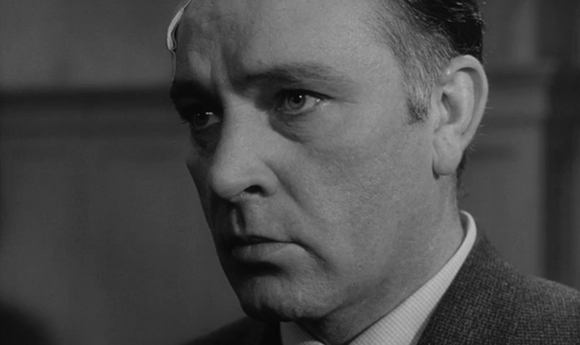
The Spy Who Came in from the Cold is a dour, misanthropic picture of the Cold War era. A narrative perfectly matched for Burton’s pair of somber eyes, cynicism, and brooding. He’s a man who speaks of Peter Pan and God in the same breath — they are both fairy tales. His role as a spy is never glorious, instead besmirched by conspiracy and lies. When you put it that way it’s not very appealing at all, and it shouldn’t be. Director Martin Ritt, unfortunately, is a greatly under-appreciated director and his films are often tinged with moral and political undertones that follow troubled characters.

Notably, this film felt like a precursor to The Three Days of the Condor, except this time it’s about the British organization Control that pulls the wool over the eyes of the enemy. The conspiracy runs so deep it’s almost difficult to even comprehend it.  Maintaining its tone, the story ends much like it began, very bleak indeed. This is a film that deserves your time and demands your full attention.

4/5 Stars

“What the hell do you think spies are? Moral philosophers measuring everything they do against the word of God or Karl Marx? They’re not! They’re just a bunch of seedy, squalid bastards like me: little men, drunkards, queers, hen-pecked husbands, civil servants playing cowboys and Indians to brighten their rotten little lives. Do you think they sit like monks in a cell, balancing right against wrong?” ~ Richard Burton as Alec Leamus

Harper (1966)

harper1We are brought into the world of Lew Harper with a cold open full of character. There he is. Paul Newman. Soaking his head in a sink full of ice. Making his morning cup of Joe. Popping that first piece of chewing gum before heading off to his first appointment.

What follows is a narrative courtesy of Ross Macdonald’s The Moving Target and an up-and-coming screenwriter William Goldman. Really, the film pays tribute to all of Bogart’s great P.I. roles (even going so far as casting Lauren Bacall), becoming a ’60s revamp of The Big Sleep.

But although the plot is not quite as incomprehensible as its predecessor, the greatest joy of this storyline is the witty repartee of Goldman’s pen paired with wall-to-wall star power. We have Newman and Bacall headlining as a gumshoe and his client who is looking rather half-heartedly for her missing husband. We have young blood with Robert Wagner and Pamela Tiffin. Then some old reliable talent in the likes of Janet Leigh, Julie Harris, Shelley Winters, and Strother Martin. The characters might not be the most insightful, but who needs that when they’re fun.

Lew Harper’s marriage is going down the tubes as he begins digging around for leads on the whereabouts of millionaire Ralph Sampson. He begins his inquiries which ultimately lead him to a washed-up starlet (Winters) who he pumps for information. He meets her charming husband and pays a visit to a nightclub singer (Harris) with a drug habit.

The dive musical halls, a rogue truck, and an encounter with a new age religious cult point Harper toward’s Sampson’s kidnapping, but he must piece together all the broken shards. There are twists, turns, and big reveals that are only fitting for a mystery of this inclination.

It’s certainly a nifty charade of mystery accented by a bouncy score courtesy of Johnny Mandel. But this sublimely Paul Newman role is more fun.  In his own words, “He’s a regular beaver,” a jaded cynic prone to smirks and sarcasm. He’s a sly dog even before Jim Rockford. He gives off an air of not being particularly happy in his work, but who would be thrilled to be a private investigator? On top of the lousy lifestyle and unglamorous dirty work, his wife is calling for divorce proceedings.

And yet he reveals moments of humanity and charm, whether he’s stacking up on tea sandwiches, chatting it up with his pal Albert, or pulling one over on his wife over the phone with paper towels stuffed down his throat.

Harper serves up exactly what we want with Newman grabbing hold of a cynical streak like he does best and riding the waves of Goldman’s engaging script. It’s not rocket science, but everything translates into a thoroughly enjoyable experience all around.

3.5/5 Stars

(After being beaten up again)

“Hey Lew, you alright?” ~ Albert

“I’m awful tired of answering that question” ~Lew

Review: True Grit (1969)

truegrit1My father has always maintained that two of his favorite films are The Magnificent Seven and True Grit. The first one makes sense with its stellar cast, resplendent score, and some top rate gunslinging. The second film, well, it makes sense too, but for completely different reasons.

Director Henry Hathaway is never flashy but he is a self-assured worksmith of early film-noir and westerns such as The Sons of Katie Elder. Those are minor classics, and yet each one is gripping in its own way.

John Wayne is just John Wayne pure and simple except with an eye patch slung over his eye, but do we care? Not in the slightest. When you have such a presence in a film, it will never lack at least a shred of viewing value. He was always memorable, but he was probably never more iconic than his turn as Marshall Rooster Cogburn. He’s a gruff, tough, drinking man who is willing to take on anyone and everyone at the drop of a hair. Yet despite all of that fury, Wayne embodies him in such a way that makes him lovable all the same.

Wayne is usually a given to steal the spotlight but Kim Darby gave him more than he bargained for as the stubborn, no-nonsense Maddie Ross. Following suit, singer Glen Campbell showed he can do more than knock back a tune, playing the Texas Ranger.

Darby beautifully embodies the rational-minded young Maddie with her terse and straightforward rhetoric. She knows what she wants and she will not budge on those proclivities – whatever they might be. Glen Campbell was hardly an actor, but instead a country music superstar and yet the musician makes a handy Texas Ranger in a pinch bringing a sense of camaraderie and humor to wrangle with his counterparts.

As with many of his other great westerns, Wayne and company are surrounded by a solid group of stock characters including the likes of Dennis Hopper, Robert Duvall, Strother Martin, and even John Fiedler.

The film is adapted from the Charles Portis novel where Maddie, intent on catching the man who killed her father, hires Cogburn to track him down. They are joined by Laboeuf and thus begins their search.

Looking at the plot alone, this film is about a journey to apprehend a fugitive man named Tom Cheney, who killed Maddy’s father as well as a Senator back in Texas. But really what we’re watching is this unlikely trio joins forces to do things we would never expect from them. It’s certainly no coon hunt, but then again it’s hardly a single-minded mission. Maddy has one opinion, the Texas Ranger has another, and Rooster Cogburn’s mostly drunk when he’s not belittling his rival or poking fun at “Baby Sister.” Do we mind? Certainly not because time makes these three companions into friends. Their ribbing gives way to trust and their anger and annoyance breed mutual respect.

Nothing beats the adrenaline rush of seeing Wayne charge across a vast meadow towards Ned Pepper and his cronies, with his guns drawn and a bridle between his teeth. The sequence is enhanced by the spectacular Colorado landscape that adds another character to the entire film. You cannot witness such a scene and simply write it off as average. That’s part of the reason we go to the movies – to see men with True Grit.

The Coen Brothers brought us a darker, more dramatic interpretation of this film, but it is hard to beat the fun of Henry Hathaway’s version. John Wayne, Rooster Cogburn, whatever you want to call him, he has True Grit. Isn’t that right baby sister?

4.5/5 Stars