
Sing Street (2016)

Sing_Street_posterA famed philosopher of the MTV age once sang “video killed the radio star,” and John Carney’s Sing Street is a tribute to that unequivocal truth. Certainly, it’s what some might call a return to form for the director, landing closer to his previous work in Once, and staging the way for some wonderfully organic musical numbers set against the backdrop of Dublin circa 1985. In this respect, it’s another highly personal entry, and Carney does well to grab hold of the coming-of-age narrative.

Our main point of interest is Conor, a lad thrown into a new school of hellish proportions and of course, there’s a girl, and he wants to get to know said girl. What follows soon thereafter is the inception of an entire band, the eponymous Sing Street. So in essence, the band forms so he can get the girl. It’s that simple and it works…sort of.

By all accounts, she’s an untouchable goddess, a year older than him, with a mature boyfriend and aspirations of modeling in England. And yet Raphina deigns to stoop to their level and take part in their first foray into music video-making. It’s in such moments that the film unabashedly hoists up its 80s sensibilities, suggesting Carney’s own personal affection for that day and age. Because amidst all the god-awful make-up, outrageous costumes and mimicry of the new wave scene, there’s a sense of amusement. Since every boy, at one time or another, has gone through these different phases and stages, like a sponge soaking up all conceivable inspirations. In this case, Conor’s older brother Brendan becomes his pontificating Buddha of rock n’ roll. His influences run the gamut from Duran Duran to the Cure and most definitely a little David Bowie.

But his band also develops into a wonderfully liberating beast to combat the furies of the world. Conor is consumed by grand dreams of Back to the Future themed prom nights at an American-style high school. Meanwhile, his parents are continually squabbling at home and his dream girl leaves for London without a word of goodbye. But he uses his newfound outlet paired with the guidance of his brother to turn his stray thoughts and accumulating angst into something of true substance. Namely, Conor and the versatile Eamon, have a bit of a Lennon-McCartney partnership going, as far as creative genius goes, proceeding to run with each spark of an idea that strikes. In fact, with all the boys, there’s a matter-of-fact gravity to it all, because forming a band is a serious business — it’s a concerted effort not to succumb to the grisly fate of yet another gutted cover band.

Like any formative tale about young men and women, Sing Street suggests the vital importance of personal identity and chasing after dreams in particular. You see it with Conor as he constantly dons new facades, not simply in a search for greater artistic expression, but personal freedom.

But where he breaks with his big brother, is what he actually does with the inspiration that has been passed down to him from the rock gods. He uses its whole potential as a gateway to the way of life that he desires — making the most of the opportunities that are afforded him — even if they are a long shot. As the movie progresses Raphina looks younger and younger, and it hardly seems by accident. Over time, she sheds layer after layer of makeup and manicuring to reveal a bit more of herself, until the tipping point where all her dreams come cascading down, and she has nowhere to hide. In fact, in these more fragile moments, Lucy Boynton is reminiscent of a young Felicity Jones.

Admittedly “Sing Street” has a ludicrous ending and there are moments that it tilts towards the plastic production values of  “Begin Again” rather than the sincerity of Once, but that’s a lot of what the 80s feels like. It’s fake. It’s this construction projected up on a screen. And that’s precisely what this film is saluting and celebrating, but that’s only the half of it. Raphina rightfully points out you can never do art half way. That’s what rock n’ roll is in a sense. It’s audacious exploration, risk-taking and a bit of foolishness in the name of chasing your dreams, usually involving a girl. Thus, the film is not wholly original, even for Carney, who has drawn from the same well three times over, but like any artist, he’s able to discover fresh inspiration from old cisterns. After all, every member of humanity is in one way another a broken work of art, beautifully complicated, and that’s worth returning to again and again.

4/5 Stars

Museum Hours (2012)

Museum_Hours_posterThere are few films where art and film more obviously intersect than Museum Hours. In fact, its director and general mastermind Jem Cohen blends the line between filmmaker and multimedia artist. His generally deliberate piece on Kunsthistorisches Museum of Art follows two figures in the vibrantly beautiful city of Vienna, Austria

Johann (Bobby Sommer) is a museum guard with a reassuring face full of kindness and good humor. He spends his days in the museum, a place where he finds tremendous tranquility and great contentment in the vast intricacies of the beauty around him. For others, this would be wearisome work. From his perspective, it’s an immense joy. His eyes are constantly taking in the world around him, bright and full of awe. Always ready to help.

In one such occasion, his gaze happens upon Anne (Mary Margaret O’Hara), an obviously frazzled traveler, lost in a world that is foreign to her. In truth, she came to Austria after receiving news of the deteriorating health of a distant relative. Johann willingly gives her directions to the hospital and soon enough the museum becomes her little oasis too.

So if the film did have a plot that would be it. Two people finding a connection in a great big city. And yet this film is hardly Coppola’s Lost in Translation. The arrival of Anne in Austria is seemingly only a pretense for the audience to spectate. In some ways, it’s quite reminiscent of the contemplative nature of Christ Marker’s Sans Soleil, at times blended with the naturalistic visuals of Malick’s Tree of Life. It operates as part film, part documentary, with voice-over often playing over images. Everyday scenes mixed with works of art, and ultimately leading to a greater appreciation of both.

Often the camera is stationary and as such it watches the world of Austria rather like the patrons who wander through the halls of the museum surveying the most mundane things with a degree of awe, peering at the beauty that lies there within. We can use the same critical eye we use to look at art for life. Not to find fault but on the contrary, to develop a greater appreciation for all that is around us.

The likes of Cranach, Rembrandt, and especially Bruegel bring to light the beauty that can be found in our world, even in the smallest of instances. Different people take it different ways. A tour guide will become didactic, patrons in a tour group will try to come up with all the answers, and kids are content sitting in a corner to stare at their phones as the world passes them by. But Johann has the right idea. It really is rather a child-like perspective, in the sense that each day brings new excitement and he garners great joy out of the little things.

Obviously, I’m a bit biased as someone who likes paintings and art history, but Museum Hours is a powerful film that truly elicits a greater appreciation for art, but more importantly life itself. Really, there’s no need for a score, because that would almost detract from the pensive nature of Cohen’s work. It’s about the juxtaposition of visuals. That’s where it gets its power.

4/5 Stars

Finding Dory (2016)

Finding_Dory.jpgI heard it from the fish’s mouth that the main question behind this film began to gnaw away at Andrew Stanton relatively soon after the release of his first effort Finding Nemo. The question of, Where are Dory’s parents? Nemo found his father. They got their happy ending. But what about the hapless Dory, always trusting, forever faithful and also hopelessly lost. There’s a story buried there somewhere.
Out of a character who exudes so much joy and positivity, there’s definitely the potential for a lot of heartbreaking moments and this film has those no doubt. After all, Dory (Ellen Degeneres) is a fish who we all know has short-term memory loss and so-called psychological issues often lead to moments of great emotional turmoil, even in fish. This story does have some of those heart-wrenching moments, but it’s also a film of discovery, building off what we already know and love about these characters and reinforcing them in a number of ways.

New and old acquaintances are brought back to the fore namely Crush, Mr. Ray and of course Marlin and Nemo. New castmates including Ed O’Neill, Ty Burell, and Kaitlin Olson entertain us with their own ticks and foibles including faulty echolocation and nearsightedness, reflecting just how much Dory is not alone. Then there are a couple downright oddballs in the dippy sea lion Gerald and a certifiably insane loon Becky, who nevertheless prove their own individual worth.

But it’s the ornery octopus (or septapus) Hank who is the key to much of the plot because it is thanks to his agility and camouflage alone that Dory is able to navigate the Jewel of Morro Bay’s Marine Life Institute with any sort of success. She is, after all, a fish and a fish out of water is far from a good thing.

Still, this film certainly pushes the envelope as far as human-fish interaction. If the fish seemed anthropomorphized before, just wait. Without too many spoilers it gets even more pronounced this time around involving a big rig on the freeway among other shenanigans.  Enough said. It’s a more constrained film, set in and around an aquarium, but the Pixar animators show an adeptness for moving around this world in new dynamic ways with relative ease.

But there’s also a flipside to this. As the voice of God, Sigourney Weaver, so aptly reminds us, “rescue, rehabilitate, release.” That’s the name of the game. Still, it seems like sea life has never been more encroached upon, more endangered or monetized. This negative impact is seen implicitly throughout the film, but it’s never more haunting than the moments when Dory is seen wrapped up in six-pack rings. Being the bright and bushy-tailed tang that she is, no comment is made about it. But in the back of our mind’s we cannot help think about what that image represents. She gets put into captivity for this precise reason, but she wouldn’t have to be removed from her home in the first place if it wasn’t for our own ineptitude as humans.

It’s hard to put a finger on it exactly but there’s also something slightly off about Finding Dory‘s pacing. Perhaps it even has to do with the stakes of this film. It’s not truly driven by some high conflict. Yes, we know Dory needs to find her parents, but there’s something in us that realizes she already has a type of family, Marlin, and Nemo. This idea is explored a little bit while at the same time Dory tries to find her birth parents. But it’s admittedly hard to top a 13-year-old classic and I laud Finding Dory for not trying to do that. Instead, it shows a continued appreciation and care for its characters, in this case, Dory. If Finding Nemo was this rollicking, rip-roaring adventure at sea, then its sequel can best be described as a well-wrought character study. And when that character is such a well-meaning personality as Dory, that’s not a bad thing in the least.

4/5 Stars

The Hunt (2012)

The_Hunt_(2012_film)One lie. That’s all it takes to completely decimate one person’s life. Out of the mouth of babes can oft come gems, but also deadly slander that leads to public scandal and personal destruction. In a small Danish village that’s what happens to Lucas (Mads Mikkelson), a sympathetic kindergarten teacher, who generally cares for his kids, while he tries to maintain a relationship with his teenage son Marcus, who is the casualty of divorce. It’s not easy for Lucas either, but he finds solace in his work and the companionship of his coworker Nadja, who moves in with him. On top of that, he is well-liked in his community which includes his close friend Theo, who has a son and a little girl Klara — dearly fond of Lucas’s dog Fanny.

But in one instant Klara makes the life of her adult friend a living hell. In a moment of confusion, she makes a confession to her teacher. Both surprised and worried, the information sends all sorts of alarms off in Grethe’s head and Lucas is relieved of his position quickly. Next, Klara’s parents are brought in and soon the rest of the community is let in on the troubling news. The following contradictory statements brought forth by Klara are quickly dismissed. After all, she has been thoroughly traumatized by Lucas. He’s arrested but finally released because the testimonies of the children do not add up. Still, he’s now labeled as a sexual predator and ostracized by everyone. His former friends have turned against him, and he is no longer welcome in the local grocery store.

The only place he can turn is his friend Bruun, who does not abandon him, as well as his son Marcus. That does not do any good for faithful Fanny as the witch hunt continues.  The sequence of events has the Christmas holiday as its backdrop, and it seems like peace on earth and goodwill towards men need not apply to Lucas. In one potent moment, the solemn outcast wanders into Church for service, only to be forced to sit in a pew all alone. There gathered around him are all the people who have destroyed his life. All the people who professed to be his friends, and yet quickly turned on him.

His response is uncalled for perhaps, but certainly not unwarranted. Theo is deeply affected and it only takes listening to the listless whisperings of his little girl to know that Lucas is innocent. They make peace on Christmas day and things die down.

Time passes. Lucas is happy. He’s back with Nadja. Marcus is about to get his rite of passage as a hunter. Everyone’s friends again. But still, there’s something not quite right. In the final moments, the motif of a hunt takes on a deeper meaning. The drama has all but subsided and yet it still lingers. Lucas is still being hunted even if it’s only in his dreams.

After the Wedding gave me tremendous respect for Mads Mikkelson as an actor, and The Hunt only solidified that conviction. He is facially so recognizable and expressive. Not exactly a handsome face, but there is a raw beauty to it, and it is wonderful for expressing a broad spectrum of temperaments. It can be an evil mug or a sympathetic face revealing layers of anguish. In many ways, it’s a great enigma, so reserved and yet so emotive. Thomas Vinterberg’s bare-boned film rides on Mikkelson’s shoulders, and he is able to carry the weight brilliantly.

4/5 Stars

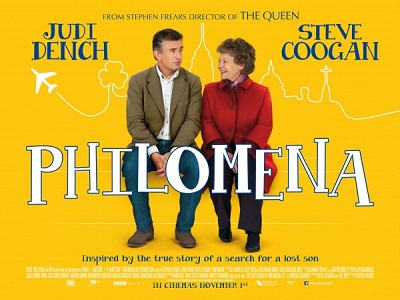
Philomena (2013)

Philomena_posterStephen Frears is not the foremost of directors, but he very rarely makes bad films, and Philomena is yet another jewel in his crown. It’s a simple enough story, but those are oftentimes the most rewarding because they tap into something near and dear to most of us. This is indeed another one of those based-on-true-events type tales, and it starts off with Martin (Steve Coogan) a former journalist and political spin doctor. He’s now not doing much of anything aside from contemplating writing a book on stuffy Russian History. He’s also lacking in conviction while being weighed down by cynicism, so it’s not exactly the most uplifting of perspectives.

But then he’s put in contact with the retired nurse and spirited Irish lady Philomena Lee (Judi Dench), on track for a great story. Although he’s not very experienced with human interest stories, he forges ahead with her’s. 50 years before Philomena met a young man and ended up getting pregnant, but the local nuns forced her to work in the convent out of penitence for her “sin.” She could only see her son briefly each day and then one day she lost her Anthony altogether when he was taken away from her, never to be seen again. The events still haunt her years later, but she is finally ready to share her secret.

With Sixsmith by her side, they first visit the convent where it all happened, but very little information is unveiled because while the nuns are polite, they are far from obliging. Martin is able to discover that Anthony was adopted by an America family as was the custom in the 1950s, and he ultimately ended up in the United States. He and Philomena travel across the sea to D.C. to try and get a lead on him.

There Martin makes another discovery. In the U.S. Anthony went by the name Michael Hess and was a prominent aide to both Ronald Reagan and George H.W. Bush. The hardest discovery, however, is that he passed away 8 years prior. Although deeply troubled by this news, Philomena resolves to try and meet anyone she can who knew her boy. They make the rounds without much luck, but there are several revelations that make the whole trip worthwhile.

Everything comes full circle, and it’s in these difficult moments that Philomena shows her true character, and her unwavering ability to forgive in the hardest of circumstances. By now Martin is as invested as she is, and for the life of him, he cannot understand how she could forgive such injustice done to her. But that’s exactly what grace is, an undeserved gift, and she gives in willingly.

For the entire film Martin has been hounded by his editor about angles and getting the juiciest bits for his story, but by the end, it resonates with him too much for him to publish it in some superficial outlet to grab waves of media attention. He respects Philomena too much for that, and yet being the strong and resilient lady that she is, she resolves that people need to and deserve to know all that has happened.

This film was a lot more thoughtful than I would have initially given it credit for because I assumed it would be a weepy tale full of heart, which it was, but it also had great insight into life. Some may see the film as an indictment of hypocrisy that crops up in religion and that is certainly noticeable, but what stands out more to me is the indefatigable spirit of Philomena. She is a woman of great resilience and faith, loving others well even when it is most difficult and really reflecting what it is to be a genuine person of faith. Thus, the dynamic between her and Martin is a wonderful one, because their differences in temperament and worldview do not stop them from forming a far deeper bond of friendship.

4/5 Stars

In a World (2013)

220px-In_a_World_posterWhat makes In a World… work for me is a new perspective on material that could potentially be so cliche. Even when it enters long-trod territory we as an audience are able to extend grace to a film that is willing to step out there.  The film’s writer and star Lake Bell crafts a story set in the world of movie trailers, where her character, Carol Solomon, looks to make the leap from a vocal coach obsessed with dialects, to a full-fledged trailer narrator. It has the potential for a light, unassuming payoff, for a topic that feels so slight, but In a World… is indubitably rewarding.

It starts with Lake Bell’s Carol, a character who is easy to get behind. Her dad is a highly-acclaimed voice-over artist, who also happens to be a Grade-A jerk. Her sister’s stressed by a hotel concierge job and to have family plopped long-term on her couch is only another annoyance. Moe (Rob Corddry) is probably the most chill of all her relations, and he’s a brother-in-law with an easy-going vibe and a genuine love for his wife. To his credit, Corddry proves he can play roles that an audience can sympathize with.

Besides Carol, the most pivotal character is Louis (Demetri Martin), that slightly awkward, slightly awesome, male love interest, who happens to work in the recording studio with her as a sound engineer. They must go through the cringe-worthy conversations and interactions that are almost a rite of passage for the genre, before finally getting together as they are supposed to. That includes uncomfortable telephone conversations and a very eventful party at the home of trailer champ Gustav Warner. As Carol must navigate her own romantic entanglements, Dani’s marriage to Moe takes a hit when she starts entertaining the advances of another man. It’s in such moments that In a World… sheds its simple layer of humor and gets to something a little more substantial. These are genuine moments involving characters like Dani and Moe who we truly feel for, not to mention Carol and Louis, who both exhibit a refreshing level of earnestness.

As Carol tries to get her big break by beating all her male competition, she continues to get lack of support from her father, until things get real personal. He too decides to audition for the coveted voice-over for the upcoming epic quadrilogy “The Amazon Games.” It pits father against daughter, man versus woman, and the results are more than memorable. For me, Demetri Martin is a standout with his dorky turn, and we get another appearance from perennial indie supporting cast member Nick Offerman, not to mention a cameo from Geena Davis (and Eva Longoria)!

3.5/5 Stars

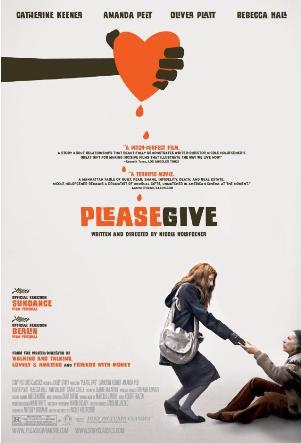
Please Give (2010)

Please_Give_FilmWhat is Please Give about? The most succinct answer I can muster up is that it is about the simple rhythms of life. It’s about people rubbing up against each other, the neighbors you try and be nice too, but speak about behind closed doors. In writer-director Nicole Holofcener’s fifth collaboration with Catherine Keener, the latter is Kate, a woman who lives a life of uncomfortable dichotomy with her husband and teenage daughter.

Next door is the cranky grandma Andra, who is quite along in age, and she gets assistance from her granddaughters, who are both young professionals. Rebecca (Rebecca Hall) works as a radiology technician often spending her days giving mammograms, while her fashionable sister Mary (Amanda Peet) works as a cosmetologist. Their grandmother is not exactly the most agreeable person, and her acerbic nature earns the disdain of Mary and the quiet industriousness of Rebecca. They both have different ways of dealing with other people just as they have different ways of approaching love. Rebecca is quiet and looks for love in a nice young man. Mary constantly checks out the woman who stole her old boyfriend and embroils herself in an affair.

Meanwhile, Kate feels uncomfortable for buying Andra’s flat and waiting for her passing to start renovations. Likewise, in her joint venture with husband Alex, they buy people’s old possessions at estate sales and make major profits on their furniture. These issues along with a rebellious streak in her daughter, make Kate noticeably agitated, and she tries to overcompensate. She gives money to every homeless person she ever sees and tries to volunteer at numerous spots across town without much success.

The film suggests that we can tread a thin line on the margin of what is honest and what is termed “the ways of the world.” After all, if we balance it out with enough good deeds it ends up okay in the end, right? On her part, Kate has an odd way of dealing with her own sense of morality when it comes to her family business and the homeless on the street corner. Her husband is a generally agreeable man, who has no trouble with what they do, but he at least admits it, just like admitting when he flirts with other women.

Above all, I think Please Give boasts interesting female characters, in fact, they are the focal point of Holocener’s story, and it makes for a worthy character study in an industry that is often male-centric. Within these women is hypocrisy, pettiness, and a lot of insecurity, but it manages to be invariably funny as well as perturbing at times.

3.5/5 Stars

The Sessions (2012)

220px-The_Sessions_posterI was a bit skeptical of this film at first, but I can say unreservedly that it boasts true heart and sensitivity. In many respects, it reminds me of another film about a man with a so-called disability, The Diving Bell and the Butterfly. In both, a highly creative individual is able to defy their physical barriers and truly impact the world around them.

In the case of Mark O’Brien (John Hawkes), he graduated from Berkeley destined to become a journalist and poet, the only difference with him is that for most of his life he has been confined to an iron lung that keeps him alive. It seems like an obvious roadblock to success in life, and yet not so for Mark because he faces each day with a sense of humor and even a spirituality that is impressive. He relies on his caretakers for so much and yet they enjoy helping him because he is a generally kind spirit. First, it’s the beautiful Amanda (Annika Marks), who he sincerely professes his love to and then there’s Vera (Moon Bloodgood), who while frank, is still deeply concerned with his well-being. Furthermore, the local priest (William H. Macy) is equally willing to listen to Mark’s confessions, not simply about sins, but more importantly his life on a whole.

Mark’s a very transparent individual, who attacks life with a positivity and tenacity that goes beyond the physical. Wit becomes his precious ally in facing every day, and he also takes great care in the relationships around him. He wants to live his life to the fullest, and he won’t let an iron lung impede him. Thus, he decides that he would like to try and have sex since he is still a virgin and feels that he might not have long left to live. And so, after consulting with his priest and acknowledging the sensitive nature of the decision, he tentatively decides to go for it. Cheryl Cohen-Greene (Helen Hunt) becomes his sex surrogate, and yet she is more of a therapist than anything else. She helps Mark become more and more comfortable in his own body and there is a beautiful vulnerability and openness to their time together.

The Sessions proves that there can be depictions of sex that can be as tender and sensitive as the characters involved. It’s not some vulgar act or a simple gratification of desire. It has more significance than that, just as these characters carry more significance. Father Brendan is not a perfect character just as Mark is not perfect, but we appreciate them for their geniality and light touches of humor. As for Cheryl, she does a great favor for Mark, and yet in the process she herself is deeply moved by this man in front of her. He’s seemingly so weak, so unassuming, and yet there is so much vibrancy to him.

The day Mark dies is sad for all of us and gathered at his funeral are all the people we expect to be there. The Father gives a heartfelt eulogy as all the women he touched sit in the pews looking on. The beauty of this story is that Mark finally did find love quite by accident, and he touched so many lives in the process. Though not a perfect film, The Sessions is heartfelt and that covers a multitude of faults.

4/5 Stars

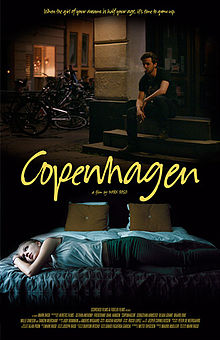
Copenhagen (2014)

Copenhagen_film.jpegSometimes you attempt to make a mental pros and cons list to try and convince yourself in one direction or the other after watching something. Copenhagen was such a film for me. Bike rides through the city. Pro. At times this film loses its steam and flounders a bit. Con.

In truth, the narrative does feel pretty thin when it comes to the main character William trying to track down his grandfather in Copenhagen. William for that matter is a foul-mouthed and generally annoying jerk of an American for most of the film. Also, the weird romantic tension that builds between him and Effy is obviously uncomfortable, but the will-they-won’t-they component is key to the entire narrative. Because essentially this is a film about a grown man finally coming to age, with the help of a very mature 14-year-old girl, who acts as his guide through Denmark.

That being said, the scenery in and around Copenhagen is obviously a lot of fun to partake of, and it truly is the perfect place to ride a bike around, day or dusk. Furthermore, with her husky voice, feisty nature, and winning charm Frederikke Dahl Hansen makes this film with her turn as Effy. True, she’s playing a character quite a bit younger than herself, and yet she succeeds wonderfully and really thrives as the winning force in this film. Because, if we don’t like her this film has little hope of rising above its narrative foibles and the utterly annoying nature of its other main players. Effy makes us like William at least a little tiny bit by the end of this story. And that’s a major compliment to her. To his credit, Gethin Anthony is easy to dislike, but that undoubtedly can be credited to his acting. His character does come around in the end too, not so much because of the quest for his grandpa, but he learns what it is to be a man and to treat others with the respect they are due. Namely in this case a 14-year old girl, and also is his best bud, Jeremy.

So is this a film I would recommend… Yes, but I tried to lay all the cards on the table because you could easily enjoy this film or just as easily find it disconcerting and tiresome. I fell into both categories at different times, but there were some truly entrancing moments that are hard to forget. Effy is almost hypnotic during her singing session in the bar. And traipsing through an art museum becomes a fascinatingly intimate study of the human form. Perhaps now more than ever Denmark will be on my travel radar since it looked like an absolutely brilliant place to spend a summer.

3.5/5 Stars

Captain America: Civil War (2016)

Captain_America_Civil_War_posterIn spite of being a jaded viewer at this point, the Russo Brothers (Arrested Development and Community) and the screenwriting duo of Christopher Markus and Stephen McFeely (The Narnia Franchise) proved still capable when it comes to keeping the Marvel Franchise afloat and, nay, helping it to flourish like few franchises ever have.  The pair of directing and writing duos who brought us Captain America: Winter Solider were able to add another link in the armor, and Marvel has remained stalwart. There are moments of misguided drama, times when the fight sequences become monotonous rather than momentous, but Marvel always does well to keep their funny bone intact.

As with any superhero movie Civil War calls for a suspension of disbelief, but it also becomes a balancing act, because for any movie to truly resonate with a mass audience its characters must feel human in some way shape or form. Where their powers and superhuman abilities must be on display for all those awaiting a popcorn thriller, but still restrained enough to keep them relatable.

In this case, Captain America (Chris Evans) is swayed by the love of a friend he’s known for over 70 years. Bucky Barnes is once more in the middle of a manhunt, and yet Cap has faith in his old friend. But it’s exactly that kind of loyalty that lands him on the wrong side of the law. Meanwhile, our other force of nature Tony Stark (Robert Downey Jr.) rehashes the tragic death of his parents and tough times with Pepper Potts leave him conflicted. He’s ready to concede to the United Nation’s demands to put the Avengers in check and that’s where he breaks with his former ally. When the two undisputed leaders of the Avengers become polarized that forms the dividing line between factions and the whole film becomes fascinating as the sides are slowly drawn up. As an audience, we are forced to make a choice. It’s either the true blue Steve Rogers or the wonderfully snarky Tony Stark or perhaps we watch as an impartial observer. But, nevertheless, a mental decision must be made.

And it’s not only a balancing act of super versus human qualities, but the sheer size and scope of the cast could easily be a hindrance. Equality of screen time or at least moments in the spotlight for everyone are key, and the film generally does that capably enough. Marvel revels in the callbacks and Civil War is no different. In this installment alone we have the pleasure of seeing numerous returning players sans Hulk. In fact, the most entertaining fight sequence involves everyone duking it out, and the fact that it feels almost like play fighting rather than full-fledged combat is of little consequence.

But the new additions are also noteworthy including the likes of  Black Panther (Chadwick Boseman) and yet another Spiderman. Credit due to Tom Holland for in some ways making Peter Parker into an invariably entertaining persona, who feels different than his predecessors. There are a few others in smaller roles of note including the likes of William Hurt, Martin Freeman, and even Jim Rash.

By this point, we have long grown tired of villains rising up from outer space harnessing some unfathomable amount of power. The antagonists that are truly compelling are those who are closer to home, more realistic, and sometimes even within our own ranks. Built into this film’s title is that type of conflict, between former friends, between people who used to be close or would be on the same side given any other circumstances. But Civil War ups the ante not by getting bigger and grander necessarily. It’s the fact that it gets more personal that makes it work surprisingly well.

Daniel Bruhl is a delightful actor, and he does well to play what some might call a villain and others might simply label a pained, vengeful man. That’s oftentimes far more interesting.

It’s overstuffed with players, many who are admittedly wonderful acting talents. Its editing and cinematography is at times overly frenetic and mind-numbing. While Civil War is the expected superhero extravaganza, there are dour, more mature interludes that are difficult not to appreciate. If Marvel has not completely kept me enraptured, due to so many subsequent films, they still have me coming back and if I’m any indication, there will be many far more ardent fans than me who will truly enjoy what this film has to offer.

4/5 Stars