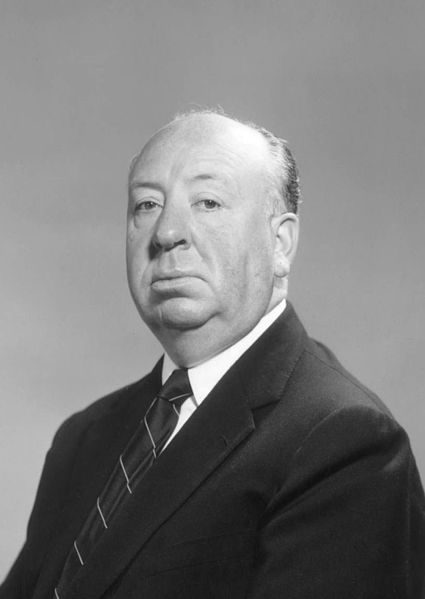
Director of the Month: Alfred Hitchcock

With no shame whatsoever I would have to say Alfred Hitchcock is my favorite film director because he had so many great movies. His films are entertaining from one standpoint but also skillfully crafted with many unique touches and techniques. His career spanned from the silent era to modern films into the 1970s making the breadth of his work expansive. Furthermore, he made the transition from England to the United States and his style changed as a result. He is now an icon for the quirky persona he created promoting his films and narrating his TV shows. Whether it be by his choice of lead actors and actresses, locations, subjects, plot devices, or cameos, he left an indelible mark on his work. I have watched over 20 of Hitchcock’s best films and I have some of his other most famous ones listed. I will let you make your own opinion but hopefully you can enjoy his films as much as I have. In the following days I hope to release reviews of some of the films I have watched and really enjoyed.


Greatest Hitchcock Movies:
Rear Window
North by Northwest
Psycho
Vertigo
Notorious
Strangers on a Train
Shadow of a Doubt
Rebecca
The Lady Vanishes
39 Steps 

The Birds
To Catch a Thief 

Dial M for Murder
Foreign Correspondent
Lifeboat
The Man who Knew to Much

The Wrong Man
Spellbound
Rope
Suspicion
Frenzy

The Lodger: The Story of London Fog 
The Girl Was Young
Secret Agent
Sabotage
The Trouble with Harry
Marnie

Saboteur 
I Confess
Blackmail

*Bold I have seen
Screwball Comedies

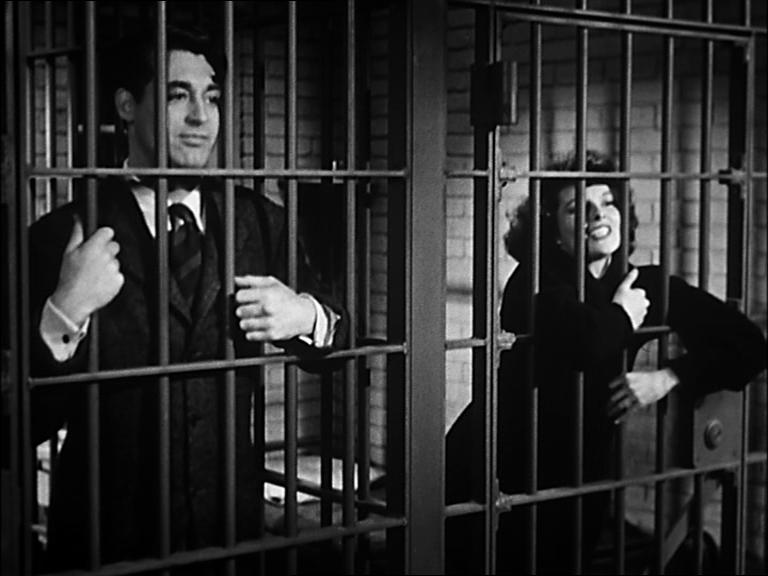
The Screwball Comedy came into existence in the 1930s probably with the release of It Happened One Night (1934). They are a unique type of romantic comedy prevalent in the 30s and early 1940s. Often the plot revolved around bizarre, crazy, or extravagant scenarios having to do with the love interests. Often the male character is challenged or humor can be found in class conflict. They are seen as escapist films that allowed Great Depression and World War II audiences to get away from their difficult lives in order to have some laughs and enjoy some fantastical situation. A number of directors including Preston Sturges, Howard Hawks, Ernst Lubitsch, George Cukor, and Frank Capra all had successes in this genre.

I Love to Laugh (2013)

I came to the realization recently that a lot of the films on Four Star Film are rather dramatic and heavy. I figured a change of pace would be good and I wanted to lighten up some. So in the near future I wanted to highlight some great comedy films from the Marx Brothers, Laurel Hardy, Mel Brooks, Rob Reiner, and Jacques Tati, as well as some great screwball comedies of the 1930s and 40s. Hopefully these films will give you a chuckle whether it is a Groucho Marx quip, a comic footfall of Laurel and Hardy, or a light romantic comedy. I took some inspiration from the American Film Institute, but also added a few of my own favorites. Maybe I can’t “Make Em’ Laugh,” but I sure do love to laugh.

My Personal Taste in Film (2013)

I would say that no one who watches movies is, or can be, completely objective. Thus, I thought it would be good if I laid out my own preferences and biases for all to know and see. I must admit that I have always been fond of older films from a young age. Classics from the 1950s and 60s were mainstays for me because my parents grew up with them and oftentimes they were more tame than modern films. After watching even more films from this Golden Age of Hollywood I would say I still appreciate them a lot. In many ways I would be more apt to watch a classic then a recently released blockbuster, but that has changed to some extent. At least now I am more open to watching and enjoying newer movies. I think that came about partially because I became more well versed in modern films and I try to keep up to date with the best new releases.

Going back to my fondness for classic films, that has also led me to a great appreciation of legendary directors such as Alfred Hitchcock, William Wyler, John Ford, Billy Wilder, and Howard Hawks. I also became fascinated by the film-noir genre which occurred during this Golden Age and still very much influences films that come out now. I am not squeamish about black and white films either, in fact, I rather enjoy them because in some ways they allow for more artistic expression.
Originally I was a bit more hesitant watching modern movies because oftentimes they are less innocent and they can contain more violence or rough language. However, not all films are like that and it is important to realize that good movies are still coming out today. They may be different from the classics but they can be superb in their own right. In an effort to curb my initial bias I have tried to watch more recent films from the end of the 20th century and the start of the 21st. As you might have noticed my knowledge of classic films was specifically Hollywood from the 1950s into the 1960s. So in an effort to broaden that range I started off on famous international art house films as well as silent films by the likes of Chaplin, Keaton, and Murnau.
I am only human so I obviously would pick certain films over others by personal preference, but hopefully because I have attempted to expand my knowledge and exposure you will at least come to respect my opinion on films even if you disagree with me.

Film-Noir

Noir comes from the French word meaning “dark” and it generally refers to a type of crime melodrama that often includes hard-boiled detectives, beguiling femme fatales, taboo topics, and violence. In order to tell the story flashbacks, voice-overs, as well as chiaroscuro cinematography are often used. The tentative period of film-noir is often said to be from 1941 to 1958 but none of things are set in stone. To put it simply film-noir has a cynical tone that often reveals the world’s underbelly. A film may not have all of these parameters and it can still be considered noir. Although many people say the true noir period is over, movies still come out with similar themes or qualities and are thus christened neo-noir. In the following weeks I am looking forward to releasing reviews on some of my favorite films in the genre. I hope you enjoy them as much as I do. After all, this is the stuff that dreams are made of.

A scene from White Heat that pretty much sums up James Cagney’s performance. Keep your eyes open for former world class athlete Jim Thorpe passing along the news at the table. If you have not heard of or seen this film, I would definitely recommend it.

Keaton and Lloyd

I have been well acquainted with the films of Charlie Chaplin which always seem to couple romance and comedy so nicely with the character of the Tramp.

However, I had seen very little of Buster Keaton and I had only heard of the name Harold Lloyd. Recently I have finally had the pleasure of taking in more of their work and I must say I have a new appreciation for them. With their respective films it is understandable how they were able to give Chaplin a run for his money. Keaton always appears as a solemn figure whether he is a Confederate soldier, a detective, and so on. He does not try and win our sympathy or affection but he is always determined to take on whatever his world throws at him. His various hilarious and often life-threatening antics cause us to cheer for his characters and in turn we also grow to respect Keaton for his talent as an actor and a director. (Recently I have been able to see Sherlock Jr., Steamboat Bill Jr., and Our Hospitality).

Then, there is Harold Lloyd, the number three man of the silent era comedians. Lloyd had his own persona that he developed to perfection. He was the nerdish fellow who always wore the same pair of glasses and the same hat. He makes us laugh because of his naivete and various antics including scaling a building only to dangle from a clock (Lloyd actually only had eight fingers to accomplish this feat because of an accident). This  causes us to empathize with him much like we would with Chaplin, but their styles could never be confused with each other. (I was able to watch Safety Last! and The Freshman).

That is the beauty of these three men because each one created his own legend and so each one is an icon in his own right. People might fight over who is the best of the group, but really there is no comparison since they all went in different directions. Although these films may be an acquired taste, I hope to be able to watch more in the future sometime!


Get Ready for Man of Steel!

Out of the summer blockbusters I think this is the one that most people are especially excited for. This highly anticipated installment of Superman is set to open on June 14. I think many fans are hoping for a Dark Knight-like adaption of the franchise and with Christopher Nolan involved as Producer their hopes may just come true!

Two Dancing Greats

Fred Astaire and Gene Kelly were both tremendous dancers and choreographers in their own right. Whether they were in classics like Swing Time or Singin’ in the Rain, they always mixed entertaining films with artistic and at times revolutionary dance sequences. Here they are together in Ziegfeld Follies (1946) performing “The Babbitt and Bromide.”