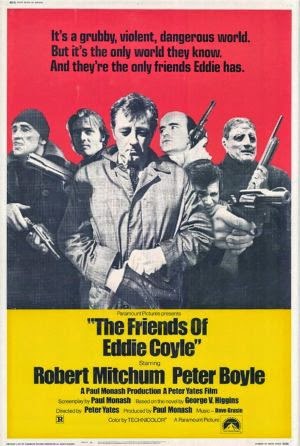
The Friends of Eddie Coyle (1973)

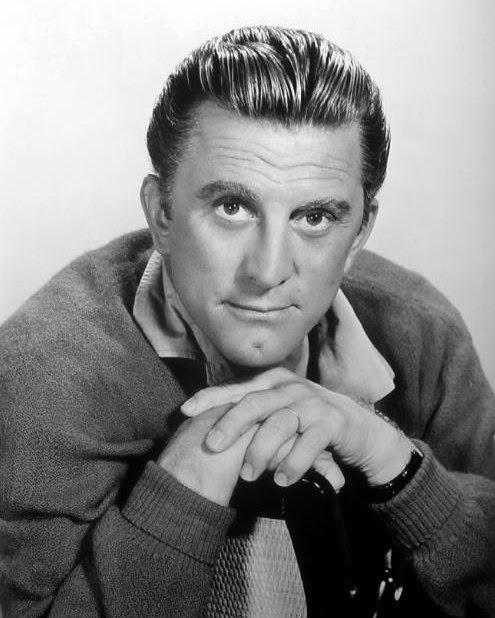
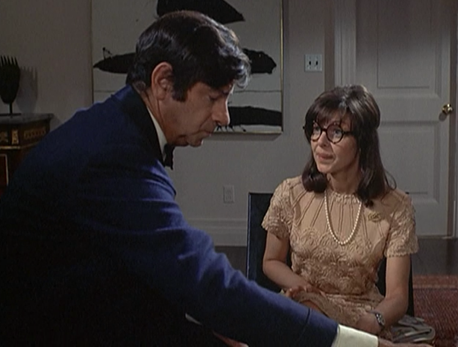
76af9-the_friends_of_eddie_coyleIn this precursor to other gritty Boston crime films like The Departed, Eddie “Fingers” Royle (Robert Mitchum) is a middle-aged truck driver who does some gun running on the side for the mob. On one occasion he got caught with his hand in the cookie jar, and it meant two more years of jail time. He’s seen the clink before.

Three men have been pulling off bank jobs in clear daylight using hostages and new guns each time. Eddie is the guy who has been delivering the guns, and he deals with a young thug (Steven Keats) who acquires the stolen merchandise.

Eddie also gets acquainted with F.B.I. agent Dave Folley (Richard Jordan) who tells Eddie his only way to dodge prison is to become an informer. Unbeknownst to Eddie, Folley has another informant working for him, in fact, it’s the man who set Eddie up. Now Eddie is thinking of himself and so he sets up the gunrunner Jackie because he has everything he needs. Folley closes in and nabs the guy. Eddie wants to be done with it, but Folley wants more. Eddie’s buddies who have been pulling the heists are his next victims, but Folley’s other man gives him the information faster and Royle is left with nothing to bargain with. To top it off, he is suspected to be the stool pigeon, and a hit is secretly planned on him. The middle-aged, hopeless, beat down, world-weary, nobody is knocked off and no one loses any sleep over it.  The manipulative stooge reaps the benefit and agent Folley has what he wants. Royle was the one who got the short end of the stick. Some friends he had.

Peter Yates proves again after Bullitt that he can deliver on gritty crime films. He left San Francisco and car chases behind for Boston, Mass. and bank jobs. Murder seems prevalent everywhere and with the killing comes a wide array of tough guy types. The violence is not over the top and neither is the drama, but it is cool, collected and unsentimental.

I cannot help but compare Mitchum’s performance to earlier crime films of his like Out of the Past. He has some of the same grittiness and toughness, but he is decidedly wearier in this film. He has similar moral ambiguity, but his death is far more pitiful. There is no redemption here, and he is a lowlife loser to the end. Despite his rough edges and shady activity, it is difficult not to feel just a little sorry for the man. The film’s title only helps to point out the irony of his situation. We thought he was the rat, but it turned out it was someone else. He needed to find new friends, but then again it takes one to know one. They were a product of their environment and that environment was not the friendliest place to be.

4/5 Stars

“Look, I’m getin’ old, you hear? I spent most of my life hanging around crummy joints with a buncha punks drinkin’ the beer, eatin’ the hash and the hot dogs and watchin’ the other people go off to Florida while I’m sweatin’ out how I’m gonna pay the plumber. I done time and I stood up but I can’t take no more chances. Next time, it’s gonna be me goin’ to Florida.” ~ Eddie Coyle

El Dorado (1966)

5a6c7-eldorado3 El Dorado is less of a remaking of Howard Hawk’s previous western production Rio Bravo and more of a reworking of it. This time the town drunk is sheriff J.P. Harrah (Robert Mitchum), who got his heart broke by a girl. The kid is Alan Bourdillion Traherne (James Caan) also known as Mississippi. He can be found with a shot up old hat on his head and a sawed off blunderbuss for a gun. It’s not his weapon of choice anyway. Then, there’s old reliable Bull Harris (Arthur Hunnicut), who holds down the fort and looks after the sheriff when he’s laid up. As the main love interest, there’s Maudie (Charlene Holt), a resident of El Dorado since her childhood days.
As always the man who calls the shots is Cole Thorton (John Wayne), an old war buddy of J.P.s. He has one of the fastest draws around but also has a surprisingly soft spot for doing good. He befriends the younger Mississippi and comes to the aid of J.P when he could have joined the other side.
Thorton rejects the offer of local villain Bart Jason (Ed Asner), but a threatened local ranch family wishes to take no chances. When it is all said and done Thorton receives a bullet in the back that causes him problems afterward.
Now lethal hired gun Nelson McLeod (Christopher George) has taken up Jason’s offer, and they ride into the town. One of their first meetings takes place in the old church and it ends in the arrest of Jason for his part in the whole affair. Another shootout takes place that night and now the formerly drunk sheriff also gets nicked in the leg.
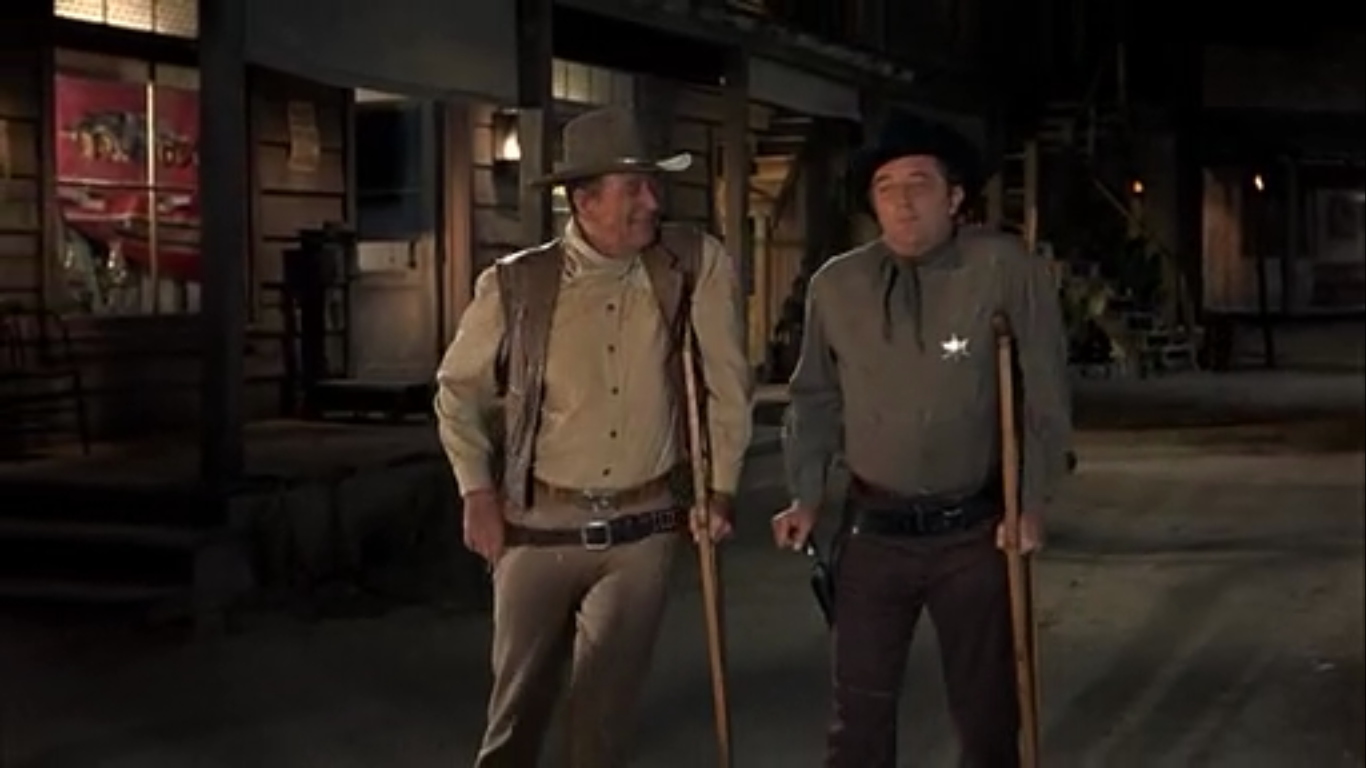
Maudie is fearful of the thugs milling around her place and when Thorton and Mississippi go over to investigate they get ambushed because Cole has physical ailments of his own. They get Cole back but not without giving up their own prisoner. With one of the McDonald’s kidnapped a quick plan is devised and the final showdown begins. Our ragtag crew gets the job done, but J.P. and Cole make quite the pair. They look more like crippled old men than hardened gunfighters, both hobbling down the street with a crutch.

I must admit I am partial to Hawk’s original Rio Bravo and I have yet to see Rio Lobo, but I did really enjoy these characters. Wayne and Mitchum seem to play against type because at times they are quite comical. Mitchum is not a tough P.I. or ruthless villain, but a town drunk! Wayne can hardly shoot a gun at times and he even gets taken. That’s unheard of. It’s as if they softened with old age, but I don’t mind, because the interactions between those two, Mississippi, Bull, and Maudie are a lot of fun. Even the antagonist McCleod is a man with a sense of honor and good fun. Some great moments include Mississippi’s miracle concoction and numerous bars of soap being brought to the dirty sheriff when he finally takes a bath! The initial introduction of the two leads is priceless too. They both were smitten with the same girl.

Howard Hawks really knew how to make westerns not simply about guns and shootouts, but colorful characters who oftentimes seem more content kicking it back in the jail than in smelling out trouble. He proved it again with El Dorado.

4/5 Stars
A gallant knight,
In sunshine and in shadow,
Had journeyed long
Singing a song, 
In search of El Dorado

Le Silence de la mer (1949)

f9677-lesilence1Out of the many titans of French film, I found a personal favorite in Jean-Pierre Melville. Aside from changing his name in honor of the American author who wrote about the great white whale, Melville was also a member of the French Resistance during WWII. Thus, he seems to be the perfect man to helm a film based on a novel that was secretly published during the Nazi occupation. You would think that it would be brimming with political agenda and underhanded controversy.

Instead, Melville gifts us a nuanced and sympathetic film about a German Lieutenant who is quartered in the home of a French gentleman and his young niece. In many ways, much of the story plays out as an extended monologue rattled off by Werner von Ebrennac, and it becomes the perfect narrative device for an intimate character study. He is met by silence and passive aggression from his hosts, who hate his guts and the situation they have been placed in. He represents everything they despise, and his mere presence also reminds them of the shameful fact that France has fallen.

And yet he is far from the stereotype, and Melville never allows this German Lieutenant to succumb to our preconceptions. This has to be one of the most sympathetic depictions of a German soldier ever seen captured on film. It turns out that Ebrennac is a perfect gentleman, cultured in literature (Moliere, Rascine, Cervantes, Dante, Shakespeare, and Goethe), and a seasoned musician. His head is full of romantic ideals about the reviving of France as it is taken under the wing of its new conqueror.

His words are always met with a quiet contempt as uncle and niece continually sit reading and knitting. It never seems to change or stop. There is never a change in temperate or a word spoken. Just the words of Ebrennac every evening after he gets back and the voice-over of the older gentlemen constantly illuminates us about the unspoken workings of his mind.

Soon, however, the Lieutenant learns the reality of the war from Treblinka to the Nazi ideology pervading the psyche of all the German military. Friends have been brainwashed, and his view of the German war is completely dashed. There is nothing left to do but apply for a transfer and resign himself to the hell that has been created. Uncle and niece reluctantly bid farewell to a man who was the exception.

This was Jean-Pierre Melville’s first feature, but I really enjoyed it as simple as it is. He seems to understand the ambiguities of war. It often is difficult to decipher who is in the right or the wrong. Germany was the odious villain and France the obvious victim. However, in this domestic drama the tables are seemingly switched in stark contrast.

4/5 Stars

My Dinner with Andre (1981)

18639-my_dinner_with_andre_1981_Directed by Louis Maille and starring Wallace Shawn and Andre Gregory playing characters named after themselves, this interesting film has a relatively simple, albeit, unique premise. A writer who lives in New York goes to a dinner engagement with a man who he used to know well. 

However, he approaches their meeting with some anxiety not knowing what to expect from a man who has no doubt changed. Andre greets Wally and pretty soon they are talking about this and that as they wait for their food. Andre initially talks about his experiences abroad in Poland, Findhorn Scotland, and even the Sahara. All the while Andre experimented with spiritual encounters, met unusual artists, and took part in performance art. During his time away he was made to contemplate humanity, life, death, and many other profound subjects. 

Wally for his part describes his own life in contrast and what he thinks about his more droll existence. It includes spending time with his girlfriend, reading an autobiography on Charlton Heston, sleeping with an electric blanket, and trying to write plays. Andre on his part believes there are problems with this lifestyle because it is more like a dream than reality. 

Both men leave the meeting content and Wally rides off in a taxi ready to tell his girlfriend about his dinner with Andre. Andre Gregory represents your philosophical existentialist who is discontent with the normalcy of life. Then, Wallace Shawn is your common everyman who lives his days simply, content with simple comforts and a normal existence. Maybe not your normal dinner conversation, but after all it is a movie. This film is certainly not for those with a short attention span and I myself find this film more intriguing in concept rather than in practice. However, there are many philosophical issues here so if you are ready to ponder and sit back so the conversation can flood over you, it can be an interesting film to take in.

3.5/5 Stars

Review: Star Wars (1977)

ccbff-starwars1Star Wars has such a giant mythology and full-blown culture surrounding it that it becomes nearly impossible to separate the entire galaxy from the film franchise. It is so much more than just a movie with a plot and some characters going on an adventure. Sure, George Lucas let his boyhood imagination run wild taking pages out of numerous playbooks from John Ford’s westerns, Kurosawa’s samurai, and the serialized sci-fi adventures of Buck Rogers.

However, when I look at this classic that I grew up with for so many years now, it is nearly impossible to shed the role of a pure fan and take on the role of a film critic. One prime example would be Sir Alec Guinness. All my knowledge of film history tells me he is one of the greatest English actors of all time and for good reason. However, there is also this innate conflict that says he’s Obi Wan Kenobi since that’s what I knew him for originally. That’s what I identify him with, and I probably always will. Because, as I said before, Star Wars: A New Hope (As it was later titled) means so much to so many people like me on a personal level.

But let me hold off on that for a moment and focus on Star Wars the film. First and foremost, you would be hard-pressed to find a more colorful array of characters. C3PO and R2D2 are the films jesters and the story is told from point of view, to begin with. You have the hapless farmboy, the wise old man, a spunky princess, a dashing tough guy, and his ever faithful fuzzy sidekick. Not to mention the greatest, most imposing villain every developed for the silver screen. It took some developing with three different actors, a mask, a cape, and SCUBA sounds all joined to create his persona.

That aside, the world Lucas created is so astounding and inventive that it has become second nature to true Star War fans. Jawas on Tatooine, the Cantina in Mos Eisley, and Storm Troopers on the Death Star are simply a no brainer. They are part of our lexicon just as many of these quotes easily roll off our tongue. “May the force be with you,” “I’ve got a bad feeling about this,” “Help me Obi Wan Kenobi, you’re my only hope.” You get the idea.

Then, it goes without saying that John Williams propelled this film from being good to great. Because without his iconic scoring, Star Wars is just not the same. It lacks the same energy and epic vibrancy that pulses through every scene. One prime example is the final scene in the Throne Room on Yavin IV. That could have been the longest most awkward award ceremony in history.  When you think about it, no one is talking, they just stare at each other as the medals get bestowed. But with Williams score, it develops a grand crescendo that caps the film on the highest notes as the credits role.

I am also convinced that Ben Burtt is a genius because he breathed still more life into the Star Wars world through his sound design. He gave us blaster noises, RD-D2’s “voice,” Chewie’s distinctive growls, and of course the hum of lightsabers and Darth Vader’s iconic breathing. A personal favorite of mine is the ever present Wilhelm Scream, but I digress.

Thus, what we witnessed the first time we saw Star Wars (followed by countless more times) was not just a film, but a revolution, and I’m not just talking about the rebel alliance blowing up the Death Star.

As I suggested before, Star Wars is so affecting because it is not simply a movie we watch. In many respects, it brings up flashbulb memories in our lives. I remember birthday parties, childhood afternoons playing Legos, or being a Jedi with my very own lightsaber. Star Wars infected my entire adolescence and so when I watch this film it causes all the many great memories to flood back.

It is a joy to watch it again because I almost feel like a kid once more, experiencing the same excitement all over again as if it’s the first time around. My taste in films may continue to mature and evolve, but I dearly hope I never lose my affinity for Star Wars. In many, it would be like losing some of my memories and even a little bit of my humanity.

Not to worry, though, because based on this most recent viewing I will not be dismissing Star Wars any time soon. As some wise man once  said, “absence makes the heart grow fonder.” I forgot how much I missed “a long time ago in a galaxy far far away.” It was great seeing an old friend.

5/5 Stars

The Defiant Ones (1958)

2672e-defiant_ones_posterStarring Tony Curtis and Sidney Poitier with director Stanley Kramer, the film opens in the pouring rain with a truck full of convicts. It goes off road and no one is hurt except two men escape.  A Sheriff an state policemen begin tracking them on foot. However, this pair is unique since one is the white “Joker” Jackson and the other is a black man named Noah Cullen. Their racial prejudice and conflict of interests causes sparks to fly. Through it all they are forced to work together just to survive, whether it be wading through rapids, climbing out of a ditch, or trying to break their chains.  Along the way they narrowly escape a hanging and they meet a lonely white woman. Jackson is forced to make a decision about his newfound comrade and Cullen in turn also makes a sacrifice of his own. This is such an extraordinary story about racial conflict. Ultimately, they are no longer so much black or white as much as they are fellow men. In an era full of racial tensions, this film was extremely relevant and it is still powerful to this day.

 
4/5 Stars

Shadowlands (1993)

2bfce-shadowlands_ver2Starring Anthony Hopkins and Debra Winger with direction by Richard Attenborough, this film chronicles the romance of famed Christian professor and author, C.S. “Jack” Lewis with the American poet Joy Gresham. Jack is by now a respected professor at Oxford and a widely acclaimed lecturer who often speaks on the issue of human suffering. In his personal life, he is rather reserved. He lives with his older brother Warnie and spends times with his colleagues discussing topics of all sorts at the local pub in the evenings. 

It is not until he receives a letter from an American admirer named Joy Gresham that his life seemingly begins to change. He first accepts to meet her only to be gracious, but soon their relationship develops into a close bond. Jack meets Joy’s son Douglas who is enthralled by Narnia. He even offers them a place to stay during the Christmas season, since they have nowhere else to go. Lewis and Gresham are very different people, to say the least. He is a quiet intellectual with the sensibilities of an Englishman, while she is a plain -speaking American who does not mince words. However, these differences bring them closer together because they help each other to view the world in a radically new light.  Jack learns how Gresham’s marriage is going badly and he settles to marry her in a practical union so she and Douglas can stay in England. They do not speak of it much and it hardly seems real. Joy calls him on it realizing for herself that he allows no one to challenge him. There is no vulnerability to him whatsoever.

However, then Joy is diagnosed with bone cancer and slowly but surely she begins to deteriorate. For the second time in his lif,e Lewis understands the anguish that comes when a loved one is suffering. Because, the fact is, he most definitely loves Joy, and it simply took a tragedy to make him realize it. As with any inexplicable suffering, Lewis is tested in his faith, and the reality human suffering has new meaning to him. It is no longer just lecture material, becoming a far more personal process.

Although this film is not so much focused on C.S. Lewis as a Christian theologian or apologist, I think Anthony Hopkins does a wonderful job of portraying him as a kindly and gentle man of faith. He struggles with doubts and fears like every human, but he found something wonderful in his love for Joy which ultimately changed him.

Debra Winger must also be commended because she played well off of Hopkins and even though I have no picture of the real Gresham, Winger seemed to embody her. In some ways, I found her most beautiful when she was bedridden, absent of all makeup and seemingly so pure. It positively tears your heart out watching her son say a tearful goodnight or to look on as Jack stays up with her. This is a better picture of real, unadulterated love than most films can hope to manage because it very rarely becomes a sappy melodrama instead resorting to more deliberate means. As Jack says we live in the “Shadowlands,” but amidst the pain and suffering, love seems to shine through even brighter.

This was such an enlightening film for me because I always envision C.S. Lewis as a scholar and rational thinker, which he was. But he also had a vulnerable human side and this film, as well as A Grief Observed (written after Joy’s death), prove that point. It’s hard not to feel for him and that’s part of the beauty of this story.

4.5/5 Stars

A Room with a View (1986)

df65f-room_with_a_viewWith direction by James Ivory and a cast including Helen Bonham Carter, Maggie Smith, and Daniel Day-Lewis, the film opens in Italy where a well to do English woman is on holiday with her significantly older cousin. While staying in Italy she falls in love with the country and comes to appreciate the many different people you come across there. 

It could be a commanding author, a pair of kindly old women, or a father and son with a more open way of thinking. In fact the Emerson’s reflect the change that is coming to England while Lucy and her cousin Charlotte reflect the old Victorian way of England. They are so caught up in manners and etiquette that they never give much thought to their actual desires and feelings. This becomes extremely important when Lucy returns home to her family and the snobbish but well-meaning young man she is to marry. She believes she is in love, but then the Emerson’s come to live nearby and Lucy is in conflict, especially after an incident in Italy. 

Lucy continues to follow the norms of what she is supposed to do, and it is only after much lying to others and herself that she truly confesses her feelings. Things are not turning out the way she had expected and thanks to kindly Mr. Emerson she finally leaves the pleasantries behind for love. She returns to Italy with her love and is met with another group of colorful individuals and she once again has a room with a view. This film is obviously very English and it is made by the characters like Mr. Beebe, Charlotte, and the Emersons who all make this a pleasant film to watch. 

4/5 Stars

The Conversation (1974)

6d644-theconversationDirected by Francis Ford Coppola and starring Gene Hackman, this film begins with a commonplace conversation between a young man and woman in the relatively busy Union Square in San Francisco. As they make their way around their words seem of little importance and yet unbeknownst to them they are being followed and recorded. 

The mastermind behind it all is the surveillance expert Harry Caul who uses his know-how and a small team to track their words from a van.  As a professional and a highly respected member of his field, Caul is guarded and he tries not to concern himself with the reasons behind his surveillance. However, as he works his magic in his private lab space, Caul finally does become affected when he picks up on bits and pieces of the conversation. It deeply troubles him and he continually plays the tapes back. 

Because of his concern, Caul holds out on giving the tapes to the assistant of the Director, the man who commissioned the job. The aide pressures him more and more and then finally Caul finds the tapes are stolen. Fearing that the couple is in grave danger, Caul takes the room right next to theirs, but unfortunately despite his best efforts, his fears seem to be confirmed. After searching the empty room Caul goes to confront the Director only to find that things are not as they seem and Caul is the only one who realizes it. The disillusioned man is then threatened over the phone and informed that now the shoe is on the other foot and he is under constant surveillance. Little did he know the implications of the conversation… 

Gene Hackman may have played more memorable characters like Popeye Doyle, Lex Luthor, or even Norman Dale in the Hoosiers, however, I am not sure if he played a more complex character than Harry Caul. He is a detached man who has no telephone, tells white lies about his birthday, has multiple locks on his door, keeps his equipment caged and he has no significant relationships. The other side of him loves the saxophone and is a devout Catholic. He is no hero and not what we would normally call a villain. He is Harry Caul a lonely, confused human who has tendencies for good but still constantly struggles to reconcile that with his career. Above all, The Conversation is a thought-provoking psychological thriller which gives the audience lots to mull over.
 
4.5/5 Stars

Modern German Relationships Told Through Film

Here are two films in Summer in Berlin (2005) and Everyone Else (2009) that focus not only on romantic relationships, but interpersonal relationships between friends and couples. These social interactions in turn give a view into the hopes and aspirations of contemporary German individuals. The first film is a dramedy directed by Andreas Dresen that follows a pair of girlfriends who face hardships and a romance that nearly comes between them. Everyone Else directed by Maren Ade on the other hand focuses on a young couple who takes a trip to Sardinia and become strained in their relationship. Although quite different, both films place importance on a central relationship that becomes further complicated by other acquaintances. All of this in turn gives commentary on not just the state of mind of Germans but of humanity as well. Everyone wants to have friends and to be loved.  

           By the title it would be assumed that Summer in Berlin is light fare, and at times it is, but it also has something to say about the difficulties of relationships and the realities of life. Katrin is divorced, has a young son named Max and is trying to make her way in the world by finding a job. Her good friend Nike is single and works as a caregiver for the elderly. Their lives are far from ideal and that makes their friendship even more important to them. After the daily grind their sanctuary is the rooftop where they share a glass of wine, unwind and chat about whatever they feel like. However, after one especially long day Nike is not around when Katrin needs her. Their roof top oasis is rudely broken up and the fact is Nike now has a boyfriend, the gangly truck driver Ronald. This is an interesting turn of events since the main relationship that both these women really cherished is hurt, because of Nike’s desire for a boyfriend or at least intimacy. Here is the struggle that plagues everyone. There is a primal longing to be loved and accepted and sometimes that urge can become even more important than maintaining a strong friendship. If you give Ronald a quick going over, he really is not a desirable character to be in a relationship with. He can be friendly enough and he is willing to sleep with Nike but that’s about where his involvement stops. Even when he first meets her at the club Ronald does not really show any genuine interest or his only motive is self-gratification (Summer in Berlin). It’s as if he asked himself, what can she offer me? The answer was simple: Food, coffee, a bed, and superficial companionship. He was fine with that so he went along with it and was satisfied. Nike on the other hand is attempting to make something more out of their relationship. She desires something deeper and more genuine. It is only during a pit stop when she is accompanying Ronald on his route, that Nike finally sees his real side. The fact is, he is married and has children, but he told a little white lie to Nike before (Summer in Berlin). This situation brings to mind Katrin’s own failed marriage and whether or not it ended due to her husband sleeping around like Ronald. As far as career advancement goes Ronald is a Nobody who is simply excited to be shipping electronics instead of carpets soon. Despite these signs, Nike still stays with him. Finally, her relations get completely muddled when Ronald shows up at her empty apartment only to go down to wait at Katrin’s (Summer in Berlin). When Nike discovers this, she resentfully suspects that something is going on behind her back. Thus, a love triangle is created that never existed before and a man who is a tramp has gotten between two friends. Nike desired the same things that everyone else wants and it did not turn out in her favor. Ultimately, she wises up and renews the bonds that are truly important, with Katrin and Katrin’s heartbroken son Max.

            Fittingly Everyone Else is a film about a boyfriend who wants to be as happy as another couple and a girlfriend who does not want to be like everyone else. Whereas Nike’s relationship with Ronald seemed wrong from the beginning, the Chris and Gitti we grow accustomed to at the beginning of this film seem made for each other. Their relationship exudes intimacy, playfulness, and affection. They spend time in their beach attire soaking in the sun and they even have time for private inside jokes like the little ginger man “Schnappi.” In one sequence when they are sprawled out Gitti even puts eyeliner and makeup on a consenting Chris (Everyone Else). Interestingly enough, Chris has little interest in seeing his former schoolmate Hans and his partner Sana. At first it seems that it might be because he is annoying or a phony. That is far from the truth however as Hans turns out to be a genuine guy who is willing to poke fun at himself and he enjoy the company of others. His relationship with Sana is a mutual bond of love between people who are getting ready to have a child and continue a life together. They seem like an ideal mature couple and the type of couple Chris and Gitti might be a few years down the line. However, circumstances begin to change for the two vacationers. Their relationship begins to crumble slowly at first and it continues to unravel as they spend more time with Hans and Sana. It is almost as if Chris knew that this would happen if he was with Hans, because Chris realizes that he covets the type of life that Hans has. The reality is he is not quite as accomplished an architect. Furthermore, he and Gitti are nothing like the other couple and they probably never will be. Gitti for one wears her emotions on her sleeve, she is more of a clown, and she only wants his love. Chris on the contrary is often quiet and he has trouble reciprocating affection. He is the typical strong silent type who is content with books and not prone to share his feelings. This comes back to hurt them because he feels it is unnecessary to tell Gitti he loves her and he is more open about his vocation with Hans than with Gitti. Their evening exchanges over dinner become in some ways reminiscent of Who’s Afraid of Virginia Woolf. The conversations do not become shouting matches, but they are perhaps more realistic and in some ways more harmful. They quibble and then brush off their hurt feelings quickly only to move on without any acknowledgement that something is wrong. Thus, Chris and Gitti are not able talk through their relationship effectively and that’s where they fail. It worked initially, in the early stages, when it was all about intimacy, vacationing, and superficial laughs. But the reality of a full-fledged relationship seems unattainable for them and even by the end of the film it seems doubtful that they will get back together. Although they were initially in a better place than Nike and Ronald, they too fell apart, since they were not able to make anything substantial out of their relationship aside from the sex. So many people in our contemporary world desire to have deep, lasting relationships, because in many cases they have never been able to get past the surface level and they want more. In this way these two couples in Summer in Berlin and Everyone Else are perfectly imperfect examples of modern relationships.