Pather Panchali (1955)

pather panchali 1.png

Pather Panchali is one of those films that instantly helps you to recognize the merit of the cinema. It’s a cultural artifact allowing us to come to grips with the fact there is a world far larger than our little pocket of existence. Satyajit Ray does that for us here in his affecting debut by relating India to us through stark realism. It pierces to the core and captivates its audience through simple beauties. Simultaneously, he manages to touch on universal truths that prove our very commonalities as human beings.

I must admit to being fairly ignorant about many of the nooks and crannies of international film and so I needed this movie just like I needed the work of Ousmane Sembène and no doubt the films of many other directors still yet to be discovered.

In this particular instance, I deeply appreciated Pather Panchali because this is not a story told by Rudyard Kipling about a British Colony or even a Hollywood adaptation of an albeit heartwarming tale like Lion (2016). This is Ray’s picture. For all intent and purposes, told from his perspective as he so chooses. He has agency if we desire to use the terminology. It allows this to be a truly intimate portrait crafted by a budding Indian visionary as a showcase to the world abroad.

Ravi Shankar is best remembered for his connection to George Harrison but his score featured here, consisting solely of his virtuoso sitar playing, adds a strain of traditional instrumentation, further blessing the film with a sense of native identity.

Maybe this is a highly romanticized portrait. I cannot personally speak to this either, but there is a paradoxical even spellbinding quality to the imagery as it unfolds. We are seeing the everyday lives of this family. We see them in their humble means, their poverty even, and yet though we are cognizant of it, somehow it doesn’t completely register because their world somehow manages to be so rich.

The reflections in a stream reminded me of the images in Kurosawa’s Rashomon (1950) when he captures the light through the trees. Ray is equally content with documenting the immaculate construction of nature at hand. Delicate as it is magnificent.

But against this backdrop, he unfurls a perceptive slice of life that’s its own brand of neorealism — never rushing the ordinary moments — allowing them the space to unfold of their own accord. It methodically seeks out the fascination in these common things such as the whistling of the wind, passing trains, water lilies, and incoming rainstorms.

Still, it’s about the people too and they make up the glut of the story. The most mundane of these moments made me smile with fond recognition. Two boys playing tic tac toe on their slate instead of doing sums at school. A dog and cat pawing at one another. A little boy combing his stringy locks of black hair or running around his family’s rickety home with his homemade bow and arrow as his mom chides him to finish his food.

Instead of an ice cream truck, they have a traveling sweet seller and they always beg their father for money when they see the man off in the distance. Sometimes they get it but more often they follow him to their neighbor’s to see if their playmates were so lucky as to get some sweets.

The individual characters we meet are no less intriguing and all of them, as far as I know, are amateur performers. The big sister Durga takes fallen fruit from a neighbor’s yard to give to her old auntie. But such practices get her accosted and labeled a nuisance. Auntie meanwhile, moves creakily, her face weathered by a tough life, hunched over and missing most of her teeth. Yet there’s still fight left in her and an indefatigable spirit.

The husband, though he struggles to provide for his family and oftentimes doesn’t even get paid regularly when he is working, aspires to write in his few idle hours because his forefathers were authors in their own right.

His wife has her own fears about being alone so often as he’s off at work or trying to find work. It leaves her by herself taking care of their degrading home and watching over their kids in a society with a poor support system. She has no one to turn too aside from the humiliating charity of neighbors.

Then, last but not least is little Apu and while he might not be our main character — all the family play equally important roles — it’s his point of view that’s most accessible. Ray clings to his face with soft zooms or closeups catching his reactions to all sorts of events. Young Apu peers at the world inquisitively with steely eyes. Very rarely does he speak but he’s a constant observer of the everyday.

He’s the herald of letters which come few and far between when his father is away. He and Durga frolick around the train tracks as the belching locomotive passes by. He gets into his sister’s humble cache of foil in her toy box to craft a prince’s crown. Then shares sleeping quarters with his sister in their meager lean-to that looks like it will all but collapse in the wake of the rainy season.

Certainly, there are dramatic turns in the broader story of this family unit but they are rooted in the real-life events that we experience in the day-to-day. Debts to pay off. Saving face with the neighbors who needlessly gossip. Family members passing away. Husbands gone with barely a word because lines of communication are difficult. The innate desire to want more out of life even if it’s a simple home to call your own and a better future for your kids.

What makes Pather Panchali resonate to the very last frame as we watch this family move on to the next stage in their life, is not how different they are from us. It’s how similar. Because, yes, this is a picture of an impoverished Indian family but it no doubt can speak into any person’s life who is willing to be open to its story like an inquisitive child. Ready and willing to see the world for all its innumerable complexities both the sorrowful and the joyously light.

4.5/5 Stars

Four Weddings and a Funeral (1994)

Four_weddings_poster.jpgI’ve been of the certain age where it seems like every friend you have is getting married in the next year. It’s an exhilarating time albeit expensive and a bit taxing (if you’re even able to go to all of them). But most of us wouldn’t trade the joy of being a part of these experiences for anything.
Weddings in themselves have always been a marvelous enigma to me. Because the days before and after are full of preparation, stress, and a barrage of feelings. But the actual arrival of the ceremony is almost surreal. It’s a moment captured in the hinterlands where you’re suspended in this euphoric high that can either be magical or come crashing down thanks to some inexplicable faux pas. Emotions are heightened. Love and romance are on everyone’s minds.

That’s what makes the narrative conceit of Four Weddings and a Funeral such a smashing idea because we know already what weddings do to people and that makes the prospect interesting. Imagine you only really ever meet someone at these regal affairs. She has a fashionable hat. You’re dressed to the nines. Mutual friends are being wed. The bubbly is flowing. She’s an American. You’re British. Well, anyway that’s the preliminary outline of this story.

Charles (Hugh Grant) is perpetually running late to big day after big day. But each one is special and each one of them puts him face-to-face with a gorgeously remarkable woman named Carrie (Andie MacDowell).

First, they connect in the aftermath of a mutual friend’s wedding, getting to know each other rather well at their hotel. Then the next time they meet his heart goes flutter once more only for her to introduce a fiancee at least 30 years her senior. Charles is devastated. Still, only a little while later, they spend the night together again.

Wedding three belongs to Carrie and you can already feel the dissonance going on as she slept with Charles but is willfully marrying another man. However, they both take it in stride as do their many friends. Until one of the more boisterous members of their crowd, Gareth, dies from a heart attack.

So in the final stretch, we have Charles looking to tie the knot with one of the various girlfriends we’ve met at the subsequent gatherings, Henrietta. That is until the news hits about Carrie’s marital status when they cross paths quite by chance. She’s no longer married. The Pandora’s box of doubt has been busted open right on the eve of his wedding day and he’s stricken by indecision as he teeters on the edge of this monumental event.

What Alan Curtis’s script captures exquisitely is the vast network of people and relationships that link and interconnect over the years when you share a friend group and it slowly begins to grow and expand with the passing years. It provides the perfect cultivation ground for myriad characters, budding couples, best friends, priests, parents, and the crotchety elderly. All mainstays of the wedding circuit.

However, the final conclusion arrived at in this romantic comedy feels, in one sense, outmoded and by other estimations, rather selfish and unrealistic. Maybe they are one in the same.

The lovely, whimsical idea of finding “the one” remains intact to the very end but at what cost? Surely it doesn’t matter that another woman has been left at the altar and a whole wedding has been canceled because of what we might pragmatically term one man’s indiscretion or closer yet, his selfishness.

That ethereal feeling of the quintessential movie romance is unfortunately sullied. Perhaps I’m perceiving too much of reality and not enough of the lens of fairytale magic that might be afforded such a narrative, but I cannot help it.

Like I already mentioned, I’ve been in those moments where people you know and love were getting married. I’ve seen the affection in their eyes and on their faces. There was not an ounce of visible apprehension there. Everyone in the room, the chapel, or the banquet hall, knew it full well. These were people who were in it for the long haul. This was not a flippant decision, a momentary fling, or a mere consolation prize.

This was the joining of two people through thick and through thin. Maybe it is soppy but to me, it proves far more fulfilling than its alternative. In my naivete, I’d like to believe that there are still people out there who are committed to marriage and they’ll willingly dig in together for better or for worse. My assertions might fly in the face of this film but I’m okay with that.

Four Weddings and a Funeral has its moments of delight, however, in the end, it cannot do complete justice to the utter jubilation when you’re with your friends or family celebrating the union of two people you dearly love. Perhaps that’s as it should be. Each wedding is personal and unique all to its own.

3.5/5 Stars

Review: The Quiet Man (1952)

John_Wayne_Maureen_O'Hara

When you think of the combination of John Ford and John Wayne, it’s only normal to conjure up the quintessential western pairing. It’s true there are so many films that we could pay a nod to like Stagecoach (1939), The Searchers (1956), The Man Who Shot Liberty Valance (1961), etc.

Thus, when considering such company The Quiet Man always felt like an obvious outlier and yet I’ve always been taken with it for those exact reasons. John Ford was an Irishman through and through. He made The Informer in 1935 and though How Green was my Valley (1941) was based around a Welsh family it might as well be considered an analogous world.

But with this picture, we see Ford’s final venture into such a country — the homeland of his people and there’s certainly an idealized quality to it. Where the Catholics priests (Ward Bond) pretend to be Protestants when the local magistrate comes through the village to inspect the parish. Where the colorful figures of the village, despite small stature, are painted with bright and jovial strokes that nevertheless seem larger than life. There’s nothing lackluster about them and no harm in that.

Stereotypically wrought or dated by today’s standards you might say but Ford is undoubtedly paying a final homage to the lore of his ancestors. A history that stretches further back than many of us might be able to comprehend. There’s a surprising affection that courses through the picture. If not simply in the people than certainly through the capturing of scenery as well.

Exterior sets aside, the on-location imagery is on par with John Ford’s most  resplendent scenes from Monument Valley. There couldn’t be a sharper contrast either in Winston Hoch’s photography of rolling hills with the arid plains that define most of the indelible visuals from Utah. Again, that makes them all the more resonate, the true epitome of lush mise en scene.

Because The Quiet Man is a film that is continually blessed by a big screen where the Technicolor tones overwhelm you with their fervent grandeur only surpassed by the feisty fire bursting forth from Maureen O’Hara. Ireland has never looked more gorgeous and the same can be said of the bonniest lass I did ever lay eyes on clothed in red and blue. Victor Young’s score proves to run the paradoxical gambit between utter serenity and majesty with playful dips to match the film’s own backbreaking brand of broad comedy.

Sean Thorton (John Wayne) makes the pilgrimage to the little community of Innisfree intent on buying back his childhood home and finding himself a local bride. He’s reticent as to why exactly he’s decided to return. But regardless, the yank is not accustomed to the way the world works in the old country. He is in need of some sagely council.

Sean’s main guide is the bright-eyed leprechaun in human form (Barry Fitzgerald) who becomes his matchmaker, the liaison between him the and barrel-chested bully Will Danaher (Victor McLaglen). Though Sean is taken with the man’s sister, he can’t call on her until the squire gives his consent and a squabble over some real estate makes their relationship tenuous at best.

There are certain sensibilities. Certain customs that are unspoken law of the land. Life moves a little slower too.  But when it does move it rolls down the roadways with a blistering pace of good-natured thunder. Local horse races become the arena for men to exercise their prowess and win the favor of the local ladies through feats of athleticism leading to a bonnet-lined finish.

Sean finally gets some consent and the courtship begins though Flynn constantly warns against any amount of “Paddy Fingers.” And they get on well enough until Mary Kate, being the proud woman that she is, demands her husband collect the dowery that is rightfully hers. He could care less about the money or her hulking brother and yet he declines. She figures him a coward and not to be touted as such, he finally relents, ready to have it out with his rival onece and for all.

To make his point, he deals with both of them setting up The Quiet Man’s exemplary showdown. It’s a final fist-throwing wallop fest that’s all spectacle. The whole town runs rampant across the countryside as the two men (Wayne and McLaglen) wail on each other. Back and forth. One decked. The other pushed, kicked or whacked. They’re on the receiving end of a face full of water and start it all over again. In the end, its all in good fun and that’s how this movie would have it. There’s little need to take it too seriously. The pure enjoyment factor is one of its most laudable virtues.

It’s also the stuff of legend what Maureen O’Hara was coaxed by her director to whisper to Duke in those last moments. The words are said michievously and his face lights up with sheer incredulity. For me, it doesn’t matter because his expression says it all and the way she playfully leads him off into the distance, enticing him to follow her across the row of stones, is so candid.

The chemistry between them is as real as anything I’ve ever seen on screen. He whips her around and drags her along, gives her a slap, and yet she’s got fire enough to face off against him and give him a run for his money. She keeps him on his toes and he goes to great lengths just to be with her. The Quiet Man works because that central dynamic is robust and still equally passionate. Their natural affinity for one another cannot be counterfeit. It’s too sincere. It’s what made them so iconic together and it’s part of what made John Ford’s The Quiet Man an idiosyncratic and still thoroughly luxuriant classic.

5/5 Stars

Paris, Texas (1984)

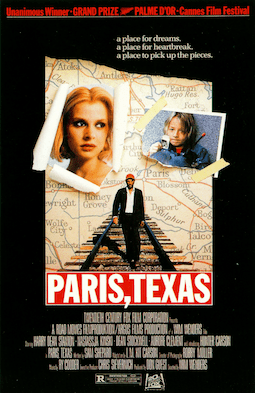
Paris,_Texas_(1984_film_poster).pngIt occurs to me only someone with an outsider’s perspective would choose to make this movie, which is void of any typical Hollywood flair. No American would have thought in a million years to cast Harry Dean Stanton (a lifelong character actor) and Dean Stockwell (an all but forgotten child star) while capturing such a cross-section of America. Therein lies a moderate amount of the allure in Paris, Texas

We must begin with the locales. There’s little doubt they are indeed as American as they come and yet director Wim Wenders, backed by a joint French and West German venture, has embarked on something distinctly his own. The film’s title perfectly reflects this blending of Americana with European sensibilities. 

Of course, the Heartland of the U.S.A. is evident as well. Anyone who has trekked across Middle America stayed in a cheap motel or found the nearest rest stop knows it well because it turns up so many other places aside from Texas.

It is a film reflecting the degradation of America as much as the austere beauty. Cinematographer Robby Muller captures rundown junk, forgotten turn-offs, billboards, and roadside diners because they are just as much a part of the American experience as any amount of decadence. One might say they are even more indicative of the generally accepted cultural status quo. 

Especially in its opening moments, Paris, Texas readily evokes a bit of the ruggedness of the Old West. What others might envision as the mystique of America with one of its distinctly original mythologies. It is the kind of imagery at home in a Ford picture who was himself one of the foremost purveyors of the American mythos.

The hard-edged twang of Cy Cooder’s utterly distinctive slide guitar score gives us a very concrete inclination of our world. The only time I can recall anything similar might be the minimalist music to go along with Murder by Contract (1958).

Travis materializes in our story almost like an extra-terrestrial life form. He wears his iconic ensemble of a red baseball cap with his suit and tie. Red tones course through the entire film in fact. There’s no missing it again and again. However, in these opening moments, it does feel like Travis never had a true beginning just as he merely dissipates in the end. This almost otherworldly quality readily dictates the entire conventionality of the landscape.

When his brother Walt (Stockwell) receives news of his whereabouts he goes to fetch him. He and his wife (Aurore Clement) are the ones with feet firmly placed in a sort of reality. He is a billboard ad man and they have taken in Hunter (Hunter Carson) as their own son.

Stanton is catatonic and yet there is a near robotic purposefulness to his steps. He has a bit of Forrest Gump but this is not quite right. He undoubtedly is plagued by some form of amnesia, which nonetheless is never fully acknowledged. Walt expects his brother to talk after four years off the grid and he rarely obliges. 

As they travel back to Los Angeles, the movie rolls along leisurely, content to be almost cavalier with its runtime. Because it wouldn’t be a road trip if you didn’t take your sweet time but it’s certainly a European strain of road film.

As such we might easily segment Sam Shepard’s story it into three parts. The opening moments in Texas set the scene, there’s the interim in Los Angeles, environmentally so different, and then the final odyssey back into the heart of Texas.

Surely the film lacks pure authenticity but instead, we are met with a spellbinding subtlety equal parts poetic and mundane. We must only watch the characters a few moments to know they hardly function as we would.

It starts with Stanton and radiates out from there down to his son and finally his long-lost wife Jane (the exquisite Nastassja Kinski ) who is the object of his journeying. There is parental negligence going all but unquestioned. They never seem to cling to bitterness even the little boy seems mature beyond his years, ready to embark to the ends of the earth with his recently arrived father. It’s as if this one quest galvanizes their relationship without question. There is no need to put words to it. They intuitively understand each other as flesh and blood, no matter the years that may have gotten between them.

Stanton himself is a walking corpse who nonetheless never seems in need of sustenance or sleep. And the extraordinary phenomenon, thanks to time, is the establishment of a new status quo, a slightly modified version of the world, which we readily come to accept. Maybe it’s the foreigners perspective I mentioned in passing or a more pensive contentment with the world. I cannot say exactly lest the film loses some power.

Regardless, the final act by some piece of cinematic ingenuity manages to be gripping. Perhaps as an audience, we become more attuned and simultaneously conditioned to the pacing. Because while the journey might seem slight it’s no less of a journey. 

With one concrete lead — a bank in Houston, Texas — father and son set off to find the third member of their fragmented family, staking out the bank with walkie-talkies and waiting for her to arrive. Finally, she does and Travis finally makes contact in a garish back alley peep show.

However, ironically, despite the sullied outer layer, it’s in this environment of anonymity provided by a phone connection and a two-way mirror that allows him to communicate with her in the adjoining room. The pretenses of such a place fall away as the film manages to unearth a tragic intimacy of heartbreak and melancholy in the wake of lost love.

The immaculately staged climax is made up of a monologue — a moment shared between a man and a woman — as he recounts their story. It’s a single scene that must go on for 10, 15, 20 minutes. Except we never realize it. She thinks she is providing a service to the person on the other end of the line, being a listening ear, and she is. But then he solemnly recounts their romance and recognition begins to don on her face.

He pours out his heart matter-of-factly and honestly, turned away from the glass as not to see her in this compromising world. It makes it exponentially easier for the words to leave his lips as she listens captured in every painful recollection just as he is. But there is no emotional outbreak, breaking of glass, or the like. This is purely an exercise in loneliness and regret.

Not until after the fact does the boldness of this scene set in because it’s so easy to get caught up in the moment. We understand the implications and yet we’re desperately trying to perceive the situation, wanting to know if she recognizes him. Even more so we want to know what they will do.

Striking the perfect note of resolution and continued inscrutability, mother and son are finally reunited in a maternal embrace and just as he arrived into the world, Travis fades into the night just as easily.

I can imagine Paris, Texas is a place that is meaningful to Travis just as Nevers and Hiroshima hold importance to the lovers in Hiroshima Mon Amour (1959). It’s really not a place at all but a part of his identity, a destination he is hoping to get to, a dream he is doggedly pursuing on earth. He is ever searching, always wandering, but in the midst of it, he maintains an unswerving capacity for love. Even though he’s made mistakes we can hardly comprehend, family remains his guiding compass.

4.5/5 Stars

The Song of The Thin Man (1947)

the song of the thin man 1.png

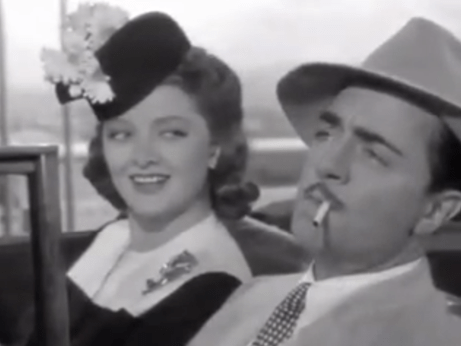
The Song of The Thin Man is really and truly the swan song of the series and while I did enjoy most of the additions, there is a sense that it was time to end the franchise. The year is 1947. The war is over. Things have changed. It really has little to do with William Powell and Myrna Loy being older or past their prime, because they are still a joy to watch working in tandem and they’re hardly over the hill.

But in some respects, society didn’t need Nick and Nora anymore. They were more like a touch of nostalgia than an up-and-coming force because they were born out of the Depression years and though they grew and matured as characters well after that, it seemed like as good a time as any to let them be.

Their son, little Nick Charles Jr. (a young Dean Stockwell) is a precocious lad like his father.  His behavior is deserving a spanking though his father is averse to giving it out even on his wife’s behest. But this was never meant to be a family comedy. Even Asta was always a sidekick and not a focal point.

Most of the film is conceived on a luxury liner, the S.S. Fortune amid nightclub musicians and patrons who have come out for a charity benefit put on by the wealthy David Thayer. It’s the perfect locale for, you guessed it, murder.

The center point of it all is Tommy Drake, the band leader scrapped for cash and with plenty of bones to pick with any number of people. He wound up gunned down from behind. In introducing all the players, it’s safe to assume they’re potential suspects too. There’s songbird Fran Page (Gloria Grahame), the ship’s proprietor Phil Brant (Bruce Cowling), and the soused musician Buddy Hollis (Don Taylor). It’s Brant and his forbidden fiancee, Janet Thayer (Jayne Meadows), who come to the Charleses so that Phil’s name might be cleared.

Bess Flowers turns up in a fairly visible role given her usual penchant for bit parts in hundreds of high profile films. Leon Ames returns to The Thin Man universe in an unusual circumstance of the same actor taking on a different role. Helen Vinson who played his wife previously was not available for the picture and so the exquisite Patricia Morrison (currently 102 years young at the time of this viewing) filled the part instead. Even noir regular Marie Windsor shows up as a gangster’s moll although I’m not sure if she even utters a word.

Anyway, back to the business at hand, Nick and Nora Charles and the mystery. One of the best parts of the film is watching the Charleses be introduced to the jazz beatnik culture craze and their guide is none other than Clinker (Keenan Wynn) a real hip cat on the reed who happened to be aboard the liner when the murder occurred.

It should be noted that when rock n’ roll came Beethoven could be found rolling in his grave. Currently, his bust simply looks begrudgingly from his perch, given the state of affairs with the contemporary music scene.

Interestingly enough, there aren’t many police authorities running around to get in the way. It’s all Nick Charles joined by his wife and, in this case, Clinker who has connections to really help them understand the scene.

Although the setup and the characters are interesting enough, the film probably has the least satisfying finale of any of the Thin Man films. It winds up back on the ocean liner but it somehow doesn’t come off like its predecessors. Even the fact that the picture is a good 20 minutes shorter than the earlier films seems to suggest the beginning of the end. But on the bright side, for once Nick was able to retire for good — to his bedroom that is. It’s fitting, really. Mr. and Mrs. Charles gave us plenty of laughs. They deserve to rest in peace.

3.5/5 Stars

The Thin Man Goes Home (1945)

thin man goes home 3.png

Sometimes it’s necessary to go back to the basics. We’ve been introduced to the social elite of New York and San Francisco, invited along to giant family estates, and frequented the race track and wrestling rings. It only makes sense that at some point we would finally be introduced to their roots.

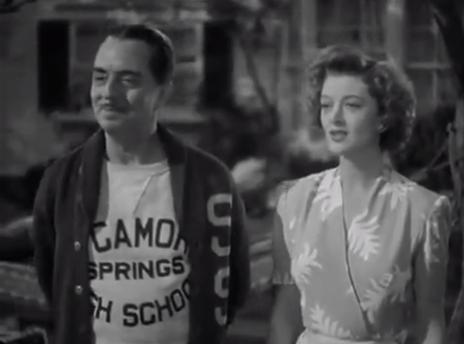
What is the occasion, you ask? Nick has a birthday coming up and what better way to surprise his parents (Harry Davenport and Lucille Watson) then popping in on them in his hometown of Sycamore Springs? It’s not the most comfortable of trips, crammed together with other passengers; before resigning themselves to the luggage car, for Asta’s sake, where he gets accosted by the local livestock. But be it ever so humble, say it with me, there’s no place like home!

The premise is plainly given but this might just be the most enjoyable installment since After the Thin (1936).  That is not to say the other entries were not amusing. They most certainly were. But there’s something gratifying about getting to know Nicky’s community a little better. Due to the passing of W.S. Van Dyke, it is Richard Thorpe who takes up the reins without too many noticeable hiccups or maybe there are just enough.

There’s the inevitable running into a plethora of old acquaintances of all sorts of ticks and demeanors. Most curious among them is the aptly named Crazy Mary (Anne Revere) or the starstruck young debutante Laurabelle Ronson (Gloria DeHaven). Nick takes each reunion in stride while also finding time to fix tables and fiddle with deadly hammocks all to the mild amusement of his better half.

The comedic range of gossip around town is astounding as the whole neighborhood drums up a story about how the town’s most famous citizen has returned to investigate a homegrown murder. It couldn’t be further from the truth, until it becomes true. What happens is the most ludicrous of murders yet, with a young man (Ralph Brooks) showing up on the Charles’ doorstep only to get the axe a minute later.

Mr. Brogan (Edward Brophy), a reformed greeting cards salesman, is always coming out of the bushes to give Nick a tip but of course, he didn’t see or hear the murder. Still, he provides his services to the amateur detective by pulling his wife away for an evening.  Myrna Loy in the humorous tailing sequence showcases her talents, making the scene into her own shining moment away from her husband. Though they are inseparable in one sense, the film benefits from these digressions as wayward as they might seem.

There are so many juicy tidbits to latch onto but one of the most crucial is a fateful painting of a windmill that Nora buys her husband as a birthday present,l due to some childhood significance. But there’s also a couple (Leon Ames and Helen Vinson) anxious about getting their hands on the piece for its perceived value. It’s no small coincidence the painting was attributed to the deceased victim.

At the Charity Bazar, the Charles make their appearance and Asta hops up on the counter to pay a visit to a house check girl in the periphery (I have no idea why this caught my eye). Meanwhile, Loy is forced into a jitterbug with an eager sailor serving as a convenient diversion. Nick doesn’t want her to be with him while he goes snooping around upstairs. And in these moments you see the allure of the Charles marriage.

The husband is the quintessential bachelor-type who nevertheless makes an affectionate husband and his beautiful Nora, a high-brow socialite, is ever the understanding wife. But beyond this archetypal pairing, you have the wryly comic tug-of-war between them as the smirking Nick always looks to throw his wife off the track and she always does her best to stay right there by his side.

In fact, the payoff looks different in the small town as everyone of possible motive is gathered into the drawing room but also it is Nora and not Nick who becomes the master of ceremonies, quelling their objections and keeping the audience under raps while her husband gets ready to make his appearance.

Given the crazy nature of the murder, it would be safe to reason the finale would be a little wild too and that assumption holds. But that cannot take away from what this film has to offer. Because what is The Thin Man without Nick and Nora Charles? It would be nothing and yet in this picture, they both continue to shine as they always did together. Even as the years progress, they don’t change all that much. The only thing that’s different is Nick has made strides with his drinking hobby which has been traded out for a flask of cider. One can only surmise the reason for this change was the wartime ration on liquor.

3.5/5 Stars


Shadow of The Thin Man (1941)

the shadow of the thin man 1.png

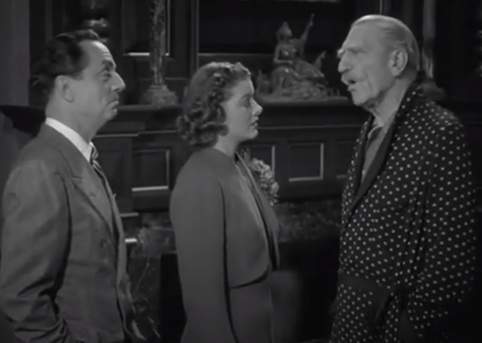
Little Nick Charles Jr. is growing up and his loving daddy, in lieu of fairy tales, reads to his son about the horse races. Some things never change. Despite an unfortunate stereotyped-laden portrayal provided by Louise Beavers, the picture quickly settles into another enjoyable jaunt.

In fact, it’s a perfect day for the races until Nick gets pulled over for speeding. That’s only the beginning. Because the cop proves to be a big fan of Mr. Charles. After all, if we haven’t realized it already, he is a household name. Everybody seems to know him. Policemen, conmen, jockeys, and anyone else you can possibly pull out of a hat. It makes no difference. By now, his wife never shows an ounce of surprise. She only smiles, nods, trades pleasantries and never says another word about it.

The recurring gags keep coming with yet another former acquaintance with a grubby nickname like “Fingers” running into Nick and inquiring if the dame he has in tow is his new girlfriend. It seems like no one ever thought him one to get married.

It’s all good fun and there’s even the return of Nick’s old buddy, old pal, Lt. Abrams (Sam Levene reprising his role). This sense of world building and the introduction of characters was always The Thin Man series at its best, but there’s also business at hand — a jockey named Gomez has been whacked.

However, Nick tries to avoid getting pulled into yet another case by patronizing the arts, namely a wrestling match. It’s one of the film’s most delightful diversions but there’s also a sneaking suspicion it must tie into the case somehow. The forces lurking in the shadows hang over the racetrack murder like a stench and they’ve got there hands in all the places, including the press. Maybe even higher up too.

A youthful Donna Reed makes an early appearance as a naive secretary and while still growing as an actress, there’s no doubting her sincerity that always shined through in all her work. With writers Albert Hacket & Frances Goodrich, then James Stewart and Sheldon Leonard also involved in earlier installments, and Reed being featured here, it does seem The Thin Man was a bit of a training ground for It’s a Wonderful Life (1946).

But back to the current business at hand. Molly’s beau Paul (Barry Nelson) is a prime suspect when murder strikes again. With the young couple right at the center of the mess, compassionate Nora wants her Nicky to get them out of it and that he does.

Also, tied up in the case are stuttering Rainbow Benny, famed acting instructor Stella Adler in one of her actual roles as Claire Porter, Frank Faylen as a nervous ticket booth operator, and you guessed it, a whole host of others.

Still, Nick finds time to get accosted by kids while taking Nick Jr. around on the carousel. While Asta’s best gag is getting trapped in a revolving door chasing after a fugitive. Myrna Loy doesn’t get as much screentime as she should but as usual she provides a calming and still slyly comic presence. The continuity provided by W.S. Van Dyke is there as well though this is the first script not penned by the screenwriting duo Hackett & Goodrich.

By now it’s all but inevitable. Everyone gets rounded up to the police precinct. Nick Charles takes center stage bringing wifey along and Lt. Abrams is in the middle of it all for good measure. But he’s really only the white noise and perfect stooge as Nick deduces his way to the finale as he always has. It’s true that the formula feels a tad overspent but seeing as Hollywood is used to beating dead horses to a pulp recently, this one doesn’t feel that bad. At least it’s a good time and we still have Powell and Loy as amiable as ever with a continous spritzing of humor.

3.5/5 Stars

Another Thin Man (1939)

another thin man 1.png

Parenthood hasn’t slackened the good-natured give and take between Mr. and Mrs. Charles or Mr. Charles drinking habit either. The only difference now is that Nick affectionately calls his other half “mommy” and they have a little more work getting their nurse to watch over the baby — Asta’s new younger brother.

For the most part, they have a hands-off parenting approach with the infant Nick Jr. which is a bit of necessity given they need time to solve a mystery. Sure, it starts out innocent enough. They plan to take a trip out to the country to pay a visit to an old friend Colonel McFay (C. Aubrey Smith) who is desperate for Nick’s counsel on an issue of utmost importance.

So they head out to the country to an old family mansion that just so happens to be the perfect space for an “And Then There Were None” scenario. Except this one has Nick and Nora Charles at the center of it all and the cast of characters fits into their world.

After the Colonel is found dead in his study following a piercing gunshot, the police swarm the grounds looking for clues, but Asta winds up tampering evidence again. Meanwhile, their flighty nurse (Ruth Hussey) takes off without leaving a forwarding address. The dead man’s daughter is beside herself with grief compounded by fear when someone kills her prized dog and takes a shot at her. It doesn’t help that she’s caught between two men who love her (Patric Knowles) and her father’s secretary (Tom Neal).

The most obvious suspect is a threatening thug named Church (Sheldon Leonard) who’s been having dreams about the Colonel’s impending death. He’s in cahoots with a deadly dame and the ever faithful Dum-Dum (Abner Biberman). A big man with specs (Don Costello is somehow tied up in this business too. Yet Nick is never one to show his hand too early and he lets things play out.

Having enough of the country life, our heroes get back to the big city to do some sleuthing at the West Indies Night Club while still finding time for made-up meet-cutes and the usual playfulness. One particularly visually uproarious sequence involves Nick Jr.’s first birthday party complete with a playpen for of babies and kindly ex-cons just out of the real pen.

There’s the tell-all finale and it’s as befuddling as any mystery drama. That hardly stops Nick Charles though. It must be admitted that the final stretch outside of the haunted mansion loses a little bit of its traction because the story is stacking moment after moment on top of each other. By the sheer number of characters, it pulls the wool over the eyes once more. And yet again the Charles’ quiet weekend away became the biggest newspaper headline.

While not quite on snuff with its two predecessors, this picture is still carried by the insouciant charm of its impeccable leads and yet another host of quality character players. You’ll notice among them Tom Neal (Detour), C. Aubrey Smith, Ruth Hussey, Sheldon Leonard (It’s a Wonderful Life), Marjorie Main (Ma Kettle), Abner Biberman (His Girl Friday), Virginia Grey, and many, many more. Those were the days of great supporting stars and phenomenal studio stars for that matter. This would be William Powell and Myrna Loy’s 8th film together out of a mindboggling 14. That in itself is a remarkable feat.

3.5/5 Stars

After The Thin Man (1936)

after the thin man 1.png

The reason to watch The Thin Man series was never murder. Sure, like its predecessor, this follow-up has the pretense of a mystery plot but that’s merely a trifle in comparison to the return of Nick and Nora Charles.

The novelty of this picture is no longer that it once more brings crime and comedy together because that’s what the original film did. We already have the formula, the groundwork set before us, and certain expectations. But what it does even in its opening vignettes is further develop its leads by transplanting the New York socialites to the world of San Francisco which brings with it different colorations and really an extension to this fanciful world that they live in.

William Powell and Myrna Loy are just delightful with teasing ever whip-smart interplay but we also see the class dimensions being played up too. All of a sudden, their marriage of such stark opposites comes into clearer focus and we love them even more.

Nick seems to know someone on every street corner most of them being hoods and shifty conmen begging the question just what he did in his previous life (I can’t ever remember being told)? Meanwhile, Nora comes from money and runs in a certain society that’s slightly averse to the constant verbal barbs and nose-thumbing of her husband. You see, he seems to have no respect for respectable folks. Her family can’t stand Nikolai as he’s called. But he loves his wife and she loves him.

The fact that the action is set over The New Year blesses the film with jovial gaiety and champagne bubbles that add a little pizzazz to your run-of-the-mill murder of passion. Meanwhile, the dubious Lychee Club takes its place front and center because a couple implicated persons are tied up with the establishment. One of them, named Dancer, runs the joint while his star performer Polly and her brother Phil also seem caught up in something shady. If you had to put a name to it you might call it extortion.

Then a slimy playboy (and unfaithful husband) is found murdered after a night carousing at the club with the chorus girl. That effectively gets his devastated wife accused of murder with her longtime beau (James Stewart) going to great lengths to defend her.

We could keep running off the list of suspects but to no avail, and it has the typically gung-ho cop Lt. Abrams (Sam Levene) understandably suspicious as he tries to make head or tails of the whole mess. Of course, he has Nick Charles on his side and a good thing too.

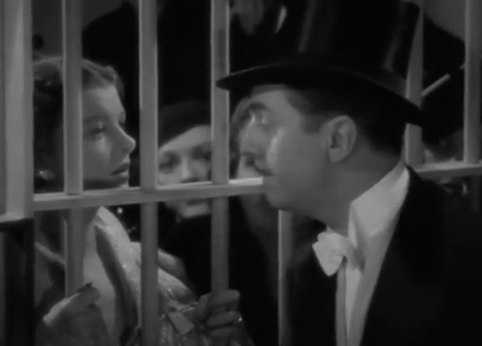
Asta is up to his old tricks running off with a vital clue and Nick’s up to his old tricks having his wife locked up in prison so that he can bail her out. Despite her longsuffering lot in life, she gets in some comic retribution of her own while maintaining a dazzling marriage full of mutual understanding.

Because, in one sense, Nick Charles is a complete imbecile, a habitual jokester, and yet he’s just serious enough to warrant some respect in the crime-solving trade and just sincere enough to hold onto his wife for posterity. Again, that’s all part of his charm. If he wasn’t so good at solving crimes, it’s doubtful people would give him the time of day. Though his wife does continuously and that’s what really counts. That’s the heartbeat of this entire franchise.

The Charles also realize humanity’s aspirations of sleeping the day away and it’s true they can get away with settling down for breakfast just as everyone else is finishing up dinner. That’s their lifestyle. I’m sure most of us hold a deep-seated desire for it in some cockeyed way. But most of us can’t solve murders on a whim either. So they get to be our surrogates on both accounts.

I won’t say he’s the epoch of amateur sleuthing, as the company includes the Sherlock Holmes, Miss Marples, and Jessica Fletchers of the world, but Nick Charles is one of the wittiest individuals to hold the mantle.

It must be noted that he was a creation of the Depression, a needed respite from the day-to-day, but you get the sense that today he comes off as a bit callous. Surely a man who knows so many undesirable characters was aware that there was a Depression on. And yet you see, that’s precisely the trick. In this world, such an event does not exist.

There’s no need to worry about it and this alternate reality instead gets to occupy itself with murder and excess, jokes and romantic patter. It truly is escapism and a gift to the masses. No wonder people loved Nick and Nora so much because it really does seem like they filled a need at the time.

While he’s not the center of attention nor is his role all that meaty until the final moments, James Stewart is nevertheless entertaining in this early part with a slam-bang finish that gives a glimpse of the passionate intensity he offered as an actor. It was full steam ahead for both him and The Thin Man series though you might say his future was a little more promising.

4/5 Stars

A Christmas Story (1983)

a christmas story 1.png

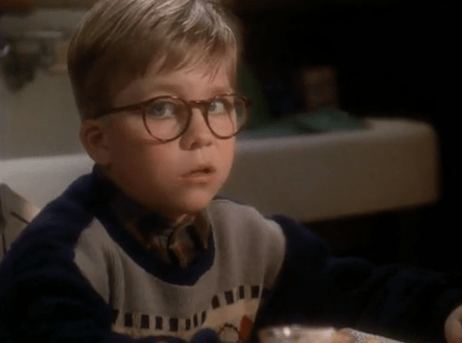
The premise is ludicrously simple. Ralphie wants a Red Rider BB Gun for Christmas. It’s his one aspiration. His sole desire in life. But of course, every conceivable adult simply dismisses him, their choice phrase being that mainstay of our modern lexicon, “You’ll shoot your eye out!”

Peter Billingsley remains an icon of the 1980s much in the same way Fred Savage would become one a few years down the road. In fact, it’s no surprise. Because their performances were of a very visual nature but it was the insights of their adult selves (in this case Jeane Shepherd) that lent a certain irony to everything they did in childhood.

Look at Bob Clark’s film and The Wonder Years and you see some very plain points of similarity. Most obviously the television series borrowed this narrative device liberally from its very conception. It lets its young protagonists’ imaginations run wild in colorful ways, but Ralphie did it first.

What proves to be most appealing about this perennial Christmas marathon favorite is the very fact that there is very little agenda and it functions mostly as numerous bits and pieces of anecdotal experiences related to us in a matter-of-fact fashion.

There are the infamous triple dog dares that lead to the inevitable pole licking at the school playground. There’s the ever notorious leg lamp, won in a contest, their proud father’s (Darren McGavin)  glorious victory exhibited for the whole neighborhood until their mother (Melinda Dillon) breaks it accidentally on purpose.

It’s the era of Little Orphan Annie on the radio, ovalteen, decoder rings, The Wizard of Oz, and Bing Crosby and The Andrew Sisters singing their greatest hits. Parents resorted to archaic forms of punishment, namely, mouths washed out by soap and the threat of bodily harm.

In the schoolyard, the roost is always ruled by the biggest bird until it comes out that the bird, in this case, one Scut Farkus is actually a chicken after an unfettered Ralphie begins whaling on the resident red-headed bully.

The infamous bunny suit from Aunt Clara donned by Ralphie on Christmas morning is one of the lasting images as is younger brother Randy wrapped up in puffy winter clothing, or watching a defeated Ralphie get slowly nudged down the slide by a griping Santa Claus at the local mall.

The now anachronistic Chop Suey Palace makes an appearance as does  Ralphie’s Old Man’s constant curse-laden crusade against the furnace. Each subsequent tale is contained as part of this familial lore, a bit murky and at the same time mythical. It turns out to be absurdly even darkly comical in its vignette-driven escapades but that provides much of the substance of its charm.

However, that very nature makes it difficult for me to become unequivocally attached to this picture. Because it’s not an exercise in pathos, though still being steeped in nostalgia and references to the mores of Middle America in some far off, bygone era. It evokes the period but does so with a somewhat trivializing sense of humor.

But what strikes me about the picture, specifically in the Christmas scenes is how the most memorable and, dare we say, “special moments” that we remember around the holidays are the ones with mishaps and circumstances that while derailing our perfect expectations, simultaneously become our most cherished memories. Because life at its best isn’t a cookie cutter experience. It’s full of all those misshapen weird outcomes that bulge out and disrupt life in ways that we can only look back on and laugh. Christmas was never meant to be perfect. Have you looked in the mirror lately? As humans, we are far from it.

That’s what this story sums up quite impeccably. It’s not so much a moral tale or a movie of themes but the scripting and setting get at the essence of a time and place where desiring a Red Rider BB Gun is enough. There doesn’t need to be more — at least not in childhood — that’s what adulthood is for. Even then a child-like perspective, especially during the holidays, is something to be desired.

4/5 Stars