Man in the Moon (1991)

maninthe1Robert Mulligan is an unassuming film director. Man in the Moon would be his last film in a career that was not so much illustrious as it was respectable. In truth, I’ve only had the pleasure of seeing one of his other films — his crowning achievement To Kill a Mockingbird.

There are in fact some similar threads running through these two films, starting with the Deep South nostalgia and close analysis of adolescence. Both these films take the point of view of a young girl. Their narratives hope to shed at least a little bit of light on that intricate stage of life. This time a 14-year-old Reese Witherspoon is our lead, playing the Elvis-loving, gum-chewing, spunky dynamo named Dani. She and Scout share a lot in common because as young people there’s an inherent tendency to mope, question, and disregard. They have not quite grabbed a hold of the mature world of their parents. After all, they still have a great deal to experience. That’s what makes these film arcs necessary.

Man in the Moon starts with Dani, but there’s a whole family unit around her. A father (Sam Waterson) who is a decent, down-to-earth-man, and he would rather commune with nature in his fishing boat than go to typical church. A mother (Tess Harper) who loves her husband and daughters dearly, knowing when to trade tough love for hugs. Maureen (Emily Warfield) is Dani’s oldest sister and her idol, along with the object of every local boy’s desire. She’s beautiful and yet what’s more extraordinary is her good nature. She doesn’t deserve the creepy father and son duo eyeing her in the local town.

maninthe2Arguably, the next most important character in Dani’s story is Court (Jason London). They have your typical terse meet-cute that signifies only one thing. They must fall in love. It turns out he’s the eldest son of an old friend of Mrs. Trant. Soon things change for young Dani because she’s never known someone like Court, much less liked a boy.

Their relationship is one of those complicated entanglements. He’s a few years older and is the man of the house. He has to grow up quickly and views Dani as a child. But their friendship blossoms with frolicking afternoon swims. Dani is ready for something more. She thinks she’s in love. Now if Court was one of the other boys, he could easily take advantage of the situation — this fawning girl who is madly in love with him. But he’s not like that. Dani can’t quite get that through her head. It just doesn’t make sense. They enter friend territory and Dani’s heart is still aflutter, but she’s happy again.

maninthe3The second half of the film enters melodramatic territory that first hits the Trant’s with familial turmoil, and then Court. Dani for the first time in her life is faced with the full brunt of tribulation. What makes matter worse is her feelings are all mixed up. She loves her sister. She hates her sister. She cannot bear to see Court. She cannot bear the suffering. It’s in these moments that uncomfortable feeling well up in the pit of your stomach.

Man in the Moon like many of the great coming-of-age movies is really about adolescents coming out of their innocence and being inundated with the often frightening realities of life. It reminds even the youngest of us that more often than not life is unmerciful. It’s how we pick ourselves up out of that fatality that matters. It’s hard but that pain is often how we grow and mature — learning how to cope with the way things are. That’s what makes the people around us so integral to existence. They can be our lifeline that keeps us afloat. Thus, Dani’s friendship with Court matters so much. That’s why Dani’s relationship with Marie matters too.

Perhaps the drama is laid on rather thick, but nevertheless, it’s difficult not to get behind this film. Reese Witherspoon’s perkiness is wonderfully disarming, and Jason London plays a decent young man. These are characters I want to watch and emulate. Not quite Scout and Atticus, but they are still definitely worth the time.

4/5 Stars

You’ve got a right to grieve, Dani. You got a right to be hurt. But if you get so wrapped up in your own pain that you can’t see anyone else’s, then you might just as well dig yourself a hole and pull the dirt in on top of you, because you’re never going to be much use to yourself or anyone else. ~ Mr. Trant 

Note: This review previously said Marie (Gail Strickland) instead of Maureen (Emily Warfield)

Once (2007)

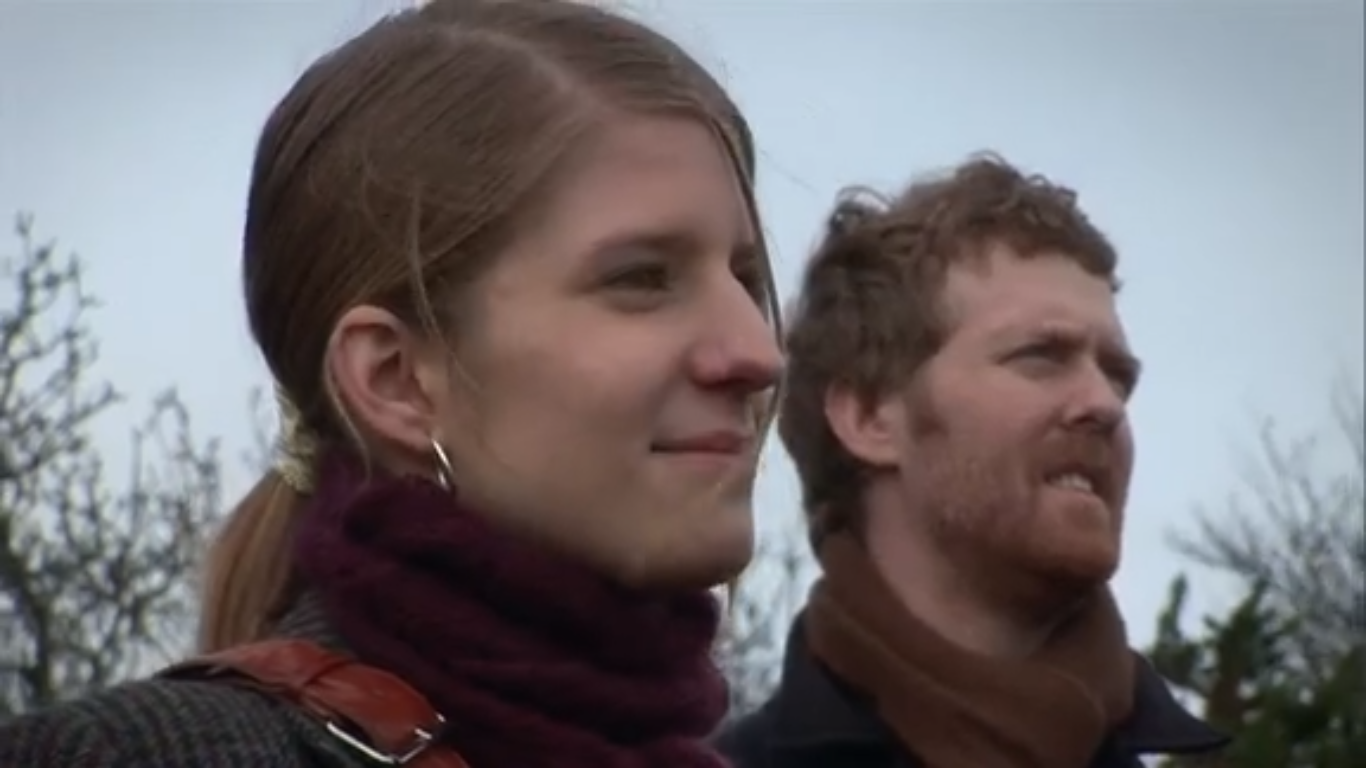
once1Only sometime after the film ended did I come to the realization that we never learn the names of our two protagonists. And yet we build such a connection with them through music, through their bits of humanity, and from being a part of their lives for a short time. Because Once really does feel like a documentary. It feels like we’re meeting these people and peering into their lives for an hour an a half of sheer delight.

The guy (Glen Hansard) is an Irish street performer who can be found on the street corners, guitar case open, strumming away, hoping to get a buck or two. He’s good but nobody much seems to notice him. It’s as if people see you doing such a gig and think you must not be very important. I must admit I’m guilty of such a fallacy myself many a time.

But there is one person who does come up to him. It’s a girl (Marketa Irglova), very straightforward and direct, and we learn she is Czech. What could two such people have in common? Music. Of course. The universal language even more so than English. Because she obviously has an accent and he does too, to my American ears, but their music transcends cultures.

It’s easy to forget Once technically functions as a modern-day musical because more often than not the genre seems like a dying breed. The songs in this film are beautifully melodic, with wonderfully earnest lyrics, and equally well-wrought instrumentation. But it fits into the narrative and nothing feels like a forced plug to get our respect.

They’re laying it out there. Letting us into their homes and keeping all their feelings out in the open. Really they both have a humble existence, and each has had their own romantic pasts. He has memories of a love who now lives in London and despite her young age, the girl has a husband she left behind in her home country. It’s a surprise to him and the audience both.

once2Their ride on a motorcycle, for a brief instant, brought to mind the Vespa ride in Roman Holiday, although their excursion is a little less chaotic. There’s still an innate playfulness of people with wonderful chemistry and whether they are acting or not is anyone’s guess.

Everything goes back to the music though since that acts as the heart and soul of this story. When the pair of them are able to get a recording studio it looks like he might get his big chance. He invites her to sing because he really wants her to be a part of it. He rounds up a few more street musicians and they’re set. When they get to the recording studio and the tape starts rolling what follows is a performance bursting with passion and energy. You can feel the electricity.

It feels as if we’re on the ground floor of something special, unwinding right before our eyes and yet we don’t know exactly what is going to happen. He’s about to head off to London to show off his sample and perhaps catch up with an old flame. She is preparing to make amends with her husband. But before leaving the guy drops a very big present on her doorstep to thank her for all she’s done for him.

Their tune “Falling Slowly” plays in refrain summing up this music-infused love story. The question is, is this an actual love story? I would answer in the affirmative. There is no sex in the contemporary sense, but this film does most certainly have love, whether or not it becomes physical. And it acknowledges the clear distinction between sex and love. These are two people who deeply care about each other and share a connection more intimate than most people can manage.

4/5 Stars


Sherlock Jr. (1924)

sherlockjr1When I was just learning about silent comedy I would have said that it started and ended with Charlie Chaplin no questions asked. And it’s true that he most certainly is a starting point, but if you want to get even a small understanding of comedy you have to look at Buster Keaton (as well as Harold Lloyd). I’m not claiming a great deal of knowledge about silent films (I still have much to see and learn), but Keaton astounded me with his prolific output during the 1920s and his physical prowess. I did not appreciate The General (1926) that much the first time around, however, by the time I got to Our Hospitality (1923), Seven Chances (1925), Steamboat Bill Jr. (1928), The Cameraman (1928), The Navigator (1924), and of course this film, I completely changed my initial evaluation.

Since Sherlock Jr. is shorter than most of his other features it’s almost like Keaton cut out all the dross and what we are left with are sequences of cinematic gold. In this story about a projectionist obsessed with being a detective, there is surprising depth and inventiveness that is still magical today. The plot really is a film within a film, starting with Sherlock Jr. trying to win over the affections of his love (Kathryn McGuire) with a box of chocolates. But his rival (Ward Crane) does the same by more shady means and pins his dastardly deed on Jr. Now our hero is banished from the house and resigns himself to his projection room where he enters into a dream-filled sleep. It mirrors the film that is playing on the screen as he enters this world as a detective and fills it with all his real-life acquaintances. The fact that the girl comes back to him at the end feels rather superfluous because we automatically assume that is the case. It’s how Keaton gets there that’s ingenious

sherlockjr2It easy to marvel at some of the visuals as Buster Keaton literally leaves his body and walks onto the screen, shifting between an array of backdrops in a thoroughly entertaining sequence. He’s pulling crazy stunts without CGI mind you, and many of them put his life and welfare on the line. He tries his hand at pool with impressive skill and pulls off some amazing parlor tricks including a disappearing act that not only stumps the thugs pursuing him but the audience as well.

Even after reading a full breakdown of how he was able to literally vanish into thin air I’m still utterly baffled. Every time it causes me do a double take. Then, of course, there’s his wild ride on the handlebars of the motorcycle, which has some beautifully comic stunt work. It’s stuff you certainly would not want to try at home and it would be unthinkable today, but that was the brilliance of “The Great Stone Face.” He was literally willing to put his life on the line, and whereas Chaplin was adept at pulling at our heartstrings, the often emotionless Keaton does not try that. He wins us over with his resilience. In him, I find a figure of a very relatable temperament although he was more of a daredevil than I could hope (or want) to be. That just makes me respect and marvel at what he can do. If you want to see slapstick and sight gags at their zenith then take a look at Buster Keaton. Sherlock Jr. is always a good starting point.

5/5 Stars

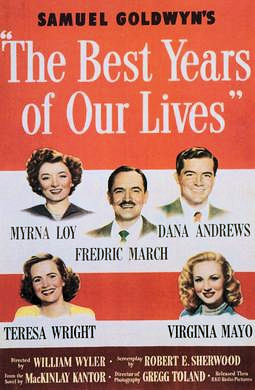
The Best Years of Our Lives (1946): The Forgotten Counterpart to George Bailey’s Story

The_Best_Years_of_Our_Lives_film_Inherent in a film with this title, much like It’s a Wonderful Life, is the assumption that it is a generally joyous tale full of family, life, liberty, and the general pursuit of happiness. With both films you would be partially correct with such an unsolicited presumption, except for all those things to be true, there must be a counterpoint to that.
Upon watching both these films on subsequent days, that became markedly evident. George Bailey (James Stewart), of course, must go through a perturbing alternate reality where he never existed, and the consequences are catastrophic to all those he knows and loves in his community. But such a paradigm shift or new perspective, does truly revitalize his entire existence. It’s as if he sees the whole world through an unfaltering lens of hopefulness thereafter.

Although it lacks the dark fantasy that engulfs the latter half of It’s a Wonderful Life, Best Years has its own heavy dose of foreboding, that while more realistic, is no less disconcerting. All the boys have returned from the theaters of Europe and the Pacific, including our three protagonists Fred (Dana Andrews), Homer (Harold Russell), and Al (Fredric March). Upon getting back to their old abode of Boone City, sons talk about nuclear fallout in Hiroshima and men at drug store counters warn of the imminent threat of “The Reds.” Some soldiers like Fred have trouble landing work. Others struggle with getting the necessary loans from banks like the one Al works at,  or they come back to far less glamorous lifestyles. Homer copes with being a double amputee and simultaneously closes himself off to all those who love him, including his longtime sweetheart Velma (Cathy O’Donnell). He must learn not so much how to love, but the equally difficult life skill of allowing others to love him.

Derry also struggles in a loveless marriage with his superficial wife Marie (Virginia Mayo), while also battling with PTSD symptoms like recurrent nightmares. Even the subtle reality that the only African-Americans in the film work behind soda fountain counters or in nightclub jazz bands has greater implications. Theirs is a relegated status, even in a country of liberty like America. Unlike the former film, we do not see any ghoulish human cemeteries, but we do see plane graveyards like ghost towns where metal is slowly rusting just waiting to get demolished and re-purposed. At this point, it is only a sobering reminder of all those who fought and died in the war years.

Many of these topics are only mentioned for a brief moment or we can only infer them from visual cues, but still, they lurk there under the surface or better yet, right in plain view. These real-life unsettling concerns are worse than It’s a Wonderful Life because they fall so close to home even today.

Wounded veterans are still coming home to a country that doesn’t know what to do with them, or a country that seems ungrateful for their service. Married folks still struggle through marriage and divorce. Single people still struggle with figuring out if they should get married and so on.

I think part of the reason I admire The Best Years of Our Lives so much, despite its nearly 3 hour running time, is its ability to captivate my attention rather like a day in the life of someone I would meet on the street. Although Virginia Mayo and Mryna Loy seem the most Hollywood, most everyone feels rather ordinary. Certainly, Dana Andrews is handsome and Teresa Wright, as well as Cathy O’Donnell, are wonderful as multidimensional girls-next-door, but I feel like I could potentially know people like them. And of course, Harold Russell was unusual since he wasn’t a trained actor. That casting choice pays off beautifully in moments such as the final wedding scenes where in a dyslexic moment he switches up his vows. But it works wonderfully as an authentic addition.

Although Gregg Toland worked on revolutionary fare like Citizen Kane, and William Wyler dabbled in all sorts of genres from westerns to period dramas, they have all the necessary sensibilities for a perfect presentation given the subject matter. The visuals are crisp and beautiful, but never flashy or overly conspicuous. The use of deep focus concerns itself with the overall composition of the frame -never attempting to focus our attention on any singular action.  It all becomes equally important. Meanwhile, Wyler directs with a sure hand that makes the actions flow organically and at the same time his ensemble is given the space and the time to grow and evolve before our very eyes.

It’s a timeless film for what it brings to the forefront and also because of what it evokes out of the audience members themselves. There is an underlying somberness to it at times, but most importantly it rings loudly with the high unequivocal notes of hope. In the post-war years, it was a pertinent film, and it still has something to offer even now. More people need to know about The Best Years of our Lives.

5/5 Stars

While We’re Young (2015)

whilewereyoung2“It’s the Goonies and Citizen Kane. They don’t distinguish between high and low.” ~ Ben Stiller as Jamie
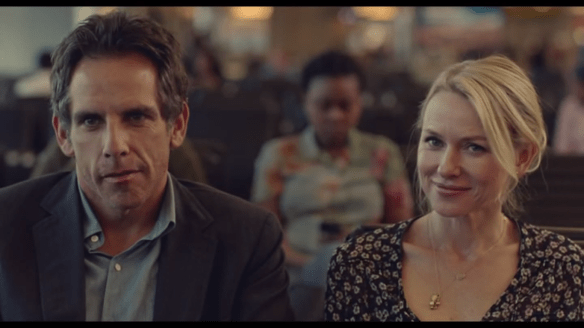
Although not nearly as prolific, in some respects Noah Baumbach feels like a lesser heir apparent to Woody Allen, if in fact the veteran filmmaker ever stops making films. Nevertheless, Baumbach seems to have a knack for a similar cross-section of New York. Frances Ha is his Annie Hall with the cinematography of an updated Manhattan. Also, his characters are more often than not middle-class intellectuals. People who think, have deep conversations, and yet there still manages to be something funny or different about what they have to say.

While We’re Young begins something like this. There’s a middle-aged couple stuck in neutral scared out of their minds about kids, and at the same time scared of growing older all alone with just the two of them. They have some good friends, who now have a child, and now Josh (Ben Stiller) and Cornelia (Naomi Watts) feel lonely. Then, they meet Darby (Amanda Seyfried) and Jamie (Adam Driver) and phase two begins.

Baumbach proves he really is a different creature entirely, and While We’re Young embodies that with its progression. It’s not quite what we expect. It’s refreshing, lithe, and friendly. Hold that thought. Maybe that’s actually exactly what we wanted and expected — at least for now.

Very quickly these two couples connect on so many levels despite their vast age difference. The old ones feel young and the young ones are really old souls guided by free spirits. They live life as they please without the drudgery that Josh and Cornelia feel weighed down by.

He’s been working on the same documentary for eight years now with the same talking head (Peter Yarrow), and he and Cornelia have hardly been out of the house, much less the country, in the last several years. To make matters worst he feels like he’s living in the shadow of his highly-successful father-in-law (Charles Grodin). In utter contrast, Jamie imbues so much passion it’s hard for Josh to not to latch onto that.

Their friendship blossoms in such a way that Josh and Cornelia almost seem unrecognizable with their hip-hop and fedoras. It’s not obvious quite yet whether that’s a good or a bad sign. But of course, the story doesn’t end that way. Because that’s not life, or at least not the way of real life outside of the world of filmmakers and documentarians.

Darby and Jamie aren’t the perfect young couple they seem to be. Their mish-mash of culture and public domain mentality has a downside. It gets worse than just the Goonies and Citizen Kane. After all, what are we supposed to expect? Two people who build their own furniture, make ice cream for a living, and live off old records and VHS cassettes have faults too.

Something happens that shakes Josh and the audience out of their reverie. In fact, everyone is brought back to earth. The world is often full of lies or worse yet half-truths. Unfortunately, we have to learn to accept them even when it feels so unjust. Joshie learns a valuable lesson about humanity and the younger generations. They aren’t evil and they are far from perfect.

In its finality, While We’re Young wasn’t the pretty picture that we half-expected. In fact, it got downright weird, dark, and deceptive, before giving way to apathy.  But that’s okay. Life doesn’t always end there. There’s often a hopeful epilogue and so it goes with Josh and Cornelia.

3.5/5 Stars


Review: North By Northwest (1959)

1024px-North_by_Northwest_movie_trailer_screenshot_(6)Wedged between two landmark Hitchcock films in Vertigo (1958) and Psycho (1960), North by Northwest is iconic in its own right, but it boasts sprawling adventure and a bit of a lighter tone. It’s rather like Teddy Roosevelt wedged in between Jefferson and Lincoln on Mt. Rushmore but that comes later.

Supposedly the film was once to be called In Lincoln’s Nose, but when the now famous slanted North by Northwest logo hits the screen you instantly know you’re in for something extraordinary. The title sequence is wonderfully exciting given a boost by yet another impeccable score from Bernard Hermann.

This film is once again beautifully shot in color (VistaVision), but it covers more ground than Vertigo and has far more elaborate set pieces. The action begins ordinarily enough at an office building where advertising man Roger O. Thornhill (Cary Grant) makes his way out of the office. It’s a busy day at the office, but Roger has a dinner engagement and an evening at the theater to look forward to. His plans and his whole life are put on hold after he fatefully flags down a waiter.

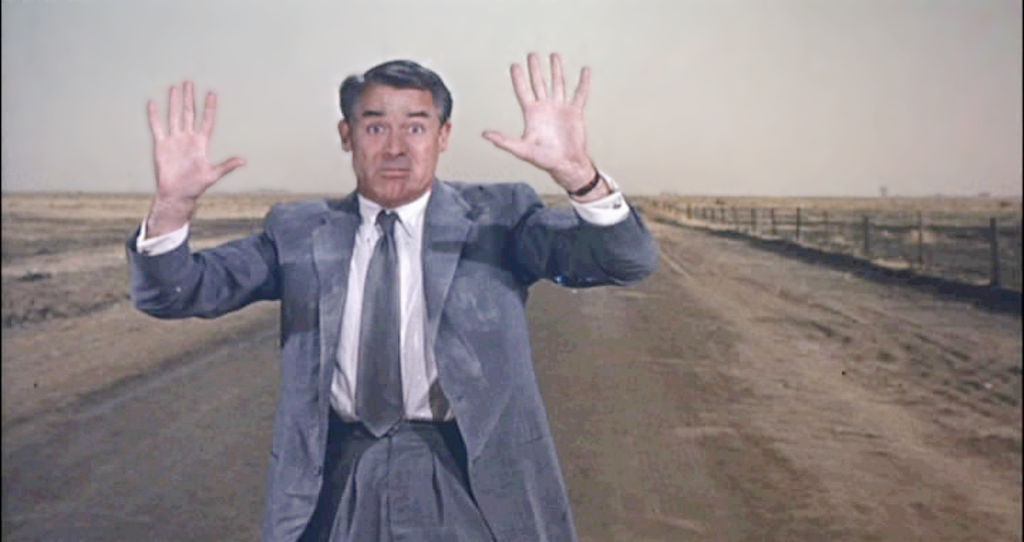
His actions don’t go unnoticed and two menacing men lead him off at gunpoint as he tries to head to a phone. He is utterly confused, but we know it has something to do with the name George Caplan. These men think that’s who he is, and not to be persuaded otherwise, they take him to their leader (James Mason), who is very interested to meet him. Over the course of a harrowing evening, Thornhill is left on the edge of the road in a completely drunken state to die. But instead he gets brought in on a drunk driving charge and of course, no one will believe his cockamamie story, even his skeptical mother (Jesse Royce Landis).

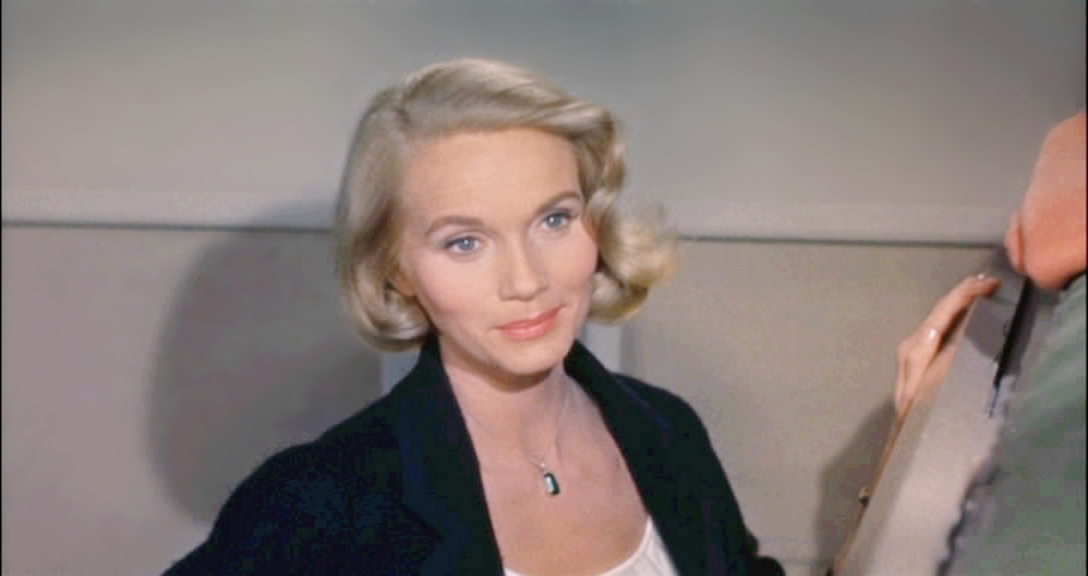
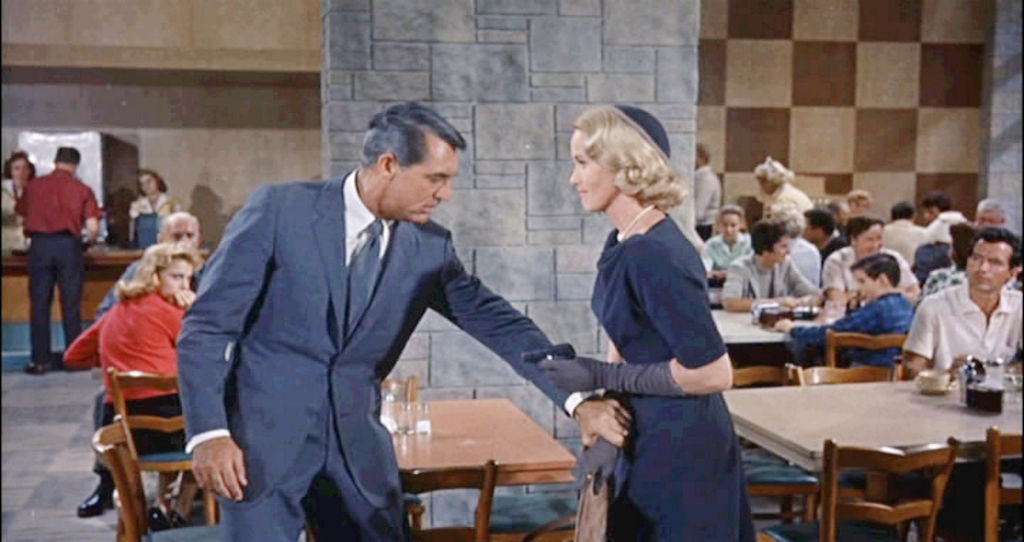
North_by_Northwest_movie_trailer_screenshot_(21)Next, it’s onto the U.N. Building to find out who Lester Townsend is, but of course, his captors are on his trail and just like that Thornhill is framed for murder and a fugitive on the run from the thugs and the cops. He tries to get away train ticket out of town, but in order to evade the law he ducks onto a train and meets the pretty blonde Eve Kendall (Eva Marie Sainte), who extends a favor. Little does he know what her angle is. Right now all he cares about is a little tete a tete and perhaps an amorous evening.

Kendall wistfully sends her new lover off to meet Caplan. Instead, he is met by a bi-plane and once again running for his life. But the build-up of this now iconic scene is wonderful. Hitchcock utilizes his background in silents to allow the scene to progress without hardly any dialogue and it unfolds ominously. However, he proves that even on an isolated roadside stop danger can still be present. Thornhill has new opinions of Kendall now and continues following the trail of Caplan which leads him to his old nemesis (Mason) and wouldn’t you know, Eve is by his side.

North_by_Northwest_movie_trailer_screenshot_(31)Roger feels like he has everything figured out, but he gets a visit from the mysterious Professor (Leo G. Carroll), who helps straighten him out with all the business surrounding the elusive George Caplan. With this new insight, Roger goes to the Professor to Rapid City and the one and only Mount Rushmore. It’s the perfect spot for a Hitchcockian finale to satisfy the director’s flair for the thematic.

North By Northwest is fun because we get to be right alongside Grant when he gets caught up in the whole mess. Although we see the picture a little more clearly than him, all the details are not handed over to us. So in a sense Hitch lets us in on a few secrets without showing us his entire hand. The staging is also wonderful whether it is the U.N. Building (with that marvelous aerial shot), or desolate Bakersfield, and even the soundstage set up to look like the surrounding area of Mt. Rushmore. It’s such a contrast to Rear Window and it uses the scenery very effectively similar to Vertigo.

Ernest Lehman’s script simply put is a lot of fun, because we have our villains, we have our romantic leads having a lot of great scenes together, and the pacing is surprisingly good. I am amazed how spry Cary Grant looks for his age (especially compared to aging Jimmy Stewart). Eva Marie Saint is great and in my estimation, she is the second-best Hitchcock Blonde following Grace Kelly, but you can easily disagree. James Mason plays yet another debonair villain and there are a handful of fun appearances by the likes of Martin Landau and Edward Platt.

One reason I’m constantly drawn to this film is that it feels rather like a road trip as we slowly cross the continental United States with Cary Grant. Furthermore, it’s simply good, unadulterated fun. There’s not a ton of analysis or commentary to mull over or to think deeply about (maybe some implications to the Cold War). But I’m content to sit back and watch with glee as a crop duster nearly clotheslines Cary Grant. Movies don’t get much better than this, seriously.

5/5 Stars

The End of the Tour (2015)


endofthetour1My Dinner with Andre
was a film that was interesting in conception and not quite as engaging in practice — at least for me. The End of the Tour is another such conversation-driven story with a similar promise, but by some miracle, it really seems to pay off.
The narrative actually felt rather like a stripped down Lawrence of Arabia, because we first are introduced to our main person of interest, writer David Foster Wallace (Jason Segal), following news of his death. Then, with the aid of his numerous taped dialogues, Rolling Stone journalist David Lipsky (Jesse Eisenberg) takes us back to the 1990s where he had a few days to interview the accomplished author. David and Dave spend a great deal of time together, and the author willingly and openly allows the other man into his life. It’s not some monumental epic, and in that way, it parts company with Lawrence of Arabia, but it is an intimate heart-to-heart.

Furthermore, it doesn’t matter if you don’t know the man or not, because I, in all honesty, did not know him. Under Pondsoldt’s direction, however, the film is so universal — it does feel so personal — like you’re slowly getting to know Foster Wallace bit by bit as the layers come off. He speaks into so many issues of what it means to be human, though this is only a one time interaction between two men. The conversations at times become contentious and bitter as Lipsky tries to dig in more. And that’s perfectly alright.

Foster Wallace describes himself interestingly enough as a “combination of being incredibly shy and an egomaniac.” But in this paradox lies a lot of his personal insecurities as a successful writer. Truthfully, they also put the mirror up to all those listening in, because he’s not the only with anxiety, it’s just that he’s the one voicing it.

Jason Segal does a superb job of portraying someone with obviously unfathomable talent, while also being candidly vulnerable as time progresses. There’s an understated humor to this man that is somehow warm and disarming. Underneath there obviously dwells a woundedness that gives way to a plethora of issues which also consequently becomes topics of discussion. For instance, pornography, entertainment, television, depression, loneliness, fears, doubts, and a great deal more.

We return to the present as David listens to his final audio cassettes from so many years ago now. How do you try and paint a canvas of a person’s life with all the minutiae that are involved? The soda and foods they like. How they dress. The name of their pets. Where they live and so on. David delivers a beautifully evocative memo that he speaks into his recorder in order to try and capture that moment just as it is. That time and place, in some respect, feels like hallowed ground amidst a far off realm. Now, with Wallace gone it’s only a distant wisp of a memory. Therein lies the beauty of that conversation for not only Lipsky but the entire audience. That dialogue — that human interaction just as it happened — can never happen in the same way, but you can still take solace in the memories and the words that were said. David Lipsky looks back at that one time conversation with only fond thoughts.

The End of the Tour reminds us what real life can be like, and it reminds us that we are not alone — but surrounded by a wide expanse of humanity just waiting for someone to reach out and talk with them. It’s not a radical idea, but then again if David Foster Wallace, the preeminent author that he was, had such an impact with it, then maybe we can too.

4/5 Stars

“It may be what in the old days was called a spiritual crisis or whatever. It’s just the feeling as though the entire, every axiom of your life turned out to be false, and there was actually nothing, and you were nothing, and it was all a delusion. And that you were better than everyone else because you saw that it was a delusion, and yet you were worse because you couldn’t function.”~ Jason Segal as David Foster Wallace

When Harry Met Sally… (1989)

whenharry2“Men and women can never really be friends”
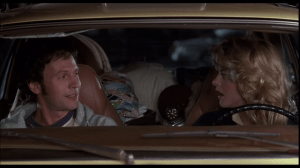
When Harry Met Sally…what happened? Well, the first time in 1977 they spend an indubitably long car ride together. Whether or not it’s true, this debate about men, women, and friendship is the driving force behind their choppy relationship over the next decade or so. Back then it began with arguments over Casablanca and late night conflicts at a diner when Harry makes a pass. Good thing they’ll never see each other again. That’s what they think.

5 years later we’re in an airport. It doesn’t seem like much but Harry bumps into an acquaintance he knows, and surprise, surprise Sally ends up being his girl. They don’t give much notice to each other, that is until they end up on the same flight together. Once more they continue the friendly argument they began back in college, although he is now a political consultant and she is a journalist or something. Harry has become more lenient on his hard and fast rule, but they leave each other ready to get together with their significant others. A friendship between the two of them now seems so inconsequential.

But 5 years later role by again and Sally is still unmarried. Things didn’t quite work out and her best friends are hoping to help her move on. Then, she spies none other than Harry Burns in a bookstore and they strike up their quinquennial convo once more. This is a defining moment as they finally decide to become friends. It seems with the passing years they’ve lost a little bit of their idealism and pigheadedness respectively. When you have experienced romance and lost you are more apt for compromise. The passage of time changes people too. So it goes with Harry and Sally.

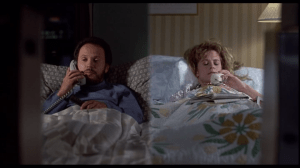
whenharry3Now they have late night chats as they lie in bed listlessly or they grab a bite to eat at the local deli. In that perceived transitional period of loneliness, they find comfort and companionship. They discover what a platonic relationship can be without sex. Except much of their time is still spent talking about love and sex. Harry and Sally are so preoccupied with such topics they probably don’t even see what’s happening to them.
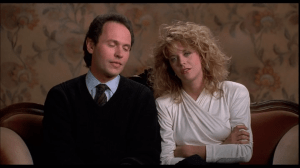
Ultimately a blind date they set up with each other’s best friends fails abysmally, but their best friends hit it off instantly. Bruno Kirby and Carrie Fisher end up making a stellar combination, both exhibiting wonderful personality paired with wit. They make believable best friend material. But during their wedding, Harry and Sally’s friendship goes down the tubes and looks to be finished. It’s in the interim leading up to New Year’s Eve that Harry realizes what is happening inside of him. It took umpteen years, but Harry and Sally finally fall in love! At the end of the film, they fittingly receive their own cutscene like the various old married couples who share their fairytale romances interspersed through the entire film.

whenharry5Bob Reiner’s When Harry Met Sally… works unequivocably because, in many ways, it helped define many of the unspoken rules of the rom-com following the mold of Woody Allen’s Annie Hall. Overall, the addition of Harry Connick Jr.’s music gives the film a jazzy feel rather reminiscent of Allen’s work. In fact, it does feel like Reiner emulates Allen and in this case, mimicry is the highest form of flattery. Meanwhile, Nora Ephron’s script is often inventive, creating future cliches rather than falling into old ones. To his credit, Billy Crystal is able to play his role with sincerity and sarcasm when necessary, while Meg Ryan is full of a feisty vim and vigor in her own right.
Perhaps most importantly the film speaks to topics of romance and sex. Sex is not a commodity to be bartered with, but then again it cannot be wholly bad if humans are constantly desiring it. In there lies a mystery. There must be a context in which sex actually means something more than just being a simple act. Perhaps when love comes first. That’s what makes what Harry and Sally have so special. True, it’s marriage, but really it’s a lifelong friendship. That’s what it’s meant to be — the closest bond you’re ever going to have with another person. 

4/5 Stars

The Double Life of Veronique (1991)

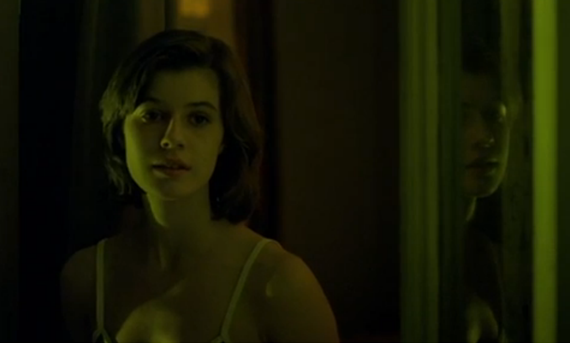
thedoublelife4Krzysztof Kieslowski’s The Double Life of Veronique fills an ethereal world full of dancing light, soft hues, and faint reflections. It’s beautifully muted visuals complement a wonderfully mysterious story. Its title suggests the potential of a story about one woman living two varying lifestyles, one respectable, the other not. Instead, the film revolves around two women living parallel lives. Neither is shameful or noticeably corrupt. They are both sweet individuals with aspirations that drive their lives. They desire love and commendation like many of us.

The first is named Weronika, a Polish beauty, who is an up and coming operatic performer. While her star is on the rise, she meets a new boyfriend and goes a trip to visit her aunt. But everything goes back to the music. In fact, music often takes center stage totally enrapturing us in song. There are sublimely haunting melodies that pierce right through our core. The angelic voices are gracefully wafting through the chambers of cathedrals and music halls. And just like that the breathe is gone out of one of the angels for good. We get a hint at it from Weronika’s aunt, suggesting that all their family members died unexpectedly, but there’s no more explanation.
thedoublelife5
The majority of the narrative follows French music teacher Veronique, who is the spitting image of her Polish counterpart. Except they have no relationship whatsoever, only some odd intuition that there is someone else out there who they do not fully know. As we observe the daily rhythms of this young woman’s life, it feels almost otherworldly with an unearthly golden glow that illuminates the streets she walks. It’s a film where marionettes are made graceful and bouncy balls are little orbs of wonder. Along the way, Veronique finds a love of her own that she doesn’t even know. But she’s enchanted by him and the magic that surrounds him, much as we are bewitched by her. Her lover is constructing two identical marionettes in order to tell a new story about two women with a connection that cannot be described. In other words, the mythos around his narratives, tread closely to Veronique’s own life. A girl in one of her photos makes it clear. Everything comes to a fitting full circle, and yet we get little in the realm of a fully gratifying ending.

thedoublelife2More often than not Kieslowski’s film has a mesmerizing effect on me and a  great deal of that power of entrancement is due to Irene Jacob. She is like a cinematic goddess with a face made to be scrutinized. A charming classical beauty, she exudes a range of emotions, while still managing to hold onto a semblance of mystique. Jacob is a wonderful muse for the director’s purposes and she would prove so again in Three Colors: Red. But that’s another conversation entirely.

I consciously ask myself, “Is this a film even to be understood?” Because the plot points and the pieces don’t always seem to fit together especially well when you actually consider them. And somehow I remain content in that reality. Whereas someone like Michelangelo Antonioni throws away a few pieces of the puzzle for good measure, for Kieslowski these final pieces never existed. They are not paramount to what he is trying to accomplish. The Double Life of Veronique maintains such a transcendental almost spiritual quality because we can only watch and listen. Ours is not to reason why ours is to simply look on in awe at what we are witnessing. The beauty, the enigma, and the feelings. Because Kieslowski is more interested in the essence of the film than the particulars.

4.5/5 Stars

Review: A Night at the Opera (1935)

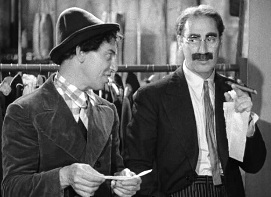
ANATOcontract“That’s in every contract, that’s what you call a sanity clause.” – Groucho

“You can’t a fool a me there ain’t no sanity clause” – Chico

The Marx Brothers had a set formula, where everyone else played the drama straight and they did whatever they wanted. So essentially there is no formula, lending itself to the anarchic comedy that they will be forever known for. However, if you put A Night at the Opera up against there earlier work at Paramount (this was their first film with MGM), you can see some important changes. Wunderkind Irving Thalberg wanted to give their films a more concrete plot line and in an effort to make them more sympathetic figures, all their antics were aimed at obvious “villains,” while they helped those who needed help. In this case, it was the aspiring opera star Rosa (Kitty Carlisle) and her beau Ricardo (Allan Jones), who get a helping hand from the boys.

This restructuring worked out because although the film plays out dramatically under the direction of Sam Wood, the Marx Brothers are still up to their old tricks, pulling off the same stunts that they used to. In fact, A Night at the Opera would be a very boring operatic drama by itself. Some of the interludes including song and dance are rather dull even in their extravagance. But Chico, Harpo, and Groucho inject the film with their brand of comedy that is difficult to top.

Groucho’s quips are aimed once more at the oft-abused Margaret Dumont. And then Harpo and Chico help befuddle the conceited opera star Lasparri, an Opera Company magnate (Sig Ruman), and the police among others.

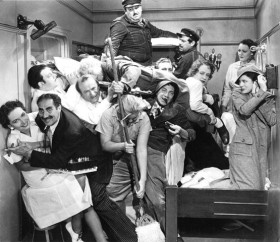
ANightattheOperaStateroomThe film borrows the stowaway storyline from Monkey Business (1931) so the brothers and their friend  Ricardo can follow the opera to New York. This lends itself to the now iconic stateroom scene where a total of 15 individuals are crammed together into Groucho’s tiny ocean liner abode.

Earlier on Chico and Groucho have fun drawing up and ripping apart a contract for their new partnership (including the famed Sanity Clause at the end). It ends up that the three fugitives are on the run from the authorities and Groucho is thrown out of his job finally.

But everything culminates at the opening performance at the opera and the Brothers are in high form. Chico and Harpo invade the orchestra pit, insert “Take Me Out the Ballgame” into the arrangement, and join the cast as a pair of gypsies. Meanwhile, Groucho delivers his usual quips from the box above, much to the dismay of all the patrons. To top it off, Harpo goes swinging up above the performance making a shambles of Lasparri’s big night, and Rosa and Ricardo are able to win over the audience. But it goes without saying, it’s the Marx Brother’s who steal the show. Groucho is as rude as ever. Harpo is always ready to knock someone out, and Chico is just waiting to join in on the ruckus. It’s comic mayhem at its apex.

4.5/5 Stars