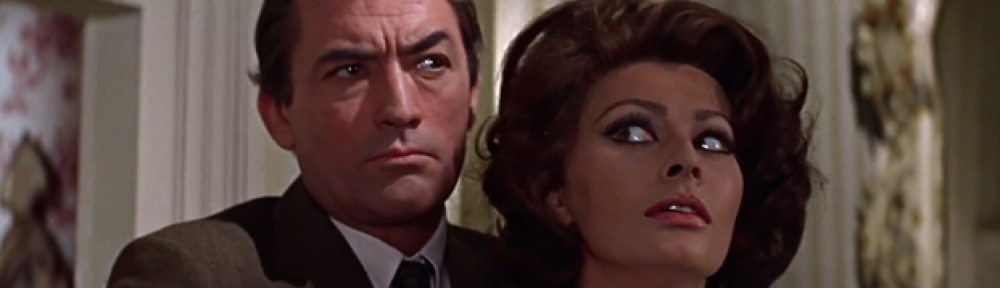
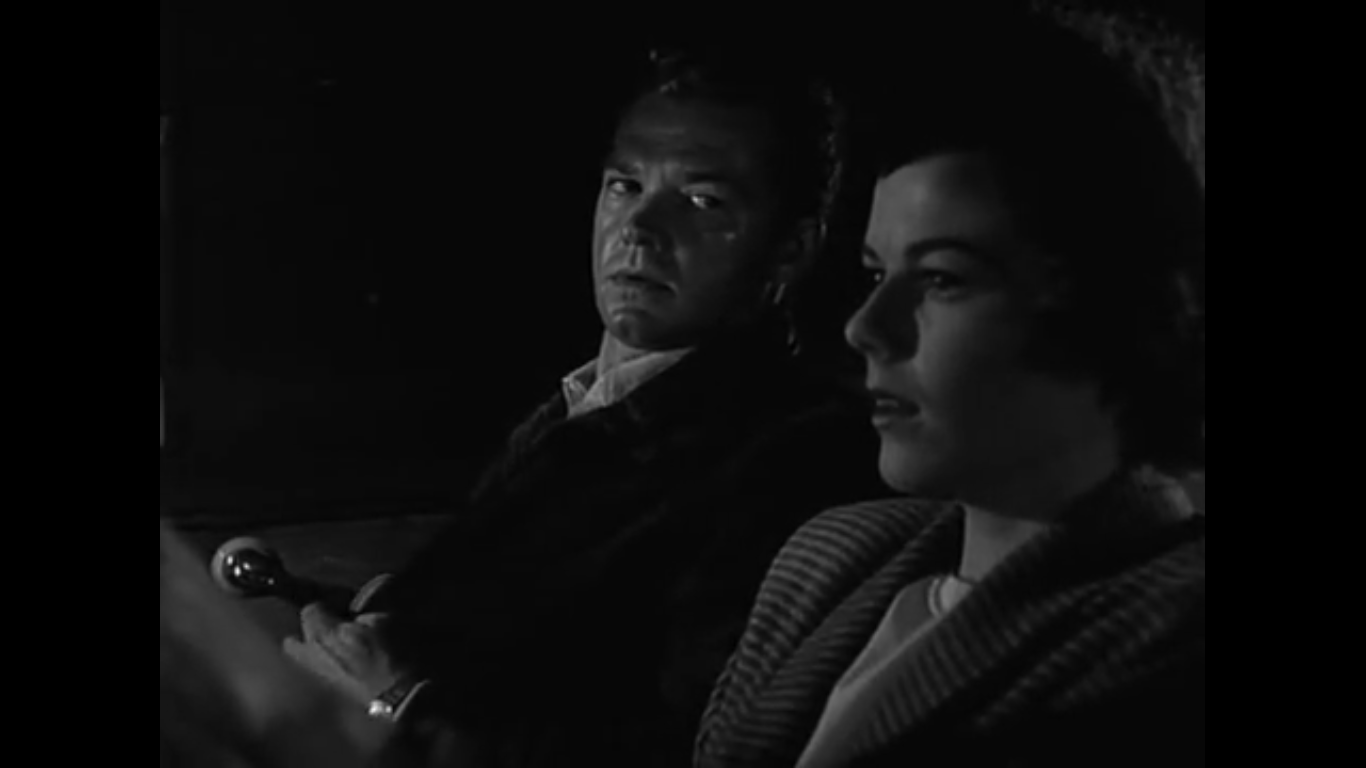
The Clay Pigeon is a film that I have spent several years trying to track down, and I’ve finally been able to see it. From the outside, it feels like fairly run-of-the-mill post-war noir fare. It’s directed by an up-and-coming workhorse in Richard Fleischer and stars real-life couple Barbara Hale and Bill Williams.
It’s one of those amnesia plots steeped in the residual post-traumatic stress of WWII reminiscent of Somewhere in The Night, Act of Violence or even a later entry like Time Limit. It’s this kind of narrative device that injects instant ambiguity into our story since G.I. Jim Fletcher (Williams) doesn’t know why he is currently in a hospital, and he seems to be implicated in some far more dubious crimes. Richard Quine also turns up, and he still has a couple years to go before his prolific career behind the camera.
Williams feels like a bit of an innocuous leading man without the gravelly charisma of a Van Heflin though he works in a pinch. Barbara Hale is a fond friend from Perry Mason so it’s easy enough to take her even if she transforms fairly quickly from victimized hostage to loyal female companion.
Because during the war her deceased husband was compatriots with Williams and Quine in a notorious Japanese prisoner of war camp. This clouded mystery of how their buddy was snitched on drives the movie with dubious implications in their own backyard.
Screenwriter Carl Foreman (known for High Noon) spins a swift tale that incorporates some real-life history that’s too farfetched to be fiction. It came out of an incident where a former POW walked into a department store only to see the unmistakable face of his former tormentor, a notorious prison guard nicknamed “The Meatball.” What a nightmare scenario.
Tomoya Kawaita was an American-born Japanese, going to Japan for university, but he got stuck overseas as the war heated up and ultimately became a notorious prison guard who would speak to his captors in English. After the war, he returned to States to attend USC. He was ultimately tried for treason and eventually got deported, spending the remainder of his days in Japan living in obscurity.
We usually think of the idyllic serenity of returning home from war albeit with growing pains. Warzones and home are mutually exclusive spaces. But here these scenes collide. The movie ties all of these details into a widespread conspiracy with broader implications and still it pales in comparison to the facts.
Richard Loo becomes “The Weasel” and the fateful encounter happens at a Chinese restaurant called “The White Lotus.” It’s possible that the movie conflates the Japanese and Chinese cultures, but regardless, it’s rather striking to even have this space acknowledged at all.
Loo purportedly relished the opportunity to put the Japanese in such a bad light, and he was often called upon to play such demented roles for WWII propaganda. The Clay Pigeon was no different in how it called on his wartime persona. It’s a bit of a holdover of the earlier sentiments.
However, there is one obvious difference. The movie does actually provide some nuance or at least an alternate depiction of the Japanese. This is the other reason I’ve searched so earnestly for this otherwise unassuming movie.
During a chase where Fletcher’s trying to flee his pursuers and clear his name with the Naval authorities, he rushes into an open door seeking asylum. The woman (Marya Marco) calmly doing her laundry looks him over and allows him to hide as she answers the door.
Once the danger passes, they share another moment. It’s an interaction that the tiny film, barely over an hour long, didn’t require, but whether it was screenwriter Carl Foreman or someone else, he takes time to honor this lady and her people. You see she has a young son, but also her husband was a Nisei who died during the war. His commendation and photo are displayed proudly for all to see.
When Fletcher sees it, it changes his whole demeanor because the 442nd carries a certain cachet. They paid for it with their lives and through their bravery. That’s something that anyone fighting in the armed forces can accept. It’s a badge of honor.
The movie rumbles to its inevitable conclusion, and it’s a nice bit of meta narrative to watch Hale and Williams embrace right outside the doors with all the loose ends wrapped up neat and tidy and our hero vindicated.
But for me, I already got what I came for with this one solitary interaction as an emblematic remembrance memorialized for all time. In the face of so much discrimination and wartime paranoia, the Japanese-Americans proved themselves to be fearless, fiercely loyal, and just as profoundly American as anyone else.
3/5 Stars
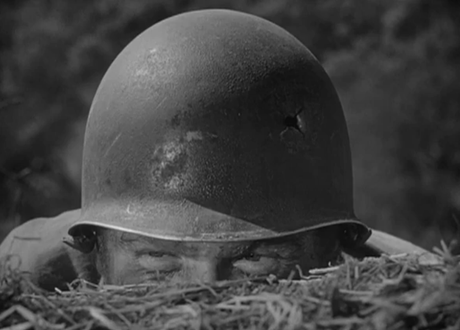 “What a fouled-up outfit I got myself into” – Sgt. Zack
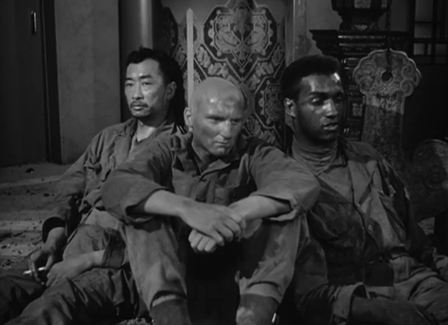 But the old WWII vet simply acknowledges the facts and retorts with his own piece of trivia. In the all Japanese-American regiment the 442nd 3,000 Nisei “idiots” got the purple heart for bravery. All he knows is that he’s an American no matter how he’s treated. That doesn’t change. Once more Fuller delivers some of the most engaging portrayals of Asian characters ever and the discussions of race relations were way ahead of their time. Both Richard Loo and James Edwards are honorable characters who hardly fall into any common stereotype.
 4 Star Films