Classic Movie Beginner’s Guide: Method Actors

Since we will be reviewing some films from some of the so-called Method actors, who were prevalent in the 1950s, we thought it would be good to do something a little different and pick four actors who are normally associated with the movement.

The Method was an approach to acting first conceived by Konstantin Stanislavski. However, his ideas were disseminated and widely influential thanks to the work done at New York’s Group Theater and then later the Actors Studio. Three prominent teachers who followed in his footsteps were Lee Strasberg, Stella Adler, and Sanford Meisner. Other noteworthy early figures were Elia Kazan and John Garfield.

A wave of younger actors would be flagged for bringing an exciting rawness and emotional vitality to Hollywood movie acting that was as revered as it was belittled and misunderstood. Let’s meet four key figures.

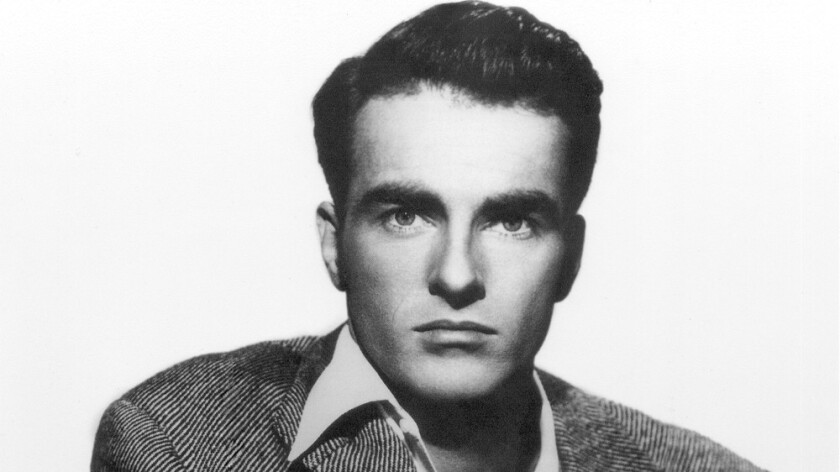
Montgomery Clift (1920-1966)

It’s difficult to understate how big Clift was when he made his auspicious transition from stage to screen. He chose his roles carefully and gained a reputation for not only his authentic emotional vulnerability on screen but also the meticulous time and preparation he put into his craft. A Place in The Sun and From Here to Eternity are as good a start as any.

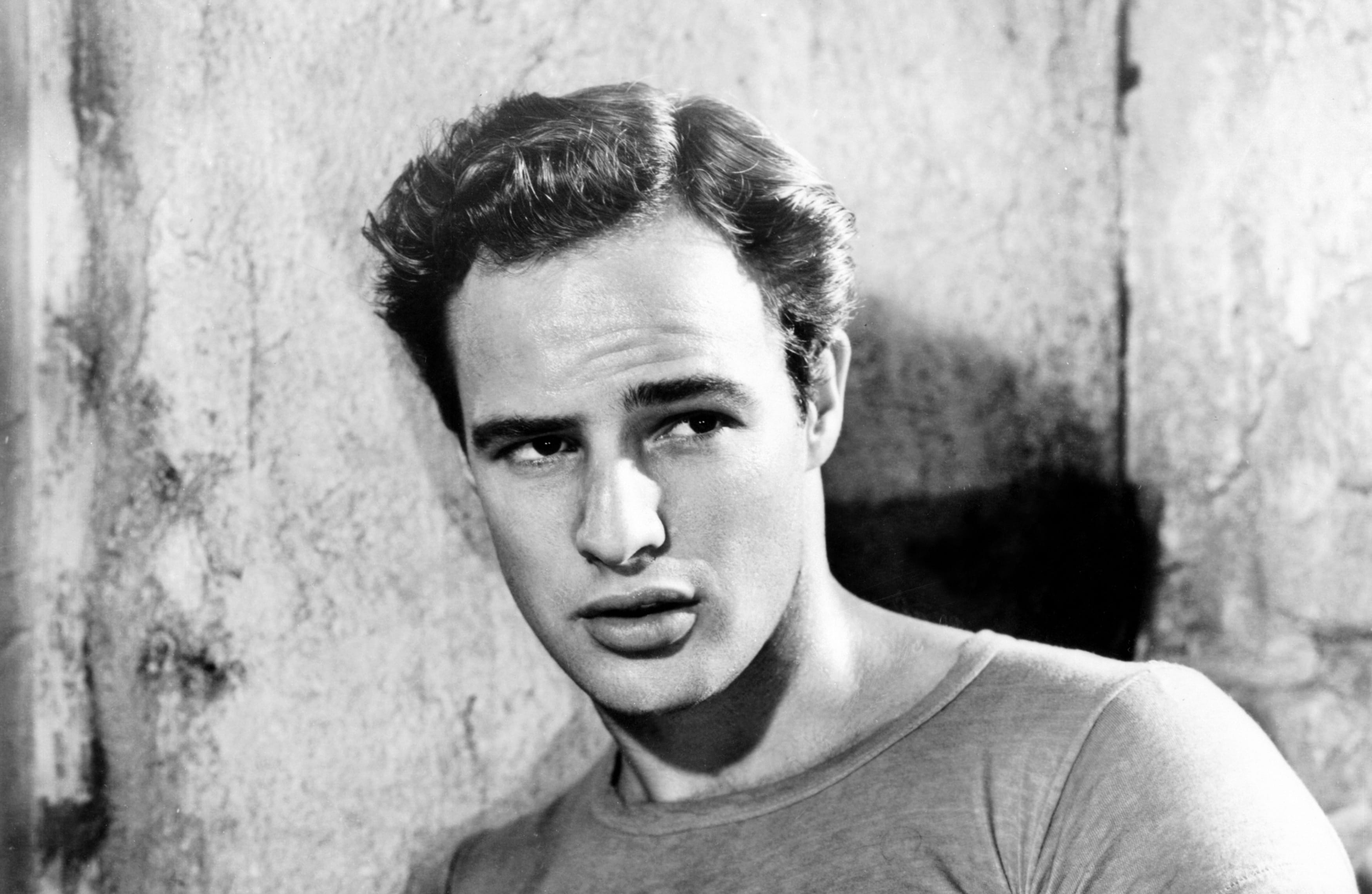
Marlon Brando (1924 – 2004)

Brando often ranks as one of the greatest actors of all time and for good reason. He took the rules and generally assumed conventions of acting and gave them an animal magnetism and a kind of ever-present honesty that represented something entirely new and daring. It’s so easy to parody his mumbling delivery, but hard to replicate the breadth and import of his work especially early in his career. A Streetcar Named Desire and On The Waterfront are good starting points.

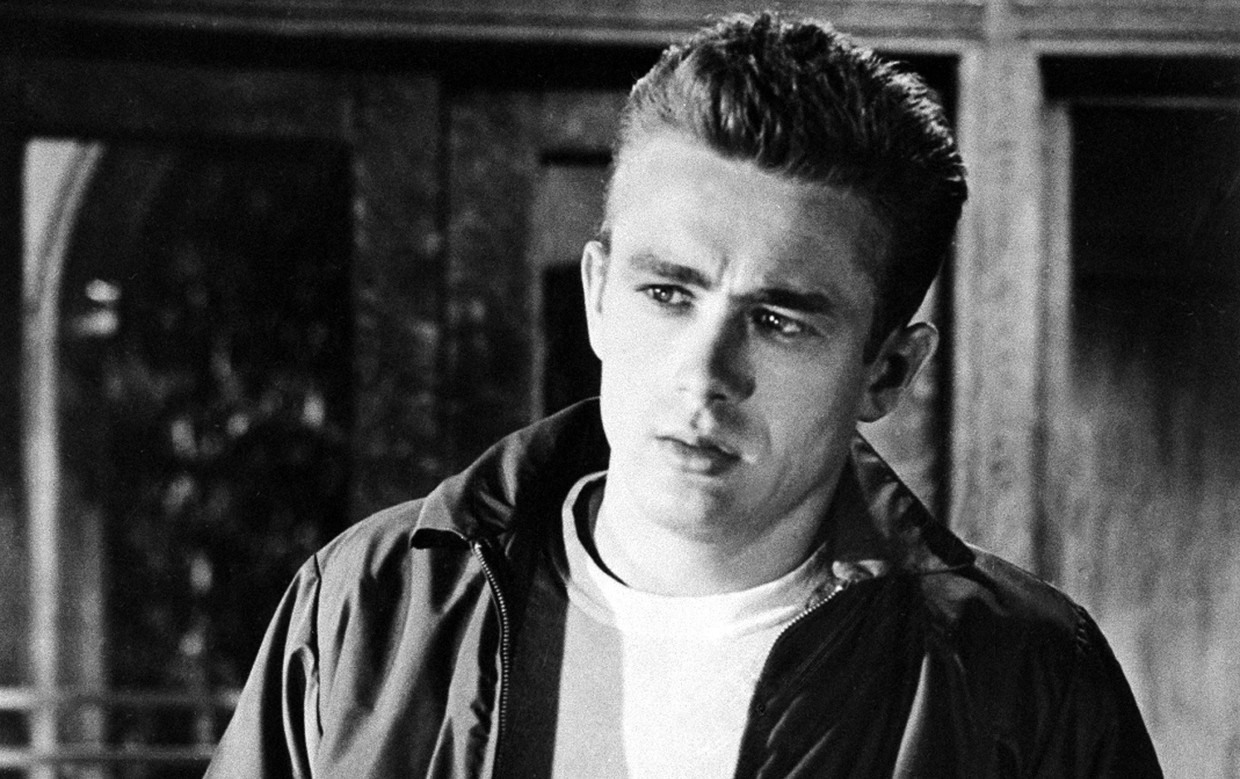
James Dean (1931 – 1955)

James Dean only has three starring roles to his name, and yet it’s a testament to his stature on screen and his lasting impact that he’s still talked about to this day. He doesn’t have the presence of Brando or the poise of Clift, but in his own flighty even standoffish temperament there was something truly mesmerizing for countless generations. East of Eden, Rebel Without a Cause, and Giant all feel like must-sees.

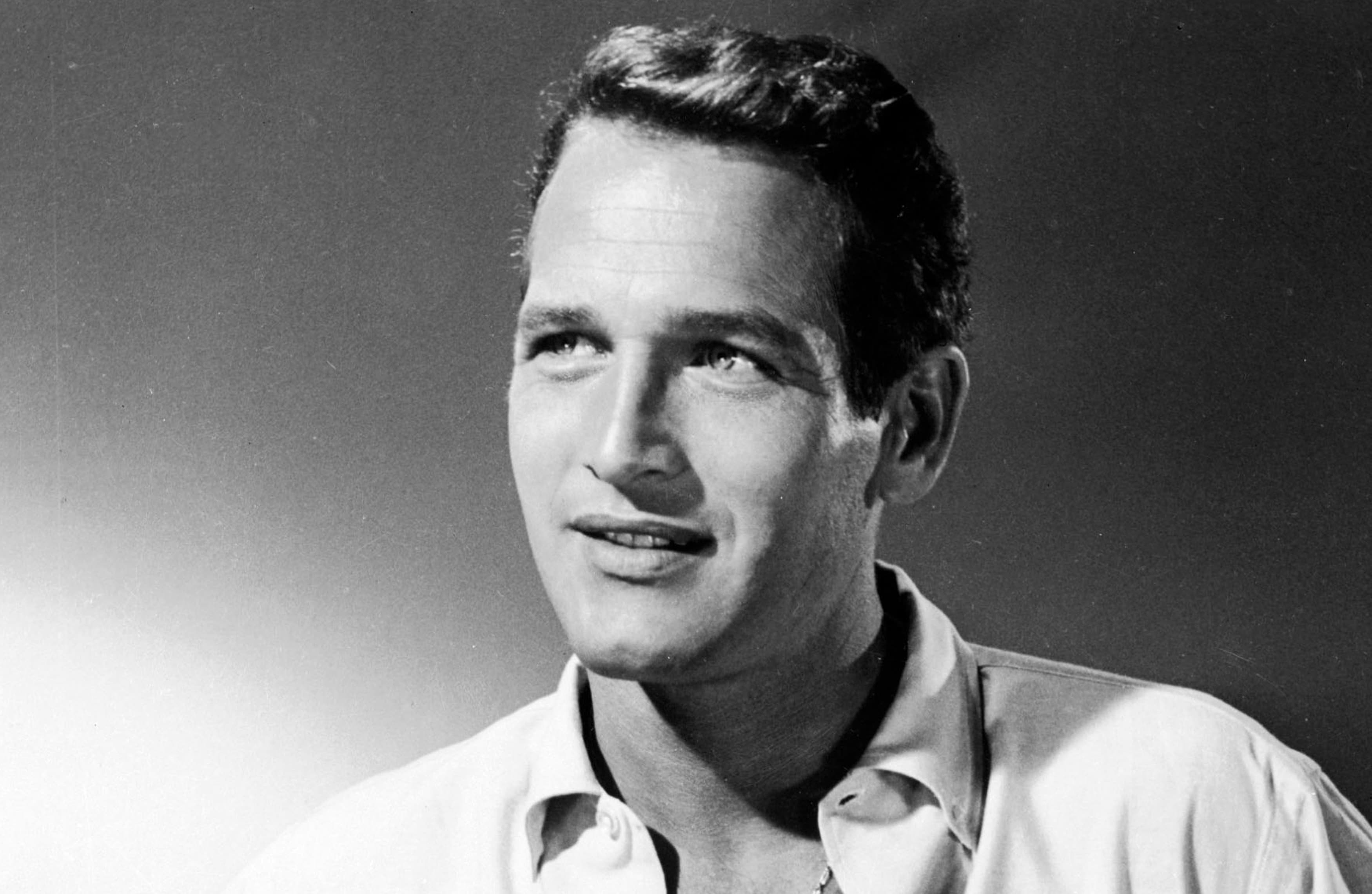
Paul Newman (1925 – 2008)

Like Brando, Newman had a long and varied career, but in the ’50s fresh off his time at the Actors Studio, he found himself in any number of heady dramas from the likes of Tennessee Williams. He also partnered with fellow student (and future wife) Joanne Woodward and the socially-minded actor’s director Martin Ritt. With the hole left with the tragic death of Dean, he was one of the young upstarts called on to fill the void. The rest was history.

Do you have a favorite out of these four actors or some favorite films they starred in?

Bhowani Junction (1956) and Racial Identity

Bhowani_Junction

“It’s about time the Lord started making all human beings the same on the outside as well as the same on the inside.” – Stewart Granger as Col. Rodney Savage

“They’d only change it back again, the moment his back was turned.” – Ava Gardner as Victoria Jones

Some will easily take offense with Bhowani Junction for its portrayals. To be sure, it’s working in terms of imperialism, British-Indian relations, and biracial identity. Oftentimes Westerners, and Hollywood in particular, are suspect of taking an oversimplified, superficial perspective when we represent other cultures. It could be the “White Man’s Burden,” The Nobel Savage archetype, or even “The Tragic Mulatto.”

Certainly, a lot of these stereotypes — now decades later — aren’t only indicative of a skewed or misguided sense of portrayal. Rather they get maintained through prolonged underrepresentation. It starts with ignorance and the kind of clumsy cultural shorthand that tries to make sense of other people who are different than ourselves. However, its continued pervasiveness lasts partially because it’s never fleshed out or totally dismantled by a flood of new portrayals. In many cases, we’re still getting over this very same hump in the 21st century.

For this reason alone, Bhowani Junction makes an admirable go at offering a slightly different perspective. It’s hard to say the Indian characters get to reclaim their own story because this narrative is still dominated by colonialism like its predecessors.

Granted, we must also still court issues of whitewashing (if not simply with Ava Gardner). You have both Bill Travers and Francis Matthews playing a mixed-race and a native Indian respectively. It feels especially regrettable since an actor like Sabu was passed over for a role.

Likewise, there is something convenient about Gardner ending up with the strapping white man (her fellow Anglo-Indian dies a sacrificial death). Meanwhile, the kindly Sikh she nearly marries out of gratitude is forgotten in the wake of ensuing drama. Still, these are only a few qualms.

The backdrop of the story is of vital importance in order to contextualize what’s going on. The British Empire’s foothold in India is crumbling. You have the peaceful protests of Gandhi sweeping the country. Meanwhile, more militant riots are being instigated by a local troublemaker named Davay (Peter Illing). Deciphering the socio-political climate is hardly easy and that’s why the conquerors usually got it wrong wherever they wind up.

The curious thing is how Bhowani Junction is not about holding the empire together. One of its main representatives, Colonel Rodney Savage (Stewart Granger), knows it’s only a matter of time before it crumbles. What gains importance is the process of leaving well. The primary objective is based on creating stability and relinquishing power honorably with as little bloodshed and animosity as possible.

It’s people like Victoria (Gardner) and her childhood friend Patrick Taylor (Bill Travers) who must figure out where they fit into this narrative. However, it’s noteworthy that the dissociation going on inside her own being goes beyond existing as a mere social pariah. Far from being an outcast, she’s a respected member of the British military and not completely rejected by the local Indian population.

Still, she is different than both. It’s reality and she must come to terms with it. What presents itself is a surprisingly unique perspective for 1950s Hollywood and even if it is imperfect, it proves willing to grapple with history in an altogether different manner. Thus, Bhowani Junction is a welcomed contour of 1950s Hollywood filling in and shading a cross-section of society we very rarely see.

Subsequently, what the film does is offer up a case study of racial identity with Gardner caught between three men representative of the three “cultures” tugging at her very being. Because Victoria Jones, half-English, half-Indian, has her affections and allegiances split threefold.

However, Bhowani Junction adds a bit more nuance when it comes to the representation of biracial characters. I will dance around these lines gingerly as I know some might vehemently disagree. I can only speak from my own experience as someone who grew up with a similar background. Even if I am rarely accustomed to this kind of racism or private dissonance, questions of my own identity still creep into my mind from time to time. It’s only natural.

Yes, the romance with Granger and the melodramatics might fall within the realm of accepted convention, but under Cukor’s sympathetic eye, Gardner comes at the part with a ferocity — giving it her all. One particularly scarring moment involves a devastating rape scene.

Far from being a mere lynchpin of the narrative, it’s actually suffused with the terror and concern it should rightfully engender. What a horrible experience to be privy to as Gardner struggles for her life by the local train tracks. In truth, it left the actress so affected she had to make peace with her onscreen aggressor (Lionel Jeffries) off-camera. It’s graphic in movement and emotion and that’s terrifying enough.

Amid the foreseeable beats, there is a far more intimate and engaging story attempting to court themes of a far more personal nature. The hubbub and crowded train depots are momentarily diverting, but they are not Cukor’s prime concern nor his forte. He’s no Demille or David Lean. Give him the relationships, person-to-person, and on this scale, he is a wonderful handler.

Cukor also remains vindicated by history. Because the epiphany that his original structure was ruthlessly bastardized by the studio, through hastily constructed voiceover and other such shortcuts, gives me greater faith in the man. It’s only a shame we cannot see his personal cut of the movie. Not only does the thrown-together bookend narration kill the climax, it feels stilted, wrecking the basic integrity of our story. Alas, what could have been.

3.5/5 Stars

The Barefoot Contessa (1954): A Cinderella Story

Screenshot 2020-04-18 at 51159 PM

While it shares elements with the earlier Pandora and The Flying Dutchman in both its techniques and the mystique projected around Ava Gardner, The Barefoot Contessa ultimately evolves and settles into the narrative rhythms one might expect from its creative partners.

Jack Cardiff returns to give Ava Gardner phenomenal lighting and color — flattering her complexion — beams bursting with radiance and vibrant pigmentation. The extraordinary tones of the cinematography are married with Joseph L. Mankiewicz’s penchant for substantial but well-wrought dialogue and a kind of suave dinner repartee dating back to the days of All About Eve. Likewise, the spine of the story is derived from a very conspicuous novelistic device — starting at the end to illuminate the beginning.

Because someone has died. There is a funeral in the gloom of a rainy day in Spain. Although rain falls mainly on the plain, that is no concern of ours. Instead, we meet the onlookers from many walks of life, all sheltered (for the most part) under their respective umbrellas.

Humphrey Bogart is Harry Dawes a veteran movie director and screenwriter halfway around the world from Hollywood & Vine, attending the funeral of one of the industry’s incandescent starlets who burned out far too quickly.

As is commonplace with many of these self-reflexive industry portraits popular specifically during the 1950s, you begin to suspect where stories gleaned their inspirations by weaving fact and fiction together into a new amalgam of the Hollywood dream factory.

This tale of a nightclub singer in Madrid rising to the heights of Hollywood is hardly a far cry from other real-life origin stories. Rita Hayworth was reborn as a screen goddess and eventually married a prince. Lana Turner was discovered at a drug store counter or the likes of Linda Darnell and Ava Gardner herself had Hollywood contracts thrust upon them at such an early age. In other words, this wasn’t just another wishful Hollywood story. There are obvious antecedents floating around the industry.

The world is instantly placeable. Flamenco guitar. The unmistakable Enzo Staiola from the Bicycle Thief as a busboy (in Spain no less). What sets Maria Vargas apart is her startling frankness, hardly enamored with the movie industry.

She makes a startling first impression as much for what she won’t do as for what she does. Because she’s a very hard girl to see — not easily swayed by Hollywood glitz — and terribly grounded when it comes to what she wants for her career.

The wheeling-dealing P.R. man Oscar Muldoon (Edmond O’Brien) talks up what she has to look forward to, continually dabbing his forehead with his hanky from his exuberant bouts of hyperventilation. Meanwhile, the tense and controlling financier, Kirk Edwards (Warren Stevens), sits by expecting everyone to cave to his will.

He’s no Hollywood wunderkind, but he has money to finance the industry’s next big hit. His money speaks and so Dawes and Muldoon follow his lead. He makes the world turn. Maria Vargas knows no such convention. She is the master and perfecter of her own destiny.

Harry’s the first person she feels akin to; he’s a real person without throwing around the pretense of his purported fame. Meanwhile, she’s not completely ignorant of the movie industry, throwing around the names of Lombard and Harlow, Lubitsch, Van Dyke, and La Cava from the golden days.

Even as the lovely dancer sets her sights on Hollywood, she carves out an individual path. She began as an untouchable with no interest in the enticements of men or romance promised by the industry around her.

Because she knows who she is and her grounded roots are signified by her affinity for having her feet in the dirt. You can’t easily change someone to the core of their being. Though she’s not Spanish nor does she exude the qualities of a girl from humble means (looks can be deceiving), Garnder makes the most of it.

There are men jockeying for her affections (or at least ownership of her career) among them Kirk and a frivolous Latin American gigolo, Alberto Bravano (Marius Goring). He is little better, enslaved by his own excesses be it gambling or drink. The man who admires her from a distance and subsequently takes her away from the place is Count Vincenzo Torlato-Favrini (Rossano Brazzi), the closest thing to a decent man she’s ever had in her life thus far.

barefoot contessa 1

Harry remains a steadfast friend and a protector of Maria when the world seems full of ravenous wolves and superficial opportunists. He knows Maria better than most; she owns an acute Cinderella complex, looking for her Prince Charming, even if the glass slippers were never meant for her. The Count seems to be the man. Alas, in life midnight often strikes and there’s no way to reclaim the time. Her fairy tale ends in tragedy.

No fault of her own, I never felt the weight or magnitude of Maria and the loss of her life. The way the story continually circles “the round” of funeral guests somehow hinders us even though the myriad of perspectives are meant to help us comprehend her better.

I found myself wanting more Bogart or at least more O’Brien, who gives an impeccable showbiz send-up, but when topics turned to the other men in Maria’s life, the story grows turgid and uninteresting — partially alienating the audience. They were never established in the same way nor do I have the kind of instant rapport with Goring or Brazzi that I instantly feel for Bogart.

Most regrettably, Gardner’s performance is never truly allowed to cast a spell of enchantment aside from a few intermittent scenes. Yes, once again, she’s remarkably beautiful and Jack Cardiff’s camera does wonders to ignite her God-given features in an extraordinary light. When she dances with gypsies or wanders through grand estates in luxuriant gowns, she has powers to entrance the audience.

However, her actual performance — going beyond her casting as a Spaniard — never seems to play to her true strengths. If I may be so bold, I never consider her much of an actress, but she’s at her most sublime playing shades of who she really was or at least what her reputation made her out to be.

I look at Pandora and the Flying Dutchman, even in its heightened state of reality, or Mogambo and The Night of The Iguana, and I feel like I know and understand Gardner a bit more intimately in and through her performances. Perhaps this is precisely the point, but in The Barefoot Contessa, we only know her due to the recollections of others.

For me, she is merely another portrait of inevitable rising and falling human tragedy. Unfortunately Hollywood has engendered many of those storylines. She feels more like the postscript to other people’s stories than the definitive protagonist of her own biography.

Because a Barefoot Contessa is such a stirring image, both dissonant and complex, well-worth eulogizing about. Sadly, it never harnesses all its assets, and when the credits roll it feels inconsequential at best and at worst disrespectful.

Such a woman deserved a better remembrance. If nothing else, it’s a sad commentary suggesting a woman’s legacy is made by the men who helped shape her and are consequently the ones who live to tell her story. The Pygmalions might live in regret, but it is their creations who are buried in the dirt. “Che Sara Sara” feels like too pat an answer for this tragic Cinderella story.

But, after all, this is Hollywood we’re talking about where it’s tempting to mold everyone into easily digestible, one-dimensional media icons ready for immediate consumption. For all their glamour and tabloid-worthy headlines, Rita, Lana, Linda, and Ava (as well as any other Hollywood casualty) were human beings too.

3.5/5 Stars