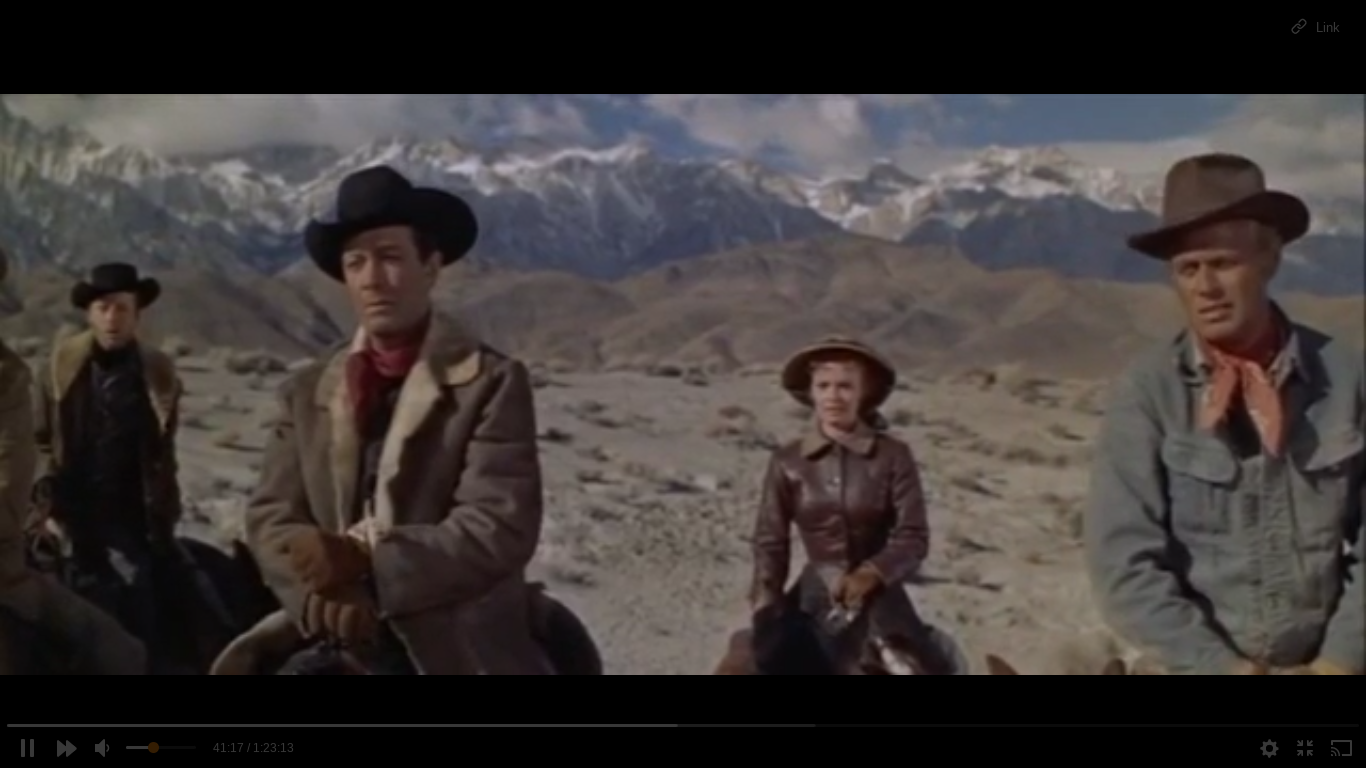
The Law and Jake Wade (1958): Robert Taylor and Richard Widmark

It’s initially intriguing to have a western pairing of Robert Taylor and Richard Widmark, rather like what we get out of Warlock from Henry Fonda and Widmark the year after. My estimation of the dashing ’30s matinee idol has refined over time as he matured into such worthwhile westerns as The Devil’s Doorway, Westward The Women, and even Saddle the Wind.

Here again, Taylor holds the mantle as the inscrutable, no-nonsense lead and Widmark falls back into his role as a merciless reprobate, prone to all sorts of aggression. What’s more, there’s something delightfully skeezy about his voice. He slips into it so seamlessly playing a kindred of Tommy Udo or any of his more reprehensible characters.

The premise is set up immediately with a brazen jailbreak — one man comes in for his pal — and then they shoot their way out of town toward freedom. However, it quickly becomes more complicated. Jake Wade (Taylor) and Clint Hollister (Widmark) are not so much friends as former acquaintances.

This is merely an act of reciprocation because when they raided the Yankees during the Civil War, they formed an uneasy alliance, out of necessity, before eventually parting ways. If they don’t entirely hate each other’s guts, then at the very least they’re deeply mistrustful.

It’s even more curious when Jake returns to his current life. He’s a town’s marshall. How do you make sense of him? In one moment he commits a brazen act of jailbreak, and yet in another, he sits behind a desk in a decent, sleepy town holding a position of repute. Here the noir element is made evident — the way a dark past always comes back to haunt the protagonist and the life he’s tried to make for himself.

In the meantime, the imagery and more specifically the snow-covered mountains are an awesome backdrop and something only the western landscape affords. Jake also is keeping company with a pretty gal. Patricia Owens reminds me a bit of Julie London, mousier but deeply sensible. Her requests make sense, but her man can’t tell her his misgivings without dredging up unwanted memories.

Because Widmark is the force out of his past he can never totally get rid of. We wonder why he pulled him out of prison. It might come down to some moral prerogative, but it feels a lot like letting the monkey out of the cage so it can end up on your back again.

The old gang moves in and Taylor is taken prisoner with the sole purpose of leading them back to a cache of gold pieces he buried in some forsaken town years before. The journey is long and arduous and the callous Clint makes his old partner do it with his hands tied behind his back. He’ll give him a horse, but he doesn’t trust him with more. If you give him an inch, there’s no telling what will happen.

Deforrest Kelly never quite does it for me as one of the heavies — though he’s quite a psychotic hulk in Warlock. Of all the sidekicks, Henry Silva has real umbrage and a chip on his shoulder, coming off smug and vaguely dangerous.

However, in its best moments, it really becomes a fitting inverse of The Naked Spur held aloft by the two central performances dueling it out. The bad guy is the one holding the reins and dictating the story while our hero and his girlfriend are under his watchful eye as they go on the hunt for the buried treasure. The tension rides with them every moment of their trek.

When Widmark skirts off to catch the Native scouts that bode trouble, there’s a fear something will be lost in the movie. We stay back with the others as they wait it out in the ghost town, and it feels mostly stagnant. The dynamic brought by Taylor opposite Widmark is momentarily relinquished.

In its wake, there’s a run-of-the-mill shoot ’em-up Indian barrage. I couldn’t help but compare it with the shootout in Man of the West also preoccupied with a ghost town. However, whereas that film has Gary Cooper and a mythos about it like a knowing predecessor to Sergio Leone’s stylized showdowns, Jake Wade feels mostly unspectacular. It’s a shame because the film packages together a handful of worthwhile performances and tangible menace in fits and starts.

3/5 Stars

Time Limit (1957) Directed by Karl Malden

Time Limit sounds like it should be the title of a syndicated TV program or at least a game show in the heyday of family entertainment. It is not. The themes are heavy, and there’s a weight behind the picture that means something. And in spite of the clunky title, it bears testament to the main players both behind and in front of the camera.

Like his acting compatriot, Marlon Brando, Karl Malden only ever directed one full feature-length picture. Here it is before us, and you can see his sensibilities in it if only because it does stand for something. There is a purpose to it.

Although we never even see the inside of the courtroom, it still reminded me nominally of Man in The Middle with Robert Mitchum solely due to the scale. They both seem to rely on performance and actors who are up to the task.

Time Limit hones in on an investigation into a potential court-martial of a major who looks to have caved to Communist ideology and committed acts of treason against his men and his country in a North Korean POW camp.

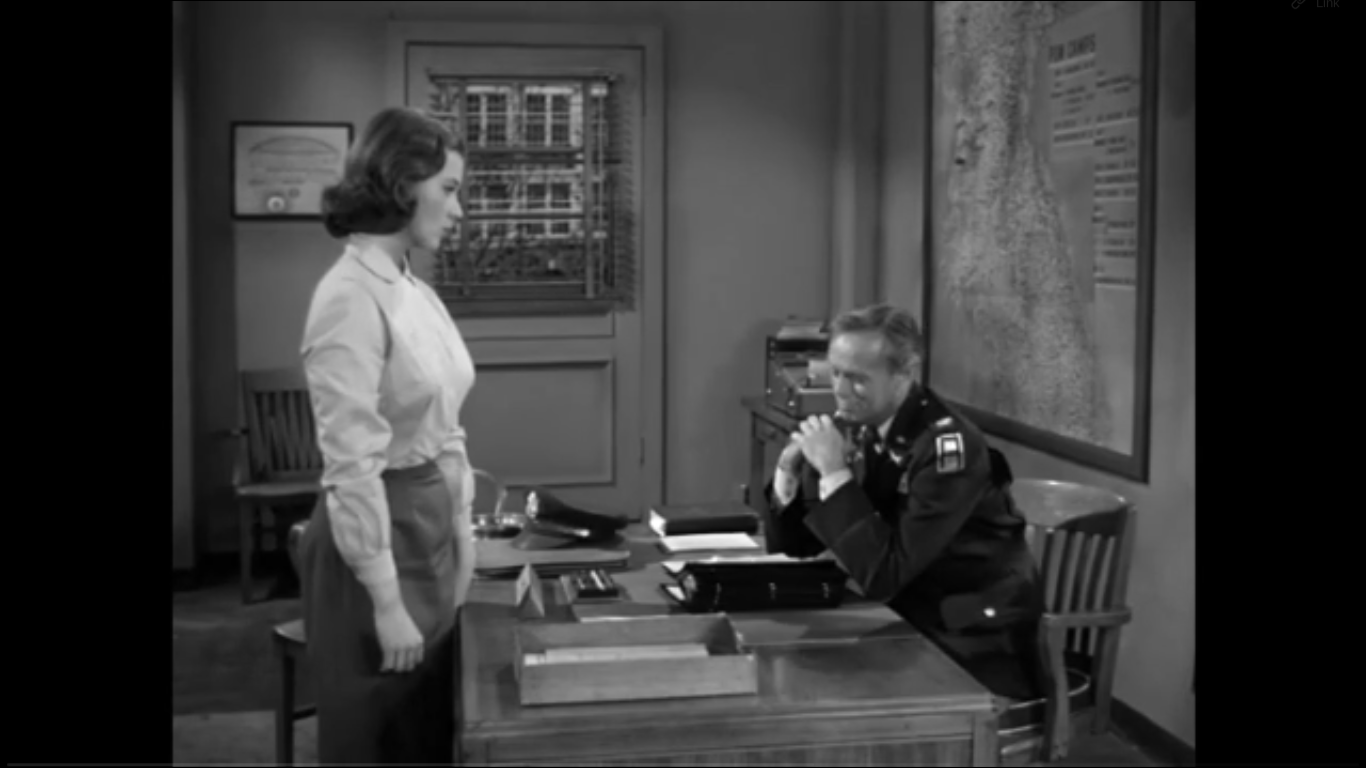
Richard Widmark, as the producer and one of the primary architects, is the anchor of the movie as the primary officer — a clear-minded Colonel — called upon to compile the details of the case.

But it is really Richard Basehart with the most complicated, ever-shifting role. It’s easy to sleep on him because of his stint in Europe, and he was never intent on being a movie star. And yet over a serpentine career, he left a trail of memorable noir (He Walked by Night, Tension), arthouse classics (La Strada), and mostly forgotten dramas like Reign of Terror or Fourteen Hours.

Because Time Limit functions mostly as a character piece albeit laced with flashbacks and ratcheted with tension. The ensemble itself is made up of a handful of others. General Connors is the Colonel’s immediate superior, and he’s pushing for a quick court-martial. He doesn’t want the boys to suffer through any more trauma. Although he’s not a totally unlikeable fellow, he does have a very concrete way of thinking. It’s abrasive, to say the least.

If you’ve read me before, you know I have a soft spot for Martin Basalm, and it started with movies like 12 Angry Men and Psycho and steadily built over time. He’s just so versatile while never losing his personal DNA as a performer.

Time Limit finds him on the more irksome spectrum as a busybody rat fink, who always has a way of divulging information to interested parties, much to Widmark’s displeasure. But for every tattletale by Sergeant Baker, there’s a supreme act of loyalty by the faithful and whipsmart corporal Jean Evans (Dolores Michaels). If we were to codify the movie purely between good and bad, she is one of the movie’s unsung heroes.

But they must also have witnesses — people with first-hand knowledge of the case — both personal and otherwise. An almost unrecognizable Rip Torn is a clean-cut, fresh-faced member of the unit who was there in the POW camp when the Major turned. Mrs. Cargil (June Lockhart) has a much different point of view because she still can’t believe the debilitating change that has come over her husband. It’s not like him. Something else is going on under the surface.

The score rages too much for my liking, but for what it is Time Limit plays quite well. The General starts breathing down Edwards’ neck — with personal interest invested — his son was one of those killed in the camp. It certainly cannot be discounted. Then, there are these very particular repetitions in the many testimonies (describing factors like acute dysentery). Something does not add up because everything lines up almost too perfectly.

More than anything, it does feel like Malden makes his actors look good. I’m thinking of a particular scene where Widmark is absent. Balsam leads Basehart into the office to wait but then prepares to ambush him and give him a piece of his mind. Michaels makes sure she is present to moderate, but first Balsam leans over his superior in his chair. Then, the close-ups cut back and forth between him and Ms. Evans as they have at it.

The tension in the sequence is palpable because the scene is blocked and covered in such a way that we feel the entire essence of what is going on. The visuals not only augment the performances but also the emotions underlying the sequence.

Winston Churchill is cited as saying, “In wartime, truth is so precious that she should always be attended by a bodyguard of lies. Widmark turns these words on their head because he says, “Truth can be more rotten, more vicious, and destructive than any lie.” Within the context of this move, he’s right.

Like Act of Violence, it becomes a film of making sense of a clouded past under circumstances the offenders are not proud of. The General invokes an unbreakable code for all his men — even his son — a code that must be adhered to with unswerving resolve. It’s a graceless proposition that no one can stand up to. Because for the hundreds of days men are heroes, there’s always going to be a few where they falter.

The question remains how do we canonize others? Is it at their most cowardly and despicable or at their very best? For those paying attention, the irony in the General’s final convictions should not be lost on us, “The Code is our Bible, and I thank God for it.”

If you’ll allow me one final digression, a book that’s pierced me to the core is Silence by Shusaku Endo. It is about Catholic priests, not soldiers, but they face a similar conundrum: the desire to attain some sort of martyrdom. However, what if someone is forced to face the ultimate ignominy instead? Each must struggle and make peace with a world that will openly disdain them, and that is a tough pill to take for any person.

3.5/5 Stars

Backlash (1956): Donna Reed and Richard Widmark

Only in a western could we meet our protagonists in a sand trap known as Gila Valley. It says everything you need to know about the Arizona landscape, and then the sweeping Technicolor tones say a bit more.

Richard Widmark is easy enough to place as an enigmatic figure. There’s a glint in his eyes, and we know from his pedigree he’s capable of playing shifty. The true pleasure is watching Donna Reed — because she becomes very much his equal — another sturdy customer with her own personal agenda.

It feels so very unaccustomed for the woman who played Mary Bailey and anchored her own family comedy. Then, again, the edges of From Here to Eternity are not too far in the past. It’s hard to forget what she did there across from Monty Clift.

The movie gets its legs when a man takes a shot at Jim Slater (Widmark) from the rocky crags above. He thinks he’s been a mark. The woman, Karyl Orton, was trying to play him, and he nearly fell for it. Leaving her behind, he scurries to the rockface to have it out with his enemy on the high ground.

Backlash is a constant exhibition in deciphering characters’ intentions. Because as an audience we are thrown into the action and asked to follow what’s going on. She’s searching for some gold, and he asks us to believe his interests are purely in his father who disappeared in the territory.

Although it’s adapted from source material, it does feel reminiscent of some of Borden Chase’s other patented efforts with a craggy showdown reminiscent of Winchester 73′ (1950). Thematically, John Sturges’s turn as director also proves a decent facsimile of some of Mann’s best westerns where the blending of psychological duress, perturbing imagery, and in-your-face action strings out the story into a taut state of tension.

It’s easy to become genuinely immersed in the first act with a fleeing stagecoach looking to cut across the open plains with Indians in hot pursuit. As they fall back, they’re forced to hold down an isolated trading post against the onslaught of marauders.

Unfortunately, all this buildup feels a bit too convenient. Because Slater searches for a seasoned soldier named Lake (Barton MacLane), who was a part of the detail that found the dead bodies that were left behind in an earlier massacre. In serendipitous Hollywood fashion, the old man keels over from a battle wound, just before divulging the remnants of what he remembers of a “6th man.” Surely he is the key to the movie, and Slater has been propelled forward.

If we can stop for a moment to acknowledge them, Backlash has a couple doozy bits of casting with the normally maniacal heavy Jack Lambert playing a sniveling Indian trader. Then, Harry Morgan, in a role reversal, takes on the role of a squat, no-nonsense heavy out to hunt Slater with his big brother. Because Slater killed their sibling.

But if there was any doubt in the red-hot chemistry of our primary stars, it sizzles while Reed brandishes a knife to cauterize the gunman’s most recent injury. It is a movie moment made for the big screen audience if there ever was such a thing. This smoldering passion and growing relationship are nearly enough to salvage the picture in its slower ebbs as they continue their search for answers.

In the end, they split the thread pretty thin between the two of them. It can only go one of two ways. Either the man he’s looking to find is her long-lost husband, a corrupt man, or it’s his own father — a man he’s never known a thing about. We must wait to discover the answer.

But the factions in the buildup are interesting. Our protagonists meet a man named Major Carson (Roy Roberts), who runs a local ranch. He seems like a pragmatic, sensible sort of fellow, and he’s got a range war on his hands thanks to a man named Bonniwell (John Mcintire).

One hotheaded sharpshooter (William Campbell) goes turncoat, and there are still thugs looking for Slater to gun him down in an act of retribution. The local sheriff (Robert Foulk) aims to remain impartial in all of this while still maintaining some manner of civility. He’s not concerned with private vendettas, only some semblance of local law and order. Widmark quickly gets tossed into the jailhouse, effectively sidelining him and leaving him incapable of exerting any influence on either side.

I won’t spell out the final act because that’s part of the fun of the picture, watching it unfold. There’s a dog-eat-dog mentality; it’s about family, but it never stops being a picture founded on Richard Widmark and Donna Reed. If you’re curious about seeing them together, that’s a good enough reason as any to invest in this western from an often underrated craftsman.

3.5/5 Stars

Colbert and MacMurray: Gilded Lily, Take a Letter Darling, Egg and I

One of my latest ventures was to view a handful of romantic comedies of the ’30s and ’40s, many with screwball elements, and you could not broach this territory without eventually crossing paths with Claudette Colbert and Fred MacMurray. They starred in 7 films together throughout the decade and also paired opposite some of the most prominent stars of the era (including Clark Gable and Carole Lombard).

Here are three of their movies, two that star both of them, and one with Fred MacMurray in the lead with another worthy romantic partner:

The Gilded Lily (1935)

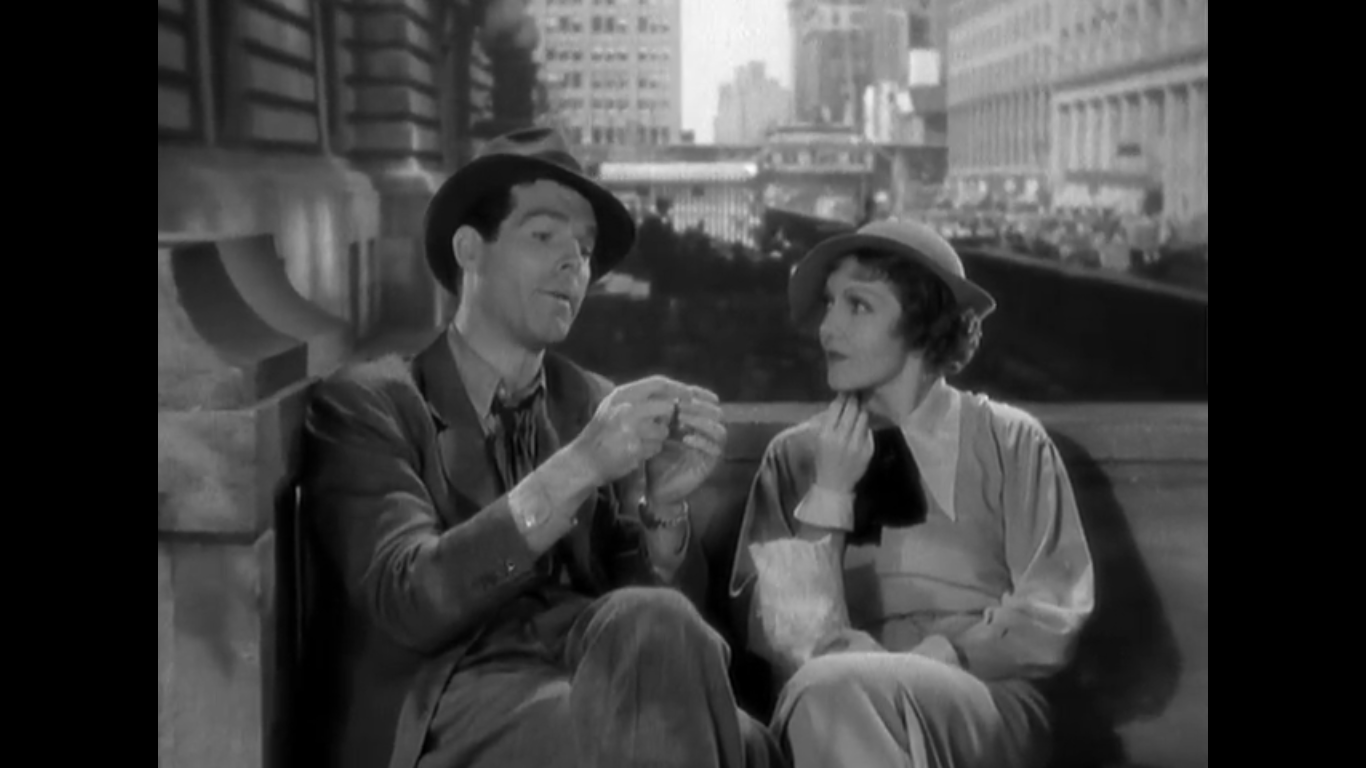
It opens on a park bench with MacMurray and Colbert chewing the fat as they share a bag of popcorn. What it does is create this instant familiarity going far beyond the bounds of the film as we’re thrown into their relationship that feels more platonic than romantic.

Thus, it’s not so much about the build-up to a prototypical relationship but the chafing that comes with their differing feelings. He has the hots for her. She loves him as a friend but still seems to be looking for her prince charming.

Prince Charming comes in the form of Ray Milland, a rich British aristocrat who’s come to America incognito. You can immediately imagine the complications arising from the fact Peter (MacMurray) is a nosy newshound and the other man has a secret to hide. They’re still to be cast as true romantic rivals and there’s already a tense undercurrent between them.

Meanwhile, Marilyn finds herself having to choose between two men as Lord Charles (Milland) promises a life of cultured sophistication. But Peter is always there, her ever-faithful confidante, and he’s also not going down without a fight.

He churns up the news mills to turn her into a household celebrity and the whole world seems to know her name. Even Charles is tickled by her world-class notoriety, but this is only a paltry imitation. If it’s not evident already, she needs a man who wisecracks, buys her popcorn, and wants to love all of her, whether she’s a big shot or not.

I’m still a bit smitten by the movie’s public bench premise because it allows our stars to do what they do best: laugh at the world together. No one can break their bond, and it teases out new contours to the Colbert-MacMurray partnership.

3.5/5 Stars

Take a Letter Darling (1942)

Although he does have a devoted following, Mitchell Leisen still does feel like a mostly unheralded director in broader circles. Take a Letter Darling is another modest feather in his cap, and it has numerous charms.

The gender norm-bending premise was actually quite intriguing for the era and MacMurray and Russell are more than up to the task of sparring in and out of the office. She’s a high-powered businesswoman who enlists a male secretary who can help her land her deals. He has a very important job: keeping jealous wives satisfied as she trades shop talk with their husbands.

There’s an obvious level of emasculation to the part, and MacMurray is more than game for it as he becomes the laughingstock of the secretarial peanut gallery. You see, he’s MacGregor’s fourth man and she’s running out of options. Still, it’s a lucrative way to bankroll his true passion: painting.

If Claudette Colbert was in fact originally earmarked for the part, I think I’m still partial to Russell in this particular role. I just find her brand of delivery perfectly metered for any kind of antagonistic comedy. And there’s a sense it builds on the kind of workplace dynamics she stirred up with such legendary fervor with Cary Grant in His Girl Friday, between quizzical glances and whipsmart repartee.

I will admit that Take a Letter Darling loses some of its comic edge when it turns saccharine, and the inevitable romance materializes. Until this point, the movie uses its premise to mine a plethora of laughs only to peter out as it makes Russell shed her authoritative business acumen for warm, fuzzy feelings.

However, while the final act can’t quite maintain the same level of comic tenacity, it also doesn’t whimper out as much as I was expecting. Yes, MacGregor wants her man back, but in typical Russell fashion, she crosses paths with him out on the road and comes armed with pebbles. She’s not going down without a fight, and she won’t totally acquiesce. It’s against her nature.

I feel like womanhood, especially in the ’50s, is glazed with this perceived antiquated patina, but watching the likes of Russell, Barbara Stanwyck, Jean Arthur, or even Irene Dunne during the ’30s and ’40s, provides a more nuanced landscape. It wasn’t all marriage and motherhood. They managed to grapple with the lives of modern working women in numerous ways. While Take A Letter Darling is no unsung masterpiece, it’s still easy enough to extend the recommendation.

3.5/5 Stars

Egg and I (1947)

Egg and I is based on a popular real-life memoir by Betty MacDonald, but for anyone who doesn’t remember it, it’s easy to pitch it as the original Green Acres — a Hollywoodized version of Grant Wood’s American Gothic. The fact it began with source material explains Claudette Colbert’s conspicuous introduction to the audience.

Otherwise, much of the movie is forged through comedy of the situation much like the wacky ’60s comedy with mostly mild and goofy trifles to contend with. The long-standing screen chemistry of Fred MacMurray and Colbert anchors the movie as its most imperative asset.

They’ve bought themselves a dilapidated house that’s riddled with leaks during the first rain. And once they’ve hunkered into their new home, next come the daily rituals that come with tending to a farm, and its livestock. They have lots to get used to. However, there’s also the local anthropological element.

Before the “Rural Purge” in the early ’70s, in deference to more urban entertainment, Hollywood has long mined comedy out of eccentric country bumpkins. Egg and I was no different introducing audiences to the first incarnation of Ma and Pa Kettle who became a bit of a low-budget institution in their own right with Marjorie Main and Percy Kilbridge.

One of the representative moments involves the local hoedown where men of all shapes, sizes, and dancing styles whirl Colbert around the dance floor, leaving her feet sore and her ears talked off. However, her greatest concerns are the advances of a local beauty (Louis Albritton), who her husband must do business with. She’s worried it’s a bit more than business, but if you watch him look at her, it does feel a bit silly.

I found the movie to be a bit too long and a tad more twee than it was gripping. Especially because Green Acres had numerous episodes and seasons to engage with analogous themes and character tropes to greater effect.

However, there are a few rewarding moments. It’s easy to recall the almost deceptively moving solidarity when the whole town bands together to loan the couple resources after a devastating fire obliterates their livelihood. For all their flaws, it’s a reminder of the close ties of small communities, and it makes Egg and I easy to root for even if it is mostly light-hearted recreation.

3/5 Stars

1930s Screwball: Love is News, Double Wedding, Young in Heart

I normally try to focus on a theme to better curate my viewing. This post will encapsulate 3 films whose primary players don’t have much in common. However, if you wanted a loose point of connection, all three are comedies from 1937-38.

It all happened when I was on the lookout for some underrated screwball comedies and though some of them are more innately screwball, I was pleasantly surprised by what they had to offer. If you haven’t seen them already, consider this a hearty recommendation to check out some underrated films:

Love is News

Love is News (1937):

Although it traverses the same worlds of pictures like The Front Page, Platinum Blonde, and Libeled Lady, there’s something rather lustrous about getting Tyrone Power in his first headlining role with his leading lady being such a fine rival as Loretta Young.

In the 1930s the prevalence of newspaper movies makes them a workplace subgenre all their own. Love is News is made by this sense of good-natured ribbing and antagonism found end-to-end. In the office, Tyrone Power and Don Ameche feud incessantly, always buzzing the intercom to pull one another off the payroll. And this comic fodder continues when Steve Leyton (Power) finagles a scoop from the “Tin Can Heiress” (Young), sidestepping all the red tape and effectively gaining her confidence.

The piece de resistance is (no, not George Sanders playing a jilted French lover), but the fact the heiress hatches her own scheme as an act of revenge. She calls in a story to say she and Leyton are to be married!! She’s used to the publicity hounds, but he is pummeled by his newfound notoriety without a moment’s peace.

What makes the movie is the kind of rambunctious reunion you would expect given such a scenario. A podunk Judge (Slim Summerville), with a jailhouse falling apart at the hinges, locks them both up: She receives a speeding violation, and he’s apprehended in the middle of grabbing, err “stealing” her vanity case.

By now the last place he wants to be is stuck right next to her — anything else would do — but she orchestrates everything just so. There’s an exuberance because now the game is afoot as Young playacts her way to her desirable conclusion.

Even if the enemy-to-lover romantic arc is something we see so often, it’s the leads who make it spark, and there’s enough chaos to make it more than palatable. I couldn’t help thinking about how bright-eyed Power and Young both feel at this point in their careers, and it gives a kinetic vitality to their chemistry.

3.5/5 Stars

Double Wedding (1937)

Double Wedding feels like it banks on all the best characteristics of William Powell. He’s witty, at times churlish and juvenile, but boy does it make for goofy, ever-contentious comedy. This was one of his prevailing gifts as a film actor. We have a fine time messing about with him, and he never quite relinquishes his charm.

I’ve previously mentioned how I’m partial to The Thin Man movies because it plays off the amenable chemistry of Powell and Myrna Loy; not on their antagonism. It’s more about their repartee as comedic and matrimonial equals than it is watching them quarrel and make up.

But enemy-to-love arcs must cast Loy in some other way. In movies like Double Marriage or I Love You Again (1940), she must seem unreasonable from the outset or at least chafe against the wisecracking good humor of Powell.

In this story, she’s the fastidious businesswoman and older sister, who effectively runs her younger sister Irene’s life. It makes her an easy target for Charles Lodge, a man who’s probably a bit slap-happy and far too bohemian for the ’30s, living out of a trailer and putting on his own stage productions.

He scorns this kind of buttoned-up oppression and though Irene and her wet-noodle of a fiancee are charmed by his influence, they’re also not brave enough to stand up to Margrit. It’s so easy to sink back into tedium as she begins to set about planning their future wedding.

Powell feels like the lynchpin of the movie as he rebuffs Irene’s newfound advances, tries to help the dreary Hugo reclaim his manhood, even as he tries to woo Margrit under the most unconventional circumstances. It hardly seems material that the title gives something away. It feels like more of a signpost for us to aim for.

The escalated chaos of the finale exceeded my expectations as folks crowd in and around Powell’s mobile home for the wedding proceedings overseen by the ever-handy Donald Meek. It just keeps on going and going, but then again, I should expect nothing less from a Powell/Loy comedy. John Beal and Edgar Kennedy are other personal standouts to keep an eye out for.

3.5/5 Stars

Young in Heart (1938)

Without any preconceived knowledge of Young in Heart, it actually positions itself with an intriguing premise. It’s built out of a family ensemble of con artists who are always looking for ways to get ahead with varying degrees of success.

Their esteemed patriarch and matriarch are played by Roland Young and Billie Burke respectively. Father is constantly ingratiating himself as a distinguished Colonel who fought with the Bengal Lancers. The grown kids (Janet Gaynor and Douglas Fairbanks Jr.) are out on the prowl for eligible suitors, who also happen to be loaded. The French Rivera has more than a few prospects though the authorities are especially vigilant.

The whole movie comes into its own after they’re unceremoniously kicked out of the country and then stuck aboard a train trying to figure out their next angle. George-Anne (Gaynor) meets a kindly old lady, “Miss Fortune,” who has her own compartment. She gladly shares it to stave off her loneliness and the family is quick to oblige. She’s just another mark they can perform for.

She welcomes them into her home, glad to have the company, and they realize if they’re nice to her, she could very easily credit them in her will. For modern audiences, it has the ring of Bong Joon-ho’s Parasite albeit without the social commentary. Instead, this family secretly unearths their soft hearts finding that as they model goodness, they find it suffusing throughout their lives.

The Colonel becomes a revered car salesman of “Flying Wombats” to the wealthy.  Richard stumbles into an engineering firm because of the pretty girl behind the desk (Paulette Goddard) and soon learns the edifying nature of an honest day’s work. They also fall in love.

If we see the progression from a mile away, it’s still a pleasure to watch this family evolve in front of us, and it feels like each member gets their individual moments to shine. Gaynor feels like the undisputed focal point, and though I don’t necessarily buy her in a skeevy role, we like her already, which is half the battle.

Young and Burke might be known for a single role each (in Topper and The Wizard of Oz), but they always can be counted on with a highly specific brand of comic eccentricity. There’s something wonderful about watching their charms bubble over. Although we could have easily had a Fairbanks-Goddard rom-com on its own, it might have been a bit bland. The ensemble brings the best out in everyone.

3.5/5 Stars