

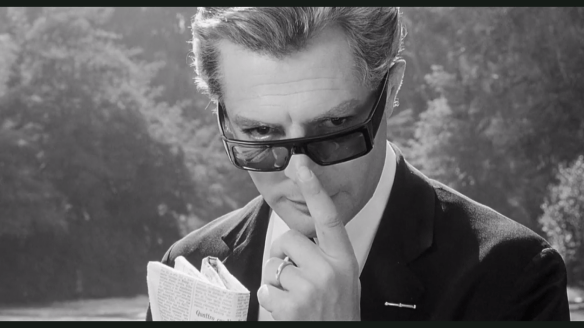
Is the subject of this film a religious one? – A Religious Leader
Yes, well, in a manner of speaking. – Guido
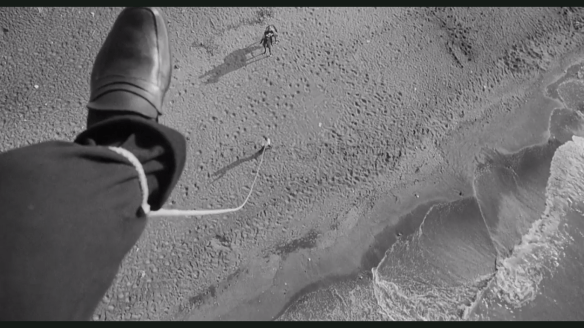
It famously opens with a dream. Our main character stuck in a silent traffic jam, completely disillusioned by the scene around him until he’s able to escape everything inhibiting him and soar into the upper echelons of the atmosphere. But it hardly lasts. Soon he finds himself tethered, being brought back down to earth.
Our protagonist of sorts turns out to be Guido (the famed Italian icon Marcello Mastroianni), a film director who is going through a spell of director’s block. His most recent activities include an extended stay at a luxury spa at the behest of his doctors. It’s also early on in the film that someone asks him if his next film is also going to be one devoid of hope. It’s a very quick statement but in some sense, it sets the groundwork for Fellini’s entire film.
And it is a very personal film and a fascinating exploration of the art of filmmaking — the thing making it the most compelling is the strange suspicion that parts of Fellini himself dwell inside of Guido. Perhaps Guido shares a bit of his philosophy and stance or more precisely Fellini is like his main character.
The film within a film soon becomes evident and in that sense, it’s also a personal picture. Its title being derived from the number of pictures the Maestro had directed thus far. And numerous meta qualities come to the fore, most obviously when Guido is going through the screen tests his producer (Guido Alberti) and wife Luisa (Anouk Aimee) among those viewing the proceedings.
But going back to that issue of hope, the film’s finale has always been striking to me but I realized that it takes on new meaning put in the context of higher issues altogether. In some respects, Guido or Fellini, whichever you prefer, is trying to derive some sort of higher meaning, whatever that means to him.
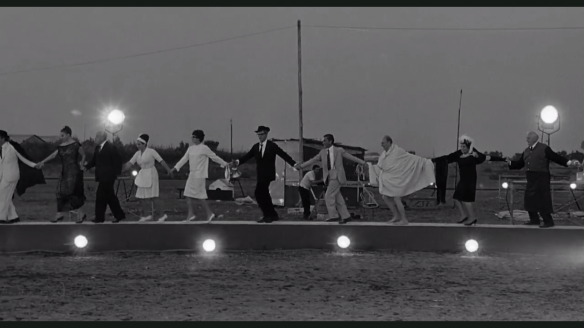
That’s in part why he has his legions of characters join hands in an almost communal dance of absurdity. Simultaneously, a journalist can be heard throwing his questions out, “Are you for or against eroticism?” and in the same breath, “Do you believe in God?” Because this is Fellini’s answer — the solution he has drawn up for himself. There is a sense of grandiose absurdity that is full of dreamscapes — where the distinction between reality and fantasy hardly means anything. Because in the eye of the beholder they are hardly different.
On purely a level of spectacle, it’s indubitably a fascinating set-up. Fellini is known for his quintessential style. To be Felliniesque is to be wrapped up in the surreal and the fantastic. But the philosophical conclusions that go hand in hand with such a provocative approach to film are rather disheartening. If this is part of what Fellini is trying to grapple with as it pertains to love and ultimate truth then 8 1/2 does fall back on a rather dismal ending.
As Guido explains to the man of the cloth, he is looking for some flash of understanding, some obvious moment of truth, like Saul at Damascus. He, like all his peers, carries the foundations of a Catholic upbringing. The religious authorities tell them that there is no salvation outside the church. His strict Catholic school told him what was wrong. Likewise, Guido plans to have a spaceship in his next film — humanities “new Noah’s Ark.” And it’s true that space exploration has been the final frontier, a beacon of potential hopes and truths. You see that in later works like 2001 and Solaris. However, Noah’s Ark was also a vessel to escape destruction as much as it was a ship of exploration.
In drawing other cinematic comparisons, Fellini’s film revolves around a pointless MacGuffin (the phrase Asa Nisi Masa) rather like Welles famed Rosebud. Truthfully, this is a comedy in the same way perhaps Citizen Kane is a comedy. In a similar way, Guido seems isolated, but his mind, in particular, is twisted up with fantasies.
The most divisive scene in the film is yet another fantasy conjured up by Guido that is either extraordinary humorous or sadly indicative of his state of being depending on how you view it. He dreams himself in the stead of all the women he has crossed paths with thus far, all ready and waiting on his whim — his personal harem of sorts — totally and completely objectified for his pleasure. Again, it’s played for truly comic effect but what are the implications?
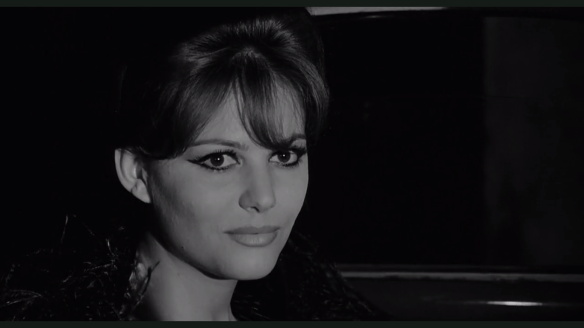
As the eternal beauty Claudia (Claudia Cardinale) notes, “He doesn’t know how to love.” She speaks of Guido’s protagonist but as the meta-ness suggests, this protagonist is Guido himself and going down even a layer further maybe even Fellini too. It’s precisely these problems that tie back into Guido’s disillusionment. “There’s no part in the film. And there’s no film. There’s nothing anywhere,” he says to Claudia.
Chaos and nothingness. True perfection is nothingness. His final conclusion? Life is a celebration. Let’s live it together. In essence, it’s true but the carnival showmanship and parlor tricks cannot obscure the bottom line here. As Francis Schaeffer once noted someone like Fellini “has no way to distinguish between right and wrong, or even between what is objectively true as opposed to illusion or fantasy.” That’s a terrifying world to come to terms with. During filming, Fellini supposedly kept a note on his camera to remind himself that this was a comedy film. But much like Citizen Kane, perhaps there’s a need to label it a tragicomedy. You cannot deal with such issues without elation being matched with some amount of melancholy.
5/5 Stars
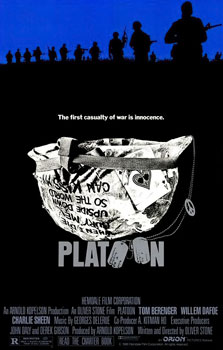 It’s a rather interesting parallel that Charlie Sheen is playing much the same role his father did in Apocalypse Now. At least in the sense that they become our entry point into the mire of war, specifically in Vietnam. But where Apocalypse seemed to belong more so to Brando or even Duvall, Platoon is really Willem Dafoe’s film. At least he’s the one who makes it what it is. His final moment is emblematic of the entire narrative.
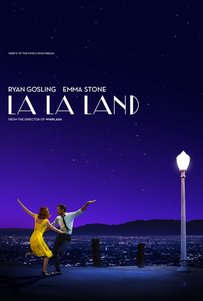 After watching this film two things become astoundingly obvious. Damien Chazelle has an equally unquenchable passion for film and for jazz. He’s also extremely bold, going all the way when it comes to choices as a director with everything from camera set-ups, lighting, staging, even casting. In fact, let’s start right there.
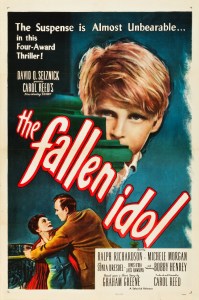 Fallen Idol is a fascinating film for how it develops inner turmoil. It’s earnestly interested in the point of view of a child and as such, it functions on multiple levels –that of both kids and adults. Philippe’s (Bobby Henrey) home is the embassy as his father is a French ambassador who is always away on the job. So Phil’s a little boy who is perpetually in the care of servants. Namely the authoritarian Mrs. Baines (Sonia Dresdel) and her good-natured husband (Ralph Richardson).

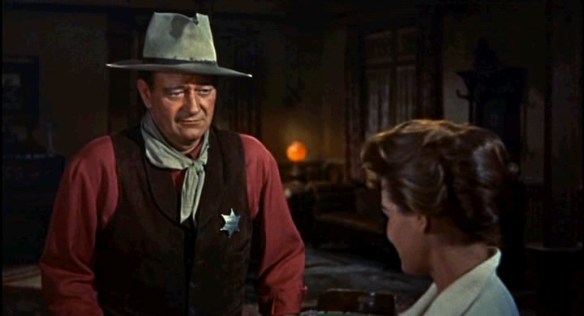
 Body Snatchers works seamlessly and efficiently on multiple fronts, both as science fiction and social commentary. Don Siegel helms this film with his typical dynamic ease putting every minute of running time to good use. The screenwriter, Daniel Manwaring, put together perhaps one of the greatest political allegories ever penned and, on the whole, it’s a taut thriller combining sci-fi and horror to a tee.
 I never thought I’d get so fed up with hearing the name “Fefe.” But it’s true. There’s a first time for everything. In fact, Fefe is the name of our main character played so magnificently by Italian icon Marcello Mastroianni. In my very narrow view, he still very much epitomizes Italian cinema for me.
 4 Star Films