Unknown's avatar

About 4 Star Films

I am a film critic and historian preserving a love of good movies. Check out my blog, 4 Star Films, and follow me on Twitter @FourStarFilmFan or Letterboxd. Thank you for reading!

Searching for Bobby Fischer (1993)

19491-searchingfor2Josh Waitzkin (Max Pomeranc) seems like your average little boy with a bowl cut and an affinity for Legos and sports. However, soon his parents discover that he has a special gift for chess and his father (Joe Mantegna) especially wishes to cultivate his skills. He finds Josh a teacher named Bruce Pandolfini (Ben Kingsley), a former chess champion himself who looks to discipline the boy’s playing so he can be the next Bobby Fischer. He eggs Josh on with the promise of a grand master certificate once he earns enough points, and so Josh listens to his instruction. His dad enters him in tournaments that Josh wins easily and rapidly moves up the ranks, but as always happens the game is no longer fun and the father gets more intent on his son excelling on the highest stage. The trophies stack up, but Josh is missing a lot of school as well as his friends.

On the urging of Bruce, Josh is no longer allowed to play with the men in the park because they play undisciplined. Stepping back for a moment, there is the realization that this is a seven-year-old boy and yet this really happened, and it happens very often. Parents push their kids so much so because they wish for them to succeed, and they want to give them what they never had.The film deals with this circumstance sensibly with Josh’s mom acting as the voice of reason. His father is not a bad man by any means, and it is during one scene in the rain after Josh loses again that we see that. Josh sits on the curb in silence as his dad talks to him and the boy genuinely asks, “Why are you standing so far away from me?” It’s at this moment that Mr. Waitzkin realizes that he has blown things out of proportion and embraces his boy telling him that everything is okay.

Eventually, Josh goes back to playing with his buddy Vinnie (Laurence Fishburne Jr.) in the park and takes some fishing trips with his dad. Despite the initial cautions of Pandolfini, Josh goes into the biggest tournament against his greatest competition without stressing over chess. He just uses all the knowledge he has accrued and plays a beautiful game. Over the course of the game, he deviates from Fischer, winning on his own terms, the way that he wants. He may have been searching for Bobby Fischer, but ultimately he found himself instead and Josh is better for it.

The film is framed with the voice-over of Josh as he recounts the exploits of Fischer which then is juxtaposed with his own story. When the film came out back in 1993, Josh was still playing in his early teens and Bobby Fischer had come out of solitude to finally beat his old rival Boris Spassky. Both were master chess players, but with two very different stories.

This is certainly a feel good story, but it has wonderfully nuanced characters that make it a step above other such films. Max Pomeranc is wonderfully innocent and unassuming with his big doe eyes and a slight lisp. Kingsley and Fishburne on their part give two worthy performances as his two starkly different mentors with dueling strategies. It is, however, Joe Mantegna and Joan Allen who have the most important roles as Josh parents because their hopes and struggles are universal for all parents. We can empathize with them and the life they want for their son. It’s then the film becomes about far more than chess. It’s about family, friends, and being true to yourself.

4/5 Stars

The Naked Gun: From the Files of Police Squad! (1988)

7e021-the_naked_gun_posterWhen you hear the names Zucker, Abrahams and Zucker (Airplane!, Top Secret) you automatically know there are boatloads of zany sight gags, puns and parodies to be had. Although weaker than the previous films, thanks to another bang up job by Leslie Nielsen, this police drama parody is still a lot of fun.

After single handedly beating up on the United States biggest enemies, Lieutenant Frank Drebin (Nielsen) returns to the L.A. precinct to investigate the case of a heroin ring and the brutal injury of his colleague Nordberg (O.J. Simpson). Drebin gets the obligatory briefing from his superior (George Kennedy) and the necessary gadgets for the mission. The case brings our hero in contact with the villainous Vincent Ludwig (Richardo Montalban) as well as his alluring assistant (Priscilla Presley). Drebin and Ms. Spencer’s relationship soon becomes sappily romantic (cue I’m Into Something Good) with hot dogs, movies and jaunts on the beach.

The rest of the case involves car chases, fires, incriminating documents, the arrival of the Queen and of course California Angels Baseball. That’s right. The Queen is to be assassinated and what better location than a baseball game? It is Drebin’s responsibility to stop the attempt at all costs and he makes quite a mess of the game (like he did with everything else), but he does get the job done. His methods are far from orthodox to be sure but he gets the girl and the bad guy pays for his misdeeds. Nordberg certainly is lucky to have such a loyal partner, maybe.

This comic trio pushes the wackiness as far as it can possibly go, oftentimes with mock seriousness and overdone tropes that get made fun of. For instance Drebin gives us voice-over narration, Spencer is very much a femme fatale at first and the story is your not so typical procedural format. Unexpected cameos by Weird Al, Jay Johnstone, Reggie Jackson and a whole host of professional announcers are certainly memorable. Furthermore the uproarious baseball sequences with “I Love L.A.” playing were certainly a hit.  This is a comedy classic from the files of the police squad and I cannot help but enjoy it.

3.5/5 Stars

Diabolique (1954)

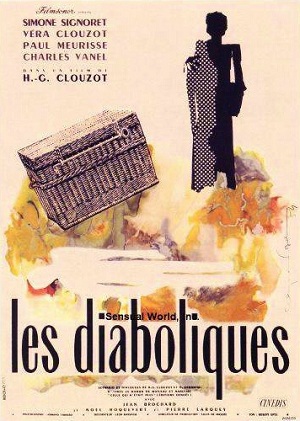
3bb85-lesdiaboliquesposterThis French thriller begins at a small boarding school for boys. The principal is a difficult man who is married to a wealthy but frail teacher, and his mistress is another one of the teachers. Because he has been awful and abusive to both of the they befriend each other and devise a plan to kill him. They lure him away from school and eventually drown him in a bathtub. They go back to the school and dispose of the body in the murky pool. The deed is done and they are both apprehensive, especially the frail wife. When the pool is finally drained there is no body! This and other strange occurrences further frighten the wife and she becomes sickly. However, she could never expect what she saw one night that led her to die of fright. The twist at the end of the film is good. It is rumored that Hitchcock tried to get the rights to this story. He would just have to settle for making Psycho instead. What a shame.
 
4.5/5 Stars

Review: Blade Runner (1982) – Final Cut

edd47-bladerunner1“Too bad she won’t live but then again who does?”

It’s the year 2019 in Los Angeles but this is a far cry from the world we are used to as you will soon see. Blade Runner is a hybrid neo-noir, dystopian, and sci-fi film. The Tyrell Corporation has successfully created humanoids called replicants that are near perfect copies of humans except at one point some went rogue and special policemen called Blade Runners were called in. Their services are still required to get rid of a few remnants

Unlike your typical Noir, the film is not in black and white but it still is faded, dank, and dreary. It’s a world-weary L.A. that doesn’t see the light of day anymore. The sterile environment is filled with unnaturally bluish light, old technology, and spaceships coupled with neon lights. The 1980s aesthetic actually adds to the atmosphere which fills all the more dilapidated and old by modern standards. It is weirdly sci-fi while also being time worn. On the ground, it has the appearance of a Chinatown where it is perpetually raining. There is a melding of cultures, time, and place. The ultimate melting pot.

This is the strangely foreign earth that four replicants escape to. One of the fugitives soon blows away a Blade Runner and thus, the best man for the job is brought in: Rick Deckard (Harrison Ford). Finding 4 so called “Skin jobs” is like finding needles in the proverbial haystack. But Deckard has the experience.

Initially, he pays a visit to replicant mastermind Dr. Elden Tyrell and does a test on the woman Rachael (who appears to be a replicant but without any knowledge of it). Deckard proves his skill to Tyrell and heads off on his investigation. Meanwhile, two of the replicants Roy Batty and Leon interrogate a replicant eye manufacturer (James Hong) who points them to one J. F. Sebastian. Another replicant Pris pays a visit to the hapless man named Sebastian and he invites her into his home.

Deckard’s search leads him to snake scales and his first target. He gets to Zhora by putting on an act as a dweeby member from the American Federation of Variety Artists (reminiscent of Bogart in The Big Sleep). She has none of his pitiful guise but he soon pops her. One down. But Leon sees what happens and is ready to make Deckard pay for his deeds. Luckily the Blade Runner gets some much-needed help. Two down. Two to go.

The leader of the replicants, Roy Batty goes with Sebastian to the lair of Tyrell. Batty meets his maker literally and they trade some choice words. In a strangely horrifying instance, he gives his father a kiss before proceeding to cave his head in. A modern reincarnation of Frankenstein and his creature. Except Batty cannot take his life yet.

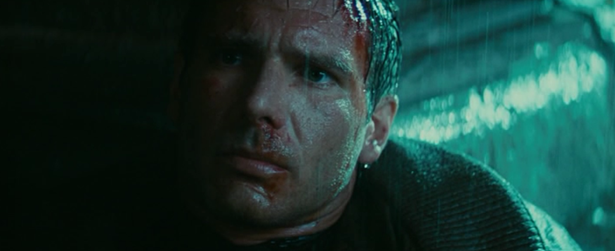
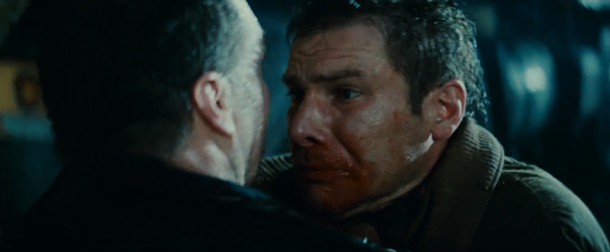
Deckard finds his third replicant and barely notches his third kill. Now it’s only Roy and Rick left to duel it out. What ensues is a game of cat and mouse where a frantic Deckard is playfully stalked by a seemingly deranged Batty. At times both men seem inhuman (I thought you were supposed to be good. Aren’t you the “good” man?), but it is ultimately Batty who remains the unfeeling one. That’s what makes his quiet death all that surprising. Deckard is left looking on bewildered as Batty’s dripping head hangs limp. Four down.

Deckard returns one last time for Rachael. He has fallen for a replicant, but he could care less. Then again, she might not be the only one left. If Gaff’s origami unicorn and Deckard’s dream mean anything at all. The identity of Deckard is one of the many ambiguities that is left for the audience to mull over. That is the beauty of Blade Runner because, with the many different versions, there are various interpretations that can be made. You be the judge of which one is correct. I still say they should have kept the name “Do Androids Dream of Electric Sheep,” but then again what do I know? Blade Runner will continue to befuddle me as well as others and that’s probably a good thing. If all movie mysteries were solved and tied up nicely with a big bow they would all but lose their allure. Not so with this one.

4.5/5 Stars

(500) Days of Summer (2009)

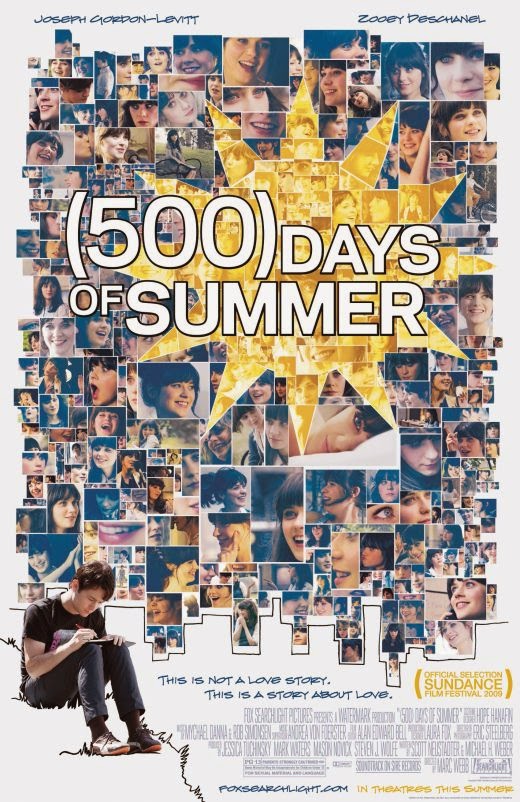
16ddc-five_hundred_days_of_summer“This is a story of boy meets girl, but you should know upfront, this is not a love story.”

This one line is uttered by the very thematic narrator of (500) Days of Summer and it describes an aspiring architect-greeting card salesman named Tom Hanson who meets Summer Finn at the office.

This often inventive and imaginative romantic comedy highlights the highs and woes that come with a relationship. You see Tom and Summer are seemingly two conflicting forces of nature from the beginning. He is a hopeless romantic believing in fate and love at first sight. She does not quite buy into that stuff, and she is only looking for “a friend,” nothing too serious. The so-called Summer Effect is what draws Tom to her. She is seemingly a normal everyday girl, but there is something extra special about her. But you will see for yourself.

The film’s scriptwriters do an excellent job at highlighting the minutiae that go along with any relationship. The Smiths are a point of agreement. Ikea is a place to fantasize about the American Dream, the copy room can be a place of romance, and Ringo Starr’s “Octopus’ Garden” will always be a point of contention. Mind you, all of this is out of sequence because that’s the way the memories come flooding back.

There are days when the whole world seems to be smiling with you. The birds are singing, you’re Han Solo, and it just makes you want to dance. There are days when you have bed head and your dreams are broken. There is no longer faith in romance. One day it seems like the walls are coming down and you are truly getting to know this significant other on an intimate level. Another day a small squabble over a punch and soon enough you hate everything about her. Her smile, her knees, her hair, they’re all awful.

All these things happen to Tom because Summer is not looking for anything more substantial, but he feels he is getting mixed signals. They are finally reunited and he thinks this might be his second chance. However, expectations seemingly never mirror reality. He is disillusioned realizing movies, pop songs, and even greeting cards are responsible for the lies society feeds us about love.

Now Summer has moved on in a big way, the wounds still hurt Tom, but they meet at that same bench overlooking Los Angeles for a final time. So you see this was not a love story after all. However, remember the date May 23rd, a Wednesday. We do not know the outcome but if nothing else it was the day that Tom reaffirms his belief in love.

(500) Days of Summer was different enough to be an enjoyable film which was instigated by a nonlinear storyline that pulled us along through a relationship ( day 1-500). Joseph Gordon-Levitt and Zooey Deschanel were both enjoyable and Tom’s friends and sister had enough personality to add something to the film. The music is often fitting (“Sweet Disposition” by Temper Trap helps the indie vibe), and both leads got an excuse to work out their vocal cords.  By the nature of the narrative, the story jumps around a lot, seemingly leaving loose ends. Perhaps that is just my own hangup. Because, like any love story, this film may have its imperfections, but that is not to say it is not worthwhile.

4/5 Stars


The Parallax View (1974)

1c362-parallax_view_“Fella you don’t know what this story means”

The first shot and we know where we are. We’ve been here before. It’s Seattle. The occasion is a Fourth of July parade honoring Senator Charles Carol. Any viewer paying attention knows something fishy is afoot and in perhaps the most intense moment of the whole film the man is violently assassinated. A committee deliberates and comes to the conclusion that the perpetrator was acting alone. And so begins The Parallax View.

Second rate journalist Joseph Frady is known for getting into trouble or causing it most of the time. So when he is interested in rehashing the old story his long-suffering supervisor is skeptical (Hume Cronyn). It all starts because news reporter Lee Carter comes to Frady fearful for her life. It turns out that 6 of the people who were there during the assassination have all died one by one. It’s all very circumstantial and seemingly harmless enough. Soon Carter herself is dead due to barbiturates and alcohol. Frady heads first to the town of Salmon Tale (in search of the elusive Austin Tucker), where he runs into trouble with the local authorities and stumbles upon the Parallax Corporation. He gets his rendezvous with Tucker who is also fearful for his life. Minutes later Kabooom.

He continues winding up with more questions than answers as new bits and pieces crop up. It turns out Parallax is in the very lucrative business of recruiting assassins, so he goes off the grid to join them. His training includes a montage of images to condition him, and the audience is submitted to the process as well. Frady diverts a bomb threat thanks to a stack of napkins, but still another one bites the dust. He finally finds his way to a convention hall where a big to do is in the works for a senator. In a perfect bookend, another man is shot and after deliberating the committee concludes Joseph Frady acted alone. The biggest conspiracy in the country gets away with murder again and slinks back in the shadows.

Gordon Willis’s cinematography exhibits beautiful wide and long shots framing his subjects in their environments. Beatty is fit to play the somewhat rogue reporter but very few of the other characters are memorable. Perhaps that’s precisely the point. The film has extremely deliberate pacing (ie. Two men ride up an elevator one after another in no immediate hurry). However, the paranoia elevates as the film progresses, because we have little idea what is going on, we just know that something is going on. I am partial to The Manchurian Candidate, but here is a film that represents the 1970s, a decade still fraught with political unrest and a myriad of recent assassination attempts.

3.5/5 Stars

A Raisin in the Sun (1961)

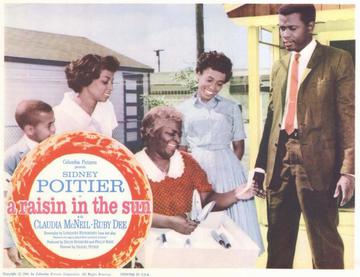
d69d4-raisin_in_the_sun_1961_poster_horizontal_bStarring Sidney Poitier and adapted from a stage play, the film chronicles the lives of an African American family residing in Chicago. The whole family including the matriarch, her unsatisfied son, his wife, his son, and his sister wait excitedly for an insurance check for $10,000. The mother receives the money and resolves to use it in order to buy a nice home for her family in a white community. She then gives the rest to her son who has big plans for it. However, he loses it all leaving the family bitter and worried. In the end Walter does show his integrity and despite the bad situation, the family remains close. A great deal of this film is about the conflict of ideas and interests of the different individuals. It is also memorable since the cast is almost all African American. Poitier is good but it seems the mother steals the show.
 
4/5 Stars
 

Good Morning Vietnam (1987)

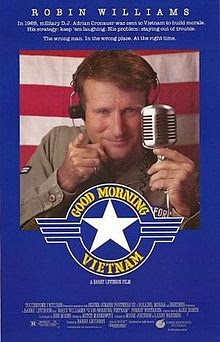
4eba0-good_morning2c_vietnamGoooooooood Mooooooorning Viiieeetnammm! I’m a little late to the party I know, but I wanted to take a look at a film that in many ways personifies Robin Williams. In the last months, I have gotten to read a lot on William’s as a comic and as an actor. When I watch this film which showcases his many skills, I am especially drawn to what I call his bipolar comedy. Let me explain. On the surface, he seems like a pleasant-faced average Joe with a little twinkle in his eye. Maybe there are even moments of emotion or sadness that make their way out. Then, bing pow! The lights go on, the sirens sound, and all chaos breaks loose.

Adrian Cronauer is the perfect embodiment of William’s quick wit and off the wall antics. He has a constant supply of new voices and old reliable ones, not to mention cultural and political jokes. It all gets thrown in so fast you hardly get to bat an eye, and he does it all with that rye smile and one defiant attitude.

This is yet another nostalgic 1980s classic directed by Barry Levinson. The story begins in 1965 with the jockey getting shipped in from Crete, and soon he is the hero of all the underlings especially his young compatriot Private Garlick (Forrest Whitaker). Immediately the power dynamic is rather odd. The General overseeing everything loves his zany, sometimes crass, take on comedy. His two immediate superiors are less than pleased with his early showings of insubordination. If the General is any indication, Cronauer’s mix of humor, (censored) news updates and groovy rock n’ roll prove insanely popular.

In his spare time, Cronauer pursues a young Vietnamese girl while teaching an English class to locals. They soon enjoy his more slang-based approach to English, and he befriends a boy named Tuan. He also has some time to start a brawl at a local hangout and eventually see it blown to smithereens. It’s after this one occasion where he gets fed up with the censors controlling what he says because it doesn’t seem right. It seems too regular army, and he is certainly not that. Cronauer is suspended but during his hiatus, he gains a new found zeal performing for the boys in the field.

Due to popular demand, he gets reinstate,d but his superior, who has always had it in for him, connects him with a wanted South Vietnamese terrorist, and Cronauer soon gets the boot with an honorable discharge. The former disc jockey realizes Tuan lied to him all along, but after confronting the boy he fulfills one last commitment with his English class. Cronauer flies off into the wild blue yonder, but not without leaving a gift with Garlick for all the boys. Gooooodbyeeee Vietnaaaam!

This was a grade A performance by Robin Williams and the soundtrack was absolutely superb, full of big and small hits alike. Louis Armstrong’s “What a Wonderful World” was especially impactful due to the images that were juxtaposed with it. Furthermore, just as much of what Cronauer was lost to his students, I feel like many of his cultural quips might get lost to newer generations. I sincerely hope they do not and his political commentary will always swirl around like any of the controversy surrounding Vietnam. The magic of the character is his ability to make men laugh despite their circumstances. The magic of Robin Williams is that he was a man who made us laugh in all circumstances.

4/5 Stars

Beauty and the Beast (1991)

7bdf2-beautybeastposterMy affinity the past decade has gradually turned from the classical Disney formula to the seemingly more inventive storytelling of Pixar. However, Beauty and the Beast certainly has all the makings of a great Disney film, and it is perhaps one of the last classics to come out of the canon.

As per usual, the story gets its inspiration from books and fairy tales. This time from France. Of course, any good fairy tale must have a prince and this specific prince was unfortunately turned into a great ugly beast by an old woman-turned-beautiful enchantress who he insulted. After that trauma, he is resigned to that awful fate until he learns what true love is. Until then he lives locked away in an enchanted castle with no human contact and only a magic mirror to gaze into.

Belle is the most beautiful girl in her little French village where she devours book after book and deflects the increasing advances of the handsome yet conceited Gaston. She lives with her quirky father who has a knack for crazy inventions. One such contraption actually works and he rides off to show it off, but on the way he gets lost out in the wilderness. Lo and behold he ends up at the Beast’s fortress and is soon imprisoned. His daughter goes after him and receives a warm welcome from the enchanted staff of the castle, but the Beast will only let her father go if she stays. So she tearfully agrees. The drama is heightening.

It is slow at first, but over time the Beast’s timid side is revealed, and he begins to fall for Belle. The breaking of the spell seems imminent and yet he reluctantly lets the homesick Belle go see her father again. However, Gaston has been working in the shadows and riles up a mob to lock Maurice away and then go after the child-killing Beast. Humanity must be saved from such a villainous creature after all.

In typical Disney fashion, the final act is a wholly entertaining conclusion with an often uproarious skirmish between the villagers and the enchanted inhabitants of the castle. Top that off with a necessary final showdown, some passionate kisses, and some sumptuous final sequences, and everyone is happy. Disney has always been adept at making films with a wide range of appeal and they do it again here with their foolproof formula. They take a universal story and fill it with mellifluous music and absorbing visuals. The animation is often inventive and fun while the characters fill all the necessary spots. You have your villain, your beautiful girl, your anti-hero, a bickering clock and candle, along with a kindly teapot. What more could you want?

I must say I am curious to watch the original French version La Belle et la Bete (1946) by Jean Cocteau to see how this version varies. Until then I am happily content with this film. This is the type of animated film audiences deserve to see and hopefully they will. Bonjour and Be Our Guest!

4.5/5 Stars

Review: Forrest Gump (1994)

950b6-forrestgump1If you want to start out on the broadest level possible, the film is a lesson in 20th century American History. It charts the turbulent course of mankind including assassinations, counter-culture, Vietnam, Anti-War Rallies, The Cold War, Watergate and much much more. The substantial soundtrack dials back the clock to fully immerse the audience in that time and place.

It is the dream movie for pop culture fanatics and history aficionados. That’s why I enjoy it. However, much like the feather that flutters in the breeze drifting this way and that, Forrest Gump is a character who floats through history as it is made. It begins with his leg braces which give inspiration to the Elvis phenomenon. Ultimately, he plays football for Alabama, sees the school desegregated, and becomes an All-American who meets JFK.

Soon it’s off to Vietnam, followed by a Medal of Honor, and a trip back home thanks to a million dollar wound. Forrest gets a taste of the nation’s capital and soon becomes an accomplished ping pong player, makes it big in the shrimping business, and heads home back to Alabama once more after buying Apple stock. All these moments are absorbing to be sure, but that alone would make the film just okay as a historical drama.

Tom Hanks‘ Forrest Gump is the important piece in the entire equation because of the people that gravitate towards him. Forrest himself only has an IQ of 75, but he is so unlike many of the characters we are used to. Not because he is “simple” so to speak, because he is far from it. Perhaps it’s the fact that he is wholly genuine, loyal, and innocent. That’s almost unheard of these days. He seems to stand at complete odds with the history that is happening all around. Sometimes it looks very different from his eyes or he is completely oblivious to what is happening.

However, in some ways, he seems to have things figured out better than most. He loves those close to him, does what he loves, and never loses his positive spirit. His observations on life might be plain, but they are nonetheless powerful to those around him. To Hank’s credit, he infuses the character with a slow-witted charm and gives him a deep southern drawl. He’s Forrest, Forrest Gump. That’s all he needs to be.

Sally Field has a relatively short screen appearance, which is still extremely important because Forrest’s mother is the one who helps guide his whole outlook on life. She encourages him to make the best of what God has given him and to realize he is no different than other “normal” people. Her love, cultivation, and homespun knowledge is what seemingly allows Forrest to lead a full life, though pithy sayings only go so far, at some point you just have to live.

Jenny (Robin Wright) is another character who is perhaps a greater drifter than Forrest himself. She is constantly trying to find her way through the turbulent times while Forrest’s feet always seem firmly planted on the ground (Rather ironic since he is always running). She is a prodigal and always prone to return to Forrest who always welcomes her back with open arms no matter the circumstances. It might be a stint in a nightclub, living the hippie life, joining the Black Panther Party, or being with other men. Forrest is forever loyal and protective of her. She cannot always handle having him in her life, and she wishes to find her own way. He is always there for her, though, even up to the point of taking care of a son.

Bubba and Lieutenant Dan are Forrest’s best good friends and both men are greatly impacted by Vietnam. Bubba dies and Lt. Dan loses his legs (not to mention his self-respect). Forrest is fiercely loyal to both comrades, starting up Bubba Gumps Shrimping in honor of his late friend and giving work to Lt. Dan when he needs it most. He is a friend for the ages and he takes the title seriously.

Calling Forrest Gump just a historical drama or even sentimental tripe might be partially accurate and yet it cohesively adds up to more than its parts. 20 years have gone by, true, and some of the luster may have gone away, but certainly not all of it.  Though it might be far from perfect, it is a story that is worth any shortcomings, because it has heart and a fantastical telling of American history that is still worth watching.

4.5/5 Stars