Unknown's avatar

About 4 Star Films

I am a film critic and historian preserving a love of good movies. Check out my blog, 4 Star Films, and follow me on Twitter @FourStarFilmFan or Letterboxd. Thank you for reading!

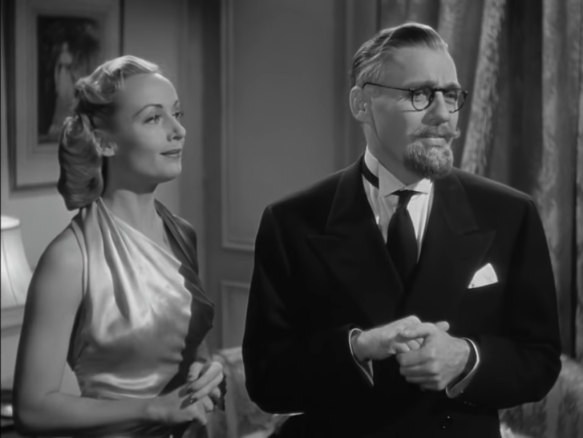
Letty Lynton (1932): A Hidden Classic

Letty Lynton is one of those hidden movies cinephiles look to unearth from the sands of time. In this case, it’s namely because it’s notoriously difficult to view after a court case in 1936 deemed it was too close in plot to the play Unfaithful Woman, which, coincidentally was made into a later movie with Hedy Lamarr.

It’s rather astounding, as we near a century later, the film is still fairly hard to come by though not entirely obsolete. Could it be that this plays mostly into its mystique as a forgotten classic? Partially, yes. But it’s yet another stellar showcase for Joan Crawford’s unparalleled stardom in the 1930s even as it highlights the perils and burden of womanhood.

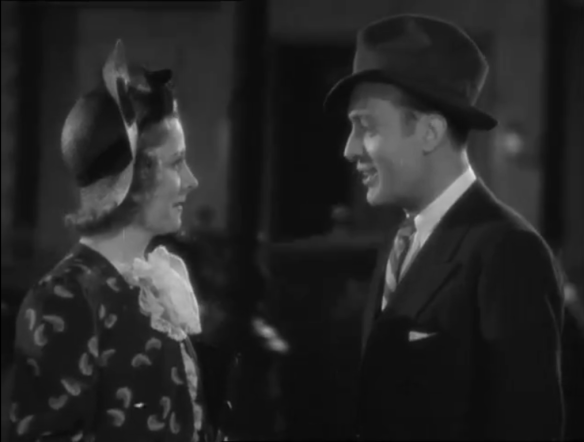
Letty (Crawford) is a gorgeous socialite who has all the men fawning over her and why not? She’s Joan Crawford draped in luxuriant furs and the immaculate creations of Adrian. However, one of her suitors, Emille (Nils Aster) is particularly persistent. She’s made a habit of leaving him only to return for more passionate romance. This time she’s ready to end it for good.

It’s not healthy for her and so she and her faithful maid prepare to run to another far-off destination by ocean liner never to be seen by Emille again. This is of primary concern. It just happens she is birthed across from Robert Montgomery and you hardly have to tell him twice when he’s caught a pretty girl in his sights. He makes a note of it until the right moment…

Still, two can play the game. They’re both intent on making each other’s acquaintance, and so it is arranged. They spend a jaunty evening cavorting until the wee hours of the morning, being chased around the decks by the crew of sailors washing it down for the night. Their rapport builds fast and easily.

Crawford is a modern girl with her puffed sleeves as decadent as can be. It seems obvious that you need a certain amount of confidence or, dare I say, audacity, to pull off such a look, and Crawford was nothing if not audacious. It helps to cement her legacy in the annals of cinematic fashion.

Christmas comes with streamers and ice sculptures. Despite the gaiety, she has a few bittersweet tears, and he does everything to cheer her up. There they are in her cabin, their feet kicked up on the furniture, and he proposes marriage with a glance as he holds a lit cigarette.

Letty is incredulous, even mesmerized by him. He’s a different sort of man. In a world swimming with men all clawing to get their hands on her, Jerry’s not like that at all. He never tries to kiss her or hold her hand or any of that. He’s not looking to get fresh because his character is genuine.

It wins her over. And then we remember it’s still Christmas, and they are deliriously happy banging on every cabin door as they stroll down the corridor madly in love and rousing the deck with some late-night yuletide cheer. For the first time in her life, she’s going straight and sincere, and Letty’s never felt better.

But it’s inevitable. The boat docks and waiting on the other side stands Emille. It’s wishful thinking to assume he would leave her be. She’s faced with a problem: there are two men in her life. One she doesn’t want to lose and the other she wants desperately to get rid of.

Not taking “no” for an answer, Emille pulls her in his arms and kisses her — trying to seduce her — and she rears back to slap him.”I’ve never had anything in my life I’ve loathed like that,” she says.

In a world hopefully far more aware of the burden of proof thrust upon women, Letty Lynton hardly feels dated. The import of its core drama is here with us today, despite the obvious notes of theatricality. It’s all spelled out through the crazed expression on Crawford’s face, a mix of relish and abject horror at what she’s witnessing.

Because she was prepared to end her life with poison rather than be forced to be blackmailed by her former lover, but she never has the chance to drink her medicine. In a development analogous to future dramas like Blue Gardenia, she becomes both a victim and the accused simultaneously.

Again, she looks to delay the repercussions and kick the can down the line. There’s the obligatory meeting with Jerry’s parents. They are decent, down-to-earth folks who welcome her in, thankful their son has settled on such a fine woman.

Imagine the embarrassment when a police detective shows up to take Letty in for questioning as she is closely implicated in a crime. Her fiancé stays by her side as they go before the judge (Lewis Stone) in the privacy of his office as he deliberates on whether or not to bring the case to court. It doesn’t look good.

In her state of hopeless helplessness, Letty receives some steadfast aid from all sides. The ending is too pat — with looming consequences of perjury — but they insinuate the theme of the movie: happiness is tenable when we surround ourselves with loved ones who will loyally intercede on our behalf. So often relationships are tossed by the waves or racked with tension. What a wonderful thing it is to find the kind of renewed stability Letty installs in her own life.

The movie employs a bit of a cornball ending, but between the amiable chemistry of Montgomery and Crawford, and the redemptive arc, for such a hard-sought picture, Letty Lynton is a worthwhile film to seek out.

3.5/5 Stars

Together Again (1944): Boyer and Dunne

The film’s title couldn’t be more true as Irene Dunne and Charles Boyer pooled their talents for a third go-around, and what a pleasant experience it is. If it wasn’t evidenced by the soaring romance and light comedy of Love Affair and When Tomorrow Comes, they share that thing that is so often conveniently distilled into the word “chemistry.” You can’t bottle it, and it’s rarely a given. Still, on the screen together, something tangible happens.

In this regard, the plot almost feels of secondary importance though Together Again begins with a quirky and, frankly, intriguing premise. One of the most prominent landmarks in the town of Brookhaven, is a giant statue to the late Mayor Crandall.

After his sudden departure from this mortal coil, his wife Anne (Dunne) was quick to shoulder the responsibility. Now she lives in their home with her curmudgeonly father-in-law (Charles Coburn) and a histrionic daughter (Mona Freeman), who is beside herself with hysteria. You see, the head of her beloved father is knocked clean off his body by a stray lightning bolt.

Being the faithful civil servant that she is, the mayor sets aside her day-to-day duties post haste in order to enlist the services of a sculptor. She takes a day trip to the city in order to requisition the new statue, but the artist she calls upon is hardly who she was expecting. Then again, George Corday (Boyer) was hardly expecting to meet such a beautiful mayor. Every mayor he’s ever known was a stodgy old man. They’re both taken aback.

Despite her misgivings, she manages to get talked into going to a quiet little club only to renege their partnership. He’s not the kind of innocuous creative type she had in mind to do justice to their sleepy little town. Obviously, Boyer smolders too much with latent passion and charisma. He unnerves her.

Could the movie be over? She wanders off to the powder room. She looks curiously like the showgirl providing the floorshow. Then, the attendant offers to iron her dress with a wet spot. Minutes later, a raid and someone running off with her garment, means she’s caught in a compromising position when the police waltz in. If we see it coming from a mile away, the beauty of the character is how she walks into it all so innocently.

Anne flees her hotel before Corday can catch her, and she tries to ignore her obscured face on the scandal sheets. It’s all a horrible misunderstanding that she tries to dismiss. When she returns home, a new extravagant hat in tow (she can’t seem to misplace it), she’s practically jumping out of her shoes.

The evolution of Dunne in the picture might be familiar to those who’ve witnessed her about-face in Theodora Goes Wild. There’s this sense of propriety that all a sudden is besieged with all the fits and giggles, quirks, and foibles one comes to expect in a screwy brand of comedy. As her daughter observes, she’s become a little “leapy.”

As mayor, she’s supposed to “keep her shirt on,” but she’s concerned what happened on her little excursion will come out and, of course, it does. This time it’s not Melvyn Douglas but Charles Boyer catching her in her “lie” so to speak. She’s traded out a salacious novel-writing career for a wild night of accidental indiscretion that might rattle her upright standing as mayor of her small town. Her beau even winds up sleeping on the premises much in the same manner of Douglas before him.

It doesn’t offer too much in the realm of invention, but the ongoing rapport of Dunne and Boyer keeps things convivial enough as they get caught up in your typical entanglements. Upon meeting him for the first time, Diana swoons and young love sweeps over her as she tries to dress the part and act more cultured, spending extra time plonking away at the piano. Why she even addresses him in French, when heading off to school, dropping a refined “Bonsoir” bright and early in the morning.

As her daughter tries to impress upon this gentleman her newfound womanhood, Anne unwittingly shows off a bit of her youth, with a becoming new hairstyle and a less fastidious demeanor. As Diana’s main beau, the lanky Gilbert “Good Night” Parker (Jerome Courtland), finds himself more and more scorned; his spirits are lifted by a show of kindness from Mrs. Crandall. He simultaneously alights on his own amorous advances.

There’s nothing particularly inspired in these beats. It’s Dunne and Boyer who continue to make it amicable. Under the circumstances, it’s difficult to consider any two people we would rather see together in the scenario. Coburn for one is tickled pink to finally see his daughter-in-law going in with another eligible man.

The denouement of the movie does provide some mixed signals. Granted, they feel like the status quo dichotomy in 1944. It seems Anne must make a choice between love and duty — her job as mayor or a life away from the stifling town — they are presented as mutually exclusive.

Boyer plays a bit of the cad in the final act when it seems almost laughable that she might have to choose. He draws a comparison between himself and that hat she tried to hide away on the top shelf of her closet. It doesn’t seem quite fair. There’s not much to spoil, but I won’t divulge what happens next.

Instead, my mind drifts once more to Charles Coburn; he was made for these types of supporting roles: crotchety yet secretly good-natured matchmakers. Surely he could deliver on them in his sleep.

Although it’s not quite as stellar as Theodora in the comedy department, Dunne still shows her usual aplomb, and out of personal preference, I fancy Charles Boyer over Melvyn Douglas on most occasions. This one is little different. Forgive my impudence. It’s just so good to have Boyer and Dunne together again.

3.5/5 Stars

When Tomorrow Comes (1939) and Romantic Shelter From The Storm

Screenshot 2020-03-22 at 61849 PM

Waitresses bustle about on their beats passing along the news like busy bees: eight o’clock tonight unity hall! It caused quite a stir in the ranks and the girls are currently walking on eggshells afraid to get canned. A few of the gals are especially jumpy including poor Lulu who drops a whole tray laden with plates.

So when a Frenchmen sits down during the dinner rush it’s how do you say, disconcerting. He’s not rude by any means. His manners are fine. But he’s a foreigner and he asks for things outside of her comfort zone like bouillabaisse for instance (I had to look up the spelling just now). For instance, we can’t hold it against her when she says “To me all foreigners are spies until I learn different.”

The prevailing thought is he might be with the management to check them out. So they put their most level-headed colleague on the assignment. It’s none other than Irene Dunne. He has no malicious intentions at all. In fact, it’s quite the contrary. After making the acquaintance of such a charming lady, he wishes to see her again.

Irene Dunne feels like the original Norma Rae. She has spirit — the kind of spirit that stands up against injustice and will not allow others to be bullied into submission. But this is grounded by a charitable heart and a sense of decency. It’s what makes people get up and take note within the clamor. Because there’s genuine substance to her words. We believe them to be true.

Amid the host of admirers is one very special one. He’s attended in hopes of seeing her, a man oozing with names (and the Boyer charm). What might have been a chance encounter in real-life, in turn breaths life into an entire movie romance. The humid streets of New York don’t exactly scream love nest, but the man is so taken with his company, he doesn’t mind if he has to meet half the city just to be with her.

There are other interludes in this budding relationship, though we might as well focus on the focal point. It comes during the onslaught of a tropical storm. The man, she now learns is the famed pianist, and he welcomes her into his home to get out of the elements. Far from feeling surreptitious, it seems like an oasis from the world outside.

She walks around one of the bedrooms scanning around, leafing through an album of pictures, trying to glean more about the man downstairs. What follows is an enchanting zoom mimicking Dunne’s gaze as she returns from freshening up. She’s brought down the stairs by the sound of his playing. There’s a forceful authority to it to, matching the gale raging outside the windows. On her face, we see the love brooding right in front of us.

The dramatic situation is made plain by the inclement weather (that’s an understatement) and falling trees overhead. Blaring coast guard bullhorns warn of waters rising. They must find high ground.

Screenshot 2020-03-22 at 65009 PM

Rest assured, this is hardly a survival film. The scenario itself is ripe with more intimate pleasures as Helen and Philip seek asylum in a church during the brunt of the storm. After the crowded, liveliness of the city, the actors are contented in one another’s company, and it provides an understated satisfaction.

They light candles, she raises a prayer to the unnamed Providence for getting them to safety. He has the subtle tact to take her up into the balcony to the organ as the water starts to flood inside. It’s a thoughtful act, and they continue their genial conversation unencumbered. As she sits, listening to him quietly play “Fur Elise,” she thanks him. Because she saw what he did too.

What a lovely digression it is for those willing to partake of the solace. The gentle hospitality of the minister and church organist is yet another touch of decency in a picture ripe with such encounters.

If this sounds blase, rest assured, it plays to the rhythms we might attribute to a Stahl melodrama. They somehow bend away from the brunt of drama and pierce our hearts far deeper. Like Tay Garnett’s One Way Passage, there’s the sense of a destined love of the highest most ethereal kind — a love that can never be — it can never fully acted upon.

Because if it’s not evident already, they are people of principle and conscience. It goes unspoken for so long — the impediment between then. But she knows. He is not free. He is married to someone else, albeit loosely, as Mrs. Chagal (Barbara O’Neil) is a sick woman.

When Helen’s roommate notes it looks like she’s been away for 20 years like Rip Van Winkle upon her return, there’s some truth in the words. Even an evening can feel like a lifetime under the circumstances.

She eventually meets his catatonic wife and lovely mother-in-law. There’s no malice or ill-will, only a bit of sadness on her part to see what his life really is. She feels obligated to leave him behind — to not make this any more difficult for either of them. So she goes back to her picketing and wins the victory she helped champion. The film has gone too far though. It is no longer about unions or these type of ideals. At the very least it is about romantic ones.

There is another scene where she answers a caller at the door. It’s the wife, out on the street, as if she’s perfectly fine, and she might very well be. The scene has been written many times before: A wife confronts the other woman. We’ve seen the scene play out in so many stories it’s mind-boggling. Here it’s different. You almost don’t realize what is upon you.

There is a curious energy about it. Quieter and yet not unsure. Forthright and devastating in its very simplicity. What could be incisive and vindictive feels blunted and equally delicate in the hands of Stahl, and I believe this is quite purposeful. The main characters pull back, compelled by their sense of good and decent feelings. The “villain” in actuality is a helpless victim.

In another film the ending of When Tomorrow Comes would feel uncomfortably abrupt. Here it somehow works for me and not because the swelling music is cued. It’s because we know there is a foregone finality. It might not be today or tomorrow exactly, but it will have to end, going their separate ways and holding onto the love they had and what could have been. That is all.

Because unrequited love is not the most tragic form; it is the uninitiated followed closely by the unfulfilled romances that sear the most. If you are inclined, this is a tender drama more than capable of inducing a few misty eyes. I’ll never get over the grace of Irene Dunne, the adroitness of her reactions, touching on each and every emotion. Boyer has never been more gentlemanly. Together they feel sublime.

If my praise sounds too effusive, I’ll admit I haven’t seen Love Affair for some time. Have I simply forgotten what their chemistry was like? I’d like to believe Stahl brings something of his own to the material as well.

3.5/5 Stars

Cluny Brown (1946): Nuts to The Squirrels

cluny brown

The title card introduces our time and place. It’s a lazy Sunday afternoon in England. The year: 1938. Nothing particularly important is going on except a cocktail party and that’s only important to the host, one Mr. Hilary Ames (Reginald Gardiner).

You wouldn’t call this much of a dramatic situation aside from the minor detail: his stopped sink is about to put a catastrophic wrench into his fast-approaching party. The guests will be coming soon! What will they say?

If this feels like an inane dilemma, then you already have a heart and pulse for what Ernst Lubitsch will be doing over the next hour and a half. Because this is his brand of continental comedy of manners, taking particular aim at the British classes.

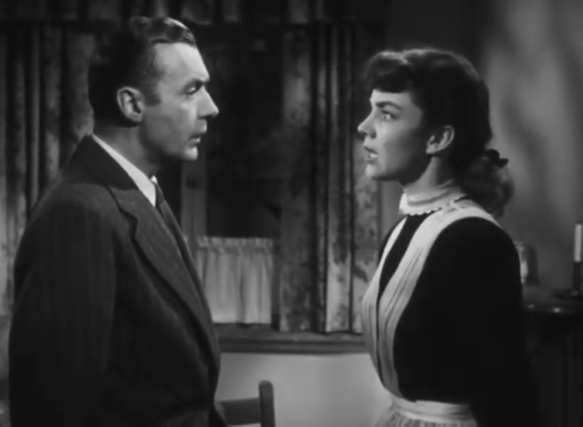
However, he’s in need of some conduits and they arrive at Mr. Ames’s door in the form of Adam Belinski (Charles Boyer) and Cluny Brown (Jennifer Jones). They couldn’t be more disparate figures.

He is an esteemed professor wanted by Hitler for some abstruse reason that’s never explained. Nevertheless, all the social elites pay him the highest amount of deference. Cluny is one of the lower classes — a chipper young lass — with an affinity for plumbing. Fixing pipes that is. She comes to repair the sink of Mr. Ames on behalf of her surly uncle. Although a crisis is averted, the bubbly girl is soon sent off to the country to be a housemaid — a position of propriety for a girl as herself.

Meanwhile, the party finally commences, and it’s what we expect, full of pretentious, huffy party guests. A trio of stultified mischief seekers, Peter Lawford, Helen Walker, and Michael Dyne are on the hunt for something to bring them out of the doldrums. They finally happen upon something arcane enough to pique their interests — a man sleeping on a bed tucked away in a back room.

What’s hilarious about Boyer is how he’s quite literally an anti-scandal maker. Lawford recognizes him as the esteemed thinker and immediately extends him the highest degree of repute. He’s falling over backward to take him wherever he needs to go and shoveling out pound notes to support his cause against the miserable Nazis.

Boyer doesn’t take advantage of these good graces as he meekly deflects most and then folds to a few. The biggest offer is a place to stay at Andrew’s parents — a lovely estate out in the countryside: Friars Carmel Manor. The very same place our plumbing prodigy is taking up residence.

However, the vivacious Cluny starts off her first day on the job on a dubious foot. She actually makes small-talk with the Lord and Mistress of the manor going so far as to drink tea and eat crumpets in their company! This will never do as far as the other staff is concerned. Her catchphrase of choice, “nuts to the squirrels” is tantamount to public indecency.

The key observation is how she never intends to bawdy; she never is. Her spirit simply sparkles brighter than any of them dare to. Because there is an intrinsic bounce in her step and a winsome demeanor burgeoning with innocence and goodwill. It feels totally at odds with the world she’s gone and got herself immersed in. But she makes a bright-eyed go of it all the same. She knows no other way to tackle life.

It’s easy to view this as a riff off the upstairs-downstairs dramas of Jean Renoir — Diary of a Chambermaid for instance — though this does have a Lubitsch twist. He, like the eminent Frenchmen, is readily poking a wry bit of fun at the lunacy of rigid class structures.

In other words, once it becomes evident who you are, people start treating you with respect or lack thereof. The good professor gets royal treatment. Cluny Brown receives the cold shoulder. And of course, they are the most crucial figures as two people totally out of place in the prim and proper hierarchy of the English countryside.

On her day off, Cluny goes prancing off to the chemist, swinging her purse, and wearing a garden on her head. She shares tea with the punctilious Mr. Wilson (Richard Haydn) and his grunting mother, then treated to harmonium music as the man of the house proudly acknowledges his position in the volunteer fire brigade. A walk in the countryside afterward sounds more rewarding. Mostly because they bump into Mr. Belinski; his candor can more than break up the turgidness of the bespectacled chemist.

On another evening, it’s the birthday celebration for Mrs. Wilson, which becomes a telling proofing ground for why this romance of opposites was destined for failure. As the candles are lit and snooty-voiced Mr. Wilson pontificates once more, the plumbing goes haywire. Cluny Brown does what comes naturally to her; she jumps into action, banging away at the pipes right then and there! It’s immaterial whether she succeeds or not. She has trampled over what is considered sacrosanct in these circles. A female plumber! It just isn’t done, and the party dissolves unceremoniously.

Thankfully, there is more to the story. The movie is blessed by these immaculately arranged character parts placed throughout for the likes of Reginald Gardiner, C. Aubrey Smith, Una O’Connor, and still others.

But the most sublime of the surprises, aside from Jones’s sheer ebullience, is how Boyer constantly feints away from his dashing leading man persona. I’m not sure if other moviegoers assumed the same, but one cannot help think that Boyer hearkens back to Maurice Chevalier in all those saucy operettas from the 20s and 30s. For many, Boyer was heir apparent as the only other cinematic Frenchmen they might have known and a dashing one at that.

In other words, we think he’ll do something — act the rapscallion in such a prim society — but this is never his flaw (or his charm). Instead, he takes a genuine interest in others. He feels more like a matchmaker and a fix-it-man making his way through the story with a perceptive eye. And yet Lubitsch is good enough to give him a moment of romance for the sake of the audience since he sees the light in Cluny no one else appreciates.

Likewise, I don’t think I’ve ever appreciated him a role so much, for the very reason he was allowed to be far more than the stereotypical reputation that proceeds him. This extends to him a power — a new kind of novel flexibility — to be something he was rarely granted the opportunity to be before.

He and Cluny make a fine pair of kindred spirits and resident outsiders. In fact, they take to English society like squirrels take to nuts — a bit baffled but good-willed — adding a strain of much-needed gaiety to otherwise stuffy lives. Bless them.

3.5/5 Stars

To Be or Not to Be (1942): Lubitsch Vs. The Nazis

Screenshot 2020-03-21 at 75752 PM

“What he did to Shakespeare, we are doing now to Poland.” – Ehrhardt about Josef Tura

Our story begins in Warsaw during peacetime. In some sense, this is a period piece because the gulf between the Nazi invasion of Poland in September 1939 and the comparably idyllic years prior could not be more starkly different. The world still maintains its innocence.

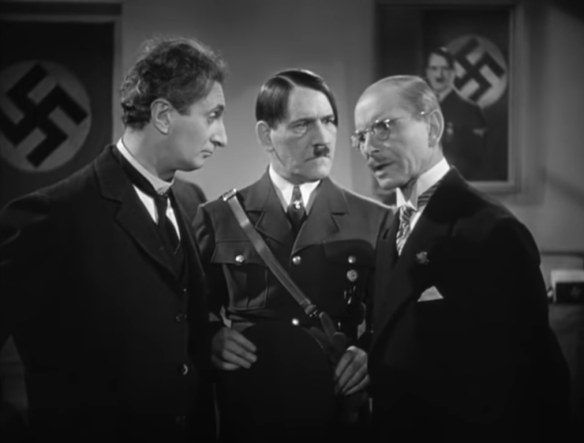
And yet, what’s this! A stir in the streets. Taxis stop. Heads turn. What are they gaping at? It’s none other than Adolf Hitler walking down Main Street! How in Hades did he get there? It catches the audience off guard, though not as much as seeing Jack Benny in a Gestapo uniform.

Of course, this sequence is all part of a performance as the stage elements fall away. The story focuses on a theater troupe trying to carry on with Europe in an uproar. From a purely theatrical perspective, this allows To Be or Not To Be license to literally lift Hamlet’s own play within a play (or in this case a movie) structure. So now with the framework set in place, there is ample space for meta qualities, breaking of the fourth wall, and with it, satirical commentary.

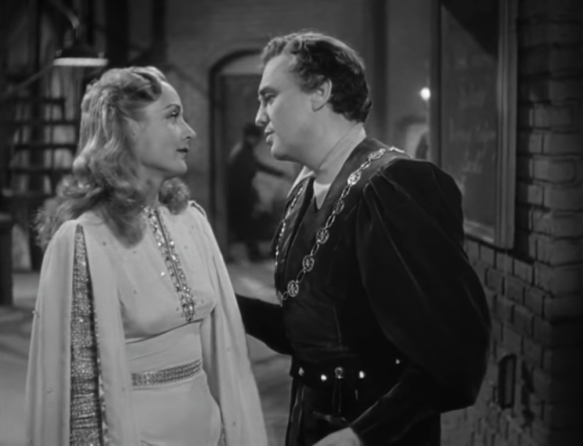
Joseph and Maria Tura are an acting power couple with dueling vanities headlining Hamlet. Carole Lombard, in ravishing dress, is elegance personified. Imagine, this was my first impression of her before dipping into her screwball filmography. It suits her in her final screen performance.

What an odd choice Jack Benny seems for this picture. Even today, he’s far more well-known for his radio show, violin playing, and his public persona as the hand-to-cheek comedian. He was a contemporary of Bob Hope and Bing Crosby but never managed the same share of the box office. Regardless, Lubitsch saw something in him no one else was willing to consider. He’s not exactly Laurence Olivier, but that’s precisely the point.

However, we are also reminded how theater is communal. The hammy Lionel Atwill is always pushing the envelope, both in life and reality. It takes his colleagues to rein him in. The spear holders Greenberg and Bromski, meanwhile, dream of roles that might one day actually utilize their talents. Their exacting director Dobosh (Charles Halton in one of his more animated performances) keeps the egos in check and the performances grounded in the material.

Circumstances always seem to get in the way of the best-laid plans. Maria has a handsome admirer (Robert Stack), who repeatedly visits her backstage, much to her husband’s chagrin. No, he doesn’t know about their private meetings. It’s the fact the young man gets up repeatedly during his “To Be or Not To Be” soliloquy; he doesn’t take kindly to the insult. Yes, he’s a jealous husband, but his whiny, puffed-up ego is the first thing to be affronted.

Screenshot 2020-03-21 at 75157 PM

Another slap to the face comes when their new play, “Gestapo,” gets nixed because it might offend Hitler, so they keep Hamlet going instead. It signals a change. It means War! The Nazis roll into Poland, and the city takes a hit. Bressart looks on glumly, uttering a fitting observation, “There was no censor to stop them.”

The embodiment of evil — in all its grotesque idiocy is Colonel Ehrhardt (Sig Ruman) — his orders posted up all around the city. We don’t get the fine print, but we get the gist: concentration camps, the death penalty, and being shot on sight are frank enough.

But the roots of Nazism are even more insidious. They have snuck behind enemy lines. Stack is among those who band together in the Polish branch of the RAF freedom fighters. In good faith, they pass on goodwill to loved ones to a Professor Siletsky — only for his wires to get crossed. They must eradicate the mole.

This is no goofy charade and Lubitsch sells out to tell the story. In this regard, he lends his players an amount of dramatic integrity. The menace is overt throughout the picture. For instance, when Stack parachutes back into Poland and flees into the night as a patrol of German fan out to intercept him.

In her own harrowing arc, Maria Tura is taken by the Gestapo. However, there’s nothing quite so sinister about it — at least in terms of her person — they offer a proposal for her to become a spy. She has to think about it.

Her husband, Joseph, has his own conundrum in the form of a befuddling Goldilocks moment, finding a young man sleeping in his bed. He does one of his iconic double-takes followed by others in quick succession as he makes his way around the room leaning over the bed. It couldn’t possibly be his soliloquy defector, could it?

For the entire acting troupe, their greatest performances are called upon to intercept the Nazi spy with his incriminating cache of papers. They rebrand their theater as Gestapo headquarters with Tura cast as their irrepressible lead, struggling to originate such an uncharted role. He’s eventually relieved of his ad-libbing responsibilities when he can take on a more biographical role — based on, shall we say, previous experiences.

The petty feud and marital jealousies between Mr. and Mrs. Tura remain an undercurrent to all their valorous acts. One of their constant marks is the oaffish tyrant portrayed by Ruman and his bumbling underling Captain Schultz. In fact, with Rugman later playing a joking barracks guard in Stalag 17 (1953), it’s hard not to see the origins of Hogan’s Heroes own roly-poly Sergeant being conceived.

There’s an obvious issue at the core of the story. Because, despite their best efforts, there are now two Siletskys running about. It leaves a lot of explaining to do, and the Nazis are reasonably suspicious.

Screenshot 2020-03-21 at 84615 PM

The final act is the finest. They make the most solemn Nazis out of the bunch the night of the show. Even if it is fiction, it still makes the hair on my arms stand on edge — all the men in Nazi uniforms streaming into the theater, standing in unison to salute.

Felix Bressart finally gets his chance to play Shylock in the most crucial turn of his career, and he brings every ounce of pathos he has into the performance. The recontextualization of the passage takes on new import pregnant with so much meaning. It is an assertion of such dignity in the face of such an egregious and ugly juggernaut as the Nazi war machine.

Truthfully, one of the hardest elements to appreciate about To Be or Not to Be is just how layered and multifaceted it remains. Being bred on Hogan’s Heroes and knowing a bit of the Lubitsch repertoire, there are some preconceived notions about what we might be exposed to. And the film certainly has wit, but we must be careful here lest the indignant get the wrong idea.

It’s quite alright to not like the film. I can only gather there are many detractors because this history is so deeply devastating. It carries so many wounds and grievances for the atrocities committed against not only Poland, but the Jews, and anyone else who was considered a target of the Nazis. The controversy is founded for these reasons. Rightfully so, I might add. Perhaps the picture is making light of this.

In my earlier days, I even believe I tried to defend this and other earlier films suggesting they could not have known the extent of the Nazis. This too seems a weak argument. And yet when I watched the film this time, I was reminded just how sincere even profound it is in-between the lines.

Yes, Benny at the center seems vain and conceited — this American comedian known for a very particular shtick — but then I look to Carole Lombard. Never has she been more majestic and extraordinary. Then the likes of Felix Bressart and Tom Dugan are forlorn while still carrying a quiet dignity about them. They get the laughs but with a straight face. They understand the gravity of what they are taking part in.

It’s too convenient to say To Be or Not To Be was ahead of its time. Certainly, there was controversy and the resolution to WWII was far from a foregone conclusion. Thus, it makes Lubitsch’s perceptiveness all the more startling. Likewise, there’s the defense he made of his work even going to the papers to do so. This is an excerpt of what he said:

“What I have satirized in this picture are the Nazis and their ridiculous ideology. I have also satirized the attitude of actors who always remain actors regardless how dangerous the situation might be, which I believe is a true observation. It can be argued if the tragedy of Poland realistically portrayed in To Be or Not to Be can be merged with satire. I believe it can be and so do the audience which I observed during a screening of To Be or Not to Be, but this is a matter of debate and everyone is entitled to his point of view.”

Ironically, here the touch of Lubitsch is not so much a comic fingerprint or sophisticated implementation of visual or even sensual comedy. What I am left with is the veracity and the bravery of his humanity. Not many men would be bold enough to make this film and then double down on what they had created.

4.5/5 Stars

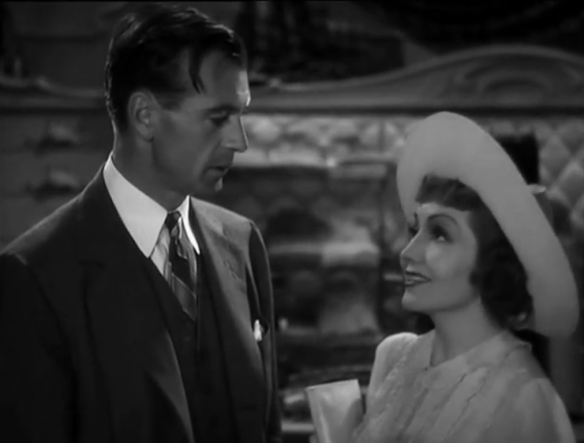
Bluebeard’s Eighth Wife (1938): Coop and Colbert

Screenshot 2020-03-21 at 31856 PM

The whole glorious entangled mess of the story feels like an obvious antecedent to Billy Wilder’s Love in the Afternoon (1957), which is one of his lesser films (even with the redeeming presence of both Hepburn and Chevalier). It seems like a fairly obvious observation to make because Wilder deeply admired  Ernst Lubitsch. Love in The Afternoon was an ode to his hero. Although it didn’t quite come off.

I have similar feelings about the screwball comedy Bluebeard’s Eighth Wife (1938). It doesn’t quite gel. But first let’s turn our attention to the illustrious opening gambit which, like many of the great Lubitsch beginnings, is too exquisite to pass up as the dramatic situation is brought to the fore.

Gary Cooper staves off the sales floor spiel of the pertinacious shopkeeper with a touch of Parisian charm. All he wants are pajama tops. No bottoms. But in France, this simply is not done. It’s unheard of. The chain reaction is set off from clerk to head clerk — rushing up the stairs to the manager, regional manager…all the way up the president! In a moment of incredulity, the disgruntled fellow rushes out of bed at the words. He yells, “Communism!” only to reveal he has no bottoms. And we’re hoodwinked from the outset as only Lubitsch could do.

It all amounts to a national calamity. You can just imagine the papers printing up a nice spread on the scandal. But none of this happens thanks to a most propitious solution in the form of a woman; she only requires bottoms for her man. If it’s not apparent already, Billy Wilder and Charles Brackett’s script might as well have written the book on the rom-com meet-cute.

They’ve piqued our interest and pricked up our ears. If nothing else, thanks to some talk of “Czechoslovakia” in the dark. Far from being risque, it’s supposed to be a handy antidote to insomnia.  The man is obliged to the woman, and they go their separate ways.

The story too moves on from a department store to a hotel hallway where Gary Cooper is still being hustled and harried, this time by none other than the perennial Classic Hollywood hotel clerk Franklin Pangborn.

Better still is Edward Everett Horton, the Marquis de Loiselle, a man squatting in the hotel with rent backdated for months. He’s trying to pawn off anything he can to anyone who will bite including Mr. Brandon (Cooper). He’s also connected with the same pair of PJs in another winking Lubitsch touch before the conversation suddenly switches to bathtubs.

If you want to get technical, the pajamas spell it out for him. It’s the reason why he’ll buy the man’s bathtub, already preemptively planning a honeymoon in Czechoslovakia. It’s Lubitsch shorthand for wedding bells. You see, Coop is intent with getting together with Claudette if at all possible, and it is. She’s the marquis’s daughter.

These elements are wonderfully conceived and textbook Lubitsch execution making the most of the script. However, I failed to feel the same way about the entire movie. If you’ll permit me a digression, I recently saw Paris When it Sizzles and there’s no doubt Lubitsch’s film is head and shoulders above the later picture — more lithe and clever at any rate — but there is the same problem at its core.

It ‘s almost counterintuitive to acknowledge this. The premise in each case feels almost too inventive for the story’s own good. However, it’s rather like we are following the mechanisms of a clever bit of story structure instead of really getting to enjoy the out-and-out thrills of romance, be they comedic or overly dramatic.

We never get past the stage of logline, hook, or gimmick into truly uncharted territory where the two characters are allowed space to breathe and do things that feel, well, natural.

The remaining elements are intriguing enough. She finds out he’s been married so often. Thus, Nicole’s ready to call the whole thing off. Instead, she decides to make him suffer. No divorce, just prolonged separation. It galls him to be so close to his wife and yet so far. He mounts an offensive inspired by Shakespeare.

What follows is a barrage of slaps, spankings, and iodine for bite marks. Colbert is able to out duel him with her onion breath — his fatal flaw is that he positively abhors the miserable vegetable. It’s all potentially brilliant stuff and a lot of it truly diverting with David Niven and a private investigator thrown into the mix. However, the pieces somehow don’t fit together in a manner constituting a decisive story, beyond some hilarious premises and snappy dialogue. Rest assured the film has both.

If we’re able to consider where it goes wrong, we can look to Gary Cooper and Claudette Colbert sharing the screen together. There’s no clear antagonism between them per se. Instead of antipathy, they have a kind of anti-chemistry. That is, they’re meant to be opposites. But there must be a sneaking suspicion on the part of the audience that they do really have feelings for one another. At least, this is what all the great screwball comedies of remarriage banked on.

Coop and Colbert never manage the same kind of underlying inertia. I never feel like I’m sitting back and having a grand ol’ time gallivanting through escapades with them. In other words, it’s not quite screwball. That was never the Lubitsch calling card. That’s not what his Touch is about.

Admittedly, I had a similar issue with Design for Living (1933) a film that was quite good on paper (and even in technical conception. The acting talents are to die for. The director one of the greats of visually intuitive comedy. Here we even have a script from Billy Wilder and Charles Brackett.  It all comes to naught if the parts don’t completely mesh.

One idea I would like to court has to do with the point of view of the story. Obviously, Gary Cooper’s our lead, and he’s far from a virtuoso comedic wit. He is a movie star. Still, what is the essence of the story?

Is it about a woman winning her man over under the most absurd circumstances? The Lady Eve did that quite well: Barbara Stanwyck taking in Henry Fonda. But that will never do with Coop (Then, again there is Ball of Fire). He began as our focal point, and he’s the main focus until the end. Even with a straitjacket gag, he gets the final kiss.

Really this should be Colbert’s movie to win over, where we get to cheer her on and relish her amorous conniving. Heaven forbid our leading man be upstaged (Then, again there is Midnight). Instead, Claudette felt like the enemy, a bit annoying, and because Gary’s strung out a laundry list of wives and meets everyone with a scowl and a brusque dismissal, there’s not much to like about him either.

Maybe the film’s take is too modern or my sensibilities not modern enough, but I couldn’t help feeling letdown. I’m not sure if doing a more thorough anatomy of the screenplay will change this, and I’m okay with that. It’s only a shame I don’t like this movie more. I wanted to. At least I know Gary and Claudette won’t hold it against me.

3/5 Stars

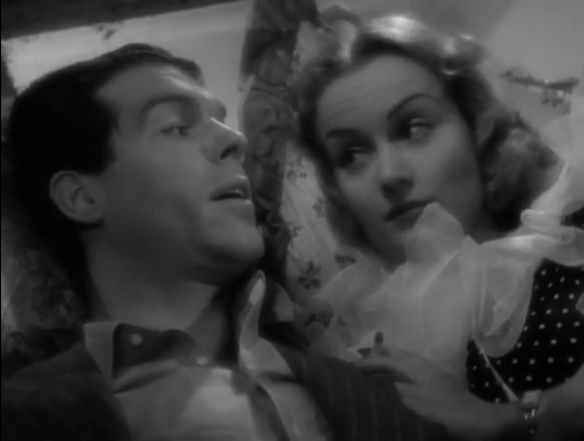
Hands Across The Table (1935): MacMurray and Lombard

Screenshot 2020-03-21 at 72315 AM

Regi Allen (the inimitable Carole Lombard) is a manicurist schlubbing along, working away at people’s cuticles, and jamming away on the subway two times a day. She’s looking for a major catch to grab hold of. Ralph Bellamy is a charming man with money, albeit resigned to a wheelchair.

This could be the perfect start of a rom-com right here. However, in the year 1935, the thought of such a romantic “couple” might have been too startling for conventional Hollywood hegemony. There must be another, and he’s soon introduced.

They meet as he plays indoor hopscotch like a weirdo right outside Mr. Macklyn’s apartment. The face belongs to the most boyish-looking Fred MacMurray I have ever seen. Because again, if you’re doing the math it’s 1935; Disney professorship and My Three Sons fatherhood would be decades in the making.

For the sake of this story, it’s fortuitous he too is another affluent moneybags or at the very least his family name has enough numerals after it to suggest he is a long-time member of the “vieux riche.”

Being an unabashed gold digger, she looks to seek him out even if he is a bit on the odd side. What matters to her is the bottom line. Namely, money. Of course, the perceptive viewer might have already guessed something is amiss here somewhere. There must be a catch or a gag or a complication of some sort.

To put it bluntly, he’s as much of a high roller as she is. Because The Crash conveniently took all his family’s fortunes in its wake. He now might as well be a member of the “new poor” though he still spends money like it grows on trees. To put a positive spin on it, he is radically generous with his capital.

They have a formal dinner date with an entree of the hiccups and onion soup. And their shenanigans continue even as she begrudgingly allows her new confidante to crash on her couch.

Fred is game now because they are actually quite alike — birds of a feather you might say. He does his most uncomfortable impression of a Japanese manservant as he becomes Ms. Allen’s live-in cook trying rather unsuccessfully to whip up dinner.

Imagine my surprise when William Demarest shows up behind the door as a new suitor for Regi. Ted has a ball of a time masquerading as her demonstrative husband scaring off the hapless chap from the adjoining room. Surely neither knew they would be reunited one day on the small screen. It’s a coincidental piece of happenstance only available in hindsight.

In turn, he tells Regi he’s supposed to be in Bermuda by now with his fiancee — an heiress of a pineapple empire — so they pay her a giggly prank call long distance. The way Lombard and MacMurray warm to one another is in one sense lovely but also a bit of a disappointment.

The best sorts of screwball, are the fall apart come back together passionately type of rom-coms involving red hot tension. All the elements are here, even the romantic foils, but for whatever reason, because the characters are so charming — no fault of their own I might add — it winds up being a lightweight iteration of the genre.

It’s funny in starts and spurts but never to the point of fever pitch or raucous absurdity. It’s never really prepared to go the extra mile off the deep end beyond hopscotch, hiccups, and heat lamps. Again, it’s a minor shame, but you also can’t take away from Lombard and MacMurray.

If you’re already a fan, it’s a delightful trifle courtesy of Mitchell Leisen who’s skill with this kind of material is often underrated. For their part, the Lombard-MacMurray partnership birthed three more pictures in rapid succession to meet the public demand.

If you’re like me, you pity Ralph Bellamy as he graciously contents himself playing the matchmaker for the two lovebirds running off into the street looking for the coin they flipped. Heads means they’ll get married. Tails they go out to lunch. The giddy couple instigates a traffic jam just to find out and wouldn’t you know it, the coin stands on end in a manhole cover. Ah, love. How sweet it is.

3.5/5 Stars

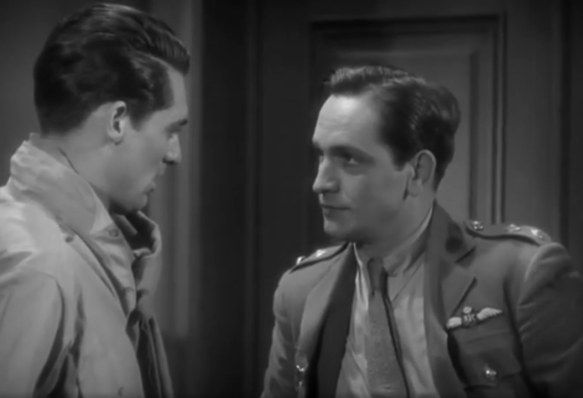
The Eagle and The Hawk (1933): March The WWI Flying Ace

Screenshot 2020-03-20 at 80407 PM

There are two elements in the opening of The Eagle and The Hawk that might catch some viewers off guard. First, is the matter of a plane landing upside down. Second, being the fact the pilot is an uncharacteristically abrasive Cary Grant. He’s still playing support to our true lead Fredric March.

It’s alright to admit the shoe never quite fits and, thankfully, Grant was not forever relegated to such unseemingly roles again (well, there is Suspicion or Notorious). Regardless, in this WWI picture, a group of American aviators ship out from London to give their British allies a lift in France.

New forms of technology like aeroplanes still feel a bit rudimentary, yet to be time-tested, and therefore they carry with them a bit more danger. They must take recon photos flying close to the ground and often engage the enemy in aerial combat. The footage of the dogfights is lively if equally rudimentary.

It’s Grant’s Lt. Crocker who has aspirations to be a pilot, not an observer — the less glamorous posts going to those who take pictures and gun. Cary’s got a chip on his shoulder, and it’s turned him sour. Jack Oakie is the complete opposite — chipper, well-liked by all, and conveniently supplying comic relief.

However, it is the final star, the leading man, Fredric March who stands head and shoulders above the rest, at least on this occasion. He goes through a startling transformation over time. He soon learns the hard lesson. For every two kills of a jubilant Jerry Young (March), there’s the searing reality of a comrade dead.

We are instantly reminded war never allows a man to rest on his laurels before inundating them with the sheer callousness of such a conflict. It shows no favoritism. Officers or enlisted men alike. Doughboys or flyboys. It makes no difference. Everyone is susceptible.

In a matter of minutes, the weight of war is made obvious. It happens between a letter written to a dead man’s spouse and a blackboard with names constantly being erased and added.  Beyond being indiscriminate, war also waits for no man.

As time progresses, the dogfight sequences maintain quite the impressive pace for their day and age. The sequences use the resources at their disposable and varied shots to develop something fairly immersive beyond mere back-projection fillers.

Finally getting his first go, Grant shoots down an unarmed parachuter with great relish, his first day on the job, only to kill the mood after hours. They say he’s a “dirty deuce,” but perhaps he’s the only realist around. He treats it like war. They treat it like an exhibition in some contrived form of chivalry.

There are rules to war and gentleman’s agreements to be abided by on one side and then the “killed or be killed” mentality of Grant. And yet even as March remains one of the righteous ones, he starts medicating with alcohol to get over what he’s been privy to.

Soon he can’t get over the insanity or reconcile with the consequences set before them. They are bestowed medals by the French military with the rain pouring down — it’s a wet affair — and he’s still soused. 

A new batch of fresh-faced youngsters come to replace those who have already expired. He’s enlisted to speak to the new recruits, sharing a message for the sake of moral, though it’s evident he barely believes what he’s spewing. Because some of them will die before even getting to the front. What’s the purpose of it all? So the folks back home might cling to some misguided patriotic fervor?

The night terrors begin — Jerry’s mind now filled with burning, blood, and snipers at night. A change of scenery is suggested and so he’s given leave.  But in the households, the conversations are boorish and needlessly taken with the romanticism of war and glory.

Here are people drunk on the same wine. Men laugh about the enemy going down in flames. Curious young boys ask questions about what it’s like to meet the enemy with hopes to be up there one day. No one seems to understand, and how can they. They haven’t been there.

Watching from a distance, there is at last one pair of perceptive eyes. They belong, of course, to Carole Lombard. She slides her way into Jerry’s cab as he tries to leave the idle chatter behind. Instead, they find a quiet park, out of the way, to share some champagne and engage in genuine conversation.

She has only a momentary part — it really is a glorified cameo if we should call it that — and this is a movie that’s already so succinct. Still, it’s a memorable spot, and she offers a sympathetic countenance in a world all but lacking such consideration. It makes her all the more attractive.

Still, Jerry must go back to the lines and maintain the burden of being a shining example for others. After all, he is the fitting emblem of what a military hero should be. Fearless in the face of the enemy. All but indestructible with a stirling flying record.

However, we become jaded with the same persistent cynicism of Jerry pulling him from the airs above back into the parties and routines down below at the base. He can’t even manage to muster any kind of good-natured sentiment in such a jocund company.

All he sees are the chunks of flesh and bone on his chest in the form of medals. And all he can think about are the boys who have died either by his hands or at the hands of others. He’s gotten his medals, gained hero status and adulation from his peers, for killing kids. What’s worse, few seem to acknowledge him, going on their merry way. Surely he’s merely drunk. He’ll get over it in the morning. Except he doesn’t.

The film’s ending is a brutal shock to the system, but it settles into an honorable arc. If anyone was worried, Cary Grant is redeemed in the final moments preparing to soar off toward bigger and better successes.

What I’m most impressed with is how The Eagle and The Hawk does such a phenomenal job distilling some of the most pressing themes of war in its harshest and most bitter realities in such a meager allotment of time. It’s like All Quiet on the Western Front lite, and I mean this as the most sincere of compliments. It adeptly hones in on the essential elements of the prior film as another stark, unfaltering statement exploring human conflict on this seismic scale.

It comes not through heedless idealism but a sobering, unblinking examination of what war really is. Any pretense is stripped away in a matter of minutes while March gives one of the most piercing performances, arguably, of his entire career. If you haven’t already, go seek it out. My hope is that you’ll be glad you did.

4/5 Stars

Pale Flower (1964): A Stylish Japanese Noir

Screenshot 2020-03-13 at 84635 PM

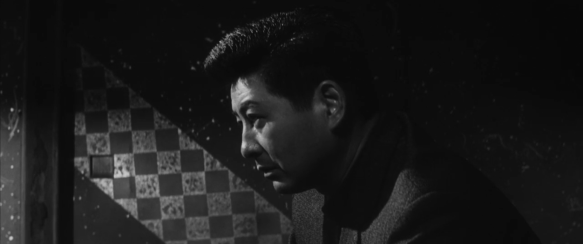
The images aren’t unfamiliar to those acquainted with Japan’s metropolis. A voice surmises over images of the bustling train station. “Back in Tokyo. 3 years. It makes my head spin. Why are so many people crammed into cage-like boxes?”

I couldn’t agree more with our narrator. The sentiments aren’t lost on me from my time living abroad and riding those very same trains with some of those same people. However, he goes further still.

They are strange animals, their faces lifeless — even dead. Later on, he equates step-fathers with pigs and young lovers in a darkened movie theater are much the same. His is quite the high view of humanity. If all of this feels detached and unequivocally unfeeling, then you’ve caught on to the despondency at the core of Pale Flower.

We realize we are in the presence of some sort of present-day philosopher. Of course, Muraki (Ryō Ikebe) just happens to be a member of one of the local Yakuza gangs. This is his turf. Someone has died since then — someone he killed — but otherwise, nothing has changed. It’s the same place he left during his stint in prison. He returns to the gambling dens to seek out the former crowd.

What’s immediately apparent about Pale Flower, at least from a visual perspective, is the texture of the images. They are pristine and drop-dead gorgeous if generally detached. They come off as silky smooth as their protagonist, who sits down with the other gamblers just like old times catching the eye of a lucky young woman (Mariko Kaga) with quite a winning streak.

Already, it gives off the smoky, self-assured vibes of an old Paul Newman or Steve McQueen movie — something like The Hustler or the Cincinnati Kid — films that had atmosphere and residual cool in spades.

It starts with our hero Muraki. If he’s a little of Newman, he might be a bit of Robert Mitchum too with a cigarette perched between his lips. Or he’s casually walking the streets in his shades like a mature Alain Delon. In a word, it’s the kind of confidence you don’t teach. It feels like it’s been inbred.

As a filmmaker, Masahiro Shinoda displays a few of the same characteristics. Some of his shot selections are awesome feats quickly garnering appreciation. I would be remiss not to mention an overhead shot of all the players gathered around the gambling table, a bold portrait of visual symmetry. It requires a resolute confidence in what your frames have to offer on their own merit.

Recently, I watched Seijun Suzuki’s Youth of The Beast, and it showcases a very different kind of artistry. He willfully blows through all the rules with a blatant disregard and bombastic energy verging on the absurd. This is his calling card throughout his most well-received offerings like Tokyo Drifter and Branded to Kill.

Shinoda’s film takes an entirely different approach, sliding casually through conventions without ever losing their sense of cool. Both give us defining portraits of yakuza cinema, but there’s a seriousness even a solemnity present that carries through, down to the black & white imagery. Suzuki would rarely be caught dead with such dourness. Here it works.

It’s also totally reinforced and enhanced by its use of sound, whether clocks, flowing water, clacking tiles, whatever it may be — there’s something about the cadence adding a pace and an innate rhythm to the beats of the story. They’re not always fast, but there is a purposeful confidence in them as they move from one to another. And sometimes, there’s silence — just street noise or feet clopping — other times the bold screeches and scrapes of the score.

If we’ve skimped on plot, it’s because Pale Flower doesn’t necessarily need much to remain effective. Aside from gambling houses, Muraki can be found at the racetrack or paying a visit to his old boss — an unassuming, aging man who takes frequent trips to the dentist.

Coming back, the faithful mobster has come to realize some things have changed in his absence. The two-sided gang war serving as the bulwark of the underworld now has a third party from Osaka complicating the works as they gain ground.

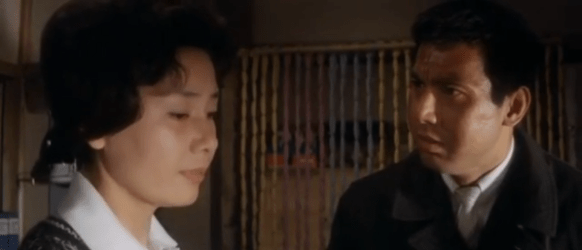
He’s also got a girl waiting for him — a girl who loves him — even as a sensible salaryman asks for her hand in marriage, and Muraki gets distracted by so many things. There’s his work and then other women. For one, Saeko the doe-eyed baby-faced beauty leaves quite an impression wherever she goes. Maybe that’s what happens in an entirely paternalistic society. Regardless, Muraki takes particular interest in her.

She, for one, is young and totally bored with life, riding the highs of gambling, although they can never get quite high enough. One is reminded of the compulsive steadily rising addiction and gambler’s fallacy at the center of Jacques Demy’s Bay of Angels.

Still, Saeko needs something else. She’s insatiable. When she can’t gamble anymore, she lets herself get carried away racing down the highways — drunk on adrenaline — and when that still doesn’t satisfy, she needs something more to get off on. She and Muraki in some ways are alike. Up to a point.

He scoffs at the ghostly-faced gangster Yoh. He’s a sleazy dope addict, who always sits in the corner like a gaunt specter. His brand of small-time criminal is a far cry from what Muraki knows. Saeko is drawn to him because he is a concrete gateway to drugs, her latest hobby.

Then, one day Muraki’s ambushed by a young punk at a bowling alley, and he proceeds to beat him to a pulp as other thugs drag him off to the tranquil melody of “Mona Lisa” playing the loudspeakers. It means very little to him even as he considers the cause of the pitiful retribution.

He opens up to the girl. I killed a man I had no reason to kill. It was just a business matter; his number came up. He felt the same exhilaration in the act of violence. It made him feel alive. Now he plays cards because what else is there to do? It’s as defeatist as it is depressing.

At the same time, Muraki’s not the most charismatic figure. He’s not about to be a PR man or make amends for past grievances. It’s not his style even as he’s called on to fill in for the boss in their latest business proposition.

However, this is not all that unnerves him. There’s an eery confrontation in a back alleyway showcasing the apogee of the film’s style. He has nightmares about Saeko, feeling more protective of her than ever. Worst yet, their cohort Tamaki is knifed.

The boss calls out his men. Someone needs to avenge the death of their own and everyone’s hesitant to take on the job. It falls on the shoulders of the one man who is a traditionalist — unswerving in his devotion to duty, honor, and all those unflinching codes.

Very rarely does it feel like the plot is imposing its will on the movie. Much of what Shinoda is doing is not only an exhibition in style but totally invested in creating a tactile world. This allows the pervasive worldview and the characters to dictate what we spend our time seeing and doing.

Gambling, driving fast cars, smoking, and throwing around a bit of shop talk in bars and backrooms. There’s not much to it on paper, but you have to witness it to really appreciate what’s being accomplished.

Even in the lingering moments, we begin to realize we’ve very rarely seen Muraki do anything. Instead, it’s his reputation that proceeds him, including his three-year jail sentence. And yet to watch him in his natural habitat, there is a certain dignity and undoubtedly a kind of code dictating his life. He feels beholden to something.

His final actions are as dutiful as they are fated. He knows what he is going to do, and the scene gives way to what feels like a choreographed dance, playing to the music as only a Yakuza film could pull it off. It’s gut-busting and shocking as a solemn final coda to the film. In some perverse way, it’s his final passionate offering to Saeko. And there is obviously a consequence.

He pays for his crime with another stretch. While he’s on the inside he hears the news. Saeko is dead. His pale flower gone. Muraki’s nightmare proves more prophetic than he’d ever wish to acknowledge. And why should it matter now? It doesn’t. It makes no difference who she was. Life cannot be redeemed by a few all-encompassing words. Not “Rosebud” nor “Pale Flower.”

After all, life is, in the words of the characters, “pointless.” For those folks lifeless on the train. For the young women deadened by drugs. For the gangsters beholden to a code and a lifestyle that feels so senseless. It’s noir sentiments laid bare in the heart of Japan.

4.5/5 Stars

Youth of The Beast (1963): Directed by Seijun Suzuki

Screenshot 2020-03-11 at 80355 PM

A crowd gathers outside the Yamato Hotel. Inside two lovers are slain, the cops milling about the crime scene: The man and the woman. The note. It all points to a double suicide (Shinju) and with it a conventional police procedural.

It very well could have been if not for one man: the film’s director Seijun Suzuki. He’s not known to the same degree as some of the hallowed masters of Japanese cinema, but he’s certainly an incomparable creator.

Suzuki is one of the most visually inventive wizards of the shoestring budget crafting a kind of stylized dynamism one doesn’t soon forget. They’re high on color, octane, and idiosyncratic flourishes. There’s nobody quite like him and given his talents, it’s quite the compliment. He could make a shoebox interesting. Instead, he has something genuinely engaging for us to be involved with.

It becomes increasingly apparent the shady business deals and operations around town are run by capitalistic scuzzballs, although we’re not just supplanting the American mafia. Though the film is rampant with gun culture, it’s not quite a House of Bamboo type of racket either, where the outsiders are at the top of the food chain, be it crooked G.I.s or other expatriates. It’s very much a homegrown kind of vice, and it makes sense given Japan’s deeply entrenched traditions of the Yakuza.

What Suzuki offers this already well-established culture and genre is a punchy, vibrant sense of cool searing everything it touches like dry ice with fireworks set ablaze in the streets simultaneously. You can’t help but look. The colors burst with the jazzy frenzy of it all, easily holding court with the French New Wave.

Equally important is a central protagonist, and the director partnered with one of his best in Joe Shishido, who was fashioned into a bit of a cult hero thanks to the yakuza flicks of Suzuki and others. There’s something oddly iconic about his distinctly chipmunk-cheeked profile.

Even as someone who was previously aware of his facial augmentations, his look is at times perturbing, pulling him out of the realm of reality and making him into a bit of a comic book action figure. And he fits the mold well as a cocksure yakuza enforcer.

He steps on people’s hands, throws men about, walks into bars like he owns the place with girls flocking around him. At the end of it all, he earns himself a salary at gunpoint. It’s quite the introduction.

What sets him apart is not simply self-assured, enigmatic cool, but the fact he always seems to be one step ahead. If he’s not quite indestructible, then he usually winds up in control of all the situations he gets himself into. It’s an impressive skill, especially in such a volatile, ever-changing environment.

His reputation more than impresses one of the local bosses, Nomoto, a head honcho with a penchant for stroking cats, throwing knives, and engaging in other dubious extracurriculars. He checks the new man out and he passes with flying colors gaining a faithful ally in the jovial heavy Minami. Jo’s the kind of insurance you want on your team. It’s a bit like stacking the deck.

However, the film makes full use of a Yojimbo-like gimmick with other token genre tropes tossed in for good measure, including the age-old archetype, the fact that everything and everyone is not as they appear. While he’s ingratiating himself with one side — raking in money by calling in their debts — he falls in with the Sanko gang too.

He meets the man in what can only be the back of a movie house — the black and white movie reels playing during their heated confrontations and tenuous partnership. Because he’s already garnered more than a reputation for his recent exploits and acts of tough-guy bravado. What the odd backdrop suggests is a particular eye for novel setups enriching the actions and the related landscape of characters.

At its best, the sets of Youth of the Beast feel totally disposable allowing characters to decimate them in any number of ways. In tandem, they also devise a plethora of ingenious forms to torture their enemies, from whips to razor blades, implemented in all manner of painful ways, on tongues and fingers. Jo torches one of his target’s hair in the process of extortion for goodness sakes! An image like that is literally emblazoned on your mind’s eye.

Likewise, it represents the call girl world without the consequences of When a Woman Ascends The Stairs; it’s more modern and pizzazzy — commoditized to be easy and delectable — specifically for men. One of the picture’s most startling images follows a female junkie crawling out of her skin only to tumble down the stairs for a fix. Moments earlier she rips the stuffing out of a chair from sheer agony.

Jo is ambushed in the shower by one of the bosses’ mistresses; she, in turn, is looking for “The Sixth Mistress.” It trumps The Third Man by three. If it’s not apparent already, all this is blended into a frenetic stream-of-consciousness plotline never waiting for the audience to comprehend everything before it goes careening somewhere else.

But rather than feeling uncentered or discombobulated, it comes off as all being a part of the wild ride courtesy of Suzuki himself. Suzuki’s never intent on holding the viewer’s hand. He rarely bothers explaining himself, putting all his energies into the outlandishness, which gives way to corkscrew twists and turns as we go barreling through the story with reckless abandon.

There are probably one or two things you don’t see coming and a few you will. Others might defy logic. All the better. His cavalier nature, even his disaffection, makes for more electric entertainment.

More than exemplifying a cohesive piece of storytelling from front to back, Youth of The Beast is made by specific moments — the sequences that feel like singular expressions — standing on their own. There’s something somewhat intoxicating about the trip. Both aesthetically and how visceral the movie dares to go, especially given its roots in the 1960s. The mise en scene — the peculiar flourishes of the art are the heart and soul of the story. Not the other way around.

There is a climax, yes, but the particulars feel inconsequential when it comes to drawing up the sides. All we need is a raucous mob war complete with drive-bys and guns galore with Jo thrown into the action. He does battle with an assailant while suspended by his feet from the chandelier. It sounds hilarious and yet it’s harrowing. What’s more, I’ve never seen anything quite like that confrontation before. It’s different.

The movie never courts any kind of sentimentality, and the way Suzuki blows through his material has a freewheeling vigor and the iconoclastic glee of filmmakers as diverse as Sam Fuller and Luis Bunuel even as he deconstructs the yakuza genre.

There’s something thrilling about watching someone where you don’t quite know what they’re going to do next. With such a small amount of capital, it only goes to show the caliber of the director. Where the continual limitations under any given scenario still make it feel like the skies the limit. He was so good in fact, his studio turned right around and fired him only a couple years later. Suzuki was, as we say far too often, ahead of his time. In his case, it’s true.

4/5 Stars