Counselor at Law (1933)

counselor at law 1.png

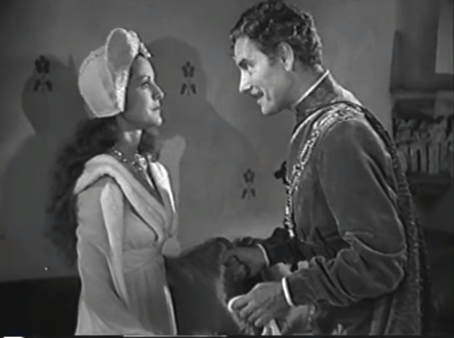
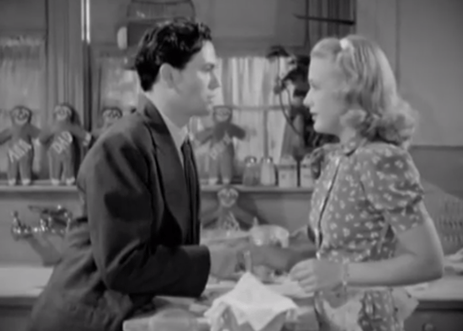
The law offices of Simon and Tedesco are at the core of this film but it’s really George Simon who’s of particular interest to us. Based off a play by Elmer Rice, Counselor at Law is a self-contained office drama of great energetic verve. It’s handled assuredly by a young Hollywood director on the rise named William Wyler — a man who continued to make quality films throughout the 30s and by the 40s and 50s became lauded among Hollywood’s finest filmmakers. Here you can already see him reining in the chaos to hone in on a lucid story that’s witty and at times admittedly tragic.

We’re quickly introduced to an office positively buzzing with activity which sets the scene nicely. There are frequent coming and goings from office to office, mail deliveries, telephone lines crisscrossing this way and that with a reception area full of people.

It soon becomes apparent that there’s a head-spinning regiment of phone calls, appointments, and anything else you can imagine going on in this busy beehive on any given day. It makes a day at work seem like the most rewarding social experiment that you could possibly conduct in that revered tradition of people watching. Because as an audience that’s what we get the privilege to do as Rice’s adapted script constructs the beats of the story as a delightful web of interactions.

John Barrymore gives a frenetic performance as the whirling dervish of a lawyer Mr. Simon. And it feels like a stroke of genius that we never see him enter a court of law but only observe the various people and types he must work with to get his job done. It makes for an engrossing human drama that puts us in touch with a myriad of narratives all at once.

Instead, we get to know so much about his makeup and personal character. He receives multiple visits from his kindly mother who he playfully ribs or from his wife who he lavishes with affection constantly while she remains notably aloof. But that’s simply his way. He’s a mile a minute generally magnanimous soul who does his job well. Many folks in the town are indebted to him and though he’s successful, you get the sense he hasn’t forgotten about the little fellow on his way to the top.

This sentiment lays the groundwork for the film as a piece of commentary. It gets its source from a boy from the old neighborhood who got brought in by the cops for spewing communist sentiments on a street corner. Now his poor mother is asking a favor of Mr. Simon. He obliges only to get ridiculed and belittled by the proud young man.

As such Counselor at Law has a bit of a socio-economic angle as well suggesting the longheld stratosphere that was imposed the day that the first Europeans came off the Mayflower. Any following party has a harder time making it and yet some of the more assiduous ones do. It’s staying there that can be difficult.

But the attacks come from the bottom too. From the fiery youths who look at a self-made man such as Simon as someone who has sold out on his kind; he’s a dirty traitor. There’s no way to win. The American way seems a tough road to traverse and still come out a winner.

One such passing interaction with a past client, in particular, changes his entire day for the worse and a crucial fact that went unbeknownst to him could spell curtains to his career. In a matter of minutes, disbarment seems to be looming over him. He can’t take it.

But the film also has another layer. Love stories are playing out and there are two levels to it. Obviously, there is Simon and his wife who he adores and her “other man.” Then, there’s Rexy (Bebe Daniels), Mr. Simon’s faithful secretary constantly brushing off the frequent advances of a bookish but persistent Mr. Weinberg. But there’s also an unrequited love that’s unspoken and seems the most devastating of them all.

Ultimately, we are privy to the blessing and the curse of the workaholic. By the end of the film, Simon’s true love is still his work even if there’s a hint at something more. Whether or not he can maintain his lifestyle is left to the imagination and perhaps it is better that way. We leave him on the upswing but with questions still to ask. It suggests that the American Dream isn’t always quite what it seems. It can be equal parts joy and tragedy. The question is whether or not it is worth the risk.

4.5/5 Stars

Three Smart Girls Grow Up (1939)

Three_Smart_Girls_Grow_Up_poster.jpgThe Universal dream team of Deanna Durbin, producer Joe Pasternak, and director Henry Koster are back at it again in this follow up to the wildly popular comedy that propelled Durbin to international stardom.
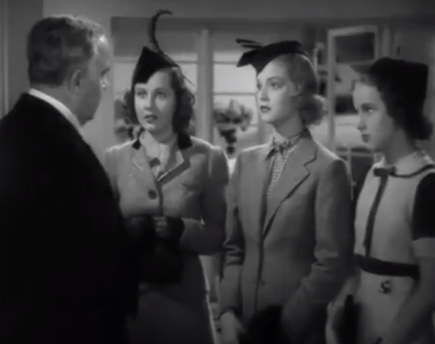
The Craig sisters are back too and this one begins with a unique and rather hilarious opening title sequence as our three girls now grown up, as the title suggests, prepare their salutations for meeting the governor.

Most things haven’t changed as Penny (Durbin) is precocious as ever. The family seems joyous given the previous film reunited their estranged parents once more. But for some reason, it seems the men they were engaged to didn’t remain (conveniently for the sake of the sequel).

So the film proposes another slightly maudlin very straightforward problem that Penny puts it upon herself to solve: Her big sister is in love with one man, the young man who is just recently engaged to be married to their other sister. There’s nothing for it but to find another man who will be a distraction. Never one to be outwitted, Penny introduces an eligible man into the equation, an older musician (Robert Cummings) from the conservatory she practices at under her teacher (Felix Bressart).  But her concerned parents get the wrong idea with her bringing an older man around the house for dinner.

They forbid their daughter from going to her music lessons now. By the time she figures out what has happened, the fateful day of the wedding is almost upon them and so she does the only thing she can think of — go to her father — the same father who has been drowning in work as of late. Like any good father, he comes in clutch when it counts. The happy ending kept fully intact.

Ironically, Robert Cummings makes a passing remark about how he has no girlfriend and he’s waiting for Penny to grow up. Funny because he and Durbin would be paired in It Started With Eve (1941) just two years later as romantic interests.

Durban, on her part, was christened “Little Miss Fix-It” for these roles and though she was beloved for such fare there’s no begrudging her for wanting more meatier and mature parts. By and large, she wasn’t all that successful in getting the type of roles she wanted and it led to her retirement from acting in 1949. She would never make another picture after that and proceeded to live a life of relative seclusion with her husband in France.

It’s easy in this specific instance to make parallels with Greta Garbo’s own trajectory from top of the world to self-prescribed anonymity.  Except Durbin did it at an even younger age. There’s no overstating her importance to an entire generation of filmgoers. There’s no greater compliment than the attributed fact that Winston Churchill so loved Durbin’s films he would play them following British victories during the war years. She certainly does give you something to stand up and cheer about with her voice and a sparkling countenance alone.

3/5 Stars

Three Smart Girls (1936)

three smart girls 1

Here is a comedy born of a certain time and age when they made such trifles. It’s the kind of plot where you can read it off in a single sentence but it’s further cushioned by cutesy moments and musical asides. Where growing girls say “Mummy” and “Daddy,” always fussing and screeching and bickering over this or that.

It could all get tiresome and too sugary if it weren’t redeemed by how very pleasant it is in reflecting adolescence. Yes, you could even call it absolute claptrap but there’s something special thrown into the concoction: Her name is Deanna Durbin.

Perhaps I am overstating her significance and making her stake larger than it possibly could be but I’d like to think on the contrary. Deanna Durbin is presented as “Universal’s newest discovery” and what a find she was. Beginning a run of many successful box office hits continuing up on through the war years, she was a beloved part of Americana.

Here was a teenage girl who with a voice and a carefully groomed persona helped salvage an entire studio and became so well-known and admired that by 1941 she would be the highest paid woman in America and the entire world, bar none, at the age of 21 (Look it up for yourself but don’t quote me).

Three Smart Girls is a film that means the very best and Henry Koster guides it along this path of sunshine and cheerfulness. There are numerous moments that say as much as Penny (Durbin) floats along with her two sisters (Barbara Read and Nan Grey) on a lake riding lazily on their sailboat in Switzerland while she knocks out a tune. Maybe it’s the girls squealing as they make use of their father’s exercise equipment and we watch Durbin repeatedly swing toward the camera until her face completely fills up the frame.

But I’ve put it off long enough. Here is my one sentence of exposition. The Three Craig girls make it their mission to go to New York and break of their father’s (Charles Winninger) engagement to a young gold digger so he can get back with their mother (Nella Walker). It’s a noble project and it also has the touches of an early Parent Trap (1961) which takes obvious inspiration from this picture.

The girls bring their flurry of teenage drama into their father’s bachelor lifestyle as well as subsequent heartbreak and tears that do finally give way to marital bliss (of course they do).

There seems to be a paradox to Deanna Durbin’s appeal. She had the feisty sass of a younger girl and the voice of an older one that sweeps you off your feet. It’s the kind of voice that I must admit sounds dubbed at times. That cannot conceivably be her singing!

She makes a line of hardened cops do a double take when she breaks out into an opera number in the police station trying to pull off a little white lie that’s she’s a Parisian songstress. It almost works too.

Ray Milland is wonderfully witty as the rich young gentleman who finds himself pulled into the girl’s charade on a miscommunication. In fact, it’s easy to prefer him in these lighter roles to his more dramatic turns that sometimes leave him looking like a stuffy cad. He can be quite charming actually. Mischa Auer also shows up but unfortunately isn’t given much to do.

But in the end, this evolved very much into Durbin’s film anyways and she does well to oblige the audience while her sisters are happily saddled with eligible young men and her parents get back together. They’re all a happy family again and there Penny is standing at the center of it all smiling broadly.

3.5/5 Stars

Little Women (1933)

little women 1933 1

I still remember visiting Louisa May Alcott’s home in Massachusetts and of course, my sister read her magnum opus innumerable times when we were younger but for some reason, maybe it was a fear of what the title suggested, I still never cracked it open during my childhood. But I’ve always been intrigued by the story usually brought to me in snippets or in bits and pieces from films (namely the wonderful 1994 version).

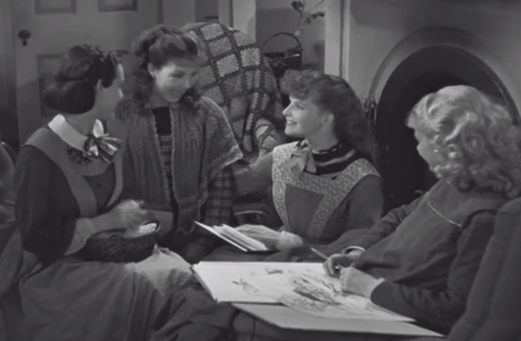
Here we have a quintessential Cukor picture that embodies the nobler side of humanity — the little women as represented by the March family — and it’s a winsome charmer, where the world seems vibrant and gay.

Despite their humble state, the March girls are cultivated by love and affection. They grew up playing at John Bunyan’s Pilgrim’s Progress when they were children and now as they become young women they have real burdens.

And yet their lives are still fortified by hope and the pure optimism of youth is captured within this picture. It provides access to that time of life which you wish you could hold onto. You see it most aggressively in Jo (Katharine Hepburn) — young, wild, and free as she is — her life full of frolicking and exuberance. She sees the world as perfect bliss surrounded by her mother and sisters — her father to return from the war at some point, a hero in her eyes.

Her next-door neighbor starts out a stranger and soon becomes one of her finest companions. Laurie (Douglass Montgomery) stirs up all her energy and welcomes being brought into the fold while his stately grandfather proves to have one of the most capacious hearts with which to bless the March girls with. Not to mention the fact that Laurie’s tutor Mr. Brook takes an immediate liking to Meg (Frances Dee) and she harbors a mutual fondness for his gentleness and good manners.

Even a life such as this is struck unmercifully by tragedy. Beth (Jean Parker) is stricken with scarlet fever after watching a neighbor’s baby die in her arms. These are the depths of woe. These are the moments for which the March family stands around the piano and sing a chorus of “Abide With Me.”

The shining moment arrives when the father of the house returns. He barely has any screen time in the entire picture because after all, this isn’t his film. But his presence is used exquisitely to aid how Cukor approaches the material. We look on as he sees each daughter and his wife until the camera’s focus turns completely on Beth bedridden and stricken with sickness as she is. Seeing her father the girl miraculously rises to her feet recalled to life after being incapacitated for so long. The miracle of the moment isn’t lost to us nor the imagery of her father arriving as a savior to lift her up. It’s deeply moving.

But it’s funny how life works. Things cannot and will not stay the same forever. Sisters mature. People grow up and share the company of men. We too grow and progress though we only seem to see it in others and not ourselves.

Jo cannot bear for her older sister Meg to get married – to be forced to watch things change within her household – still they do change and she must accept it. However, she cannot accept that Laurie is in love with her and she reacts to his professions the only way she knows how.

The final act follows Jo as she looks to pursue her career as a writer, Meg is happily married now, and Amy (Joan Bennett) is off to Europe with curmudgeon Aunt March. Time passes and old wounds slowly begin to heal, especially when Jo meets another person of peace in Professor Baehr (Paul Lukas). He is a man of great intellect but humble means and he encourages his “little friend” in her writing. Developing a relationship that they both cherish deeply.

Little Women has always been such a striking example of how life can end up so much different than we could ever imagine and yet in hindsight, there are hardly any complaints to be had. It’s never about the complaints but the difficult things that tear us apart only to tie us closer together. Because, at the end of this story, Jo has progressed so far and yet she still has her family and they love her as much as ever.

Katharine Hepburn feels perfectly at home in the role of Jo always the tomboy, independent, boisterous and such. She rumbles with “coarse talk” her favorite exclamation being “Christopher Columbus!”

I’ll try to head off any criticism that might suggest this adaptation is quaint or dated because I would argue that it’s recalling a different era that in so many ways boasted so much that we should yearn for today in our current world. People putting other’s before themselves — living only with what is necessary not in excess or in pursuit of some self-serving hedonism. These are people who cherish what family can give them and the simplicity of quality time and relationships.

Where Christmas festivities have nothing to do with gifts or monetary value but a spirit of giving and a joyful heart. The March sisters even have the original home theater putting on a performance of their own creation letting their imagination and creativity ignite.

What I respect deeply about this story is that it doesn’t feel like it has to be a romance. True, people get married and fall in love but that is not the pretense for the story. As their father entreats them in his letter, they are to “conqueror themselves.” Finding a man is not the point of their existence and this story makes it clear that life is so much more than that. It’s about love, selflessness, humility, and a great many other traits that we would do well to pursue.

4.5/5 Stars

100 Men and a Girl (1937)

one girl and 100 men.png

It’s fascinating how history works. Deanna Durbin and Judy Garland came up at the same time. In their day, stars were groomed from an early age and MGM had both the starlets under contract. But instead of holding onto both talents it turned out that Garland remained and Durbin signed a new agreement with Universal.

The conventional wisdom was that you only needed one young singing girl at a studio. That niche was filled. Of course, that proved to be far from the truth as Durbin became a smash hit in her own right rivaling Garland.

100 Men and a Girl is only one film in a long list of successful outings she had in the 1930s starting with Three Smart Girls (1936). Most of these pictures were directed by Henry Koster and proved very popular with audiences.

This particular one surrounds Durbin with players including Adolph Menjou and has some My Man Godfrey (1936) castmates carried over from the previous year. There’s the inclusion of flabbergasted Billy Gilbert as the easily duped funnyman and other crucial character actors like Mischa Auer and Frank Jenks taking up posts as a flutist and a stymied cabbie respectively.

But front and center and most agreeable of everyone is this pleasant girl who unwittingly finds herself in high society and taken under the wing of a bubbly socialite (Alice Brady), who finds this girl’s demeanor charming perhaps for the very fact that she’s so sweet and well, a frantic force of nature. It’s delightfully refreshing and different from the snooty company the lady is used to having in her presence.

But Patsy Cardell can also sing quite stupendously and that’s to her credit. I’m hardly musically inclined but Durbin even at this age hardly seems a show tunes singer, sweetly navigating the utmost of classical compositions with a voice that feels beyond her years. My personal tastes are simpler but there’s no discounting her vocal abilities.

Still, the film is born out of an admittedly absurd idea and the light bulb flashes in a rapid burst of inspiration. Patsy’s father (Menjou) is out of work and so are 100 of his fellow musicians. What should she do? Starting a symphony orchestra is what she should do! It’s as clear as day and she motors forward determined to make her idea turn into something tangible with the promise of backing from Mrs. Frost (Brady).

The wind is in her sails and she’s not about to allow logistics or the scorn of others uproot her vision. Her goal is to get her daddy on Mr. John R. Frost’s radio show. It’s just what her father needs to get back to work. Presto! This is a film plot that might as well have gotten resolved with a puff of smoke. Just like that. Instead, she is crushed by the curmudgeon husband (Eugene Pallette), his wife now off in Europe out of sight. So Patsy has no recourse to go to the top and famed conductor Leopold Stokowski (playing himself).

The rest of the story relies on a number of convenient happenstances. False hopes and crushed dreams become real hopes and true dreams. Although it’s a pure pipe dream of a film, sometimes that’s just what we need whether we’re still wrangling with the Great Depression or in the here and now 80 years onward. Because films like this that are ethereal, fluffy, and light still give us something.

Durbin holds her own with cheerfulness and a certain amount of sass that doesn’t compromise her basic principles. She was instantly likable in her day and still much the same today.

Henry Koster will never get any respect for the kind of pictures that he made but that’s okay because he made films that were crafted with a genuine heart. That speaks to people in ways that other types of films can’t seem to manage. True, this picture can hardly claim the title of an artistic masterpiece for critics to fawn over and dissect to death with their immaculate vocabulary and academic analyses. That too is okay. Here is a film that’s wacky, fun, and it’s okay with being just that.

Deanna Durbin was credited with saving her studio from the pits of bankruptcy during the depression years with her voice and her spirit and a certain candor that made her a beloved girl-next-door icon for a generation. She was crystallized in that image and never quite broke out like she probably would have liked.

She also never saw the same acclaim from modern generations like a Judy Garland since she didn’t have a film like The Wizard of Oz (1939) for folks to rally around but in her time she was quite the attraction. All told, finding her again today is still a lovely revelation. She remains enjoyable to watch even for nostalgia’s sake. Sometimes that’s enough.

3.5/5 Stars

Four Daughters (1938)

four daighters 1.png

The entire packaging of this Warner Bros. film includes director Michael Curtiz, screenwriter Julius Epstein, composer Max Steiner, and Claude Rains all who (not unsurprisingly) would have their hand in that revered classic Casablanca (1942).

Here the Lane Sisters are joined in their quartet by Gale Page with Claude Rains playing the musical patriarch of his family who has trained his daughters up to be an orchestra right in his living room. He’s a belligerent but good-willed father with all his show of bluster merely a facade to hide a heart of pure gold. The role slightly subverts many of Rains’ typically even-keeled gentlemen.

Most of these opening sequences draw up just how quaint and delightful they all are together and what a perfect little life they share as the men begin to show up in their lives to call on them. Isn’t love grand? That’s what we might be prompted to surmise is the film’s main theme.

Four Daughters teeters perilously on the edge of being insufferably schmaltzy to its core and yet it seems that the arrival of John Garfield and the insertion of his character into this idyllic world of giggling girls and small-town romance is just enough to save this story and make into something worth remembering.

Mickey Boyd (Garfield) walks into their home as an acerbic outsider who thrums his nose at the picture-perfect American family in their quintessential American home but he also has a gift for the piano and as musicians themselves, that’s an instant point of connection. Furthermore, he’s come into town as a favor to his old colleague Felix Deitz (Jeffrey Lynn) who happens to be a close family friend and maybe one of the nicest guys you’ve ever met, either onscreen or off.

Still, Mickey is a tough one to crack but that doesn’t keep the maternal Aunt Etta (May Robson) or vivacious young Ann (Priscilla Lane) from trying their best to figure him out. In fact, Mickey becomes a bit of a pet project for Ann as she looks to slowly transform him into an honest to goodness genial human being. She does a fairly good job at it too as he is brought into the fold of the family for every subsequent round of holiday festivities.

The second act proves to be the most potent and whether or not the turn of events are truly probable does not detract from how affecting these sequences turn out to be. And ironically, at the center of it all are Mickey and Ann. The man who has always been the outsider looking in and the youngest sister full of playful precociousness. He is the one who helps her see things as they actually are and she, in turn, continually spruces up his life and to use an inane phrase, she “turns his frown upside down.”

But I think that’s the key to the final act of Four Daughters. It’s dramatic but it loses that almost sickening layer of sugarcoating and shocks everyone within the frame of the film back to the reality of the world with one tragic event or two events depending on what you deem the tragedy to be. This doesn’t simply feel like a mere play for our emotions — though it might be partially this — but it’s really a bit of a representation of what life actually throws our way.

That’s why Mickey is by far the most important character in this picture and he’s so necessary for it to be anything more than typical Hollywood fare because in some sense John Garfield makes that man into a real person. He’s not necessarily a bad fellow. In fact, we kind of like him because he seems a bit sardonic, frank, and he’s not going out trying to be something that he’s not.

True, the Hollywood happy ending is tacked on as we come to expect but perhaps in the closing moments, as the sisters look through the drawing room window and Ann is back to her gate-swinging ways with her beau as before, we can gain some satisfaction in the moment. Not simply because all is right in this little universe but the family went through trials and now are better for it — more attuned to the world. They are no longer simply four daughters or soon to be four wives. They are four women.

The film was dressed up in Technicolor in Young at Heart (1954) with Doris Day and Frank Sinatra and Sinatra elevated that film much as Garfield does here. His tune “All the Way” while having no bearing on the plot is nevertheless a memorable number. I have nothing against Mr. Lemp’s taste in music nor his disdain for the contemporary bilge of his day but I rather like the crooners myself.

3.5/5 Stars


I Am A Fugitive From a Chang Gang (1933)

IAmaFugitivefromaChainGangSullivan’s Travels (1941) and Cool Hand Luke (1967) were two films that took a fairly extensive look at what a chain gang actually was in cinematic terms. Meanwhile, Sam Cooke’s eponymous song made almost in jest has added another layer to the tradition.

Nowadays Chain Gangs seem a bit archaic and a part of the uncomfortable history of the South only to fall a few rungs below the injustice of Jim Crow Laws and the like. But the pre-code drama with its sensationalized title, I Am a Fugitive From a Chain Gang, was nevertheless dealing with issues very pertinent to the age and its story was semi-autobiographical in nature.

Just as this film, directed by Mervyn LeRoy, has undoubtedly been lost among other titles of the 1930s, it seems that Paul Muni as an actor has generally fallen out of the public spotlight when classic actors are concerned. Because in his day, on stage and screen, he was considered one of the finest performers that the world had to offer setting precedents that actors have followed for decades onward in terms of preparation, research, and commitment to roles still further exemplified by his extensive costume and makeup work.

Brando is supposed to have said himself that Muni was the greatest actor he ever saw and though the man upon reevaluation has been accused of overacting, there’s no denying the repute he held in his day and watching Chain Gang there’s little doubt that he carries the picture.

In its essence, this is a film of unfortunate circumstances embodied through incisive drama. James Allen (Muni) could best be described as a wide-eyed dreamer. Coming back from WWI he wants nothing to do with his old factory job, intent instead to try his luck as an engineer. But his family cannot understand how he can be so ungrateful. Still, he heads off on his own to “seek his fortune” but what beckons him is the life of a drifter and it goes alright until the fateful day where he finds himself implicated in a small time bank robbery that he never saw coming.

Still, the police only see the reality and he was the one with his hand caught in the cookie jar so their justice is swift — 10 years of hard labor. It’s in these initial interludes where life on a chain gang is painted grimly and dour. There’s nothing to be hoped for in such an existence where the food stinks, you stink, and there’s little respite from the work.

Understandably Allen is discontent and he becomes one of the few that makes a break for it and lives to tell about it. In fact, what’s more, his future becomes a bright spot as he rises up the ranks of an engineering firm and makes a bit of a name for himself. But opportunistic women and a murky past do not bode well.

Yes, he has become a credit to society, turning his life around completely, but the sticklers for law and order want him to pay off his debt and finish out his sentence before a pardon is to be enacted. He does the honorable thing and expects the gentleman’s agreement in return but instead, he watches the gates clink behind him for good.

Our protagonist is led through an existence of seeming futility that finally hits the lowest depths. By the film’s end, you almost forget that he was one of the doughboys who made it home from the war to end all wars with its plethora of disillusionments only to become a fatality at home.

It ends in the same forlorn crossroads as a picture like The Blue Angel (1930) or Nightmare Alley (1947) except maybe it’s even more akin to Fritz Lang’s seething crime drama You Only Live Once (1937) because in both cases a system of justice that is held in the highest regard, namely America’s system, is shown to be riddled with flaws that go to the core of what true justice is. It all but fails him.

This film does not even begin to unpack the reality that most of the men on the chain gang are African-American, readily choosing the perspective of the white man in almost all accounts because this is the 1930s. So even a picture like this that dredges up important issues for its day is still flawed if you look at it now from a bird’s eye view.

One other qualm with Chain Gang, oddly enough, comes with its short running time. With all of its supporting characters, it never seems to build any kind of rapport with any of them and each new female lead hardly feels substantial enough. Still, yet again, it is Muni’s film and he’s generally up to the challenge as our cinematic surrogate traversing each ruinous twist in his life. He’s put through hell twice and no man should have to deal with that. It’s not human.

4/5 Stars

I Was Born But… (1932)

800px-I_Was_Born,_But..._1932.jpg

What strikes me right away about Yasujiro Ozu’s silent classic is just how relatable it feels. Yes, this is a Japanese film and yes, it’s silent too but watching the scenarios play out on screen have an undoubted timelessness. This is decidedly fresh material that’s blessed with humor and grace like the best silent comedies.

It’s a narrative about two young boys who have moved with their family to the Tokyo suburbs. As is usually the case it’s brought on by their father’s work and the whole family must get used to it. For the boys specifically, that means a new school and getting to know the neighborhood kids with their carefully enacted social hierarchy. Simply put, the biggest kid rules the roost and the new kid on the block is always bound to get the worst of it.

So obviously we witness the ensuing verbal skirmishes and a few fistfights where the clogs come off and are brandished as built-in weaponry. That’s all part of the rite of passage where the brothers must prove themselves. If we learn anything from this comedy, again, it’s the fact that many things have not changed all that much. Boys haven’t changed that much. At least not in the core important things that still hold weight.

Certainly, this is a less organized and less done up exploration compared to Ozu’s later endeavors but that’s part of the charm. The comedy at times is so pure and simple it gives the sensation of some of the early kid comedies like Our Gang or Chaplin’s The Kid (1921). Watching the posse of boys scamper every which way necessitates no understanding of language or culture. Watch and you understand.

Sparrow’s eggs preclude the pumice stones in Ohayo (1959) decades later as the boy’s favorite keepsake. In this particular hierarchy, it buys them a coveted place at the house of the richest kid whose parents are showing off their home movies. It’s a novel thing for all the boys and they look on with baited breath.

As it turns out, the Yoshi boys’ father is a real cut up, a real funny man, and they couldn’t be more ashamed, from the self-deprecating performance he gives for the bosses camera. This is far more than a few images that garner a few laughs. This is an affront to their father’s character and subsequently their family honor. But this hardly ever feels like a Japanese cultural issue, this is an issue that arises in the hearts and minds of proud, naive boys.

It’s the colliding viewpoints of children and adults and rather surprisingly the film is willing to look at the perspective of the kids. If Ozu’s initial work shares any similarity with Ohayo many years later, it’s at this juncture. The boys decide to protest their father by keeping silent and not acknowledging his presence since he has wounded them so egregiously. They’ve mastered the scowl to perfection as they glower in the front yard eating their mother’s onigiri. It seems like they’ll never be able to face the other kids again and they’ll never forgive their father.

Those very themes alone make this universal storytelling and it’s easy to forget for even a moment that this is a film brought to us from 1930s Japan. Because there is something going on here that feels so real. Every young boy wants to think of their father as a big deal, the king of the hill, a big success, and when we are met with anything that seems to contradict that vision we have, it does hurt us.

Still, what the story does well is to find a resolution where the boys can still be content in who their father is, beginning to comprehend a little bit the situation he is in. Even as they get a little help from the local paperboy to vanquish the local bullies, they ultimately gain a small dose of sympathy for their dad. If they don’t quite understand why he has to say good morning to his boss every day and treat him with such deference, as they grow older they might start to appreciate him more.

However, it does seem like something is lost in the translation of this title for American audiences but the subtitle does suggest more meaning. This is an “Adult’s Picture Book View” so we are looking at a child’s world from an adult perspective and though it’s inherently funny we gain a greater respect for both children and parents.

4.5/5 Stars

Young and Innocent (1937)

young and innocent.png

We meet the faces of a man and a woman bickering furiously. Another young man finds a limp body awash on the beach. He runs to get help but two young girls see his response of fleeing across the sand and believe what any normal person would believe. He’s leaving the scene of the crime. Their screams are personified by seagulls a fitting precursor to The Birds years later.

Soon film star Christine Clay covers the tabloids and the fellow finds himself on trial for murder. This is the groundwork for Young and Innocent and we have yet to even meet our heroine.

There’s a bubble-headed lawyer who’s a very nice sort but, nevertheless, a bit of a country bumpkin. Not much for such a high profile case. Thus, no one can blame the accused for fleeing the courtroom in a brief moment of tumult. Hitchcock even finds time to pose as a cameraman outside the courthouse. But more importantly, the wheels begin turning as the fugitive Tisdale calls upon the reluctant help of the local Constable’s daughter Erica Burgoyne.

Erica has become a bit of a matriarch in her family of boys and she’s learned to be a mother, a daughter, and so much more for her father and brothers. Yet soon she’s seemingly become an accessory to an assumed criminal in helping him escape. Because at the core of this story, is a variation on the Hitchcock motif. There are two innocent people on the run trying to get away including Erica who gets whisked away in the moment.

The MacGuffin set out for them to pursue is a purloined raincoat. With it comes the promise of exoneration of the wanted man. But outcomes are never that easy nor the road getting there. It leads to a row of diverting events from a brawl at a roadside rest stop with the local population of bums and even a kiddie birthday party where Erica crawls with anxiety for harboring a wanted criminal in her auntie and uncle’s home.

The story devolves into an entertaining cross-country chase, but in this particular case making its way through the countryside and to a proverbial abandoned mine shaft. These very quaint locales and the small town feel with bumbling policemen and bickering lads around the dinner table make this one feel like one of Hitchcock’s overtly “British” films or maybe one of his most stereotypically British efforts.

Some visual flourishes include a cliffhanger moment captured in typical jarring fashion and equally enjoyable is a fairly expansive crane shot that carries us through a hotel focusing on a certain person in question. Our plucky protagonist has called upon the services of an old hobo to identify the man who contacted him — the man undoubtedly implicated in the murder. Such a scene is pure Hitchcock, directing our gaze in such a way that the image he places in front of us is unavoidable. There’s no doubting his intention and he lays everything out for a fine conclusion.

Blackface aside as a horrible cultural anachronism, this picture comes off well today with Nova Pilbean coming into her own as a charming protagonist who boasts smarts and a disarming drive even as she gets whisked along.  Previously she played a crucial role in Hitchcock’s earlier thriller The Man Who Knew Too Much, but here she’s one of the undisputed stars and she and Derrick De Marney have a solid chemistry working. Of course, it’s not that customary to come to a Hitchcock picture for true romance. Still, Young and Innocent is indubitably worthwhile for aficionados of “The Master of Suspense.”

3.5/5 Stars


Sabotage (1936)

Sabotage1936.jpgSabotage: Willful destruction of buildings or machinery with the object of alarming a group of persons or inspiring public uneasiness.

It’s not exactly a titillating introduction but since this is precisely where this 1930s Hitchcock thriller commences so will I.

Again, Hitch is collaborating with Charles Bennet and of course Alma Reville (his wife) core members of his team by this point. I do find it funny that it came from a novel called The Secret Agent, the name of one of Hitchcock’s earlier entries, only to be changed to Sabotage. But it only goes to show how throwaway some of these titles were because they are hardly reflective of the genuine satisfaction in partaking in what is trying to be accomplished.

The inciting incident of the entire film involves the power grid going out all across the city. Some people assume it’s a freak event but those embroiled in national security and connected with Scotland Yard know there are far more ominous intentions. There are men looking to undermine the nation through systematic acts of sabotage and ultimately terrorism.

From our perspective, these were obvious harbingers of impending world war. In that climate, they were probably quite close to home. This film occupies itself with a single individual as he’s tailed by a government agent with his adopted family (Sylvia Sidney and Desmond Tester) acting as his convenient alibis because he’s been nothing but good to them.

One telling statement comes from the little boy when he’s talking aloud excitedly about gangsters and the like.  Because gangsters look quite ordinary, just like you and me and it’s an offhand comment but he doesn’t know how right he is. This is another textbook Hitchcock scenario because this is by no means a mystery. We know from the opening shot who the perpetrator is. But Hitchcock uses that modicum amount of knowledge to grab hold of his audience.

Similarly, he uses the tried and true example he mentioned in his dialogue with Truffaut. Having two individuals talking before a bomb blows up isn’t inherently suspenseful but if you show your cards early you’ve instantly ratcheted up the tension. He does that here immaculately aboard a double-decker bus.

Although even then it would be hard to favor Sabotage over some of his other works even those that are part of his thriller Sextet. It’s really a fairly minor addition and though Sylvia Sidney is as candid as ever she’s hardly meant for a Hitchcock film. Oskar Homolka and John Loder aren’t bad per se but they’re hardly as compelling as a Peter Lorre or Robert Donat.

Though the terrorists might look slightly different and their motives are more political than any other, there’s this uneasy sense that there is very little that is new under the sun. It’s telling that Bennet’s screenplay was loosely adapted from a Joseph Conrad story which was itself focused on sabotage in the late 19th century perpetuating this idea that certain stories are truly timeless.

Reading Walt Disney’s name in the opening credits might be a pleasant surprise for some and as might be expected, since this story does take place partially in a cinema, they show a cartoon short, seeming to be a harbinger for Sullivan’s Travels (1941) except in this story the main character gets shot with an arrow — very much a Hitchcockesque spin on animated cartoons if there ever was one. There can be humor but it’s always underlined by a sizable dose of dread.

3.5/5 Stars