
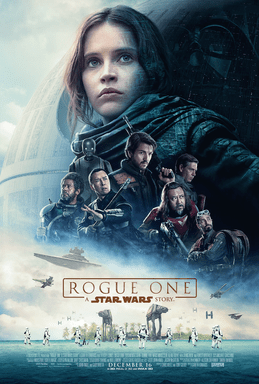
 For so many, there is a deep connection to Star Wars that started at an early age. As I have alluded to on numerous occasions, I am no different. And if I feel that way about even the prequels, it’s exponentially greater for the original trilogy, as I can imagine it is for legions of others. Thus, when I watch Rogue One I do not linger on its shortcomings, though they most certainly exist, instead, I’m fixated on that very same suspension of disbelief that overtakes me every time I enter that world, a long time ago in a galaxy far, far away.
If Rogue One had been an unredeemable, thoroughly bad film I would have been the first to say so. Perhaps it sounds crazy (or to fans maybe not so much) but I am deeply protective of Star Wars. I only want fanservice if it’s logical, fits the parameters of the world, and so on. I’m not a voracious fact checker of every Star Wars Wookieepedia page known to man and yet I might as well be. I was one of those who was deeply defensive when Disney looked to shake up George Lucas’s original canon. Though I digress…
But even as it stands as a mediocre story with vague contours at times, Gareth Edward’s Rogue One is propelled by fun characters, space opera entertainment, and, of course, A New Hope nostalgia. For those very reasons, it’s invariably easy to lend a heavy dose of grace to this standalone entry. And that’s what I will do.
We are introduced to Jyn Erso at an early age which gives context to her later exploits. In fact, when the story flashes forward after traumatic beginnings she (Felicity Jones) is a prisoner — not on behalf of the Rebel cause — and she has no plan to help the Rebels anytime soon. But in this way, she becomes one of their unassuming champions receiving news from her father (Mads Mikkelson) that the Death Star must be destroyed and she must spread the word.
It leads her to join forces with Rebel scoundrel Cassian Andor (Diego Luna) and his sarcastic droid co-pilot K2SO (voiced by Alan Tudyk). The bottom line is that all the various trips to planets and skirmishes with the Empire lead to a final showdown on the planet of Scariff where the ragtag group of Rebels lands a sneak attack on their unsuspecting enemy led by Imperial Director Krennic (Ben Mendelson). Meanwhile, a space battle erupts in the skies above and Jyn looks to transmit the vital plans to the Death Star before it is too late — so that hope might live on in the galaxy — and she does.
Not surprisingly, Rogue One has its share of callbacks involving the likes of Ponda Baba, Mon Mothma, and Bail Organa all returning to the Star Wars cinematic universe. And unused footage from the original film of Gold Leader exchanging callsigns is repurposed in the final offensive sequence as well. Although Grand Moth Tarkin and Princess Leia (the late Peter Cushing and Carrie Fisher returning from 1976) somehow look like carbon copies of their prior selves, they nevertheless sound vaguely different, giving off this peculiar sensation that they are CGI constructions and not the real thing. Still, it’s a remarkably impressive piece of work.
Obviously, the main objective of Rogue One is simple from a narrative perspective. The Rebels must obtain the plans to the Empire’s Death Star because without those, A New Hope would not be possible. But in order to get there, there are other necessary outcomes that feel a touch more suspect. I can see the need for finding Jyn’s father since his work is so critical to the Rebellion’s objective. However, the idea of a main switch to open up communication, her father’s hologram, Jyn’s final push to broadcast the vital schematics by reaching an antenna, and yes, even Kyber crystals, all seem like easy fixes to explain away the need for certain plot outcomes. I am, however, still trying to come up with an explanation how that is any different than the Force, aside from the very fact that its balance is crucial to the entire galaxy. I’ll get back to you on that one…
Furthermore, the idea of hope comes center stage in Rogue One. In fact, even despite the influences of eastern monism, Star Wars’ mythology reminds me of the Biblical text that reads like so, “We rejoice in our sufferings, knowing that suffering produces endurance, and endurance produces character, and character produces hope, and hope does not put us to shame.” The same could be said of the Rebels. And people might scoff but in its resolution, the film even takes a page out of Shakespeare’s Hamlet. That’s what makes this idea of hope so important because there could very easily be none at all with so much death and destruction.
My loyalty towards the franchise (more so than DC or Marvel or Star Trek) makes me also fear the continued mechanization of this world into a continuing box office cash cow. With film after film, story after story, it’s indubitable that Star Wars too will lose its allure. It will be run into the ground or become besmirched by some egregious plot hole, discontinuity, or for some far worse fates like the return of another Jar Jar Binks.
That is my major concern with Rogue One because with the absence of an opening crawl, what it really did was signal a changing of the times, a new seed has been planted as the extended Star Wars universe continues to germinate and grow. Time will indicate if it flourishes or sucks all the nutrients out of the vibrant creations that were given so much vigor by the likes of George Lucas, Mark Hamill, Carrie Fisher, Harrison Ford, John Williams, and so many others. Only then will we see if this franchise is one with the force and the force is in it. Because with so many films, it’s difficult not to falter. Being both critical and an avid fan, I care all the more deeply about its fate. But for the time being, enjoy Rogue One and afterward slip in A New Hope again to be reminded exactly why Star Wars remains a cultural landmark.
4/5 Stars
 “Things are only as meaningful as the meaning that we allow them to have.” ~ Beverly
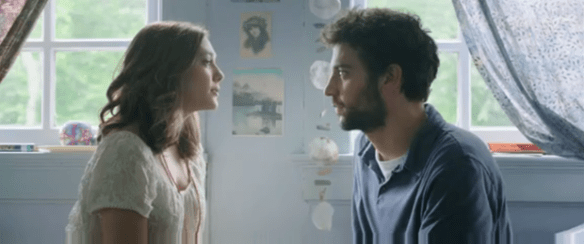 Where to start with Liberal Arts? It’s one of those deep blue funk movies. Zach Braff tackled this issue in Garden State, and Josh Radnor does a similar thing here. Because the reality is that we live in a generation of early onset midlife crises. In the opening moments, 35-year-old Jesse Fisher (Radnor) has nearly every article of clothing he has aside from the shirt off his back stolen from a local laundromat when his back is turned. We can easily surmise that this single event epitomizes his life right now, and this is hammered home rather obviously when his unnamed girlfriend clears her belongings out of his flat. There’s no better symbol of isolation and alienation than a break-up.
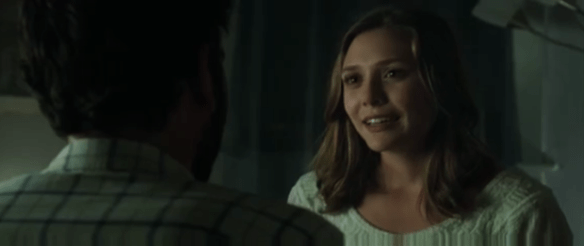 It’s crucial to note that at this juncture nothing substantive builds between these two acquaintances romantically, but they do foster an immense connection. While Jesse is taken by Zibby’s personality, she, in turn, is discontent with a contemporary culture where no one dates–everybody’s casual about relationships. She feels unequivocally millennial and yet she readily admits these areas of old-fashionedness.
 Coming out of a psychology background I was familiar with Stanley Milgram’s famous social experiment back in high school during Intro to Psych. Even back then it was a striking conclusion on conformity and just how far people will go. It was also ruthlessly contrived and even more methodically executed. Inspiration came from Milgram’s own background working with psychologist Solomon Asch, as well as his own Jewish ancestry, nights watching Candid Camera, and a fascination in the Adolf Eichmann trial.
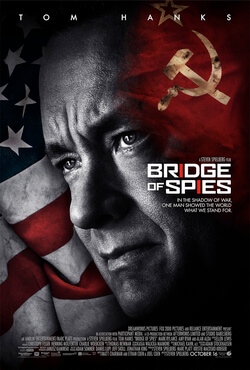 Steven Spielberg is this generation’s
  The term “banality of evil” has floated through the lexicon ever since German philosopher and columnist Hannah Arendt coined the phrase during the Eichmann trial back in 1961. In fact, the words gained so much traction that they have undoubtedly lost some impact due to overuse. However, this film takes equal interest in the backlash that she received on her remarks about the Jewish community. Her claim that the Jews were collaborators with the Nazis and privy to their own destruction, undoubtedly would be unpopular now. Back then it was a pure lightning rod for scurrilous criticism and hateful backlash.
 We are definitely in the age of the well-wrought period piece and Brooklyn has all the trappings you could want. Adapted from Colm Toibin’s novel the film showcases a pure, noble heroine in Eillis Lacy who like many others makes the journey from her homeland of Ireland to the golden-paved streets of New York.
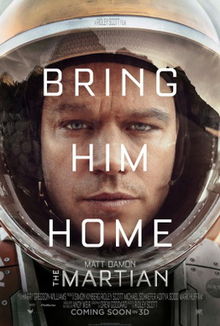 The Martian is not the film you first expect. It’s a space thriller. It has tense moments assuredly, but it also has an astute sense of humor that pulses through the film as its lifeblood. It makes Ridley Scott’s latest endeavor, based on the novel by Andy Weir, all the more palatable because it lends a fresh face to space exploration.
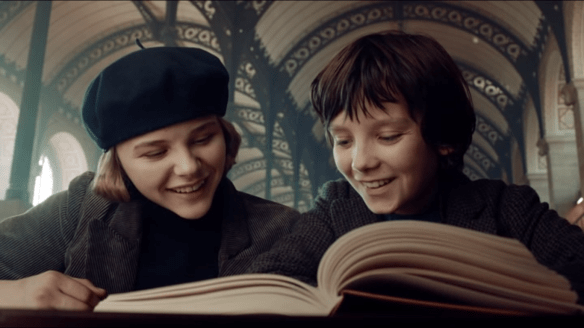 “If you’ve ever wondered where your dreams come from, look around, this is where they’re made.” – Ben Kingsley as George Melies
 Aside from the inspector, the station is full of a wide array of charming individuals who generally exhibit temperaments far more personable. However, the local toy shop owner (Ben Kingsley) is rather an odd fellow, who keeps to himself, but Hugo is wrong to cross him. He’s not a bad man, but he makes the boy work for all the things he has purloined.
 Hugo is a beautifully magical melding of the old with the new –- the mechanical and the visceral. Extravagant colors make Scorsese’s canvas pop. It works together like clockwork.
 I still remember driving through the hills and dales of the English countryside listening to Hard Day’s Night in the family rental car. Back then I had a haircut that could best be described as a mop top. And then during my one visit to Liverpool, I was beyond ecstatic. I’m a fairly reserved person and yet standing in Paul McCartney’s kitchen at 20 Forthlin Road (his childhood residence) what else could I do but bend down and kiss the floor?
 4 Star Films