Safety Last! (1923)

The great thing about The Big Three — Chaplin, Keaton, Lloyd — and all the great silent clowns, is how they engender a kind of audience identification with profoundly comic results. Because each had their own unique persona that remained constant throughout all the trials and tribulations they went through.

The enduring charm of the Harold Lloyd character is his nebbish yet indefatigable spirit. He’s bespectacled, always smiling, and there’s a bit of a hapless daredevil in him. He doesn’t always do so purposefully, but he’s accustomed to ticking clocks — racing against time against the odds — and of course Safety Last famously put him in contact with another literal ticking clock. More on that later.

At only 73 minutes, it’s easy to place a silent comedy like Safety Last with other rudimentary forms of movies from the nascent film industry. The two reelers and other silent fare which might seem like a dime a dozen and disposable. We might mistakenly think we have nothing to learn from them because they are over a century old and we’ve already grown beyond what they have to offer.

And yet the very first shot belies any erroneous impressions. There’s the shadow of what looks to be a hangman’s noose. Our hero, Harold, looks to be behind bars saying a last adieu to the love of his life. Then, the perspective shifts and we realize not a man shuffling off to jail but one waiting at the train station to head to the city to make good. Eventually, his girl Mildred can come out to him and they can get married!

There’s not a specific utility to the gag and if you’re not thrown off by it tonally, it shows a sense of visual invention that easily transfers from early shorts and reel comedies. It shows these early movies were not made by a bunch of hacks but technicians with a great deal of ingenuity and knowhow. The proof is in what they left us.

The first half of the picture is most defined by its bits. There’s a gag to avoid the rent collector where Harold and his roomie hide under their hanging coats with their legs pulled up.

In another vignette Lloyd is stuck in the back of a laundry truck baking like a sauna with a driver who is deaf; it leads into his extended attempt to get back to his work in time by any means necessary so he can clock in. It’s to no avail so he sneaks in under the guise of a mannequin, as one does. No one can say he’s not plucky.

We can all commiserate with him as he deals with time wasters on the department store floor and then the hordes of blue-blooded ladies who come for a sale prepared to pull the clothes off his back; some things haven’t changed. There’s another scene where he combs his hair in the shine of a bald man’s pate. Again, it’s yet another whimsical example of ways to stretch the form for the sake of a visual gag.

Then, Harold tries to put on airs for his girl masquerading as the general manager, though he’s only a mere grunt who’s easily discarded. Like us all he wants to be important and appreciated; he doesn’t want to let his loved ones down or be seen as a failure.

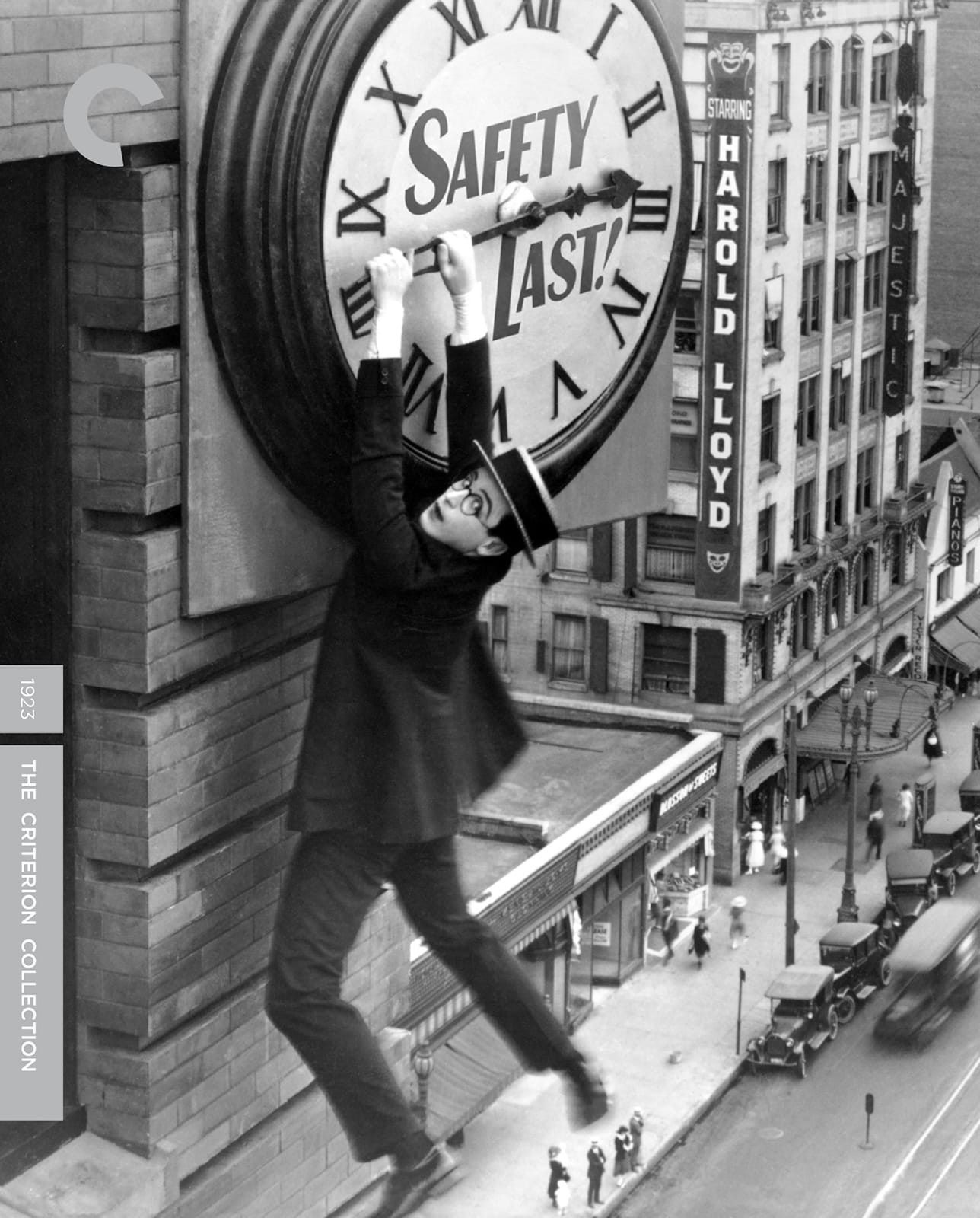
The final act of climbing all 12 floors of the department store feels like the birth of the high-wire thriller genre before our eyes. After all, he’s as much of a free climber as you or me. Still, he has that smiling girl in the back of his mind and the prize money if he reaches the top.

There’s some visual trickery but the cutaways and overhead shots give us a sense of scale all in service of the movie. The fact we can’t make out all the fault lines and there is still this harrowing sense of unassailable danger is a credit to the picture a century on. Both as a physical feat and a technical marvel of early Hollywood.

Harold’s conspiring with his acrobatic friend to get up the building devolves into a charade with cops and a drunk, a bit like a Keystone Kop reel with chases and “Kick Me” signs. It might be the lowest common denominator of comedy, but that’s hardly a bad word.

Lloyd has a myriad of gags at his disposal as he begins his ascent. They are play things that complicate what already feels like a daunting task: pigeons, scurrying mice, rope, a spring, and of course that famed clock face.

Lloyd clinging for his life has become one of the most iconic images in cinema history, and that’s across the board regardless if people have ever seen the movie or not. His exploits live on in the ubiquity of the public consciousness.

My final observation is noting how the movie ends with a gag just as it came in. His shoes get stuck in the tar on the rooftop as he walks off with his girl, the always and forever irrepressible hero Harold Lloyd.

There’s an added layer to the silent movie romance when you realize Lloyd would actually marry his leading lady Mildred and they would be together for the rest of their lives. It’s a stretch but it’s hard not to see how this big smash of a movie was to the actor Harold as climbing the department store was to his alter ego. They came out on the other side larger than life and beloved by the public. Most importantly, they got the girl. It’s the stuff of Hollywood.

4.5/5 Stars

It Should Happen to You (1954)

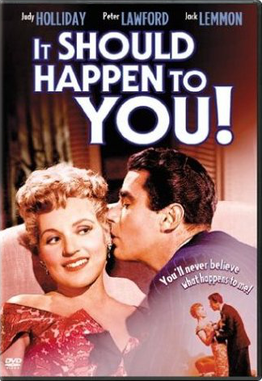
It Should Happen to You was the brainchild of screenwriter Garson Kanin and director George Cukor with Judy Holliday as their lead. As such it’s easy to cast the movie in the same lineage of Adam’s Rib (1949) and Born Yesterday (1950). Except in this movie, there’s also a featured newcomer, a young man named Jack Lemmon.

The movie opens as any respectable New York movie does in Central Park. In the outdoor reverie of men at their chess boards and kids running around, Gladys Glover causes a hullabaloo for feeding pigeons. One man takes particular umbrage at having her try to pick him up while he was minding his own business, listening to the horse races.

In the aftermath, she meets a documentarian, Pete Sheppard (Lemmon), who has his camera at the ready and an eye for people (Think a precursor to Humans of New York). He’s fascinated by this barefoot woman, and strikes up a conversation before they go their separate ways.

There’s an ethereal, fated tone I can’t quite put my finger on, but we know they will meet again and something is bound to happen. Judy Holliday perfectly exemplifies this airy bubbliness. I would never condescend to exhibit her as a dumb blonde archetype because there is far more going on here.

Gladys Glover sees an open billboard and resolves to buy up the prominent real estate on Columbus Circle. For what purpose we can’t be sure exactly. She says its personal. But she goes through the paces, speaks to the proprietor, and forks out the money that’s normally attributed to marketing corporations, not individual citizens.

Soon the words GLADYS GLOVER appear up on a street corner in lettering that looks like high rises. It’s an extravagant decision and Gladys beams with pride seeing her name like it’s never been before. But that’s not the end of it.

The rest of the movie is about the cascading effects it has since movies are meant to feed off delights of serendipity. It Should Happen to You is that kind of movie.

Peter Lawford plays a disgruntled marketing exec miffed to find out someone else has shouldered in on the billboard that has always been theirs in the past; it was an unspoken agreement between them. When he finds out about Gladys he wants to strike a deal with her. Surely a lady can be bought.

It must be said an angry Jack Lemmon is not always becoming and after moving in down the hall from Gladys, he seems to think more and more that he owns her. A more charitable reading of it is that he’s the only person who actually cares for her well-being beyond her growing reputation as a minor celebrity; he’s also falling in love.

Meanwhile Gladys strikes up an agreement to get her name put up on signage all over the city. When she’s shopping with Pete, a saleswoman helps them only for her demeanor to change instantly when she realizes who she’s helping. It’s like being queen for a day as a crowd forms around Gladys soliciting autographs from the local phenomenon.

She has effectively given them something — a nice souvenir to take with them in their day — and in this way it’s hard not to compare her to Elwood P. Dowd of Harvey. In the movie world they’re able to break into the everyday and give people some common decency and kindness.

However, we also watch from a distance as Gladys gets carried away by the mechanisms and machinery of television. She’s paraded out in front of America without much consideration of who she is as a human being. In one segment she’s even featured on a prim and proper panel show with the likes of Constance Bennett and Wendy Barrie. It feels twee by today’s standards, but the point is made.

Soon she finds herself caught between the indignant protectiveness of Lemmon and the business conferences of Peter Lawford including some extracurricular activities. His company has transformed the typical ethos marketing appeal into the Gladys Glover everywoman appeal for the average American girl. It’s a smashing success.

It Should Happen to You doesn’t feel like a groundbreaking story and part of this might be the fact we’ve seen so many analogous film’s in its wake. There’s this tension between celebrity and success and the kind of down-to-earth humanity that keeps one grounded.

I must say I was taken with the ending where Lemmon says goodbye to his girl using a film, and yet again it presages many of the meta qualities of a film within a film that have enamored writers and directors for decades.

In this particular instance, it’s in service of a romance. The happy ending is that he actually receives a reply. Gladys writes it in the sky for him with letters as big as her billboard. She hasn’t lost her knack for the spectacular, but she simultaneously recognizes someone who has her best interest in mind.

If you said you were going to make a romantic comedy with Judy Holliday and Jack Lemmon, it wouldn’t immediately strike me. Still, if you have two likable performers and put them together, the results speak for themselves, even if the returns are mostly modest.

3.5/5 Stars

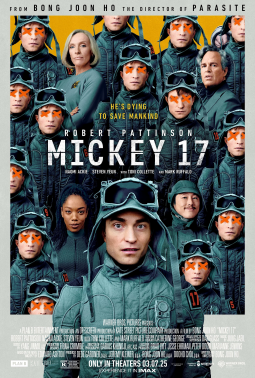
Mickey 17 (2025)

It was my pleasure to see Mickey 17 and it was because I was in the company of new friends. The film itself comes with complex feelings. 

Bong Joon Ho joins forces with Robert Pattinson for a story that defies easy categorization. It’s full of a myriad of ideas in line with the South Korean’s usual preoccupations including class and pervasive humor. There are some potentially cute creatures and, if not cute, then they are decidedly more sympathetic than many of the humans we come in contact with. 

While watching the film following Mickey Barnes, a schlub of a man who signs his life away for an excursion to outer space, I couldn’t help but return to two reference points. The first being Star Wars: The Empire Strikes Back and then Ridley Scott’s Blade Runner.

We meet Mickey as he is discarded in a snow cave on an icy planet — ostensibly left for dead. Given his costume and the circumstances, it’s difficult not to see echoes of a frozen Luke Skywalker facing imminent danger in a Wampa’s lair. Except we are dealing with a drastically different world.

Because this is actually the umpteenth iteration of Mickey, and he is part of a program that prints copies of human beings to do the morally dubious dirty work no one else is willing to undertake. 

After all, since he can just come back as a new version of himself every day, what’s it to him if he contracts a deadly virus or gets eaten alive by a snow creature all in the service of the greater good? Most of the early montage is made up of Pattinson being moved around like a ragdoll Frankenstein constantly being tested and incinerated when his utility is used up. 

As you might imagine the connection I see to Blade Runner are these fundamental questions of what it means to be human and who we give dignity to. In other words, is this an inalienable human right? Because although he was a nobody back on earth, on the run with a wily conspirator Timo (Steven Yeun), Mickey still is a human with thoughts and feelings even as he’s relegated to second-class citizenship. He doesn’t want to die any more than anyone else, but he resigns himself to the cycles of life. 

Pattinson channels an accent like you’ve never heard from him before that has a bit of a young Steve Buscemi in it. It’s a bold choice but then for the entire movie, Pattison just goes for it because there’s no vainglory in a part like this if you’re squeamish about taking it to bizarre ends. 

For me, Bong’s latest film works best as a cosmic character piece with Pattinson front and center. There could be a version following his existential arc in outer space as he comes to terms with his station in life while falling in love.

However, because it’s 2 hours and 15 minutes, Mickey 17 attempts to be about a lot more with an epic scale. The primary problem is there doesn’t seem to be a compelling narrative thrust even as Mickey is part of a vague expedition to colonize a distant planet. 

The film’s most obvious villain is the failed political figurehead Kenneth Marshall (Mark Ruffalo), who now has aspirations to colonize space with a superior race of human beings no doubt made in his image; he’s no Marcus Garvey, and I won’t even begin to guess if he’s a caricature of other political figures as Ruffalo hams it up with all the self-aggrandizing buffoonery he can muster.

Toni Colette plays his wife who is primary confidante and probably the brains behind the operation a la Angela Lansbury in the Manchurian Candidate. However, the deficiency here is that they do feel too much like cartoons. What are their genuine motivations besides being easy to tear down and be infuriated by?

On a positive note, Naomi Ackie plays a security officer on the ship who, for some inexplicable reason, falls for Mickey becoming his advocate and protector. It is an ongoing theme in the movie that the women are strong, but with Nasha we would like to believe she sees something genuine and unsullied in Mickey’s personhood.

However, when she’s on screen it feels like Nasha stands for something as both a romantic being and a person of principle who heroically champions good. In the fashionable parlance of the age, she speaks truth to power. Still, Ackie plays it in such a way that the performance feels modulated and not simply driven by a platform or plot mechanics but by her genuine affection for Mickey. 

Two other notable heroines are the timorous scientist Dorothy, who becomes an ally with her chosen expertise, and then Kai, a grieving security officer who comes to Mickey’s aid when he goes before Kenneth Marshall for an arranged dinner. Marshall wants her for her superior genes, perfect for colonizing his new planet, but she turns out to be a person of compassion too — something he couldn’t care less about. It feels like a turning point in the story even as she all but disappears from much of the final act. 

The great leader has deigned to have this expendable at his table where he feeds him raw meat, and they pray and sing hymns with a bombastic faux religiosity. He prays only to be heard by others thinking he will be heard because of his flowery words.  

It’s one of many moments where we see this state-sanctioned religion derided for what it is by Bong. There is an irreverence that is prototypical for Bong, but it seems as if it is directed at what we might call “Christendom” or in this case the accouterments of religious culture that feels disingenuous and more about propping up leaders to accrue power than any kind of piety or true virtue. 

However, much like Parasite, if we dig under the surface, the framework of the world still functions on logic that we all comprehend. There are the aforementioned questions about what it means to be a human and whether or not that should ascribe us a certain dignity. 

And in the same sense, while Marshall and his wife prove to be a pernicious, narcissistic tandem as they look to eradicate the endemic ‘creepers’ in a contentious standoff, they fall into the age-old fallacy.

Because their whole economy is predicated on showmanship and creating fear around the “other.” Mickey knows these creatures have more to them because he has come face-to-face with them. In a weird way he is an intercessor so even as the humans cause destruction and needless death, there is a requirement for a scapegoat. Someone to atone for the blood that has already been shed…

So while Bong’s latest film is not without merit and there’s plenty to quibble about, it feels like the film falls admittedly short in one primary department. It languishes in telling a focused story even as there are plenty of individual performances to single out.

As an Asian-American, it seems like Steven Yeun has currently cornered the market on these kinds of skeevy or despicable characters which feels like his well-won prerogative to upend a generation of model minority stereotypes. He’s played ceaselessly interesting characters of late. Even Steve Park gets a chance in the limelight as he continues to build a wonderful second act for himself thanks to Wes Anderson. 

Mickey 17 gets his happy ending and in a sense, it feels well-deserved. In this way Bong allows himself to be a romantic at heart even in a world beholden to his comically dark proclivities. I commend the movie more for its themes than its storytelling and given Bong’s track record it seems a shame because he’s one of the foremost genre smugglers working today. 

3/5 Stars

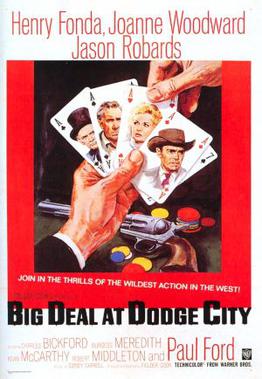
A Big Hand for The Little Lady (1966)

A Big Hand for The Little Lady is not something we see anymore: It’s a big, sprawling western brimming with comedy and a dash of intrigue. There’s a romping score from David Raksin and a frenzied opening as we watch the assembling of our secondary stars. And they are quite formidable from the grizzled Charles Bickford, Kevin McCarthy as a rapscallion with a glint in his eye, and the always irascible Jason Robards. They’re coming together, not for a showdown or a hanging, but for something far more momentous: a once-a-year poker game with astronomical stakes.

It’s mostly a contained western within the town and not just within the town, but within the local hotel and the backroom where only the richest and wealthiest are allowed a seat at the table. There’s little doubt that they could hold down a movie themselves, but they feel more like the entrée than the primary attraction.

For a time as an audience we are kept outside just wondering what’s happening between these rarefied few and then Henry Fonda, Joanne Woodward, and their son enter the scene.

Coming out as it did in 1966, A Big Hand for The Little Lady is one of those films that so easily melds with the TV age because it feels like a family movie and it was something that came of age originally on the stage courtesy of Fielder Cook.

What sets it apart as a movie are these stars, and they dole out. Fonda is his late period affable self and all his roles come off so seamlessly. Joanne Woodward may have been superseded finally by her super star husband Paul Newman, but this picture is a fine reminder of what a jubilant talent she was.

They come into town on their way to 40 acres of farm. They need some repairs on their wagon and they look to spend the night before heading on their way. It’s simple enough. Bu there must always be complications. Meredith (Fonda) proves himself to be a reformed gambler, but the temptation of a poker game is too great for him.

Kevin McCarthy has eyes for his radiant wife or sees a walking stooge before him. For whatever reason he vouches for the man and allows him in despite the remonstrations of his compatriots. They’re not accustomed to such interruptions to their yearly ritual.

Based on the facts that rules have never been bent for anyone, all of this feels like a very unprecedented development — not to mention a compromising of the rules. But Fonda goes to his hotel room to retrieve some of their life savings to front the $1,000 needed to just sit at the table.

What follows is a bizarre even absurd scenario as Fonda gets in too deep with all their funds, and he’s not left with enough collateral to stay in the game. They’ve bullied him out even as he has a killer hand of cards.

He proceeds to keel over on the spot into the loving arms of his wife, only for her to take up his mantle at the poker table as he gets attention from the local doc (Burgess Meredith). This, again, is highly irregular. They look down their noses at womenfolk, especially ones who have never played before.

After she learns the general premise of the game, she vows to put it on hold as she speaks with the bank manager. They go traipsing to the bank single file to meet Mr. Ballinger (Paul Ford), another irregular turn. While he won’t initially give her any help, once seeing her hand (another dubious red flag), he agrees to back her. What follows next is not something that needs writing about.

I’m not much for playing poker, but as a narrative device it’s one of my favorites because there’s always two levels to the game. It provides a concrete reason for a varied assortment of characters to sit down together — The Odd Couple is a favorite example — and there are usually stakes of another kind too.

However, here the movie almost feels like it reaches a premature climax with Joanne Woodward carrying a sway with the men that she hardly has time to build since most of the minutes beforehand she was away watching their wagon.

The film’s saving grace is it’s final abrupt revelation — I’m not sure if there are warning signs of any kind — but it’s a twist nonetheless. It’s also difficult not to see how Woodward’s acumen presages Paul Newman’s first-class showing and antics trying to agitate Robert Shaw in cards during The Sting.

The beauty of this movie is how it gives the actress the reins, and she proves herself to be the consummate performer. What’s more the cast is loaded with old pros who all seem game for a good time.

3/5 Stars

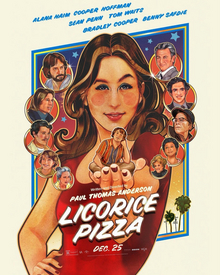
Licorice Pizza (2021)

It’s apparent Paul Thomas Anderson lovingly pinches his opening shot from American Graffiti as his boyish hero Gary Valentine (Cooper Hoffman in his debut) primps in front of a bathroom mirror, a toilet all but exploding behind him. The whole movie is born out of a chance meeting at a school picture day, but it would come to nothing if Alana Kane (Alana Haim also in her debut) does not take him up on the proposition to meet at a local watering hole. Why does she do it? She’s 25, at least. He’s 15.

It seems suspect, and the film never tries to explain. It feels like a bit of nostalgic, rose-colored wish fulfillment, and yet we come to understand Alana doesn’t know what she’s doing with her life. Perhaps it’s Gary’s charisma that draws her in. He’s got a lot of nerve, but he also knows how to hustle and people gravitate toward him. She acts as his chaperone on a press junket back east for one of his adolescent TV credits.

They get into the water bed business, and there are the expected hijinks involving deliveries; Gary even gets arrested momentarily. It’s the 1970s. Gasoline shortages have been hitting everyone hard. Although Anderson draws early comparisons to Graffiti, his film lacks the same fated structure. Graffiti is roving and far-ranging, yes, and yet it’s focused on one night in one town. Once it’s over, we know each of our characters will have changed in very specific ways. The moment is gone forever.  

Licorice Pizza looks deceptively disorganized and free-flowing. It continually combs in these vignettes bringing in other personalities like Sean Penn, Tom Waits, Bradley Cooper, and Benny Safdie. Here it’s no longer solely about our leading “couple” and comfortably pushes their relationship to the periphery to play out against this wacky, narcissistic, and sometimes tragic world around them. It’s a world that Anderson waxes nostalgic about because it effectively resurrects the periphery of his childhood and old Hollywood haunts. 

As time passes, it feels more and more like a Hal Ashby flick – a filmmaker who remains emblematic of the seventies – whether the politics, the music, or even for providing a precursor to our somewhat cringe-worthy leading couple. There’s also the hint of political intrigue along with the menace of Taxi Driver that suggests the paranoia of the contemporary moment.

Still, what prevails is the mimetic tableau and the warmer tones. Anderson’s film is also bathed in the glorious golden hues of the bygone decade. As Licorice Pizza progresses (or digresses), at times I felt like it had lost me. Where was our denouement and where was this serpentine trail leading us beyond its impressive display of period dressings?

Even Quentin Tarrantino’s somewhat analogous Once Upon a Time in Hollywood… has an inevitable ending that we know is coming like Graffiti before it. In Anderson’s film we do get something…eventually. It involves a lot of running, pinball machines, and our two leads reunited again.

Given the turns by Haim and Hoffman, it’s a testament to what they’re able to accomplish together that we do feel like we have some form of resolution. Boy oh boy, is this a casual movie and that’s generally a compliment. Thankfully our two leads are full of so much winsome charm and good-natured antagonism to make it mostly enjoyable.

The movie relies heavily on a killer soundtrack, and the era-appropriate humor feels uncomfortable at best. I like John Michael Higgins as much as the next guy. However, even if his oafish Japanese restaurateur with his revolving door of Japanese wives is based on a real entrepreneur in the valley, it doesn’t mean the casual racism doesn’t still feel queasy.

Especially when you can’t discern if the audience is laughing at him or with him. Because the implicit punchline could easily be misconstrued to be that Japanese culture feels foreign and weird without appreciating the cultural subtext of these scenes. 

Still, there are ample moments to appreciate the film and cheer for Gary and Alana. We need their charisma and they more than come through. I will say that Blood, Sweat, and Tears’ “Lisa, Listen To Me” might be my favorite deep cut of the year. It’s so good, in fact, that Anderson uses it twice. 

4/5 Stars

Note: This review was originally from 2022

Tokyo Pop (1988)

Since my time living in Tokyo, I’ve continued to be fascinated with how Japanese culture will create these hyper-specific niches of popular fandom. Japanese people take their hobbies very seriously and they go all in. You often meet teenagers or straight-laced salarymen who can barely string together sentences in English, only to discover they have some unique knowledge about American culture, especially in the realm of music.

There was a businessman who loved Olivia Newton-John; his go-to English-language Karaoke song was “Physical.” There was a student who jammed out to Korn, or one of my fellow teachers who shared a love of Sam Cooke and taught me about jazz musicians like John Coltrane and Charlie Parker.

Japanese popular culture was arguably at its height during the 1980s. You had the economic miracle or the “bubble,” which led to unprecedented prosperity in the country and with it greater disposable income and thriving youth subcultures.

Tokyo Pop feels like a perfect time capsule for this precise moment. There are evocations of pop culture that blend Japanese tradition with Western influence. Front and center are a Mickey Mouse ryokan in Iidabashi, then iconic brands like KFC, McDonalds, and Dunkin Donuts.

There were even a couple of times I sat up in my seat because I felt like I knew where a storefront or restaurant might be below the neon lights of the city. However, some of the most famous landmarks are unmistakable. We get views of Shibuya near the Hachiko statue or greasers and punks hanging out in Harajuku near Yoyogi Park.

I don’t need much plot to enjoy the movie, but here it is. Wendy Reed (Carrie Hamilton) isn’t having much luck on the music circuit in America. When she receives a postcard from a friend, plastered with Mount Fuji on the front, she makes the impetuous decision to make the trip. However, she arrives only to realize her girlfriend has already moved on.

So she’s left high and dry bumming around Tokyo like a helpless baby who doesn’t know the culture, can’t speak the language, and is quickly running out of money. Hiro Yamaguchi (Diamond Yukai) spies her at a street vendor where he’s eating late at night with his buddies, and they bet him that he can’t get lucky with her. He takes them on. It’s a trifle, a cliché-filled scenario, but it’s easy to excuse the film based on what it excels at.

Carrie Hamilton and Yutaka “Diamond” Yukai try and go through the paces of antagonism, however, it’s their genuine camaraderie and shared appreciation of music that really shines through. In one sequence he serenades his American flame with an acoustic rendition of “You Make Me Feel Like a Natural Woman.”

Meanwhile, his band spends their time trying to get to a prominent Tokyo tastemaker named Doda who can make or break their careers. When all their ploys fail, Wendy finally takes the very direct approach waltzing into his office and commanding the room.

Eventually they make it big playing poppy covers of “Blue Suede Shoes” and “Do You Believe in Magic.” We see their rapid ascension as media personalities and global sensations, but at what cost? The couple’s able to get their own apartment and they should be happy, but their art suffers. They’ve pigeonholed themselves doing something that isn’t life-giving. They want to rock out.

Tokyo Pop‘s alive with so much youthful energy and, I would argue it has an even more perceptive viewpoint than later works like Lost in Translation. Although it has an entry point for American audiences, so much of it feels attuned to aspects of Japanese culture; they’re the type of moments I see and totally recognize, not as foreign and other, but authentic.

Japanese lavishing effusive praise on their fellow countrymen for any nominal use of English. Shoes taken off at the entryway. Every taxi driver’s fear of foreigners. Karaoke and alcohol as one of the most beloved forms of socialization, and the kindness of elderly men and women who will walk you where you need to go in spite of any language barrier.

In its day, Fran Rubel Kuzui’s movie was quite a success at Cannes only to fall away thanks to a distributor that went defunct. For a film that’s so perfectly in my wheelhouse, it’s a joy to see it resurrected from obscurity in a fancy new print that does wonders in making the images of the 1980s explode off the screen. There’s a tactile sense that we are there in the moment.

During an interview, the director acknowledged, only years later when friends told her, that she and her Japanese husband Kaz Kuzui were basically Wendy and Hiro. If not in actuality, then certainly it mirrors how their relationship crossed cultural bounds.

It’s also easy to draw parallels between Tokyo Pop and Lost in Translation for how they capture a moment in time (and coincidentally they both feature Diamond Yukai). Although the former film is more upbeat, and lacks much of the alienation of Coppola’s work, you do still see the darker, lonelier edges of Tokyo on the fringes.

From passionless love hotels to getting lost in the masses of humanity, and the crippling societal expectations of Japan, it’s still present. Because while Lost in Translation is always about the western perspective incubated in Tokyo’s fast-paced modernity, it seems like Kuzui’s international marriage gives her a more perceptive and localized understanding of Japan.

I’ve long been a fan of John Carney and there’s some of that energy here where music is so integral in constructing the story. No matter how humble the means, the production of the music functions as a platform and a showcase for the performers in such an authentic way. By the end, we appreciate the music and by extension the characters as well. But they both work in tandem to supersede the plot.

Some of the songs feel like absolute knockouts like “Hiro’s Song,” which can stand on its own two feet. They leave the film on a feel-good high that extends beyond the credits. With the latest reissue of the film for its 25th anniversary in 2023, it seems ripe for rediscovery by a new audience.

3.5/5 Stars

Oh Lucy! (2017)

As an American who made my home in Japan for several years, the transcontinental cultural space between the two nations fascinates me to no end. It occurs to me that Oh Lucy is a film that navigates the disparities between these two worlds.

One element is American culture and the linguistic differences between the English-speaking world and Japan. There are many, and they come into play in director Atsuko Hirayanagi’s adaptation of her eponymous short film. She comes at this subject matter from the other side. Namely, she was an exchange student in the U.S., who now makes her home here. It’s easy for me to appreciate the point of view she brings to the movie.

Something like the office environment is familiar to anyone who has worked in Japan. There are many salient features: the rows of desks, the paperwork, the stamps, and the gossip, which always has a way of coming out when people are stone-cold drunk after hours.

Setsuko (Shinobu Terajima) is our protagonist, a Japanese office lady who faithfully serves her company quietly and without much passion. She’s a cog in the machine. She also has a drawer in her desk full of “omiyage” (that is, treats and little souvenirs that people bring back from their vacations for the sole purpose of not feeling shame).

It’s a ritualistic action of altruism so ingrained in the culture that most everyone provides them to everyone else. Of course, this is resoundingly cynical, but there’s also some collective truth in this. Is Lucy’s uneaten stockpile an act of rebellion?

It speaks to something of her character. Maybe she’s one of those nails sticking out as the old proverb (or kotowaza) says. Eventually, she will be hammered back into place. However, if this is a silent act of nonconformity, her next leap of faith comes with agreeing to an English school that her spunky niece pleads her to join.

She goes to a trial lesson in a building that looks more dubious than its rather innocuous interiors. It’s in her first meeting with John (Josh Hartnett) that Setsuko is christened with a new name “Lucy,” and in a whirlwind of American forwardness, she learns how to awkwardly hug and enlist a more rounded pronunciation with a ping pong ball wedged in her mouth.

It’s the strangest English curriculum I’ve ever seen, but there’s also something disarming about it. “Lucy” wants more and she wants to see more of John too. Although she’s still contained in her shell and hesitant with English, she’s drawn to this world so different than her own. Here we have the core of all the cultural contrasts.

Without transcribing all the turn of events, Oh Lucy has a few surprises, fashioning itself into a lightweight take on the American road trip movie. It’s not quite Paris, Texas, but it does become a sort of outsider’s tale of what America represents even as our heroine comes to terms with what she wants out of life.

If you sit thinking about what this story is about, it’s easy for the pieces to fall apart, but if you just let the story happen, you can learn much about this space in-between. Disparate cultures with relatives chafing, one against the other.

In some ways, I have a great appreciation for Josh Hartnett’s character. He starts out as the most cartoonish American caricature (He might easily have his own NHK segment). I have very little context with him as a matinee idol, but since the years have passed, it feeds into his portrayal. John feels like a bit of an adult in neutral. He’s never grown up and never managed to get his life together.

As such, there are decisions he makes and aspects of him that feel wholly unsympathetic. He’s everything other people envy about Americans on the outside — on the first impression — and if you’re American, he reflects much of what we might be ashamed of in ourselves.

Still, he’s also something of a cultural mediator. Bridging the gap between Japanese folks who have the wrong perception of America and then Americans who have little patience for anyone or anything different than themselves. Helping Lucy and her nagging sister order food at a diner is only one example. Earlier they also share a genial conversation with a fellow passenger (Megan Mullaly in a cameo).

I know these moments well on both sides of the pond. The movie continually exists in these spaces I often frequented and without being too dialogue-heavy, it strives for some kind of mutual understanding since differences and barriers always crop up. Somehow there are still universal aspects that draw us to one another and cause us to reach out of our comfort zones.

One old friend who makes a welcomed appearance is Koji Yakusho as a fellow English learner. He strived for a similar kind of self-expression in Shall We Dance?, which feels a bit like a modern classic now.

Rather unfortunately, Oh Lucy makes several violent lunges at melodrama that don’t quite suit it. This is to its detriment. It functions best acknowledging quirks in opposition to the predisposed understatement of Japanese culture. So while these are my misgivings about the movie, a hug on a train platform does feel like a resounding thunderclap and a radical act.

In a culture where you can simultaneously be crammed together in a train and yet never have any meaningful physical contact of any kind, I certainly found myself starved for it at times. There are laughs and a decent amount of heartbreak and animosity strung throughout before we finally have some solace.

Lucy comes home to find a silent rebel not unlike herself, quietly revolting against the status quo, and sometimes that is a very healthy thing. It does each of us good to open up our worlds.

3/5 Stars

Sometimes I Think About Dying (2023)

Sometimes you start a film and there’s such a specific sense of place, rhythm, and tone you perk up in anticipation. I felt that sensation from the opening credits of this new film starring Daisy Ridley.

The score is replete with a few murmuring voices and a harp, and there’s the muted color palette of a certain sleepy town in the Pacific Northwest. There’s an instant sense of where we are and what end we might be converging on. That is, besides death.

Sometimes I Think About Dying is directed by Rachel Lambert from a screenplay co-written by Kevin Armento, Stefanie Abel Horowitz, and Katy Wright-Mead. It’s easy to pigeon-hole it as a project filling the quirky indie fix and the proof of concept seems littered with a minefield of tropes.

Fran (Ridley) works in an office — the dreaded 9 to 5 desk job — and between emails and spreadsheets her mind will drift away to far off places in her subconscious. It’s also a movie with plenty of inserts of contorted posture. At times it’s uncomfortable watching her exist.

Robert (Dave Merheje) is the new guy. He’s personable and a little dorky in a charming sort of way. Make him a cinephile and you have a perfect movie character. He feels like the Yin to Fran’s Yang and somehow that bodes well.

They don’t so much have chemistry as stunted, awkward interactions. They go see a movie at the local art house theater. They have pie afterward as one does. One wouldn’t label them a couple so much as they’re two people looking for a connection; he’s just moved to town and well, she’s not the most sociable human being.

In this depicted life of dreary and at times surreal isolation, human connection is such a moving balm. They meet up again and she sees his new home, gets the tour, and learns he has his own past; he’s been divorced, not once but twice.

Ridley’s performance does feel like a performance, but the act of playing something so stunted and repressed and yet giving the sense of a charming person just trying to get out is such a meaningful focal point. Because in another movie it would vie to get bigger, but she never allows it to get into a cartoonish heightened reality of indie purgatory.

A distinction must be made. Fran doesn’t hate her life. She’s good at her job and in her own way is a part of the ecosystem in the office. Whereas Excel sheets and requisition forms are soul-crushing for someone like me, Fran seems to thrive in such a regulated environment. But that doesn’t mean she doesn’t also feel the pangs of loneliness. It’s not like they are mutually exclusive; people are nuanced.

Within the context of the film, budding feelings are meager but precious. Her personal hurt and even her greatest transgression are never extended blow outs but these contained moments thoughtfully developed within time and space by the filmmakers.

Fran and Robert get invited to a get together and they both oblige. The subsequent gathering of murder in the dark is a nice evocation on the movie’s primary theme. It’s a visualization of death for a character who does consider its headiness from time to time. The best parts of these scenes is that they feel like a rambunctious good time. That is one of the movie’s strengths: balancing these emotions of warmth and affability with real melancholy.

Robert tells her later in the car, “You’re secretly good at a lot of things. You just don’t let anyone know.” It’s true. Introverted people like this do exist in the world. I feel like I know at least a few of them. On the surface, they seem so taciturn and unassuming but there interior lives or even what they do in their off hours are so vibrant. They offer so much, but they don’t need to tell everyone about it. Selfishly I wish we knew about more of them because we would do well to learn from their example.

My primary critique of the movie initially might have been its opening runway. It felt like for a fairly truncated film, it took a lot of time to get to Robert’s introduction; we even watch as they give a going away party to his predecessor who is set to retire and go on a cruise with her husband.

But even this is paid off when Fran stops by a local coffee shop to get donuts for the office. She’s going through a different kind of pain and regret because she said something regrettable that she cannot take back; she wants to acknowledge her remorse; tell Robert how she feels. But how can she do that if she can barely string two sentences together?

There Fran bumps into her retired co-worker surprised. She was supposed to be on a cruise. Except her husband had a stroke; she couldn’t bear to tell anyone and so now she drinks her coffee alone and looks out the window at the harbor wistfully. Fran could have traded pleasantries and left it at that. There is no personal utility to stick around, and yet she stops and sits down. She makes the decision to listen and her reactions feel real.

Somehow these feelings make her empathy and concern genuine. The action of getting something for her coworkers — a learned altruistic behavior is one thing — but there is also another turn. For one of the first times, we see her sympathy on display for another human being. She connects even if it’s just a little thing.

Later, she asks Robert genuinely, “Do you wish you could unknow me?” What a question, but it comes from such a place of honesty and fear. It fits hand in hand with the hypothetical question, “If you died tomorrow, would anyone care?” Could the lie be true? The voices in our own heads can be vicious.

There’s probably an HR caveat in here somewhere, but a movie is a movie. What lingers is this reverberating optimism. Human connections are worth the risk and effort. I left the film thinking, “Me too, Fran. Me too.” I resonate with this title though not because of some kind of ideation. From dust we come and from dust we will return. 

In the final embrace of the movie, it’s in a copy room. But within seconds it’s transformed into a garden-like greenhouse — a little slice of paradise. The imagery seems only fitting. We were not made to be alone.

3.5/5 Stars

Evil Does Not Exist (2024)

From watching one of director Ryusuke Hamaguchi’s interviews, it’s made clear he started Evil Does Not Exist by using the music of Eiko Ishibashi as inspiration. There’s a swelling breadth to it augmenting everything it touches. At times doleful and then evolving into a plinking intensity looking for release.

It plays against a backdrop of austere forests, trickling streams, and fresh dustings of snow outside the prying eyes of the Tokyo metropolis. The score becomes a viable metaphor for the movie itself.

The film’s relationship with its characters is also distinct. There’s something Bressonian about it. Because the famed French director famously envisioned his actors as models and often cast non-professionals. He wasn’t looking for performances in the conventional sense.

I don’t know Hamaguchi’s filmography all that well, but it doesn’t feel like he has a stock company. Rather he likes to use different actors for what they offer in each distinct context. We spend the opening minutes watching this man named Takumi (crew member Hitoshi Omika) exist and act, though not in the way we normally think of it in film.

It is slow cinema in the sense that we watch him in the paces of his life from collecting stream water to chopping wood. This tells us more about him than any amount of dialogue might, but it also signals to us what kind of movie we’re in for.

Hamaguchi is prepared to steady your heart rate, and I could use much more of this amid the daily grind. However, it is a tightrope because it’s so easy to lose your audience as they grow potentially disillusioned by the pacing and elongated editing schemes. Seeing as Drive My Car was over 3 hours and Happy Hour over 5 hours, there’s something about Evil Does Not Exist that feels, if not economical, at least more contained.

Takumi’s relationship with his quizzical daughter is rather reminiscent of Leave No Trace (2018). So much of their affection and relationship is facilitated through their shared love of nature with the father passing down his knowledge to his girl.

The movie’s dramatic conflict comes with an impending land development. A Tokyo-based talent agency has plans to install a Glamping site, which ostensibly is little more than a ploy to get a coveted tax subsidy.

Like any conscientious Japanese company, they do their due diligence by holding an open forum for the locals to voice their concerns. The subsequent extended community scene is trademark Hamaguchi with a sprawling dialogue exchange. While it’s not a Park and Rec episode, maybe it’s the Japanese alternative.

There’s something tight-knit about this small community rubbing up against the wary encroachment of the Tokyo firm. Their concerns are well-founded and measured. They see through everything with a clarity that no formal Japanese double-speak can totally obfuscate.

Their opposition, if you will, are the archetypes of a veteran salaryman and his deferential associate who hasn’t quite detached from her empathy. The audience I sat with was mostly quiet if attentive, but there was more than one occasion I found myself chuckling to myself, either from a line of Japanese dialogue or an interaction.

I found this section of the movie especially rich with behavioral humor. There’s a youthful rebel in baggy pants who tramples over the typical decorum and has to be held back. The ritualistic bowing is met with contempt and even Takumi is brusque. They want to try to recruit him as an advisor for their glamping endeavor. He has no business card to give them as is customary, nor does he want their token gifts or pleasantries.

These might be subtle, but it’s a pleasure to watch how these locals eschew what feels like traditional norms. Because so much of Japanese life feels like a tug of war between exterior and interior identity. We say don’t judge a book by its cover and here it holds true on more than one occasion. Many of these characters seem perceptive and ultimately nuanced.

One of the other surprises is how Hamaguchi turns the “enemy” into real people over an extended car ride back to the countryside. They know they’re not dealing with idiots, but their superior encourages them to return and ensure they stay on schedule. It feels like an untenable mission. Having seen both sides, we feel for them. Their hearts aren’t in it.

They trade their hopes, aspirations, and dating prospects in a way that you rarely see in Japanese work culture without alcohol as a social lubricant. Despite the modest scope, I’m not sure if others are aware of how radical this feels.

Takumi takes his guests out into the natural world and allows them to walk alongside him in his daily tasks. Later that same evening his daughter disappears and darkness is closing in. There’s something dismal and inevitable about it as the entire population mobilizes to try and find her.

Without drawing it out too much, they do discover the girl as well as a fawn and doe who feel like semiotic creatures. It’s no coincidence there was a movie called The Deer Hunter. He lives on the fringes of the frame here with his bullets flying in a game of offscreen roulette.

The willfully oblique ending is inexplicable, but I could not look away. You can take it one of two ways: either with mystified displeasure or a contentment in not understanding everything. I fit in the latter category. It was like staring at a mesmerizing spell.

Somehow it feels like a pleasure and a privilege to get these moments in time slowed down for us — sequences that are purposefully meditative. I couldn’t help thinking how much of a backward society we live in that it takes a screen in the dark projecting images in front of us to draw a person out of the hubbub and back into nature. Are we so removed that moving pictures are one of the last vestiges of the natural world in the urban jungle? Because it’s not the real thing.

I would find it instructive for the director to expound on his themes at length — that’s what I want — and yet the movie leaves the results up to us. Still, if nothing else, Hamaguchi gives us a reminder of our imperative ties to the natural world lest we forget where we originate. As much as we try, life cannot always be domesticated comfort. There’s wild beauty out there we would do well to remember.

I think we share an appreciation of the natural world. Maybe it’s semantics or a mere positive affirmation, but if evil does not exist, we could also conjecture, like The Deer Hunter, that interpersonal discord, war, and death are natural in a chaotic world. 

However, I would not say that humans nor beasts are inherently good. For the time being, we live in a broken, fallen world and this is just a reality. Our world is full of entropy, but this is not meant to be our resting state.

It’s all the more reason to do our utmost to look after our environments, be kind to our neighbors, and work toward human flourishing. Of course, that’s easier said than done, but like Thomas Aquinas posited I would like to believe that good can exist even without evil. We’re not there yet, but I’m still hopeful.

3.5/5 Stars

Mystery Train (1989)

I hold an immediate affinity for the images at the core of Mystery Train: A Japanese couple (Youki Kudo and Masatoshi Nagase) riding a train. This is the ’80s so they’ve got a walkman with an audiocassette tape, and it’s blaring Elvis! It becomes apparent they are making a pilgrimage to Graceland so famously immortalized by Paul Simon. The song “Mystery Train” becomes an apropos and uncanny way to enter the story while paying homage to the King.

Jim Jarmusch always strikes me as such an open-minded and curious filmmaker. Modern society speaks in terms of diversity and inclusion, but the beauty of watching a Jarmusch picture, it’s the fact he’s not looking for these things in order to meet some quota. He seems generally interested by the stories and perspectives a whole host of characters can provide him, and his films benefit greatly from this enduring proclivity.

Regardless of where the funding came from, who else would consider making a film about two Japanese youth in search of Elvis Presley in the 1980s? They spend the first several minutes speaking a language that the primary audience probably does not understand. They likewise are bewildered by a upbeat yet motormouthed docent at Sun Records. Still, somehow shared passions for Carl Perkins, Jerry Lee Lewis, Roy Orbison et al., draw them together in inextricable ways.

There’s something perfectly fated about the whole thing with Screaming Jay Hawkins as a rather flamboyant hotel clerk aided by a youthful bellhop (Cinque Lee). I don’t know how to describe it but Hawkins has a command or a sway over the picture rather like Wolfman Jack in American Graffiti. His presence is felt and becomes so indelible in accentuating an aura. He comes to represent a certain era and a place in human form.

Jarmusch’s characters of choice often feel like sojourners, strangers in a strange land and Memphis is such a place. It is a film that features degradation — cracked pavements, garish neon lights, and portions of the world that are not perfectly manicured. What a concept. It’s almost like Jarmusch is giving us the real world albeit composed through his own cinematic lens. It’s no coincidence it has this kind of baked-in glow of Paris, Texas another film of geographical Americana captured so exquisitely by Robby Muller

It’s only a personal observation but my level enjoyment slightly decreased with each descending story. As someone who journeyed in Japan and went to one of the greatest concerts of my life in Yokohama, I feel this kind of kinship with these Japanese youths in their pilgrimage to Elvis and Carl Perkins. Also, on another level, this is a point of view we just don’t often see in movies of the 1980s or even today. Jarmusch is not using them as some kind of stereotypical punchline. He’s genuinely interested in their story and allowing it to play out in front of us.

Then, there’s Nicoletta Braschi in part two. She’s told a ghost story by a dubious stranger and gives him a tip to be left alone. She too seeks asylum for the night at the same hotel and gains a chatty roommate (Elizabeth Bracco) who is linked to our final vignette.

This last interlude with Steve Buscemi feels like it exists in the time capsule moment of a certain era where Tarrantino, the Coens, and others were making these stylized, often grotesque comedies. Elvis (Joe Strummer) gained his nickname inexplicably, but he’s also started to become unhinged because his girlfriend went up and left him. The cocktail of booze and firearms make his buddies Charlie (Buscemi) and Will Robinson (Rick Aviles) uneasy. Although it feels more like an absurd episode of The Twilight Zone than Lost in Space.

Regardless of my own preferences, Jarmusch still gives his world a sense of purposefulness. Again, it’s this serendipitous quality reminiscent of Jacques Demy’s fated films where lives cross paths and intersect in deeply poignant ways.

There’s something somehow elegant about the structure. It’s certainly premeditated and Jarmusch purportedly was inspired by classical literary styles in constructing his triptych, but it’s also a genuine pleasure to watch it unfurl.

The movie revolves on the axis of a few shared moments and places: A hotel, a radio DJ (Tom Waits) playing “Blue Moon,” and a gunshot. But it’s not like they’re all building to some kind of collective crescendo; it’s more so just a passing indication of how lives, whether they mean to be or not, are often interrelated.

Characters orbit each other and interact in these preordained ways that reflect the mind of the maker, in this case, Jarmusch. There’s something oddly compelling and comic about it, but there’s simultaneously a sense of comfort. We have order and a kind of narrative symmetry leading back out from whence we came.

Jarmusch is calling on the poetry of the ages and so in a movie that seems to have a free and laissez-faire attitude, there’s still a very clear order behind it, three distinct threads end-to-end and yet still interwoven into a tapestry that we can appreciate. Mystery Train represents the best in cinematic storytelling — with purposeful composition and aesthetics — but also a sense of aura and inscrutability.

It’s funny and yet when it’s over there’s also satisfaction and a hint of wistfulness. I wish there were more of its ilk today. The movie that’s come the closest is Paterson — another modern jewel from Jim Jarmusch. I see that film in a new light as a much older, wiser, and more forthcoming Masatoshi Nagase sits down on a bench with Adam Driver.

Again, it is a story about the human journey, how we are all travelers in some sense, and what a beautiful thing it is to relish the road because it can lead us to so many beguiling places if we take the time.

4/5 Stars