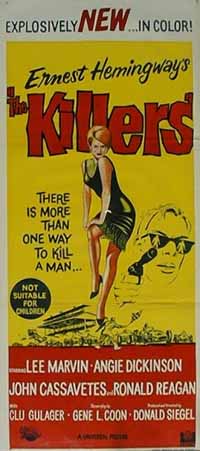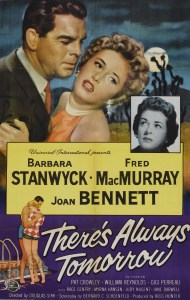
The Bad and the Beautiful (1952)

bad and the beautiful.png

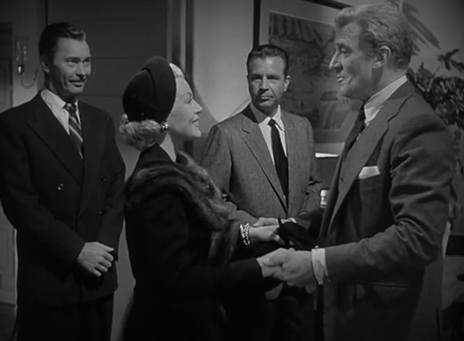
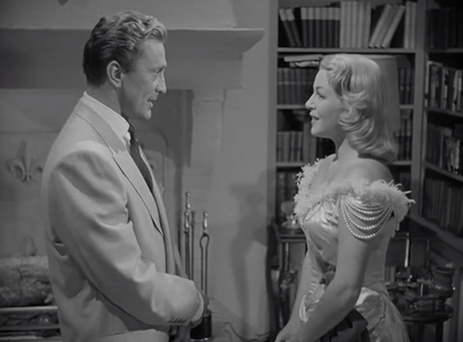
The people making the decisions, at least some of them, undoubtedly knew that this title implied some sort of sordid melodrama, a Douglas Sirk picture anyone? And yet I do admit despite the emptiness in the title, there’s some truth to its implications. Hollywood often is this gaudy, outrageous, maniacal monster looking for people and things to gorge itself on.

Except this is no Sunset Boulevard (1950) or Ace in the Hole (1951) for that matter. It’s not quite as biting or even as tragic or twisted as Wilder’s films but that’s what comes with having Vincente Minnelli at the helm. But rather than critique that decision in any way I think someone like Minnelli thinks about such a picture in a way that Wilder never would. That in itself makes for interesting creative deviations.

First, the camera setups feel impeccable, like a Hitchcock or Ophuls, finding the perfect moments to bring attention to a shot and the precise instances to sit back and allow things to unfold. It’s utilizing a bit of a flashy framing device like a Letter to Three Women (1949) or All About Eve (1950) but in this case, it relates the story of one Hollywood producer through the eyes of the people who worked with him.

Jonathan Shields (Kirk Douglas) is a man whose father was one of the most hated men in Hollywood and also one of the most successful. Jonathan buries his father and with hardly a penny to his name looks to rise out of the ashes his dad left behind. He just might make good too. So as such, it’s another exploration of Hollywood top to bottom, starting very much at the bottom.

That’s part of what makes this story compelling as we watch an ambitious man claw his way from poverty row and B pictures using a joint partnership with another up-and-comer (Barry Sullivan) to slide his way into a gig as a big-time producer. It’s at these beginning stages where they succeed in making a name for themselves under producer Harry Pebbel (Walter Pidgeon).

For Sullivan, he is so closely tied to the business, it’s almost as if he’s wedded to the picture industry.  It’s both his life and obsession every waking hour. So when he’s done with one and waiting for the next he has what can best be termed, “the after picture blues.” He’s still trying to adopt his philosophy for women and apply it to his films — love them and leave them.

In passing, we get an eye into the bit players and the small-timers working behind the scenes just to make a decent day’s wage whether assistants or agents or pretty starlets moonlighting as companions at night. There’s even a very obvious current of sexual politics where women are naturally assumed to be at the beck and call of any higher up to pay them any favors. It’s the grimy, sleazy side of the business that continues to reveal itself in due time with connivers and drunks and suicidal wretches conveniently hidden by bright lights and trick photography.

bad and the beautiful 3

Further still, there are screen tests, meetings, rushes, and sound stages, makeup artists, and costume designers each a part of the unwieldy snake that makes up a film production. All the nitty-gritty that we conceive to be part of the movie-making whirly gig churning out pictures each and every year. They say if it’s not broke then don’t fix but what if it is broken and no one is fixing it? I write this right in the wake of Harvey Weinstein’s ousting due to a laundry list of accusations against him.

One of those involved in this beast receives a stellar introduction of her own. We meet Georgia Lorrison (Lana Turner) with her feet hanging down from the eaves of an old mansion that belonged to her deceased father. She like Shields comes from Hollywood royalty and she like him is also looking to get out of her father’s shadow.

Jonathan is derisively called “Genius Boy” and maybe he is but opportunistic might be a more applicable term. Still, when he makes his mind up, he cannot be stopped and when he deems this smalltime actress will be his next star, he makes it so.

The same goes for novelist turned screenwriter James Lee Bartlow (Dick Powell) who Jonathan is able to coax out to Hollywood albeit reluctantly and works his magic to get him to stay along with his southern belle of a wife (Gloria Grahame) who is completely mesmerized by this magical land out west. Again, Jonathan turns his new partnership into a lucrative success but not without marginalizing yet another person.

One of the most interesting suggestions made by the film is not how much Jonathan ruined his collaborators — alienated them yes — but he really helped their careers. In some ways, it reflects what happens with great men who are lightning rods and always thinking about the next big thing. They’re obsessed with ideas and connections, finding those relationships that will lead to power, wealth, acclaim, and awards. Any amount of honest-to-goodness friendship goes out the window.

But for all those who felt slighted, there’s almost no need to feel truly sorry for them because they bought into this industry with its promises and they bit into the fruit. Sure, their feathers got ruffled and their egos bruised but it goes with the territory.

For everything we want to make it out to be, it’s a tooth and claw operation and those who get ahead usually are the most ruthless of the bunch. Whether we should feel sorry for them or not is up for debate. But maybe we should because a mausoleum full of Academy Awards means nothing. A life of power will be ripped from you the day you die as will the wealth, elegance, and extravagance. It will all be gone. Then, you’re neither bad nor beautiful. You’re simply forgotten. In that respect, this films has meager glimpses of a Citizen Kane (1941) or even real-life figures like Orson Welles and David O. Selznick.

Except in the sensitive hands of Minnelli, this picture is neither an utter indictment of Hollywood nor does it take a complete nosedive in showing how far the man has fallen. It even reveals itself in the performance of Kirk Douglas who while still brimming with his usual intensity chooses to channel his character more so through the vein of charisma.

So if we cannot love or admire his dealings there’s still a modicum amount of respect we must hold for him. Everyone comes out with a shred of dignity and the film’s end is more lightly comic than we have any right to suppose. But then again, we’re not in the moviemaking business and they are.

4.5/5 Stars

Little Women (1949)

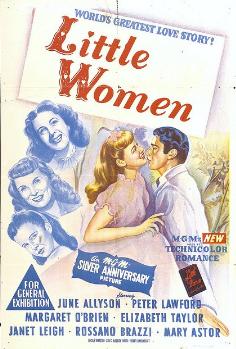
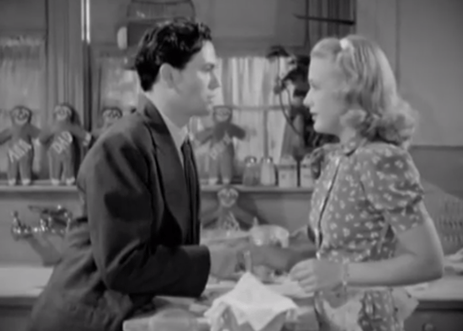
Littlewomen1949movieposter.jpgIn the recent days, I gained a new appreciation of June Allyson as a screen talent and in her own way she pulls off Jo March quite well though it’s needlessly difficult to begin comparing her with Katharine Hepburn or Winona Ryder.
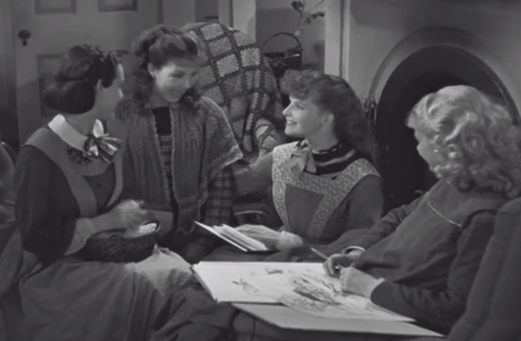
Meanwhile, Mervyn LeRoy was a capable director of many quality films and it’s difficult to say anything damaging about this one because no matter the amount of mawkishness, it’s all heart to the very last frame.

If possible to imagine, this cast is even more star-studded than the 1933 adaptation and yet still somehow the casting just doesn’t seem quite right. In the Katharine Hepburn anchored cast every character was almost perfectly wrought and they felt like an impeccable ensemble.

Somehow here you have the varying personalities rubbing up against each other and it doesn’t feel like this is the March Family as much as this is June Allyson, this is Elizabeth Taylor, this is Janet Leigh, and Margaret O’Brien. Their beloved Marmee being played by none other than Mary Astor. They’re all fine actresses with esteemed Hollywood careers in their own rights but as a family, the dynamic is slightly off.

Of all the names attached, Elizabeth Taylor feels the most at odds with the material, not that she couldn’t play these types of sincere characters — she did it in Jane Eyre (1943) and National Velvet (1944) — but she’s nearly past that stage of being cute and now simply comes off as a bit of a snob. If I know anything about the character Amy (which I may not) she’s hardly that.

This is also far from Janet Leigh’s best role as she all but disappears into the background because there’s this underlining sense that Jo is the oldest sister here (due to Allyson’s obvious age advantage over Leigh) and so with that subtext Meg loses a great deal of her quiet strength as the perceived eldest sister. Because that means she’s hardly the one that the others look up to due to her age. She’s just the noble one while Jo is the free spirit hurtling over fences and throwing snowballs. Thus, the order of sisters really does matter for the full integrity of the narrative.

Come to think of it, the other obvious departure in the film is the development of Beth as the youngest March girl which gave Margaret O’Brien the opportunity to play her and she does a fine job at stirring the heartstrings with her timid solemnity but another dynamic gets altered in the process. I also wasn’t sure what I would have to say about Peter Lawford as Laurie and yet he does a commendable job as does the stately mustachioed C. Aubrey Smith.

It’s fascinating how the same story with at times almost verbatim dialogue can give you a completely different sense of the characters. Because it’s true that this version borrowed much as far as dialogue from the 1933 version. Thus, the scenes are all but the same with slight alterations to the opening and such, but the results are starkly different.

The same goes for the setting or rather the tones of the sets. Though the colored pictorials are glorious and lend a real jovial nature to everything also helping to make this Little Women adaptation a shoe-in for annual yuletide viewing, some stories just are not made for that treatment. It’s no detriment to this film whatsoever but there’s something about the original black and white that evokes the nostalgic aura of tintypes and antebellum photography in a way that this one simply cannot. Little Women seems like such a story.

Of course, that’s only my opinion and it could very easily be the case that someone else’s conception of the March family is very different than my own. That’s part of the fascination with novels and their adaptations. Despite our best efforts, or maybe because of them, they all turn out vastly different. It’s probably for the best.

3.5/5 Stars

Little Women (1933)

little women 1933 1

I still remember visiting Louisa May Alcott’s home in Massachusetts and of course, my sister read her magnum opus innumerable times when we were younger but for some reason, maybe it was a fear of what the title suggested, I still never cracked it open during my childhood. But I’ve always been intrigued by the story usually brought to me in snippets or in bits and pieces from films (namely the wonderful 1994 version).

Here we have a quintessential Cukor picture that embodies the nobler side of humanity — the little women as represented by the March family — and it’s a winsome charmer, where the world seems vibrant and gay.

Despite their humble state, the March girls are cultivated by love and affection. They grew up playing at John Bunyan’s Pilgrim’s Progress when they were children and now as they become young women they have real burdens.

And yet their lives are still fortified by hope and the pure optimism of youth is captured within this picture. It provides access to that time of life which you wish you could hold onto. You see it most aggressively in Jo (Katharine Hepburn) — young, wild, and free as she is — her life full of frolicking and exuberance. She sees the world as perfect bliss surrounded by her mother and sisters — her father to return from the war at some point, a hero in her eyes.

Her next-door neighbor starts out a stranger and soon becomes one of her finest companions. Laurie (Douglass Montgomery) stirs up all her energy and welcomes being brought into the fold while his stately grandfather proves to have one of the most capacious hearts with which to bless the March girls with. Not to mention the fact that Laurie’s tutor Mr. Brook takes an immediate liking to Meg (Frances Dee) and she harbors a mutual fondness for his gentleness and good manners.

Even a life such as this is struck unmercifully by tragedy. Beth (Jean Parker) is stricken with scarlet fever after watching a neighbor’s baby die in her arms. These are the depths of woe. These are the moments for which the March family stands around the piano and sing a chorus of “Abide With Me.”

The shining moment arrives when the father of the house returns. He barely has any screen time in the entire picture because after all, this isn’t his film. But his presence is used exquisitely to aid how Cukor approaches the material. We look on as he sees each daughter and his wife until the camera’s focus turns completely on Beth bedridden and stricken with sickness as she is. Seeing her father the girl miraculously rises to her feet recalled to life after being incapacitated for so long. The miracle of the moment isn’t lost to us nor the imagery of her father arriving as a savior to lift her up. It’s deeply moving.

But it’s funny how life works. Things cannot and will not stay the same forever. Sisters mature. People grow up and share the company of men. We too grow and progress though we only seem to see it in others and not ourselves.

Jo cannot bear for her older sister Meg to get married – to be forced to watch things change within her household – still they do change and she must accept it. However, she cannot accept that Laurie is in love with her and she reacts to his professions the only way she knows how.

The final act follows Jo as she looks to pursue her career as a writer, Meg is happily married now, and Amy (Joan Bennett) is off to Europe with curmudgeon Aunt March. Time passes and old wounds slowly begin to heal, especially when Jo meets another person of peace in Professor Baehr (Paul Lukas). He is a man of great intellect but humble means and he encourages his “little friend” in her writing. Developing a relationship that they both cherish deeply.

Little Women has always been such a striking example of how life can end up so much different than we could ever imagine and yet in hindsight, there are hardly any complaints to be had. It’s never about the complaints but the difficult things that tear us apart only to tie us closer together. Because, at the end of this story, Jo has progressed so far and yet she still has her family and they love her as much as ever.

Katharine Hepburn feels perfectly at home in the role of Jo always the tomboy, independent, boisterous and such. She rumbles with “coarse talk” her favorite exclamation being “Christopher Columbus!”

I’ll try to head off any criticism that might suggest this adaptation is quaint or dated because I would argue that it’s recalling a different era that in so many ways boasted so much that we should yearn for today in our current world. People putting other’s before themselves — living only with what is necessary not in excess or in pursuit of some self-serving hedonism. These are people who cherish what family can give them and the simplicity of quality time and relationships.

Where Christmas festivities have nothing to do with gifts or monetary value but a spirit of giving and a joyful heart. The March sisters even have the original home theater putting on a performance of their own creation letting their imagination and creativity ignite.

What I respect deeply about this story is that it doesn’t feel like it has to be a romance. True, people get married and fall in love but that is not the pretense for the story. As their father entreats them in his letter, they are to “conqueror themselves.” Finding a man is not the point of their existence and this story makes it clear that life is so much more than that. It’s about love, selflessness, humility, and a great many other traits that we would do well to pursue.

4.5/5 Stars

Fear Strikes Out (1957)

fear strikes out 1.png

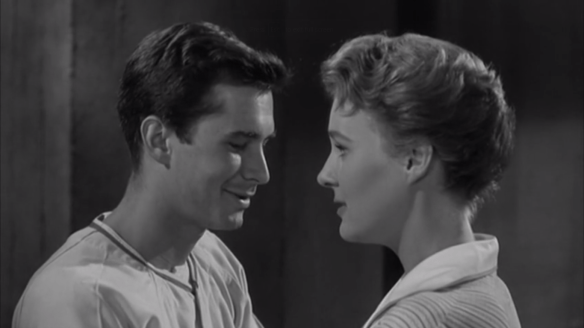
I can’t think of another actor more apt to play this version of Jimmy Piersall’s story than Anthony Perkins. History reflects a more multifaceted even complicated individual.  By other accounts Piersall could be a real cut-up; here the story is very singular-minded in how it portrays its protagonist. It’s played for the drama which it no doubt was but you get to wondering if Piersall had written the script it might have turned out to be more of a comedy.

Robert Mulligan’s film suggests there are arguably the two most important people in Piersall’s life. The first is his father (Karl Malden) who from an early age instills his boy with the onus of making it to the big leagues. That’s the goal and his father watches proudly as his boy becomes a high school star while never letting his son rest on his laurels or let down his guard. He must be constantly vigilant, continually thinking ahead, all in an effort to land a contract with the Red Sox.

He starts out in the minor leagues and there he meets a pretty nurse, the relatively unknown Norma Moore playing the ingenue and his first wife Mary. She makes him deliriously happy and vice versa as they begin to build a life together.

But the conflict at the core of the biopic is Piersall’s own bouts with undiagnosed nervous breakdowns which would be now categorized as bipolar disorder. Put in the context of the era where mental disorders were more often than not left stigmatized and misunderstood, this is actually a fairly fearless film for taking on such source material. But, of course, much of the credit must begin with Piersall himself for being willing to acknowledge it all, to begin with.

Particularly foundational to this film is Jimmy’s ongoing relationship with his father. The scenario happens so often it seems like a cinematic trope but sadly it’s also very close to the truth. It occurs between a parent and their child when they get so vicariously invested and demanding and controlling of their child’s life that they heap so much pressure on them that it becomes nearly an unbearable weight to succeed. Compounded by the fact that these parents are usually trying to realize their own failed talent and never seem to find it within themselves to give their children a pat on the back or a word of encouragement.

You get the sense it was a vicious cycle. Their father never did it for them and so they wind up having a hard time showing any amount of their affection to their kids. It’s something, in this case, that must be earned on the ballfield or in Brian Wilson’s case earned with how many hit records he churned out and composed. Maybe it’s why a parent a la LaVar Ball seems to cherish the spotlight, commanding the media’s attention even more than his boy. Whatever the outcome is, it never seems enough.

It’s purely a testament to Karl Malden’s quality as an actor that he makes Piersall’s father into a nuanced man who is not a holy terror. In fact, even when he doesn’t say it outright we know full well he is proud of his son and he even loves him. He’s not a bad man by any means. That doesn’t make measuring up to his standards any less daunting or his behavior any less damaging.

Though tender and tortured in the everyday moments, Perkins performance on the ballfield feels artificial but you can hardly blame him for lacking the posture or the swagger of a ballplayer where hitting and fielding come as second nature. He looks too much like he’s playing at it — he’s too wooden — not like he’s actually played it his entire life.

Almost uncannily it seems that I find myself at certain movies only after the subjects are gone. Piersall was still a young man in the midst of a baseball career when his story and the subsequent film was made. He passed away in 2017 at the age of 87.

Whether this story is completely true or sensationalized, there’s still an essence of something meaningful here. That we should not be ashamed of our fears and we cannot live life in pursuit of what will earn us the affection of others. It will only succeed in running us into the ground.

That’s why the moment at the end of the film is so fitting, showing Piersall playing a lazy game of catch with his dad. There’s no agenda. No pressure. You simply get the joy of throwing that ball rhythmically again and again perfectly in sync with the person across from you. I’ve done it many a time with my own father and I permanently retired from the game after being little league champions in middle school. Still, I love baseball for those very simple pleasures that it offers.

3.5/5 Stars

National Velvet (1944)

national velvet 1

“Everyone should have a chance at a breathtaking piece of folly, once in his life.” ~ Anne Revere as Mrs. Brown

There’s been many a boxing and a ball sport movie and so it seems only fair that there be room for at least one more Technicolor horse drama, especially one with the breathtaking and gloriously unbridled energy of National Velvet.

It showcases the lofty aspirations riding on the back of a horse and carrying the effervescent hopes of a young girl. I’m certain we could use more movies like this — ones done with this amount of candor and geared toward a broad audience — namely the entire family.

True, Clarence Brown is a director mostly lost to time and perhaps understandably so. This isn’t so much of a technical marvel as it is a story that wraps up its audience with some amount of vigor.

Nor was it a film shot abroad in some exotic location. But that is hardly a criticism, mind you. This was Hollywood’s rendition of the British Isles created in Pebble Beach, California much in the same category of other such period classics like How Green Was My Valley (1941) and Lassie Come Home (1943) — the most obvious point of connection being the always admirable Donald Crisp.

Featured front and center is Elizabeth Taylor in the days when she hadn’t yet been propelled to iconic sex symbol status and still remained the sweet precocious little girl who made the screen sparkle with her adorableness.

Here she is as Velvet Brown. Other girls, namely her big sister (Angela Lansbury) are boy struck but Velvet can best be described as horse struck. She dreams about them in her sleep, thinks about them in her waking hours, and must stop the moment she sees one of her favorite thoroughbreds in the fields on the road home to her town of Sewells.

From the first time she sees “The Pie” in all his majesty, she’s absolutely enchanted by him. It was a love story meant to be. Stirred up by her mother’s own past forays in sport, Velvet begins to entertain thoughts of entering her beloved horse in the Grand Nationals which she believes he is capable of winning with the right training and a rider who knows him.

With the guidance of Mi (Mickey Rooney), a young nomad hired on by the family, they get the horse trained up for competition. But of course, the only one who truly can ride “The Pie” and believes he cannot put a foot wrong is Velvet herself.

Perhaps it’s not as epic as a Ben Hur chariot race or a pod race but there’s still somehow such investment in Velvet and her horse and we feel the same urgency that’s coursing through Mi as he’s watching the race. It’s an infectious moment that catches us up in its swelling emotions to the very last leg.

Far more important than the outcome of the race, however, is how Velvet remains true what she deems to be right. She never lets her pure love of horses — or this particular horse — be muddied by any amount of press or potential fame that might come out of the partnership. Because she’s not seeking any of that. Her intentions are very sincere. She’s doing it all for the sheer joy of getting to gallop across country with her best friend. That’s reward enough for her.

It’s true that Velvet’s parents prove to constantly upend our typical expectations and there’s a pleasure in finding out more about their true character bit by bit. They are folks of hardy stock who are plain but not without their unostentatious charm that comes from being bred in a world of hard work and no doubt Christian charity.

Anne Revere gives one of the most enjoyable performances of her career, start to finish, imbued with an impeccably dry wit that also comes with being a mother who loves her family dearly and aspires for them to have hopes and dreams to carry them through life. You get a sense that she desires they might be decent people who never weary of doing the right thing. There’s a sublime nuance to her turn that would be lacking from the film’s frames otherwise. She is the moral heartbeat and the counterbalance to every other character.

Fiction also mirrored reality in that Elizabeth Taylor truly became the tenderhearted horse whisperer as one of the few people who could actually handle and ride her horse. There’s no sense of parlor tricks and if it’s possible to say this, there’s almost a visible chemistry between her and her steed. They seem meant to be together. Fittingly, on her 13th birthday after the filming was done she was bequeathed her four-legged friend and they remained together for his entire lifetime.

The only rather odd performance or casting choice might seem to be Mickey Rooney who was still a major star in 1944 but sometimes his role doesn’t feel the most authentic. It feels like he’s playing at his part. Meanwhile, Taylor continually bowls us over with every drop of cheerfulness she has in her being.

Maybe I am unfairly prejudiced against Mickey Rooney but he always seemed more like a personality than a true actor. Here as Mi he more or less looks like a tragic story waiting to happen but now thanks to a girl and a horse, he’s getting his shot at redemption. Thankfully for us, this is not wholly his story but more so the story of the horse and its girl.

It’s a wonderfully forward-thinking message for its day that a young girl with ambition can succeed in a man’s world even on the racetrack. Fantasy or not this is a story that uplifts with sheer climactic euphoria.

To all the future teachers, doctors, lawyers, explorers, scientists, and jockeys, this film gives its message loud and clear. Dare to dream. You can’t worry about what others might say. Just go out and pursue whatever it is with all the passion you can muster. No matter the outcome, there will be little to regret.

4/5 Stars

Four Daughters (1938)

four daighters 1.png

The entire packaging of this Warner Bros. film includes director Michael Curtiz, screenwriter Julius Epstein, composer Max Steiner, and Claude Rains all who (not unsurprisingly) would have their hand in that revered classic Casablanca (1942).

Here the Lane Sisters are joined in their quartet by Gale Page with Claude Rains playing the musical patriarch of his family who has trained his daughters up to be an orchestra right in his living room. He’s a belligerent but good-willed father with all his show of bluster merely a facade to hide a heart of pure gold. The role slightly subverts many of Rains’ typically even-keeled gentlemen.

Most of these opening sequences draw up just how quaint and delightful they all are together and what a perfect little life they share as the men begin to show up in their lives to call on them. Isn’t love grand? That’s what we might be prompted to surmise is the film’s main theme.

Four Daughters teeters perilously on the edge of being insufferably schmaltzy to its core and yet it seems that the arrival of John Garfield and the insertion of his character into this idyllic world of giggling girls and small-town romance is just enough to save this story and make into something worth remembering.

Mickey Boyd (Garfield) walks into their home as an acerbic outsider who thrums his nose at the picture-perfect American family in their quintessential American home but he also has a gift for the piano and as musicians themselves, that’s an instant point of connection. Furthermore, he’s come into town as a favor to his old colleague Felix Deitz (Jeffrey Lynn) who happens to be a close family friend and maybe one of the nicest guys you’ve ever met, either onscreen or off.

Still, Mickey is a tough one to crack but that doesn’t keep the maternal Aunt Etta (May Robson) or vivacious young Ann (Priscilla Lane) from trying their best to figure him out. In fact, Mickey becomes a bit of a pet project for Ann as she looks to slowly transform him into an honest to goodness genial human being. She does a fairly good job at it too as he is brought into the fold of the family for every subsequent round of holiday festivities.

The second act proves to be the most potent and whether or not the turn of events are truly probable does not detract from how affecting these sequences turn out to be. And ironically, at the center of it all are Mickey and Ann. The man who has always been the outsider looking in and the youngest sister full of playful precociousness. He is the one who helps her see things as they actually are and she, in turn, continually spruces up his life and to use an inane phrase, she “turns his frown upside down.”

But I think that’s the key to the final act of Four Daughters. It’s dramatic but it loses that almost sickening layer of sugarcoating and shocks everyone within the frame of the film back to the reality of the world with one tragic event or two events depending on what you deem the tragedy to be. This doesn’t simply feel like a mere play for our emotions — though it might be partially this — but it’s really a bit of a representation of what life actually throws our way.

That’s why Mickey is by far the most important character in this picture and he’s so necessary for it to be anything more than typical Hollywood fare because in some sense John Garfield makes that man into a real person. He’s not necessarily a bad fellow. In fact, we kind of like him because he seems a bit sardonic, frank, and he’s not going out trying to be something that he’s not.

True, the Hollywood happy ending is tacked on as we come to expect but perhaps in the closing moments, as the sisters look through the drawing room window and Ann is back to her gate-swinging ways with her beau as before, we can gain some satisfaction in the moment. Not simply because all is right in this little universe but the family went through trials and now are better for it — more attuned to the world. They are no longer simply four daughters or soon to be four wives. They are four women.

The film was dressed up in Technicolor in Young at Heart (1954) with Doris Day and Frank Sinatra and Sinatra elevated that film much as Garfield does here. His tune “All the Way” while having no bearing on the plot is nevertheless a memorable number. I have nothing against Mr. Lemp’s taste in music nor his disdain for the contemporary bilge of his day but I rather like the crooners myself.

3.5/5 Stars


The Killers (1964)

The_Killers_(1964_movie_poster).jpgAfter an opening to rival the original film noir The Killers (1946), though nowhere near as atmospheric, Don Siegel’s The Killers asserts itself as a real rough and tumble operation with surprisingly frank violence. However, it might be expected from such a veteran action director on his way to making Dirty Harry (1971) with Clint Eastwood.

With hitmen (Lee Marvin and Clu Galagher) as the motors for the story, they help maintain a similar flashback structure to the original film taken from Hemingway’s short story, except this time their inquiries are a little more forceful than anything the insurance investigator managed in Robert Siodmak’s film.

Furthermore, to fit better with the cultural moment boxing is traded out for race car driving as our fateful hero in this instance is Johhny North (John Cassavetes) a tragic figure who got caught up in love and wounded in the same instance.

Still, Cassavetes even before he was a director of great repute, he made for a quality acting force because the intensity always seems to burn in his eyes and it serves him well here yet again.

He and his mechanic partner (Claude Akins) are intent on winning a big pile at the racetrack but Johnny gets caught up in a romance with an alluring beauty named Sheila Farr (Angie Dickinson) who can’t get enough of him. But she also happens to be pretty closely connected to an unscrupulous “businessman” who conveniently pays the bills for her. If Johnny knew any better he would get out of there as fast as he could but she’s a knockout who seems to want him and he wants to believe in her sincerity.

Ronald Reagan takes on the uncharacteristically grimy role as the corrupt Jack Browning which interestingly enough would be the actor’s last Hollywood role before switching his sights on politics first as governor of California and then down the road aways as the president of the United States.

Like his predecessor so many years before, The Swede (Burt Lancaster), Johnny (Cassavetes) gets played for a bit of a stooge and as embittered as he is after a faltering racing career, he inserts himself into Jack Browning’s (Reagan) get-rich-quick bank job which is bound to spin out of control. Adding insult to injury Sheila is right there searing through him like she always used to. The imminent results speak for themselves concerning hitmen, dames, and everyone else who could possibly be caught up in the dirty business.

There are isolated moments where the drama gets laid down a little thick and yet for a film that was initially supposed to be a TV movie, this effort really is an enjoyable neo-noir despite being starkly different than its predecessor. In fact, that allows it to stand on its own two feet and even if it’s not nearly as good, Siegel’s film is still quite thrilling. Thankfully this one lives up to its name and it goes out as deadly as it came in which usually bodes well for a crime picture.

Part of that goes down to the acting talent because it feels like there’s no real throwaway role and everyone has something to keep them busy. Lee Marvin has top billing and he takes up a post that feels like it just might be the precursor to the enigmatic crime spree of Point Blank (1967). His performance along with Clu Gulager’s are undoubtedly the coolest bar none and yet they aren’t even in the majority of it.

That privilege goes to Cassavetes and Dickinson who light up the screen and play their character types impeccably. The same might be said for Claude Akins or Norman Fell. The only odd spot is Reagan but then again maybe that might only be my bias since I’m so used to seeing him be presidential.

3.5/5 Stars

Forbidden Planet (1956)

Forbiddenplanetposter.jpgWe’re all part monsters in our subconscious. ~ Leslie Nielsen as Commander Adams

I couldn’t help but recall Han Solo’s line about the Millenium Falcon in the original Star Wars in response to Luke’s derision. After giving his pride and joy an affectionate pat he defends her reputation like so, “She may not look like much but she’s got it where it counts.”

It seems fitting that the line is used to commend Forbidden Planet because this is the film that in many ways made science fiction what it is today. It’s almost too easy to trace the line from this film to the likes of Star Wars and Star Trek and a plethora of others. But today we’re so used to the canonical worlds of established sci-fi that Forbidden Planet might come off as quaint and a bit outmoded. Still, the film has it where it counts even today.

Forbidden Planet was also unprecedented in its day because this was no B-picture. This was A-grade entertainment and that was almost unheard of at the time for science fiction, a historically low budget genre. Leslie Nielsen is given his first starring role while Walter Pidgeon plays the scientist who greets the explorers on the surface of the planet that they were sent to investigate.

But the band of expeditioners who came before them was all but decimated by some unknown force leaving only Dr. Morbius alive (Pidgeon) along with his pretty daughter Altaira (Anne Francis) who has no grasp of what life on earth is like. Commander Adams (Nielsen) is intent on staying on the planet until receiving further instructions from earth.

Still, something doesn’t sit right. There’s something off about Altair IV. A silent, invisible adversary is oftentimes more engaging than a visual one especially when it dwells very close to home and that’s precisely what presents itself moment by moment as the narrative progresses.

From their very first touchdown, this is an incredibly eery picture which manages to carry the audience’s attention for a great deal of the movie. In fact, if this was Star Wars they would have said, “I have a bad feeling about this” at least a couple times. But equally crucial is the subsequent development of the landscape around us that’s at times utterly entrancing.

The key to the film is that everyone plays it straight and serious and in this particular case it doesn’t come off as camp. There’s a gravity to it all that’s mesmerizing even in its bits of antiquity because the world is full of grand endeavors in creativity.

The electronic instrumentation provides what is purported to be the cinematic world’s first fully atonal electric score and even today each note is unnerving to the core. Whereas the theremin has somehow entered into the realm of parody these notes still seem resonant and they perform far better than any traditional score might have in the same circumstances.

At times Forbidden Planet showcases a very simple, even austere mise en scene and other times expands to almost labyrinthian proportions. The sweeping palette photographed in Eastmancolor with CinemaScope certainly adds to its allure straight out of the 1950s while still managing to take cues from stories from centuries prior, Shakespeare’s The Tempest, being the most obvious inspiration.

While not necessarily prophetic or correct in all its assertions about space travel (as far as we can possibly know) there’s a commitment to the world and a specificity to its inner workings that makes the Forbidden Planet into a fairly immersive place — a world alternative to our own that we are able to explore and I think that’s part of its unique status as a pioneering film. Because now we are so used to worldmaking and fantasies outside the realm of Earth whether it be Star Wars or Lord of the Rings or Harry Potter.

Here we see it too but it comes out of a time where most stories were human stories planted on earth or at the very least had the semblance of the reality that we know to be true here. And yet here was a narrative that dared transplant our human shortcomings to the other end of the universe in an entirely different paradigm while showing how man is his fallen nature can still make a mess of life even there. It’s a fairly powerful statement full of human psychology as much as it is about conquering new frontiers.

Robby the Robot (designed by Robert Kinoshita and the team at MGM) stands as a landmark among cinematic robots since he is his own entity as a standalone character. Far from turning on man, he’s about as useful as we might possibly think — even creating gallons of whiskey for the thirsty cook (Earl Holliman). The film was also a trendsetter in describing space travel in increments of light while miniskirts far from being a thing of the future still made a splash with 50s audiences as worn so provocatively by Anne Francis.

Through its final credits, Forbidden Planet is a special picture and that uniqueness goes far beyond its rightful place as one of the seminal explorations in science-fiction. The only thing left to say seems to be despite the iconic nature of its film poster, it has absolutely no bearing on the plot whatsoever. Still, it makes for a good piece of advertising. It must be if someone as oblivious as me is talking about Forbidden Planet over 60 years later.

4/5 Stars

I Am A Fugitive From a Chang Gang (1933)

IAmaFugitivefromaChainGangSullivan’s Travels (1941) and Cool Hand Luke (1967) were two films that took a fairly extensive look at what a chain gang actually was in cinematic terms. Meanwhile, Sam Cooke’s eponymous song made almost in jest has added another layer to the tradition.

Nowadays Chain Gangs seem a bit archaic and a part of the uncomfortable history of the South only to fall a few rungs below the injustice of Jim Crow Laws and the like. But the pre-code drama with its sensationalized title, I Am a Fugitive From a Chain Gang, was nevertheless dealing with issues very pertinent to the age and its story was semi-autobiographical in nature.

Just as this film, directed by Mervyn LeRoy, has undoubtedly been lost among other titles of the 1930s, it seems that Paul Muni as an actor has generally fallen out of the public spotlight when classic actors are concerned. Because in his day, on stage and screen, he was considered one of the finest performers that the world had to offer setting precedents that actors have followed for decades onward in terms of preparation, research, and commitment to roles still further exemplified by his extensive costume and makeup work.

Brando is supposed to have said himself that Muni was the greatest actor he ever saw and though the man upon reevaluation has been accused of overacting, there’s no denying the repute he held in his day and watching Chain Gang there’s little doubt that he carries the picture.

In its essence, this is a film of unfortunate circumstances embodied through incisive drama. James Allen (Muni) could best be described as a wide-eyed dreamer. Coming back from WWI he wants nothing to do with his old factory job, intent instead to try his luck as an engineer. But his family cannot understand how he can be so ungrateful. Still, he heads off on his own to “seek his fortune” but what beckons him is the life of a drifter and it goes alright until the fateful day where he finds himself implicated in a small time bank robbery that he never saw coming.

Still, the police only see the reality and he was the one with his hand caught in the cookie jar so their justice is swift — 10 years of hard labor. It’s in these initial interludes where life on a chain gang is painted grimly and dour. There’s nothing to be hoped for in such an existence where the food stinks, you stink, and there’s little respite from the work.

Understandably Allen is discontent and he becomes one of the few that makes a break for it and lives to tell about it. In fact, what’s more, his future becomes a bright spot as he rises up the ranks of an engineering firm and makes a bit of a name for himself. But opportunistic women and a murky past do not bode well.

Yes, he has become a credit to society, turning his life around completely, but the sticklers for law and order want him to pay off his debt and finish out his sentence before a pardon is to be enacted. He does the honorable thing and expects the gentleman’s agreement in return but instead, he watches the gates clink behind him for good.

Our protagonist is led through an existence of seeming futility that finally hits the lowest depths. By the film’s end, you almost forget that he was one of the doughboys who made it home from the war to end all wars with its plethora of disillusionments only to become a fatality at home.

It ends in the same forlorn crossroads as a picture like The Blue Angel (1930) or Nightmare Alley (1947) except maybe it’s even more akin to Fritz Lang’s seething crime drama You Only Live Once (1937) because in both cases a system of justice that is held in the highest regard, namely America’s system, is shown to be riddled with flaws that go to the core of what true justice is. It all but fails him.

This film does not even begin to unpack the reality that most of the men on the chain gang are African-American, readily choosing the perspective of the white man in almost all accounts because this is the 1930s. So even a picture like this that dredges up important issues for its day is still flawed if you look at it now from a bird’s eye view.

One other qualm with Chain Gang, oddly enough, comes with its short running time. With all of its supporting characters, it never seems to build any kind of rapport with any of them and each new female lead hardly feels substantial enough. Still, yet again, it is Muni’s film and he’s generally up to the challenge as our cinematic surrogate traversing each ruinous twist in his life. He’s put through hell twice and no man should have to deal with that. It’s not human.

4/5 Stars

The Man with The Golden Arm (1955)

220px-The_Man_with_the_Golden_Arm_poster

Everybody’s habitual something ~ Kim Novak as Molly

Otto Preminger was the creator of a number of important “issue pictures” because he dared deal with themes that others had shied away from, mostly in part because of the production codes that ruled Hollywood well into the 1960s. Thus, any type of drug addiction was seemingly out of the question.

Such an issue might seem almost unthinkable in this day and age but that very fact is one of the reasons that The Man with the Golden Arm still maintains some resonance. Perhaps it has aged some and looks tame by today’s standards, a film that hardly dares to mention the drug in question, and yet there is much to be enjoyed all the same.

Saul Bass’s opening titles for one made the credit sequences of a film into an important attraction and he did much the same for Alfred Hitchcock and other Preminger films as well. The film is also laced with what might be best termed as sleazy jazz music to underscore the world that Frankie Machine (Frank Sinatra) returns to.

Before a word of dialogue is even spoken in the local dive we already have a pulse on what kind of place this is. It’s the type of world that sucks the life out of you. People lead you astray and if you’re not able to make something of yourself you’re bound to sink into the pits.

He is just off a stint in the State Penitentiary but unlike many, his story has a touch of hope. He’s gotten the monkey off his back as they say. He’s no longer addicted thanks to the help of a doctor who also tried to line up a job for him as a drummer. It looks like he has some talent that can take him places. He’s got a lifeline out of town.

His return is a heralded one. Everyone’s intent on welcoming him back including first-rate scrounger Sparrow (Arnold Stang) as well as the pudgy local card shark Schwiefka and the “dealer” Nifty Louie. He’s very much the devil on Frankie’s shoulder coaxing him to give him a call if he ever needs a fix of candy because he used to be a great customer.

Meanwhile, Charlie’s wheelchair-bound wife Zosh (Eleanor Parker) is constantly paranoid about his purported unfaithfulness and simultaneously quells any of his aspirations to make anything more of his life. She’s just a scared little person and her fear stifles Machine even as he tries to make her understand that things are different now.

The one person who does seem to understand him is his old flame Molly (Kim Novak) who is currently a hostess at the local club. He remains faithful to Zosh and yet it is the friendship with another woman that gives him the encouragement to pursue this new path.

Yet the film soon delves into the depths of addiction. As often rings true, after you think you’ve got addiction beat (any kind), it comes back with raging abandon and it goes for the choke hold. A bad break and the plethora of undesirable influences are leading Machine down the well-trod paths of old. He initially gives in and yet still battles and fights and shakes his way back to sobriety. But it’s not easy. The only place he has to turn is Molly and she gladly gives him her support.

All in all, this is a fairly unflinching portrait for the time and this picture points to the fact that Frank Sinatra was a serious actor, not simply a singer, a personality, or a star. Here he offers up an honest to goodness performance though his career was ripe with many others. Still, this one encapsulates the tortured cycles of those trapped in the throes of addiction.

Meanwhile, Kim Novak’s performance flows with a sincerity — a woman who is willing to do what is good and right even when it is difficult and seemingly offers very little recompense. It’s a stirring turn indeed.

The histrionics of Eleanor Parker are maybe a bit much and yet in this performance, you begin to see why she is hardly remembered along with other classical beauties. It’s because she actually wanted to be an actress first and a star second and thus, instead of projecting a certain image in all her pictures, it does seem like she’s constantly changing and stretching our expectations of her. Today her choices look quite audacious and yet it no doubt left her contemporary audiences a little befuddled. That in no way detracts from her efforts here if only to magnify our appreciation for Sinatra and Novak’s characters.

Rather than simply seeing this as an antiquated issue picture, a film made for a different era and for a different person than me, I would like to say that there is something of note in The Man with the Golden Arm. As Molly so lucidly acknowledges, many of us go through some type of cycle or we succumb to some habitual pattern whether it be an addiction or something less extreme. Still, either way, these very things can detract from our lives and trap us in rhythms of life that hinder our relationships and all that is truly paramount. That’s just a small caveat to take heed of.

3.5/5 Stars