UP (2009)

This Pixar film, starring Ed Asner and Jordan Nagai, follows a retired gentleman, who keeps his promise to his deceased wife by traveling to South America. Carl Frederickson met the love of his life in Ellie, and they got married. However,  pretty soon they were in their later years and Ellie died. Carl wants to keep his promise, and so he heads to South American in his balloon-propelled house. Along the way, he has an energetic boy named Russell thrust upon him. Over time they become friends as Russell tries to help Carl so he can earn a Wilderness Explorer badge. Russell befriends a talking dog named Dug and a giant bird called Kevin, while Mr. Frederisckson accepts their company begrudgingly. But they do run into trouble, and so they have to rally in order to save Kevin from his captors. Although this story seems sad at first, it quickly becomes heartwarming with the addition of Russell. He helps to breathe new life into Mr. Frederickson, and more importantly, they form a relational bond. This is probably the best Pixar film since Finding Nemo.

It always strikes me how wonderfully unassuming this film is. If you told me that a film about an old man traveling to South America in a balloon-propelled house would be this gripping, funny, and heartwarming, I certainly would not believe you. But time after time UP is a joy to watch.

It has one of the moving opening sequences in recent memory, and it does it with pithiness. This is the first sign that this is something special. Each and every time I always find the score so whimsical, and it seems to fit so perfectly with the concept. Another marvel of this film is Russell, the spunky Asian-American kid in pursuit of his assisting the elderly badge. He is a hilarious little boy with a lot to say, and he says it with such expression and energy, which really shows through the Pixar animation. A shout-out must also be given to Kevin and Dug because Russell is the standout, but the film would not be the same without this pair of quirky creatures.

Most importantly, the younger generation learns from the older generation, and in turn, I think Carl learns valuable lessons from his young companion. It is very important to never forget our past, but perhaps more important is making something of our future and living in the present. It is a new type of buddy film that reminds us that friendship, as well as adventure, are out there, we just need to go and find it.

5/5 Stars

The Bicycle Thief (1948)

This Italian post-war neo-realist film, directed by Vittorio De Sica, is about a man who has his bicycle stolen and then must find it in order to continue working. Antonio Ricci is a man desperate for a job and he is fortunate enough to get an opportunity. However, he needs a bike and he sold his trying to provide for his family. He gets enough money to buy it back and he starts his days work pasting posters up in Rome. While his back is turned his bicycle is stolen and the culprit gets away. Because it is his livelihood Antonio desperately searches first with his friends and then with his son Bruno. After much looking he believes he has found the thief but with no proof the boy gets off. As the day ends Antonio chooses the one option left with no avail. This film is wonderfully simple and beautifully realistic. You feel deeply for this man who is by no means perfect, in fact he has many faults. But he is simply human. In a sense we are left with a cliffhanger ending that leaves us anxious for him.

5/5 Stars

Mrs. Miniver (1942)

Starring Greer Garson, Walter Pidgeon, Teresa Wright, and directed by William Wyler, this film tells the touching if not sad story of an English family. We follow their life from the happy moments before World War II to the hardships in the midst of it. Through it all Mrs. Miniver is a quietly strong wife and mother who holds her family together. Whether she is waiting in a bomb shelter, capturing a German parachutist, or simply taking care of her family, she exhibits amazing courage and fortitude. She is a testament to those fighting on the home front  Mrs. Miniver is not a part of Dunkirk like her husband. She is not flying like her son but her role is just as important. Even in the closing when tragedy has hit Britain, the country and its Mrs. Minivers stay resilient. First used as a propaganda device in the 1940s this film is till moving today. When you see any of these people rejoice or suffer you too are moved.

4/5 Stars

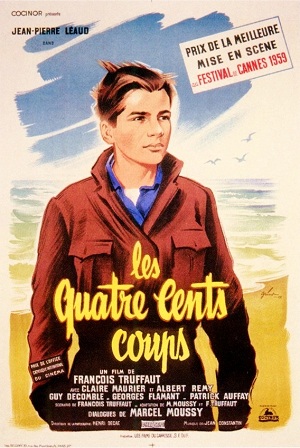
The 400 Blows (1959)

This French New Wave film directed by Francois Truffaut, more aptly titled The Wild One or Raising Hell, is about a young boy named Antoine. He comes from a working class family and his parents are struggling and frustrated. In school he gets poor grades and his teacher often punishes him. Annoyed with his life, he runs off for a time committing petty crimes and exploring the streets with a friend. That ends when he is caught stealing his father’s typewriter. Fed up for the last time his parents send him away to an observation center for boys. After he arrives Antoine escapes and runs to the ocean a sight he has never seen. With that the camera zooms in and we clearly see the face of this troubled, young boy. It is easy to appreciated this film because it does not glamorize the situation but tries to deal with it sensitively. Truffaut made a very good one here reflecting on his own experiences.

5/5 Stars

Tokyo Story (1953)

42390-tokyo_story_posterThis critically acclaimed Japanese film directed by Yasujiro Ozu has a relatively simple plot having to do with a kind elderly couple going to Tokyo to visit their adult children and extended family. They are excited to see the big city but it is not quite like they had expected. Furthermore, all their relatives and family have very busy lives making it difficult for them to spend time with the couple. The eldest son who is a doctor and then a daughter who owns a salon decide to send their parents off to a spa. Unhappy, the elderly couple return to Tokyo but they feel like they are imposing. Finally, the two of them head home and there the wife becomes ill. Because she is dying, her children do decide to visit. However, after she has passed away it seems they all too soon forget her and go on with life. This film is an interesting study of the void between generations. It also uses realism and focuses on the manners of the Japanese without fully criticizing them.

4.5/5 Stars

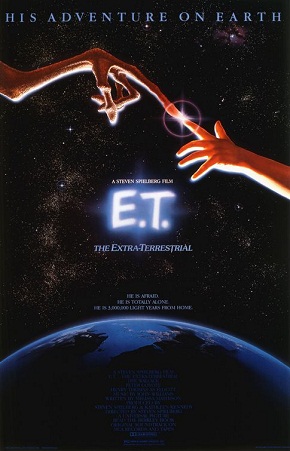
E.T. The Extra-Terrestrial (1982)

Directed by Steven Speilberg, E .T. follows the life of a young boy, Elliot, who befriends a timid alien who is lost on earth. Eventually this little alien becomes a foster member of their family, drinking soda, watching television, and taking part in trick-or-treating during Halloween. However the secret gets out and the government takes E.T. away. Elliot feels helpless as he slowly sees E.T. begin to die. However, miraculously he is revived again and Elliot with his brother and friends make a break with E.T. When it looks as if they will be caught their bikes take off allowing the peaceful extraterrestrial to escape and head home. This is one of Speilberg’s classics and it is a good historical image of life back in the 1980s aside from the alien.

4.5/5 Stars

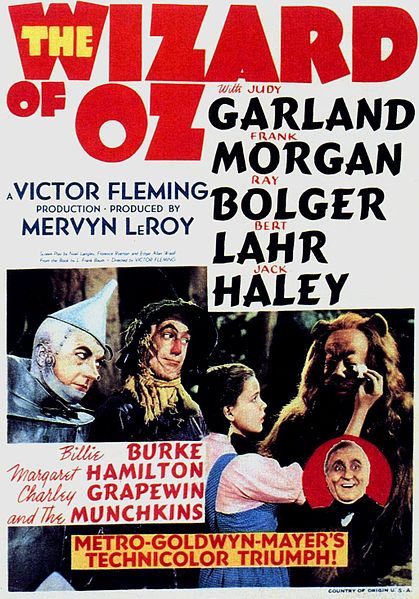
The Wizard of Oz (1939)

6bda0-419px-wizard_of_oz_original_poster_1939Coming from the great year in film of 1939 this is one of the quintessential musical, fantasy, and family films. It has some of the most famous songs around, a memorable cast including Judy Garland, and serves as a constant reminder that there’s no place like home. Furthermore whenever we think villain the film’s Wicked Witch is almost always ingrained in our minds. 

*May Contain Spoilers
The story is adapted from the L. Frank Baum novel and it follows a young Kansas girl named Dorothy who lives on a farm with her aunt, uncle, the dog Toto, and three farm hands. When a big tornado hits, Dorothy becomes unconscious and when she wakes up she finds herself in Oz. There she encounters the good witch and the land of the Munchkins. As Dorothy begins her journey to the Great Oz to get home, she meets several unique characters. First there is a scarecrow who wants a brain, then a tin man who desires a heart, and finally a lion who aspires for courage. Together they travel to Oz and the wizard tells them they must kill the Wicked Witch of the West. Dorothy finds herself eventually in captivity but her new found friends rally to save her and inadvertently kill the Witch. When she gets back to Kansas Dorothy realizes that there is truly “no place like home.” With iconic characters, memorable lines, and infectious songs it is easy to understand how this film became a classic. The added color does not hurt and also the special effects are not too shabby for 1939.

4.5/5 Stars