Garden State (2004)

gardenstate1Garden State was written and directed by Scrubs star Zach Braff before he made it big, while he was still struggling to get into the business. It’s one of those deep blue funk movies where a person has to find themselves in the giant mass of humanity. Andrew Largeman’s mom just died from drowning in a bathtub. He hasn’t seen his dad (Ian Holm) for about a decade because they haven’t really been on speaking terms. Now he lives in L.A. across the vast expanses from his native New Jersey. He works in a very zen Vietnamese restaurant and surreal daydreams clutter his apathetic mind.

The question is what will shake him out of his despondency because the death of his mom is only the inciting incident. As it is with a small town community, he’s constantly meeting all the old acquaintances from his high school days. Most are impressed by his foray in acting even though he hasn’t made much a career of it yet. The people he reconnects with include his old friend Mark (Peter Sarsgaard), who works at the cemetery and doesn’t have much of a life except smoking weed. Then there’s Jesse who made a killing off Silent Velcro and now has all the time in the world for parties in his huge mansion.

That’s not what does it though. It’s when Andrew is sitting in the doctor’s office, hoping to get checked, because he’s been having headaches after being off the meds he’s been prescribed all his life. There he meets Sam (Natalie Portman) for the first time, and he’s never the same. She’s a scatterbrained, off-the-wall personality with a lot of energetic pizzazz. That about covers it except she also has epilepsy and is a compulsive white-lier. But in her Andrew finds a genuine spirit, who can revitalize his life, by giving him sympathy in his pain, while also brightening up his everyday reality.

gardenstate2On his last day in New Jersey, Andrew obviously wants to spend the time with Sam, but it ends up turning into a daylong treasure hunt as Mark tries to track something down. It isn’t much, however, it’s the thought that counts, and on their odyssey, Andrew is finally able to let go of a lot of the hurt and pain he’s been harboring. He’s ready and willing to forgive his father.

Then, there he is in the airport terminal getting ready to leave Sam for L.A. He has to get back and he promises to call her, but he seems to remember he’s a different person now. It’s a delightfully sweet ending to the film and we absolutely want it.

gardenstate3Braff’s wistfully apathetic demeanor is so wonderfully personified by a memorable soundtrack including alternative rock groups like Coldplay and especially The Shins. His brand of acting is really just playing a wet noodle, but he does it well. Those beady eyes of his constantly scanning back and forth nervously around the space he inhabits. And the film certainly has some dirtiness around the edges, but our main couple is so endearingly sweet. I respect a film that respects its characters such as not needing to show them having sex all the time, but it can paint their romance in more playful, soft, even intimate shades. Andrew takes drugs and curses, but only to dull the pain or express his bitter frustrations. Sam’s the kind of girl who states that she’s not innocent, confirming our suspicions of just the opposite. We appreciate both of them exactly for those reasons. He rides an army issued motorcycle with a sidecar for goodness sakes, and she gets teary-eyed over a deceased hamster. They’re quite the pair.

3.5/5 Stars
Review: Bringing up Baby (1938)


bringingup2“Our relationship has been a series of misadventures from beginning to end, so if you don’t mind, I’ll see Mr. Peabody alone and unarmed.” –
David Huxley

Bringing up Baby is really and truly one of a kind, almost headache-inducing with its sure energy and dizzying with its scatterbrained tracks, but nonetheless it is a screwball masterpiece. From Hollywood master Howard Hawks comes arguably one of his greatest films, boasting the rat-ta-tat-tat of some killer dialogue, some fantastic comedic sequences, and a number of memorable performances.  Honestly, if I learned anything from this film, you can’t watch it just once, because you’re bound to get bowled over, and afterward you probably won’t realize half of what you saw. For instance, there’s so much talking you hardly realize that there’s not much of a score.

Young Katharine Hepburn is at her most radiant and almost smothering with her constant barrage of words. You either love her or hate her. There’s no way to ignore her performance here because it’s completely out there. It’s hard to believe she was a novice when she came into comedy. There’s no inhibition whatsoever. Not in the least.

Cary Grant is the bookish paleontologist who is content with constructing the skeleton of his prized Brontosaurus and then marrying his admiring, no-nonsense sweetheart Ms. Swallow. It sounds like a pleasant albeit mundane lot in life. In an effort to gather a $1 million in funding, he goes out to the golf course ready to do a little business on the side with Mr. Peabody. That’s when hell strikes in the form of one scatterbrained lady extraordinaire Susan Vance (Katharine Hepburn). First, she swipes his golf ball (quite certain it is her’s), then she batters up his car (sure it is her’s again), and to top it all off she causes him to sit on his hat when they cross paths again at a club. Poor Dr. Huxley doesn’t know what’s hit him. He just wants to get away from her and all the fury that comes in her wake.

Good luck with that Cary, because she’s a force of nature! She misunderstands everything, and he gets endlessly caught in her web of miscommunication.  Susan initially roped him into coming along with her, thinking he was a zoologist who could help her take care of “Baby.” Of course, it turns out to be a tame leopard that they must get to her aunt’s home out in Connecticut (Only in a screwball comedy). By now he’s bothered. She’s falling in love.

So she does what any resourceful girl would. She keeps him occupied. First, she swipes his clothes. Then the dog George runs off with his prized possession, the intercostal clavicle. Initially, they want to get rid of the leopard. Then they want to keep it. Auntie comes home along with her gentleman friend Major Horace Applegate. A not so friendly leopard escapes from a carnival. The police get involved led by their bumbling leader Constable Slocum.

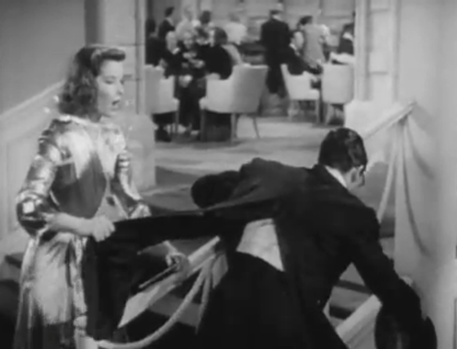
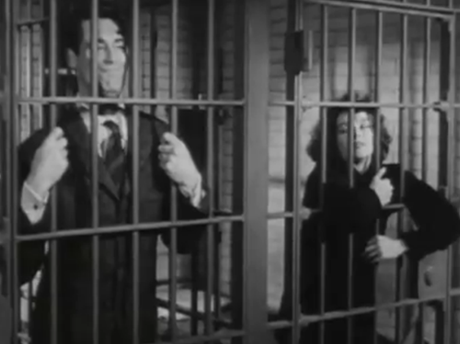
bringingup1It’s a doozy of a masquerade and most everything and everyone is utterly confused. It’s as if everything that enters the world of Susan Vance is further complicated. To her, it’s simply a day in the life and Huxley begins as an outsider, but despite all the madness, he becomes accustomed to it.  Running after the dog, getting soaking wet, tripping, falling, fending off a leopard, getting thrown into the clink. Dr. Huxley realizes that he’s never been happier and it ends pretty much as it began. Never a dull moment.

This has to be one of Hepburn’s greatest performances earlier in her career because she has everyone in a tizzy. Although he’s literally getting the run around from Hepburn, Grant is her perfect comedic foil. He dons the glasses at first and carries the sensibility that goes with them. However, he is equally equipped to go without them as a scatterbrained gentleman ready for all the pratfalls, quips, and escapades that ensue. And they are surrounded by a solid set of character actors including a drunken Barry Fitzgerald, the easily distracted Walter Catlett, the big game aficionado Charles Ruggles, and the peppy dog Asta (of Thin Man fame) among others.

Howard Hawks once said that “a good movie is three good scenes and no bad scenes.” In Bringing up Baby some of the memorable moments include the fateful meet cute at the golf course, the chuckle-worthy encounter at the club, and of course the sequence leading up to jail. But it’s also the little comedic moments wedged in between. Maybe Hepburn’s parked in front of a fire hydrant and trying to pull the wool over the policeman’s eyes. Or perhaps Grant dons the only piece of clothing, a frilly bathrobe, and is forced to answer the front door. It’s utterly absurd. It’s become classic and it shows the ability of Hawks behind the camera to make the action flow so organically.

It’s amazing that this film was a flop, Hepburn was labeled “Box Office Poison” by this point, and Cary Grant had yet to become an established star. Oh, how things changed. Because this film, in a sense, was the beginning of something truly wonderful. When two of the greatest stars aligned with one of the great directors.

5/5 Stars

Like Crazy (2011)

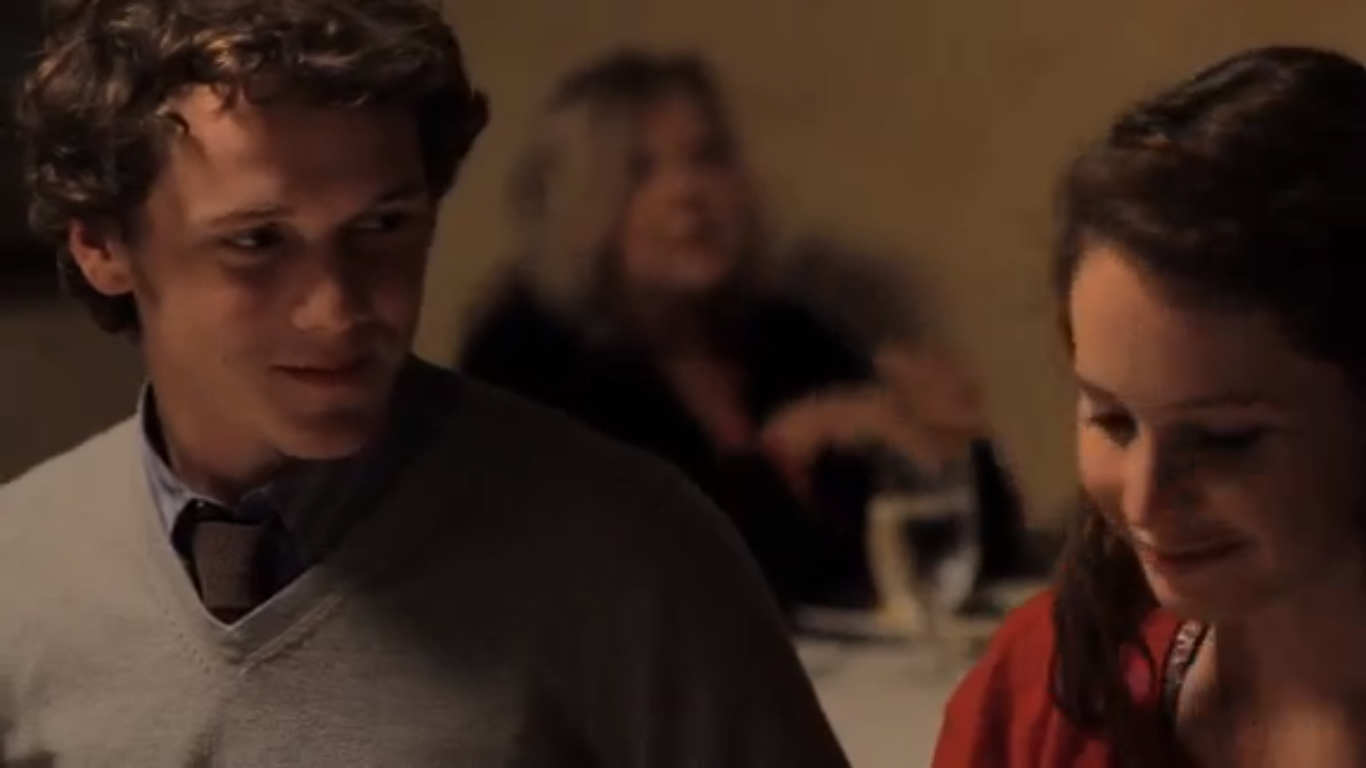
likecrazy7Like Crazy is the genesis, the passion, and the heartache of a romance all wrapped into 90 minutes of film. Our two subjects are filmed as individuals at first and the cinematographer opts for a handheld camera approach to capture their moments together. The loosely woven narrative is based on director Drake Doremus’s own experiences with a transatlantic romance. In the film Jacob (Anton Yelchin) is an American college student living and going to school in L.A. After her heartfelt confession of affection, Jacob begins a relationship with the British-born Anna (Felicity Jones), who is in country on a student visa.

The film slowly evolves into a montage of their time together as they grow closer and closer. It’s a beautiful picture of tentative and affectionate love coming into bloom. And with her visa about to expire Anna decides to forgo it all and stay with Jacob. But the Visa issues come back to bite her and continue to give the couple problems. Soon they are separated by an entire ocean dealing with the many challenges of long distance relationships.

For Jacob, there’s another girl (Jennifer Lawrence). For Anna a guy down the hall who asks to borrow her appliances. It’s so much easier having these people in close proximity, and it challenges their wills. Because airfare is expensive and talking through text message just simply isn’t the same. It works at first but it seemingly is not sustainable.

Marriage seems like the best option for them to hold what they have together as Anna’s Visa problems still loom overhead. But it’s hardly a quick fix and over time there’s a breakdown in what they have. Even when they are together they have trouble connecting, not shouting, and not getting annoyed. Because, more often than not, they are apart now. The best they can do is wistfully remember the intimacy they had before and try and go forward from there.

Likelikecrazy4 Crazy generally stays away from the constricting effects and inflexibility of your typical plot line. The script was more of an outline and the dialogue was essentially the two leads ad-libbing most of their interactions. But this lends an organic quality to this, dare I say, trendy indie love story. There’s vast distance juxtaposed with intimate close-ups. Emotions embodied by images become paramount over words. In a sense, we see their nakedness and not literally, but we see that vulnerability in those most intimate times in a relationship, sharing bits of bliss together. Whether they are in Santa Monica or London, the scenery is only a place in which the two of them are having moments. The type of times they remember in the shower or while they sit in the bar with their friends, or when they sit doodling at their desk. It’s those times that make them want to make this thing work despite the distance. It’s a difficult trade-off and I’m doubtful anyone has found the precise answer for it. Because all the countless advances in technology cannot give us intimacy only imperfect substitutes that will never fully replace the real thing.

likecrazy6It is a great joy watching Felicity Jones and Anton Yelchin play off of each other because aside from one occasion, their performances are quite subtle and refreshing. We even get an appearance from Jennifer Lawrence. For this reason, it’s fun to watch a film like this and see where the talents have gone in only a couple of years. The Theory of Everything, Star Trek, The Hunger Games. But there’s always a necessary niche for smaller films like this. I look forward to more takes on love from Drake Doremus and Felicity Jones has gained one new fan today.

3.5/5 Stars

Crazy, Stupid, Love. (2011)

crazystupid1Here is a film from screenwriter Dan Fogelman where Ryan Gosling acts as wingman for an estranged Steve Carell; seems like a basic enough pitch for a movie, and yet thankfully it’s not quite that simple. Early on Jacob (Gosling) implores the washed-up Cal (Carell) to lose the New Balance sneakers and drop the Gap for good. What follows is a lesson in how to be a “man again.” Also known as picking up women with new clothing, a better hairstyle, and a whole different strategy. Cal’s a man trying to step out and try new things after he found that his estranged wife of 20 years Emily (Julianne Moore) slept with another man. His understandable reaction at the time he heard the news was to jump out of a moving car. It hurt him both figuratively and literally.

So Jacob is the beginning of something new for Cal as he steps out to meet women. Some of the scenes make me want to crawl up into a ball out of the sheer awkwardness and that’s often the type of humor that Steve Carell revels in. He likes to make us squirm, and it happens on numerous occasions. He says all the wrong things at all the right times. You get the idea. But behind all this, he still has feelings for Emily, and he’s wistful in the presence of his kids. Everyone wants them to get back together. However, he’s not the only one facing romantic issues as his son Robbie and wing man Jacob soon have their own problems. Emily must figure out what she wants and up and coming lawyer Hannah (Emma Stone) must figure what is the best for her.

crazystupid2As for Cal, he attends a Parent Teacher Night to end all Parent Teachers Nights and it has to be the worst circumstances you could ever imagine. It gets uncomfortable quick as he learns who his son’s teacher is. I’ll spare you the details. Then there’s a  greatly hilarious twist that hits after all the primary cast find themselves in Emily’s backyard having a few unpleasant revelations. But the film doesn’t end there since the journeys of these characters have a little farther to go yet. They have to find themselves, navigating this crazy, and yes, maybe even a little stupid thing we know as love.

I must admit I like these guys in spite of those pick up lines (Lets get out of here) and attempts at romancing, because that stuff makes funny material for a film and we get some genuine laughs out of it, but it’s when we tear that down for a moment and look underneath all of that. That’s where we find true heart.crazystupid3Most of these characters are well-meaning and likable and with those who aren’t, it’s forgivable, because they are necessary for the film’s humor initially. Namely Ryan Gosling and Liza Lapira, who always seem ready with a quip or maybe a one night stand with an obliging member of the opposite sex. The movie needs these characters I suppose since for starters it’s Jacob who helps Cal find a different side of himself. Liz who goads her friend Hannah to take a chance which she finally capitalizes on. But in truth, most all of these main players have a sense of humanity about them, mixed in with their faults and failures. Cal was once a good father and now he’s made a lot of mistakes. Jacob is a total womanizer, but when he cares about people he really does. He loses all the false pretense about him. Ironically, Cal changes Jacob as much or perhaps more so than Jacob changes him, which is important in the evolution of this film. They teach each other and in turn help each other move forward.

Even the teenagers Robbie (Jonah Bobo) and Jessica (Analeigh Tipton) may have misguided affections in a sense, but we cannot help to empathize with them in their innocence. They’re young and in love and they don’t really know what that means. Very few of us probably do. Whether it’s finding “The One” or discovering your soulmate or not, it’s easy to forgive Crazy, Stupid, Love for its conclusions which might feel a tad cliche and bright. Just this one time, because these are characters who we don’t mind giving a happy ending to.

3.5/5 Stars

Hold Back the Dawn (1941)

holdbackthedawn boyer de havilland 5Hold Back the Dawn was written by the winning combination of Billy Wilder and Charles Brackett, but the director was actually Mitchell Leisen. That was the last time Wilder would let someone else take hold of his work. It’s actually rather meta, a film within a film. We see our director and a film being made (Complete with Veronica Lake), but that is only a pretense for this story to be told.

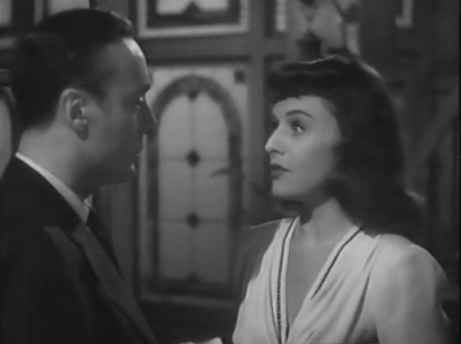
Georges Iscoveu (Charles Boyer) wanders into the studio hoping to tell his story to somebody who might help him. The tale goes something like this. Much like many other hopeful emigrants, he heads to Mexico in an attempt to try and get into the states, but he’s told that he’ll have to wait and so Iscoveu holes up at the Esperanza Hotel with all the other masses. Time passes and he is getting nowhere fast, but he does bump into an old partner in crime named Anita (Paulette Goddard). Undoubtedly using her feminine charms, she wrangled herself a husband in order to secure herself citizenship. Then she swiftly got a divorce to close the deal. She’s a real peach and she plants the idea in Georges because he is desperate after all.

The gears are turning and he sets his sights on the pretty young schoolteacher, who is in Mexico with some of her students. Their car is in the shop, and after swiping a sprocket, Georges goes into action.

With soaring rhetoric, he wins Miss Emmy Brown over and he puts a ring on it, a borrowed ring from Anita to be exact. He’s a real cad, but it is a Charles Boyer leading man.

To her credit, Olivia De Havilland plays this ingenue and small-town teacher with bright eyes and idealism. We cannot help but feel for her because this is a woman who is swept off her feet and she exhibits true affection. She’s naive, but as Georges acknowledges, she’s swell. Anita has plans for them to meet up once the marriage is terminated because she thinks that she and Georges can run in the same circles once more. But all the time he has spent with Emmy has not left him unchanged. Car rides and travels through Mexico becomes intimate and sweet. So somewhere there is a turning point in the psyche of Iscoveu. It no longer becomes a con game with Anita, but a true romance with Emmy.

However, the trouble comes when the inspector named Hammock (Walter Abel) comes sniffing around because the marriage of Emmy and Georges seems obviously fishy to him. But Ms. Brown does the noble thing and defends Georges not out of ignorance, but charity. She knows she was living a dream and is about to go back to reality, making the drive back to her home in Azusa, California.

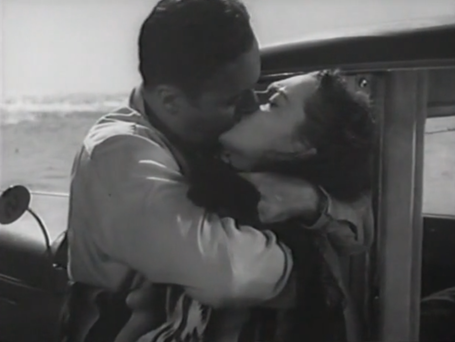
Georgholdbackthedawn6es has what he had initially set out to get, but the story cannot be over. When he hears of a deadly car accident, he rushes across the border without heed of the law so that he can be with the love of his life. It’s a gushy conclusion that looks like it might end badly. After all, Iscoveu broke some major laws, but Hammock gives him some grace showing he’s a softy at heart. Even Anita gets what she’s always wanted.

The film is a treat because we not only get an A-grade performance from De Havilland, there’s a conniving Paulette Goddard, and even a brief cameo by everybody’s favorite Peekaboo girl Veronica Lake. Curt Bois (the pickpocket from Casablanca) also makes a spirited performance in one of the minor plots.

Hold Back the Dawn certainly begs the question whether Wilder’s own experiences are infused into this story since he often told anecdotes about his emigration into the U.S. which ultimately led him to success in Hollywood. Also, this film suggests that Mitchell Leisen is not so much a great director or a maker of masterpieces, but he is in his element with romances. However, I wonder if part of his success was having the likes of Billy Wilder and Preston Sturges writing scripts for some of his most prominent films (including Easy Living, Midnight, and Remember the Night).

4/5 Stars

Libeled Lady (1936)

Poster_-_Libeled_Lady_01Libeled Lady has screwball comedy written all over it and that’s perfectly alright with such a glorious cast. Myrna Loy and William Powell reunite once again (for one of their 13 pairings), but we also get Jean Harlow and Spencer Tracy. Amazing!

The set-up is easy and pretty self-explanatory. Warren Haggerty (Tracy) is the managing editor of the New York Evening Star, but while he is reluctantly getting ready to walk down the aisle, he gets the horrific news that the paper sent out a misinformed scoop by mistake. Now Haggerty is faced with a $5,000,000 libel suit from wealthy socialite Connie Allenbury (Loy), and it brings his weddings proceedings to a halt, much to the chagrin of his peeved fiancee (Harlow). This isn’t the first time that their big day has been postponed after all.

Stuck between a rock and a hard place, he goes to one of his former reporters, Bill Chandler (Powell), who really rubs Haggerty the wrong way, but he also happens to be a whiz when it comes to libel. He’s the only man who can get the paper out of the major jam so he leverages his position. Things go down like this. Chandler will ingratiate himself to Ms. Allenby and soon afterward Gladys Benton (Harlow) posing as his wife, will rush in on them. Presto! The suit will be dropped. Simple, right?

It’s the consequences that get even dicier. At first, Gladys absolutely despises being cooped up in a hotel with Chandler and she’s still fed up with Warren. But over time, the close quarters cause Chandler to grow on her. Meanwhile, Chandler tries to learn everything he can about angling, to charm Allenby’s father (Walter Connolly), who is a fishing aficionado.

From the start, his daughter has Chandler pinned as a fake (which of course he is), but by some act of heaven his act actually works and he wins them both over. Worse, Connie is falling for him and he’s reciprocating, but Haggerty is still waiting for the plan to be executed. Gladys is waiting impatiently for her “husband” who she seems to genuinely miss. It’s all a big mess to be sure.

The finale involves the four leads together for one final climactic barrage of pandemonium and spouse swapping. As you would expect everyone ends up with the right partner, but it was sheer craziness to get there. It had been a while since I had seen a screwball, and Libeled Lady is a striking reminder why the genre is so fun. It had me laughing pretty hard whether it was the utter absurdity of the fishing sequence or any of the other madcap moments. It boasts quite the cast too. It’s crazy to think that in only a year Jean Harlow would be gone, a short but vibrant career behind her.

4/5 Stars

People Will Talk (1951)

peoplewill1People Will Talk is in this weird gray area between genres. It has humor but it’s not screwy enough to be a screwball. It has drama, but it’s not intense enough to be a full-fledged melodrama. And underlining all this are issues that reflect such areas as the medical industry, the Korean War, and most definitely the witch hunts that were going on in the nation — bleeding into the Hollywood industry.

Written and directed by Joseph L. Mankiewicz, this is a minor classic about a doctor named Noah Praetorius (Cary Grant), who is under investigation from one of his by-the-book colleagues Dr. Elwell (Hume Cronyn), who dislikes the good doctor’s unorthodox and thoroughly effective approach to his trade. Praetorius by now is a preeminent physician who started his own clinic and also teaches classes at a local med school.

One of these individuals happens to be Mrs. Deborah Higgins (Jeanne Crain). She is not a student but sits in the lecture because her former partner was a medic. A date with a cadaver proves to be too much for her and she faints. Seems normal enough right? Wrong. After examining her, the Dr. tells her she’s pregnant. The truth comes out that she’s not really married and the father is dead. Her own father would be greatly distressed to learn about her condition, since he cannot provide for her.

That’s where Dr. Praetorious comes into the picture, and he takes great concern in Ms. Higgins condition. He attempts to allay her anxiety by saying she’s not really pregnant, and she runs away from his clinic out of embarrassment, since she is falling in love with him. He goes with his stoic friend Mr. Shunderson to the farm owned by Deborah’s uncle.

Deborah turns out to have a strange mix of aloofness and lovesickness, but when she realizes the Doctor’s true motive for being there (before he even does) she is wholly relieved. They share a passionate kiss and leave the farm behind to get married. Of course, the Doctor still hasn’t told her about the pregnancy.

Meanwhile, the whole storyline culminates with a concert conducted by Praetorious himself, but it just so happens that the hearing to analyze his conduct is happening simultaneously. Some mysterious truths about Mr. Shunderson are given in his own words, and stale Mr. Elwell’s case is dumped. Everything wraps up nicely as you expect with a happy marriage and Grant free to direct the symphony in one last glorious crescendo.

So you see if you really look at this film, there are these two main story arcs. One is a response to McCarthy’s witch hunts, the other an equally subversive love story about a doctor marrying a woman who had a pregnancy out of wedlock. When you put it that way this film seems chock full of controversy, and yet it is all veiled in a palatable comedy-romance. Walter Slezak is a welcomed addition to the cast as the nutty colleague and Hume Cronyn has taken on better roles, but nonetheless, he is always an enjoyable character actor. Obviously, this is a lesser Grant performance, but his pairing with Jeanne Crain is still a fun one.

4/5 Stars

Shall We Dance? (1996)

shallwedance1Shall We Dance is a film with important ties to American culture such as the King and I and The Drifters, but it has far more important roots in its native Japan. Thus, its remake starring Richard Gere and Jennifer Lopez undoubtedly loses some of the cultural significance of the original film.

Because Japan is a nation of etiquette, good manners, and the like. They act as a whole society, not as individuals. They care about honor, modesty, and how others will perceive them. They work hard for long hours. Men bring home the bacon and wives faithfully serve their husbands and families. Ballroom dancing in a culture like that is about as compatible as oil and water. Men and women are not to show affection — sensing it instead — and holding hands or saying “I love you” is out of the question. Thus, a mode of expression where men and women are meant to be so close and intimate has a stigma attached to it.

When a seemingly successful businessman, Mr Sugiyama (Koji Yakusho) spies a girl in the window of a dance studio, he has no intention of learning the art form. All he wants is to get close to this mysterious beauty. Of course, he has a wife, a daughter, and a good job, but he feels trapped in his life. He has nothing to give him joy, nothing to make him feel alive, just the monotonous rhythms of office life.

shallwedance2In fact, his first jaunts in the dance studio are rather comical, because his ineptness is magnified by his two classmates, one rather rotund and the other short and squat. It’s as if he’s learning to dance with Laurel and Hardy by his side. In fact, a great many characters have tremendous personality on the whole. Ms. Tamura is Shohei’s sagely teacher, who constantly builds him up with encouragement. Mr. Aoki is one of the work colleagues, who also moonlights an extravagant aficionado of the rumba. They are only a few in a vast company of supporting players.

But of course, this is a sort of faux-love story. Think Ginger Rogers and Fred Astaire and you get the idea. Except in the Japanese society, the only place you dare talk about dance is in the men’s room with no one around. Stripping away everything else this film is about finding self-expression, especially in a society that has a complex relationship with such an idea. Mr. Sugiyama eventually revels in his chance to dance, practicing steps on the platform waiting for the subway, improving his posture in the rain, or even conspicuously tapping his feet on the ride home.

Mai the beautiful object of his desire is aloof, with glassy eyes, and often feels like the antithesis of Japanese women in many ways. She is strong, straightforward, and physically imposing in a graceful way. As an audience we know essentially the road this film will traverse. Mr. Sugiyama must go through a transformation just as Mai must because they are not the same two people we first met looking out from their prospective windows.

shallwedance3What became most interesting to me was this idea of the affair. Mr. Sugiyama’s wife feels like she has been cheated on and her husband agrees with her openly. However, as an American audience, we look at this plotline and see no sex or anything like that. In essence, it depends on how you define an “affair.” For instance, if we look through the lens of an Astaire & Rogers film, their musical comedies were romances, but they could never show characters sleeping together due to the production codes. So the evolution of a relationship had to be illustrated through dance – the courtship, the conflict, and ultimately the passion. Perhaps Shall We Dance is a little different, but if we look at dance in this symbolic way, this was a film about an affair.

More importantly, however, it is a film about reconciliation, self-expression, and really breaking out of the status quo. Those are themes that ring true, although they might be easier to swallow in an American society.

4/5 Stars

Make Way for Tomorrow (1937)

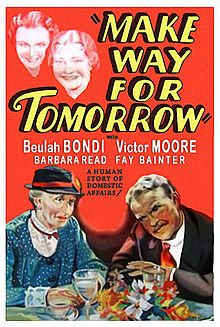
Make-way-for-tomorrow-1937It seems like Leo McCarey and this film for that matter often get lost in the shuffle. In his day he was a highly successful and well thought of director of such classics as The Awful Truth and Going My Way. However, his moving drama Make Way For Tomorrow is now often overshadowed by a similar film that used it as inspiration, Ozu’s Tokyo Story (1953).

I will not pass judgment on which film I like more. In fact, to even begin to make a decision I would have to go back to both. However, this film opens by restating the 5th commandment. Honor thy father and thy mother. After all, this film is certainly about the gap between generations, parents with children, grandparents with grandchildren, but at its core is this main concern. Honor thy father and thy mother.

The film opens in the home of Barkley (Victor Moore) and Lucy Cooper (Beulah Bondi). 4 of their 5 grown children are gathered together on the request of their parents who have something to tell them. Because their father has not been able to work, the bank is taking their house and so they will be displaced. Thus, the story is set up as the kids worry about what to do, because no one feels capable of taking both parents. Finally, it is decided that eldest son George (Thomas Mitchell) will take Mother, and one of the sisters will take father.

It is difficult for everyone. The old folks are split up for one of the first times in their 50 years of marriage. Meanwhile, grandma disrupts bridge lessons, makes life more of a nuisance on George’s daughter, and forces the maid to take on more hours. It does not make anyone angry at first, but it begins rubbing and chafing. Creating bitterness and annoyance which is arguably worse. Things reach the breaking point when George’s peeved wife finds out that her daughter is rendezvousing with men, and she is not happy at all when grandma confesses to knowing about it. She loses her temper and grandma apologizes. Seeing a letter from a retirement home she quietly decides it would be better for all if she simply moves there.

Her husband does not fare much better, and the harsh New York weather is taking a toll on his health. Furthermore, his daughter is obviously getting tired of him as her patience continues to wear thin. Mr. Cooper does make a friend in a kindly old shop owner (Maurice Moscovitch), but he soon is turned off as well. Finally, his daughter decides to send their father out of California. She says it’s for his health, but the real reason is she wants him off their hands so her other sister can deal with him.

With this new turn of events, Barkley and Lucy have one last meeting set up so they can spend time together before he is sent off to California. This is the most touching part of the entire film because underlying this oasis is the doubt that they might not see each other again. In the wake of that proposition, they have sort of a second honeymoon. They ditch the kids and have a magical evening just the two of them, reliving their youth and remembering the olden days. The miracle of this sequence is that everyone seems to finally understand them, appreciate them, and really honor them. They are offered a ride in an automobile and are met by the hotel manager who offers them drinks and listens to their wonderful stories of times past. Even the conductor plays a slow waltz just for the two of them. It’s a beautiful extended moment that is made especially moving in contrast to the earlier scenes. These are two people who, despite their advanced years, are still very much in love. It speaks to the importance that marriage holds in the life of some people. In certain circumstances, it is not a shallow event, but a lifelong friendship that carries so much weight.

When the time comes, the two lovebirds say goodbye at the train station and we don’t know what happens to them. We can guess certainly, but McCarey leaves a sweeter taste in our mouths before finishing with a realistic ending. It’s beautiful, moving, and tearful, but not in an overdramatic sort of way. In the mundane, sorrowful way that seems to reflect the rhythms of real life. Beulah Bondi was featured in some many great films, but I’m convinced that this was her greatest performance as an individual. Victor Moore was a worthy companion for her as well. However, my favorite character was probably the shopkeeper Max, because he was such a personable man in a sea of grumbling and annoyance.

5/5 Stars

My Favorite Wife (1940)

My_Favorite_Wife_posterThis is a film that I arrived at by a rather roundabout route indeed. Let me explain. I genuinely loved Cary Grant and Irene Dunne’s chemistry in The Awful Truth, but I wanted to watch My Favorite Wife before moving onto their final film together Penny Serenade. Time passed and I found two other films.

First, Something’s Got to Give which was Marilyn Monroe‘s final project that remained unfinished after her death. Only about 30 minutes were completed and it was scrapped, only to be reincarnated a year later as a Doris Day vehicle co-starring James Garner. Being a fan of Day and especially of the late-great Garner, I had to indulge in this romantic comedy Move Over, Darling.

All that is to say that the Monroe film and ultimately the Doris Day film were both based on this same basic plot. A man just recently gets married only to learn that his wife who has been missing for seven years is alive. He must figure out how to break it to his new wife, only to learn that she was shipwrecked on a tropical island with a strapping young man.

After three renditions it certainly feels over-trod, but the beauty of each adaptation is that they only have this basic framework intact. A lot of the really juicy bits are filled out by the cast. Of course, your stars change. Because James Garner is no Dean Martin is no Cary Grant. And the same goes for Monroe, Day, and Dunne. However, the same goes for the crotchety judge, the desk clerk at the hotel, the bookish shoe salesman who takes part in a deception, or even the friendly neighborhood insurance salesman.

It becomes a fun game of compare and contrast, but these different performances also free you up to watch these films on their own merit and enjoy that three times over. I have found myself to often be a proponent of characters over plot and this is another case of that.

Grant and Dunne are a lot of fun together once more even if I have seen these predicaments before because Day and Garner are great to watch, but for different reasons. And of course, all the locales and fashion trends changed a lot in two decades.

Also, I will not pass judgment on who my favorite wife was out of the three and, truth be told, I saw them out of order — I would usually pick the original. In this rendition, the judge played by Granville Bates was a real scene stealer so I was sorry to discover he passed away the same year and had very few other roles.

My only question is, would this film have been propelled to greater status if Leo McCarey had been able to direct it? Also, I am now excited I finally feel clear to watch Penny Serenade and I might just have to go back and revisit The Awful Truth because it has been a while.

3.5/5 Stars