While the City Sleeps (1956)

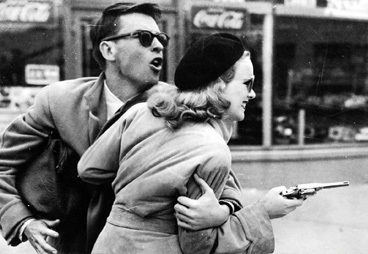
whilethecity1While the City Sleeps has a brilliant cold open followed by a pounding title sequence, courtesy of Fritz Lang, that brings to mind a bit of Diabolique and Psycho. The rest of the film turns into a case to find the wanted lipstick murderer (based on a real killer), but that only holds part of our attention.

When newspaper magnate Mr. Kyne dies suddenly, his begrudging son Walter (Vincent Price) takes over intent on shaking up the status quo and putting his mark on the company. He soon turns three men against each other as they desperately fight for the new position of executive director. The first is veteran newspaper editor John Day Griffith (played by the always memorable character actor Thomas Mitchell). The second candidate is chief of the wire service Mark Loving (George Sanders) who is Griffith’s main competitor. Finally, in the third spot is Harry Kritzer who happens to have a secret ace in the hole. Each of them is tasked with finding out the real scoop about the serial killer, and it turns into a real tooth and claw ordeal. Within the glass cubicles, everything can be seen, but not everything is heard and that’s where the secrets get disclosed.

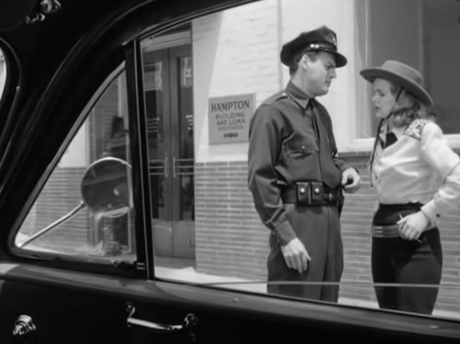
On the outside looking in, so to speak, is star TV reporter Edward Mobley (Dana Andrew), who agrees to help his friend Griffith by doing a little digging around about the murderer. He gets some tips from a cop friend Lt. Kaufmann (Howard Duff), and Mobley tries to smoke the killer out on air. However, it leads to the potential endangerment of his fiancée Nancy, who also happens to be Loving’s secretary. Loving has his love directed towards a female reporter named Mildred Donner (Ida Lupino), who attempts to needle Mobley for info. At the same time, the killer is on the move once more, with Nancy being an obvious target. Mr. Kritzer’s own romantic entanglements get him in trouble because he is seeing Kyne’s beautiful but detached wife Dorothy (Rhonda Fleming). Mildred finds out about them and they have some talking to do. Mobley also has some making up to do with Nancy after she finds out Mildred came to see him. It’s a big mess.
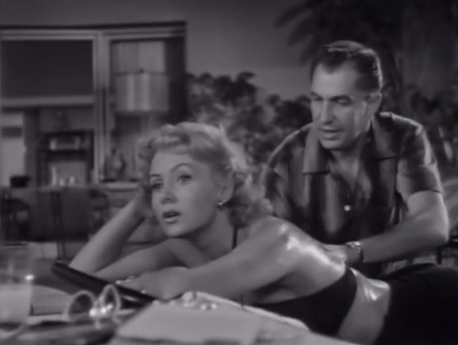
whilethecity3Mobley juggles everything from his love life to the big scoop and they apprehend the killer, but things at Kyne’s don’t wind up exactly the way they expected. Mobley looks to move on from the paper with Nancy, but even he cannot get away that easily.

While the City Sleeps is an underrated tale from Lang that is positively stacked with big names. Its pacing can be deliberate at times, but it is just as much an indictment of journalism as it is a thriller. The office is a web of deception with so many interconnections between these work factions. Those you would normally expect to be scrupulous seem to give up their honor in the face of this new promotion. In a sense, Mobley seems to be outside of this fray and yet he cannot help but get involved in it. It doesn’t help that nothing turns out the way it’s supposed to. Everybody seems to gain something, but nobody really wins the game.

I must say it was great to see Dana Andrews in one of these leading roles again and although their roles were smaller, Ida Lupino and George Sanders still were a deliciously stuffy and corrupt pair. I was never really a fan of Vincent Price due to the roles he normally plays, but I was inclined to like Howard Duff (Lupino’s real-life husband) in his turn as the policemen. It goes without saying that Rhonda Fleming is positively beautiful, but she also cannot be trusted. I guess that applies to about every character in this film. It’s certainly a cynical world out there that Lang paints, where the killer might be caught, but corruption is never fully quelled.

4/5 Stars
Review: The Big Heat (1953)

bigheat2The Big Heat is not a noir where the darkness comes from the shadowy visuals, but from within its characters themselves. In fact, some of these individuals are so subtle in their corruption that it easily gets overshadowed. Homicide cop Dave Bannion is, rather ironically, the straight-arrow trying to do what is right, and he becomes the most vengeful character in Fritz Lang’s film. It’s a subversion of the typical noir arc because his greatest help ultimately comes from the former femme fatale. That’s not how it’s supposed to happen, but then again a lot of things happen a little differently in The Big Heat.

The film opens and within a second a man has shot himself and left a confession on his desk. The cues tell us that he’s a cop and he’s just committed suicide. His wife comes downstairs strangely composed and shuffles through the pages he has written. She goes to the phone, not to call the police, but she talks to a third party. We quickly forget what’s she’s done, but the fact is Mrs. Duncan represents the corruption that reigns supreme in this film. She’s used a juicy piece of blackmail to receive large payoffs from someone and she’s not the only sellout.

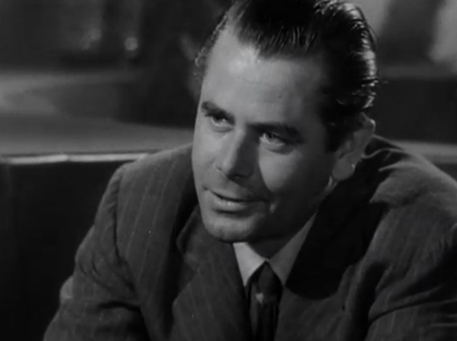
Bannion (Glenn Ford) is a cop by day and a family man at night with a loving wife and a beautiful little girl. By convention, he is supposed to be the moral compass of this film — the emblem of good conquering evil. He takes on the straightforward case of Officer Duncan’s death, but it gets convoluted when a B-girl named Lucy Chapman calls him up to say she knew the deceased, and he would never kill himself. Initially, Bannion takes little heed of this girl, because she is hardly as respectable as Mrs. Duncan, or so society says.

He gets pressure from his superior Wilks to lay off, but Bannion is discontent with loose ends, especially when he receives news that the Chapman girl has been brutally murdered. This can’t all be all coincidence, and he begins sniffing out the truth like a bloodhound. Bannion leads us into the home of this empire of crime literally. He confronts local businessman/crime boss Mike Laganna, who he accuses of involvement in the corruption. Things are beginning to heat up, and they start to infiltrate the sanctity of his home life. The dark recesses of the noir world can never be subdued, and Bannion dives deeper into the labyrinth that is created by his own obsessive vendetta. He has no tolerance for his colleagues who don’t take a stand, in favor of their pensions. He can’t stand tight-lipped locals who give him no help and most of all he hates Laganna’s guts.

bigheat3At the local shady nightclub “The Retreat,” Bannion has his first run-in with the hired thug Vince Stone (Lee Marvin). Afterward Vince’s girl Debby is genuinely impressed by Bannion’s methods, but he will not give her the time of day. He expects her to be the same superficially ditsy dame that we have all seen before. Hardly a femme fatale, but still there is the potential to be deadly. The one character who seems to conform to the stereotype is Stone, and yet he is even more brutal than most, burning girls with cigarette butts and splashing scalding coffee on Debby’s face.

Bannion gets to one of the other hired guns named Larry and both Stone and Laganna decide that something must be done to stop Bannion in his tracks. The obvious target is his little girl, but this time the family life prevails over the noir world. His family and colleagues rally around him and yet Bannion is not done with his obsession.

In fact, it is Debby who actually finishes off Bannion’s work by paying a visit to Mrs. Chapman and then Vince. Bannion arrives soon after to reprimand Vince, but Debby has already done the dirty work. The nightmare is over and everything that is good and right comes to the forefront. Debby proves her allegiance, the criminals are put away, and Bannion gets a new position with the homicide department. But underlying this seemingly happy ending is still a sense of tension. The film ends as Bannion heads out on a new homicide case with the cycle continuing and it seems like he will never be free of it.

The world will continue ripping away the ones he loves. Before he knows it, he will be left with only his personal vengeance to drive his future. Bannion very easily could cross the line between righteousness and corruption. He already almost strangled two characters and was not opposed to slugging it out with others. It’s only a matter of time before he totally blows his cool and collected exterior. It’s a dark assumption, but then again that is a lot of what film-noir is. Fritz Lang seems to get this and that’s what makes his characters here so powerful because he knows that the root of all evil can be in everyone.

4.5/5 Stars

Review: Gun Crazy (1950)

guncrazy2

Bart has an intense obsession with guns. It’s what his life revolves around. It’s the only thing he wants to do as a boy and the only things he seems to think about. It becomes a problem when he breaks a store window, but during the following hearing, his sister and friends vouch for his character. He would never take a human life or kill. That’s not in his nature.

No matter, it is decided Bart should be sent off to a special preparatory school, and he only returns years later as a grown man recently off a stint in the army.  He’s back in his hometown not quite sure what his future plans will be, but his buddies are glad to see him. They shoot some, drink a few beers, and decide to take a jaunt to the carnival for a night of fun.

Their Bart meets the girls of his dreams. There’s a quality to John Dall that makes Bart into a pure victim of his circumstances. He’s quickly infatuated with the gun slinging and sensuous Peggy, who seems to share his one love. A goofy smile is plastered on his face as he faces off against her in an act of skill. He makes her uneasy and ultimately beats her. 

He gets a job with the carnival and spends as much time as he can with her when he’s not shooting guns. They are fed up with their boss and leave the migrant life behind. Marriage is on their radar, and they live it up with the money they have. But Peggy wants more and she wants to keep living the high life. 

She wants to rob a gas station. It’s one little idea that soon blows way out of proportion. They are holding up banks, gas stations, and any place with money that they can lay their hands on. The pair is fugitives with exploits plastered all over the front pages and roadblocks waiting to stop them up. All the while Bart makes Peggy promise not to shoot anything because he still is totally opposed to killing people. 

It seems like things might end peaceably, except once again the gun-toting lovers are nearly flat broke so Peggy coaxes Bart into one last job to end all jobs. For the first time, despite their planning, just enough goes wrong to nearly botch their mission. Bart drives off and Peggy shoots a guard. He’s not the only one. 

 guncrazy1When Bart finds out, after the fact, he realizes they have just stepped up a level with murder stuck on them. The game is winding down and the only place Bart can turn is his hometown where his sister is. For good reason, she cannot stand Bart or Peggy who she sees as poisoning her brother. And it’s true. Bart seems different now, so paralyzed by fear that he even pulls a gun on his old friends.

The last ditch effort of Bart and Peggy is to literally head for the hills. The dragnet is sent out and the hounds are let loose. They hardly have a chance before dropping from exhaustion in a swamp. They’re trapped and a crazed Peggy looks to shoot it out to the death. But for once Bart breaks with her remembering his friends. It doesn’t help him much.

Gun Crazy is a B-film and yet it is easy to forget because the way Joseph H. Lewis constructed this film is so impressive in its economy. One scene that reflects this so beautifully is the long take from the back seat of the car. The camera does not change positioning and so we see a bank job from the outside, and it only helps to build up greater tension.

 We also have enough time to care about certain characters. We have enough time to see Peggy is really no good. Yet with her keen marksmanship, she is a different shade of femme-fatale who is still as deadly as any of her contemporaries. Along with They Live by Night (1948), this is one of the archetypal Bonnie and Clyde-esque films. Thank goodness this film’s title was changed from Deadly is the Female to the more apt Gun Crazy. That it is. 

4/5 Stars

The Spiral Staircase (1945)

spiral5The Spiral Staircase plays out like an Agatha Christie murder mystery with a moody, old mansion acting as the backdrop and numerous individuals filling out the cast. It seems to be some type of gothic-noir hybrid, with its ghostly interiors, torrential thunderstorms, and creaky shutters. However, with director Robert Siodmak at the helm, I am inclined to call it noir, not just because of his pedigree, but it certainly has the atmosphere and dim interiors that are expected of the genre.

The action opens at a movie hall after a woman is murdered by an unseen killer. But most of the actual drama takes place in the before mentioned mansion of the sickly Mrs. Warren (Ethel Barrymore). She resides with her son Steven and step-son Professor Albert Warren (George Brent) who never see eye to eye. Nearly on her deathbed, Mrs. Warren distrusts her nurse and only allows the mute girl Helen (Dorothy McGuire) to even help her. The rest of the cast is rounded out by servants, a secretary named Blanche (Rhonda Fleming) who Steven loves, and the constable and a young doctor who cares about Helen. It’s a wide array of figures and we quickly begin to analyze them for any hint of killer tendencies.

spiral3In fact, Helen is our main character and we experience much of the film from her perspective. The truth of the matter is that all the girls who were killed had some sort of defect, so the line of reasoning is that Helen might be next in line. It seems all too possible with a pair of mysterious eyes constantly watching from the shadows, but Helen does not heed Mrs. Warren’s advice to flee.

The film ultimately spirals into darkness as the killer takes one victim and looks for another. Helen must protect herself, while also confronting her past where the source of her muteness lies. Although simple in conception, The Spiral Staircase is no less an engaging mystery. It is not the best from Siodmak either, but Dorothy McGuire gives an expressive performance that deliverers so much heart and feeling without the use of words.

However, the film does ultimately allow her to find her inner voice in the midst of all the silence. She finally conquers the fear in the moment when it is most harrowing. Although her role is rather minor, Rhonda Fleming is as strikingly beautiful as ever. It’s a rather expected resolution, but there are enough quirks and twists to makes things enjoyable to the end. It goes without saying that gothic noir most definitely should be a thing if it isn’t already.

4/5 Stars

Late Spring (1949)

latespring1Late Spring is a film that I found in some ways more rewarding than Tokyo Story, another acclaimed classic from Yasujiro Ozu. Both films share a few of his trademarks. They are home dramas with basic, everyday plots, termed Shomin-geki. Also exhibited are a stationary camera and low camera angles that Ozu often used to focus on his characters while sitting. In this way, he invented the quintessentially Japanese viewpoint known as the “tatami shot.” We see it most certainly in Late Spring as the daughter Noriko interacts with her widowed father or when they have friends over in their home. It may look somewhat similar to Tokyo Story, but it does differ in subject matter.

Late Spring is a film about fathers and daughters. Marriage and divorce. All the things that make up a life that remain the same whether you’re in modern America or post-war Japan. Noriko is a pretty young woman who is devoted to her aging father through thick and thin. He likes having her around and she likes being there for him.

It’s the culture, namely aunts and friends, who tell Norkio that she must get married. She’s 27 years old, and she needs to find a husband before it’s too late. Her father won’t be around forever. She’ll need to make a new life for herself. But Noriko is content with not listening to the voices trying to sway her. Only when her father talks to her about marriage does she finally begin to listen. He makes conversation about getting remarried and encourages her to think about an arranged marriage that her aunt has waiting for her.

We never meet this man who supposedly looks like Gary Cooper, but Noriko seems to genuinely like him. And yet there still is something that isn’t quite right. In Japan there is great importance in “reading the air,” and it seems like some of the characters in Ozu’s film fail at this or they see only what they want to see.

latespring3In the end, Noriko gets married and it should be no surprise because it was what was ultimately expected of her. Her father, on the other hand, acknowledges to a friend that he had no intention of getting remarried, it was only to prompt Noriko. Professor Somiya took on a great sacrifice in the eyes of society and goes home alone.

This is a bittersweet tale that is surprisingly funny on many occasions, but it is also topped off with human tragedy. Not death or dying, but something potentially worse in loneliness and discontentment. It is only a thought, but it seems like Noriko and her father would have both been happy with the status quo. However, their sensibilities and society said otherwise, so they acted as they were expected to. From this simple drama comes one of the most powerful films on father-daughter relationships ever.

I must admit, at first, I really was not fond of Chishu Ryu’s character, but over the course of the story, he grew on me. As for Setsuko Hara, she is an amazing example of kindness and servility, but also the undisputed muse of Yasujiro Ozu.  Late Spring also plays off the conflict between the old and new not to mention the traditional Japan and western culture. It’s not a blatant presence, but the allusion to Coca-Cola and Gary Cooper reminds us that this is a post-war Japan still recuperating from an awful war. That’s the backdrop of this film and its part of what makes Ozu’s human drama all the more striking. Despite, where it is situated in the historical context, Late Spring is a timeless film giving calculated insight into human relationships.

4.5/5 Stars

Inside Out (2015)

Inside_Out_(2015_film)_posterIn a generation often bloated with unoriginal ideas, Pixar has been one of the most prominent fountains of creative inspiration. Pete Docter has always been a master class storyteller (“Monster’s Inc.” and “UP”), but “Inside Out” finds him at perhaps his most innovative yet if you can believe it. Not everyone would be audacious enough to make their latest animated film on the inner workings of the human psyche. A film following a girl and her emotions could easily be insensitive or some downer emo tale at best.

However, Inside Out ends up being a wonderful and heartfelt film that comments on a difficult time in life without making the parents flat out buffoons or the children complete jerks. It finds a great deal of its substance in the personified emotions, positive and negative, that course through a young 11-year-old girl on a daily basis. Joy, Sadness, Fear, Anger, and most certainly Disgust.

From the get go it looked to be a veritable field day for stars like Amy Poehler, Mindy Kalig, Bill Hader, Lewis Black, and Phyllis Smith. In other words, the casting was impeccable and everyone delivers the goods.

As Pixar so often does, the characters are wonderful and the writing develops a tirelessly inventive world full of creative entities for the main players to bounce off of. Our two main settings are essentially San Francisco and the mind, and both come off pretty well, although by default the mind becomes the visual playground of abstraction that lends itself to the most mirthful moments as well as touching enlightenment. San Francisco is the city that ruined pizza. That’s pretty bad.

Above all, I think Inside Out makes a powerful suggestion to its audience. Going in we have a certain set of presuppositions. We live in a society that says joy is good. Sadness is bad. Among other things. However, this film dares to point out that all emotions have their places. All of them are meaningful and there is a season for each. Because as it turns out, without Sadness, you really would not be able to know what true Joy feels like. And that is a beautiful thing. Overall, this is not the best of Pixar, but it is a wholly memorable outing, especially when we are allowed to get inside the heads of each character. That’s when the story is at its creative best. Those jingles in commercials are really annoying too. They really struck a chord with that.

4.5/5 Stars

Donkey Skin (1970)

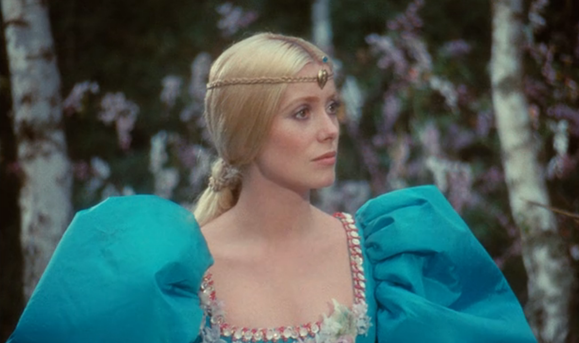
donkeyskin1Donkey Skin takes the unique world of Jacques Demy and steps it up a couple of notches. The story is based off a fairy tale and brims with all the necessary trappings accented by the French director’s own flourishes.

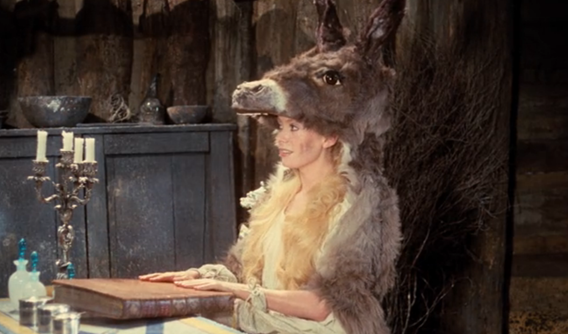
Once again the music is supplied by Michel Legrand and the songs are a mix of playfully fun and sometimes solemn songs that help dictate the path the story takes. As far as the tale itself goes, it revolves around a beautiful princess who sends herself into a forced exile wearing a donkey skin. It all sounds rather odd, but she is given the idea from her fairy godmother, in order to keep her father from marrying the princess.

The world is a fanciful array of gaudy fake interiors, blue people, red horses, a treasure-dropping donkey, oddly-masked creatures, a talking parrot, princesses, princes, and some rather alarming potential incest. This is no Disney endeavor by any means and its bright colors often call to mind Hippy culture.

donkeyskin2Into this land, the princess flees covered in her donkey skin and takes on the lowly role of a scullery maid where she is belittled and looked down upon. However, a glum young prince happens upon her in all her beauty and wants nothing more than to marry her. In fact, he plays sick just so he can be with his gorgeous vision. Instead of Cinderella’s slipper, this story deals with a ring which is only to fit the finger of his true love. A whole to do is made out of it with people coming from far and wide. However, the prince already knows who he wishes to wear it, after all, it came in a cake that Donkey Skin baked for him.

In the end, this fairy tale receives the happy denouement that is expected with plenty of riches and love for all. The film used simple but nonetheless mesmerizing special effects that add a touch of magic to this tale. It also gets bookended by some obligatory narration concluding an enchanting fairy story fit for children, mothers, grandmas and anyone else who is willing to partake. Although not as memorable as his earlier musicals, it seems that Donkey Skin sees Jacques Demy at his fully realized creative powers in a way that is uniquely his and fits with many of the trademarks he developed earlier. Furthermore, Catherine Deneuve proved that she is beautiful even wearing a donkey skin hoodie. It’s hard to say no to a movie with her in it, no matter the topic.

3.5/5 Stars

Bay of Angels (1963)

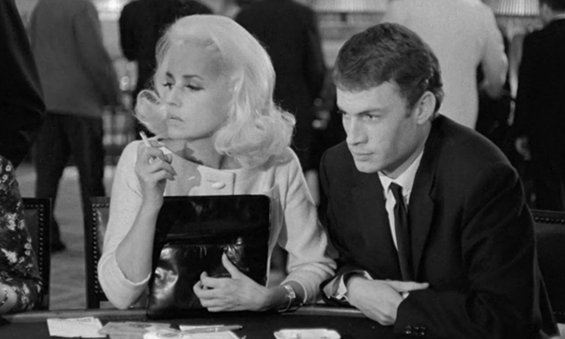
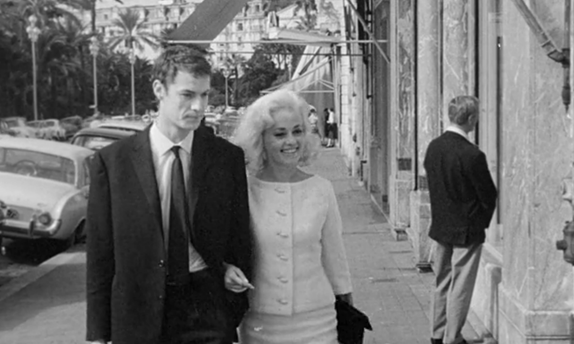
bayof3Bay of Angels is quite different than anything else I have seen by Jacques Demy. Similar to Lola (1961) it is shot in starkly beautiful black and white and it has a kind of love story, but it lacks the music or general whimsy that often characterized Demy’s later works.

This film finds its subject matter in gambling, and it follows one woman’s obsession and another man’s growing interest in roulette. At first, Jean is a rather bored young bank employee, who is coaxed by a colleague to take up gambling.

bayof2

Initially, he is skeptical, looking down at the pastime as a frivolous waste of time and money, after all, he is a sensible young man. However, he parts with the sensibilities that his father would have for him and instead take a few weeks of vacation to spend some time in the casinos of Nice and Monte Carlo.

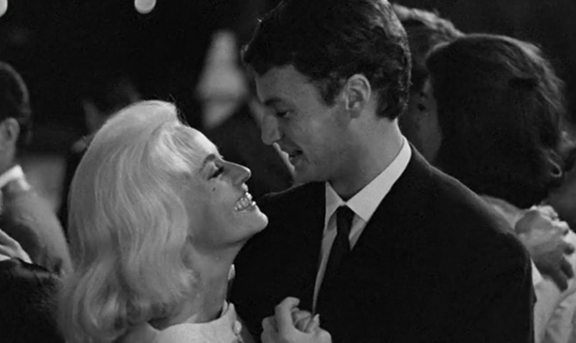
Soon he gets bitten by the gambling bug and he’s hooked. He finds an equally enthused companion in Jackie (Jeanne Moreau), who has had a far longer history with roulette. Jean falls for her very quickly and Jackie holds onto him like her good luck charm. Their many days spent in the casinos are constantly fluctuating roller coasters of luck. Once gambler’s fallacy has taken hold it’s hard to kick the habit, and Jackie constantly blows her money. If not at the wheels, it gets spent on fine dining and clothes. She has no restraint when it comes to spending and Jean indulges her willfully. It gets so bad that Jean begins to get as reckless as his companion, and he cannot bear to leave her, although she really does have a problem.

bayof4The formally reserved persona of Jean becomes violent and passionate for Jackie’s affection, but she’s not quite as ready to give it out. The ending felt a bit forced, but yet again Demy delivers a story that is riddled with feelings of love and passion.

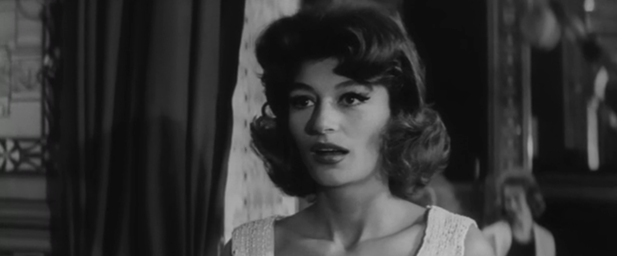
It is an interesting observation that his male characters pale in comparison with his female leads ranging from Anouk Aimee, Jeanne Moreau, and Catherine Deneuve. These ladies who are always the object of affection, steal the screen with their mesmerizing performances. In fact, Claude Mann has a rather slumping posture, a glum face, and not particularly good looks. Thus, in contrast, Jeanne Moreau looks like an especially alluring beauty, who seems at home in gaudy gambling houses billowing with smoke or seaside promenades.

Bay of Angels is supposedly the place that brings the pair luck, but the reality is that this film is all about chance. Not fate so much as Demy usually explores, but a topic that is still somewhat similar. It is also a film that makes me never want to play roulette. I do not want the mundane lifestyle of Jean, but I would like to find my excitement somewhere else. I suppose that’s what made Moreau’s character so fascinating because her obsession was so great and yet she simply accepted it and thought little of it. But it drove her life.

We’re partners in a game. Let’s leave it at that.” ~ Jackie

4/5 Stars

Lola (1961)

Lola1961As the debut of Jacques Demy, Lola has some qualities that, for lack of a better term, are very un-Demy. First off, he was a member of the French New Wave period of filmmakers and yet he resigned himself to making mostly musicals, taking inspiration from Hollywood and setting them in his own unique world. He was not concerned with the experimenting or political undertones of many of his peers. However, this is probably the most typical looking of his work and thus a jumping off point for the rest of his career.

Not quite as elegant in camera movements as Max Ophul’s work which received a nod, Lola still has a pleasing sleek visual style representative of the French New Wave. Its silky smooth, black and white cinematography courtesy of Raoul Coutard (Breathless), however, makes the film look more like something from Godard.

Lola is what Demy himself coined “a musical without music,” I suppose because it lacks the signature singing of his later films, but keeps the music and some of the other elements. Demy’s film also has a sense of cinematic realism with characters crossing paths with one another in various coincidental moments. It may be highly unbelievable in its plotting and yet it works within the Demy world of romance and fatalism which he would often revisit later on.

lola3This film follows a cabaret singer named Lola (Anouk Aimee) in a small seaside village called Nantes. She has a young son and a lover who she has long waited for. In the meantime, childhood friend Roland Cassard (Marc Michel) trudges on with his life without much drive. He is a befriended by a lady and her daughter Cecile at the local bookstore where they strike up a quick friendship. Then, by chance Cassard runs into to Lola, or Cecile as he used to know her when they were children. It’s been many years and although she has been getting together with an American sailor (Alan Scott) named Frankie, she is excited to go out for an evening with Roland. However, in another interesting meeting young Cecile runs into Frankie while buying a comic book and they have some fun together.

lola6In the end, Lola tells Roland that she will never truly love him and they must remain friends. It’s a bitter time for Roland as he decides to leave like he was originally planning. Finally, Michel returns and Lola is reunited with her love. It’s another bittersweet tale of love from the mind of Jacques Demy. Whimsical, poignant, and wistful too. That’s not the last we will see of Roland, though his luck doesn’t get much better (Umbrellas of Cherbourg), and  Lola returns too (Model Shop). Now only to go back and watch The Blue Angel (1930) from von Sternberg and Lola (1981) by Fassbinder which both bookend this work by Demy also chronicling a cabaret singer. There’s a lot of history here still to be seen and Jacques Demy is a worthy addition to the lineage even if this is not his best film.

4/5 Stars

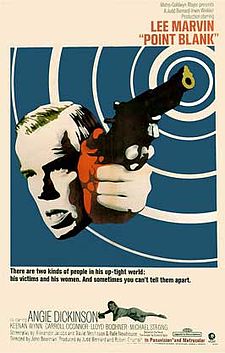
Point Blank (1967)

225px-PointBlankPosterJohn Boorman and Lee Marvin came together as equal parts in this venture called Point Blank and it’s quite something. You can call it neo-noir, you can call it a revenge story, a crime film, but nothing quite sums up what you end up with.

It’s a brutal, stark, psychedelic trip at times that never falters to any level of convention that we are used to. You have the clip clop of shoes on the concrete. Solemn, self-assured, repeating and ultimately deadly. There’s a man named Walker (Lee Marvin) on a seething rampage. He personally totals a car with the victim inside scared out of his wits. He’s shooting up victims all across kingdom come. Watching, waiting, then acting.

Point Blank is full of repetitive, reverberating sounds and images. Time too is repeating and evolving; fractured shards of the past followed by the present. It does not always line up or add up. Walker’s past is being fed to us through his own memories.

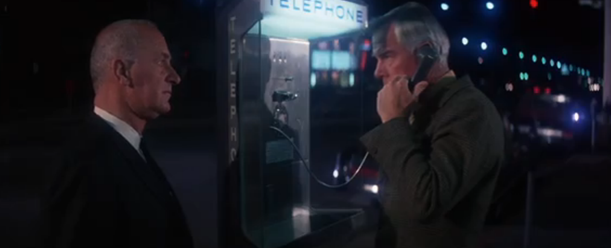
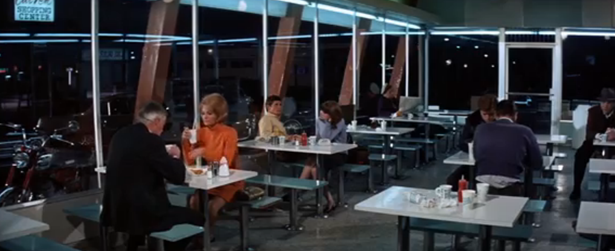
We get to pick up the pieces as he pushes forward on his vendetta. His wife is dead and he is after a man named Mal Reese, who double-crossed him, stole some of his money, and his girl. But the hunt doesn’t end with Reese. That would make too much sense and it would be too easy. Walker keeps going. Keeps hunting until it leads him to the next man and then the next. He gets together with the older sister (Angie Dickinson) of his wife Lynne (Sharon Acker). She is the repetition of Lynne who is now dead, just as each one of these targets is the new Reese.pointblank2There’s a point where we must beg the question? What does Walker even want now if all he gets is $93,000? What is going on in this world? Why does it tick in such a way, because to be honest, it doesn’t always add up? Is the Alcatraz we see and then the L.A. landscape true reality or is this a dream that Walker has created so he can act out his revenge? After all, he was shot, right? It might be a long shot, but the plan of Walker in itself is a long shot. He just continues pushing on and the hunt leads him back where he was in a perfect circle.

Now what? Reese is gone. Lynne is gone. Every single middleman is gone. He has a load of money laying out at Alcatraz for him and perhaps Chris is stilling waiting for him. We don’t know. That’s where Point Blank finds its conclusion and it’s just as vague as where we jumped in.pointblank3It’s understandable that it has gained a cult status over the years since Lee Marvin is an uber-cool gunman and his journey is hard to figure. His world is a bleak cityscape of 1960s L.A. and S.F. We can never hope to fully understand him or this world either and that’s the beauty of Point Blank. There is a degree of ambiguity that is fascinating. Heck, we don’t even know this man’s first name and yet we invest time in his story. I want to see Point Blink again because it’s not just your typical shoot ’em up action film. It makes you think and it has such a cool aurora and style. It deserves another viewing at some point soon.

4/5 Stars