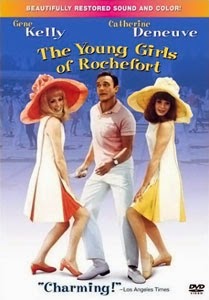
The Young Girls of Rochefort (1967)

Directed by Jacques Demy and starring an ensemble cast including Catherine Deneuve, Francois Doreleac, Gene Kelly, Michel Piccoli, George Chakiris, Grover Paul, and Danielle Darrieux, this is a whimsical French musical.

The film opens with a group of performers coming into the town of Rochefort to get ready for a big outdoor show. They become acquainted with the local hangout that includes a kindly matron and many locals including an idealistic artist and sailor, who is searching for his ideal lover.

Nearby her two adult twin daughters hold piano and ballet lessons as they two get their little prodigies ready for the big show.  Delphine is fed up with her suitor and desires a new love while Solange on her part hopes to advance her career as a pianist. She goes to the proprietor of a local music store to see if he can introduce her to a prestigious American friend.

The dramatic irony sets in, and the plot is constantly moved forward through song. Yvonne at the café is still depressed over a split with a lover 10 years prior because he had an unfortunate name. Solange has a chance encounter while stopping to pick up her kid brother Booboo, and Delphine becomes curious about an artist, who painted a portrait that looks strikingly like her. All of these events reach their apex on the Sunday of the big performance and in need of some performers, the Carnies enlist the help of the twins. They are a huge success and things wind down.

The next morning the performers get ready to leave for Paris, and the girls decide to follow suit. However, Solange has another encounter that changes her plans, and then Yvonne is reunited with her love. That leaves only Delphine to go with the boys to Paris, but not to worry. She would be united with her love soon enough.

The singing is an integral part of this film, and sometimes there seems to be so much that it gets tiresome. However, the light and very French-sounding tunes are hard not to like. Demy pays homage to the Hollywood musicals of old going so far as casting Gene Kelly in his film. The film takes place in a real location, but it truly is a fantasy world that the characters inhabit, full of perpetual dancing and most of the talking comes out in song. The real-life sisters do a wonderful job in this film, and most of the characters are pleasant in this comedic musical of renewed and new found love.

4.5/5 Stars
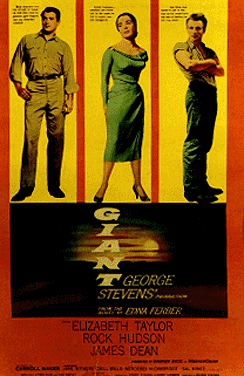
Giant (1956)

This is an epic film that stars Elizabeth Taylor, Rock Hudson, and James Dean, with direction by George Stevens. It shows the ongoing conflict between a rancher (Hudson) and his former hired hand who becomes rich off oil (Dean). As Jett Rink (Dean) exclaims, he becomes even richer than the rancher Bic Benedict (Hudson) ever dreamed. The relationship escalates when Rink makes a rude remark to Leslie Benedict (Taylor), and some punches are traded. From this point on the three main characters slowly grow older and the Benedicts have children. In his final screen appearance, Dean’s character is suppose to give a speech at a large banquet. However he is so drunk he falls flat on his face a complete wreck. Giant was ahead of his time by giving commentary about the race relations with Mexicans. It also took young actors and progressively made them look older, something that was quite unusual. Although this was Dean’s final movie I think it can be said he came full circle. He began as a youth in East of Eden and by the end of Giant he was a old man.

4.5/5 Stars

Shane (1953)

10788-shaneposterThere is often something special about westerns, and Shane is no different. Directed by George Stevens and starring Alan Ladd, Van Heflin, Jean Arthur, and other great character actors, Shane is simple yet charming. It has many of the qualities of a great movie, because of what it shows of mankind. Furthermore, it simply makes you feel good.

In the film Shane (Ladd) is a wandering ex-gunslinger, who decides to live with a frontier family as a hired hand. His presence makes everyone happy because he is quiet, humble, and fundamentally so good. However, there is trouble from a man named Riker and his gang. Heflin’s character is adamant he must face the foe and defend his home. Shane will not allow it knowing this is a job for him. The two friends fight it out with Shane winning and riding into town. In the end, he wins the shootout but more importantly he is reconciled with the family’s boy Joey. The time has come for him to move on and Shane rides off into the distance, a humble hero.

The first thing that always strikes me about this film is the brilliant scenery around Jackson Hole, Wyoming with the Tetons looming majestically behind a solitary cabin. In some sense, this is not just a western, but the archetypal story of a family taming the land.

The very next thing of importance is the eponymous and unassuming drifter Shane. He always seems so kind and good, but early on there are glimpses of another, perhaps darker past. And yet from the point of view of Joey, he is an idolized, almost mythological figure. What is so striking about Shane is that he is obviously handy with a gun and an excellent fighter, but he never flaunts it. Perhaps it is because he wishes to rely on it as his last possible resort, or maybe it is because he is just a humble man.

As an audience, much like Joey, we want him to fight back, and we are happy when he finally does. During the course of the film, Grafton’s mercantile and saloon is often the place of conflict, and here multiple times Shane ultimately uses violence. It is his fallback, but he uses it effectively even against his own friends if he sees fit. Then Shane drifts on and the cycle undoubtedly continues again.

Yes, he certainly could be called a hero, with no last name to speak of, but he is a man, who will always be on the move. This may not be because he wants to, but because he really has no other option. Shane foresaw what we did not want to see, and now he cannot come back even if he wants to, so he rides on. This is the middle of George Steven’s so-called “American Trilogy” and probably the hallmark of his illustrious career.

5/5 Stars

A Place in the Sun (1951)

In this film starring Montgomery Clift, Elizabeth Taylor, and Shelley Winters, with George Stevens directing, a young man (Clift) tries to rise up in his uncle’s company. He is poorly-educated yet ambitious and he slowly moves up in the Eastman business. While he works George begins to fall for a modest girl (Winters) who also works in the assembly. They slowly begin to show romantic feelings for each other because they face the same hardships. With a new found postition George begins to interact with people of higher social status. Although he feels out of place there, he meets the beautiful and rich Angela (Taylor) who he begins to fall in love with. As he begins to get more involved with Angela, he learns that his former love interest is pregnant and therefore wishes to marry him. Faced with a dilemma, George makes a decision that will ruin him forever, whether he goes through with it or not. A hard-hitting drama, and an adaptation of “An American Tragedy” by Theodore Dreiser, the latter half is the best part, including the chilling finale.

4/5 Stars

The More The Merrier (1943)

e0052-the_more_the_merrier_-_posterDirected by George Stevens and starring Jean Arthur, Joel McCrea, and Charles Coburn, this comedy makes light of the housing shortage in Washington D.C. during WWII. Retired millionaire Benjamin Dingle comes to D.C. as an adviser for the housing crisis. Unfortunately he cannot find a place to stay right away. By chance he happens upon an ad for a room the only thing is that the other tenant is a young woman. Mr. Dingle will not take no for an answer and despite her misgivings she agrees to let him stay. It soon proves to be a hilarious situation and it gets even more complicated when Dingle rents half of his half to a Sergeant Joe Carter who is about to ship out. Of course he doesn’t tell Connie. There is initial conflict however Dingle tries to play matchmaker. The only problem is that Connie is already engaged to a bureaucrat. Then Dingle oversteps his boundaries reading Ms. Milligan’s diary to Joe. Dingle accepts the responsibility and leaves but Connie allows Joe to stay since he will be gone soon. Through a series of events the newspaper gets a hold of the situation so Mr. Dingle advises them to get married to stop a scandal. As Joe gets ready to leave they realize they really do care for each other and Dingle was right Connie finally gave into her true feelings. All the main players were good and I think Charles Coburn was really the standout because he was the character who kept the whole story together. As is his motto, “Damn the torpedoes, full speed ahead.”
 
4.5/5 Stars

Gunga Din (1939)

ac5f5-gungadinStarring Cary Grant, Victor MClaglen, and Douglas Fairbanks Jr. with Sam Jaffe in the title role and director George Stevens, the film follows three men in Her Majesties’ Forces. They soon have a run in with a violent cult but they narrowly come out in one piece. However, after that things quiet down and one of the three plans to leave the service so he can get married. Another follows the water boy Din and happens upon a golden temple. Then the cult takes him prisoner while Din flees to get help. His tow buddies come alone only to be captured as well. After putting up a fight they watch in horror as their troops start to fall in the same trap. The wounded Din sounds the alarm just in time, allowing the forces to defend themselves and then lead an offensive attack. Miraculously the three friends come out alive and Din dies a hero. This film is a great combination of action and humor. As Kipling would say, “You’re a better man than I am, Gunga Din.”

4.5/5 Stars

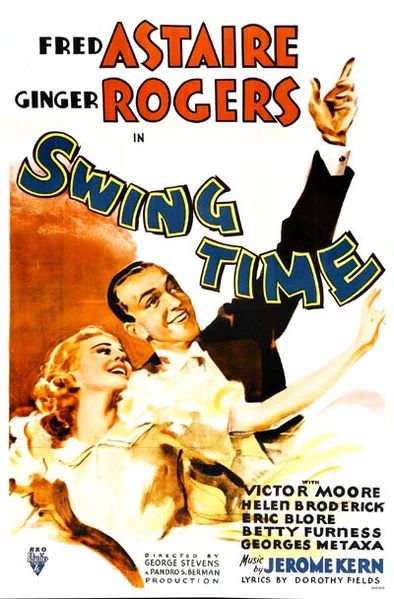
Swing Time (1936)

0c747-394px-swing-time-1935Starring Fred Astaire and Ginger Rogers with director George Stevens, this light film is like a screwball romance with a lot of added dancing. Astaire is a man who has missed his wedding and he agrees to go off to the city with a friend so he can make money to bring back. There he meets a fiery dance teacher accidentally and then they begin to perform together. As “Lucky” (Astaire) and his friend try to survive by gambling with the little money they have, he begins to fall for Penny (Rogers). However, she does not find out until later that he already has a fiancee. When she realizes the situation she goes to marry another. In the end everything is all a big mistake full of laughter and of course everything is made right again. There is no denying that Astaire and Rogers are not only good dancers but good performers. Many of the numbers they dance and sing are memorable like “The Way You Look Tonight,” Pick Yourself Up,” and of course “Waltz in Swing Time.”

4.5/5 Stars

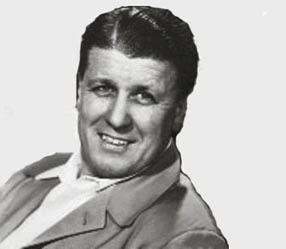
Director of the Month: George Stevens

One of the great, if often unheralded American directors, it is astounding when you look at the breadth of George Stevens work. His catalogue of films rivals those of the other American greats such as John Ford, Howard Hawks, Frank Capra, and William Wyler. His films also evolved over time as he changed with the times.

Stevens got his start working at the company of Hal Roach as an assistant cameraman where he worked on B-westerns and the comedy productions of Laurel & Hardy. This training with the camera would influence him later as a director because he would also pay close attention to details. The mise-en-scene and the relationships between his characters were of the utmost importance to him. Despite, these aesthetic aspects he never lost sight of the humanity in his films.

Soon Stevens had moved on to directing and his credits include the quintessential Astaire-Rogers vehicle Swing Time (1936), along with the swash-buckling thriller Gunga Din (1939). Then during the early years of the war he had a string of solid films including the comedies Women of the Year (1942), The Talk of the Town (1943), and More the Merrier (1943). In the waning years of WWII he would begin to shoot footage of the war and concentration camps as well. This reality would deeply impact Stevens and as a result his post-war films were also impacted. His so-called “American Trilogy” included the tragic drama A Place in the Sun (1951), the western Shane (1953), and the epic Giant (1956). In these three films we see signs of a man disillusioned who turned away from the comedy and crafted films with a heavier tones and more complex themes.

With these films Stevens solidified his legacy as an American Film Legend and despite what anyone might say it would be difficult to take that away from him. Other notable films of his include: Vivacious Lady (1948), I Remember Mama (1938), and the Diary of Anne Frank (1959).

My Oscars

So obviously I have not seen all the nominated films, and even if I did I am only human, and humans do not pick all the same things. That being acknowledged, I wanted to make an award list of my own that is not meant to rival the Academy of Awards in any way. They are simply My Oscars.

Here are 14 picks and I would say that most of them are certainly worth your time:

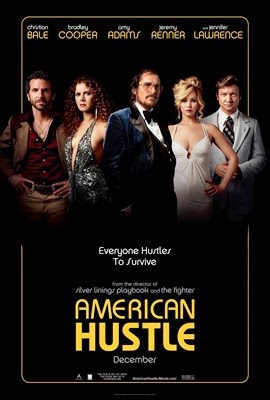
Most Entertaining Picture: American Hustle


Best Picture for the 21st Century: Her


Best Picture Visually: Gravity


Best Picture Romantically: The Spectacular Now


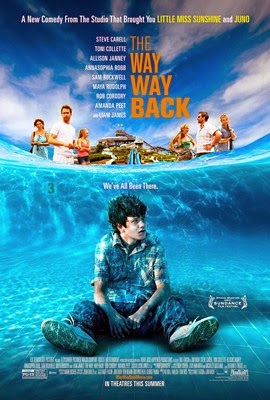
Best Nostalgic Picture: The Way, Way Back


Best Sentimental Picture: Saving Mr. Banks


Best Dystopian Picture: The Hunger Games: Catching Fire


Best Young Actor: Michael B Jordan for Fruitvale Station


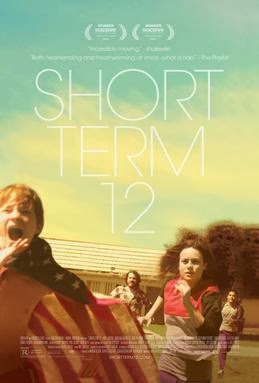
Best Young Actress: Brie Larson for Short Term 12


Best Animated Movie: Monster’s University


Best Action Film: Star Trek Into Darkness


Best Superhero Picture: Iron Man 3


Best Biopic: 42 (Jackie Robinson)


Best Rivals: James Hunt and Niki Lauda in Rush

Argo (2012)

339c3-argo2012posterDirected and starring Ben Affleck, this historical thriller is based on the real events revolving around the Iranian Hostage Crisis that erupted in 1979. After a brief interlude, we are thrown right into the fray outside the U.S. Embassy in Tehran where nationalists are protesting vehemently. They break in and it becomes frantic insides as files must be burned and help must be found.

 Soon they are overrun and 69 hostages are taken, however, six Americans were able to escape and then seek refuge with the Canadian ambassador. From that point on the CIA must figure out how to get them out as they monitor the tense situation from home. All ideas seem doomed to failure, and soon an ex-filtration specialist named Tony Mendez (Affleck) is brought in. He has one wild idea, but it is the only one with a chance. 

With the help of a Hollywood makeup artist and film producer, he begins to create a fake movie so he can get the six out as part of a movie crew scoping out exotic locations. With this daring plan in mind the sci-fi film Argo is born, and Mendez heads to Iran. He must race against the clock because the Revolutionaries are near to discovering that some Americans are missing. Furthermore, his plan leaves the refugees skeptical and scared. Mendez is able to get them all on board as part of the film crew, and he preps them with fake Canadian identities, passports, and rapid-fire interrogations. Everyone is tense as they get ready for the day of departure because so many things could go wrong. The CIA shuts down the operation, but Mendez is adamant to keep on as planned. 

Despite some setbacks, interrogation, and near catastrophes, they miraculously make it to their flight and after one last tense moment, they enter airspace, officially safe, mission complete, and able to drink alcoholic beverages again. The six return to the U.S. amidst much fanfare and Tony Mendez returned an unsung hero. 

I found this film entertaining, tense, and fascinating. This is a part of American and international history that is seemingly glossed over and it needs to be known. I felt the film created an atmosphere that reflected the 1970s very well whether it was news broadcasts, sponsor spots for the Love Boat, mentions of John Wayne, or allusions to such films as Network, Kramer vs. Kramer, Star Wars, and Planet of the Apes. 

I know films like Argo can never be completely accurate, but it is amazing how close so many of the actors looked to their real-life counterparts. Furthermore, I did not feel I was being fed one side of the story. As with any international situation, both Iran and the U.S. were at fault. Ultimately, there was a happy resolution on January 21, 1981, and Mendez finally gained recognition.
 
4.5/5 Stars