
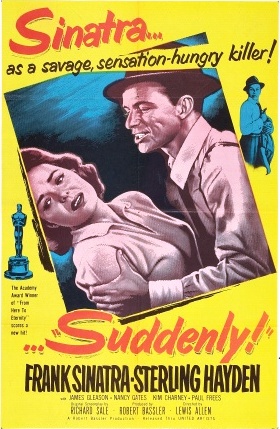
 In some ways, the sleepy town of Suddenly feels like it could have easily been the prototype for Mayberry (Willis Bouchey’s appearance acting as the one actual tie-in to The Andy Griffith Show). The sheriff wanders around lazily. He knows everyone by name and they probably haven’t had anything exciting actually happen for 20 or 30 years at least. But then they go and have something bigger than Mayberry ever dreamed. No filling station robberies, or shipments of gold, or even a group of out of towners trying to case the bank. This is big. It involves the President of the United States and Frank Sinatra or rather Johnny Baron, the man who`s looking for a big payday from assassinating the commander in chief. But people generally liked Ike and so the Secret Service roll in to take the necessary precautions including cueing in the local sheriff on the particulars and shutting down the town.
But the one family that doesn’t happen to get the memo are the Bensons who just happen to have the property overlooking the town — the perfect point to knock off an unsuspecting president from but, of course, a thought like that would never cross their minds, not in a quaint town like Suddenly. Still, Baron has thought about it quite a lot and he and his cronies make a house call on the Bensons and subsequently take over their humble abode, except the family doesn’t realize yet that this is a home invasion.
It just so happens that one of the Veteran servicemen Agent Carney (Willis Bouchey) goes way back with Pop Benson (James Gleason) and so he and Sheriff Shaw pay a visit to the family but the welcoming committee is far from obliging. After the initial setup, the film evolves into a tense drama involving not only the imminent attack on the President but the very real hostage situation that we are now privy to. The majority of the ensuing drama is crammed inside the tight quarters of the home as all the hostages tensely wait for events to unfold. Sheriff Shaw looks to keep Baron talking as they bide their time.
But even his background in law enforcement cannot fully prepare him for who he is dealing with and that’s a great deal of the enjoyment that comes out of Suddenly. The characters are ripe with possibilities and Sinatra, in particular, gives an electrifying performance off of Hayden’s somewhat uncharacteristic stalwart turn.
Paul Frees as one of the thugs wasn’t quite bad-enough (sorry for the Rocky & Bullwinkle pun) and the other hired gun is constantly clutching his ulcer.
Richard Sale’s script is surprisingly vibrant and it does a lot in a limited amount of time building up connections and backstories of characters that help make each life valuable while simultaneously increasing the stakes, packing a punch on multiple occasions. And although there were more guns than I was expecting it’s far more than a simple shoot ’em up.
Sinatra’s character is tormented by demons, constantly referring to his own war record and the silver star he won, and in the same breath writing off the hit on the President as just another job for him. It’s true that the specters of World War II seem to affect everyone. Likewise, Ellen Benson (Nancy Gates) must grapple with her own hatred of violence and guns as a result of her husband’s death in the war that keeps her from allowing her spunky son Pidge from seeing war movies or playing with firearms. She’s also hesitant to indulge the calling of Tod because she’s not ready to move on. Each of these aspects underlines the film’s main conflict.
There’s also some striking connections that can be made to the Manchurian Candidate (also featuring Sinatra) as well as the realization that this was the pre-Kennedy era, meaning no one knew what was possible. In some ways, the film’s premise seems rather incredible but then again maybe it was more credible than even the makers of the film realized. Just a few years down the road our President would be killed, the man Frank Sinatra would sing a campaign slogan for. So, Suddenly comes off as a B-picture but it rises above those meager expectations and turns into a fairly impressive thriller with some stalwart talent and moral issues anchored in its plot.
3.5/5 Stars
 Cat People has one of those sensationalized B-picture premises and there are moments when its meager aspects let slip that this is a low-budget effort, but within those restrictions, it moves with a certain purpose and chilliness. It’s true that producer Val Lewton had a B-movie renaissance going on at RKO Studios and Cat People is one of his treasures.
 At Oliver’s work, talk around the water cooler is made compelling in that his best pal and colleague is the sensible Alice (Jane Alexander) always ready to lend a listening ear. She’s genuine in accepting Irena for who she is because she can tell that Oliver earnestly loves her. But at the same time, she serves as a contrasting figure — someone who is completely different than this enigmatic creature.
 The whole thing turned on a freak accident. You’ve got to believe that Susan.
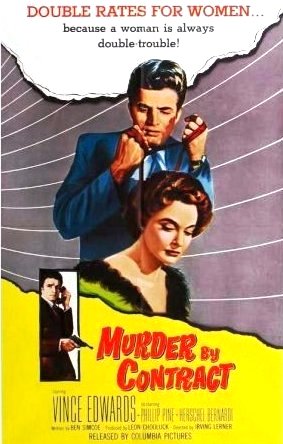 Every once and awhile when you dig through the treasure trove of cinema which includes the B film you can wade through the refuse and come upon something truly special — elevating itself from all the lesser offerings of the past decades. Murder by Contract is such a film.
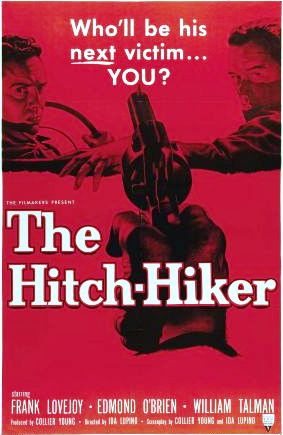 Part of the harrowing allure of the Hitch-Hiker is that it’s actually based on a true incident that occurred only a year before the events shown. It’s not as if someone took artistic license with some murderers and made it into a horror spectacle. Hitchcock’s Psycho especially comes to mind.
 Body Snatchers works seamlessly and efficiently on multiple fronts, both as science fiction and social commentary. Don Siegel helms this film with his typical dynamic ease putting every minute of running time to good use. The screenwriter, Daniel Manwaring, put together perhaps one of the greatest political allegories ever penned and, on the whole, it’s a taut thriller combining sci-fi and horror to a tee.
 It’s a B-picture title to be sure but with Robert Siodmak and such an ensemble, this is an enticing noir all the same. The well-to-do Quincy family of small-town America are an odd bunch, still holding onto their surname with pride as they slowly drift further and further into obscurity within the walls of their old mansion.
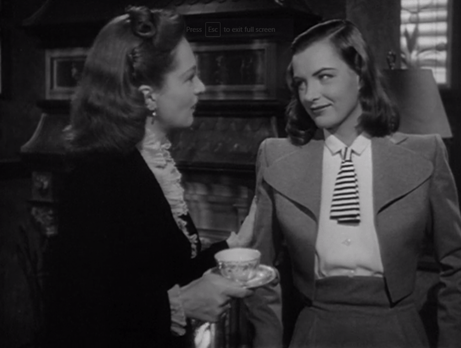 The dominating sister Letty, played by Geraldine Fitzgerald, is more aloof in her ways, veiling everything with a conviction that what she does, she does for the good of her brother. But it’s all really due to the fact that she cannot bear to let him go. In this way, she’s constantly controlling his life and undermining his happiness. She’s hardly your typical femme fatale, more cultured and refined than most, but there’s still something exacting about her.
 What it manages to bring together within the frame of a meager B-film plot is quite astounding, balancing the brutality and atmospheric visuals with the direction of Robert Wise to develop something quite memorable. Boxing movies have been bigger and better, but film-noir has a way of dredging up the grittiest pulp and the Set-Up is that kind of film.
 There’s not a whole lot to it. Aside from a wonderfully pulpy title, Private Hell 36 feels like a pretty straightforward endeavor from director Don Siegel. The low budget procedural nevertheless boasts a surprisingly good cast. The tale is framed by a nice bit of narration from the sitting police chief played by the always enjoyable Dean Jagger, in a particularly compassionate role.
 The temperature begins to rise when the two colleagues get caught up in a car chase with their counterfeiting adversary. All the days casing the local race track with Ms. Marlowe finally leads to some action. In the aftermath, one car goes careening off the road, and the boys have a decision to make. They frantically begin snatching up dollar bills and they decide to go dirty and make a run with the money.
 4 Star Films