Reviews: The Mummy, Island of Lost Souls, The Black Cat

The Mummy (1932)

There’s something deeply prescient about The Mummy beginning with an archeological expedition for The British Museum. If it’s not evident from the outset, the film is firmly planted in the reality of 1922 when Howard Carter famously discovered the tomb of Tutankhamun. This is only one historical example, but even I remember hearing about the exploits of this modern discovery.

Now we live in a world in dialogue with the history of colonialism from the cultural tension over the Elgin Marbles to the very idea of ancient antiquities being housed in museums themselves. Even if it’s mostly to capitalize on something the contemporary audience might be aware of, The Mummy makes it plain, this kind of potential cultural desecration is not a totally new idea from our “enlightened” age. It has deeply entrenched traditions.

The British expeditioners come from two different camps, and they must mediate the pull between doing their methodical work of cataloging and then following the finds that will gain the most press. Those who are fully committed know they are working for the cause of science and not for loot.

It begins with a young man who will not heed the terrible curse on a casket, and he awakens a creature from eons before. It is Imhotep (Boris Karloff), who enters back into the world fully prepared to take back what is rightfully his and reunite himself with his long-lost love by any means at his disposal.

The Mummy starts out promising, but it never quite nails down the extent of its mythology and everything feels far too convenient with the re-animated mummy capable of doing anything he pleases to serve his purposes (and the plot). He’s well-versed in mind control, he has what looks like a shortwave television, and he’s all but indestructible to human hands.

The flashback sequences of Egypt hearken back to the expressionistic imagery of silent cinema and here is where our director, Karl Freund, seems to show his origins as the fantastic cinematographer for revered works like Fritz Lang’s Metropolis.

The film’s other compelling theme involves a woman of Egyptian blood (Zita Johann), who almost functions as a doppelganger through time. One man falls in love with her in the present (David Manners) and another man loved her in the past. She’s effectively trapped between two worlds — one distantly remembered — and yet now dwelling in the body of a young woman, breathing and alive.

She is not prepared to make the kind of sacrifice asked of her and only the supernatural can save her. Karloff is expectedly chilling, but the pieces around him aren’t quite as enjoyable as his greatest monster movies.

3.5/5 Stars
Island of Lost Souls (1932)

“Mr. Parker, do you know what it means to feel like god?” – Dr. Moreau

Island of Lost Souls is the kind of movie that all but disappeared with the more stringent implementation of the production codes in 1934. It begins with an uneasy mood as a castaway is rescued by a not-too-genial sea captain, who’s anxious about dumping him at the first sign of land.

This is how our protagonist Richard Parker (Edward Arlen) catches a ride to shore on the Island of Dr. Moreau. There’s something rather uneasy about the whole setup and the movie frequents a landscape and a world not so foreign from The Most Dangerous Game. It’s as if an island conveniently eschews all traditional rules of law and order.

While the earlier film is harrowing, subjecting Joel McCrea and Fay Wray to a grueling game of high-stakes cat and mouse, this one is more thematically rich. This might be entirely thanks to H.G. Wells. He is the man who originally conceived of Dr. Moreau. However, something else must be attributed to Charles Laughton.

There’s a level of devilish forethought to Laughton’s performance. Although he’s not an entirely imposing figure, there’s something mischievous about him. Sometimes he comes off gleefully boyish even as he takes on these calculated and totally premeditated social experiments on his self-made ecosystem.

Parker knows nothing about the world he’s wandered into, but he is our stand-in representing everything inherently decent about humanity. And there is something deeper to this since he is white in the age of colonialism. While he might not necessarily bear the “white man’s burden,” certainly he’s aware of his place in the social hierarchy. He’s a benevolent figure. Dr. Moreau is this privileged mentality gone astray.

Judeo-Christian society would look back to Genesis, and the parallel imagery is made plain fairly quickly. There’s a specific order to the world, a created dichotomy between humans and beasts. Because Moreau has installed himself as god on his own private world. However, he has somehow perverted what is good in strange and troubling ways.

These themes get murkier when you start considering ideas of eugenics and even how the aforementioned production codes forbade the outright depiction of miscegenation or the mixing of races in romance. These are not synonymous terms when it comes to humans and beasts living on the island, but it’s hard not to see how predominantly white audiences at the time might conflate the two.

Because Moreau’s rudimentary imitation of creation has elements to mirror what we already know intuitively. His creatures live by basic laws shouted out by their de facto leader (Bela Lugosi), and they realize through roundabout means certain tenets. He has taught them what pain is, and he’s molded some like his prized creation Lota (Kathleen Burke) into his own human image.

If the Christian origin story hinges on a Fall from grace where Adam and Eve were deceived by the serpent and ate from the forbidden tree of knowledge of good and evil, then Island of Lost Souls has its own paradigm. Suddenly, these indigenous monstrosities of his realize their creator is mortal or at the very least they can rebel against him. The law is no more and it’s been disproven. There is no longer anyone willing to uphold or live by it. Namely, because they realize it’s fallacious.

Parker is mostly uninteresting as we watch his repugnance grow, and he looks to be reunited with his innocent love (Gloria Stuart). Meanwhile, the doctor toys with him and tries to set him up with Lota. Lota fits crucially into this deeply human narrative because there’s a suggestion of her “evolution” within the arc of the film even if it’s not in purely Darwinian terms. Because she has come to understand what sacrificial love is: laying one’s life down for one’s friends.

If nothing else, surely this shows her not to be a creature without reason or logic but predetermined with something deeper and more primal inside of her. I find it impressive how something that feels deeply exploitive could still come down on some deeply philosophical ideas without ever forfeiting its obligation to a paying audience. It’s the kind of genre film capable of triggering all sorts of ancillary conversations, and I’m all the more curious to return to Wells’s source work.

4/5 Stars
The Black Cat (1934)

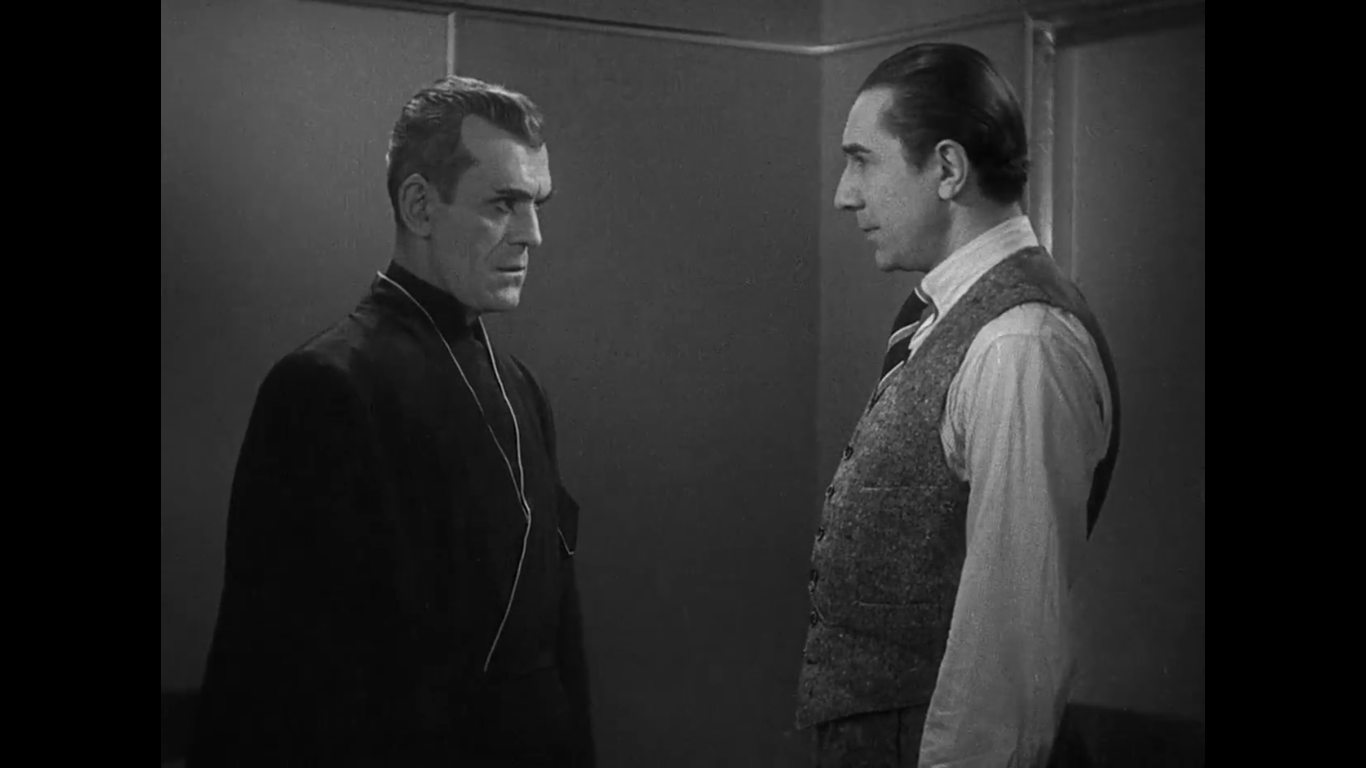
Each lineage of horror movies must have its own in-house aesthetic and stable of performers matched with specific technicians who come to exemplify a studio and their body of work. The Black Cat brings together much of what made Universal Pictures horror so lucrative from the studio, and it gathers together two of their most iconic stars: Bela Lugosi and Boris Karloff.

Although we’re not in Transylvania, the story picks up aboard a train traveling through Hungary, a typically foreign locale for a hometown audience. We meet a newlywed couple (David Manners and Julie Bishop) on their honeymoon only to have their compartment’s marital bliss disrupted by Lugosi’s Dr. Vitus Werdegast. He looks nice enough, but there’s always something menacing behind his eyes (even when he’s playing pleasant).

Inclement weather leads to a devasting crash and the couple and their newest acquaintance show up on the doorstep of one of his old friends, although I use the word friend loosely. Hjalmar Poe is a famed Austrian architect, and his abode lives up to his reputation. We must expect nothing less as we are welcomed into the home of the always foreboding Karloff.

For the rest of the picture, The Black Cat feels like an oblique tour throughout the art deco space with a subtle game of death going on between Karloff and Lugosi. Because instead of bringing two unsuspecting victims into their lair, this is much more a grudge match with two unsuspecting parties caught in the middle.

It becomes a world modulating between the polls of the supernatural and baloney. With a rogue gallery of Lugosi and Karloff, we know better, and as the good doctor demures, “There are many things under the sun.” His evocation of Ecliasstes has very ominous underpinnings.

But that’s not the only source of disquiet. The way the two actors lurk around the corridors, the very way they interact around the woman is unnerving. Karloff always seems to be leering and ogling even if that’s how his face is predisposed. Then, moments later, he’s caressing a chess piece in a disturbing manner. Or is it only our imaginations playing tricks on us?

There were lulls that I wouldn’t mistake for tension, and yet there is so much to be said about the architecture of that house even when the architecture of the film seems to fail. Because this aspect of the mise en scene embodies something that fits so perfectly with the personas of Karloff and Lugosi. Somehow always incongruous and ill at ease.

And the film never feels pulse-pounding; it’s outrageous, yes, but it also builds to these harrowing moments. They’re sinister and escalate into a final descent into the pit of Hades further accentuated by the lines of the architecture.

The ending nearly balks on the entire movie. It’s a wink and a joke that dares us to tell others about what we just saw. They’d never believe it because this is the apex of outlandish storytelling. The Black Cat‘s not great, nor is it mediocre; instead, it feels deeply alive with something probably more indebted to Edgar G. Ulmer than Allan Poe.

3.5/5 Stars

Dracula (1931): Starring Bela Lugosi

As the story behind Universal’s Dracula unfolds, it’s a joy to pinpoint all the elements helping to intensify the dread and solidify it among the studio’s emerging array of horror classics.

There has to be a kind of mythology and lore that the scares can be built out of. The protection of the cross is that of a powerful talisman capable of warding off evil.  Superstition and religion intermingle seamlessly like many of the horror films of the day.

Likewise, there must be a visual palette to help the world manifest Bram Stoker’s famed character. He already received a dose of notoriety in F.W. Murnau’s unauthorized adaptation, but now Nosferatu returns in the guise of Bela Lugosi’s now-paradigmatic Dracula. He definitively ate up and defined all future tropes for years to come.

The tale opens in a carriage when a callow young man named Renfield (Dwight Frye) disregards the warnings of the local population and ventures to the castle of Count Dracula on some proposed business. I watch Dracula and I’m immediately taken by the gaunt Transylvanian atmosphere.

Far from feeling corny, there’s an eerie spareness that’s to the credit of the picture introduced in the bleakness of night. The count’s ominous castle proves itself to be both a foreboding space and one falling apart with decay. Working with director Tod Browning, the incomparable Karl Freund translates his cinematography from Europe to become the epitome of Hollywood genre filmmaking at its finest.

The second portion of the story is born when a schooner, the Vesta, is found drifting into Whitby harbor with all the crew having perished aside from one raving madman. He’s put under lock in key in Seward Sanitarium, all but prepared to do his master’s bidding. Because of course, Renfield is now beholden to his master Dracula — by his blood.

In this new locale, Dracula borrows liberally not only from the traditions of Bram Stoker but the menacing Jack the Ripper, Jekyll & Hyde-type atmosphere of foggy London streets weighed down with gloom. It’s in this milieu one evening that Count Dracula makes the acquaintance of Doctor Seward (Herbert Bunston) as well as his daughter Mina. They are perfectly oblivious to who he really is. But, of course, he’s hardly looking for a romantic partner. Rather, he’s on the prowl for another unsuspecting human to provide him their life’s blood.

Meanwhile, a Professor Van Helsing (Edward Van Sloan) takes a particular interest in Renfield’s peculiar tendencies. When he starts making claims about the undead, Nosferatu, and vampires, this is yet another dose of necessary logos to explain the movie’s scares. Wolfbane is another tried and true vanguard against this unknowable evil.

As such, even as others remain skeptical, Professor Van Helsing becomes the film’s main advocate and certainly fits the mantle of a detective, prepared to deduce the answers and go head-to-head with Count Dracula. The man has no reflection and when he’s found out, he gets desperate like a caged beast.

The Professor and The Count have a standoff in the study — a literal crossing of wills — although Dracula manages to get to Mina and fuse with her blood. It remains to be seen if she (or Renfield) can be saved from their sorrowful fate.

Most of the movie’s horrific power is born in the face of Lugosi — how he is lit, the fire in his eyes — it’s indelible imagery. The rest is illusion borne in the space between what we see on the screen and the cut away. This is what makes it quite effective even generations later. Because it’s not about hokey gore or any such dated method of special effects.

It relies on us and the frights we can conjure up within our own imaginations. The movie supplies the building blocks of terror, but we must put them together for ourselves. Even 90 years later there’s something deeply powerful in this cumulative effect.

This might be an unpopular observation, but somehow, having a movie unaccompanied by music somehow augments this sense of piercing dread. There’s something direct and unembellished about it — it’s starkly beautiful — and yet it pierces like a stake through the heart.

The story is expeditious, but these quick strokes are so heartily effective until the very last heartbeat. Dracula does everything we should require from a horror movie, and it remains a timelessly perturbing experience.

Like so many of the horror greats, Bela Lugosi would forever be typecast by the part. It’s the curse of an actor but the glory of a screen icon. He’s unforgettable and people never have forgotten him even those who have never seen the movie. He lives on purely through our cultural consciousness.

4/5 Stars

Abbott and Costello Films: Naughty Nineties, Time of Their Lives, A&C Meet Frankenstein

The Naughty Nineties (1945)

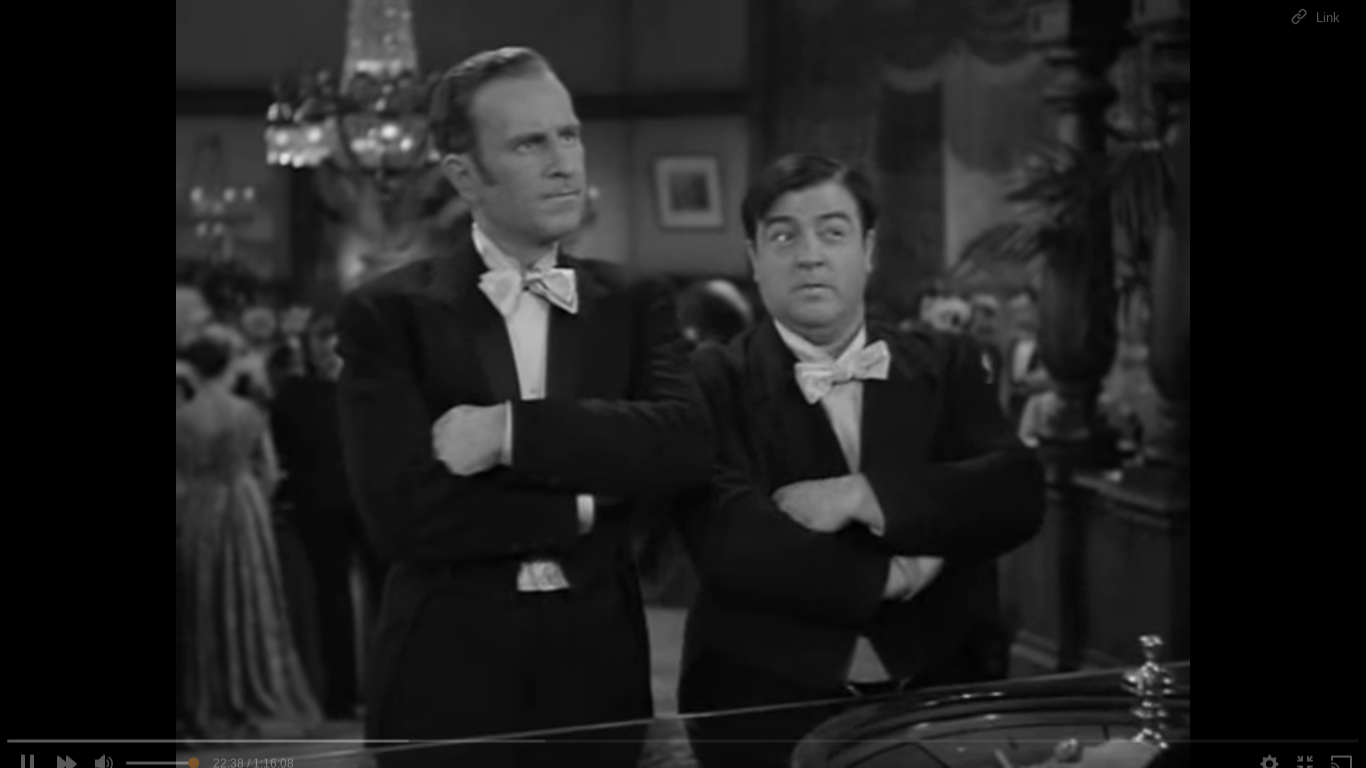
The next genre Abbott and Costello took on in The Naughty Nineties was the show boat-style musical. Henry Travers fits as a kindly old ship captain who promises family-friendly entertainment headlined by his daughter and a very familiar leading man (Bud Abbott).  Costello crops up in a local band pounding his drum with a parade off the beaten path. Soon enough he’s getting up to all kinds of his usual shenanigans as the lone stagehand for their stage production.

Comedy like this must have a rightful antagonist: Rita Johnson and Alan Curtis lead a trio of shady malcontents. They’re getting brushed out of town, but they set their sites on the naive Captain. His one vice is gambling, and they know how to bend the odds. Soon he has no recourse but to work with them by their rules. They commoditize and taint all he’s worked so hard to build.

Enter Abbott and Costello. They take on a crooked roulette wheel with the hiccups using a wad of chewing gum. Lou makes himself useful in the kitchen whipping up a feather-filled cake though he gets his comeuppance with a cat burger routine that has him cringing over his dinner after every mew.

Although it’s not very organic and feels like the most shoehorned gag in the story (because it was), we do get one of the recorded versions of “Who’s on First?” standing in the halls of comedy as one of the most revered routines of all time. Partially because it only works with the duo. You need the straight man, you need the comic, and then the situation to put them at odds. Few have done it so cleverly as this one.

The rest of the movie isn’t so lofty and that’s okay. Costello’s running around the deck being chased and chasing. It’s puerile entertainment, but not the worst we could have. If nothing else, his ever-present wheezing, warbling sound effects feel reminiscent of Stan Laurel though Costello’s portly frame makes him feel a little more like a man-child. This too became the bedrock of Abbott and Costello’s comedy.

3.5/5 Stars

Time of Their Lives (1946)

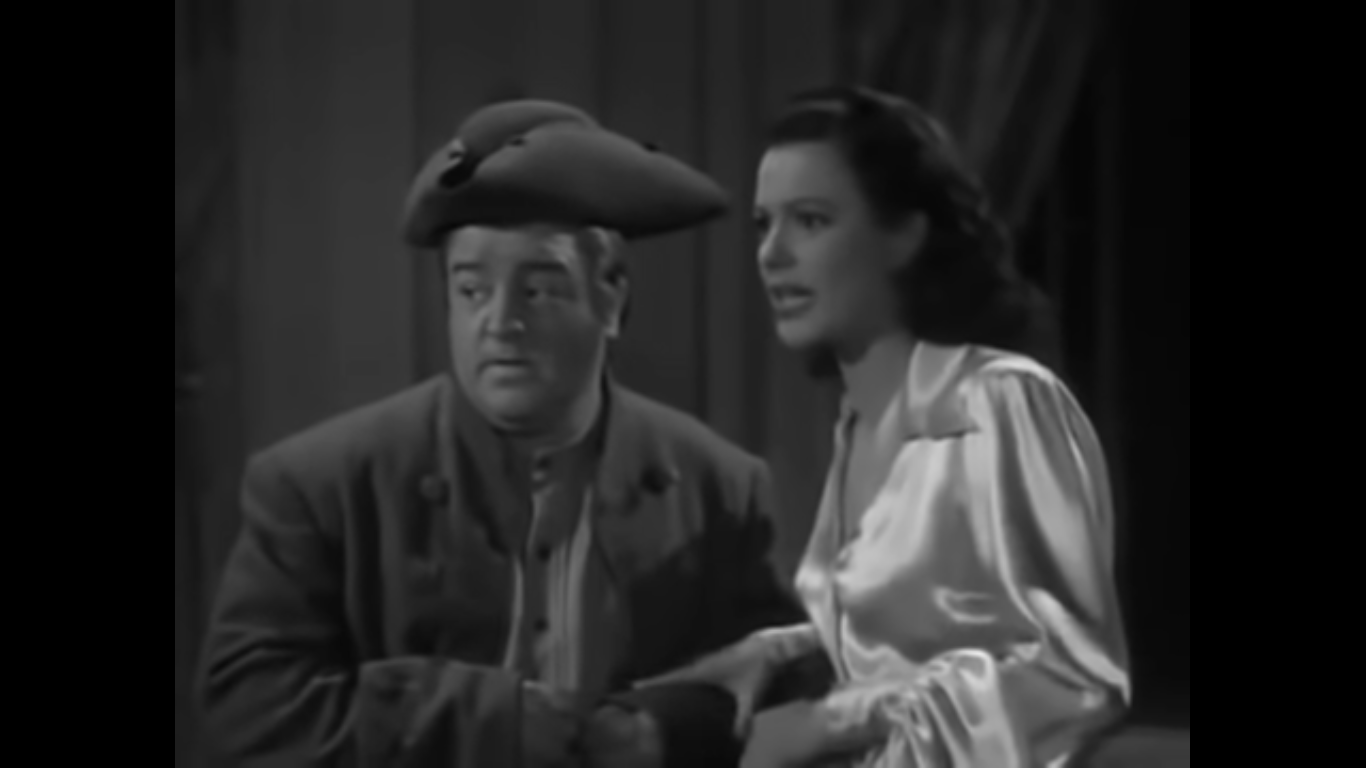
Time of Their Lives feels like an obvious departure for the team. We found ourselves planted in a colonial drama with a spritzing of the usual comedy. Box office woes or not, I’m not quite sure I’m amenable to how they retooled the Abbott and Costello formula. This movie begins as a straight period piece. It can be done well with something like The Court Jester, but it does feel like the boys rarely get enough time together. Perhaps this was by design.

Still, like many of the great comedians of their day and age, they seem to work best when they can break away from the rigors of plot and the confinement put on them by a narrative arc even if it’s for the sake of a few throwaway gags. Because this is what their entire reputation is founded on, and it’s these moments in between where they lose the plot and we gain laughter.

Time of Their Lives is certainly in danger of becoming moldy pretty fast if not for a quick change of direction leading into an entirely different movie. The ghost angle is something — Mr. Topper redux if you will — but it feels a bit uneven and not quite in the vein of what we’re used to. What it does morph into is a bit of the Costello and Marjorie Reynolds show, which isn’t an entirely bankrupt proposition. In comparison, Abbott as a straight-laced and tormented psychiatrist doesn’t provide much in the way of genuine laughs. He functions best in conjunction with his able partner.

I’ve already made it painfully apparent, I’m not an admirer of haunted house films with seances and the like, but Abbott and Costello probably give us the funniest version (although I need to rewatch I Love Lucy to make doubly sure). I especially appreciated when Costello the apparition made his presence fully known by rapping his comedy partner over the foot. There’s not a great deal of this kind of interplay in the picture, but it seems telling these are still among the most noteworthy moments.

3.5/5 Stars

Abbott and Costello Meet Frankenstein (1948)

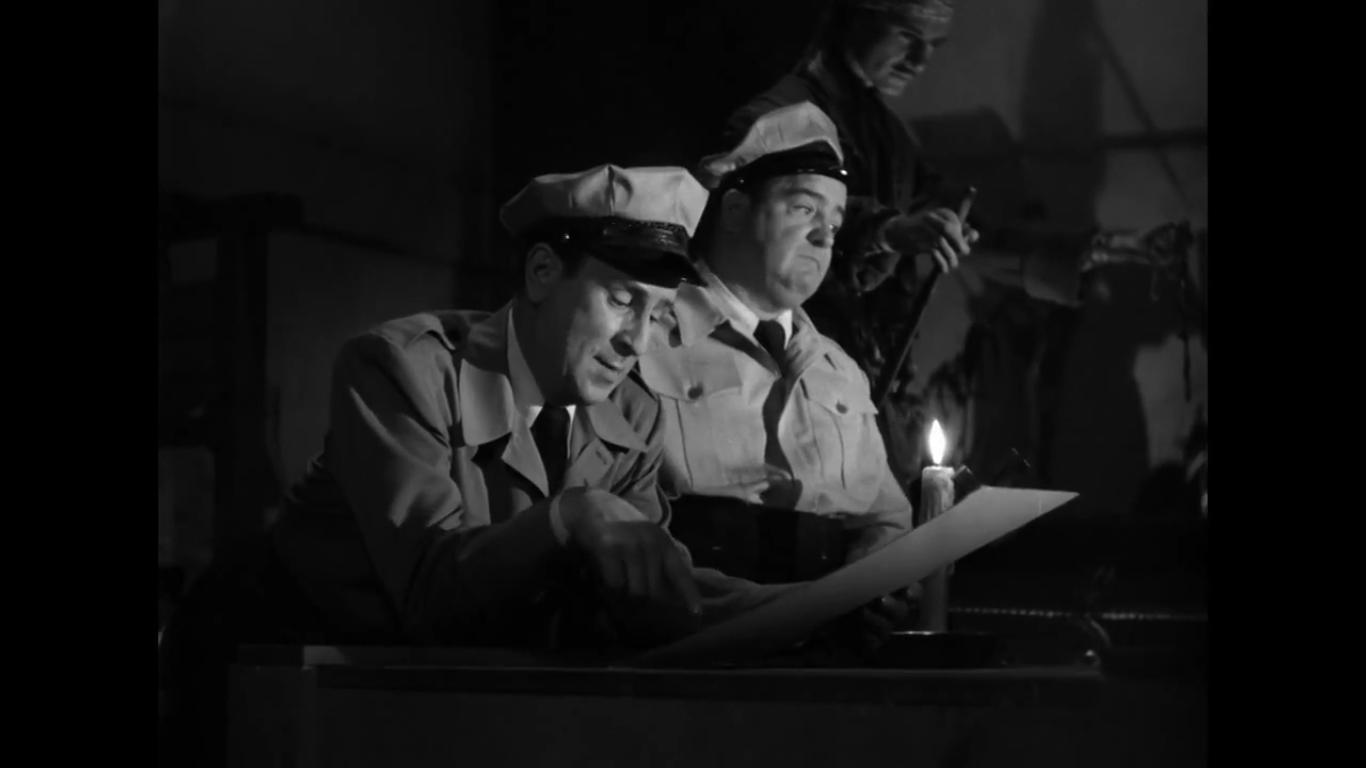
Between the animated credits and their pairing of some historically lucrative stars, Universal does well to promote their assets. Abbott and Costello Meet Frankenstein also shows an understanding of the continued shelf life of IP. If that was true in the 1940s, it’s even more of a buzzword in the modern media landscape.

At its best, we get Abbott and Costello trading off their impressions of some of the most iconic monsters. But more important than that is how our team is back together again. All is right within their world with their patented antagonism restored along with their attempts at menial labor.

Abbott’s bossing Costello around even as he’s somehow managed to nab the pretty girl. It’s really a reversal of the Hope & Crosby dynamic where Bing always seems to get the girls. Here it’s the lovable pudgy nincompoop Costello. Though both his pretty ladies have ulterior motives.

They also have ample opportunity to bump heads with a belligerent businessman. It’s only the beginning of their troubles. McDougal’s House of Horrors is a personal showcase for the traditional gags where Lou crosses paths with Dracula who is very much alive, though he’s never around when Bud comes back to investigate.

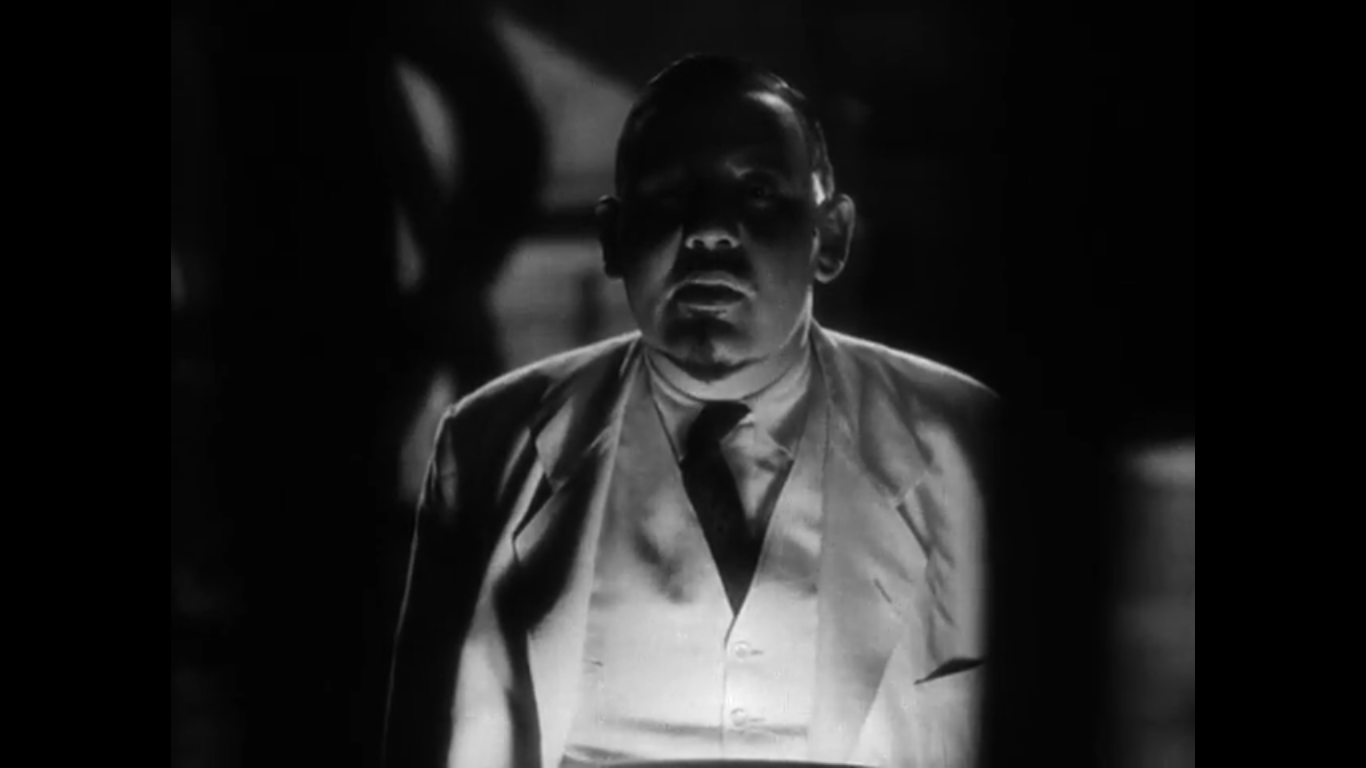
Lou can’t catch a break, but of course, that’s the gag. Bela Lugosi’s Dracula, Frankenstein’s Monster, Lon Chaney Jr.’s Wolf Man, he unwittingly has run-ins with them all, and somehow comes out on the other side still intact. This is the ultimate joke that can only work with a foundation of laughs. It’s his absurd invincibility in the face of all of this supernatural threat and menace that seems bent on destroying him time and time again.

It’s also one of the first movies in their catalog with a dramatic turn — Abbott must believe his buddy for once — he knows he’s not just seeing things. It does disrupt the situational irony fundamental to their brand of comedy, but it comes late enough, we’re ready for our resolution, and the movie pays it off in the most melodramatic Hollywood form.

But it is a glorious crescendo of scaredy-cat comedy, and it seems to suggest to forthcoming generations just what can be done if you successfully meld these genres together. Because it doesn’t merely trivialize them. By weaving together the mythology of the Universal monsters from their own standalone entries, this addition effectively built on all their legacies. 

3.5/5 Stars