
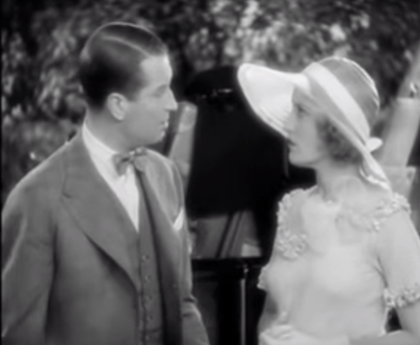
 This is unequivocally the age of sound! That’s what this film proclaims from the rooftops with its symphony of syncopation as the world of Paris awakens from its slumber. Its opening rhythms are pure ingenuity and the glorious unfoldings never cease for the rest of the cheery production.
In its efforts to tip a hat to Lubitsch, Rouben Mamoulian’s film manages to eclipse him or rather make a name for itself completely removed from the previous Maurice Chevalier musicals. In fact, Love Me Tonight feels like the obvious precursor to later classics like An American in Paris and the works of Jacques Demy. Whereas Lubitsch’s films almost always function as a comedy and social commentary, Love Me Tonight is first and foremost a musical and it rides on its melodies even while simultaneously driving forward its plot line.
When our humble but nevertheless jovial tailor winds up chasing after one of his notorious spendthrift customers to his relative’s aristocratic residence, things are in motion. Maurice is certainly out of his element, but his charm wins him many an admirer in the household including the Duke (C. Aubrey Smith) and his man-hungry niece (Myrna Loy). In fact, there are only two people who seem wary of this new arrival, the Duke’s skeptical daughter, Princess Jeanette (Jeanette MacDonald) and her feeble suitor.
Everybody else persuades The Baron — as he is called — to stay because his is such a magnetic and disarming personality. Of course, when the real news about him gets out following an incriminating wager for his honor, it dooms his romance. But every story needs a final epiphany of realization and, in this case, Princess Jeanette comes to her senses. She throws the utter absurdity of family rank and status out the window.
True, this is a love story, but while that could be the focal point there are wonderful sequences that fill all the nooks and crannies. Fine gentlemen walking around a tailor’s shop without their pants on or a trio of aunts who come right out of the pages of Hamlet. As a Pre-Code film, it certainly has a few risque moments including a Doctor’s visit and one or two mentions of a nymphomaniac — all played for comedic effect of course.
Meanwhile, tunes like “How are you?” and “Isn’t it Romantic” literally takes the country by storm manifesting themselves in all forms imaginable. “Mimi” is a particularly saucy number that pays homage to our main female heroine and it’s opening refrains boast some wonderful point of view shots of our fated lovers. Love Me Tonight winds up being an operetta of repeatedly and ingeniously inventive rhyme and melody all the way through. It also has brilliant sound design from head to toe.
Maurice Chevalier is as charming as ever, still melding his song with a magnetism that flows right into his role, ironically enough, as a character named Maurice. Although Myrna Loy might have become a bigger name arguably, this is Jeanette MacDonald’s film and she plays her part with the necessary aloofness that nevertheless gives way to amorousness. By the end, we like them both and we can’t help but be won over by their songs. For being lesser known on the generally accepted spectrum of classic musicals, this one is a gem.
4.5/5 Stars
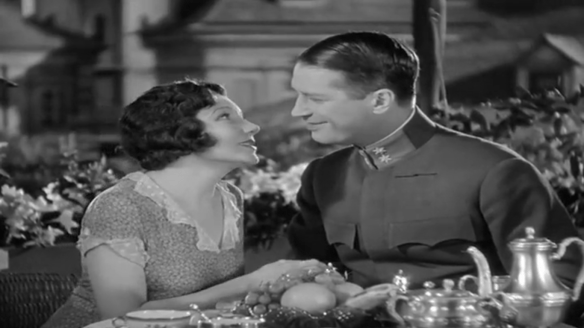 One would never think that one well-placed wink would change the course of an entire life or be the basis for an entire film, but on both accounts it is true. Ernst Lubitsch’s The Smiling Lieutenant represents all that is good and right about one of his films. It’s light and airy with a dash of charm and a tune in its heart. It’s light on its feet with humor and somehow maintains its self-respect, much like the man at the center of this one (Maurice Chevalier).
 But Lubitsch’s final twist is completely out of left field and a completely comic inversion of what’s supposed to happen — capping off his oeuvre of song, suavity, and sensuality in high fashion.
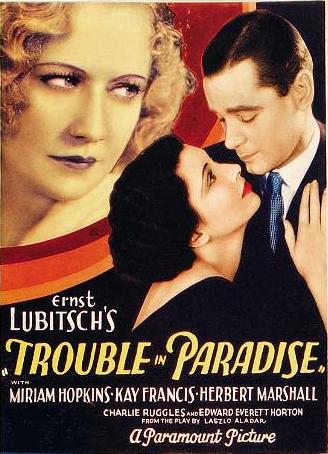
 A quaint, unassuming film, especially up against other more lavish Ernst Lubitsch works like Trouble in Paradise and Heaven can Wait, Shop Around the Corner still manages to be in the upper crust of romantic comedies — even to this day.
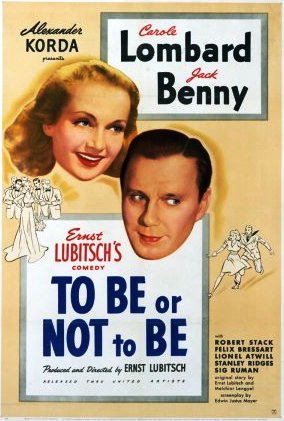
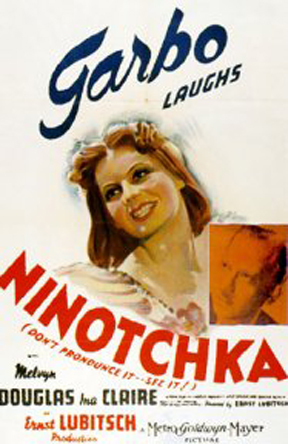
 4 Star Films