Angels with Dirty Faces (1938)

angelswithdirtyfaces-theatricalposterWhaddya hear, whaddya say ~ Jimmy Cagney as Rocky Sullivan

If he hadn’t been on the stage and screen, it’s easy to get the sense that James Cagney, born and bred on the streets of the Lower East Side of Manhattan could have easily been a gangster. And it’s true that in films like Public Enemy and White Heat he embodied gangsters for ensuing generations solidifying his own legend.

Angles with Dirty Faces features another stellar performance as Rocky Sullivan, but what makes it truly unique are the intertwining worlds of faith and crime that meet and ultimately provide the major conflict in the narrative. It’s at these crosswords — the moral fabric of the film — where things get fascinating and to understand those things it’s necessary to see where Angel with Dirty Faces opens.

Two young hoodlums get caught in the act of snitching from a train car and in the ensuing chase one gets nabbed by the cops while the other slips away from their clutches to live another day. This succinct scene is a fitting reflection of all that happens thereafter. The one fellow will grow up to be the notorious gangster extraordinaire Rocky Sullivan who will be at odds with the authorities from his first moments in juvie to his final days.

Meanwhile, Jerry (Pat O’Brien) becomes a local priest who makes it his life’s work to reform the young men in the community who are more than likely destined for the life of Rocky and his fellow gangsters. Through a certain amount of kindness and quiet strength, he attempts to mold the boys through constructive activities like basketball, choir, and other extracurriculars. However, the bad boys (the real life Dead End Kids ensemble, less actors than personified hellraisers) are not quite swayed by his regimen, more content rough-housing, causing mayhem, and idolizing their rebellious hero the great Rocky Sullivan.

When he finally gets out of his stint in prison, Rocky has some choice words for his crooked lawyer (Humphrey Bogart) who hands over a load of cash to save his neck although he’s not looking to be swindled. But although he continues to have his hand in the local corruption and crime scenes, Rocky still maintains his ties with his old friend while renting a room from the girl he used to rib, the now stunning Laury Martin (Ann Sheridan). Here the core relationship between Rocky and Jerry becomes paramount as Jerry vows to tackle corruption in the city with the help of a local paper, even if his old buddy gets in the way.

So Jerry begins his full-fledged crusade against vice because he sees it as a threat to his parish — made up of the impressionable boys in his stead. But just as crucial is the boy’s idol worship, namely of Rocky. This is Jerry’s final goal to bring their idol tumbling down and it doesn’t involve simply destroying the aura surrounding a gangster — it involves two old friends making one final promise. The crime syndicate is thrown into an uproar as Rocky is wanted for murder, cornered, and finally apprehended.  Oh how the mighty have fallen, although he’s not about to go yellow because that’s the only thing he has left–his own bullish sense of moxie.

Still, Jerry asks him to imbue a different kind of courage (Not the courage or heroics of bravado but the kind that you, me, and God know about). And as the electric chair looms in front of Rocky as an arbiter of justice, you could easily make the claim that this is his modern-day cross with him as the martyr. But this gets into the ultimate dilemma where everything begins to break down. Either Rocky committed his final act out of undying affection for an old friend (and not remorse) or more feebly still he was not repentant at all but was, on the contrary, legitimately groveling in the face of death.

The first time seeing this film I mistakenly mistook Rocky’s actions as heroic in the end because as our protagonist that’s what we like to project onto him but it simply does not line up. The way he’s so belligerent before breaking down as he gets ready to meet his maker. The way the priest looks on with tears in his eyes, newspaper men too awestruck to jot down a single note. I mistook Cagney’s astonishing acting for Rocky’s own showmanship. However, the more astounding conclusion is that Rocky is hardly high and mighty in the end. His rough veneer is equally easy to shatter as his being is brought to the ultimate low, death.

It reflects the moral ambiguity of man that these angels with dirty faces are not in the singular sense but the sum of man in his plurality. We are all prone to evil just as we are all capable of good. But we can hardly save ourselves just as we are not always wholly good or wholly evil. The best we can do is make the way better for other people. If this film is any indication sometimes it’s extremely difficult to parse through the differences between the altruism versus the evil versus just plain cowardice.

Films about friends on diverging paths have continued to exist from Cry of the City to Mystic River but Angels with Dirty Faces is arguably one of the most compelling. Once again, Cagney steals the film with his usual no holds barred approach.  It electrifies the screen like very few others, making Angels with Dirty Faces an undisputed gangster classic and one of his very best.

Furthermore, the often discounted Michael Curtiz shows his versatility with the foremost of Warner Bros. winning craftsmen including directors William A. Wellman and Raoul Walsh. Notably, each man paired with Cagney with great results, because, after all, he is without question the king of the gangsters.

4.5/5 Stars

The Mortal Storm (1940)

The_Mortal_Storm-_1940-_Poster.pngOur introduction to The Mortal Storm feels rather flat. Bright and bland in more ways than one as we become accustomed to our main storyline.  Professor Viktor Roth (Frank Morgan) is held in high regard all throughout the community as a prominent lecturer at the local university and beloved by his colleagues and family. The year is 1933 and the Bavarian Alps are still a merry and gay place to live. That’s our understanding early on as the Professor celebrates his 60th birthday with much fanfare and receives a commemorative memento from his class.

In some ways, Frank Borzage’s picture shares a striking resemblance to All Quiet on the Western Front another film that makes its German roots blatantly obvious and yet it wears its incongruities like the ubiquitous use of the English language with ease. And as all the characters accept it, we do too as we begin to sink into the story. But crucial to this story is that they are not as accepting of other things. It feels a little like paradise. Life is good and people are happy. But we expect that at some point the time bomb will go off and it does. Adolf Hitler is elected Chancellor and just like that people begin to change. It’s a collective revolution — a youth movement of sorts.

Pastor, pacifist, and thinker Dietrich Bonhoeffer tore apart the Fuhrer concept straight away in a talk he gave in 1933, long before many of the later horrors during the Nazi reign of terror. But much as this film portrays, such an ideology only leads to destruction — a necessity to harm your brother. Bonhoeffer stated the following which feels surprisingly pertinent to this narrative:

“This Leader, deriving from the concentrated will of the people, now appears as longingly awaited by the people, the one who is to fulfill their capabilities and their potentialities. Thus the originally matter-of-fact idea of political authority has become the political, messianic concept of the Leader as we know it today. Into it there also streams all the religious thought of its adherents. Where the spirit of the people is a divine, metaphysical factor, the Leader who embodies this spirit has religious functions, and is the proper sense the messiah. With his appearance the fulfillment of the last hope has dawned. With the kingdom which he must bring with him the eternal kingdom has already drawn near…

 “If he understands his function in any other way than as it is rooted in fact, if he does not continually tell his followers quite clearly of the limited nature of his task and of their own responsibility, if he allows himself to surrender to the wishes of his followers, who would always make him their idol—then the image of the Leader will pass over into the image of the mis-leader, and he will be acting in a criminal way not only towards those he leads, but also towards himself…”

And so it happens in this film. We see it around the professor’s dinner table first. Formerly, a forum for high-minded debate, it’s quickly become a battleground of ideology. Roth’s step-sons and most notably his daughter’s fiancee Fritz Marberg (Robert Young) have all been caught up in the rhetoric and promises of Herr Hitler. All other forms of thought and free thinking have been discarded, these new ideals burrowing into their minds, dictating their actions, and ultimately poisoning their lives and the lives of all those around them. I never thought it was possible to despise Robert Young but when his mind is polluted by an ideology as rancorous as Nazism it’s far from difficult.

We don’t see Jimmy Stewart until quite a ways into the film and he disappears from sight for some time following an escape to Austria from the Nazi clutches, but he’s still our hero imbued with that same iconic everymanness. He is the man to continue the open-minded, compassionate forms of thinking that Professor Roth exemplifies and subsequently get torn asunder.

Margaret Sullivan and Stewart yet again make a compelling pair following Lubitsch’s Shop Around the Corner. She is the good little German girl Freya who actually proves to have a backbone and he is the humble farm boy who stands by his ideals like Stewart always did. They are caught up in a love story amidst a world that seemingly lacks any shred of romantic passion.

Undoubtedly the Production Codes forbade from mentioning Jews in the story — the non-Aryans like Professor Roth, but that makes this film even more haunting, the fact that the people without a voice are not even acknowledged. They are silenced and remain silent.

With its overt portrayal of the Nazis as menacing thugs and brainwashed ideology machines, The Mortal Storm is startling. For years and years most all of us have read, heard, and seen a great deal on the Nazis that we have unknowingly compiled but this film brings many of those common factors to the fore. It’s obvious that people saw them then. They knew them then. They weren’t blind. Thus, it makes us beg the question what were other Europeans and Americans actually thinking? Because although The Mortal Storm might be the exception rather than the norm, there had to be a general consciousness about the Nazis.

Because the film hardly sugarcoats anything nor does it mince words. It’s surprisingly blunt and utterly bleak in its portrayal even with a bit of a bittersweet Hollywood ending. What’s left is a lingering impact that’s terribly affecting. Only at that point do we realize the total transformation the film world has gone through. Those opening moments of The Mortal Storm are so vital as it is only in the waning interludes where we truly comprehend how far things have fallen into hell.

It’s a stunning piece of work and this is not simply the ethereal love story I was expecting. It is a thoroughly gripping indictment of the Nazi menace and far more candid than I would have ever imagined. The Mortal Storm suggests perhaps most audaciously that there were people who waded against the pervasive current of the time. They let their lives be dictated by good will, decency, and personal relationships rather than any churning force of a single political ideology.

The final quotation pulled from the moving work of Minnie Louise Haskins “God Knows” ends like so:

“I said to a man who stood at the gate, give me a light that I may tread safely into the unknown. And he replied, go out into the darkness and put your hand into the hand of God. That shall be to you better than a light and safer than a known way.”

4.5/5 Stars

Review: A Hard Day’s Night (1964)

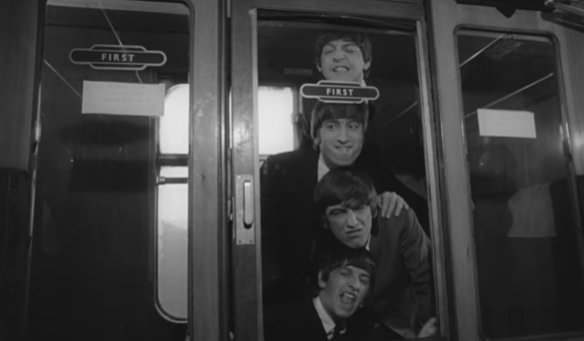
A Hard Day's Night 2.pngAre you a mod or a rocker? ~ reporter

Um, no, I’m a mocker ~ Ringo

As a 4 or 5-year-old, I didn’t know who the Marx Brothers were and no one had told me yet about Cinema Verite and what that meant. But I loved the Beatles. Also, I didn’t find out until years later that Richard Lester was an American director who caught the eyes of the Fab Four and predicted the MTV age with its frenetic editing style. But if you actually watch A Hard Days Night with the eyes of an unabashed fan — like I was as a boy — none of that matters. So let’s leave that on the drawing room floor and look at what makes this film pop with vitality all these years later.

Any conversation must begin with the music. The film bursts onto the screen with the iconic riff of A Hard Day’s Night as the Beatles scramble down a street corner fleeing frantically from a screaming mob of fans. It perfectly encapsulates this rash of Beatlemania that was exploding onto the world stage and making its way across the pond.

And what the film does so well is create this fun aura around the four lads from Liverpool. There silly, fun, a bit cheeky too but there’s something so endearing about them still. It struck me this time around that these are four men are hardly over 20 years of age and yet they had fame and stardom thrust upon them. And they are superstars but they don’t act quite like superstars.

A Hard Day's Night.png

The filming style and handheld camera work lend themselves not only to Lester’s frantic style but there’s also an indication that this is a day in the life type of musical comedy (no pun intended). It’s the perfect combination of quotable one-liners and zingers paired with a certain British humor (I now declare this bridge open!) and some of the early classics from the Beatles canon (Can’t Buy Me Love, She Loves You, etc).

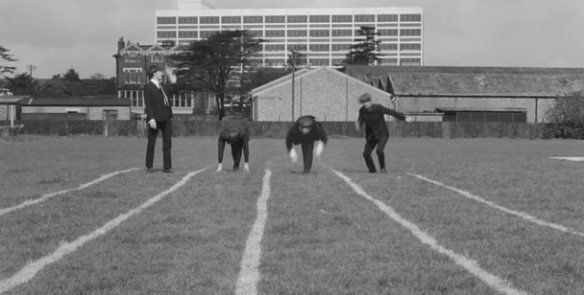
Paul’s Grandfather (Wilfrid Brambell) is very clean but that’s only a veneer for a searing personality that looks to manipulate others and stir up trouble. On Paul’s own account he’s a real mixer.  Norm is their road manager and general killjoy while Shake is his gangly hapless sidekick good for a few laughs of his own.  If you want a “plot” in the conventional sense you probably won’t get it but it’s enough to watch the boys run out on their obligations by sneaking off to dance parties or abandoned fields to do their own renditions of Monty Pythons silly Olympics.

A Hard Day's Night 3.png

We watch them in their idle moments as John messes around in the tub and George exhibits his shaving prowess on Shake’s mirror image.In another moment George takes a wrong turn and finds himself in some new age advertising agency where he unwittingly tears their campaign to shreds by calling their merchandise “grotty.” Meanwhile, the boys are herded from press junkets to tapings, from makeup to answering fan mail (a train and a room and a car and a room and a room and a room). That’s about their life at this stage.

It’s odd to think that the name The Beatles is never spoken in the film. It just is. It’s part of the world consciousness. It brings to mind a chance encounter John has with a woman who while she doesn’t utter his name notes his striking resemblance to one of the boys. In the end, she’s mistaken and he walks away muttering that she looks more like “him” than I do. So A Hard Days Night is a film that while boasting great music and wonderful comic mayhem still is a slight commentary on the Beatles stardom.

They have become beholden to their rigid tour schedule. Prisoners in a sense. But they still find time for personal expression and a bit of playful rebellion despite those very restraints. Of course, the backbone of this comic-laden rock musical is the pinnacle of their artistic expression — their music. By now all these songs are like old friends to me that it hardly seems necessary to list them off one by one. You just have to hear them.

In the final moments before their climactic show, Grandad stirs up Ringo to go out and live a little and so the boys must track him down before time runs out. What follows is an inane ruckus involving the majority of the local bobby population. But all four make it back and put on a lively showing for their adolescent admirers screaming their heads off the entire set.

As quick as they arrived they get whisked off by a helicopter to their next destination ready to rock another day. I’m not sure if this is based on the film or my own wishful dreaming, but I like to think that they’re heading across the ocean blue as the flagship of the British Invasion. When you watch this film it all comes into clearer focus what all the hoopla was about. They had a genuine charisma, a certain presence, and their music speaks for itself after all these years. Still sincere, catchy, and enduring even in its pure simplicity. Billions of screaming girls can’t all be wrong.

5/5 Stars

Saving Private Ryan (1998)

saving-private-ryan-1There’s something remarkably moving about the beginning of Saving Private Ryan. I’ve only felt it a few times in my own lifetime whether it was family members recognizing names on the Vietnam Memorial tears in their eyes or walking over the sunken remains of the U.S.S. Arizona at Pearl Harbor.  It’s these types of memories that don’t leave us — even as outsiders — people who cannot understand these historical moments firsthand.

And that’s why Saving Private Ryan is a truly breathtaking, at times horrifying, and wholly visceral experience. Words cannot actually describe the visuals on the beaches of  Normandy at Omaha. The utter chaos, death, and tumult engulfing the scene — above and below the surface of the water.

The cast includes a number of memorable players including Tom Hanks, Barry Pepper, Giovanni Ribisi, Vin Diesel, Paul Giamatti, Matt Damon, and even Nathan Fillion. And yet it’s not about any one man or even a singular act of valor. Even Private Ryan is only a starting point of a far more universal tale.

It’s also easy to say that this is a film cheapens life in the number of bodies that are blown to bits and slaughtered seemingly needlessly on screen. However, it’s even more difficult to acknowledge that in one sense life is cheap — transient to the extent that our bodies are not indestructible. We are fallible beings and breath so easily leaves our lungs and no time is this more evident than in the wake of war.

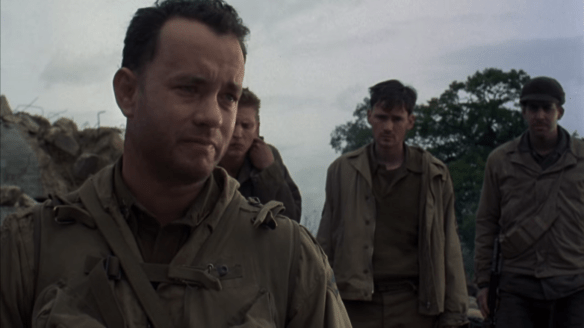
One sequence that springs to mind involves two surrendering men who, on first inspection, look German and sound German. The men under Captain Miller’s (Tom Hanks) command gun them down and they do it with smiles on their faces. This, after all, is the enemy, pure and simple. Except they were not “Nazis.” They weren’t even Germans, but Czechs (based on what they say). Men who historically had been captured by the Nazis and press-ganged into military service. And in the end, they get shot by Americans. Even the undertones of this scene point to the fact that their lives were so easily snuffed out, without even a second thought.

So, yes, life seems cheap in this film in the physical sense, even from just one example. But it is granted a great deal of depth and richness in many other ways. Families and brothers. Comrades and compatriots. Personal convictions and disillusionment in war revealed through the many characters we come to know. All of that bleeds out of this film along with the blood from the bodies.

In that sense, it’s all difficult to watch and Spielberg never intended this to be easy going.  I cannot speak for others but within the intense moments of bloodshed, the lulls in the action, and unrest within the ranks, there’s a solemnity developed.

War is at times the everyday. It’s indescribable and inscrutable. But Saving Private Ryan’s suggests that there are certain things that we hold onto. High and lofty things such as liberty and freedom that are often so easy to discount. They seem easily besmirched, dragged through the mud by all of our human inadequacies and evil. But perhaps that makes them even more important to hang on to, because just like life, these ideals are worth the fight, though they might so easily be lost. It doesn’t make the wrong right or cover up all the pain, even found within this film, but it latches on a tiny bit of good within a whole lot of messiness.

It goes back to the basic implications of the film’s main conceit — the task of saving one man — Private James Francis Ryan (Matt Damon). It’s  representative of not only the entire war but each and every one of us as we traverse roads of tribulation. Every story, whether wartime or our own, deserves an ending with some type of salvation. Because Saving Private Ryan is imbued with so much more meaning. Our human experience is wrapped up in it. There is no greater love than a man giving his life for his friends. But imagine if you are dying for the freedom of others or even the preservation of someone who you hardly know? That’s what happens in this story.

That’s why when elderly James Ryan comes back to Normandy so many years later, there’s a gravity to the situation. This is by no means a corny piece of Hollywood drama. It’s the ultimate act of love that he has received and he can hardly comprehend it, just as we as an audience must grapple with it too. In that way, Saving Private Ryan is indubitably affecting not simply as a war drama but an epic human narrative. It pertains to all of us.

The profound and terrifying thing about this gift that he has received through the sacrifice of so many others is that he cannot “earn it.” Because, in this sense, life proves to be far from cheap. There is no way to earn that back. There is no way for us to live a wholly “good” life or be completely “good” people. The whole entirety of the film tells us otherwise. Still, we can live our life with a sense of freedom knowing that cannot be expected of us. A life of purpose is all that can be asked of us. It’s that kind of purpose that makes Saving Private Ryan continuously compelling.

5/5 Stars

Pandora’s Box (1929)

pandoras_box_filmThe Greek gods created a woman – Pandora. She was beautiful and charming and versed in the art of flattery. But the gods also gave her a box containing all the evils of the world. The heedless woman opened the box, and all evil was loosed upon us.
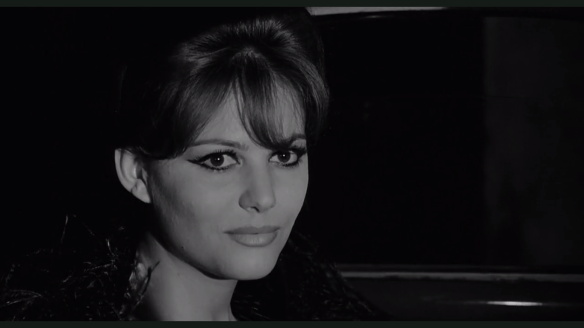
It’s often extraordinary the international platform that silent films afforded their stars. Pandora’s Box is one of the now lauded pinnacles of Weimar cinema and yet its main starlet — its acclaimed cover girl — was an American. With her bob hairstyle and vivacious sensuality, Lousie Brooks became synonymous with the Lulu character she portrayed in this film. It was this persona that caused her to rival other noteworthy contemporaries including Marlene Dietrich and Greta Garbo.

Except she differed in that Hollywood was not her first choice. Hollywood was not what made her a star. In fact, she shied away from that route, instead opting for other avenues altogether. That’s how she wound up partnering with director G.W. Pabst in not only Pandora’s Box but another classic, Diary of a Lost Girl. Then when she had enough she retired from the trade allowing her legacy to be championed by film aficionados years later.

The film in itself is really a bit of a parable taking inspiration from Greek mythology and sectioned off into Acts like a stage play. Pandora’s Box, is of course, the titular object that released all the evils into the world leaving only hope behind. The parallels are planted early on as Lulu lives life with a flirtatious vitality but that’s precisely what leaves a wake of destruction in her path. She woos every man who comes her way, a dancer and performer for all who will lend an eye. As of right now, she is the mistress of a well-to-do businessman named Schlon but he realizes that he needs to protect his image.

He plans to marry another woman but Lulu finds a way to unwittingly needle her way back into his life forcing his hand and ultimately winning him over again. But the conquests that come her way never last and she truly is a destructive temptress — a landmark femme fatale — she cannot help but flaunt her sexuality. She’s energetic, pernicious, meretricious.

The turning point of the film comes at Lulu’s trial sequence for the deed that she unwittingly perpetrated. The prosecutor stands over her wagging his finger as she’s veiled in somber shades of black. Her journey could end there but instead, she is granted another reprieve and escapes with two companions to London.

Not being bogged down by Production Codes of any kind, Pandora’s Box plays with some surprisingly frank themes most obvious of those being Lulu’s overt sexuality as well as adultery, prostitution, scandal, and so many other taboos. However, what makes the film quake with emotion is the very fact that Lulu is hardly an evil individual. Misled, immoral, and destructive yes, but it’s easy to feel sorry for her. Hers is the ultimate tragic narrative because while she assuredly ruins other people, she’s only injuring herself even more so. She dredges up so much hurt and elicits so much violence. All her attempts at love are only met with brutality.

Through it all, we follow faithfully even though we know from the outset it’s all for naught. And that’s a credit to Louise Brooks’s portrayal because there’s no doubt that she has that special something that makes you turn an eye and look. Her performance runs the gamut of emotions so uninhibited, lively, and free. There’s a universal vim and vigor to her that still feels fresh to this day in an otherwise archaic mode of filmmaking.

The amazing thing is that she probably could have been a bigger star than she actually was. She never really realized the potential that she had like a Dietrich or a Garbo but that’s not what she wanted. Still, the notability came her way anyways. Sadly, real life and the cinematic seem closer than you might expect. Her life was hardly as tragic as a film but you wonder if she ever found love chasing after men as she did.

4.5/5 Stars

Roman Holiday (1953): Escapism and Why That’s Okay Sometimes

Audrey_Hepburn_and_Gregory_Peck_on_Vespa_in_Roman_Holiday_trailer.jpg

I’ve made a point of suggesting that the reason that I return to movies, again and again, is not because I go to them as an outlet of escapism but for the fact that films give us a little bit more insight into the lives we lead as human beings. In some ways, you could say I’ve even vehemently warned against films functioning in such a way if that’s their sole purpose. In other words, I’m not a proponent of turning on a movie and tuning out all the periphery. It sounds a little too much like Timothy Leary for my tastes.

And yet I return to Roman Holiday time after time.  This story that literally functions as a fairy tale, a vignette-filled journey that perfectly encapsulates a day on the town. And we get the pleasure of returning to it again and again along with Gregory Peck and Audrey Hepburn. I will qualify why this all still makes sense but first, a little background is in order.

From the first time I saw it, on a plane flight to England, I was enamored by the whole adventure and the individuals involved. Hepburn has remained unequivocally my favorite actress of all time period. Gregory Peck’s lasting screen presence keeps him among the greats as far as film stars go.

They make Roman Holiday work so impeccably, but the major key to director William Wyler’s success is the very fact that he took his film on location — something that was still a fairly new phenomenon. So instead of getting some artificial Italian world conjured up on the Paramount backlot, we got a far more realistic experience that is almost palpable with its authentic flourishes.

They’re the kind of iconic panoramas that you cannot try and fake without them turning out ridiculously corny. But Roman Holiday is the real deal and that shines through its crisp black and white imagery and successfully turns Rome into the third major player in this romance.

I think it’s telling that Roman Holiday is a fairy tale in itself. It’s the story of Princess Ann’s little bit of escapism. It’s a bit of bliss that she gets to share with someone very special. But does she wrap herself in it forever and never return to reality and the responsibilities she has? No, she goes back to them. And there’s a reluctance and as an audience, it’s certainly bittersweet.

But look at Ann in the end and we see that she has truly grown up in that short span of time. If she had not, she would have undoubtedly been content with a life living out her little fantasy and forgetting everything else around her of substance. That’s so easy to desire after all. However, in doing what she did, she not only grew immeasurably but, in the end, she has a magical experience to hold onto and remember fondly. The fact that it cannot last forever only makes it that much more special.

There’s nothing wrong with vacation — a day of rest and relaxation is necessary for all of us. It’s no coincidence that we have a weekend built into our daily rhythms. That’s why I enjoy returning to Roman Holiday every few years because it’s alright to have that guilty pleasure every once and a while. In fact, it’s not a guilty pleasure at all. You could make a case that stories like this are even necessary. But the important distinction to make is that escapism is fine — I’m not against it completely — but it needs to be in moderation.

We can return back to earth after the fun of the fairy tale and simultaneously our lives are made better and we have the good times to look back on. I will continue returning to Roman Holiday for years to come and without the least bit of hesitation. A little bit of fantasy can be a very good thing. I’ll try and remember that.

5/5 Stars

Review: 8 1/2 (1963)

8.5 1.png

Is the subject of this film a religious one? – A Religious Leader 

Yes, well, in a manner of speaking. – Guido

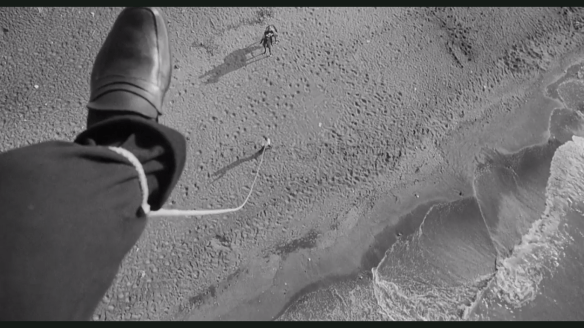
It famously opens with a dream. Our main character stuck in a silent traffic jam, completely disillusioned by the scene around him until he’s able to escape everything inhibiting him and soar into the upper echelons of the atmosphere. But it hardly lasts. Soon he finds himself tethered, being brought back down to earth.

8.5 2.png

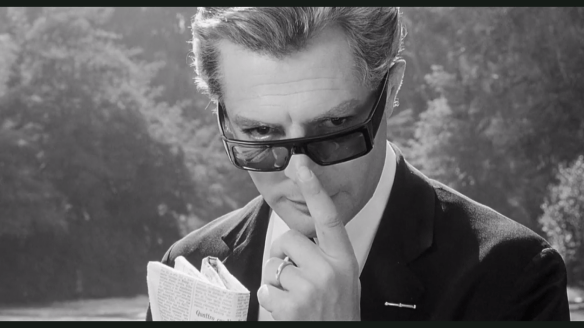
Our protagonist of sorts turns out to be Guido (the famed Italian icon Marcello Mastroianni), a film director who is going through a spell of director’s block. His most recent activities include an extended stay at a luxury spa at the behest of his doctors. It’s also early on in the film that someone asks him if his next film is also going to be one devoid of hope. It’s a very quick statement but in some sense, it sets the groundwork for Fellini’s entire film.

And it is a very personal film and a fascinating exploration of the art of filmmaking — the thing making it the most compelling is the strange suspicion that parts of Fellini himself dwell inside of Guido. Perhaps Guido shares a bit of his philosophy and stance or more precisely Fellini is like his main character.

The film within a film soon becomes evident and in that sense, it’s also a personal picture. Its title being derived from the number of pictures the Maestro had directed thus far. And numerous meta qualities come to the fore, most obviously when Guido is going through the screen tests his producer (Guido Alberti) and wife Luisa (Anouk Aimee) among those viewing the proceedings.

But going back to that issue of hope, the film’s finale has always been striking to me but I realized that it takes on new meaning put in the context of higher issues altogether. In some respects, Guido or Fellini, whichever you prefer, is trying to derive some sort of higher meaning, whatever that means to him.

8.5 4.png

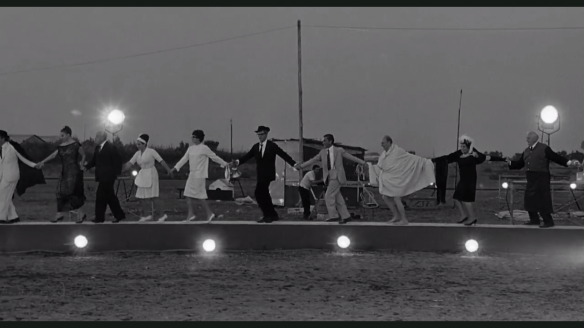
That’s in part why he has his legions of characters join hands in an almost communal dance of absurdity. Simultaneously, a journalist can be heard throwing his questions out, “Are you for or against eroticism?” and in the same breath, “Do you believe in God?” Because this is Fellini’s answer — the solution he has drawn up for himself. There is a sense of grandiose absurdity that is full of dreamscapes — where the distinction between reality and fantasy hardly means anything. Because in the eye of the beholder they are hardly different.

On purely a level of spectacle, it’s indubitably a fascinating set-up. Fellini is known for his quintessential style. To be Felliniesque is to be wrapped up in the surreal and the fantastic. But the philosophical conclusions that go hand in hand with such a provocative approach to film are rather disheartening. If this is part of what Fellini is trying to grapple with as it pertains to love and ultimate truth then 8 1/2 does fall back on a rather dismal ending.

As Guido explains to the man of the cloth, he is looking for some flash of understanding, some obvious moment of truth, like Saul at Damascus. He, like all his peers, carries the foundations of a Catholic upbringing. The religious authorities tell them that there is no salvation outside the church. His strict Catholic school told him what was wrong. Likewise, Guido plans to have a spaceship in his next film — humanities “new Noah’s Ark.” And it’s true that space exploration has been the final frontier, a beacon of potential hopes and truths. You see that in later works like 2001 and Solaris.  However, Noah’s Ark was also a vessel to escape destruction as much as it was a ship of exploration.

In drawing other cinematic comparisons, Fellini’s film revolves around a pointless MacGuffin (the phrase Asa Nisi Masa) rather like Welles famed Rosebud. Truthfully, this is a comedy in the same way perhaps Citizen Kane is a comedy. In a similar way, Guido seems isolated, but his mind, in particular, is twisted up with fantasies.

The most divisive scene in the film is yet another fantasy conjured up by Guido that is either extraordinary humorous or sadly indicative of his state of being depending on how you view it. He dreams himself in the stead of all the women he has crossed paths with thus far, all ready and waiting on his whim — his personal harem of sorts — totally and completely objectified for his pleasure. Again, it’s played for truly comic effect but what are the implications?

8.5 3.png

As the eternal beauty Claudia (Claudia Cardinale) notes, “He doesn’t know how to love.” She speaks of Guido’s protagonist but as the meta-ness suggests, this protagonist is Guido himself and going down even a layer further maybe even Fellini too. It’s precisely these problems that tie back into Guido’s disillusionment. “There’s no part in the film. And there’s no film. There’s nothing anywhere,” he says to Claudia.

Chaos and nothingness. True perfection is nothingness. His final conclusion? Life is a celebration. Let’s live it together. In essence, it’s true but the carnival showmanship and parlor tricks cannot obscure the bottom line here. As Francis Schaeffer once noted someone like Fellini “has no way to distinguish between right and wrong, or even between what is objectively true as opposed to illusion or fantasy.” That’s a terrifying world to come to terms with. During filming, Fellini supposedly kept a note on his camera to remind himself that this was a comedy film. But much like Citizen Kane, perhaps there’s a need to label it a tragicomedy. You cannot deal with such issues without elation being matched with some amount of melancholy.

5/5 Stars

La La Land (2016)

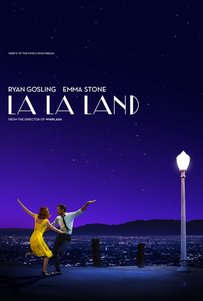
La_La_Land_Poster.jpgAfter watching this film two things become astoundingly obvious. Damien Chazelle has an equally unquenchable passion for film and for jazz. He’s also extremely bold, going all the way when it comes to choices as a director with everything from camera set-ups, lighting, staging, even casting. In fact, let’s start right there.
Emma Stone and Ryan Gosling do not initially pop as performers. They’re not song and dance entertainers equal to the likes of Astaire & Rogers or Gene Kelly or Judy Garland. There’s no contest. But the brilliance of this decision is the very fact that these two beloved stars are one of the few remnants of the bygone Hollywood era where romantic stars were paired up together for more than one movie. Bogey & Bacall, Tracy & Hepburn, Loy & Powell, yes even Fred & Ginger.

And in a generation that’s often lacking that kind of history, Emma Stone and Ryan Gosling still have a bit of that cinematic romance tying them together not just in one film but in multiple allowing the audience an even greater connection with them.

It makes the musical thoroughly modern and yet most certainly takes cues from the past and the rich tradition that it was born out of. The film’s knockout opening sequence is a far grander more audacious riff off of The Young Girls of Rochefort’ while the film’s ending reflects Chazelle’s deep affection for Umbrellas of Cherbourg wedded with the fantasy scapes of An American in Paris.

But sandwiched in between those obvious touchstones is a film that’s at moments mesmerizing, beautiful, and engaging on its own merits. Chazelle’s sheer boldness behind the camera is thoroughly impressive because he commits to telling his story in the most extraordinary way possible. It dares to dream, succumbing to the glories of the movie musical, taking risks that generally pay off in a big way. Like Jacque Demy he plants his film in the real world, in this case, contemporary Los Angeles, but he also stylizes it through elements such as production design, color, and lighting.

Beginning with the extended artistry of the initial traffic number, cinematographer Linus Sandgren’s camera is about as fluid as they come, even overtly so, bringing such attention to itself that in many respects it becomes another figure, shaping how we view every one of these environments. Its conspicuous ways generally help to turn dance sequences and musical numbers into dynamic spectacles but there are individual moments where we might still question if a more static perspective is in order.

Still, it’s easy enough to disregard this as the camera is constantly casting its gaze on the world painted with the vibrant tones that brighten Los Angeles and allow it to enter a stylized awe-evoking state of eye-popping energy. Likewise, the storyline mixes and matches real-life locales with the artistic and the magical. It succeeds in becoming a diverse patchwork of lights and staging that sets the tone for every moment our stars are on the screen as everything from the backdrops to the very clothing that the actors wear is an extension of their current state.

Emma Stone is a real winner, genuinely hilarious and cute while still being overwhelmingly compelling as she struggles through her acting career balancing her “real job” as a barista with her true aspirations as an actress. And to his credit, although I wasn’t all that sure about Ryan Gosling in this film, with Stone by his side somehow it works rather magically superseding any other objection we might have about his performance. Like Astaire & Rogers, the song and dance routines become the galvanizing moments in the film as they should be. True, they hardly have the same caliber but their chemistry is what it holds it all together.

The minor influences of The Band Wagon can also be seen when they dance together in the night air overlooking Los Angeles. Meanwhile there gravity-defying routine at Griffith Observatory leaves behind simple references to Rebel Without a Cause and becomes its own spectacle entirely.

In all the other nooks and crannies you see the affection for film. The Killers poster on the wall, Ingrid Bergman’s face plastered up in the bedroom, and movie nights watching Bringing up Baby and Notorious with Grandma. But that’s only matched by the infatuation with jazz that similarly surges through the narrative. In this case, Sebastian is the vehicle for this passion. As far as criticisms the only one that I have heard voiced and I too can call into question is the very fact that a Caucasian male wants to resurrect jazz in its purest sense.

If nothing else it’s highly ironic because tradition says that this is an African-American art founded in those roots. That’s not to say that others cannot take the mantle necessarily but in some ways, Sebastian seems to think that people like Keith (John Legend) have sold out on their culture. I suppose that issue is still up for debate long after the credits roll.

Although “City of Stars” might be the most noted number developed by Justin Hurtwitz and Chazelle for this film, I must admit my personal favorite had to be “Audition” because Emma Stone delivers the song with such an earnestness that it’s mesmerizing to watch as all else disappears and we are left to watch her sing in empty space. Perhaps the film is often lacking the minimalistic moments and the juxtaposition of a scene such as this becomes especially striking. It’s so simple.

The final question to be asked is, what is La La Land or closer yet, what is Chazelle trying to say about fame and pursuing your dreams? Because in the end, it feels like a mixed message. The film is constantly a seesaw back and forth of following your passion, versus just making ends meet, to selling out or turning to alternative paths entirely. And when it’s all said and done and the movie has wrapped up we don’t know quite what we think.

We leave both characters in a place where they are undoubtedly better off than we found them in some respects. Still, there’s a wistfulness that hangs in the air, a bittersweet quality that lingers a moment longer and that gives La La Land a certain power that feels more complex than a simple musical fairy tale. That is yet another thing Chazelle borrows from Demy that works so well.

In some ways, it’s a very “un-Hollywood” ending and though the film does spend a lot of its time infatuated with that very industry, that doesn’t mean it can’t still be conflicted in the same breath.  In fact, that’s probably the most honest conclusion it could have arrived at. Dreams are good, the world can be a magical place if we let it be, but that does not mean for one instant that we will not be met with heartbreak or difficulties along the way.

I found myself unconsciously asking myself, What does the title La La Land even mean? I had not fully considered the implications of the phrase. Yes, it’s having your heads in the clouds, maybe even existing in an ethereal world of fanciful dreamscapes as much as it is a moniker for those who live the Hollywood lifestyle.  And it’s in both these places where the film dwells. Partially in the magical realms of dreams but also in those extremely human moments of confusion and failure. That is La La Land in a nutshell.

4.5/5 Stars

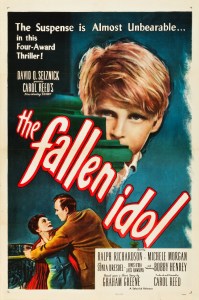
Fallen Idol (1948)

fallen-idol-poster-1948Fallen Idol is a fascinating film for how it develops inner turmoil. It’s earnestly interested in the point of view of a child and as such, it functions on multiple levels –that of both kids and adults. Philippe’s (Bobby Henrey) home is the embassy as his father is a French ambassador who is always away on the job. So Phil’s a little boy who is perpetually in the care of servants. Namely the authoritarian Mrs. Baines (Sonia Dresdel) and her good-natured husband (Ralph Richardson).

It seems like he has a fairly cushy life, able to have his run of the embassy, play all the time, and eat three square meals a day. He diverts himself with numerous trifles like any good little boy would, including an affinity for his pet snake McGregor. Meanwhile, Mrs. Baines is constantly pestering and prodding him to behave. Simultaneously Mr. Baines continually affirms his boyish nature. It’s no secret which one Philippe likes better.

This triangular relationship is vital to the film but it’s only the beginning. Because Mr. Baines, rather understandably, is unhappy in his marriage. It’s not working out for him and he has met another woman (Michele Morgan) who he dearly loves and who loves him. Of course, the one moment he goes off to meet her in confidence, the mischievous, prying eyes of Phillip find them, but he does not fully comprehend what he is seeing — what they are talking about in hushed voices — as he nibbles away at tea cakes and pastries.

The nuances of the events at hand are earnest between two deeply concerned adults who fear never being able to be together. But again, as a young boy, Philippe doesn’t quite understand the subtext of all that is going on. How could he? And Carol Reed does a wonderful job of conveying this through some simple camerawork throughout the story. It always seems like Philippe’s point of view is either from the distant staircase looking down at the figures below or he is looking up at the adults who stand above him. There’s always a pronounced distance, a gap that must be forged. And all of this suggests just how far removed he is from the events swirling around him.

At this juncture, Mr. Baines asks him to keep their secret and they go on an escapade to the zoo together. Philippe is happy with the reptile house and other animals, while Mr. Baines is soaking up his final moments with Julie before she goes away. She can’t bear to not be with him. Still, Phil is uninterested in the whole business.

But later, when some words slip out, Mrs. Baines puts two and two together. Now she is asking Phillip to keep their own little secret. He’s been asked to hold onto two conflicting secrets now and he doesn’t quite know how to respond. His mind’s convictions about lying and truth-telling are tied up in knots and they remain that way for the entire film.

The final act is even tenser as Baines must cope with the tragic aftermath of his wife’s death. She was confronting him about his love but that’s hardly the most interesting part. At this point, Phil thinks he knows what he saw and he doesn’t want to tell on Baines. In his eyes, Baines killed someone, but he likes Baines. There’s this troubling moral dichotomy that’s created in his little head. When the police inspector comes in digging around for the truth, the boy’s no help and Baines’ story is highly suspect at best.

Everything young Philippe does in an attempt to help only serves a hindrance for the man he idolizes. His allegiances were manipulated and by the end, his cries to be listened to are all but disregarded. When all is done he scampers down to his returning mother joyously. Completely ignorant of the bullet that Baines has dodged. It’s the perfect ending, summing up a film about a child embroiled in something far above what he can even fathom.

He doesn’t quite understand that Julie is not Mr. Baines niece. He doesn’t know what Mr. Baines meant when he was bickering with his wife about his freedom. Or even that the lady that he clings so closely to in the police station is a woman of the street. That’s what makes the performance that Reed teases out of his actor that much more impressive because it gets that obliviousness and confusion across perfectly.

In truth, Reed’s film brings to mind two other classics of the 1940s from British masters.   The first is Rebecca with Mrs. Baines asserting her domestic dominance rather like the unnerving Mrs. Danvers played by Judith Anderson. Furthermore, the heartbreaking nature of infidelity in this film also calls to mind David Lean’s heart-wrenching work with Brief Encounter. However, again, what sets Fallen Idol apart is the perspective of a child. It’s an innocent way of trying to make sense of the world. A world that is so often confused, ambiguous, and complex.  The beauty of being young is that same naivete. So much has gone on and Phil has seen and done so much. Yet when his mother is home, he cannot help but be happy to see her. All else fades away. That innocence remains to the end.

4.5/5 Stars

Review: Rio Bravo (1959)

howard_hawksrio_bravo_trailer_39

During the 1930s and 40s, Howard Hawks was an unstoppable force of nature churning out a string of classics year after year: Only Angels Have Wings, His Girl Friday, Sergeant York, Balls of Fire, To Have and Have Not, The Big Sleep, and Red River. All these titles stand as a collective testament to his prowess.

Over a decade later, Rio Bravo is a film that reflects something of the mastery Howard Hawks still held as a filmmaker making his way through every interlude with impeccable skill. It showcases his ability to string together scenes in a perfect rhythm, balancing humor with tension, romance with conflict, and making the western into a thoroughly entertaining experience once more. To say Rio Bravo is Hawks’ greatest films is not too far off the truth. He makes it so easy, the way he constantly tracks with his characters in space — often just talking — sometimes serious others times not, and it’s all so fluid, natural, and fun. It’s what makes the film, that’s over two hours, run seamlessly like the sweetest of liqueurs.

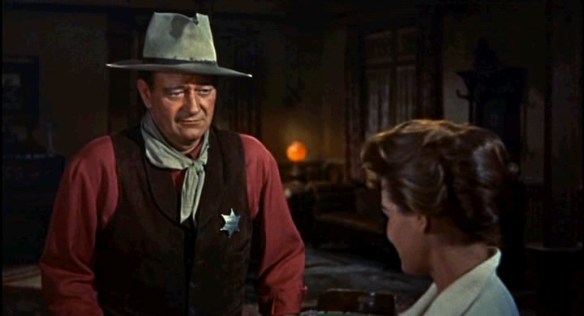
The script courtesy of Leigh Bracket and Jules Furthman is a bounty of inspiration and amusement. One such moment includes the perfect meet-cute between John T. Chance (John Wayne) and Feathers (Angie Dickinson) when she catches him in a compromising position with a pair of red bloomers. From that point on their dynamic is constantly churning with energy.

Dimitri Tiomkin’s score takes some cues from his earlier work Red River (also with Hawks) including the addition of the hauntingly sorrowful notes of “El Deguello.” With such talent as Dean Martin and Ricky Nelson, it also makes the prospect of a song a rich opportunity and Hawks finds ways to weave a musical aside into his film, showcasing the especially memorable tune, “My Rifle, My Pony, and Me.”

Howard_Hawks'Rio_Bravo_trailer_(31).jpg

Meanwhile, Hawks builds on this almost cartoonish mythology of the West where every person of interest lives life with a nickname spending as much time jawing and bickering as they do gunslinging. A great deal of that vibrancy is provided by the actors themselves with John Wayne as our anchor. Walter Brennan and Ward Bond prove to be his wizened counterparts while Dean Martin, as well as newcomers Ricky Nelson and Angie Dickinson, hold their own against the old vets.  It’s great fun to watch Dickinson spar with Wayne and Nelson lends his matinee idol looks to a laconic role as young gun “Colorado.” In an inspired bit of casting, Dean Martin plays a drunk and Brennan takes up his post in the jailhouse as a crotchety old man. It all fits nicely together.

But the question many engaged viewers might ask is whether or not Rio Bravo is a response to the earlier western High Noon. The concise answer is “yes” but that probably is not enough. It’s up to the viewer to discern which example is more truthful and honest in its portrayal of humanity. And High Noon certainly is a somber portrait full of doubt and inner turmoil. However, Rio Bravo is probably just as compelling because of its relational dynamics. John Chance is the sheriff, and as sheriff, he has a certain obligation to uphold the law. That means keeping murderer Joe Burdette (Claude Akins) behind bars. He’s the no-nonsense harbinger of justice that we expect and because he’s John Wayne he’s also tough as nails.

howard_hawksrio_bravo_trailer_26

But that’s what makes the first scene of the film so crucial. It’s notable because it begins with no dialogue, opening up on the town drunk in a saloon that also gets a visit from sheriff John T. Chance. Whether it’s an act of charity or disdain Chance saves El Borrachon’s self-respect only to get bashed over the head in return.

However, this moment is vital in how it sets up Chance’s character. Yes, he maintains a rough even grouchy exterior but looking closer, you see something else. He holds onto his friendships pretty tightly, namely old reliable Stumpy (Brennan) who he bickers with like an old married couple. Then his pal Wheeler (Bond) who comes into the bottled up Texas town with a load of supplies.

And they’re not the only ones. Chance looks to turn away a woman who’s got her face plastered on wanted posters, but slowly shows an affinity towards her. He certainly would not admit it at first but he ultimately does care for her deeply. Also, one of his most faithful allies is the spirited hotel owner Carlos (Pedro Gonzalez-Gonzalez) who is always ready to come to the sheriff’s aid while simultaneously talking his ear off.

Lastly, we go back to the Borrachon who was once Chance’s deputy but lost his sobriety in pursuit of a girl. Honestly, many people would not blame Chance for giving up on this man as a lost cause, and at several junctures, it looks like he has. But the bottom line is that he never does and in his own ornery way, he sticks by his old compadre — never deserting him or doubting him in crucial moments.

Thus, when we put High Noon up against Rio Bravo it’s not a weak sheriff versus a stalwart sheriff in the conventional sense as Hawks and Wayne might have supposed. However, what makes Chance strong are the people he surrounds himself with. In a way, when he is weak, then he is strong because he’s surrounded by people who are faithful and beholden to him. Yes, he’s still John Wayne and he’s one deadly man to cross, but he’s a lot more lethal with friends guarding his back. And that’s a testament to the people he surrounds himself with and also the ones who gravitate towards him. You get the sense that these are not fickle relationships — even in the cinematic sense. The characters can spend as much time ribbing each other as they do toting a gun through town. And perhaps the most telling part is that as an audience we grow to cherish these characters in a similar way. They’re fun to spend time with and that makes Rio Bravo a true gem.

5/5 Stars