The Big Sick (2017)

The_Big_Sick.jpgIn his opening introduction, Kumail (comedian Kumail Nanjiani playing a cinematic version of himself) explains what it was like to grow up in Pakistan with cricket and praying and arranged marriages. All those fun Pakistani traditions. There’s a bit of a matter-of-fact flippancy to how he recounts it all. Truthfully, it’s in stark contrast to much of what we’re used to. As he so rightfully points out, it also meant they got episodes of Knight Rider a lot later than everyone else. That’s before his parents made the decision to move to the States with their two sons.

America has always been a melting pot since the day of Alexis De Tocqueville and that’s part of what this film celebrates while never completely denigrating Kumail’s Pakistani roots. It so refreshingly provides a story told from a different point of view — one that we have not seen all that often — which is all illustrated so exquisitely in the opening moments.

But The Big Sick is also resonant in part because of the conflict of cultures that dwells at its core. A differing perspective usually causes chafing and it’s no different in this case. Still, at first, it must start out as a love story and it is or at least it evolves into one. This particular romance feels invariably relevant to the current world we find ourselves in. It’s a picture informed by a 21st-century worldview.

Kumail is making a go of it as a stand-up comedian in the Windy City and he makes ends meet with a bit of Uber driving. He meets a girl named Emily (Zoey Kazan) at his comedy club, a local grad student with aspirations to be a therapist. They go on a date and wouldn’t you know it, they sleep together. That is the culture after all as much as Uber, ethnic diversity, profanity, and irreligiousness.

Perhaps it’s more precisely put by Kumail who so candidly admits he hasn’t prayed for years because he does not know what he believes. That is the world that this movie occurs in, our world right here and now. They have their rounds of playful patter and time spent together watching Kumail’s favorite horror movies (he proudly has a poster of Shaun of the Dead up on his wall like any unabashed nerd). Still, they are equally noncommittal in how they never want to get too serious about relationships.

It makes sense that romances are about relationship but often those very things are also so closely tied to family. Both sets of parents play a significant role in the picture and certainly, none of them are perfect — exhibiting a wide range of idiosyncrasies — and yet the key seems to be that they are more than a pair of punch lines. It’s those very relationships too that seem to add even a greater depth and heighten the stakes. Because parental commitment more often than not is for the long haul even when their kids’ relationships don’t seem to be.

In case the title didn’t tip you off already, I’ll save you the trouble and let you know that Emily winds up sick in the hospitable. The people by her side are her mom (Holly Hunter), her dad (Ray Romano), and Kumail who feels bad even as their relationship was all but finished.

As we get to know them as people though, it really feels as if we are getting a better understanding of Emily and the same goes for Kumail. In the same way that Kumail feared telling his family that he was dating a white girl, we see another culture clash in her parent’s who fell in love years ago despite coming from two very different backgrounds, one a stiff New Yorker the other a southern belle in a football-loving family.

Kumail begins to gain a certain modicum of courage to stand up to his own parents, in particular, a mother who is always trying to set him up with a nice Pakistani girl like she did with his older brother. He’s weathered a long list of resumes and “drop-bys” by the most eligible Pakistani ladies. We sense the need for personal integrity. He needs to learn how to exercise it not only in dealing with Emily but his parents as well.

You can still be an American and embrace other cultures and that’s one of the keys to this story because navigating that can be utterly trying. Our differences far from encumbering us should bless us with life more abundant and humanity still proves that love can be a universal language that crosses many divides, cultural or otherwise.

Furthermore, could it be that this film too succumbs to that character trope formerly in vogue as the manic pixie dream girl? It’s a stretch since this is based on real events but it falls apart further still as we watch the film progress to its full conclusion. Because if you remember this fantasy character is meant to bring something out of the male character and cause a change in them. That does happen to Kumail to an extent.

The crucial development for the sake of Zoe Kazan’s character is the fact that she is allowed more growth than simply being the cause of Kumail’s growth. Thankfully she is more than a mere plot device. She is given the dignity of an actual human being meaning that she’s able to acknowledge that maybe she hasn’t changed as much as him — she’s not ready to just go back to the way things were before — and that’s okay because that feels authentic.

That’s not to say there can’t be a happy ending but as many of the greatest modern romantic comedies have managed this one leans into ambiguity and makes that a strength far more than a weakness. Kumail has gone onto to pursue his stand-up career. Emily no doubt continues her aspirations to become a therapist. Still, there’s such a thing as a fairy tale and this might be a good time to point out again that this is semi-autobiographical. Real life fairytale romances are possible. They just usually happen to be a lot messier than we’ve read about in books. A lot like this story.

3.5/5 Stars

Update: On September 16th, 2017 a man named Nabeel Qureshi passed away. And I bring up his extraordinary life because it was difficult for me not to see the parallels to this film.

Like Kumail, Nabeel was Pakistani-American. Like Kumail, Nabeel also faced the challenges of going against the wishes of his parents when it came to core aspects of his life. Like Kumail, Nabeel and his wife faced the malevolent onslaught of sickness. But in Nabeel’s case, the sickness struck him and he did not recover.

It sounds like a very sad tragedy and it is bittersweet but I reference it because Nabeel was a man who had tremendous joy and hope and he left such a lasting impact on his fellow man. It is a life worth sharing about. I enjoyed the Big Sick but even in the last few months and weeks, I have been inspired by Nabeel Qureshi’s life even more.

20th Century Women (2016)

20th_Century_Women.pngIn his noted Crisis of Confidence Speech, incumbent president Jimmy Carter urged America that they were at a turning point in history: The path that leads to fragmentation and self-interest, down that road lies a mistaken idea of freedom. It is a certain route to failure.
This also serves as a viable entry point into Mike Mills’ intimate, pensive eulogy, 20th Century Women. This is a film on the verge of so many things. It frames its story in the context of the time and the people that existed in one particular moment. Mills floods his canvas with natural light but also paints it with bold colors and plants us in this world that’s somehow tangible and present while still only being a memory to look back on.

It’s 1979. Nixon is slowly fading. Reagan is coming with his conservative boon. You have the Talking Heads. You have hardcore punk. Feminist novels and the woman’s movement. Skateboarding down the empty Santa Barbara roadways. It feels less like a time of change and more of a moment on the brink of something new.

But this very self-awareness in the era is provided by the characters who live within that context because this is their life, these are their memories, and they connect them together delving into the past and soaring forward to all that is yet to come. They recount the world they know through matter-of-fact voice-over to match the images that undoubtedly play in their own heads. This is for them. Namely a son and his mom, Dorthea and Jamie. There’s is a generational difference but not so much a divide.

Dorthea (Annette Bening) is an eccentric, dynamic, empathetic woman who cares deeply about life and others. She believes in each individual person’s rights and volition–you might even say she’s progressive in some ways. But she’s also a mom and a woman bred in a different age. Her son Jamie (Lucas Jade Zumann) makes a point of the fact that she’s from the Depression.

Giveaways include her chain smoking habit, a penchant for Bogart, and a predilection for show tunes. She was an aviator and draftswoman in a male-dominated world. But She came out of a time where the community was expected to look after everyone and she searches out the same framework for her son because he’s of a certain age.

If you were pressed to pick out the story’s inciting incident it might be the moment where Dorothea gathers the instrumental women in Jamie’s life around her kitchen table to enlist their help. Because the men around him either don’t resonate (Billy Crudup as William) or they only make their presence known on birthdays (namely Jamie’s father).

She takes a near death experience to mean he’s going through his adolescent phase and she doesn’t believe she can be all things for him anymore. As she notes later, they are better suited for the role because they get to see him in the world as a person. She will never get that. Oh, the heartaches of parenthood–being so invested–while simultaneously trying to be hands-off.

And so in some sense, her tenant Abbie (Greta Gerwig) and their teenage neighbor Julie (Elle Fanning) make a concerted effort to press into his life. Julie is the one who sneaks up through his window sometimes, not to sleep with him, though they often share the same bed, for mere companionship, someone to feel safe around and to talk to. Because he’s someone she knows can be trusted amid the fray of highschoolers.

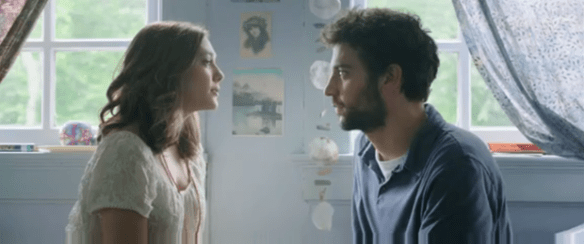
In one particular sequence, Elle sits on the bed her eyes looking sullenly at Jamie as she tries to talk through their relationship. She concludes, “I think I’m too close to you to have sex with you.” In one sense, it’s touching because it shows that their connection goes beyond this physical act that all the kids are doing, she holds too much respect for him, but it also points to the sorry state of affairs when something like sex is seen as dirty and degraded. That’s part of what she is wrestling with. That and the fact that her therapist mother tries to conveniently label her every action.

Elle Fanning leaves a startling impression casting herself in this film in a light that in one sense is the prototypical edgy, angsty teenager but there is also an undeniable vulnerability and genuine caring quality there that steeps her in unknown depth. That top layer is nothing new but that latter aspect is a testament to Mills’ characters.

Meanwhile, Gerwig provides her exorbitant supply of charismatic energy and panache that allows her to hold some of the most memorable scenes in the film in comedic terms and yet she also proves that there still is a certain tenderness in the red-haired, photography-loving, punk listening, new age modern woman, Abbie.

At the behest of Dorthea she tries to invest some of her artistic spirit into Jamie’s life, showing off the punk scene, introducing him to seminal feminist texts, and helping him to be comfortable around women but, of course, he’s more comfortable than most which is a sign of a certain amount of maturity. In fact, he impacts these women as much as they speak to him and that’s a testament to everyone involved, all flaws aside.

Even if Jamie is, in truth, our main character, perhaps a stand- in for Mills or for us, this film succeeds in crafting stalwart female characters with actual contours that are worth dissecting and with inherent worth denoted by their actions and what they care about.

I don’t know a great deal about Mike Mills but watching a film like 20th Century Women I feel like I know him better–not all of him certainly–but there are pieces here that are no doubt personal and give us a slight view into his experiences.

It’s intimate and there’s an unquestionable amount of vulnerability in his story that must be admired for its sheer honesty. It comes off as purely genuine and real. Because the bottom line is the fact that it never runs on agenda. It never tries to overtly get us to think something or feel something else. If it comes to any overarching conclusions at all it’s that life can be hard and confusing and the same goes for people.

Each one of us can come off as a complex enigma. Even the ones we know and love. It’s possible that we will never know and love them as much as we wish we could. It’s possible we cannot help them or guide them as much as we would like. Still, that’s okay.

For some, this will be a maddening, rudderless picture but to each his own. However, if I may be so bold, 20th Century Women is the kind of film I would want to make–a film wrapped up in its cultural moment in a way that feels so authentic–where the events playing out even if they’ve been made cinematic have real resonance for me as a human being.

Yes, it’s the kind of effort that won’t be received by everyone but a film so very personal rarely is. A film like this you don’t necessarily make for other people anyway. You make it for yourself and the ones you love and leave it at that. This is a love letter.

3.5/5 Stars

Blue Jay (2016)

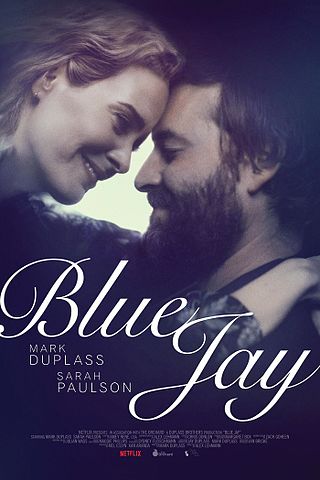
Blue_Jay_film_poster.jpgAre you leaving room for Jesus?~Amanda

You know it. Catholic school forever.~Jim

Is it true that nostalgia always feels like it should be in black and white? If that sentiment is true there’s a rooted purpose in Blue Jay’s muted black and white tones that run deep. So often we consider it as a gimmick in the modern film spectrum but here it works.

This is a story of boy meets girl again. Now they are both 20 years older no longer naive high school sweethearts and he’s lost his mother and she’s now married to a man many years her senior. They’ve moved on you might say as is customary with those living life. But this day they run into each other at the local market. The stage is set for a fulfilling reunion.

However, in the opening interludes, we don’t know anything about either of them. Jim (Mark Duplass) with his scruffy ensemble and Amanda (Sarah Paulson) with her knit cap. For us, both of them have a clean slate but for the two of them meeting again is a mixed bag of emotions.

In these moments, it seems like all parties involved with the film are trying to make everything as unbearably awkward as possible. Is this the way movies work? A script must always acknowledge the sheer awkwardness of it all, creating certain pretenses, and piddling around with what characters are actually thinking. Is it simply a mean trick of a screenwriter to try and pull us into his story, in this case, Mark Duplass, or is there actually some truth to it all?

Are people actually this awkward in real life? Heaven forbid we actually act like this when we’re together or worse yet with someone we have a crush on. I can answer that rhetorical question almost instantly as a multitude of cringe-worthy moments surge to the fore. So yes, there’s probably some truth here and yes, Duplass is drawing us in. Of course, the final joke is that the film utilized no script at all only simple character arcs to arrive at its conclusions.

Still, these moments are only the setup. It’s not Blue Jay at its best. The film comes into its own as time progresses and the contours of the two characters become more evident with every memory they manage to conjure up and every little thing they do together that takes them through their old routines. They stop at the local liquor store and the proprietor (Clu Gulager) with his cowboy hat welcomes them in like old times. Whether or not they know his unassuming roots in western television lore is another thing altogether.

Then, they make the rounds of Jim’s old family home, the house of his deceased mother which is left pretty as it was when he was still a teenager. Piled high with treasures, clothing, trinkets, romance novels, and other artifacts from that long bygone era known as the 1990s.

They let the nostalgia waft over them as they reminisce together, playing their admittedly dorky version of “House” as Mr. and Mrs. Henderson and exhibiting the funkiest ’90s dancing as two of the whitest kids you know. But they accept their quirks and how dorky they are. That’s the fun part as they remember their younger days.

It’s in these wistful and yet still somehow carefree moments that the film recalls one of my favorite lyrics,

Here’s to the twilight
here’s to the memories
these are my souvenirs
my mental pictures of everything
Here’s to the late nights
here’s to the firelight
these are my souvenirs
my souvenirs

I close my eyes and go back in time
I can see you’re smiling, you’re so alive
we were so young, we had no fear
we were so young, we had no idea
that life was just happening
life was just happening

In the final stretch there some big reveals, there’s some of the drama we were expecting, some of the histrionics that we were wary of from a film such as this. After all, they’re in a confined space together with so many emotions still dwelling inside. You wonder about the old dichotomy that men and woman can either be married or unmarried. They’re never just friends because the boundaries become too difficult to maintain. The self-restraint too difficult to manage even in the most self-controlled of us all. After all, metaphorically speaking, a man can’t scoop burning coals into his lap without burning himself.

But we’ve come to care about the characters enough that’s there no sense that this is some shallow attempt to play with our emotions and get a rise out of us. Somehow it feels like a less flawed iteration of Your Sister’s Sister because it’s frank but never purposely crass and more than its predecessor Blue Jay feels true blue and sincere. It’s a more intimate even heartfelt drama that wins its audience over.

These characters deservedly earn our respect and even in the modicum amount of time they do well to build a rapport with their audience. They do the heavy lifting by opening up and we are called to respond accordingly. The tears and the laughter are intermingled. The regrets with the reality. The way we perceived things would look farther down the road and how they look now. I guess you could say that it’s the blue jay way–reflected precisely by the path this film takes.

It’s the memories and the dashed hopes it starts to pull out of the closets back out into the open. It’s joy. It’s laughter. It’s pain. It’s heartbreak. And as is usually the case with life the ending is unwritten. That’s why they’re still making films like this, now until the end of time.

3.5/5 Stars

Tu dors Nicole (2014)

Tu_dors_Nicole_POSTER“Nicole, you’re sleeping…”

I admire a film that is able to linger and I’ve read enough scripts to know that there is a difference between filling up scenes with mindless dialogue and slowing the action down in a way that’s inherently more lifelike. In fact, I now have an increased fascination with the films that don’t rely so much on plot points at all but characters and the everyday situations that they encounter. Because, if I’m honest, everyday situations often make up most of my life and they are most relatable to me. They’re the stories that feel the most genuine.

Just looking at Stephane Lafleur’s Canadian drama, Tu dors Nicole, a little bit of the mundane is evident. Sorting racks in a clothing store. Lazy afternoon bike rides. Lifeless neighborhood streets. Long summer days with the sound of crickets outside the window. Hot nights where you can hardly keep your eyes clamped shut due to the miserable heat that keeps you tossing and turning.  It might all seem of little consequence and in many ways it is. But in the modern arena where every film must be the next big thing, the greatest spectacle imaginable and so on, it’s actually quite refreshing when someone dares to tone it down a notch.

There are some oddly weird moments throughout the film. Namely, Martin, a boy who has the vocal range of a 30-year-old man. And the traces of harp music whenever something especially enchanting comes to the fore. Then, there are the closing images of water spouting off into the atmosphere.

However, what’s at the core of Nicole is a story of adolescence coming into adulthood. It’s not so much a coming of age narrative as emblematic of that period of transition. And if Nicole had the fragments of a prototypical plotline it would be this.

The eponymous young woman (Julianne Cote) has recently graduated college and is working a menial job. Her parents have gone away for a little vacation leaving her behind with a list of tasks to complete in their absence. She would have the house to herself if it wasn’t for her older brother who is always jamming away with his bandmates in the living room and all throughout their house. Their backbeat is constantly reverberating through Nicole’s life. She hardly gets any peace and quiet.

And yet even in the tranquil moments, our protagonist still seems a bit melancholy. Mini golf isn’t as fun as it used to be. A trip to Iceland is more fun to plan for than it is to actually go through with. Nicole gets in a row with her best friend. She loses her job after taking a few articles of clothing home with her. But life continues like it always has.

In this case, black and white is not simply an aesthetic choice but an appropriate palette to reflect the underlying tone of this film. There is a listlessness, an apathy to Nicole’s life at the moment.  The thing is it’s due to nothing in particular, at least nothing spoken aloud or seen overtly onscreen, but like life, it just is.

Our main hint comes from the title itself. Could it be that Nicole is asleep? She cannot sleep at night, because, perhaps she does her sleeping during the day–going through the motions without a great deal of purpose — without a goal to drive her. We’ve all been there. Maybe even a few moments ago. Growing up in this fashion is not always all it’s cracked up to be.

The question to ask at the end of this particular narrative is this: Have things changed? Not really. But so it is with the vicissitude of life. There will be highs and lows. Moments of vibrant colors and grayish doldrums. Quarter life crises and galvanizing flashbulb moments. Still, we keep on living, latching onto what gives our confusions and doubts even a shard of meaning. We aren’t meant to live life asleep.

3.5/5 Stars

Everybody Wants Some!! (2016)

everybody wants some 3“Things are only as meaningful as the meaning that we allow them to have.” ~ Beverly
How can Sisyphus and baseball be connected? Budding lovebirds Jake (Blake Jenner) and Beverly (Zoey Deutch) tackle this question as they float contentedly in inter-tubes with college just beginning. Sisyphus is, of course, the mythical figure who tragically spent his entire existence pushing a boulder up a hill. How does that relate to baseball? Just like anything, if it becomes our sole focus, it takes on immense meaning. Looking at it one way or another it can either be seen as a blessing, a curse, a chance at a singular purpose or even an obsession. But without question, each individual person has a chance to latch onto what they find meaning in as they float through life fluctuating between contentedness and discontentedness. That’s not only what college but, what life in general, is all about.

But that’s enough waxing philosophical because as Richard Linklater has the penchant for doing, Everybody Wants Some is a romanticized, idyllic visual collage, of what it is to be in college, what it is to be a baseball player, what it was like to do all those things in the 1980s. Some will look at it disinterested because it seems to be a pretty narrow lens but as we already acknowledged, Linklater’s films always carry a fondness for their subjects — oftentimes capturing moments, little snapshots of time and space, the building blocks of life really.

We can even look at Richard Linklater, his past, his pedigree and there’s no doubt that this is another meaningful film for him. For some, there will be a similar meaningfulness to this time capsule of his. However, even for those who are not quite sold, there’s something deeply personal and heartfelt about his work that’s hard to take away from him. In that respect, his work is always universal.

In truth, Linklater follows in the tradition of many of the great European filmmakers where Plot is certainly not king. Because anything in screenwriting 101 or out of the Hollywood milieu emphatically declares that conflict is key. Watch most anything from the Texas native and the normal plot conventions go out the window since that’s not where his interest lies. And yet Everybody Wants Some still remains diverting during its entire run.

It follows in the footsteps of Dazed & Confused over 20 years its elder and it’s a film similarly ripping at the seams with song and dance. It’s another one of the vignette movies basking in nostalgia whether it’s Van Halen, Twilight Zone anecdotes, Gilligan Island punk music or any number of other things. These boys spend, not the last night after high school, but the waning days before college sitting around their house talking about who knows what, getting sky high, hitting golf balls off rooftops and taking part in endless competitions in ping pong, knuckles and anything else that can be needlessly turned into a game.

But to a lesser extent, Linklater’s latest film also has ties to Boyhood because although it might take place decades before, it picks up where the other film left off. It’s easy to forget but a big part of Everybody Wants Some!! is about a boy meeting a girl in the first days of college.

There’s still so much to be done and the film only briefly brushes on what it means to be in college but that’s not its main objective. Anyone who has played sports or went to college can identify with the camaraderie of being part of a team or the elation of all the excitement laid out in front of you the next four years.

Everybody Wants Some!! uses the typical Supers onscreen to denote the countdown until reality hits and school and sports begin for real. There’s a brevity to the moment that this film captures. Sure, in many ways, it’s filled with raunchiness and raucous fun but it also signifies a carefreeness that is very rarely realized at any other time in your life. It brings to mind one of the ballplayers Willoughby. It comes out that he faked his transcripts and is actually well over the playing age. Why would he do such a thing? We would think it’s for some competitive advantage, but no,  he just wanted to prolong this little piece of paradise. Partying and playing baseball with the world as your oyster.

Because whereas this is the beginning for some like Jake, it’s also nearing the end for others. That’s the scariness and in some senses the beauty of life. All of us are walking along our own roads like passing ships in the night but that does not mean we have to go it alone. The key is finding community and honing in on a purpose that gives our lives meaning. We have to live for the moment because those moments are transient and before you know them, they’ll be gone. Make the most of them. Enjoy them. This year as well as next.

3.5/5 Stars

Shadows (1959)

shadows1By today’s standards, it might not look like much, but all conversations of independent filmmaking cannot go anywhere without John Cassavetes and specifically his debut Shadows. It’s hard to get out of our modern perspective with so many different outlets to get films made, but back in the 1950s your only road was Hollywood and that was only a select few. Then Cassavetes got the idea to make a film with a group of his acting school students, who were trying to carve a niche for themselves amidst the method acting revolution overtaking New York.

In its initial cut, Shadows was far from popular, and after it was overhauled and re-edited it did a bit better. But now it is the emblem of indie movies — it’s a different type of film-making altogether. It’s the Beat Generation. It’s New York City. It’s handheld camera work. It’s thumping jazz. It’s improv. It’s spontaneous.  All of this loosely ties together the narrative of three siblings dealing with universal issues like family and highly volatile ones like interracial relationships.

shadows2The first is younger brother Ben Carruthers, a light-skinned black who has a struggling career as a jazz musician which he balances with a nightlife of escapades with his buddies. More often than not he’s getting in trouble, in a pinch for cash, and his violent temper gets the best of him more than once.

Then there’s his older brother Hugh who is trying to sing a new gig with the help of his agent, but he must settle for a stint at a sleazy nightclub. It feels below his talent and completely wastes his ability, but he just goes with it. On the side, he tries to keep an eye on his younger brother and sister who he feels responsible for.

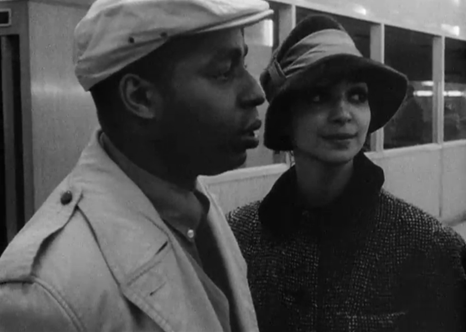
shadows3The youngest, Leila, is still an innocent and naive girl who thinks she knows how to take care of herself. Over the course of the film, she winds up with a few very different men. The first is a stuffy author with an authoritative streak. The second is a soft-spoken bright-eyed man, who gets her to sleep with him. Finally, the last one is a young African-American man who is gentlemanly, but not about to be made fun of. In fact, over the course of these relationships, we see the evolution of Leila as she starts out as a demure girl with the big doleful doe eyes. Slowly she becomes more controlling and self-absorbed, but still, she has a lot to learn about actual romantic love.

She’s not the only one either. We leave Ben as he lays battered with his buddies after they got in a brawl with some tough guys over some broads in a diner. There’s no big epiphany at the end of this or some riveting conclusion. We leave them in a moment of their existences just like any other. It’s nothing altogether novel or interesting, and ironically that’s what makes Cassavetes’ film so fascinating. It broke the mold — perfect in all of its imperfections or more aptly because of them. Not to mention the fact that it flipped conversations on race and gender upside down.

4/5 Stars

Lars and the Real Girl (2007)

larsandtherealgirl1

This Canadian-American production, written by Nancy Oliver, undoubtedly frightens the more suppressed of us in the audience (mainly me) with its main hook, a man who begins a relationship with a female sex doll, but just like his entire town, most of us leave this film with a very different perspective. There’s an innate somberness to this film that hearkens to the palette and tone of Alexander Payne, and yet Lars and the Real Girl feels surprisingly innocent. The beauty of the film is how an entire community gets behind this one man and truly accepts him for who he is.

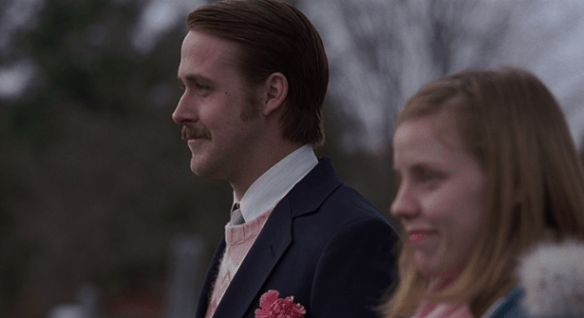
Lars Lindstrom as played so impeccably by Ryan Gosling is an isolated, lonely young man who goes to church on Sundays, lives across from his brother and sister-in-law, and avoids the cute girl at work with averted eyes. He’s an Elwood P. Dowd for the modern age. He trades in a disarming personality for an aloofness that conceals a deep well of loneliness and nevertheless shies away from normal everyday human interaction.

His views of sexuality and intimacy have been in many ways twisted up inside of him due to the specters in his past and a modern culture that does not know how to deal with sex by normal means. For Lars, it manifests itself in the form of a doll he buys off the internet. But far from using it to gratify his utmost desires sexually as we would expect, what he really does is project what he truly cares about onto this figure, christened Bianca.

She wears clothes like you and me, holds a nursing degree, lived the life of a missionary, and is constrained to a wheelchair, relaying all her thoughts to Lars and Lars alone. Harvey was an imaginary being whereas Bianca is tangible–in the flesh–sort of.

At first, this situation feels slightly uncomfortable and increasingly strange and in the moments of discovery Lars’s brother (Paul Schneider) and sister-in-law (Emily Mortimer) are beside themselves. What will the town think? He’s crazy. What are they to do?

But the beautiful thing is that they seek counsel from older, wiser people in the community including the local minister and they preach a message of love, accepting Lars for who he is, and helping him through his healing process, whatever that means.

Everyone else only sees the freak, the dysfunction, but they fail to see the dysfunction in their own lives. It’s the ones who realize that–realize that they too have their own problems. They shed their hypocritical point of view and take Lars for who he is, quirks and all. By this point, the film has subverted expectations and the joke’s on us because although some people stop and gawk, the majority of the locals begin to rally around Lars.

He still maintains his delusions as his own insecurities, fears, and the dark recesses of his childhood become more evident. He’s fearful of contact, scared of being close, and it’s these moments that dredge up all the FOO, and he’s forced to deal with it.  But that makes way for some intricate conversations, brother to brother and between Lars and the kindly psychologist Dagmar.

It’s when he finally realizes just how much people care, that he’s able to let go. Give up Bianca and engross himself in the real world with a real girl. He doesn’t have to live life scared anymore. The film wins because of its sincerity. It never belittles. Never plays its story like a joke. For that, it deserves our respect as an audience. Even in the moments that it feels utterly absurd, pay it the respect it is due — just like what all these characters give to Bianca and in turn Lars.

What struck me in particular, was the nuance of all the main female characters. When we first meet Karin (Emily Mortimer) she is a generally caring sister-in-law who has such a great capacity to extend grace towards Lars. Dagmar (Patricia Clarkson), although she is a doctor, never becomes didactic–trying to change Lars or alter him– instead allowing him to heal of his own accord. Meanwhile, Mrs. Gruner (Nancy Beatty) is spot on as the Christian lady we all wish we knew. She cuts the holier than thou attitude, covering it with a heavy dose of genuine neighborly love. That speaks more than any amount of sermons or platitudes that can be spouted off as actions invariably speak louder than words.

Finally, Margo (Kelli Garner) is the epitome of the girl who Lars deserves. Sweet, authentic and a faithful friend. When Lars let’s go and concludes the grieving process, she is right by his side ready to live life next to him. She’s a real girl, through and through.

3.5/5 Stars

Liberal Arts (2012)

liberalarts1Where to start with Liberal Arts? It’s one of those deep blue funk movies. Zach Braff tackled this issue in Garden State, and Josh Radnor does a similar thing here. Because the reality is that we live in a generation of early onset midlife crises. In the opening moments, 35-year-old Jesse Fisher (Radnor) has nearly every article of clothing he has aside from the shirt off his back stolen from a local laundromat when his back is turned. We can easily surmise that this single event epitomizes his life right now, and this is hammered home rather obviously when his unnamed girlfriend clears her belongings out of his flat. There’s no better symbol of isolation and alienation than a break-up.
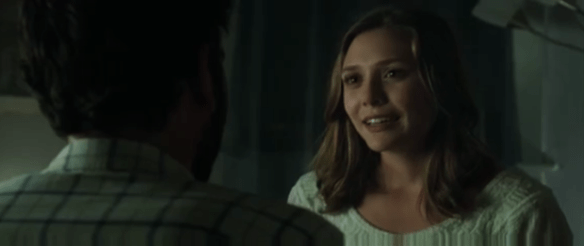
That’s when Jesse’s former professor the personable and witty Professor Peter Hoberg (Richard Jenkins) pays him a call that doesn’t so much change his life as it alters his course. The professor is preparing for his retirement and as is usually customary a dinner is being held in his honor. Jesse is one of the people he looks to invite and the former liberal arts major takes him up on it gladly as the nostalgia begins to waft over him. It’s excruciatingly corny at times even painfully awkward.

However, it’s no small coincidence that it was filmed at Radnor’s real-life alma mater Kenyon College in Ohio–a beautifully tranquil campus that reflects an idolized Middle America–a perfect place to rediscover youth and ruminate pensively on past endeavors. Jesse does all of the above, but while staying with the professor he also meets Libby (Elizabeth Olsen), a current college sophomore whose father and mother had ties with Peter as well.

Zibby has a self-assurance–the way she carries herself is completely disarming but in a good way. In fact, it intrigues Jesse (Radnor) sweeping him off his feet before he even knows it. But that’s not the only thing that affects him. Nostalgia is a powerful thing. I can feel it now as I close the books on my own college career, and I can only imagine this character who is looking back at those idyllic glory days when he was an optimistic, naive young man.This peaceful campus is completely different feel than the bustling public institution I became accustomed to, but the important things are not all that dissimilar.

liberalarts2It’s crucial to note that at this juncture nothing substantive builds between these two acquaintances romantically, but they do foster an immense connection. While Jesse is taken by Zibby’s personality, she, in turn, is discontent with a contemporary culture where no one dates–everybody’s casual about relationships. She feels unequivocally millennial and yet she readily admits these areas of old-fashionedness.

As she and Jesse part ways, Zibby burns a CD of classical music for her new confidante and entreats him to write her correspondence with pen and paper–like gentlemen and ladies in days of old. It feels very much like a Jane Austen novel, perhaps a little pretentious, but it’s hardly a criticism of these characters. What it creates within the both of them is not only a deeper connection going beyond sexual attraction but an awareness or realization of being — what people these days often call mindfulness.

As they traverse this road together there are some obvious digressions that we could easily foresee, and yet the film takes a mature and altogether realistic path. It considers the relationship between various points in time, passing of the years,  looking backward and forwards. In one direction with nostalgia and the other with anxiety and maybe even expectancy. All these are the backdrop for this complicated friendship between a 35-year-old and a college student.

The conclusions of Liberal Arts perhaps feels a bit muddled, but that’s only indicative of life. We’re all set adrift in a world that we don’t know all the answers to. As Zibby so rightfully ascertains life is basically improvised. We’ve just got to step out and live it to the best of our capabilities. Pick ourselves up when we fall and do our best to make the most of what we have. A lot of that comes when we learn how to connect with the people around us in such a way that leaves us content with who we are. I think it can be said that we leave both Jesse and Zibby better off than they began.

3.5/5 Stars

This is the only time you get to do this. Read books all day. Have really great conversations about ideas. – Jesse Fisher

Experimenter (2015)

Experimenter_PosterComing out of a psychology background I was familiar with Stanley Milgram’s famous social experiment back in high school during Intro to Psych. Even back then it was a striking conclusion on conformity and just how far people will go. It was also ruthlessly contrived and even more methodically executed. Inspiration came from Milgram’s own background working with psychologist Solomon Asch, as well as his own Jewish ancestry, nights watching Candid Camera, and a fascination in the Adolf Eichmann trial.
The results of his controversial deception are staggering. If people are told to administer an electric shock, even against their own will, knowing that the other person might full well be hurt, they will comply with benevolent authority. When you think about its moral implications, you wonder why no one had yet to make a film about it, but then again, now someone has.

Michael Almereyda appears to be the heart and soul of this film, and he brings together a mixed bag of talent, headed by Alexander Skarsgard and Winona Ryder, with various supporting spots filled by the likes of Jim Gaffigan, John Leguizamo, Anton Yelchin, Dennis Haysbert, and Anthony Edwards.

This is a stripped down film of simple design, but it rocks us with potency because its basic premise is so intriguing. It’s difficult not to be fascinated by the findings of Milgram since they feel as startling now as they were back in 1962.  The scary part is that humanity has not changed all that much, not really when we get down to the base levels of human nature.

It puts the systematic genocide of the  Nazis into perspective, but it has even more frightening implications for all of humanity. It leads to soul-searching, personal reconciliation, and of course, backlash, against Milgram himself. As the moral issues are twofold. The participants subjected to such an illusion, with confederates playing along, are forced to figure out their own conscience — what this all means about them. Meanwhile, the man behind this deception is understandably under fire. The public cannot fully condone what they did, nor do they want to believe his results.

Milgrim would lose his tenure, but as the years rolled ever onward, he carved at a decent life for himself with his wife, kids, and a nice work circuit, giving lectures and continuing his social experiments on conformity.

These are the fascinating aspects of the film. It’s when it gets a tad pretentious, breaking the fourth wall and using obviously phony back projection to tell the story of Milgram the man, that it ceases being as interesting. Because we are intrigued far more by his work than him as a person. He’s hardly an anomaly and more the norm, so we begin to remember why a film was never made about him before. The narrative strands start becoming fairly thin.

But in some ways, Experimenter feels like an apt companion piece to the film Hannah Arendt, because they both examine two people fascinated with human kind’s capacity to commit evil by examining not simply Adolf Eichmann but a great many other everyday individuals. That alone makes it worthwhile viewing — especially those fascinated by psychology. Like the former film, it’s hardly perfect or even cutting edge when it comes to biopics, but it certainly gives the viewer something to grapple with.

3.5/5 Stars

Sing Street (2016)

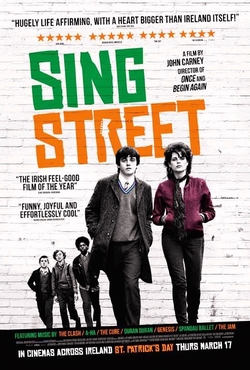
Sing_Street_posterA famed philosopher of the MTV age once sang “video killed the radio star,” and John Carney’s Sing Street is a tribute to that unequivocal truth. Certainly, it’s what some might call a return to form for the director, landing closer to his previous work in Once, and staging the way for some wonderfully organic musical numbers set against the backdrop of Dublin circa 1985. In this respect, it’s another highly personal entry, and Carney does well to grab hold of the coming-of-age narrative.

Our main point of interest is Conor, a lad thrown into a new school of hellish proportions and of course, there’s a girl, and he wants to get to know said girl. What follows soon thereafter is the inception of an entire band, the eponymous Sing Street. So in essence, the band forms so he can get the girl. It’s that simple and it works…sort of.

By all accounts, she’s an untouchable goddess, a year older than him, with a mature boyfriend and aspirations of modeling in England. And yet Raphina deigns to stoop to their level and take part in their first foray into music video-making. It’s in such moments that the film unabashedly hoists up its 80s sensibilities, suggesting Carney’s own personal affection for that day and age. Because amidst all the god-awful make-up, outrageous costumes and mimicry of the new wave scene, there’s a sense of amusement. Since every boy, at one time or another, has gone through these different phases and stages, like a sponge soaking up all conceivable inspirations. In this case, Conor’s older brother Brendan becomes his pontificating Buddha of rock n’ roll. His influences run the gamut from Duran Duran to the Cure and most definitely a little David Bowie.

But his band also develops into a wonderfully liberating beast to combat the furies of the world. Conor is consumed by grand dreams of Back to the Future themed prom nights at an American-style high school. Meanwhile, his parents are continually squabbling at home and his dream girl leaves for London without a word of goodbye. But he uses his newfound outlet paired with the guidance of his brother to turn his stray thoughts and accumulating angst into something of true substance. Namely, Conor and the versatile Eamon, have a bit of a Lennon-McCartney partnership going, as far as creative genius goes, proceeding to run with each spark of an idea that strikes. In fact, with all the boys, there’s a matter-of-fact gravity to it all, because forming a band is a serious business — it’s a concerted effort not to succumb to the grisly fate of yet another gutted cover band.

Like any formative tale about young men and women, Sing Street suggests the vital importance of personal identity and chasing after dreams in particular. You see it with Conor as he constantly dons new facades, not simply in a search for greater artistic expression, but personal freedom.

But where he breaks with his big brother, is what he actually does with the inspiration that has been passed down to him from the rock gods. He uses its whole potential as a gateway to the way of life that he desires — making the most of the opportunities that are afforded him — even if they are a long shot. As the movie progresses Raphina looks younger and younger, and it hardly seems by accident. Over time, she sheds layer after layer of makeup and manicuring to reveal a bit more of herself, until the tipping point where all her dreams come cascading down, and she has nowhere to hide. In fact, in these more fragile moments, Lucy Boynton is reminiscent of a young Felicity Jones.

Admittedly “Sing Street” has a ludicrous ending and there are moments that it tilts towards the plastic production values of  “Begin Again” rather than the sincerity of Once, but that’s a lot of what the 80s feels like. It’s fake. It’s this construction projected up on a screen. And that’s precisely what this film is saluting and celebrating, but that’s only the half of it. Raphina rightfully points out you can never do art half way. That’s what rock n’ roll is in a sense. It’s audacious exploration, risk-taking and a bit of foolishness in the name of chasing your dreams, usually involving a girl. Thus, the film is not wholly original, even for Carney, who has drawn from the same well three times over, but like any artist, he’s able to discover fresh inspiration from old cisterns. After all, every member of humanity is in one way another a broken work of art, beautifully complicated, and that’s worth returning to again and again.

4/5 Stars