Pickpocket (1959)

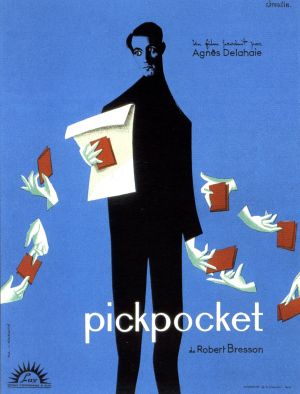
6593f-pickpocketposterThis French film directed by Robert Bresson, begins with voice-over narration of a man recalling his past. Michel is a nondescript person who was down on his luck. Then, one day he ineptly tried his hand at pick pocketing and was caught. He got off and over time he sharpened his skills and teamed up with two other men. They successfully bring in a great deal and it becomes Michel’s livelihood. At the same time Michel’s mother is becoming ill and he meets a young neighbor named Jeanne. Michel’s best friend is falling for this girl while Michel himself is continually tempted to steal. This leads to a little trouble from a police inspector and yet he stays out of jail.

However, after further discussion with the chief and Jeanne, Michel leaves Paris. He returns later still impoverished, to find Jeanne with a child but unmarried. He resolves to support her and yet after trying to work, he reverts back to his past vice. This time his guard is down and he winds up in jail. Jeanne comes to visit him a great deal and through this devotion he realizes they both are in love with each other.

This film has simple but intriguing topic. Sometimes the pick pocketing scenes are shown almost as a choreographed dance which is done so fluidly. Overall Pickpocket has a striking resemblance to Doestoevsky’s Crime and Punishment but it reflects the wonderful simplicity of Robert Bresson’s realistic style. Is it just me or does Marika Green look like Natalie Portman in black and white. I certainly think so.

4.5/5 Stars

Three Colors: Blue (1993)

b0ad4-threecolorsblue“Now I only have one thing left to do: Nothing. I don’t want any belongings, any memories. No friends, no love. Those are all traps.”

I once thought that Before Sunrise was the type of movie that I would want to make. Three Colors: Blue is another concept that I have often envisioned without even knowing it. In fact, I had seen The Descendants, a film with a somewhat similar story arc told from a different perspective. Except whereas Clooney’s film is full of blatant drama and intense familial moments in Hawaii, Blue is far more nuanced.

The Descendants might be a more gripping drama, but Blue has the sort of complex depiction that seems to more closely mirror reality. The grieving process involves isolation, solemness, and at times few words. The easiest way to grieve is not to feel, not to fully embrace the pain. Sometimes that is the simplest if not the healthiest way to deal with it for Julie. It’s a real world approach to the scenario, and it’s no less painful to watch — perhaps even more so.

Julie’s husband Patrice de Courcy was a famous composer who was commissioned to arrange a grand piece to be performed at concerts for the Unification of Europe. It is a great honor and we quickly learn that Patrice is quite a big deal. However, after a car accident, Patrice and his 5-year-old daughter perish in the crash and only Julie gets away alive. It is a stark, unsentimental picture, and it succeeds in changing Julie’s life forever.

After being released from the hospital she soon sells all her possessions and moves out of her family apartment to take up residence somewhere far removed from any acquaintances, including a man named Olivier who is in love with her. She has a new home and begins to sever ties to her old life. The unfinished work of her husband (and her) is trashed and that’s the end of that. In her new Parisian home, she has a rodent problem and becomes the hesitant confidant of a local exotic dancer. Furthermore, she rejects the necklace that a young man pulled out of the wreckage. Her times of solitude are spent swimming laps alone in the local pool, submerged and half-covered in shadow. Grandiose symphonies reverberate through her mind haunting her. In such moments, Kieslowski will often black out the screen in the middle of the scene, effectively interrupting the action for a few seconds before bringing us back.

Words are few and far between for Julie and when she does speak it is often brief and reserved. We are, therefore, forced to observe her without the aid of dialogue. She is certainly detached but there is a provocative side to her. Something is mystifying about her soft features, dark eyes, and short hair. She is a wonderful woman of mystery and beauty because the reality of it is, we do not know a whole lot about her. We must discover more bit by bit and she does not readily disclose information.
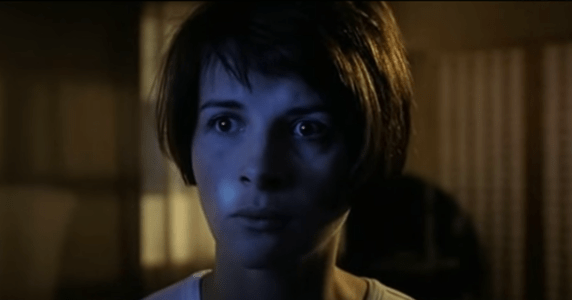
It is when pictures of her life literally flash before her eyes on a TV screen that the story takes its next turn. Julie learns soon enough that her husband had a mistress that he was with for a few years. In the hands of Hollywood, this would be high drama. In the hands of Kieslowski, it is far from it. Julie is still the same aloof individual she always was and even a confrontation with the mistress does not change that. She is civil and generous through it all.

Finally, she returns to her husband’s composition which she learns Olivier has started to rewrite. They agree that he will make his own work and Julie must accept it for what it is. Faces from the film float across the screen and a still solemn Julie lets out a few silent tears. The anti-tragedy is complete, a subdued, intriguing piece of cinema. Not for those with short attention spans but, I am interested to see Red and White. Kieslowski intrigues me with his thought provoking films somehow reminiscent of the likes of Bergman or Bunuel.

4.5/5 Stars

The Kid with a Bike (2011)

fe148-kidwithabikeTo say this is an affecting film would be an understatement, because if you want, to be honest, it is truly heart wrenching and painful to watch. From the beginning moments, this film brought to mind a modern-day hybrid of The 400 Blows with a bit of The Bicycle Thief mixed in. However, comparisons are always unfair, because this film will never be either of those and that is fine.

Cyril (Thomas Doret) is a young red-headed boy whose most prize possession is his bicycle. Now his mother is non-existent (either dead or gone) and his father might as well be. The boy lives at a foster home, but he is an unruly occupant who is prone to flee. The reason being is that Cyril clings to the hope that his father will come and get him or that his father will call him soon. It never happens.
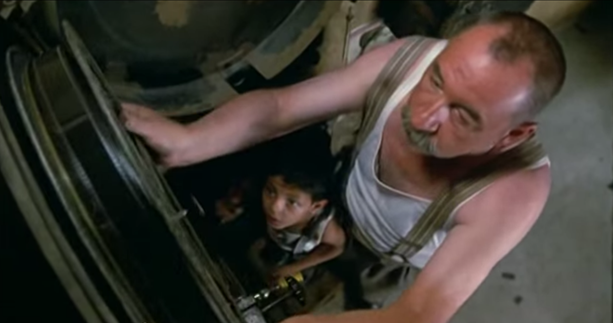
On one such escape attempt, Cyril clings to a lady hairdresser (Cecile de France)  as his caretakers pry him away. Soon she comes to see him and brings his prized bike which had been stolen. Next, she graciously agrees to take him for the weekends after he asks her. However, he is far from a perfect child, often detached, prone to disobey, and can even be violent at times. Things get worse when Cyril goes with Samantha to talk to his father. It’s a happy moment for Cyril until his father reluctantly tells him to his face that he will not take him back. He had initially asked Samantha to do it showing his lack of a spine and self-respect. You cannot much blame Cyril, but he gets worse before he gets better. He spends time with a local thug who ingratiates himself to Cyril with bike repairs, Assassins Creed, and soda. The motive being he needs a new accomplice to take part in a small-time robbery. The worst part is Cyril does it after Samantha specifically tells him not to hang out with the guy.
Without getting into all the gory details Cyril runs into more problems, Samantha gives up her boyfriend, and there are more repercussions for his actions. However, unlike The 400 Blows, this film ends on perhaps a more positive, although altogether odd, note. We can only hope that Cyril and Samantha gel even more because they deserve to be happy, but that is a story for another film. Or maybe it is better not knowing.
I had yet to see anything from the Dardenne Brothers, but I can see why their type of film-making is so popular. It’s “European film” at its best with simple storylines, realistic and humble camerawork that is brought to life by complex characters. There is a lot of raw emotion and character traits that must be parsed through. Motives and actions must always be questioned since we cannot understand everything. We just know they happen. That is a beautiful thing I suppose because these characters are not often two dimensional and that is a service to the audience. These are the type of films people deserve to watch whether they know it or not. If all we see are summer blockbusters and Oscar contenders we would be missing out on a whole different niche of film entirely. Give it a chance and just maybe you’ll like it.
4.5/5 Stars

Cinema Paradiso (1988)

58390-cinemaparadisoTo the casual viewer, Cinema Paradiso can seem like a plodding film, but this pacing is almost necessary since it reflects the passing of the years for one individual. It has been 30 years since Toto left his hometown as a young man never to return. Now he gets a call from the mother he never talks to, with the message that Alfredo has passed away.

The memories become coming back from when he was a young boy in the post-war years. He had a knack for getting into trouble, falling asleep as an altar boy, and getting scolded by his mother. She was especially displeased with his obsession with the movies played at the local theater called Cinema Paradiso. It is there where Toto has his first encounters with the great legends of film, but also perhaps more importantly, the projectionist Alfredo. Initially, the middle-aged man finds the boy a nuisance but slowly a close bond forms between the two. Alfredo teaches little Toto the tricks of the trade and the movie hall flourishes with packed houses all the time. You see, it was the age when movies were a family affair, and the whole town showed up to be entertained. They were the perfect escape from disillusioned post-war years. However, there still is a local priest who censors all kissing in film because after all, that’s highly objectionable. Very racy indeed.

One such night a near fatal accident occurs when the projector overheats then burns the film setting the whole projection room ablaze. Toto barely pulls out Alfredo alive and he is permanently left without sight. From that day on his young prodigy takes over the job but never forgets his mentor and friend. The boy is soon turning into a man and it means young love and a stint in the army, and still Alfredo is around for him. He is always ready to give a bit of homespun wisdom from a movie or do a simple favor. However, finally on the advice of his old friend Toto left town and never returned in order to make something of his life. 

Now he finally returns to pay his respects and the old has passed away. Some familiar faces still inhabit the town but the Cinema Paradiso is about to be demolished and the end of an era has arrived. The days of cinema halls are waning as videos and the like grow bigger. As a gift to his friend Alfredo left Toto (now Salvatore Di Vita) one last reel of film containing a montage of big screen kisses. It is less a lesson in Italian and American classics and more of a lesson in life. Our relationships matter. More on that later. 

 Cinema Paradiso made me crave watching films with a big audience because that is something modern moviegoers often do not experience. Movies were initially meant for the masses (ie. Sullivan’s Travels) and they were meant to be enjoyed in community with one another. That’s part of their magic I suppose. 

This is also a highly sentimental, highly nostalgic look at film, but as I alluded to before, it is less about film and more about the people. I tried to recognize actors and films while I saw bits and pieces of old black and white footage, but then I realized it was arbitrary because the audience members are what really mattered. As Alfredo points out in one of his last chats with Toto, “Life isn’t like in the movies. Life…is much harder.” However, the reward of living life is great despite the risk involved, and so it is necessary to leave the movie theater, television, or your laptop behind at times. Life and the relationships that fill it are the most paramount of all and although nostalgia is wonderful there is something to be said for living in the present. That is some of what Cinema Paradiso teaches us and it is a message to take to heart.

4.5/5 Stars

City of God (2002)

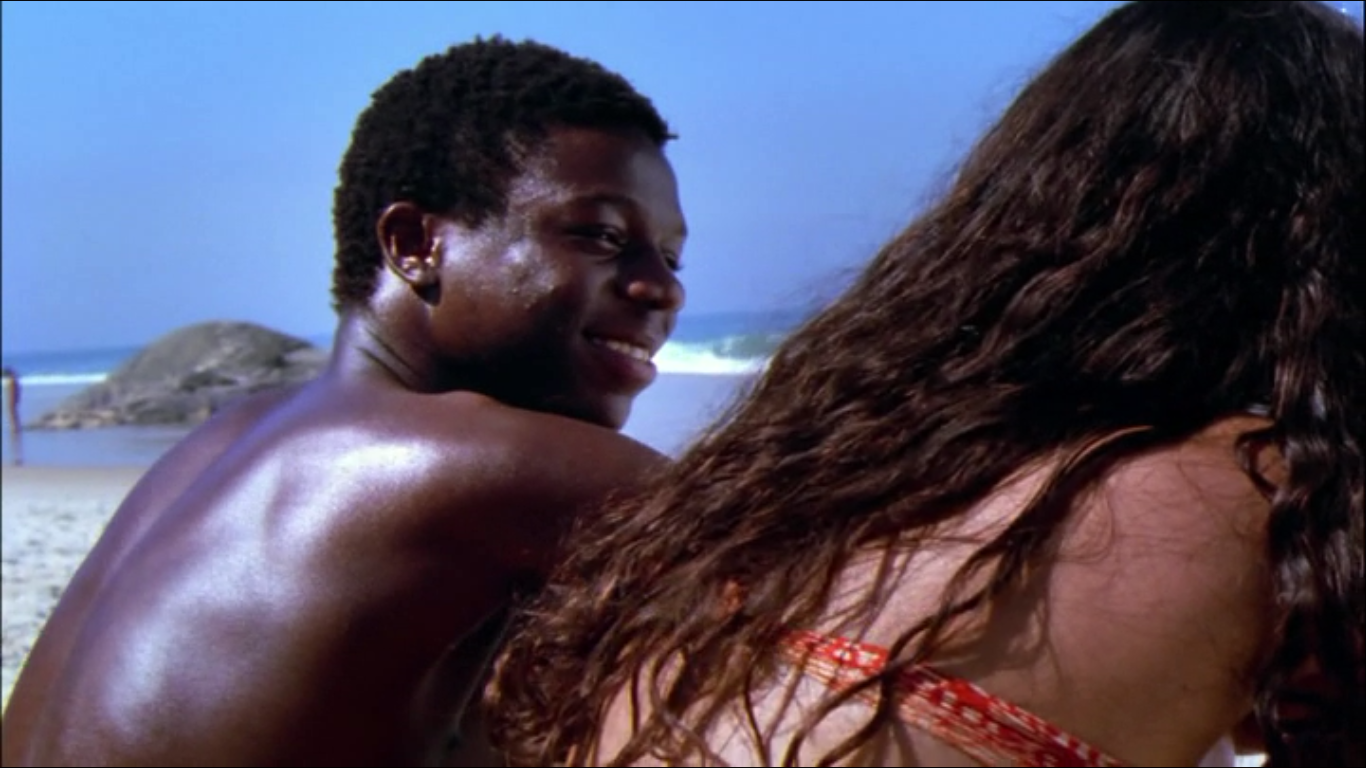
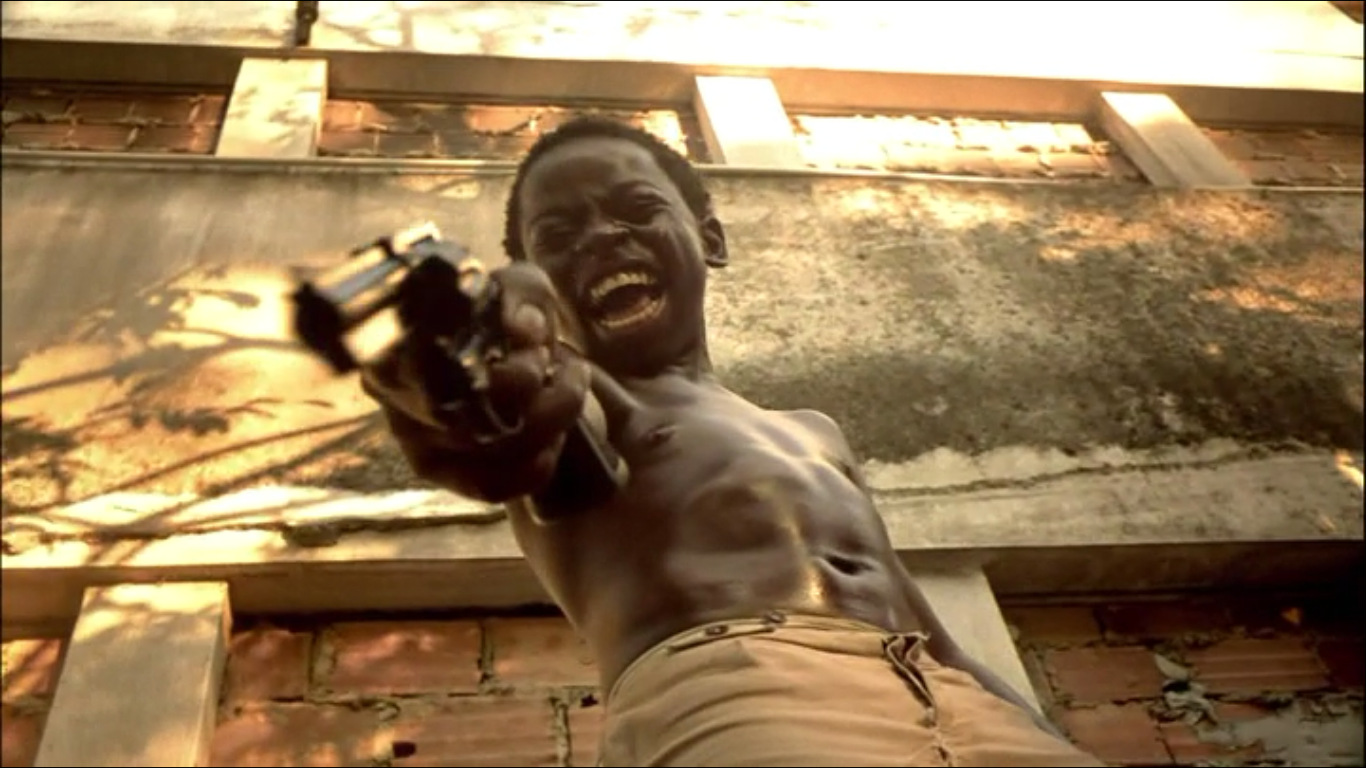
6e6f8-cityofgod1The slash of a sharpened knife grabs our attention and from that point on there is no turning away from City of God. The story is fed to us by Rocket, a character we initially know very little about except he will help us make sense of all that follows. The setting of the story is the slums of Brazil during the 60s and 70s. People are poor, crime is rampant, and adolescents wave guns around like they were toys.

Rocket’s older brother Goose was a part of The Tender Trio along with teenagers Shaggy and Clipper. They have a lucrative revenue stream robbing businesses and gasoline trucks and they share the profits with the people of the town in return for protection. Then a little twerp named Li’l Dice convinces them to rob a hotel and the job pays off big. But soon after begin the police raids and the trio is split up for good. Clipper joins the church, Shaggy is shot by the cops, and Li’l Dice knocks off Rocket’s brother. From that point, the drug trade slowly grew, and ultimately was left in the hands of a young thug named Carrot.

Now it’s the 1970s and Rocket cultivates a love for photography while hanging out with his hippie friends. Meanwhile, Li’l Dice now known as Li’l Z has taken over the drug trade and pushed almost everyone out except Carrot. He is obsessed with being the boss and ironically under his rule, the City of God remains in relative peace. Z’s childhood friend Benny is a relaxed guy who keeps his buddy at bay and earns the admiration of everyone even Rocket.

But the “good times” must come to an end as Benny decides to skip out on the slums with his girlfriend because he does not want the life of a drug lord anymore. At a giant bash tragedy strikes, and Li’l Z is looking for blood. His target is Knockout Ned and the man’s girlfriend. After a night of turmoil, Li’l Z is never at peace again, because there is now a man with a personal vendetta bent on making him pay.

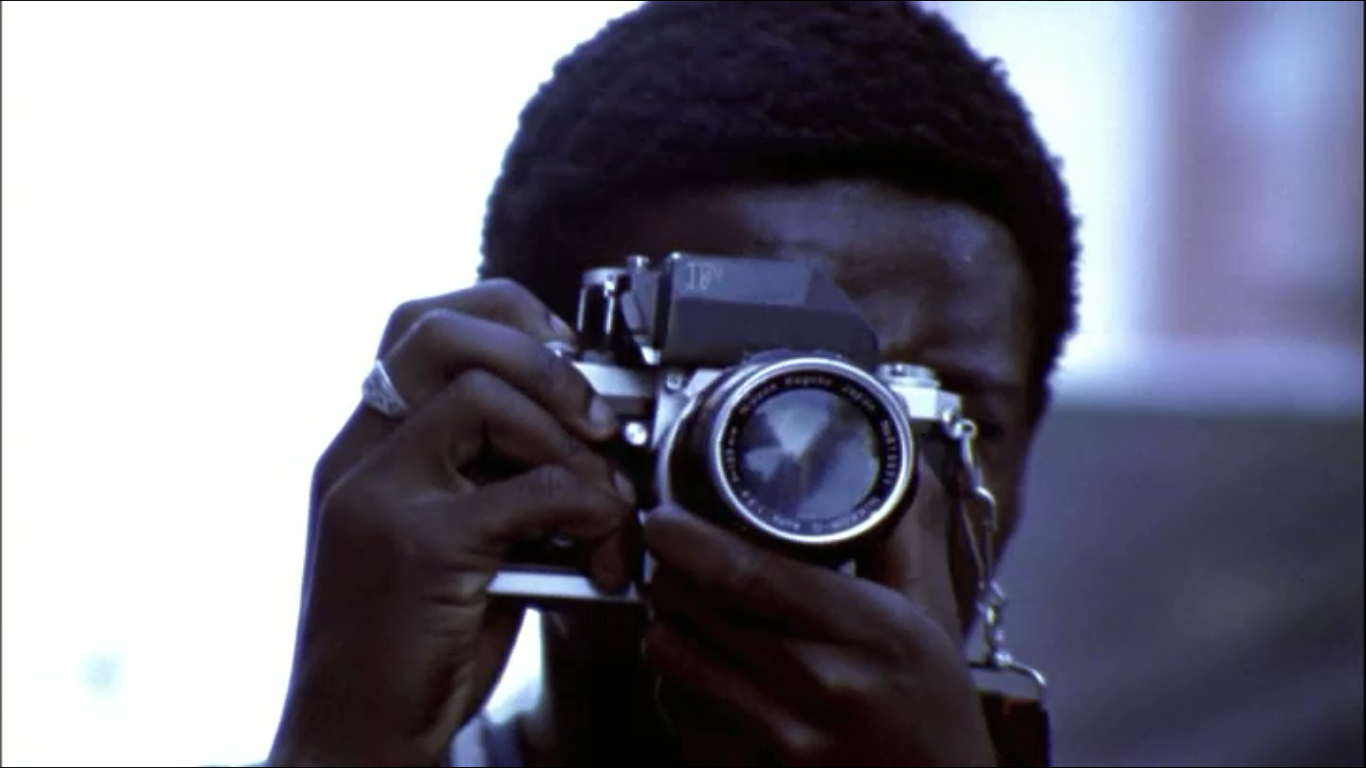
Carrot uses this new ally to his advantage and thus begins the drug war to end all drug wars. Carrot and Ned vs. Li’l Z. Both sides bring anyone and everyone into the fray and load up on guns, guns, ammunition, and more guns. It’s at this time that Rocket’s dreams become realized. He gets a job as a lowly paper boy and ultimately snags some photos of Z and his thugs making it big with the local paper. Soon his photography is in high demand and he’s even on Li’l Z’s good side.

Thus begins the beginning of the end as the rival forces meet in one last skirmish. In the aftermath Ned is shot by a vengeful boy, Li’l Z is jailed then shot, and Carrot is fodder for the papers. The little Runts now plan to run the streets and Rocket becomes famous for his photography. The film holds onto one last secret until the end before it is revealed. As we guessed this film is based on a real story and his name is not Rocket but Wilson Rodrigues.

City of God is an ironic name for such a godless place and likewise, I haven’t felt so squeamish in a film recently and perhaps ever. There is so much violence and crime in this film but we do not seem to get numb to it. It feels like we become more aware of the reality and the vicious cycle that continues its cyclical path. These young thugs are products of their environment and so how they end up is truly saddening. Even such a despicable, sadistic man such as Li’l Z knows what friendship is (ie. Benny), but ultimately even Benny cannot help him. That’s what makes the success of Rocket so extraordinary. In many ways, he is the perfect narrator, first because he survived, but also because he has a view into everything from varying angles and different perspectives.

As far as the film goes, the non-linear story line and multiple points of view made for an engaging story. This piece of storytelling keeps us begging for more crumbs as we attempt to connect the pieces as they are fed to us. Maybe it is a bit of morbid curiosity that keeps us interested or a desire to know if justice is dealt. The quick editing can be disconcerting at times and the often bobbing camera can sometimes get annoying but it fits the style of the whole film. It is part On the Waterfront, part The Godfather, but set in Brazil and a whole lot grittier. City of God reflects the hierarchy of the drug trade that permeates all areas of life and governs an entire community. Rocket was one of the lucky ones.

4.5/5 Stars

Diabolique (1954)

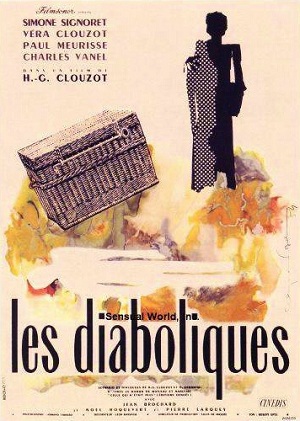
3bb85-lesdiaboliquesposterThis French thriller begins at a small boarding school for boys. The principal is a difficult man who is married to a wealthy but frail teacher, and his mistress is another one of the teachers. Because he has been awful and abusive to both of the they befriend each other and devise a plan to kill him. They lure him away from school and eventually drown him in a bathtub. They go back to the school and dispose of the body in the murky pool. The deed is done and they are both apprehensive, especially the frail wife. When the pool is finally drained there is no body! This and other strange occurrences further frighten the wife and she becomes sickly. However, she could never expect what she saw one night that led her to die of fright. The twist at the end of the film is good. It is rumored that Hitchcock tried to get the rights to this story. He would just have to settle for making Psycho instead. What a shame.
 
4.5/5 Stars

La Dolce Vita (1960)

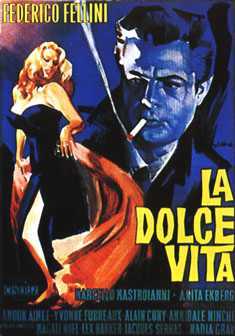
bc0c3-la_dolce_vita_1960_film_coverartStarring Marcello Mastroianni and directed by Federico Fellini, this Italian film set in Rome follows a tabloid reporter named Marcello. If he is not finding a scoop with other ravenous reporters, he spends time with his wary girlfriend, falls for an American bombshell, talks with a cultured family man, or spends time with his good natured father who he does not really know. All the while he witnesses the lives of the rich and has many romantic relations. The underlining theme of it all is boredom,  unhappiness, and superficial lifestyles. This film is not really about a main plot but rather Marcello’s many different episodes and experiences. Some are funny and others maddening, but he muddles his way through. This film, much like Breathless, is international and chic. The cinematography and score are both effective in helping to create this feel.

5/5 Stars

Cleo from 5 to 7 (1962)

This Left-Bank French film starring Corinne Marchand, follows a young singer in a real time as she waits to get back the results which will prove if she has cancer or not. The film has a unique color opening where the superstitious Cleo has her future foretold. The rest of the film follows her as she anxiously waits on her results. To pass the time she buys a new hat, rides in a taxi through Paris with her housekeeper, and also goes to a café. Returning to her flat, we see how privileged and spoiled Cleo is, first being visited by her busy boyfriend and then her joking composters. However, all the while she is constantly being reminded of what she is waiting for and what her fate might be. Cleo then meets with a friend who models and they drive through Paris together. Finally, she ends up at a park and in a quiet spot she becomes involved with a talkative soldier on leave from Algeria. They eventually take the bus to the hospital and she frantically tires to hear her results. Then, abruptly everything is okay and Cleo or Florence as we now know her, can continue living her life in relative peace. This film has many aspects of the New Wave with its often Chic Parisian atmosphere and a camera that constantly seems to be on the move. A memorable moment includes the silent picture starring Jean Luc Godard with Anna Karina.

4.5/5 Stars

Pierrot Le Fou (1965)

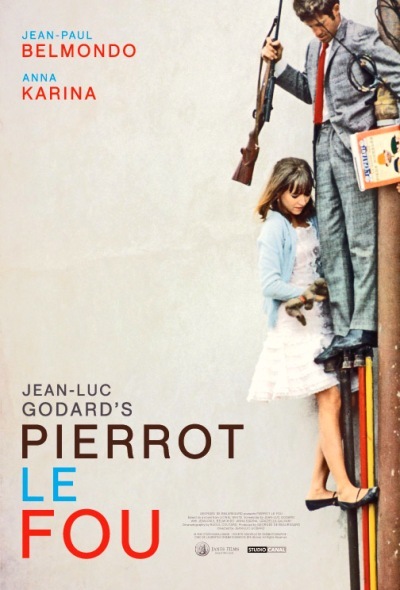
Directed by Jean-Luc Godard and starring Jean Paul Belmondo and Anna Karina, this film is chock full of poetic musings, literary allusions, pop culture images, and so on. Belmondo is a Frenchman who is unhappy with his life and marriage. When a young woman he is already acquainted with comes to watch his child, they eventually elope together. Ferdinand goes with Marianne to her apartment only to find a corpse and they must flee the scene from two gangsters. Now on the run, the two lovebirds are intent on living life and making their own Hollywood inspired movie that they can both star in. Their aspirations lead them to live a wild life on the move, but finally they settle down for a awhile in the French Riviera. Ferdinand is content with a quiet life of philosophizing but Marianne is discontent with this life right out of a Robert Louis Stevenson novel. They finally move on and stop at a night club where they face one of their pursuers. After some mishaps Ferdinand and his girl get separated. Finally they are reunited only to have Marianne turn on “Pierrot” for her real boyfriend. The final moments are filled with gunfire, a suitcase full of money, blue paint, and dynamite. You could say that everything blew up in Ferdinand’s face, and you would be quite correct.

4/5 Stars

Band of Outsiders (1964)

Directed by Jean-Luc Godard, this film follows a young woman who meets two  crooks in an English language class. Through narration we learn that she told them about a cache of money she knows of and so they get her to help them swipe it. They both fight for her affection and ultimately the thug Arthur wins out. Despite Odile’s apprehension at taking the money from her aunt’s home, they continue to get the plan ready. Arthur’s uncle now wants in and then the plan changes again because the owner of the money is gone a day earlier. From this point everything begins to go wrong and after a horrible botched attempt the three culprits flee the scene with little to show for their caper. Arthur makes up an excuse to return and Odile and Franz drive off but they return when trouble seems imminent. Back at the house Arthur is confronted by his uncle and there is more bloodshed. Afterwards Odile and Franz again flee heading to South America while the narrator promises a sequel in the near future. This film unabashedly proclaims to be Nouvelle wave even going so far as having it printed on a store banner. Again, Godard combines his love of American pulp fiction and artistic experimentation to create yet another tragic tale. The film gives a nod to Hollywood crime films and also features several famous sequences. Some high points include the moment of silence, the spontaneous dance in the café, and of course the run through the Louvre. In my mind, Pulp Fiction owes at least something to Godard right here.


4/5 Stars