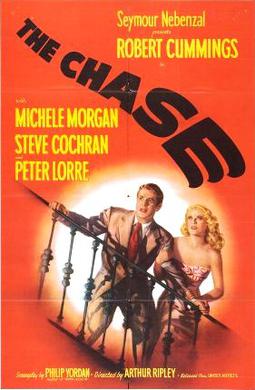
The Chase (1946)

The Chase opens as a wonderful contrivance of noir done up in a couple of successive visuals. A bedraggled man (Robert Cummings) stares through a shop window at a griddle laden with fresh bacon and hot cakes. He leans in so his hat brim mashes up against the glass, and proceeds to cinch up his belt. He doesn’t have any dough.

Then, he looks down right at that precise moment and notices a wallet at his feet stacked with cash. Any person in the real world would have seen it immediately, but it’s set up perfectly for the camera. He proceeds to treat himself to breakfast and a cigar, and after he has a full belly, he decides to pay a visit to the address inside the wallet.

You get a sense of the milieu with a mention of a standoffish Peter Lorre staring through a peephole and questioning what the stranger wants. Our hero is unwittingly cryptic, saying he wants to see one Eddie Roman — he has something to give him…

It could be a belly full of lead or something more innocuous, and, of course, it’s the latter. They give him the once over and reluctantly let him in. The room’s stacked high with statues and ornate antiquities; somehow, they make the interiors feel not just capacious but hollow.

Who lies down the corridors is anyone’s guess because this isn’t where ordinary folks dwell, only cinematic creations. Sure enough, the ex-Navy man Chuck Scott has just happened to fall in with a psychotic lunatic (Steve Cochran). We’re introduced to his temperament when he gives his manicurist a slap for screwing up and sends her simpering out the front door.

Still, he’s impressed by Chuck: An honest guy shows up on his doorstep, and he even tells him he treated himself to breakfast for a dollar and a half (those were the days!). For being such a standout guy, he repays him with a gig as his chauffeur. When you’re destitute, you don’t bite the hand that feeds you.

There’s an uneasy tension in everything Cochran and Lorre, his right-hand man, have their hands in. The controlling Eddie is married to a young lady (Michèle Morgan) named Lorna; he’s hardly allowed her out of the house in 3 years. It says so much about their relationship.

The sadistic slant of the movie becomes increasingly apparent as they stick a different dinner guest in the wine seller to be ripped apart by Eddie’s prized pooch. He has something they want for their business dealings, and any semblance of hospitality burns off as his bubbly conversationalism quickly turns into despair.

For a time, The Chase becomes a kind of contained chamber piece drama. It’s not obvious if it will break out and be something more as Chuck forms an uneasy existence between the backseat driving of his new boss and the despondency of Lorna, who stares out at the crashing waves of the ocean, all but bent on presaging Kim Novak in Vertigo by jumping in and ending it all.

Lorna and her newfound advocate book two tickets to Havana and are prepared to skip out together. Even these scenes evoke a foreboding mood more than anything more concrete because there’s only a vague sense of plot or purpose. From here, it builds into this debilitating sense of obscured conspiracy in the bowels of Havana.

There are obdurate carriage drivers, slinking foreigners, and cloak-and-dagger antics that find his woman harmed and Chuck fleeing from the authorities. The surreal tones of the story just continue to proliferate with novel characters and new environs materializing rather than moving systematically from one scene to the next.

This inherent sense of surreal atmosphere might place the picture ahead of its time, with a select few films of the era. However, it comes off as rather stultifying after auspicious beginnings because it doesn’t accomplish what many of the great Classical Hollywood films managed by telling compelling three-act stories with a sense of economy.

The underlying perplexing tension set against a dreamscape, siphoned from Cornell Woolrich’s source material, is not enough for The Chase to fully pay off on the goods. It feels more like an intriguing experiment than a successful crime drama.

3/5 Stars
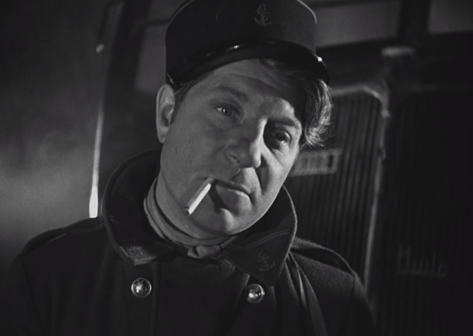
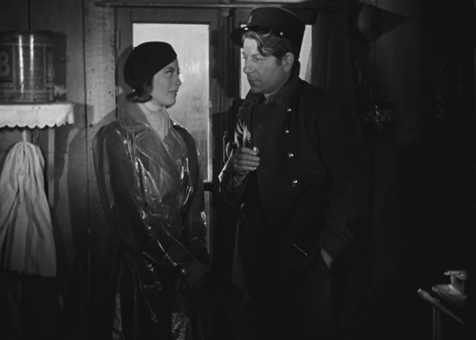
Port of Shadows (1938) and The Face of Jean Gabin

port of shadows 1.png

“Like the movies. I see you. I like you. Love at first sight.” – Jean Gabin

Jean Gabin has one of the great visages of the cinema. But in making such a statement you immediately run the risk of giving the wrong impression. To actually see him on the big screen is to know what I mean. He is not classically handsome in the Hollywood sense, fitting somewhere in between Spencer Tracy, Bogart, and Fonda when Hank had a chip on his shoulder. And yet set off in black and white as Gabin always was during his most prolific periods, there is something unmistakable about his face.

It is worn with the grooves, contours, and the residual sadness that come with life. He gives the impression of seeing the world, having his heart ripped out, being battered and bruised, while still choosing to press on anyway. You could say he has the entire French experience of the early 20th century on his brow. He’s simultaneously a projection of their best self in the face of hardship.

Historically, the cultural mood and the looming world war to come were ill-omens, as far as the release of the film was concerned. It was far too portentous to be met without some amount of resistance

In Port of Shadows, Gabin fittingly plays a jaded soldier who catches a lift to the nearby port town of Le Havre. In an opening act of clemency, he keeps his truck-driving benefactor from quashing a mutt masked by the billows of fog. It’s an instant flag. We know this man. His emotions are not obvious, but they are there; he concerns himself with the well-being of others. There is a heart under there somewhere. Scene after scene his constant companion is the runty little dog, a continual reminder of who he is as a man.

Along with setting up its star, we soon learn director Marcel Carne cares about his characters and takes care of them. Not that the environments are unimportant. Between the pitch darkness of the highway or the smoky and garish interiors of the club, there’s atmosphere aplenty. But Carne is focused on his players; their faces and distinct movements, allowing them to be focal points of scenes in a generally clean, uninterrupted fashion.

Between the instantly palpable world and the menagerie of players cycling in and out, Port of Shadows cannot help but feel like a prototype for everything from Casablanca to the entire film noir movement with its smoky brand of realism.

I don’t know much about the time frame of when the picture takes place. In all honesty, I’m not all that concerned with that so much because instantly you are pulled into a world’s depth of field with its shadow and fascinating figures. There’s a compulsion to fall into the story and be as fully involved as possible.

He’s in town, flat broke, and there’s an unspoken understanding he’s not looking to get noticed by the local gendarmerie — most obviously a deserter. This is one of those picturesque places where you can fall in with drunken vagabonds and find yourself on the receiving end of neighborliness.

As is, everyone who is down-and-out or in trouble seems to go to Panama’s, though it serves as little more than an old shack with a couple of rooms.  A sorry excuse for a hangout and yet it has far more life than the fancy club in town. It’s the people there who truly make it worthwhile.

port of shadows 2.png

Jean (Gabin) is given a meal by the ragged proprietor, gets some fancy talk from an amiable artist, before meeting the most important person: Nelly (Michele Morgan). She’s young but precocious, mature beyond her years. The same might be said of Morgan who assuredly holds her own against all her male costars. She’s thoroughly outnumbered yet she handles it poise.

It’s a testament to the strength and varied colorfulness of the characters that the illustrious Michel Simon almost becomes of less interest as Nelly’s despicable godfather, especially compared to the peculiar sots he was tasked with portraying in Boudu and L’Atalante. His big scenes come near the end of the picture anyway.

Mostly this is a love story. In a rare moment of self-reflexity, Jean mentions how theirs is a movie romance. It’s this heightened sense of romantic reality. If we put it up against anything we experientially know to be true, it’s poppycock, but between the eyes and embraces of Morgan and Gabin, it just feels right.

We also learn more about Jean. Not only is he capable of deep measures of love, but he has no tolerance for lowlifes and scum — those lacking a sense of honor or principle. You have it out with a man face-to-face with fists, not from behind. One of his main targets is the local gangster Lucien who is nothing more than an arrogant rich kid with too much time on his hands. He wants his hands on Nelly. Jean is having none of it. He cuts directly through the artifice, slapping him around for his impudence.

The story comes to a head on the docks and again, of all places, at the bumper cars in the middle of a carnival. You do not mess around with Jean Gabin when a girl is involved. This could be the movie’s ending; the romance would be the euphoric and the hero would remain triumphant. However, it is a movie and so a greater, darker, more wistful avenue of drama is in order.

Because Jean knows he is not safe, though he has gratefully taken another man’s identity. It is better for him to leave on the latest vessel shipping out to Venezuela the following day. His love for Nelly is great, but there is a need to move on, to let her be while also keeping her away from the trouble that would come from knowing him. He does the selfish or heroic thing (depending on how you look at it), in cinematic terms, and he doesn’t tell her. He holds off as long as possible.

One fine sequence is at the waterfront bar with kegs of alcohol lodged right outside the door. There’s a conversation at the bar between the bartender and an old acquaintance we’ve already met. At a distant table, our protagonist, with his new identity bequeathed him by the philosophizing painter, charts his course for Venezuela aboard the freighter now sitting in the harbor.

These seem like mundane enough scenarios, but instead of a normal cut, Carne rides an extra with his camera, acting like the seamless segue between the two conversations. It’s a classy and efficient way to keep the scenarios fluid even in a seemingly sedentary state.

These lulls lead up to what can only be seen as the film’s inevitable tragedy. Like the most sublime expressions of cinema, Port of Shadows is a visceral, emotive experience capable of so many things. It’s a piece of art: humorous, tragic, brooding, and searingly romantic. In short, a sheer pleasure to take part in.

4.5/5 Stars

4 Living Legends Part 2

day-midnightlaceHere is another entry in our ongoing series of Classic Hollywood Stars who are still with us.

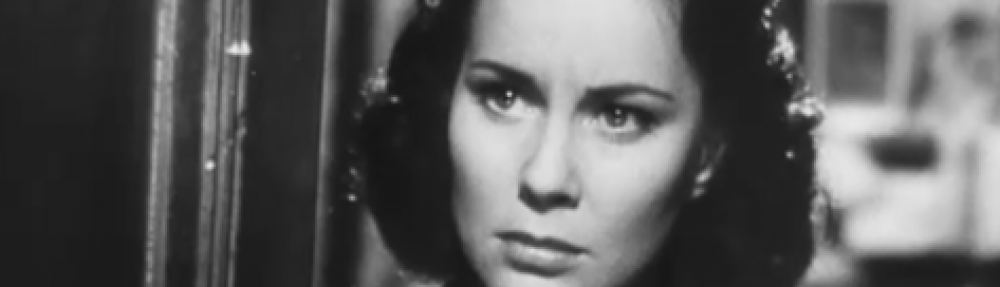
Michele Morgan (1920-)

A French beauty and leading lady for numerous decades known for integral roles in films in her native France and across the globe. Her filmography includes Michel Carne’s revered classic with Jean Gabin Port of Shadows as well as Carol Reed’s adroit drama Fallen Idol.

Nanette Fabray (1920-)

Fabray had her roots in vaudeville and musical theater and I know her best for her memorably fun role in the Stanley Donen musical Band Wagon alongside Fred Astaire, Cyd Charisse, and of course, Oscar Levant. In the 1950s she was also paired with Sid Caesar on his eponymous “Caesar’s Hour.”

Rhonda Fleming (1923-)

If Maureen O’Hara was Classic Hollywood’s favorite fiery redhead, Rhonda Fleming deserves to be thrown into the conversation as well, lending herself to many intriguing film-noir including classics like Out of the Past and lesser-known gems like The Spiral Staircase,  Cry Danger, and While the City Sleeps. The true “Queen of Technicolor” is still up for debate.

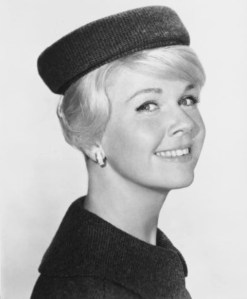
Doris Day (1924-)

Undoubtedly the biggest star on this list, Doris Day was quite the extraordinary performer as a singer, actress, and comedienne. Her string of romcoms with Rock Hudson and Tony Randall were memorable including Pillow Talk. However, she also paired with the likes of James Garner and Cary Grant in Move Over Darling and That Touch of Mink respectively. If there was a big-name leading man in Hollywood there’s a good bet that Day sparred with them. She also showed off her dramatic chops in Hitchcock’s The Man Who Knew Too Much, a film that boasted her signature song, “Que Sera, Sera.”