
 It only serves to show where my mind goes when I watch a movie. I couldn’t help but think of Harry Chapin’s elegiac and stirringly heart-wrenching tune “Mr. Tanner” as I was ambushed with some of the most revelatory notes of Coco. The most meaningful line out of that song relates how music made our eponymous hero “whole.” I feel the same guttural satisfaction blooming out of this picture.
Coco proves to be a film about many things. This is a film about music melded with family. The wholeness that comes out of music when you do it for sheer love and passion. Because you couldn’t live without picking up a guitar or throwing back your head to sing. Serenading family or penning a love song is just an extension of who you are. If you know anyone like that you can thoroughly appreciate what we have here.
In the best ways, it’s also about when families and our passions and the traditions that we’re taught to live by and that are passed down to us seem to collide — wholly impervious to any type of reconciliation on first glance — yet still somehow capable of fitting together.
Our hero Miguel (voiced by Anthony Gonzalez) is a precocious boy who lives with his family in Mexico as part of a shoe-making matriarchy where they have long been taught to despise music because their no-good great-great-grandfather left his family behind to pursue his dreams as a musician. The conflict is created right there.
Visually it’s another inventive landscape for Pixar to play with under the helmsmanship of Lee Unkrich because though the setting and storyline are planted in the present world of Miguel’s family, it’s infused with rich undertones of Mexican tradition. Not least among those is “Dia De Los Muertos” or “The Day of The Dead.”
Except instead of taking that as a mere tradition or a cultural practice the film translates that into a fully animated reality as Miguel experiences the “afterlife.” There the spirits of his ancestors exist in skeletal form making a yearly pilgrimage to commune with their still-living relatives. Family is still of the utmost importance to their lives and the most tragic reality is to have no one left to champion your legacy.
The hero’s journey laid out before Miguel is direct and compelling so we know what he is up against. He must receive the blessing of one of his blood ancestors before sunrise or else spend his days forever in the land of the dead. Even now he’s slowly losing more of his definition a la Back to the Future (1985). The stakes are obvious and his inner conflict stressed by the very fact that his relatives will only provide their blessing if he gives up his true love: music.
There’s so much else that could be lauded in the film for how it dares to explore its setting much in the way Inside Out (2015) did. It boasts some clever reversals akin to those found in something like Toy Story 3 (2010) and plays on the themes of hero worship in a similar fashion to UP (2009) with Miguel being charmed by mythical singer Ernesto de la Cruz (Benjamin Bratt). It’s also a bit of a Ratatouille (2007) tale of someone pressing against the currents around them to realize their individual gifts. But far from being to the detriment of the film, every one of these similarities is a genuine compliment. Could there be too many themes even? I’m not sure.
However, the idea I was most taken with deserves a bit more explanation. I’ve purposefully refrained from talking about Coco until now. If you were like me you probably assumed that our hero was named Coco or something like that, without giving it much forethought. However, we soon find out that she’s the fairly senile great-grandmother of our main character.
Because a major aspect of this film has to do with this idea that can best be described as transgenerational memory — where we pass down our recollections of the people that came before us to the younger generations. It’s no small coincidence that the lynchpin track is called “Remember Me.” Because in digging into his family’s personal narrative Miguel develops a deeper bond with his great-grandmother. It’s striking how even as we grow forgetful our long-term memory, the entrenched recollections of childhood or even muscle memory, often stay with us. That’s precisely how it is with Coco and Miguel aids in keeping her memories alive.
In these moments I could not help but reminisce about one of my favorite musicians Glen Campbell who passed away just this past year. He was a high profile casualty of Alzheimer’s and yet during his last tour though he could hardly remember the words anymore to his most famous songs, his fingers were just as nimble on the guitar frets as they were as a young man. Amazing. One of his final tunes was the brutally honest admission “I’m Not Gonna Miss You.”
And I mention it in passing only to suggest that if the idea is that you will only be remembered if other human beings remember you then that’s a terrifying world to be subjected to. As a writer that means that I will fade away unless someone actually unearths some of the mindless drivel I penned and shares it. If I’m single it means I better find someone quick and start a family so my children can not only pass on my gene pool but keep my name.
Even the pervasive theme that two people’s love for each other will live on forever, though a nice sentiment, still rings slightly hollow. Not to be a nitpicker but eternity is a long time. Even a blazing meteor burns out at some point. So if you’re like me maybe Coco will get you to think long and hard about your mortality. I’m not sure the answers are that easy to come by but they’re necessary to consider nonetheless.
In the context of this life at present, Coco fittingly rewrites the negative admonition to never play music with a more positive call to never forget family. Taking the restrictive and making it ripe with promise. That’s something most of us can probably get behind and share with our kids and grandkids as the years go by because we won’t be on this earth forever. The question remains, what do we do if we aren’t so lucky?
4/5 Stars
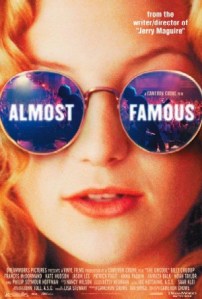 Almost Famous is almost so many things. There are truly wonderful moments that channel certain aspects of our culture’s infatuation with rock n roll.
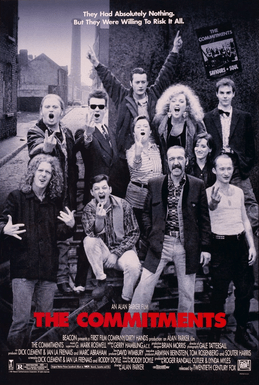 The Commitments is a very coarse film, extremely rough around the edges, and yet to its credit, the real appeal of this crowd-pleaser from Alan Curtis is the way that music is able to bring so much good into a dire situation. Because in some ways The Commitments are not just the christened “Saviors of Soul” but for one brief shining moment, they’re the “Saviors of Dublin” too.
 It disappoints me that I was not more taken with the material than I was but despite not being wholly engaged, there are still some fascinating aspects to Panic in the Streets. Though a somewhat simple picture, it seems possible that I might just need to give it a second viewing soon. Let’s begin with the reality.
 Are you a mod or a rocker? ~ reporter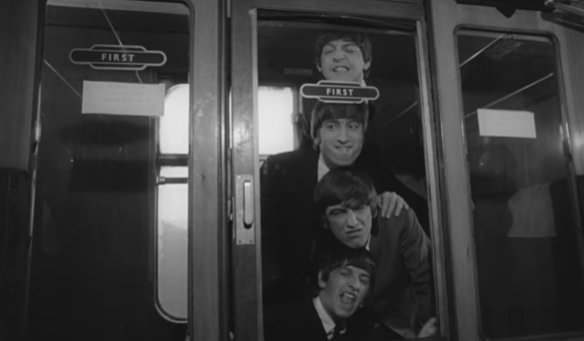
 After watching this film two things become astoundingly obvious. Damien Chazelle has an equally unquenchable passion for film and for jazz. He’s also extremely bold, going all the way when it comes to choices as a director with everything from camera set-ups, lighting, staging, even casting. In fact, let’s start right there.
 At face value, Model Shop is an ordinary film of little consequence but look a little deeper and it’s actually a fascinating portrait of the L.A. milieu in 1969. Part of that is due to the man behind it all.
 I still remember driving through the hills and dales of the English countryside listening to Hard Day’s Night in the family rental car. Back then I had a haircut that could best be described as a mop top. And then during my one visit to Liverpool, I was beyond ecstatic. I’m a fairly reserved person and yet standing in Paul McCartney’s kitchen at 20 Forthlin Road (his childhood residence) what else could I do but bend down and kiss the floor?
 A famed philosopher of the MTV age once sang “video killed the radio star,” and John Carney’s Sing Street is a tribute to that unequivocal truth. Certainly, it’s what some might call a return to form for the director, landing closer to his previous work in Once, and staging the way for some wonderfully organic musical numbers set against the backdrop of Dublin circa 1985. In this respect, it’s another highly personal entry, and Carney does well to grab hold of the coming-of-age narrative.
 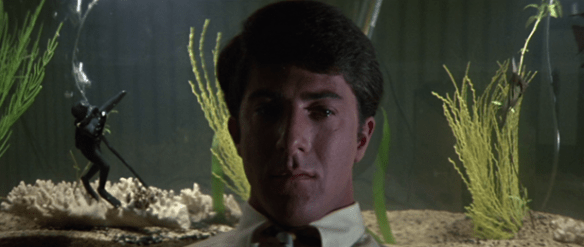 “You’re living at home. Is that right?
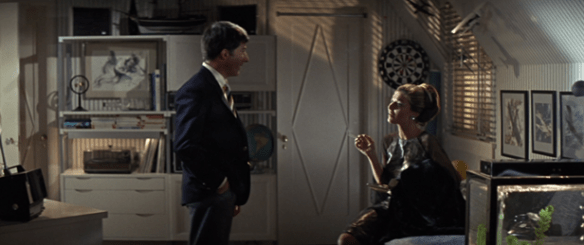 Then Mrs. Robinson coolly enters his life. It’s perhaps best signified when she tosses him the keys. They end up in the fish tank almost as if on purpose and after that she has him reeling for good. Soon he’s walking into the lion’s den (or lioness’s) as she expertly manipulates and elicits the precise response from him. In these moments the film is elevated by the awkward, huffing and puffing, and nervous chattering of Hoffman. We often forget the second part of his famed line, “Mrs. Robinson you’re trying to seduce me. Aren’t you?” His general naivete and hesitancy say it all.
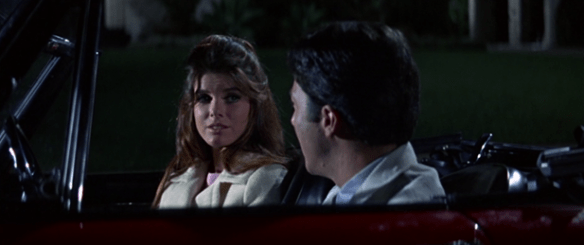 But when he meets Elaine Robinson and finally begins to connect with her on a peer-to-peer level, it’s something so profound to him. Having someone his own age that he can relate to, who feels the same unnamed apprehension and angst that strains on him. It’s what makes Ben become so mixed up. He has true feelings for her, while his affair with Mrs. Robinson only serves to poison all that could be good. And his illogical, unhealthy pursuit of Elaine continues to Berkeley where she is attending school. Still, Mrs. Robinson and her now estranged husband look to send their precious daughter far away from Benjamin Braddock.
 That’s what makes his final Herculean effort all the more climactic. He bursts in on her marriage to another man and whisks her off to another life altogether. A life that seems exciting at first, because, oh how great it is to be young and in love. But once they climb aboard that bus in their tattered garments, have a chance to sit down and really think about what they are embarking on, you see something else in their eyes. The laughter slowly dissipates and as they look around nervously, they begin to somber up. True, Ben is no longer alone in an airport terminal, he has a fellow traveler, but that does not make the future any less unpredictable or scary for that matter.
 4 Star Films