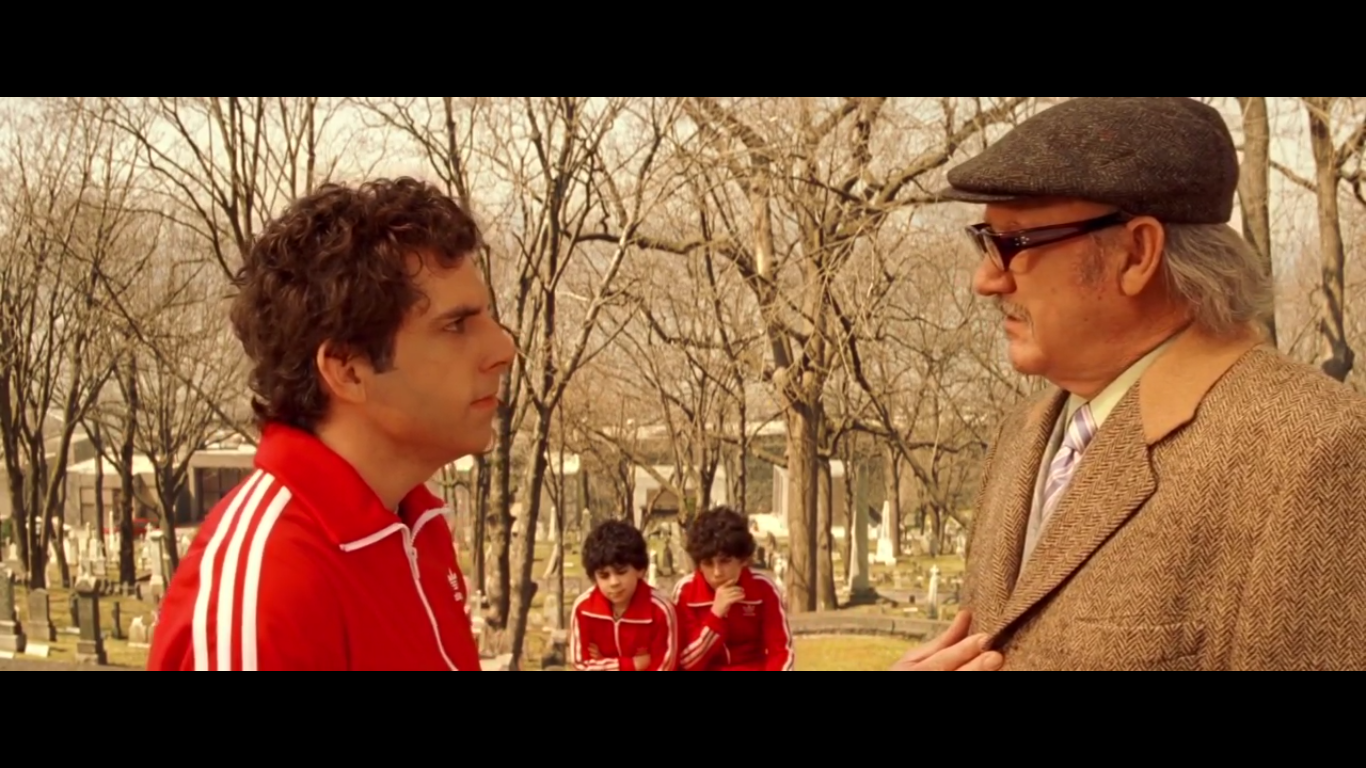
The Royal Tenenbaums maintains Anderson’s very literary style with narrative sensibilities that would crop up again in many of his movies including Moonrise Kingdom and Grand Budapest Hotel. It gives us a storybook reality firmly planted in the real world. Though he’s never seen onscreen, Alec Baldwin becomes an integral part of the story providing the voice of our narrator.
Gene Hackman is perfect for the role of Royal Tenenbaum, and it’s not surprising Anderson had him earmarked for the part. There’s an irascibility, even a callousness, to him that cannot totally quell his unquestionable charisma. By all accounts, Hackman was tough to deal with on set, but surely I’m not the only one who can think of countless movies where the actor was blustering or difficult; still, I could not stop watching him. It feels the same here. Because there is something genuine about his abrasiveness and his lying; we know people to be this way.
By now we are spoiled (or Anderson is spoiled) by amazing casts every time he makes a movie. However, this is the first time where it feels like he has assembled something special, from start to finish, and it really does feel like a cinematic family put together.
Although they spend most of their time in front of us as adults, the Tenenbaum children have core wounds and facades that prove easily identifiable. Anderson utilizes the voiceover as well as insert shots to reveal character early on. Most of their savant-like triumphs of childhood have given way to the mediocrity of adulthood.
Richie (Luke Wilson) is still licking his wounds after a failed tennis career and looking to sort out complicated romantic feelings as he traipses around doing his best brown-haired Bjorn Borg impersonation. Margot’s (Gwyneth Paltrow) dark eyeliner and secret smoking habit feel like outcroppings of her own personal angst. She’s now married to a much older man (Bill Murray), one of many romantic partners in her fairly short life as a playwright of minor acclaim.
Ben Stiller gives what initially feels like an uncharacteristic performance simply for the fact it’s not very charitable. He’s dealing with the death of his wife, the raising of two young sons, and bitterness toward a father who was always absent. Anjelica Huston and Danny Glover seem the most contented. She is the matriarch of the Tenenbaum household and he is her faithful accountant though they must both deal with the old bear, Royal himself after Henry proposes marriage. It’s not an easy road to navigate for anyone.
To say Anderson has watched The Gathering and constructed his plot is too dismissive. It’s true it follows this similar arc — a father reconciling with his children over his terminal cancer — but what’s important is how he’s able to express it in his own cinematic terms. Because it blends the sprawling family drama of something like The Magnificent Ambersons (1942) with the haunting depression of The Fire Within (1963) alongside countless other references. Still, there’s a specificity to his style and vision allowing it to grow and false start until it’s something else entirely.
There’s also always a matter-of-fact idiosyncrasy to his characters and, therefore, his plot developments. It’s what makes them interesting, mining these bits and pieces that at one time seem like one-note, throwaway gags and exposition, and yet they color his characters so distinctly.
There are BBs lodged in hands, lost fingers, people get shivved on the street corner, and we meet pet mice and a falcon named Mordecai. Even some characters like Eli Cash (Owen Wilson), Pagoda (Kumar Pallada), and Dudley (Stephen Lea Sheppard) feel like sidebars and afterthoughts who still manage to add something palpably absurd to the ensemble.
Although Anderson could not get the rights to some Beatles tunes, it would be remiss not to mention some of the impressive needle drops throughout from Charlie Brown and Nico to The Stones and Van Morrison. He uses the raucous fun of Paul Simon’s “Me and Julio Down by the Schoolyard” to encapsulate Hackman’s finest set of interactions with his grandsons. He lets them run wild, goof off, and really experience life like little boys are meant to.
However, the one choice that will remain the most impactful comes when Margot steps off The Green Line Bus to the sounds of “These Days.” It’s like a moment captured for us as Ritchie watches her come towards him, her hair perfectly fluttering in the breeze. Time all but stands still, and then we realize his feelings. He’s in love with her. It was an instant revelation for me. Because we see her through his eyes.
There’s this immediate dissonance playing out in the background. She’s his adopted sister, right? This isn’t what’s normally supposed to happen between siblings, but that doesn’t stop his feelings from being genuine. It says so much in a single moment about both of them. We don’t need more. This one interaction informs the entire film going forward.
For the rest of the movie, they must toil with these confusing pangs of love complicated by Margot’s uninhibited past and one of the most gutting suicide attempts ever captured on film. Despite this turmoil and even as Royal is outed and then castigated as a fraud, we are shown some form of restoration. It’s in the face of recurring and in some cases pent-up trauma leftover from an entire life thus far.
I won’t say everything is resolved. That wouldn’t be true. Royal is broke and becomes a doorman at a nearby hotel; there’s a car crash, and later a funeral. But there’s also a wedding and the family feels tighter and more together than they have been in years past. It’s not perfection and yet they have a newfound stasis, and since this is like a storybook, it only makes sense. We require an ending befitting the Tenenbaums. Thankfully we get it.
4/5 Stars
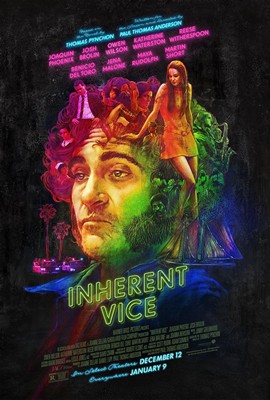 It’s not something you think about often but stoners and film noir fit together fairly well. Why more people haven’t capitalized on this niche is rather surprising. Think about it for a moment. Film noir in the classic sense is known for its private eyes, femme fatales, chiaroscuro cinematography, and perhaps most importantly a jaded worldview straight out of Ecclesiastes.
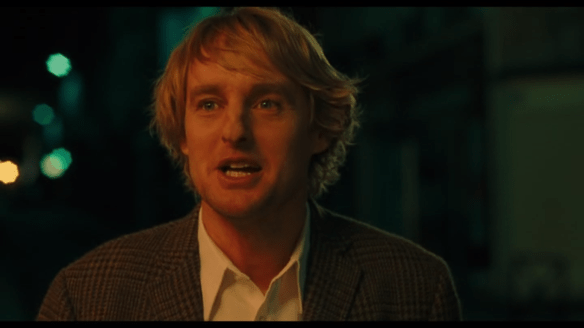 Midnight in Paris begins with scene after scene of the Parisian landscape. It gives off the feel of a lazy vacation, strolls in the park, sidewalk cafes aplenty, and even romantically rainy afternoons. For those who have never been to Paris, it makes you fall in love with the city in only a matter of minutes. Gil Pender (Owen Wilson) is such a person who would easily be content with the Left Banke, Baguettes, and a chance to write his latest novel. There is an air of wonderment that pervades his very being. He’s often naive and unassuming — hardly someone you would peg for a big Hollywood success story.
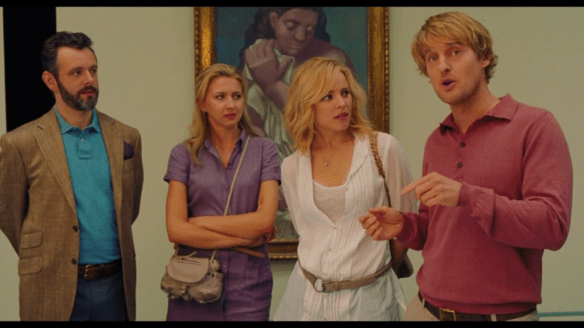 For obvious reasons, Gil cannot stand spending time with his wife’s friends. Instead, those breezy, absent-minded walks down the lanes are more his taste. Inez can’t begin to understand why he does it, but one night he’s in for a big surprise. One minute he’s out for a stroll and then the clock chimes twelve. All of the sudden something a la Cinderella happens. A coach pulls up, Gil tentatively gets in not knowing what he has just stumbled upon, incognizant of the adventure ahead of him.
 The linchpin of the whole story is really the ravishing French beauty Adrianna (Marion Cotillard), the muse of Picasso, the desire of Hemingway, and a newfound friend of Gil. He cannot help but be enraptured by her grace and the time they spend together is wonderful, that is until he tells her that he is pledged to be married. Although, it looks like he and Inez will not be together much longer as they continue to drift further and further apart.

 4 Star Films