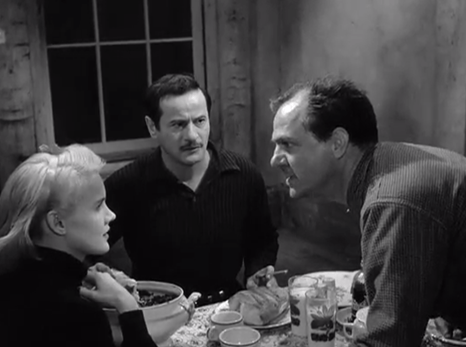
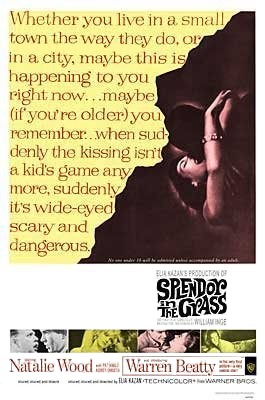
Splendor in the Grass (1961): Natalie Wood and Warren Beatty

Splendor_Sheet_ALike William Inge’s earlier piece, Picnic, or some of Tennessee Williams’ most substantial work, Splendor in the Grass seems to hinge on the fact its content is in some way pushing the envelope as far as social issues and subsequent taboos go. It’s no surprise Elia Kazan was often drawn to such content over the course of his career on stage and screen. Hence his numerous collaborations with some of the landmark playwrights of the mid-20th century.

But again, in spite of being a Depression-era period piece, Splendor in the Grass comes off as a bit dated for how it’s trying to grapple with its contemporary moment — at least to begin with.

Our protagonists Norma Dean (Natalie Wood) and Bud (Warren Beatty) are coming of age in a society with a curious way of making sense of sexual mores. They are so confusing and no one seems willing to talk about them. When they do their advice only complicates matters.

Because the two teens look into each other’s eyes lovingly in the hallways at school. The affection is palpable and they want to do it right. They believe that the other is probably the “One.” Norma Dean has a Bud triptych up in her bedroom. Her devotion verging on obsession. Bud tells his boisterous father (Pat Hingle) he’s bent on marrying the girl.

They want to have intimacy but no one seems capable of dispelling the myths for them. Mrs. Loomis is quick to make sure her daughter hasn’t gone too far with her beau. She doesn’t want her daughter to be one of those girls — easy pickings with no respectability. It’s like a death sentence in a small town like theirs.

Kazan also captures the almost incoherent whisperings of bystanders whether concerned parents, students, neighbors, or partygoers. Because it’s true every slight tilt toward something “abnormal” gets the whole community talking. There’s a stigma attached to so many things.

The perfect example is Bud’s own sister, a prototypical floozie named Ginny (Barbara Loden), who is used to a good time and cavorts with nearly any man who will take her. Her father tries to keep a rein on her and Bud begs his sister to pull herself together. You can tell he’s genuinely worried about what she is willfully doing to herself.

Whereas Norma Dean’s mother preaches chastity to her little girl, Bud’s own father encourages him to find another type of girl — a girl in fact not unlike his daughter — someone who is easy. He preaches a gospel of sowing his wild oats before settling down to a life of prosperity and a Yale education. Bud eventually takes the advice and generally finds it lacking, though he still winds up terminating his relationship with Deanie. His experiences in college aren’t much better as he’s always maintained humbler aspirations.

Already so devoted to him, Deanie is emotionally torn apart by the separation, going so far as to teeter on the edge of a nervous breakdown. Her mother encourages her to court another boy named Toots (Gary Lockhart) who comes a calling, but it literally drives Deanie to the brink where she looks to jump off and save herself any future heartache.

When she enters her home and her parents seem oblivious to her feelings, bombarding her with happiness, it somehow feels like a precursor to Benjamin Braddock’s suffocation. It’s not simply that we begin to take on Deanie’s point of view, but there’s such a relational disconnect. Parents have no idea what their kids are going through and they seem hardly capable of empathizing with them.

So they go it alone. Natalie Wood soaking in the bathtub. Her voice gets more airy and unsettled by the minute. She’s the epitome of fragility. Bud struggling away from home and looking for understanding in another girl (Zohra Lampert) or a benevolent school official who actually chooses to listen to him, unlike his father.

However, far from demonizing parents, we realize just how much pressure there is on them, so many mistakes to be made, ways you treat your kids, which unwittingly affect them in their future. It’s just the way it is. Art Stamper cares so much about the success of his kids and he’s put his entire life into setting up their good fortune. Where does it get him in the end? Likewise, Mrs. Loomis dotes incessantly over her daughter confessing she did her best as a mother, afraid Norma Dean holds past failings against her.

Then, her parents make the heady decision to send her away for therapy and things begin to reach an equilibrium. The plot feels like vague fragments rather than a fully cohesive narrative from start to finish, but it gives us hints and contours of our main characters trying to decipher their lives.

As times passes, there’s less and less of Kazan’s more dramaturgical entries and more of Wild River another Depression-era drama, which was equally blessed with understatement in its most crucial moments. I think Splendor in The Grass does well to ditch drama for a near wistful milieu feeling at home in the poetic romanticism of William Wordsworth. Regardless, it proves a healthier place to wind up.

It’s a more hopeful rendition of Umbrellas of Cherbourg. The romance we thought would be something — even marred by scandal — was nothing of the sort. It just dissipated and with the passage of time two people found others and it seemed right.

When Bud and Deanie meet again, in the end, they muse how strangely things work out sometimes. Neither of them would have foreseen things this way. He’s a farmer now, with a kindly wife, and a boy with another child on the way. She’s to marry a successful doctor whom she met while she was in the care facility. It really is a satisfying denouement.

Instead of thinking about happiness, they take what comes and find contentment wherever life leads them. For people so young, they seem to have a fairly clear handle on doing precisely that.

With his debut, Warren Beatty readily became another protege of Elia Kazan gleaning anything he could, serving him well in a diverse career as an actor, producer, and director that is still going to this day. Meanwhile, Natalie Wood benefited as well in a performance that though it borders on the spastic, nevertheless seems to cull depths of emotional instability yet untouched in her career.

Now we cannot immediately label those the hallmarks of a great performance. Yet maybe the vulnerability brought on makes it so. The film is at its best in its innocence and transparency finally giving way to a newfound maturity. The old maxim manages to ring true; time heals all wounds.

3.5/5 Stars

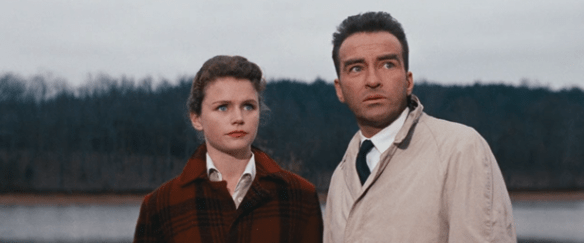
Wild River (1960): Elia Kazan and Monty Clift

wild river 1.png

“You’re getting awful human aren’t you Chuck?” ~ Lee Remick as Carol

“I was always human, wasn’t I?” ~ Montgomery Clift as Chuck

With the mention of the Tennessee Valley Authority and what feels like Depression newsreel footage suggesting the work they are looking to do in the face of poverty, it becomes immediately apparent Elia Kazan’s Wild River feels very much like a docudrama.

Despite the raging water in the title, this is a surprisingly subdued picture especially given Kazan’s credentials. But there you have a dose of its enticement as a film that all but flies under the radar because it cannot be so easily attributed to the Method due to theatrics like a Streetcar Named Desire or East of Eden.

And yet there is no doubting the capabilities of a now weathered Montgomery Clift in this latter stage of his career. Fitting, as his name is linked, deservingly so, with the Brandos and the Deans for the jolt of newfound authenticity and masculinity they helped usher in within the Hollywood community.

However, unlike his compatriots, Clift was not a rising star partnering his talents with Kazan’s own intuitive handling of actors. He was a highly established and ceaselessly ingenious talent already. Clift never seems prone to histrionics but more crucially proves invested in emotional authenticity.

In this case, he is a man with an obvious task at hand. With a new TVA dam going in to provide electricity for the surrounding community, Chuck Glover is called upon to clear the area of all its occupants so the river valley can be completely flooded. The area has been all but vetted except for one lifelong unwavering inhabitant, Ella Garth (Jo Van Fleet) who lives on a solitary island with her grown sons and granddaughter.

She’s not too favorable toward TVA men and Glover’s predecessor gave up, finding the old lady unyielding. Still, the new man’s got to at least try because the Tenessee Valley Authority is intent on moving forward with progress.

As she showcased in everything from East of Eden and Cool Hand Luke, Jo Van Fleet could be a scene-stealer in her own right and she was consequently an adherent to a “Method” style, gelling with her director. Hence Kazan’s eagerness to cast her again. She doesn’t disappoint with her 45 years all but disappearing behind her performance filled with a resolute obstinacy, which is neither wholly bitter or overly pious.

One could situate Wild River as a Grapes of Wrath story from a sympathetic perspective.  The wheels of progress are more of a benevolent aid to the public rather than an unfeeling force bulldozing the old for the new. The delineation is purposeful even as it leads to obviously divergent conclusions.

Chuck does not want to use force and he is looking to understand the local inhabitants so he can help them the best he can. Though the eldest Garth rejects his initial inquiries, he does find a sympathetic spirit in Carol Garth Baldwin (Lee Remick) who raises two children following the premature death of her husband. As the story progresses and Chuck keeps on plugging away in his mission, he and Carol slowly grow closer even as their worlds seem so far apart. There’s a glint of Norma Rae in how they come together. What matters is people’s convictions rather than their environment.

But to a slightly lesser degree, there’s the racial element as it seems like it would be ill-advised to draw up a story such as this without a certain enmity. Chuck just wants his job done and he’s ready to use black labor to do it. All the local southern white folks aren’t about that, much less equal wages.

He meets particular pushback from a local cotton plantation owner named Bailey (Albert Salmi) who doesn’t look on his presence too kindly. The same might be said of Walter Clark (Frank Overton) who has been Carol’s beau for some time. And yet their characters could not more starkly different. We get to understand them more deeply in due time.

wild river 2.png

One of the greatest pleasures of Wild River is the opportunity to study the faces of our leads in-depth. Lee Remick’s performance alone abounds with the unspoken feelings behind her eyes.  It’s as if her eyes are the windows into her every emotion. Bright blue, at times pleading, other times aloof with a sadness we can only attempt to understand. But the film is made by its warmth and its subtleties, far more than any amount of blundering brutal magnetism. It comes out aging like a fine wine compared to some of its hothouse contemporaries.

The galvanizing moment comes when the local yokels try to scare Chuck off and have themselves a time goosestepping on the roof and ramming a truck into the side of a house; a shotgun even gets brought to the proceedings. The sheriff observes from a measured distance with mild amusement.

And yet when Chuck wanders out to face his perpetrators, there’s a resolve in his eyes. Surrounded by all these folks, he goes up to the spiteful man who is behind it all and proceeds to get wailed on. It’s almost pitiful. Our hero goes flailing, his girl starts climbing and clawing over the guy only to wind up in the mud right next to her lover.

It’s hardly a cinematic moment but it feels like a real one and the fact that our hero, Monty Clift, winds up so pitifully is a testament to this story. For the record, I’ve never gotten into a fist-fight. I’m a very flighty non-confrontational fellow but regardless, there’s something honest about how this one goes down.

One of the final shots is an equally fitting testament of what we have just witnessed. A solitary house on an island is set ablaze surrounded by water with an American flag dancing in the breeze. Maybe others feel the same emotion but the flag all but suggests this nation of ours has a complex relationship with progress. Where we must let go of the old to make way for the new. However, we must also reconcile each with the other.

Is it simply a part of life — the inevitable — or are there truly righteous and detrimental ways to go about it? The film is not forthcoming with its own answers. All we can do is sit back and ruminate. With a smile on our faces looking forward but nevertheless a lingering wistfulness for the past we left behind.

4/5 Stars


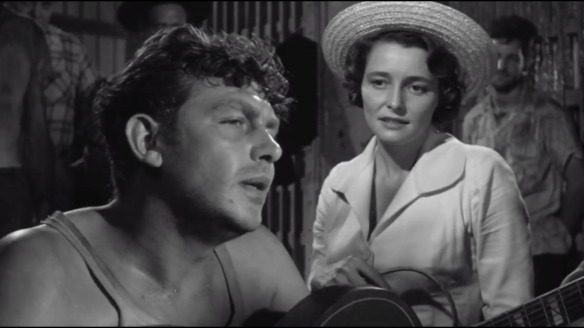
A Face in the Crowd (1957): Lonesome Rhodes is No Andy Taylor

a face in the crowd 1.png

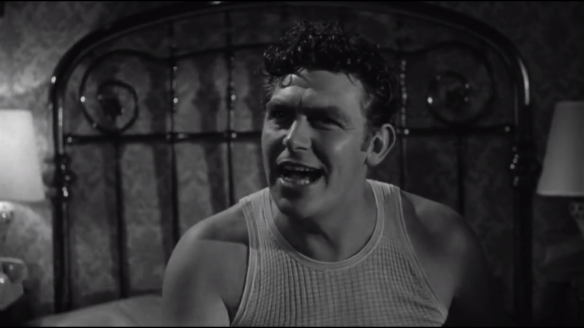
It begins unobtrusively enough. In a backwater Arkansas jail, a drunkard plays his guitar on a radio segment of “A Face in the Crowd” being broadcast from his cell. They don’t know it quite yet but soon the host who found him, Marcia Jeffries (Patricia Neal), and Larry “Lonesome” Rhodes (Andy Griffith) capture the public’s imagination. Far from just plucking Rhodes out of obscurity, Jefferies also rebrands him with an off the cuff remark and uses her daddy’s radio reach to broadcast him all around.

With such a platform, Rhodes does the rest with his wild whoops of down-home charm and strangely beguiling magnetism. He’s a natural performer and showman who knows how to form a connection with the folks at home. Soon they have created a following or as is popular in the lexicon these days a “tribe” giving him real media presence in the cultural conversation.

Someone asks him the question, “How does it feel to be able to say anything that comes into your head and be able to sway people?” But it’s true. He’s at the forefront of a grassroots democracy turning into a television phenomenon.

Meanwhile, Jefferies watches it all unfolding with bright-eyed awe and deep enthusiasm. It’s absolutely rich seeing it sweep over the country. One of the cogs in the machine is a jaded writer named Mel (an early Walter Matthau) who watches the unfoldings with grim amusement. Meanwhile, Lonesome’s ever-ambitious and cutthroat promoter (an even younger Anthony Franciosa) positions his man to continue broadening his success. Everyone’s trying to get a piece of this new pie. Because what’s more American than pie?

Rhodes keeps up his side of the bargain by purveying his own brand of “authenticity.” On one show he brings on a destitute African-American woman and gives a call-to-action and the money comes pouring in, in response. Another week he crosses a mattress sponsor and subsequently raises the man’s sales all across the country simply by belittling his product.

Soon he’s brought on to promote the product of the stuffy Vitajex company and he takes their pride and joy, disregarding their focus groups and tradition, selling the pill straight to the public. By the time he’s done with them, the public’s buying them up by the barrelful.

He also captures the imaginations and the fancy of all the young girls all across the nation — soon has them all swooning over him — but one lucky girl wins out (Lee Remick) with her baton twirling during the Ms. Arkansas Majorrette competition of 1957. Of course, Lonesome Rhodes is made the judge and after getting mobbed by the girls, he takes a shine to Betty Lou.

Marcia gets pushed further and further into the periphery of his life as Rhodes weds the frisky twirler and sets his sights on the next domain to be conquered. Politics have entered a new stage — the television age — and no man is more beloved than Lonesome Rhodes. “You gotta be a saint for the power the box can give you,” as Mel notes, and in the wrong hands, this immense power is dangerous.

a face in the crowd 2.png

Rhodes throws his support behind a stodgy old lawmaker giving him advice in the process. The film was already predicting the famed televised debate between Nixon and Kennedy. Where campaigning is about punchlines and glamor; it becomes a popularity contest and an advertising endeavor as much as a smear campaign. He uses his Cracker Barrel Show to promote the senator in a more relaxed atmosphere and has the position of Secretary of National Morale waved in front of him.

He even notes his candidate should get a dog, observing that it didn’t do Roosevelt any harm or Dick Nixon neither (referring to the well-received “Checkers” speech in 1952). Because these events begin to hint out how corruption, even double talk, begin to make the general public question “authenticity.”

In one off-handed remark, Lonesome crows, “This whole country is just like my flock of sheep.” However, like Arthur Godfrey, his downfall (though more rapid) occurs after an onscreen incident that removes his mask and undermines his image before the people. They can never see him the same way. The saboteur, as it were, is Marcia for she cannot bear to see the people taken in.

So the final trajectory is obvious — the ascension and the dethronement — but that can hardly neutralize what we have already witnessed. A Face in the Crowd lingers with fair warning, relevant to any analogous situation in the modern landscape, only magnified to the nth degree.

Earl Hagen’s down-home waterhole tunes fit The Andy Griffith Show just as this arrangement from Tom Glazer gels with A Face in the Crowd. Speaking of, I must insert a thought on what I know more about, as I grew up watching countless hours of The Andy Griffith Show.

The character of Andy Taylor obscures the fact of what a fine actor Andy Griffith was. To some extent, the same can be said of No Time for Sergeants because like the early seasons of his show, he’s just playing a bubble-headed hick. Later on, he became more of a straight man and after Barney Fife left, he settled into a more irascible role so there was an evolution.

Regardless, Lonesome Rhodes turns the overarching stereotypes of the man on their head. You can still see him as the benevolent Sheriff of Mayberry but this certainly lingers in the back of your mind. Take away the moral integrity and others-centric mentality of Andy and you wind up with Lonesome.

Given its themes about media and television, which seem like a cutting-edge indictment in their contemporary age, it seems logical to lump A Face in The Crowd with Network. Similarly, though technology and advertising continue to become more advanced and invasive, the themes explored feel, not less relevant, but more so.

We simply have to magnify them. Instead of television, we have Twitter and smartphones. Instead of people who willfully hide their intent, we have people in power who seem to blatantly disregard moral uprightness.

I want Lonesome Rhodes to be outdated and immaterial but to make such a claim would be an immense act of folly. It would cater to the same sense of ignorance and sway in all sectors of society, which led to the rise of such a person in the first place. Then and now…

4.5/5 Stars

Note: An earlier version of this review erroneously said Rip Torn instead of Anthony Franciosa (He was featured in an uncredited role).

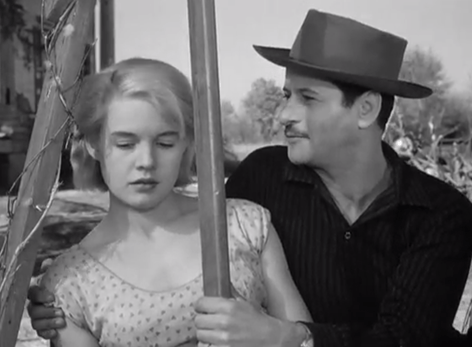
Baby Doll (1956): Elia Kazan Does Southern Comedy

baby doll 1.png

Elia Kazan had a fairly lucrative partnership with Tennessee Williams and the same could be said of his ongoing working relationship with Karl Malden. It’s fitting that all three are back for Baby Doll and yet it still manages to feel like a bit of an outlier in Kazan’s oeuvre thus far.

As per usual, Kazan invests great commitment in his actors and the emotional richness of their performances, which enter near hyper-realized heights. Because there would be no Baby Doll without Malden, Eli Wallach and of course, Carroll Baker. They must carry its weight and for what it’s worth, they manage the task quite well.

Malden is the bug-eyed hick, Archie Lee, who made a pact with the dying pappy of his virginal bride that he would take care of her. Whether he’s held sway on his side of the bargain is up for debate, as Baby Doll and he live in a home literally crumbling around them by the hour

He’s a narrow-minded cotton gin operator who has recently been hitting the skids due to competition. If you are looking for the bare minimums of the story, there you have them. The situations themselves venture on the absurd in this hardly fully-realized plot.

With their house a decrepit eyesore, the furniture soon gets taken away. Archie Lee’s just about at the end of his tether and so he sneaks out one night and commits an act of arson on a whole silo full of cotton. It’s a desperate attempt to give himself an advantage and direct some business his way.

It’s true many might be unaccustomed to comedy in a Kazan film because though it’s masked by typical antics, melodrama, and the risque veneer that precedes it, the humor is unquestionable. If it sounds like melodrama you only have to look at the performances to crack a grin because they do feel like over-the-top exaggerations.

The galvanizing moment, of course, is our first view of Baby Doll lounging in a crib-like bed, sucking on her thumb. Her husband peeps on her through a hole in the plaster giggling like a lecherous schoolboy when she wakes up. We have a Lolita archetype and no doubt the source of its censorship woes, which elicited a “Condemned” rating from the Catholic League of Decency.

What always stings more is hearing the N-word bandied around so inconsequentially as the African-American characters play an unheralded supporting role in the far-off periphery. There you see the hypocrisy. No one in the Catholic or Southern Christian communities probably saw it fit to condemn this element, no doubt considering it acceptable, even commonplace. It’s at least something worth acknowledging soberly.

baby doll 2.png

If Archie Lee is our entry point into this asinine world, then Baby Doll and Vacarro (Wallach) have the presence to keep us watching. In a momentary lapse in judgment watching Long Hot Summer, I mistook Lee Remick for Carrol Baker because they look vaguely similar at first glance. However, Baker does more than a southern belle here full of sing-song dialogue. There’s a tremor, an impediment to her speech which, comes off as strangely childlike. She boasts a cutesy name and enticing sensuality akin to Darling Jill from God’s Little Acre and really there’s the film we can draw the most parallels between.

Because Eli Wallach plays the other man who pays Archie Lee a visit the following day after the conflagration at his place. He’s derisively referred to as a “Whop” and so it’s easy for him to become the outsider with a chip on his shoulder. He’s willing to do what he needs to do in order to get back on top of the heap. Ironically, he lets Archie Lee in on his philosophy.  He’s a proponent of “biblical justice,” an eye for an eye and a tooth for a tooth, though he obviously didn’t read the scriptures too closely.

Instead, he implements their “Good Neighbor Policy” and while the other man is out fixing his machines to take on a new cotton crop, Silva starts playing with his wife even sneaking into the house to toy with Baby Doll. But remember this is not A Streetcar Named Desire. Wallach has his own inner demons but he’s no Stanley Kowalski and Baby Doll’s no Blanche.

Their trajectories take them into different places as a drunken Archie Lee gets jealous of his wife’s suitor, going after his adversary with his shotgun. However, in the end, the stakes are slighter than its predecessors and yet there’s something novel and slightly refreshing in this. While Baby Doll is nowhere near the best of Kazan’s work its “otherness” makes it a risible endeavor out of left field.

3.5/5 Stars

A Tree Grows in Brookyln (1945): The Precursor to I Remember Mama

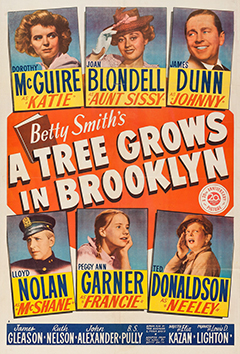
ATreeGrowsInBrooklyn1945Poster.jpgThe reveries of a Saturday afternoon in childhood are where A Tree Grows in Brooklyn chooses to begin and it proves a fine entry point, giving us an instant feel for the world the Irish neighborhood of Williamsburg in Brooklyn. Its contours are impoverished, even harsh, but also richly American.

There is a mother (Dorothy McGuire) who is practical and ever-resourceful, scrimping and saving to eke by an existence for her family. She faithfully pays her family’s due to the door-to-door insurance man Mr. Barker, who is always ready to sow some juicy gossip around the community.

It occurs to me that Katie Nolan (McGuire) is a precursor to Irene Dunne’s role in I Remember Mama. But there is also a near-callousness that is lacking in the latter part, which is mostly sunshine. In this regard, it gleams with a certain individual truth. Struggling  to make ends meet, Nolan asserts, “My kids are going to be something if I have to turn into granite rock to make them.” She dishes out tough love and makes difficult decisions in what she deems is their best interest — an extension of her undying love for them.

There’s an extraordinary shot showing bickering wives, stories up in their apartments, with clotheslines strung up every which way and a man trying to fix the source of their problems.

Nearby sits the little girl enthralled with her book and you understand first hand the power of the library. Because with the internet, television, and movies we’ve deluded them but, at a certain time, books were a way of escape, of learning, and open avenues to distant places.

Francie (Peggy Ann Garner) is, without question, the emotional center and if we are to extend the earlier juxtaposition further, she is an analogous version of Barbara Bel Geddes’s character in I Remember Mama. We view the memories of the past through their impressionable eyes.

She too is captured by her imagination — the rapturous escapes that stories and music can provide a fanciful mind like hers in the station of life she finds herself in. Francie’s deepest wishes are granted when she is able to attend a fine school where her benign teacher gently cultivates her passions.

The advice passed down to her is empowering as Francie is inspired to be a writer. She must write about the things she knows imbuing them with truth, which can then be dressed up with the whims of her imagination.

It’s true Francie maintains an underlying sweetness and innocence even in the midst of heartache. For instance, there is the annual Christmas ritual retrieving discarded trees and boy do the kiddies bring home a whopper. Its presence alone puts some yuletide cheer and the smell of evergreen into their holidays.

It only takes such a minor yet meaningful Christmas scene to humble us in our modern tendencies so that we realize how off-base our modern celebrations are. These folks have nothing and yet to look into their eyes you see such contentment in the singing of a song and quality time spent together.

However, the most debilitating ideology in the film is the concept of neverending cycles — believing the lie that change is impossible and things will never be different. Because already you have a self-fulfilling prophecy. We see it most obviously in the marriage of Francie’s parents.

Johnny Nolan is an ebullient father bred on dreams and singing. There’s always a song in his heart whether “Swanee River” or “Sweet Molly Malone” and unfortunately, for the sake of his family, a bottle in his hand. His daughter memorializes him aptly, “He had nothing to give but himself but this he gave generously like a king.”

The words stand tall and true. To my mind, I have not seen such a compelling father finger as Johnny Nolan in some time and the reasons are as obvious as his flaws. He’s an alcoholic. He makes promises he can never keep. He’s practically useless when it comes to providing for his family. And yet through all his shortcomings shines a light of generosity and geniality that positively warms the cockles of our heart. We cannot condemn him without loving him just as deeply. There you have the testament of a truly impactful character.

Aunt Sissy (Joan Blondell) proves another bright spot in the film and her vivacity, much like her brother-in-law’s, injects the film with a buoyancy making us grow fond of them even as their flaws are laid fully bare. Sissy has her own struggles holding onto a marriage with a couple of husbands already coming and going. Her escapades leave her baby sister shaking her head and hoping to shield her kids. And yet even Aunt Sissy has her admirable qualities.

The local police officer Mr. McShane (Lloyd Nolan) walks his beat with a quiet integrity, disregarding any stereotypes of policemen and fashions them into compassionate people the world could probably use more of. Meanwhile, kind old Mr. McGarrity (James Gleason) heaps neighborly generosity on the Nolan’s in an effort to help the overextended Mrs. Nolan make ends meet.  It’s the benevolent spirits in the film who are quietly memorable.

Too blinded by the resonating sentiments, I failed to see the obvious denouement of A Tree Grows in Brooklyn, which nevertheless proves deeply satisfying. As its title suggests, out of death and decay can grow new hope. It comes from hardy stock and dutiful cultivation, which all seem integral to the American way of life.

For me, it’s almost unthinkable to think the man who played a small part as Googie in City for Conquest only 5 years letter would alight on a directorial career that shook Hollywood over and I don’t think that’s hyperbole. He brought us Brando and Dean, conquered stage and screen and left an indelible mark on film acting forever. Of course, we’re talking about Elia Kazan and here he has his first prominent muse Dorothy McGuire (a founding member of the La Jolla Playhouse) who is often an unsung star fitting as she’s playing an unsung heroine

It seems a fitting entry point into Kazan’s career as it is an immigrant story and he came from such a family. It makes no difference that he wasn’t Irish because we can surmise the essence is much the same. He believes in the American dream no doubt and the love and integrity that can see people through the turbulence of life.

However, perhaps the most striking acknowledgment has to do with the fact this story does not thrive on intensity — one might see that as being a marker of Kazan’s most noted works — it’s tenderness mostly. But then if you stop a moment and think of Brando slipping on the glove belonging to Evie (Eva Marie Saint) or James Dean crying to his father (Raymond Massey), you realize he never lost those sentiments. What made his films was the real emotions that reach out to us. He never allowed for those sensations to waver. There you have an integral element of his success.

4/5 Stars

Ad Astra (2019): To The Stars and “The Seeing Eye”

Ad_Astra_-_film_posterSince the dawn of man, the vast reaches of the cosmos up above have enamored us to the nth degree. You need only watch something like 2001 to be reminded of that fact. (There’s no doubt James Gray is well-versed in its frames.)
Herein lies a core theme throughout our very existence. We have this inherent overlap between science and spirituality — the celestial spheres and the extra-terrestrial — forming a framework for how we comprehend this world.

Aspects of this film even have a near-liturgy or the solemnity of an open-air cathedral. Dean Martin’s “Heaven Can Wait” is a hymn and a hint. Prayers are cast up to St. Christopher for the pilgrimage ahead. The dead are venerated like saintly martyrs for the cause. Because somewhere at the end of it all is the thought of some universal meaning, some ultimate truth, be it God or sentient being.

One is reminded of the proclamation the Soviet Union made when they sent their cosmonaut up into the stratosphere and came back down not having seen God. In essence, the conclusion was that this tangible world was all there is. Tools and technology are the instruments in which to make sense of the world. God, in whatever form, is only a pipe dream or a form of wish fulfillment for the weak. We must look somewhere else. Inside ourselves perhaps.

C.S. Lewis in his essay “The Seeing Eye” wrote the following response when pressed on the Soviet’s pronouncement:

“Space-travel really has nothing to do with the matter. To some, God is discoverable everywhere; to others, nowhere. Those who do not find Him on earth are unlikely to find Him in space. (Hang it all, we’re in space already; every year we go a huge circular tour in space.) But send a saint up in a spaceship and he’ll find God in space as he found God on earth. Much depends on the seeing eye.”

Watching Ad Astra (Latin for “To The Stars”) with this context uncovers profound meaning for me. It is a journeyman’s film pure and simple. Brad Pitt’s Roy McBride is on a mission to the outer reaches of the galaxy. He procures helping agents along the way, namely, Donald Sutherland in an enigmatic role and Ruth Negga, an operations director and Mars-native who dreams of Earth as the distant reality she once visited as a child. It brings to mind her parents, now deceased. Yet another cryptic puzzle piece.

One is led to think they do a fine job being exactly that, mysterious and understated, but it doesn’t give us much to relish as an audience. Tommy Lee Jones is a vanished American hero clouded with secrets of his own. Could it be the rumblings are true and he’s the manifestation of Kurtz in the heart of darkness on the surface of Neptune?

The question becomes not what is at the end of the universe but even more sobering, what if there’s nothing there, just the vastness and austere beauty (as Kubrick depicted, without his images of rebirth)? What are we to do then? Ad Astra‘s conclusions aren’t all that different than the Soviets all those years ago, but they are admittedly far less cynical.

While it lacks true emotional heft in crucial scenes, Gray’s endeavor is concerned with human relationship and this distinction is ever so important. Because this niche of movies can fall into two categories. 2001 spearheads those that are not altogether interested in humanity as such. It’s vast and clinical with the vision and scope Kubrick could capture immaculately. Whereas Tarkovsky’s Solaris or even more recent films like Gravity and Interstellar are far more intimate, regardless of any flaws they might engender.

James Gray is certainly skilled at developing the world planted in a so-called “near-future.” Still, as expansive as the galaxy becomes with every panorama and lens flair by Hoyte van Hoytema, so much more of the movie is borne by the features of Brad Pitt. His perspective and his thoughts. We come to understand him in physical proximity even as we are never allowed close emotional proximity.

Because Ads Astra is a pensive, solitary film. It maintains some intrigue by divulging little and stretching out its assets. It plays with some generic terrors. For instance, “The Surge” that has sent a shockwave across earth leaving many dead and without power. We have moon raiders, Gravity-like survival moments, which Pitt handles with steely aplomb, and touches of governmental conspiracy verging on the sinister.

Primates in space give another brief glimpse of 2001, Planet of The Apes, or even Alien. However, we also get the fleet-footed Nicholas Brothers, who are one of the best-kept secrets of Classic Hollywood’s musical circuit. All these are cultural references to earth, mind you, and not the outer reaches of the galaxy. This is an important observation.

Because there is an uncanny feeling that humanity has managed to shape outer space into our own image with the proliferation of Subway or DHL shipping even made available on the surface of the moon.  It makes the Restaurant on The End of The Universe less of a joke and more and more of a reality.

Still, these are never the elements completely defining Ad Astra for me. They are of secondary or even tertiary importance in deference to the central character study. I am willing to give Pitt the benefit of the doubt and believe his performance to be authentic and genuine. Where his masculinity is made really and truly vulnerable. We don’t build a deep connection with him precisely because he doesn’t have a rapport with anyone. Not his wife (Liv Tyler in a minuscule role), not his father, not anyone.

We begin to assemble a blueprint of someone who has always dwelled in their father’s footsteps, resentful of being abandoned, and simultaneously driven to be the best he can be in pursuit of the same auspicious goals. There are fractures cutting through his life even as he is a figurehead of national pride and American know-how, his life continually compartmentalized into professional and personal.

In fact, Ad Astra is simultaneously an exploration of how we forge heroes and erect idols in our culture. It doesn’t actually tackle this idea to an altogether satisfying conclusion, although it’s pardonable as the film literally takes an about-face. This is how it manages to set itself apart from the pack with a final decision different than the Soviets or Lewis, Kubrick or Nolan, even Tarkovsky.

For the final key, I turn to a very mundane place. One of my favorite bands sings about “Stars” from a Descartes perspective — humanity at the center of the universe — only to turn it on its head.

Instead of us looking up into the heavens, it becomes the stars looking down at us. To recall Lewis, those who cannot find “God” on earth will hardly find them in space. And those who look for meaning, or the beauty or the love they are lacking, in the skies above will probably be disappointed.

After all, maybe our objective is not the stars at all, and it never was. They are only markers and a compass with which to reorientate ourselves amid the entropy of this lifetime, that is, existence on earth. Once oriented, we can start looking around and seeing the people orbiting around us and begin a new objective — to love and cherish one another. It’s striking Roy’s final words almost sound like wedding vows. As if he went to the stars only to realize what he had to come back to. He finally had eyes to see.

4/5 Stars

Once Upon a Time in Hollywood (2019): Tarantino By Way of Model Shop

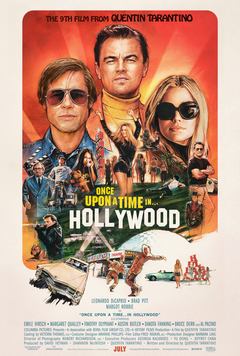
Once_Upon_a_Time_in_Hollywood_poster

To his credit, Quentin Tarantino will always and forever be a divisive creative force. There is no recourse but to either love or dislike his work. I fall closer to the latter category though I’m not as vehement as some.

At the core of this fission are his own proclivities. Tarantino has always been a profane filmmaker reveling in gushing blood capsules and wall to wall pop-cultural references. His knowledge is dizzyingly Encyclopedic even as it leans toward all the deliciously lowbrow delights he can indulge in. It doesn’t take a genius to recognize his nods to Leone and the Spaghetti western or his love affair with everything as diverse as pulp-infused noir and Hong Kong action cinema.

He eats it up voraciously and practices it devotedly. It’s not too far a stretch to say cinema is his religion — or at least the most important entity in his life — and yet even his obsessions are indulgent and so every movie he’s taken on has those traits. In essence, nothing is sacred. As he’s made quite clear, he makes movies he would want to see. They fit into his vision.

Remarkably, Once Upon a Time in Hollywood is probably the most personal picture he’s ever made — the one touching on something the most human — where there is even a hint of authenticity and something real that does not need a wink or an undermining remark.

I think of Sharon Tate in this picture as portrayed by Margot Robbie. I understand some people taking issue with how she is established. The vocal weight of her part holds nothing comparing to the bromance of her male counterparts.

But in the context of what has been manifested, it feels warm and humane in a way we very rarely see from the director. He is giving Sharon a few days of her life back, in a sense, and pays her another honor by not removing her actual image from the footage or the posters we see (ie. Don’t Make Waves or The Wrecking Crew). It’s all her. Right there in front of us to be appreciated again and not merely gaped at. She simply exists for a few solitary days in the summer of 1969.

However, the same respect is not paid to Bruce Lee or for that matter, anyone else because Tarantino never operates that way. He’s beloved for his very irreverence of everything even as everything in his films is saturated with reference and homage.

It makes Once Upon a Time‘s most relevant points of departure all the more surprising. Model Shop (1969) is an unhurried slice-of-life film distilling The Sunset Strip and the surrounding area much in the way Tarantino does. And yet Jacques Demy is on the complete opposite spectrum of a Tarantino.

His films are full of fantasy as well but more whimsy, romance, and an almost innocent naivete. For instance, I could never imagine Tarantino being able to pull off a non-ironic musical; Demy imbibed their magic.

But Model Shop was a departure for him as much as Once Upon a Time in Hollywood is slightly different for Tarantino. At any rate, it finds them drifting toward a central thematic world — Hollywood of the late 60s — where there is golden sun to match the melancholy and the music.

The post-Kennedy, Vietnam-era malaise is upon us even as it clashes up against the rock ‘n roll soundtrack supplied by the likes of Simon & Garfunkel, The Mama and The Papas, and Paul Revere & The Raiders.

The representation of 1969 on its own is impressively immersive as if Tarantino is recreating his childhood — the way he used to remember things — and no doubt he is. I only know secondhand and still heartily appreciate the likes of 93 KHJ and The Real Don Steele, all but ubiquitous, with the static whizz of the radio bathing the listener in jingles and audio AC. The lit-up signage of The Sunset Strip, billboards and advertisements, stretching out across the horizon.

Products like Velveeta, Kraft, Hormel Chili. I know those too. And that is part of the enjoyment of this movie, to be given a couple hours to bask in the nostalgia of the past, whether it’s the Westwood Theater, drive-in movies, and certainly the myriad of era-appropriate posters we catch glimpses of.

And the sprawling — some would say lethargic — runtime allows for these day-in-the-life type scenarios we would not get in your typical film. However, Tarantino also has the task of inserting his own vision into the tableaux put before him.

Rick Dalton’s (Leonardo DiCaprio) character is an extension of the issues I have with these types of pictures: a fictitious character in a real world. To be honest, the writer-director fully commits to inserting him into the bygone era from co-starring with Telly Savalas, being up for The Great Escape, and now in his downward spiral guest spotting in FBI and Lancer.

And against these ready-made touchstones, Tarantino can employ his own fanciful riffs off history. Whether the amalgam of Bounty’s Law — take your pick of any 50s or 60s shows (Burke’s Law and Wanted Dead or Alive spring to mind) and you’re there. As Tarantino has already acknowledged, this prevalent career decline during the mid to the late ’60s was indicative of many of the tough guy idols who could not transition. This arc is not made up.

However, I find myself grappling with the same problem I had with Cameron Crowe’s Almost Famous, though to a different degree. Because, of course, everything Tarantino’s ever made is couched in pulp and totally self-aware. It’s the real with the fiction. It just so happens I find the real far more compelling. For instance, Sharon Tate, the depictions of the L.A. milieu, even the glowering menace of the tripped-out Mansion Family, these elements engage with social context head-on.

Whereas when I watch the spoofed scenes out of his own Inglorious Basterds parody or Dalton’s latest guest appearance as a heavy in the real-life — albeit obscure — Lancer, there’s not the same thrill. It’s not so much that we know we are watching a movie; it has to do with knowing we are watching Tarantino play out his own reenactments with all his tongue-in-cheek (and sometimes spot-on) parody.

The moments of Dalton that get at something more complex are the doubts that plague an actor in his position. For an extended scene, he sits in a casting chair with his precocious costar (Julia Butters) recounting the two-bit western paperback he’s been reading. Through rather overt terms, he and the audience realize the downward spiral of the book’s hero describes him to a tee. And he sobs.

Otherwise, I find most of these interludes to be dead ends, only useful for watching Tarrantino avail himself of his own personal pleasures. The one exception is Cliff Booth (Brad Pitt) because his function is less about parody or homage.

He fits into this world but it feels more organic — not like Tarantino is pasting his creation into the boots of several other men. Like Gary Lockwood in Model Shop, or even Sharon Tate in this film, he is also afforded the luxury of meandering around town to make the most of the mimesis Tarantino has employed.

He resides in a Jim Rockford-like trailer hitch, beer in hand in front of the TV with his closest companion, his salivating dog Brandy. It instantly provides us something else delectably dilapidated. There’s nothing wrong with DiCaprio but I am drawn to Pitt’s characterization especially.

His loyalty feels indicative of some indestructible set of values and common decency. One might surmise his type of people are representative of all that was simultaneously right and wrong with America. Because it’s true you can start saying that about just about everyone. We all bring our share of good and bad into the world.

Even his detour to the old Spahn Movie Ranch — coaxed to the sketchy commune by Pussycat (Margaret Qualley), a coquettish member of the Mansion family, as he is — keeps with his sense of right and wrong. And even in a foreboding arena such as this, he walks toward it more like Dirty Harry than Jim Rockford. He seems indestructible and for all intent and purposes, he is. We know any attempt on him will be negligible as he casually makes his acquaintances and checks in on the old man (Bruce Dern).

The ending Tarantino wanted to keep hushed up is rather ironic for how unsurprising it really is, when you get right down to it. I hardly mean it as a spoiler. If you’ve seen even a bit of any of his oeuvre, you know what’s coming. The instant tip-off is the song  “12:30 (Young Girls Are Coming to The Canyon)” because if I wanted to make a film about Cielo Dr. or Laurel Canyon there’s no other choice. It’s one of the few instances of near on-the-nose song selection.

The lamentable thing is he somehow leaves behind all the best moments of Once Upon a Time behind — the fairy tale moments even — and winds up with something far more Tarantino-esque. His fans will be praising the glories of his name because he has done it again. That much is certain.

However, others of us will rue the potential wasted. What could have been a far more honest portrait than we might have ever thought the man capable of is like all the rest, a provocative, messy collage of ambitions and years of cultural relics skillfully sutured together.

But it feels again like Tarantino is more a gifted fanboy than a man with a genuine cinematic heart and soul. His aesthetic is cutting all of his heroes into something outrageously bombastic; because he boasts many, both high and low.

There’s nothing inherently wrong with this style but after the momentary glimpse into something else, more promising even, it falls short of what could have been. Maybe it’s this reality that plants his dashed fairy tale most firmly in a problematic past we can never have back, even if we wanted it. What’s more, he had to bludgeon the magic out of the movie with an utterly Tarantino crescendo. Nothing can be taken seriously. Nothing is sacred.

3.5/5 Stars

To Each His Own (1946): Olivia de Havilland Does Melodrama Well

To Each His Own 1.png

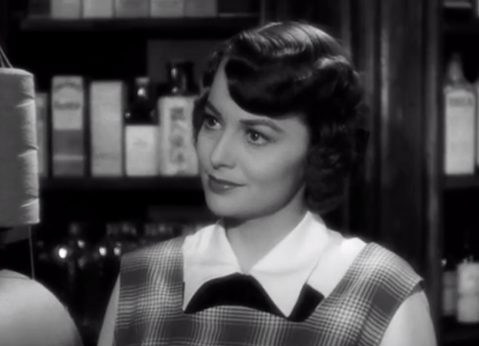
Ginger Rogers purportedly passed over the script for To Each His Own because, at first glance, it’s hardly a glamorous role; but for the right person, it could be something unquestionably special. That actor was Olivia de Havilland.

Certainly, the production is bolstered by Mitchell Leisen, a mostly forgotten director who made a string of highly memorable comedies and romantic pictures during the 30s and 40s. It’s no different here. And then you have Charles Brackett, formerly half of the lucrative writing partnership with Billy Wilder before alighting on his own as a producer. None of that can be discounted nor a handily-played dual debut by John Lund. But we must return to Olivia de Havilland.

In the opening interludes, she comes off as acerbic and curt, a forlorn type of person. No relationships or community or people to worry about or to worry about her. She’s joined by another middle-aged man named Desham (Roland Culver) and they make quite the pairing, taking on the night watch duty over the holidays so others might celebrate.

He coolly makes the observation that people like themselves are alone for one of two reasons — not caring enough for other people or caring far too much. Though Ms. Norris divulges little, we instantly gather she fits into the latter category. This is what starts us on the journey through her past, which led her to a man named Bart Cosgrove (John Lund).

But before their fateful meeting, the flashback sets up the world of Pierson Falls, familiar to anyone who has glimpsed It’s a Wonderful Life with its parochial atmosphere and local drugstore. Match that with the jingoism out of Hail the Conquering Hero and you have a slice of life in this little town during WWI.

John Lund is sour and far harsher than I recall in say The Mating Season and it serves him quite well. He and his co-pilot (the always reliable Frank Faylen) are the two jaded flyers who get the hardiest of welcomes from the townsfolk. However, this is their umpteenth stop on an endless bond tour. They’ve become overly familiar with people like Bernadock Clinton (Arthur Loft) the asinine town cryer making a continual bother of himself ushering the flyers around like prized sideshow attractions. And it would be more of the same if not for the meeting of the flyer with the town’s most eligible gal.

To Each His Own 2.png

The heightened emotion of wartime uncertainty swirls around them and they share a rapturous, if whirlwind, romance that Captain Cosgrove was never expecting. All too soon, he’s off again leaving his newfound love behind and to use euphemistic vernacular, they’ve created a ticking time bomb.

Here To Each His Own enters its scandalous phase where Jody must confess to her father that she’s had a child out of wedlock. The old man (Griff Barnett), with the steady voice, sounds uncannily like Will Geer and spouts unassuming wisdom, “We don’t judge each other. We love each other.” But small towns are not usually as forgiving and so lest people talk, Jody decides to leave her child on a doorstep. Hoping to pick her child up later and “adopt him.”

Instead, a couple who’ve been tragically hit with a miscarriage are thankful for this second chance at cultivating life and they take the child. Of course, the couple is one of Jody’s old beaus and another peer. They got married because Jody rejected him. The dramatic situation is clear enough.

When the mechanizations of the plot become clear, it also becomes clear just how awful the circumstances are — just horrible. They’re apt to tear your guts out. After the passing of her father, Jody, who needs a job, proposes coming on as a nursemaid, but there is no compassion there. She gets pushed out of the scenario thanks to a jealous wife and a husband who still holds a boyhood crush.

She has no choice to move on and, being a go-getter, she takes charge of a bootlegging business and turns its front, Lady Windemere’s, into a legitimate international operation proving highly successful. Whenever she has a free moment, Jody does her best to manufacture chance encounters just so she can glimpse a few minutes with her son who is growing in knowledge and stature. But she knows deep down, with each passing year, little Gregory is less and less her son.

Melodramas or so-called “women’s pictures” can be hit or miss depending on how thick they lay it on and how much the music swells at the exact moments of deepest impact. But in full consideration, To Each His Own might be one of the finest such pictures to come out of the 1940s, and it’s no small coincidence that it shares that distinction with the thematically similar Stella Dallas.

When it’s all said in done, it’s about heartwrenching relationships between mothers and their children and when the mothers are portrayed by such stalwart titans as Barabra Stanwyck and, in this case, Olivia de Havilland; the drama enters territory that can easily pierce the heart to the core.

To Each His Own is also somehow akin to Random Harvest with dramatic irony being integral to the plot — one character knowing something that deeply affects how they live their life — except the person they care about knows nothing about it. This is by no means a criticism either but simply an acknowledgment that these stories can tug at the heartstrings with great fervor.

Again, it comes down to the players as much as the scenario. They must be people that we are capable of feeling great pathos for. Certainly Stanwyck, Greer Garson, and Ronald Colman and even Olivia de Havilland. Maybe she’s known for being difficult or a perfectionist or what have you, but that has nothing or maybe everything to do with her as an actress.

She makes us care about her as she moves from every stage of her life. And I say life because it feels less and less like a performance and more like real life. She, like Stanwyck before her, is able to carry the weight of youthful exuberance and maternal toil equally well.

Far from being unglamorous for winding up being mother to a grown son, I think a film like To Each His Own makes you appreciate the beauty of de Havilland even more. Because there’s a realness and a depth there that you would have never gotten in a career of roles opposite Errol Flynn. You just wouldn’t.

That’s part of what makes it special. And like the other previously mentioned titles, it goes out with a few tears but also espousing dreams. We can question the final moment — the rationality; the catering to the audience — or we can just enjoy it like a wedding feast with the ones we love.

4/5 Stars

Gentleman Jim (1942): Biopic by Marquess of Queensberry Rules

Gentleman_Jim_-_Poster.jpgBoxing movies and biopics are a mainstay of Hollywood. It’s an established fact so naming names is all but unnecessary. The affable brilliance of Gentleman Jim is its agile footwork allowing it to sidestep a myriad of tropes attached to biopics and the schmaltz that Old Hollywood was always capable of serving up.

Certainly, a great deal of credit must be heaped upon Errol Flynn who seems to relish the very opportunity to portray such a magnetic man as James J. Corbett — always perceptive and driven with a bevy of tricks at his disposal to get ahead. I can’t help but hear Butch Cassidy’s words in my ears, “I got vision, and the rest of the world wears bifocals. Corbett could live by that credo too.

Authenticity is to be trodden upon softly and so there is a sense Flynn has taken the “gentleman” moniker of his namesake and fashioned the role around his own roguish charm, good looks, and irrefutable charisma. Thus, it becomes almost second nature for him to play the part because there’s this sense that he’s playing what he knows best, and loving every minute of it.

He’s meant to come from hardy Irish stock with a jovial father (Alan Hale), two boisterous older brothers, an awestruck sister, and the ever maternal mother figure. Around all these types Flynn and Jim feel like outliers. They’re not meant to fit into this family and yet it somehow manages to work — Marty McFly anyone?

The script, co-written by Vincent Lawrence and Horace McCoy, begins by drawing up the story in a most agreeable fashion that takes into account our hero’s life but also considers any number of stray antecedents that led to his rise in the boxing world.

Boxing in its most barbaric forms is being outlawed across the nation. Jim and his hapless buddy Walter (Jack Carson) spy the prominent higher-up from their bank at a fight only to have the police raid the event. Soon they’re all in prison with their prominent friend and Jim sees it as the perfect opportunity to earn some favor. Soon Judge Geary has brought on his young protege as a new brand of fighter: one with class.

Being a fast worker, Jim gets himself into the elitist Olympic Club doing his best to look the part of a  well-to-do gentleman, despite hardly having a dollar to his name. Concurrently he begins annoying the gentleman around him with his constant stream of boys sent around paging him.

It becomes quickly apparent that Gentleman Jim exists in a world, not unlike that of Walsh’s Strawberry Blonde (1941), where America seemed to have acquired a newfound propriety. Nasty pugilism had been replaced with marquess Queensberry Rules and someone like Jim Corbett was able to become something.

He soon is acquainted with Ms. Victoria Ware (Alexis Smith) who along with her family are members of the social elite and patrons of the bank. I must admit that the Canadian actress has all but slunk under my radar aside from her part in Conflict opposite Bogart.

But I have rectified the oversight because she gives a lovely turn opposite Flynn allowing the sparks to fly in the most vehement way possible. High-class respectability can only get you so far. Sometimes you just want to see someone get wailed on for their own good.

She has just about enough of his conceited ways finding him utterly infuriating with his faux polished manners and overblown head. He has the gall to criticize her idol worshipping of such an eminent legend as John L. Sullivan. Corbett being an utter nobody himself. But he’s got ideas and the fancy feet to go someplace.

Upon leaving their little tiff, he dances his way back down the street zigzagging through oncoming passerby. He’s got John L. Sullivan (an impeccably cast Ward Bond) on the mind now. Because there was no bigger national hero, icon, and legend than John L. Sullivan. The film even evokes the famous phrase, “I just shook the hand that shook the hand of John L. Sullivan!” He was that big of a celebrity.

Backed by William Frawley in his corner, Corbett is soon on the rise taking on anyone who will get him some visibility. In the ring, the suave-looking Irishman is a model of agility and impeccable footwork. Though Flynn, to his credit, stood in for most of the scenes his flying feet were spotted by world-class former welterweight Mushy Callahan.

Many of the sequences capture the immersive even suffocating atmosphere of a boxing match through fairly furious cutting, especially for an old film. Inserting shots of the ring, mincing feet, and a flurry of audience reactions throwing together a swirling experience.

The most frenzied is a back and forth river barge slugfest with haymaker after haymaker flying through the air. Corbett and his hulking opponent wind up decking each other flat again and again.  Flynn takes a plunge into the water only to lay out his competitor for good minutes later.

The victor is finally raised as the police arrive on the scene to crash the proceedings and all the spectators jump ship in the most tumultuous and mayhem-filled denouements to a fight you’ve ever witnessed. The beauty is we get an almost birdseye view of the madness from the cheap seats and we see on what a large scale everyone is frantically escaping. Jumping into the drink. Screaming and shouting. It’s the kind of bedlam that’s contagious and a real enjoyment from reel to reel for some inexplicable reason.

Surely the fight to top them all is Jim Corbett against John L. Sullivan. But just as important as the actual bout is the skirmish going on outside the ropes. As the telegraph lines are flooding the country with news round after round, Corbett’s clandestine backer watches expectantly for him to get clobbered.

Meanwhile, Ms. Ware’s father with a glint in his eye eggs her on very tenderly toward the most antagonistic man in her life and subsequently the most important. In the movies at least, the people who detest each other the most wind up making the most passionate romances.

Aside from love, Gentleman Jim is refreshingly light on heart-wrenching drama or needless sentiment for that matter. It slips up in one solitary moment where a gracious Sullivan looks back wistfully at an illustrious career and pays his respects to Gentleman Jim. If anything it shows that Flynn can play genuine just as he can slather on the charm.

For contemporary audiences, it no doubt carried a sardonic edge as the actor was simultaneously embroiled in a scurrilous court trial that all but ruined his reputation for months on end.

Regardless, standing on its own merit, Gentleman Jim might just be one of my new favorite boxing exhibitions and the key is that there’s seemingly no agenda. It ebbs and flows around a life and characters without concerted realism or a need for continual heightened drama. And yet we still find it compelling and jovial with all sorts of moments worth telling the folks at home about.

In fact, that might just be Raoul Walsh’s finest attributes making every scene, action, brawl, what-have-you, totally immersive, effectively involving the audience through his array of shots. While Flynn and Smith are finally in each other’s arms, Jack Carson makes one final call straight to the camera shouting that the Corbett boys are at it again, duking it out in the parlor. Some things never change and the beauty is that we’re in on the joke as much as anyone within the frame. What a delightful biopic. Shamelessly fun to the very last word.

4.5/5 Stars

The Sea Hawk (1940): Errol Flynn Against The Spanish Armada

sea hawk 1940.png

Anyone who knows even a smidgeon about historical dates knows what the big to-do with 1588 is. If anything, 1588 automatically means the sinking of the Spanish Armada by Queen Elizabeth’s forces. So when a film opens in Spain in 1585 we already have a good idea of where we might be going. It’s the voyage to get there which matters most.

I can’t quite help but see the parallels between Spain and the Nazis aspirations for world domination. Because in the year 1585 there is a King in Spain named Phillip II who not unlike an incumbent dictator in 1940 was looking to conquer all of Europe with England being a priority.

With this historical backdrop, Warner Bros. gathers another classic ensemble anchored by Errol Flynn and director Michael Curtiz along with the steady support of Alan Hale. Following his debut as a film composer in Captain Blood (1935), Erich Wolfgang Korngold returns to similar waters to provide the scoring once more.

The film does feel empty without Olivia de Havilland but she was by this point fed up with playing second or third fiddle in swashbucklers. Be that as it may, Brenda Marshall (the future Mrs. William Holden). with a shining countenance, fills in swimmingly in one of her most prominent performances.

Leading his pride and joy The Albatross in the service of her majesty Queen Elizabeth, English captain Geoffrey Thorpe (Errol Flynn) makes a glorious conquest of an enemy ship. The thrilling surf soaked cannonball-filled action picks up right in the same waters as Captain Blood.

He just happens to commandeer the boat carrying the Spanish ambassador (Claude Rains) across the English channels. It is the conniving man’s mission to ingratiate himself with the queen and being the two-faced scoundrel that he is, he finds Thorpe to be an incorrigible scoundrel.

Though he makes a monkey of court and her closest advisor Lord Wolfingham who seems quite sympathetic toward the Spaniards on a whole, Elizabeth is fond of Thorpe’s patriotic brand of cheekiness. Envisioning vast spoils at the hands of the Spanish, he takes on a clandestine mission off the record albeit with the Queen’s permission behind closed chamber doors.

Cloak and dagger countermeasures ensue as Don Jose looks to ensure that his mortal enemy will be cut off before he has any chance to do anything. Although initially turned off by the scoundrel, his daughter soon becomes enchanted by his chivalry even as she fails to intercept him in time. They are riding off into a trap.

They set out through the sepia-toned world of Panama in search of vast treasures to be plundered from their enemies. Instead, they get brutally ambushed and pushed back into the mosquito-infested swampland by the waiting conquistadors.

Whereas Captain Blood found Flynn starting at the bottom in The Sea Hawk he is brought down into the pits of despair once taken prisoner. He and all his men are imprisoned aboard a Spanish ship, oarsmen chained to their places and beaten mercilessly. They grind it out and take the torture while biding their time behind the oars.

It takes time but eventually, a chance is created culminating in a brazen escape attempt. The midnight mutiny is aided exquisitely moment by moment by Korngold’s score put on full display and nearly urging the men on in their quest while instigating an underlying tension.

The final burst of drama comes when Thorpe returns to shore, reunited with his love in her carriage making amends and sneaking back to the queen’s castle cloaked by night. Making it to the queen proves a nearly insurmountable task with all the guards on high alert and Wolfingham waiting to intercept him for one final duel. But Flynn could never be outdone and Henry Daniell is certainly no Basil Rathbone. The Queen gets the news and vows to battle the Spanish Armada. We know the rest of the story.

While not quite eclipsing the jaunty heights of Captain Blood, this worthy successor nevertheless has its own share of thrills and fine action with Flynn maintaining high form. Perhaps it’s partially a testament to how captivatingly the film opens because it’s difficult for any picture to maintain that kind of vigor all the way through. But with a valiant effort led by its charming rapscallion and his crew, they wade through any slow passages to bring us back around to the grade-A entertainment of a quality swashbuckler.

The production thriftily saved on funds by repurposing the exquisite period costuming from The Private Lives of Elizabeth and Essex from the prior year. They become a perfect extension of the storyline to match Flora Robson’s formidable turn as the Queen. Meanwhile, Claude Rains is transformed into a dark-haired Machiavellian villain which he pulls off with the required amount of duplicity. This time around, Flynn’s character is based on the legendary Sir Francis Drake and yet like Robin Hood before, the Australian falls into the part and makes it his own through magnetism, athleticism, and wit. It’s another sterling achievement.

Queen Elizabeth gives one final stirring message that again can be taken in its time as a veiled indictment of Hitler’s belligerent aspirations. America had yet to enter the war and yet in over a year’s time, they would be right by England’s side. It wasn’t quite the surprise defeat of the Spanish Armada but it would take long hard years of waves of sacrifice and hard toil against the enemy. Winston Churchill is said to have admired this picture immensely and it’s hardly difficult to see why. It sums up his guiding sentiments exactly. After all, he is the man who famously said:

“We shall fight on the beaches, we shall fight on the landing grounds, we shall fight in the fields and in the streets, we shall fight in the hills; we shall never surrender.”

4/5 Stars

Note: I watched the original restored uncut version of the film that clocks in at 127 minutes.