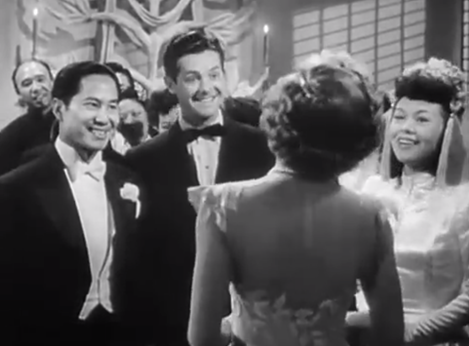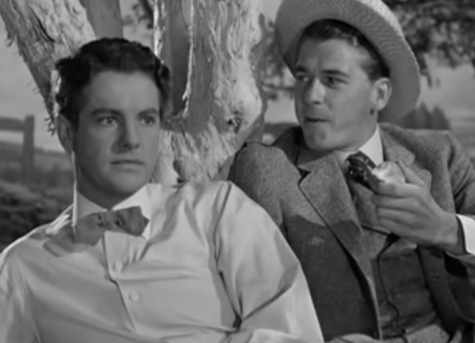
Here Comes Mr. Jordan (1941)

here comes mr. jordan 1.png

I’ll lay my cards right on the table. I’ve never been a huge fan of Robert Montgomery. He just doesn’t have a charisma or a delivery that I much care for so as far as carrying a whole picture I’m not quite sold.

Still, with Here Comes Mr. Jordan, it all seems to work and it’s funny and clever in ways that would cause Hollywood to strive for storytelling that looked to think outside the box. Of course, the irony is, a new box gets created for people to work inside — a new style or sub-genre — but there’s little question that Here Comes Mr. Jordan feels very much the first of its kind. If not, I stand corrected.

It’s a story effortlessly built around quirky inventiveness. There are fantasy elements here that feel very much akin to the likes of Stairway to Heaven (1946), Random Harvest (1942), and Heaven Can Wait (both films from 1943 and 78).

Heaven is depicted as a kind of celestial processing center where human beings are plucked away from their life on earth to begin a new afterlife. Through intervention, by angelic beings, lovers can all but forget one another only to have some deja vu feeling that they’ve been together before.

And further still, the ideas of the heavenly and angels entering into everyday life soon became a staple of 40s and 50s Hollywood much in part to this picture. Without it, there’s a possibility that classics such as It’s a Wonderful Life (1946) and the Bishop’s Wife (1947) would not have been conceived in their most remembered forms. After all, what would those films be without Clarence or Dudley? Or what would this one be without Mr. Jordan for that matter?

Elaine May must have thought the story was ripe for more exploration too when she penned Heaven Can Wait which expanded a great many of these ideas only in a different context.

Unequivocably this rendition proves to be far from a one trick pony, taking a main conceit that admittedly seems absurd at first — even gimmicky — and turning it into a fantastical comedy with continual possibilities.

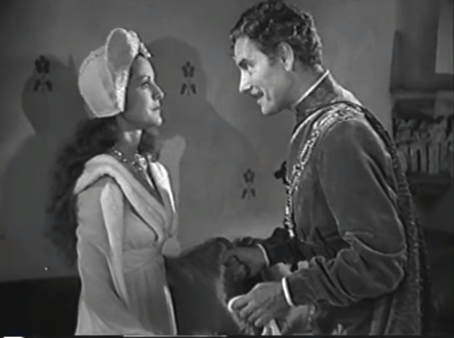
Imagine just for one moment that a feisty boxer, Joe Pendelton (Montgomery), preparing for his next big bout flies to the site of the fight only to have his plane malfunction en route. He looks like a goner but he’s pulled from the aircraft too soon by 7013 (Edward Everett Horton). In fact, it’s 50 years too early, his date with the afterlife is not until 1991 (In case you were wondering, Montgomery actually passed away in 1981). Being the bullish personality that he is, Joe’s not going to sit by when he had such a good thing going on earth.

The genial Mr. Jordan (Claude Rains) grants his wish and inserts Joe back into life but they must find him a new body — you see his previous one has already been cremated which makes for added complications.

We plot his journey between two distinct individuals and their bodies and aside from the opening plane crash, a few puffs of smoke, and a few parlor tricks, the film doesn’t rely too heavily on any amount of special effects. For all intent and purposes, things are normal as they’ve always been. It’s just the parameters that have changed. Namely the fact that Joe can see Mr. Jordan and no one else can. First, he’s Bruce Farnsworth formerly a crooked magnate who was murdered in his bathtub by his wife and her lover.

Boy, are they surprised when he turns up again. Mr. Jordan and the audience see Montgomery but the others see and hear the man that they think they’ve done away with. Still, coaxed by Mr. Jordan, Joe or Farnsworth, turns this man’s life around, taking ownership of his past indiscretions and helping the father of a young woman (Evelyn Keyes) who was accused of fraud.

here comes mr. jordan 3.png

Meanwhile, Joe, err, Farnsworth still has his sights on his previous shot at the boxing ring. It all comes off rather odd to those who used to know his alter ego but he calls up his old coach Max Corkle (James Gleason) and he’s finally able to convince him of his true identity due to his beloved saxophone always in tow.

Finally, it looks like he’s on the road that he wants but alas complications ensue. He finds himself falling for Ms. Logan and circumstances are such that he must find another body. He settles on a straight-arrow named Murdoch and subsequently gives the fighter a second chance in the ring while hiring on Max to be his coach so he can still actualize his dreams.

Mr. Jordan leaves Joe in this moment, seeing he has a version of the life he always wanted and the celestial being conveniently removes all of Joe’s memories of a previous life. Of being a man named Joe Pendleton. It makes for some goofy comedy with Corkle and supplies one budding meet-cute with Ms. Logan.

While the theology is probably sketchy at best, it’s a good-natured, comic interpretation of the afterlife that serves the world of the film well. The only thing in question is the ethical nature of angels removing human memories but surely Claude Rains knows what he is doing.

James Gleason is an absolute riot as the one human privy to the whole gag only to look like a complete nutcase when questioned by anyone else who is “normal.” He easily puts you in stitches and Edward Everett Horton has his flustered indignance down pat. He made a career out of it after all.

4/5 Stars

Imitation of Life (1959)

220px-Imitation_of_Life_1959_posterWhen I was watching the film I distinctly remember one instance I threw my head back in the air and just smiled to myself. How I love Douglas Sirk. He gives us something seemingly so superficial and decadent that plays so perfectly into those expectations and simultaneously steamrolls them with a not-so-veiled indictment unfurled on multiple fronts.

This was Douglas Sirk’s final film in his U.S. career. It’s another gorgeously rendered picture. A harsh social satire of the ambitions of an American Dreamer but also the inherent fissures that run through our society to its very roots. These issues have hardly changed with time or if they have changed, it’s simply the same problems given a facelift. The core wounds remain the same.

Imitation of Life is a story that starts in New York, of all places, at the beach. For the first time, Lora Meredith (Lana Turner) crosses paths with the kindly, God-fearing Annie Johnson (Juanita Moore) who looked after Lora’s daughter when she got lost in the crowd of vacationers.

In less than a comfortable position herself, Lora nevertheless offers her home up to Annie and her fair-skinned daughter Sarah Jane who strikes up a fast friendship with Susie while showing early signs of vehemently despising her African-American identity.

Those are the core aspects of the story as the glamorous single mother follows her aspirations to star on Broadway first with commercials and then small parts that lead her to something more. She finds an agent (Robert Alda) and ultimately earns the respect of a noted playwright (Dan O’Herlihy) who soon writes all her roles. The demands on her time mean that a fledgling romance with a photographer  (John Gavin) falls to the wayside and she hardly sees Susie.

Meanwhile, Annie remains a faithful friend by her side who keeps her house in order and looks after the girls as they slowly begin to mature into womanhood. And as they grow into women their own personal crises come to fruition. Sarah Jane (Susan Kohner) continues to try and pass as white while denouncing her mother. It gets so bad that she leaves home and changes her name to perform at dive bars where her mother hopefully won’t follow.

Susie’s (Sandra Dee) problems are of a different nature. She feels so alienated from her mother, the lady so often absent in her life, that she decides to attend college far away in Colorado. When Steve Archer (Gavin) drifts back into Lora’s life things are complicated by Susie’s obvious crush on him.

On both fronts of mother-daughter relationships, the film showcases its many themes playing out in vivid fashion. In fact, Imitation of Life feels all too resonate given the state of affairs in Hollywood and our world right now.

There’s this ongoing temptation to cheapen who you are for the sake of success. In this case, it applies to the theater and the career of Lora Meredith (Turner) but it could be in, let’s say, Hollywood or the corporate sector or any other endeavors. The jobs change but the people do not. Where you are forced to feel awful for not lowering yourself to other people’s level of sleaze and impropriety.

It’s a film about the fame monster and the industry dominated by a patriarchy where you are coaxed into making certain concessions so that people will like you and give you what you want. Just to maintain a career and your ambitions, your familial relationship, in this case, with a daughter is led to the point of deterioration. To this day, money and opulence, nice things and social standing, do not make up for an actual relationship. There’s no contest.

Ironically, only after the good fortune strikes and you have years of success do you begin to realize amidst the rush that the pinnacle has been reached and still something is missing.  That’s Lora’s realization. But just as fervently this can be a film of idealism and dreams. Seeing things the way they are and making them more and more into what you want them to be. Being the change. That’s Annie’s part.

It is also a film about racism — a fixture of society — and a troubling one that is still opening up innumerable wounds in the fabric of our society and they are wounds that must be acknowledged. There is a painful scene that while a girl is being berated and slapped by her alleged boyfriend a playfully jazzy score dances in the background and it’s this disconcerting contradiction — the kind of contradictions that are often easy to pick up on if you’re willing to see them.

People loathe themselves for the color of their skin and the stigma society puts on their personal identity. Someone’s life is driven by shame instead of an unswerving pride in who they were created to be. And whether we like to admit it or not, we’re all part of the problem where being white is seen as being normal or the status quo or what have you.

One of the most striking moments in the film for me is when Annie is recounting the Christmas story to the girls and they ask a very honest question. “Was Jesus White?” or “Was Jesus Black?” Because it seems like a question that devises some way of relating to this historical figure. But it also forces you to see the astronomical error in such ideologies of a  “white savior” or a “white man’s burden.” It simply cannot work. Nor does it work the other way.

Of course, as Annie sees so clearly, neither of these distinctions matter or any type of distinction because this was not a figure concerned with race or wealth or gender or respectability or any of that, at least in the sense that it holds importance to us. For him, as she sees it, it seems to have no negative effect on the relationship you could have with him. It doesn’t seem to matter and yet simultaneously it does immensely. Because it reflects our unique human identity.

Annie reflects those same types of ideals all throughout the film. You might take aim at her for being subservient or have qualms with something she does but it’s hard to question her sincerity or goodness. She has a prodigal daughter but just like the parable her maternal arms are always open and her daughter is never too far away for her to love Sarah Jane unconditionally even unto death.

I must admit it rubbed me the wrong way because Annie felt like yet another iteration of the mammy stereotype. One of Sarah Jane’s colleague even notes, “You had a mammy,” led to believe that the woman was simply an old housekeeper. But that’s the key. Annie Johnson is actually her mother. Aside from adding a searing undercurrent to the scene, it confirms she is not just a sideshow attraction for some southern charm. She is a parent and a friend and a person. In fact, the best scenes in the entire film belong unequivocally to Juanita Moore and Susan Kohner.

The original story the film is based on came out of a very different time in American history during the 1930s. Here it is updated and aware of the changing mores and difficult roads still to traverse thanks to the likes of Thurgood Marshall and his landmark case Brown v. Board in 1954 and the increased rumblings of the Civil Right Movement with the Bus Boycott and other peaceful initiatives spearheaded by Dr. King.

In the film’s closing moments Mahalia Jackson brings down the Lord’s house with her mournful dirge for Annie. And it is a bitter, heartwrenching moment of agony but that is not the final word. Because Annie was a tremendous person with an extravagant capacity for love.

Like Dr. King once orated in vivid Biblical imagery, “[I have gone] up to the mountain. And I’ve looked over. And I’ve seen the Promised Land. I may not get there with you. But I want you to know tonight, that we, as a people, will get to the promised land!” That is the hope. Even in this embittered world of ours there is still something to be longed for.

4.5/5 Stars

Tarnished Angels (1957)

tarnished angels 1.png

With the name Douglas Sirk, Technicolor opulence no doubt springs to mind but his black and white pictures are no less diverting and still extremely attractive to look at with photography once more courtesy of longtime collaborator Russell Metty.

The cinematography is crisp monochrome filmed in voluptuous cinemascope. It’s hardly as flamboyant as we are accustomed to but then again, The Great Depression was far from a decadent time and the visuals suggest that malaise especially in the film’s latter half when the cracks and the dirt begin to show a little more.

The inspiration for the narrative’s morality play comes from a William Faulkner story, Pylons, an aptly chosen title if it weren’t true that “Tarnished Angels” is more in line with Sirk’s oeuvre and the director glides forward with his usual flair.

The year is 1932 and Mardi Gras festivities seem to be taking over the town as a traveling airshow makes its latest pitstop headlined by those intrepid barnstormers WWI flying ace Roger Shumann (Robert Stack) and his wife LaVerne (Dorothy Malone). Subsequently, the stars involved make this picture a reunion of the previous year’s success Written on the Wind (1956).

Tarnished Angels is a picture that documents the morbid curiosity that often overcomes humanity with such feats of insanity as Shumann does crazy eights in the sky and his wife performs perilous stunts as a daredevil parachuter. The locals eat it up until it all goes terribly awry and then they want nothing to do with it.

A horrendous crash during the gripping race sequence is captured in surprisingly graphic fashion as the planes zoom around the course and from that point on the film goes into a tailspin that the characters can never really recover from.

The sheer pandemonium is underscored by the fact that the announcer continues to entreat the viewing audience to stay off the field and yet in the mayhem no one pays him any heed. It’s their gut emotions that are driving them now, not their rationality.

But despite the tragedy, Shumann is desperate to have his wings back and he reluctantly goes to veteran backer Matt Ord to pilot his plane. His wife agrees to go to the man’s apartment. Although it’s never explicitly stated, we know what it is for. It’s written on the faces of every man who is complicit or privy to the incident and stands by complacently.

Newsman Burke Devlin (Rock Hudson) finds himself enthralled by Roger’s story as a fallen man while faithful mechanic Jiggs (Jack Carson) is about fed up with all that Roger puts LaVerne through and yet she goes to Ord and they do little to stop her.

But it’s true that Devlin also finds himself falling for the other man’s wife after she gives him insight into her life thus far. An intimate moment is burst in upon by a drunkard in a skeleton mask. You have to see it to understand the utter tension that is felt and the collected sigh of relief because we are part of this.

But this is far more than a film about an illicit affair or a man who doesn’t know how to love his family. It gets far more tragic than that and Sirk dramatizes it with a pair of images. A boy helplessly trapped on a carnival ride, a mother restrained by local bystanders, one disconcertingly still wearing a mardi gras mask. And tragedy strikes again with a second crash landing.

Shumann was a  man so obsessive with flying that it literally drives his entire life. He cannot love his wife and child as much as he relishes being in the air performing daring feats of aerial acrobatics. Take away his wings and it’s like a man addicted needing his fix. Driven to such levels of indelicacy he willingly sacrifices family or, more specifically, his wife for a flying machine. But in his final moments for a brief instant perhaps he rises above his past failings to shed his former self and show something else.

Rock Hudson gives a drunken monologue in the newsroom that silences any dissenters and naysayers at least for a minute because he developed an almost intimate relationship with this man’s life.

I can’t help but draw up comparisons between this picture and Billy Wilder’s Ace in the Hole (1951). Distinctively both films use journalism and a member of the profession to get at the material but their actions couldn’t be different.

Certainly, both are interested in stories. They are drawn to the spectacle. In the earlier film a miner is trapped in a mine shaft and in this picture Devlin is intrigued by that crummy carnival of death as it is so eloquently christened. But Hudson character hardly seems to be taking advantage of the situation because he offers up his home and proves himself a stalwart defender of children and women.

If he’s interested in a mere story at first, ultimately the whole ordeal takes hold of him so personally that it transcends any of that and proceeds to overshadow everything else. Kirk Douglas in his role might provide a harsher indictment of journalism’s capacity for creating a media circus. Sirk’s film is an equally telling portrait of human frailty as much as it chronicles callous indiscretion.

4/5 Stars

Review: Written on the Wind (1956)

written on the wind.png

Douglas Sirk’s films are always lovely to look at, almost to the point of making you sick. The panoramas swell with color. They’re too perfect. The sets are gaudy — the cars the same — to the point of almost being unsightly in their over the top artificiality. Try to find any amount of authenticity and you will most likely fail.

The people within the frames are even more glamorous than the rooms they fill and arguably more colorful.  Namely the dashing Rock Hudson, a Sirkian mainstay and then Lauren Bacall, Dorothy Malone, and Robert Stack, all Hollywood talents playing character types with names and dialogue straight out of a trashy romance novella. We wouldn’t have it any other way. It’s exquisite.

Because everything is played with the utmost of seriousness from starting credits to the closing shot and yet it just doesn’t take. Sirk seems to be working against his material and that’s where the enjoyment of this picture really lies. It makes Written on the Wind the zenith of the soap opera tradition.

Like any good melodrama, it begins with a shooting, it ends with a murder inquest and the in between is filled in with drunkenness, romantic interplay, familial strife, impotence, fist fights, childhood dynamics, and anything else you can imagine in such a sleazy affair. Still, when everything has run its course, our leading man and his leading lady are able to drive through the pearly mansion gates off on a perfect life together.

Though Rock Huson and Lauren Bacall are arguably our stars, it is their fairly typical and straightforward roles lay the groundwork for the true show put on by Malone and Stack as the Hadley siblings.

Malone sheds her librarian role in The Big Sleep (1946) for the performance of her career as the uninhibited, diabolical, sex-crazed platinum blonde. And Stack is a far cry from Elliot Ness. He lives like he’s never even heard of prohibition as he lets his characterization go completely off the rails in a fantastic manner.

Their father (Robert Keith) is one of the richest oilmen around and they’ve grown up as brats accustomed to wealth and yet their lives are an utter shambles with flings, booze, and personal demons leaving a wake of tumult that rips through the tabloids.

Mitch Wayne (Hudson) and Lucy Moore (Bacall) meet in a boardroom as nice as you please. You would guess that romance is kindling except that the impetuous Kyle (Stack) inserts himself in the situation trying to win her over with jet flights and a steady stream of charm. Somehow it works and they are wedded soon thereafter. It has all the signs of a trainwreck given Kyle’s track record but miraculously it works for a while. But he’s devastated by some news from his local doctor (Ed Platt) which drives him back into a constant stupor and drunken tirades.

Meanwhile, his sister relishes watching him falter because they’ve never seen eye-to-eye on anything. Her main focus is seducing Mitch their lifelong friend who has never allowed himself to fall prey to her wiles. In retaliation, she looks to search out any man who can show her a decent time. She doesn’t much care who it is. But Mitch is hardly jealous for her, only protective, and his eyes are set on Lucy nee Moore anyways. If the entanglements aren’t clear already they present themselves obviously enough.  It’s gloriously sensationalized nonsense.

Still, so many others owe an undying debt to this film and those like it. Fassbinder came from here as did Todd Haynes. Dallas, Dynasty, or any other 80s soaps found their roots right here too. After all, this is the original version of “Who Shot J.R.” Thus, the debt must be paid to Sirk’s films and people have.

Because his style is very easy to admire. Contemporary audiences undoubtedly ate it up and we do now years later. The artificial interiors and the airbrushed Technicolor palette helps define what many people deem to be 1950s Hollywood. It’s luscious, easy on the eyes, decadent, all those apt superlatives. But if that was all that he had to offer, Sirk wouldn’t be as interesting to a great many people now.

It’s the very fact that he seems highly self-aware and he’s so wonderful at staging and creating this environment, beautifully photographed by his longtime collaborator Russell Metty, that the whole composition tells us something more. It’s rear projections and painted backdrops. Sets and stages that accentuate this piece of drama. It’s all sending us a collective wink to see if we get the joke. Those who do will be greatly rewarded.

4.5/5 Stars


There’s Always Tomorrow (1956)

aatheres8

The film begins with that old storytelling standard, Once upon a time in sunny California…and it’s raining outside. Not a minute has gone by and the tone of the picture has already been set with this opening taste of irony. It unravels on a smaller, less grandiose scale than other Sirk pictures but it’s no less potent.

It brings to mind one of the other great masters of such films in Billy Wilder also from Germany and yet you would never get either of their pictures confused because how they go about it so so vastly different. This is, of course, another Double Indemnity (1944) reunion (a film directed by Wilder) bringing Barbara Stanwyck and Fred MacMurray back together.

I did some digging and besides the underrated Christmas classic Remember the Night (1940), the memorable screen couple appeared in a  minor western called The Moonlighter (1953). This would be their last pairing.

But back to Wilder and Sirk. The way this film looks and the subject matter strikes no exact resemblance to the former’s more caustic work and there’s also the fact that Wilder wrote all his material. While Sirk had often cohesive themes running through his stories, I’m fairly certain he could not claim script credit on any.

The true connection point and the aspect of these two emigre filmmakers that is so crucial to appreciate what they are doing is how they both managed to critique their adopted country through both comedy and drama and they do it in such inventive ways.

Here Fred MacMurray is the owner of a toy shop and a stockroom full of hobby horses and pinafores as they look to roll out their latest pride and joy Rex the Walkie-Talkie Robot. Meanwhile, after a hard day at work, he comes home to ungrateful and preoccupied kids who constantly tie up the phone lines with girlfriends and take up their mother’s time with their numerous extracurriculars.

It’s akin to All That Heaven Allows (1955) in that it places a camera to the mores of Middle-Class America. While that film was about a mother and her children’s reactions to her romantic life, this is a picture about a father and what he does with what he deems to be an unfulfilling life. He has a similar outcome. This is by no means a My Three Sons episode.

He’s feeling that age-old suffocation of suburban life, work, kids, wife, and no satisfaction with any of the things that are supposed to be the pinnacles of the American Dream. What do you do with said disillusionment? You look for an outlet.

Two tickets to the theater just about look as if they’ll be wasted when rather fortuitously an old friend shows up on his doorstep or more correctly an old flame. And on a whim, they make an outing out of it to the theater. Leaving early they end up touring the toy shop and dancing together to “Blue Moon,” a song that conjures up reminiscences and nostalgia and subsequently can be heard in refrain after refrain from that point forward.

The following weekend it happens again when Mr. Groves is looking forward to a weekend getaway with his wife although he must admittedly mix business with pleasure. In the end, his wife stays behind with their histrionic daughter and the work meetings fall through. But coincidentally he runs into Norma again and they have a lovely time talking, horseback riding, and the like.

But the wrinkle we come to expect is a surprise visit by his eldest son who takes a detour from Los Angeles to Palm Beach. It’s so very cringe-worthy and aggravated by the fact that he overhears his father and Ms. Vale talking but proceeds to leave the tourist trap without even a word to his father. He’s too vexed.

Still, MacMurray comes back from the invigorating weekend refreshed and explains everything to everyone all perfectly innocent and this works against our preconceived notions of what might happen.

The film goes further by folding over yet another layer. His son when hearing his explanation far from confirming his faith in his dad, only causes him to sink deeper into distrust. In one sense, it’s absolutely absurd (he quotes An American Tragedy for goodness sakes) and yet it’s a perfect development. Here we have the planting of seeds of resentment and doubt even in things that aren’t the truth.

Stacked upon this is the final irony that it’s the so-called “other woman” who talks MacMurray’s character out of an affair that ironically he slowly evolves into wanting. That’s a new one but also a very honest outcome.

And being the strong individual that she is, Stanwyck not only weathers the difficult conversations with her old beau with dignity but she’s equally strong when it comes to scolding his children for their treatment of him. She is the one who points out the error in their ways. Again, it’s yet another ironic development.

So yes, this is no doubt a weepie; it’s a contrived set-up with a wife who is conveniently busy and children who seem so quick to turn on the man they’ve known all their lives, but putting those preoccupations aside for a moment, what we do have is a beloved pair of stars and a director who made a living off of such fare. If you ask me that’s a quality combination and though it’s a less heralded film, There’s Always Tomorrow is still very much a worthwhile affair.

4/5 Stars

Summertime (1955)


summertime 1.png

It’s summertime and the living is easy. It makes me think of sultry summer days and cool summer nights and George Gershwin. But summertime also means travel. It did for my family when we were growing up as kids and it took us to many places near and far off. That’s what this film gives us license to do. Venture into another world for a picturesque vacation.

News that Summertime was supposedly David Lean’s favorite picture of his own work is not all that surprising when put into the context of his career. When I think of him I am quick to reference monumental epics or British narratives out of Charles Dickens but here is a picture that feels strikingly different. It’s intimate and small yet still gorgeously photographed and affecting. It’s no Lawrence of Arabia (1962) or even Great Expectations (1946) but it has no aims to be. That’s what makes it a delightful change of pace.

Katharine Hepburn plays an American school secretary from Akron Ohio, one Jane Hudson, who has always had a dream to travel and get out of Middle America to see the world. We see her aboard a train bound for Venice and she’s beyond ecstatic chatting up her fellow traveler and snapping pictures on her camera that’s already logged rolls and rolls of film undoubtedly, capturing the most mundane things for the simple fact that they come from a foreign land.

But there are even more stereotypical American tourists who are hilariously ignorant and subsequently stick out like a sore thumb wherever they wind up. To say the McIlhennys are slightly insufferable is kind of the point. Still, they’re hardly to be taken seriously. It’s people like them that cause Jane to want to venture to Italy to get away and allow herself to be wrapped up in the throes of another culture. I can certainly resonate with that sentiment. I feel that way now.

So, in one sense, she still maintains the awe of a tourist but manages to experience the life as if she were a local and that’s the key, boarding in a pensione and trying to get a taste of everyday life.

First, she is befriended by a spunky little boy who tries to sell her his goods and out of that grows a mutual affection for one another. She also wanders into an antique shop to buy what she deems to be a precious goblet and strikes up a conversation with the proprietor (Rossano Brazzi) who she had unwittingly crossed paths with before. This is the first of many meetings.

In a film such as this where the sets are left behind for a foreign locale, a place like Venice very easily becomes almost another character in the film because being there alone creates a dimension you would never get otherwise. Without Venice, those layers of history, accents, and textures, something magical would be lost. But with it, Lean makes something that rings with gentle passion.

The sumptuous visuals capture both the immense character and quaint waterways with their gondolas drifting lazily by. Tailor-made for romance especially between an American school teacher and a handsome Italian shopkeeper, bringing them so close together over the course of the film. The Piazza San Marco is showcased front and center in numerous sequences but even with its presence this still exists on a smaller scale than the parade through Rome that is Roman Holiday (1953). Because it readily occupies itself with many smaller scenes too.

Lean even preceded Hitchcock’s To Catch a Thief (1955) with a very similar fireworks show. In both cases, the moment signifies the strides made in the relationship and just how splendorous they are.

Summertime also features one of the most striking endings because it’s not quite as cathartic as we are used to in a love story and yet it hardly can be considered downbeat or melancholy. A lot like life, it simply is and how can you be glum anyway? It’s summertime. Venice is immaculate. Love is afoot.

It so enraptured David Lean that he would make it his home away from home. At that point, it doesn’t matter if we like this movie because as its director Lean was taken with it. That’s praise enough.

3.5/5 Stars

The Bad and the Beautiful (1952)

bad and the beautiful.png

The people making the decisions, at least some of them, undoubtedly knew that this title implied some sort of sordid melodrama, a Douglas Sirk picture anyone? And yet I do admit despite the emptiness in the title, there’s some truth to its implications. Hollywood often is this gaudy, outrageous, maniacal monster looking for people and things to gorge itself on.

Except this is no Sunset Boulevard (1950) or Ace in the Hole (1951) for that matter. It’s not quite as biting or even as tragic or twisted as Wilder’s films but that’s what comes with having Vincente Minnelli at the helm. But rather than critique that decision in any way I think someone like Minnelli thinks about such a picture in a way that Wilder never would. That in itself makes for interesting creative deviations.

First, the camera setups feel impeccable, like a Hitchcock or Ophuls, finding the perfect moments to bring attention to a shot and the precise instances to sit back and allow things to unfold. It’s utilizing a bit of a flashy framing device like a Letter to Three Women (1949) or All About Eve (1950) but in this case, it relates the story of one Hollywood producer through the eyes of the people who worked with him.

Jonathan Shields (Kirk Douglas) is a man whose father was one of the most hated men in Hollywood and also one of the most successful. Jonathan buries his father and with hardly a penny to his name looks to rise out of the ashes his dad left behind. He just might make good too. So as such, it’s another exploration of Hollywood top to bottom, starting very much at the bottom.

That’s part of what makes this story compelling as we watch an ambitious man claw his way from poverty row and B pictures using a joint partnership with another up-and-comer (Barry Sullivan) to slide his way into a gig as a big-time producer. It’s at these beginning stages where they succeed in making a name for themselves under producer Harry Pebbel (Walter Pidgeon).

For Sullivan, he is so closely tied to the business, it’s almost as if he’s wedded to the picture industry.  It’s both his life and obsession every waking hour. So when he’s done with one and waiting for the next he has what can best be termed, “the after picture blues.” He’s still trying to adopt his philosophy for women and apply it to his films — love them and leave them.

In passing, we get an eye into the bit players and the small-timers working behind the scenes just to make a decent day’s wage whether assistants or agents or pretty starlets moonlighting as companions at night. There’s even a very obvious current of sexual politics where women are naturally assumed to be at the beck and call of any higher up to pay them any favors. It’s the grimy, sleazy side of the business that continues to reveal itself in due time with connivers and drunks and suicidal wretches conveniently hidden by bright lights and trick photography.

bad and the beautiful 3

Further still, there are screen tests, meetings, rushes, and sound stages, makeup artists, and costume designers each a part of the unwieldy snake that makes up a film production. All the nitty-gritty that we conceive to be part of the movie-making whirly gig churning out pictures each and every year. They say if it’s not broke then don’t fix but what if it is broken and no one is fixing it? I write this right in the wake of Harvey Weinstein’s ousting due to a laundry list of accusations against him.

One of those involved in this beast receives a stellar introduction of her own. We meet Georgia Lorrison (Lana Turner) with her feet hanging down from the eaves of an old mansion that belonged to her deceased father. She like Shields comes from Hollywood royalty and she like him is also looking to get out of her father’s shadow.

Jonathan is derisively called “Genius Boy” and maybe he is but opportunistic might be a more applicable term. Still, when he makes his mind up, he cannot be stopped and when he deems this smalltime actress will be his next star, he makes it so.

The same goes for novelist turned screenwriter James Lee Bartlow (Dick Powell) who Jonathan is able to coax out to Hollywood albeit reluctantly and works his magic to get him to stay along with his southern belle of a wife (Gloria Grahame) who is completely mesmerized by this magical land out west. Again, Jonathan turns his new partnership into a lucrative success but not without marginalizing yet another person.

One of the most interesting suggestions made by the film is not how much Jonathan ruined his collaborators — alienated them yes — but he really helped their careers. In some ways, it reflects what happens with great men who are lightning rods and always thinking about the next big thing. They’re obsessed with ideas and connections, finding those relationships that will lead to power, wealth, acclaim, and awards. Any amount of honest-to-goodness friendship goes out the window.

But for all those who felt slighted, there’s almost no need to feel truly sorry for them because they bought into this industry with its promises and they bit into the fruit. Sure, their feathers got ruffled and their egos bruised but it goes with the territory.

For everything we want to make it out to be, it’s a tooth and claw operation and those who get ahead usually are the most ruthless of the bunch. Whether we should feel sorry for them or not is up for debate. But maybe we should because a mausoleum full of Academy Awards means nothing. A life of power will be ripped from you the day you die as will the wealth, elegance, and extravagance. It will all be gone. Then, you’re neither bad nor beautiful. You’re simply forgotten. In that respect, this films has meager glimpses of a Citizen Kane (1941) or even real-life figures like Orson Welles and David O. Selznick.

Except in the sensitive hands of Minnelli, this picture is neither an utter indictment of Hollywood nor does it take a complete nosedive in showing how far the man has fallen. It even reveals itself in the performance of Kirk Douglas who while still brimming with his usual intensity chooses to channel his character more so through the vein of charisma.

So if we cannot love or admire his dealings there’s still a modicum amount of respect we must hold for him. Everyone comes out with a shred of dignity and the film’s end is more lightly comic than we have any right to suppose. But then again, we’re not in the moviemaking business and they are.

4.5/5 Stars

Mr. Blandings Builds His Dream House (1948)

mr. blandings 1.png

Here is a Cary Grant and Myrna Loy vehicle that makes a comedy out of the morning drudgery and cramped quarters of domesticated life in that pearl of a city, New York. It’s a satire of the All-American Dream with the wry commentary of Melvyn Douglas guiding us through the raucous adventure.

He positions the story as such, the main confidante and best friend of advertising executive James Blandings (Grant) and his wife Muriel (Loy). Any given morning in their apartment involves early morning duels over shutting off the alarm clock for a few last seconds of slumber. Then, there’s the fighting over mirror space and closet space and drawer space.

But they’re true Americans singing “Home on the Range” in the shower. Singing in the shower seems to generally be a hobby of Cary Grant as he would do it again in at least one other picture. Meanwhile, their prim daughters are attending a progressive school and filling Mr. Blandings breakfast conversation with unwanted social significance.

All he wants is to drink his coffee and read his paper in peace and intact. He’s granted neither luxury. But these are only symptoms of the problem. They have a lovely home in a lovely city with two lovely daughters and a terribly lovely marriage. They’re just hemmed in on every side. And at work, he’s been slammed with the advertising campaign for “Wham Ham” which seems a living nightmare.

It’s Mrs. Blandings’ idea to consider a renovation while Mr. Blandings isn’t too keen on bankrolling interior designing and home redecorating courtesy of one Bunny Funkhouser. Instead, they mutually agree to purchase a quaint Connecticut home with real “character” that coincidentally no one has had the courage (or the naivety) to even try and buy.

But attracted by the “convenient” commute of 50 minutes, a little Revolutionary War History about General Gates’ horse, and their own dissatisfaction with the current state of affairs, they commence the biggest undertaking of their lives.

The Hackett Place could very easily be the prototype of the Haney Place years later in Green Acres. In fact, this film made me yearn for the rustic folks from Hootersville and the construction craziness of Extreme Home Makeover from year’s past because it evokes both.

Rather than deal with it as is, the Blandings knock it to the ground and sink their first wad of cash in the mammoth project. The first of many. But they are hardly attuned with what remodeling entails and the complications never seem to end nor do the bills which come one after another.

While I was secretly hoping that Dreamhouse would be an update on Buster Keaton’s One Week (1920) with Grant showcasing his usually brilliant physical antics, what we got instead is a household comedy full of incessant complications.

While I probably would have enjoyed the former even more, there’s no doubt that this film is worth it for the Cary Grant and Myrna Loy dynamic. It’s that ability to bicker and joust and fight and still have the innate capability to make up and have the audience enjoy every minute. If the film had been made years later it would have been called Mr. and Mrs. Blandings Build Their Dream House. This is without question a joint effort of marital madness and reconstruction.

For those who cherish glimpses of the past available in the present, the Blandings home can still be seen on the property of Malibu Creek State Park in California. Unfortunately, I don’t think the Blandings still live there. Sadly, they vacated the premises some time ago. The commute from Malibu to New York City was probably too much for them.

3.5/5 Stars


Crime Wave (1954)

crime wave 1.png

The opening gambit is wonderful. It’s marvelous. You can’t blame me if I get a little…Well, anyways if you thought that squeaky-clean Doris Day could never turn up in a film noir you were gravely mistaken.

In this particular case, a jovial gas station attendant has her blaring loud on the radio right before he gets whaled on. Crime Wave makes its intentions fairly clear right from the beginning. Here is yet another arbitrary noir title that tells you next to nothing. That’s what this first scene is for. It tells everything to us in visual language.

A trio of San Quentin convicts are pulling bank jobs dotted all the way up and down the coast of California and this is just one of them. But a cop has been killed and they ran off with the cash register’s contents.

I had to do a serious double take because my eyes must have passed over Charles Bronson’s name in the credits. Seeing him young and tough as ever is like seeing an old friend — even if he’s playing a thug.

He’s an ogling and ill-mannered brute as can only have a life in such a darkly cynical world. Meanwhile, Ted De Corsia is the ringleader who has been sitting on his scheme for years now. But they need someone to call on — a new home base for their operations after one of their men gets a bullet in the gut.

Just like that, reformed jailbird Steve Lacey (Gene Nelson), currently working as an airport mechanic and married to a nice respectable girl (Phyllis Kirk) hears his old life calling. It’s the old Out of the Past (1947) conundrum. You never truly escape the specter. So he gets netted once more by his old mates and slowly dragged back into the crime world he hoped to never look back on.

But even in his attempt to maintain his path on the straight and narrow and remain on the right side of the law, one momentary lapse in judgment is all that it takes. He tells his wife to keep a pact with him. A man came to their house and that was all. He doesn’t want to be implicated any further so he leaves out the shady doctor who took the cash on the dead convict’s person. It seems such an easy bit of information to divulge but then again, the world is twisted in knots of confusion. He’s paranoid and distrusting of everyone. Perhaps he has every right to be.

Two dueling philosophies seem to present themselves from the side of the law. Police Detective Sims (Sterling Hayden) holds fast to that old adage that “Once a crook, always a crook” while Lacey’s kindly veteran parole officer seems to think that “sick men get well again.” And as the film seesaws back and forth we are forced to consider both trains of thought. The cop with no heart for ex-cons or their wives, while the parole officer entertains more sympathy. But it’s hardly enough.

However, that plays precisely in its favor as a gritty picture rooted in realism while still overlaid with a cinematic crime story inspired by a Saturday Evening Post write up. The film presents a world where the cops are as cunning as the villains and in a sense, they have to be.

It has the imprint and the contours of an L.A. that existed at one time — though now eroded and reconstructed through the years — but this is a stylized vision of it all from Andre de Toth. The streets and names might be all too real from Glendale to San Diego but the events and accents are not — overrun with stray cats and dogs — not to mention the colorful mugs of pet doctor Jay Novello (some might remember his nervous-types on I Love Lucy) and the forever crazed-faced Timothy Carey.

It becomes a sort of neorealism with the Hollywood touch even in its ending which while not a complete sellout definitely caps the film with optimism. And in that moment, maybe Crime Wave gives us a hope for the real world. Maybe cops and robbers don’t look all that different. Maybe they both are prone to corruption and vice. But maybe justice can still be enacted.

If this film was all about morals it wouldn’t be worth much to many movie audiences. Thankfully it’s a gripping picture that places us right into the scenario like all the great caper films and it gives us a hero to empathize with. The visuals are presented as a stellar piece of added everyday reality. Search this one out if you’re a fan of small-time gems.

3.5/5 Stars

Little Women (1949)

Littlewomen1949movieposter.jpgIn the recent days, I gained a new appreciation of June Allyson as a screen talent and in her own way she pulls off Jo March quite well though it’s needlessly difficult to begin comparing her with Katharine Hepburn or Winona Ryder.

Meanwhile, Mervyn LeRoy was a capable director of many quality films and it’s difficult to say anything damaging about this one because no matter the amount of mawkishness, it’s all heart to the very last frame.

If possible to imagine, this cast is even more star-studded than the 1933 adaptation and yet still somehow the casting just doesn’t seem quite right. In the Katharine Hepburn anchored cast every character was almost perfectly wrought and they felt like an impeccable ensemble.

Somehow here you have the varying personalities rubbing up against each other and it doesn’t feel like this is the March Family as much as this is June Allyson, this is Elizabeth Taylor, this is Janet Leigh, and Margaret O’Brien. Their beloved Marmee being played by none other than Mary Astor. They’re all fine actresses with esteemed Hollywood careers in their own rights but as a family, the dynamic is slightly off.

Of all the names attached, Elizabeth Taylor feels the most at odds with the material, not that she couldn’t play these types of sincere characters — she did it in Jane Eyre (1943) and National Velvet (1944) — but she’s nearly past that stage of being cute and now simply comes off as a bit of a snob. If I know anything about the character Amy (which I may not) she’s hardly that.

This is also far from Janet Leigh’s best role as she all but disappears into the background because there’s this underlining sense that Jo is the oldest sister here (due to Allyson’s obvious age advantage over Leigh) and so with that subtext Meg loses a great deal of her quiet strength as the perceived eldest sister. Because that means she’s hardly the one that the others look up to due to her age. She’s just the noble one while Jo is the free spirit hurtling over fences and throwing snowballs. Thus, the order of sisters really does matter for the full integrity of the narrative.

Come to think of it, the other obvious departure in the film is the development of Beth as the youngest March girl which gave Margaret O’Brien the opportunity to play her and she does a fine job at stirring the heartstrings with her timid solemnity but another dynamic gets altered in the process. I also wasn’t sure what I would have to say about Peter Lawford as Laurie and yet he does a commendable job as does the stately mustachioed C. Aubrey Smith.

It’s fascinating how the same story with at times almost verbatim dialogue can give you a completely different sense of the characters. Because it’s true that this version borrowed much as far as dialogue from the 1933 version. Thus, the scenes are all but the same with slight alterations to the opening and such, but the results are starkly different.

The same goes for the setting or rather the tones of the sets. Though the colored pictorials are glorious and lend a real jovial nature to everything also helping to make this Little Women adaptation a shoe-in for annual yuletide viewing, some stories just are not made for that treatment. It’s no detriment to this film whatsoever but there’s something about the original black and white that evokes the nostalgic aura of tintypes and antebellum photography in a way that this one simply cannot. Little Women seems like such a story.

Of course, that’s only my opinion and it could very easily be the case that someone else’s conception of the March family is very different than my own. That’s part of the fascination with novels and their adaptations. Despite our best efforts, or maybe because of them, they all turn out vastly different. It’s probably for the best.

3.5/5 Stars