The Lineup (1958)

Thelineupmovieposter6nfIn style if not entirely in execution The Lineup exhibits some similarities to Murder by Contract from the same year. Both films choose to take hit men as their main characters and it becomes a surprisingly intriguing way to look at a crime. Because the killers are a certain brand of sociopath who make film criminals all the more compelling based on not only on the way they carry themselves or the actions they take but the very words that leave their lips.

For the modern viewer, it’s very possible to miss the fact that The Lineup was a Dragnet-like detective show of the 1950s and this film installment carried over some of the same hallmarks from the program.

The police lieutenant is played by a no-nonsense Warner Anderson who utters every word as if he has marbles crammed in his throat. The other man (Emille Meyer) is what you expect from a second fiddle, a bit more flabby, a rounder face, and a funny intonation to his voice. Still, together these two men represent the arm of the law in San Fransisco, only two hardworking men in a vast force of crimefighters.

Don Siegel does well in all facets of the film from the opening mayhem on the streets of San Francisco that set the groundwork for all the rest, guiding the plot through the rhythms of procedures, hits, crime scenes, and casings. The climatic scenes on the Embarcadero pack the type of gratifying wallop you would hope for.

Meanwhile, Stirling Silliphant’s script has an odd cadence to it that’s particularly entrancing. It’s not hardboiled patter and that’s perhaps signified best by the fact that we meet our two main villains mid conversation on an airplane. One lauds the use of proper grammar and diction while the other, an out of town killer only known as Dancer (Eli Wallach) reads a grammar book to improve himself. After all, who’s ever heard a killer who knows their subjunctives?

From one end we follow the police as they look into a few big payloads of heroin that are being shipped in from Asia using unsuspecting tourists. There are no solid leads but they have enough competency to know something is up. They do all the things that they’re supposed to in order to nab the wanted parties. But it’s not that simple.

Because we also see a bit of what’s going on with the other side of the law. Dancer and Julian (Robert Keith) are called in to retrieve the payloads for a shadowy Mr. Big orchestrating everything from the background. And these are two of the most peculiar criminals you’ve ever known.  Dancer’s a bit of a tough guy and he’s almost never caught without his trusty briefcase that carries his silent killer. He’s not about to take any flack from their chatty wheelman (Richard Jaeckel) either.

Except Dancer listens to Julian, an older fellow (obsessed with last words) who seems to serve little purpose except to be Dancer’s constant voice of reason and his coach giving him pep talks and guidance from every location. First, a Seamen’s club near the Bay, then a local residence, and finally an aquarium where they track down their last unsuspecting carrier, a young mother (Mary LaRoache) traveling with her little daughter.

But all great crime pictures must have some kind of twist, a wrench in the plans or an about face and The Lineup likewise begins to tear at the seams. Except it actually begins to mean something because in some ways we’ve built more of a connection with the criminals than the good guys.

With its surprisingly authentic images of San Francisco preserved from the 1950s, you can definitely trace a line between this film and Dirty Harry another Siegel picture that made extensive use of SF’s iconic terrain as well. Silliphant also graduated to several big crime films most notably In the Heat of the Night. But there should always be a place for smaller gems like this because they must differentiate themselves from the pack in the ways they draw up their characters and how they choose to rehash themes that have existed all throughout the tradition of gangster flicks and film-noir. That is the only chance they have to be remembered. The Lineup certainly stands out amid the fray.

3.5/5 Stars

Review: Vertigo (1958)

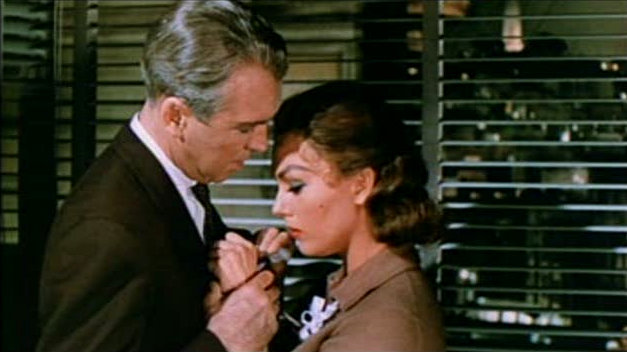
Vertigo_1958_trailer_embrace“The Greatest Film of All Time.” It certainly seems like an arbitrary title, but if nothing else it gives film aficionados something to discuss. And that’s what Alfred Hitchcock’s Vertigo is now being called for many reasons. Rather than join the debate, I wish to take a few moments to acknowledge what makes the film itself special.

On the surface, shall we say the first viewing, Vertigo is thoroughly enjoyable as a psychological thriller and mystery. The title sequence is haunting with an eye staring back at us from behind the credits and as an audience we are quickly thrown into the action, watching the opening chase scene unfold. In only a few moments one man is dead and the other John “Scottie” Ferguson (James Stewart) now has debilitating vertigo that takes him off the police force. We never learn why they were chasing a man on the rooftops. It doesn’t really matter. It’s a time later with his friend Midge (Barbara Bel Geddes) that we first see Scottie after the harrowing events. She obviously cares deeply for him, and he sees her simply as a good friend so we can undoubtedly expect her to be in the film more.

Then, rather mysteriously, an old school acquaintance named Elster (Tom Helmore) calls up Ferguson, hoping to get him to shadow his wife. It has nothing to do with infidelity, but fear, because the worried husband believes that something is wrong with his wife Madeleine. She disappears for hours at a time and is barely conscious half the time. He would describe her as possessed and Scottie is noticeably skeptical. But he relents and agrees to tail her sending himself spinning headlong into a mystery that will become his obsession.

Vertigo_1958_trailer_NovakHe gets to know Madeleine by following her, all throughout the streets of San Francisco, and much like Rear Window, this part of the film becomes a repetition of scenes followed by the reactions of Stewart. Hitchcock’s background in silents is seemingly at work here as he lets the images and score of Bernard Hermann take center stage along with Stewart’s expressions. We end up all over, from a flower stand to a cemetery, an art museum, and an old hotel. Madeleine goes from place to place like a solemn specter and we watch in expectation. Something must happen.

In an instant, she leaps into the water near the Golden Gate to commit suicide and that’s when Scottie swoops in to rescue her. He can’t lose her now because by this point he’s entranced by the icy blond who he only knows from a distance. And so their relationship progresses if you can call it that. They wander together and Madeleine shares her nightmares with Scottie.

The two of them head to San Juan Bautista and that’s when the nightmares become a reality for both of them. It’s devastating to Scottie, and the second phase of the film begins. He’s inconsolable and madly in love with this girl he cannot have. She’s hardly real. But then wandering the streets listlessly he spies Judy Barton, who coincidentally looks strikingly like Madeleine.

So he does the only thing that he can think of, meet her and try to turn into the girl he so desires. His obsessions are the only things that drive him, that and the haunting memories. Finally, he figures out the mystery, but the swirling cycle continues as he goes back to San Juan Bautista. A cruel twist of deja vu rears it’s ugly head once more.

Vertigo_1958_trailer_Kim_Novak_at_Golden_Gate_Bridge_Fort_PointHitchcock always was one for visual showmanship and it reveals itself whether it’s the parallel symbolism that Scottie notes in the painting of Carlotta Valdes or the out-of-body dream sequence that he suffers through. There’s also the dizzying zoom creating the so-called Vertigo Effect whenever Stewart looks down from a great height. These are obvious visual flourishes, but it’s almost more interesting to watch our main characters walk the streets of San Francisco, especially since there are so many real landmarks to work with (ie. Golden Gate, Mission San Juan Bautista, Muir Woods National Monument, and the Coit Tower among others). There’s something mesmerizing and trance-like about all these scenes that’s difficult to discount. It pulls us in as an audience. We want to see more. Bernard Hermann’s score is, of course, noteworthy and at its core, there is a constant disconcerting quality. It is strangely majestic and beautiful, but it pounds away menacingly. And it spirals in and out with the same sounds, the same crescendos. You think you would get sick of it, but strangely enough, you don’t. It enraptures us.

Vertigo_1958_trailer_embrace_2Then there are the players. Kim Novak has the dual role as Madeleine and Judy. She carries out both with the needed precision. Elster’s wife is elegantly beautiful, aloof and ethereal in a way that makes her the obvious fantasy of Stewart’s character. When she casts a sidelong glance or stares up at Stewart there is a faraway quality in her eyes. The clothes. The hair. How she talks. Even how she carries herself. She is spellbinding, otherworldly, and almost unattainable in all ways. Then there’s Judy, the epitome of a Midwestern girl. Pretty but not elegant. Smart but not cultured. But she falls for Ferguson as he falls for an impossible ideal.

Vertigo_1958_trailer_Stewart_on_a_laddderJames Stewart is an important piece in this film because it’s his character’s obsession that drives the plot. His instabilities, his desires, his anguish, his vertigo. It has been said that Stewart himself is a stand-in for Hitchcock and the own inner workings of the director’s being. His obsession and lusts. That may be true but something else that could be inferred is that Stewart is really a stand-in for all of us. After all, there was no greater every man than him, but there also is a universal quality to the baggage weighing on his being. Stewart’s every man is certainly being subverted, or could it be he is becoming a more accurate depiction of everyone? It’s a scary thought but what is buried inside of us? What are our own fantasies, obsessions, and lusts that lurk under the surface? Let me put it a different way.

For Stewart, he has three prominent women in his life. There’s the fantasy in Madeleine, the perfect ideal, who will ultimately ruin his life because intimacy with her is impossible. There’s Judy who has a passionate love for him, but it seems complicated in so many ways. She’s trying to measure up to his standards. The ideals and fantasies he has created poison what they could have. Then, there’s Midge who is practical, funny, and also completely devoted to Scottie. If his head were on straight he would go right to her because he would undoubtedly find the most satisfaction in that relationship, but his obsessions have undermined that.

There was an alternate ending of the film which showed Scottie with Midge once more, listening on the radio about Elster’s capture. The ending that was kept is more powerful, not because Elster got away scotch free, but because we don’t see Midge again. She all but disappears by the end of the film and with her goes all that could have been decent and good about reality for Scottie. He gets so caught up in fantasy and that tears his life apart. He’s literally spiraling in a web of never-ending hellish obsession.  Who knows what becomes of him? We can only guess.

5/5 Stars

Inside Out (2015)

Inside_Out_(2015_film)_posterIn a generation often bloated with unoriginal ideas, Pixar has been one of the most prominent fountains of creative inspiration. Pete Docter has always been a master class storyteller (“Monster’s Inc.” and “UP”), but “Inside Out” finds him at perhaps his most innovative yet if you can believe it. Not everyone would be audacious enough to make their latest animated film on the inner workings of the human psyche. A film following a girl and her emotions could easily be insensitive or some downer emo tale at best.

However, Inside Out ends up being a wonderful and heartfelt film that comments on a difficult time in life without making the parents flat out buffoons or the children complete jerks. It finds a great deal of its substance in the personified emotions, positive and negative, that course through a young 11-year-old girl on a daily basis. Joy, Sadness, Fear, Anger, and most certainly Disgust.

From the get go it looked to be a veritable field day for stars like Amy Poehler, Mindy Kalig, Bill Hader, Lewis Black, and Phyllis Smith. In other words, the casting was impeccable and everyone delivers the goods.

As Pixar so often does, the characters are wonderful and the writing develops a tirelessly inventive world full of creative entities for the main players to bounce off of. Our two main settings are essentially San Francisco and the mind, and both come off pretty well, although by default the mind becomes the visual playground of abstraction that lends itself to the most mirthful moments as well as touching enlightenment. San Francisco is the city that ruined pizza. That’s pretty bad.

Above all, I think Inside Out makes a powerful suggestion to its audience. Going in we have a certain set of presuppositions. We live in a society that says joy is good. Sadness is bad. Among other things. However, this film dares to point out that all emotions have their places. All of them are meaningful and there is a season for each. Because as it turns out, without Sadness, you really would not be able to know what true Joy feels like. And that is a beautiful thing. Overall, this is not the best of Pixar, but it is a wholly memorable outing, especially when we are allowed to get inside the heads of each character. That’s when the story is at its creative best. Those jingles in commercials are really annoying too. They really struck a chord with that.

4.5/5 Stars

Point Blank (1967)

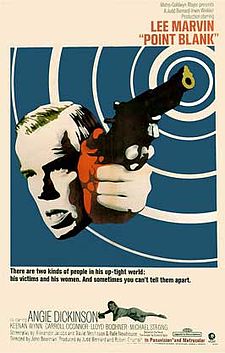
225px-PointBlankPosterJohn Boorman and Lee Marvin came together as equal parts in this venture called Point Blank and it’s quite something. You can call it neo-noir, you can call it a revenge story, a crime film, but nothing quite sums up what you end up with.

It’s a brutal, stark, psychedelic trip at times that never falters to any level of convention that we are used to. You have the clip clop of shoes on the concrete. Solemn, self-assured, repeating and ultimately deadly. There’s a man named Walker (Lee Marvin) on a seething rampage. He personally totals a car with the victim inside scared out of his wits. He’s shooting up victims all across kingdom come. Watching, waiting, then acting.

Point Blank is full of repetitive, reverberating sounds and images. Time too is repeating and evolving; fractured shards of the past followed by the present. It does not always line up or add up. Walker’s past is being fed to us through his own memories.

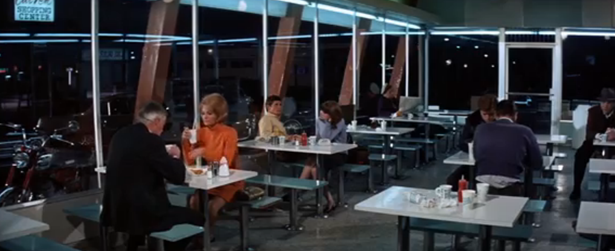
We get to pick up the pieces as he pushes forward on his vendetta. His wife is dead and he is after a man named Mal Reese, who double-crossed him, stole some of his money, and his girl. But the hunt doesn’t end with Reese. That would make too much sense and it would be too easy. Walker keeps going. Keeps hunting until it leads him to the next man and then the next. He gets together with the older sister (Angie Dickinson) of his wife Lynne (Sharon Acker). She is the repetition of Lynne who is now dead, just as each one of these targets is the new Reese.pointblank2There’s a point where we must beg the question? What does Walker even want now if all he gets is $93,000? What is going on in this world? Why does it tick in such a way, because to be honest, it doesn’t always add up? Is the Alcatraz we see and then the L.A. landscape true reality or is this a dream that Walker has created so he can act out his revenge? After all, he was shot, right? It might be a long shot, but the plan of Walker in itself is a long shot. He just continues pushing on and the hunt leads him back where he was in a perfect circle.

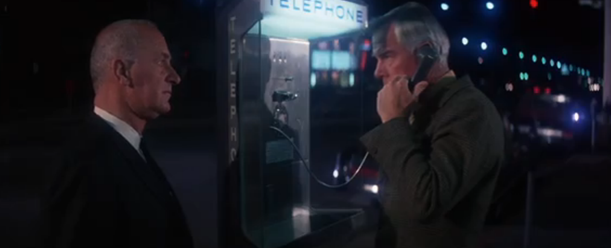
Now what? Reese is gone. Lynne is gone. Every single middleman is gone. He has a load of money laying out at Alcatraz for him and perhaps Chris is stilling waiting for him. We don’t know. That’s where Point Blank finds its conclusion and it’s just as vague as where we jumped in.pointblank3It’s understandable that it has gained a cult status over the years since Lee Marvin is an uber-cool gunman and his journey is hard to figure. His world is a bleak cityscape of 1960s L.A. and S.F. We can never hope to fully understand him or this world either and that’s the beauty of Point Blank. There is a degree of ambiguity that is fascinating. Heck, we don’t even know this man’s first name and yet we invest time in his story. I want to see Point Blink again because it’s not just your typical shoot ’em up action film. It makes you think and it has such a cool aurora and style. It deserves another viewing at some point soon.

4/5 Stars

Blue Jasmine (2013)

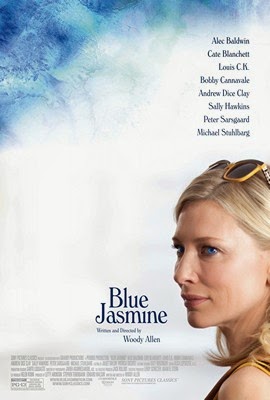
90cbd-blue_jasmineThe emotionally unstable socialite Jasmine (Cate Blanchett) seems to think everyone in the world wants to listen to her talk and reminisce
This film shares a resemblance to Tennessee William’s A Streetcar Named Desire, and it can be know coincidence because Woody Allen knows his history.  On her part, Blanchett ironically shines as Jasmine, a woman who was married to a swindler (Alec Baldwin), has a nervous breakdown and then finds herself penniless in San Fran on her sister’s doorstep (Sally Hawkins). Jasmine is a snobbish jetsetter who had all the possessions that money could buy and a successful hubby. However, pull out the rug from under her and what’s left is a needy hypochondriac plagued by bouts of loneliness.  When she’s not jamming down pills chased by martinis, she’s feeling sorry for herself. She is also often prone to be unstable and throw tantrums. But by the end of this film she is all alone on a bench. No money, no family, not even any love life. Jasmine is a tough case because she is absolutely despicable and on top of that annoying, and yet we still have a small degree of sympathy for her. Allen’s film walks the tightrope between comedy and tragedy to great effect. 
 
4/5 Stars 


Dirty Harry (1971)

2daf4-dirty_harryStarring Clint Eastwood as San Francisco police Inspector Harry Callahan, the film opens with a sniper knocking off a young woman. The self-proclaimed Scorpio says he will keep killing a person everyday until the city pays him off.  They go on high alert and Callahan stakes out with his new rookie partner Chico. However, Scorpio escapes once again and he is just begun. He kidnaps a young girl and threatens to kill her. Callahan runs all across town to deliver the ransom where upon a confrontation occurs. After they recover the girl they track down the killer but he is released because they had no warrant. A furious Callahan finally hunts down the conniving killer one last time after Scorpio kidnaps a bus load of children. In the ensuing chaos Harry finally gets his man. This is one of the great action films and it spawned a memorable character in Dirty Harry.

4.5/5 Stars