Born to Be Bad (1950)

“When you came here that first day, I fell flat on my face over your suitcase. I never really got up.” – Joan Leslie as Donna

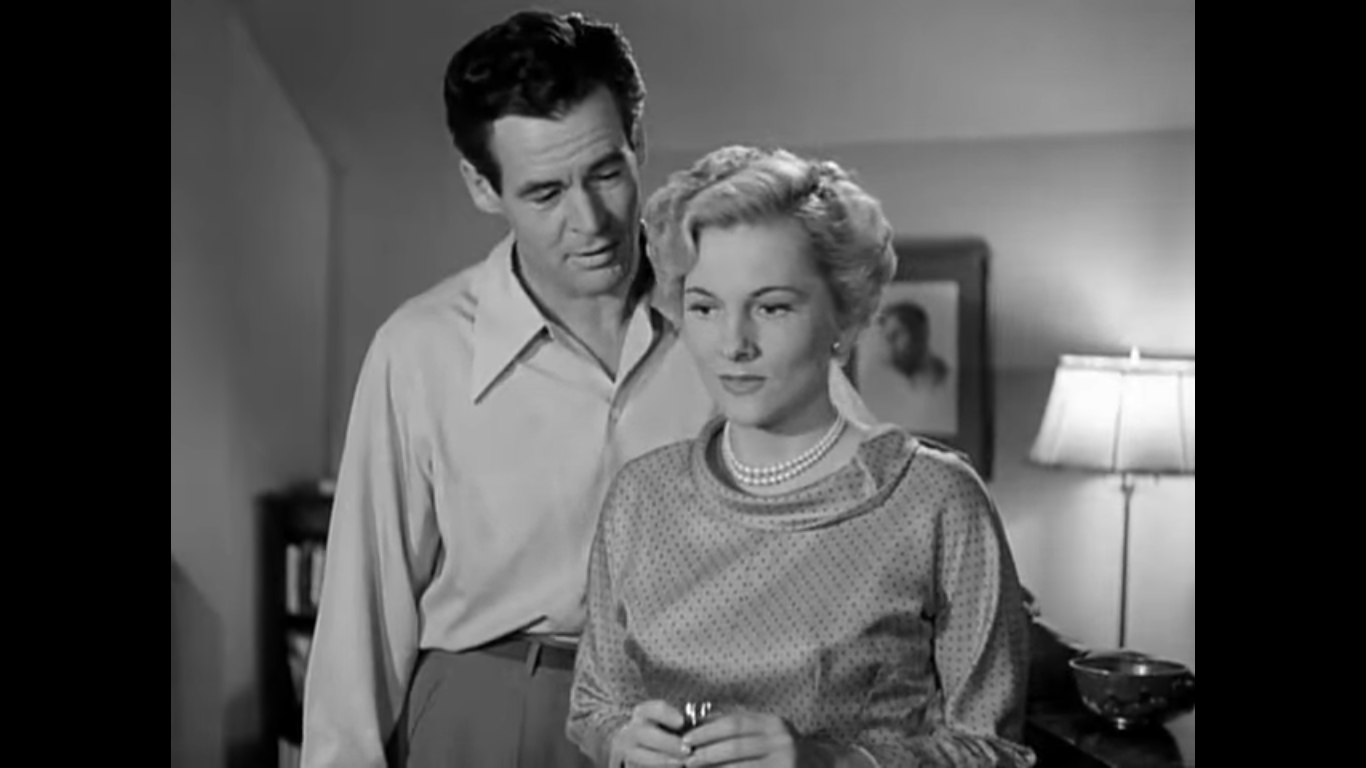
Born to Be Bad is not high-grade stuff. Its trashy exploitive title says as much, but it’s also worthwhile for exactly these reasons. Nicholas Ray would make a name for himself in Technicolor — not black and white — capturing a bevy of emotive performances from the likes of James Mason and James Dean. But it’s easy to forget some of his earlier films are equally stirring. Bogart in In a Lonely Place or Robert Ryan in On Dangerous Ground.

There’s something lighter, more convivial about the performances in Born to Be Bad, but straight down the line, it offers up a thoroughly intriguing cast. It has to do with how they can play off one another and couple up with various character dynamics forming between them.

We have a disorientating beginning because we don’t see Joan Fontaine, but someone who turns out to be Joan Leslie. She’s older now, mature, assured, and still more ebullient than I ever remembered her before in the early Warner Bros. days.

Within the context of the picture, she has reason to be. She’s deliriously happy, about to marry the love of her life, a rich moneybags (Zachary Scott), and yet she still finds time for a job and other wisecracking male companions. One’s a painter (Mel Ferrer), the other a purported novelist (Robert Ryan). There’s a happy-go-lucky familiarity to it all. We almost forget what the movie is meant to be about.

Then, Joan Leslie trips over a suitcase, her hair tossed violently askew, and she looks up to see the soft features of none other than Joan Fontaine perched on a couch. The unassuming beauty is her usual diffident self. However, this iteration of her screen image holds a manipulative underbelly.
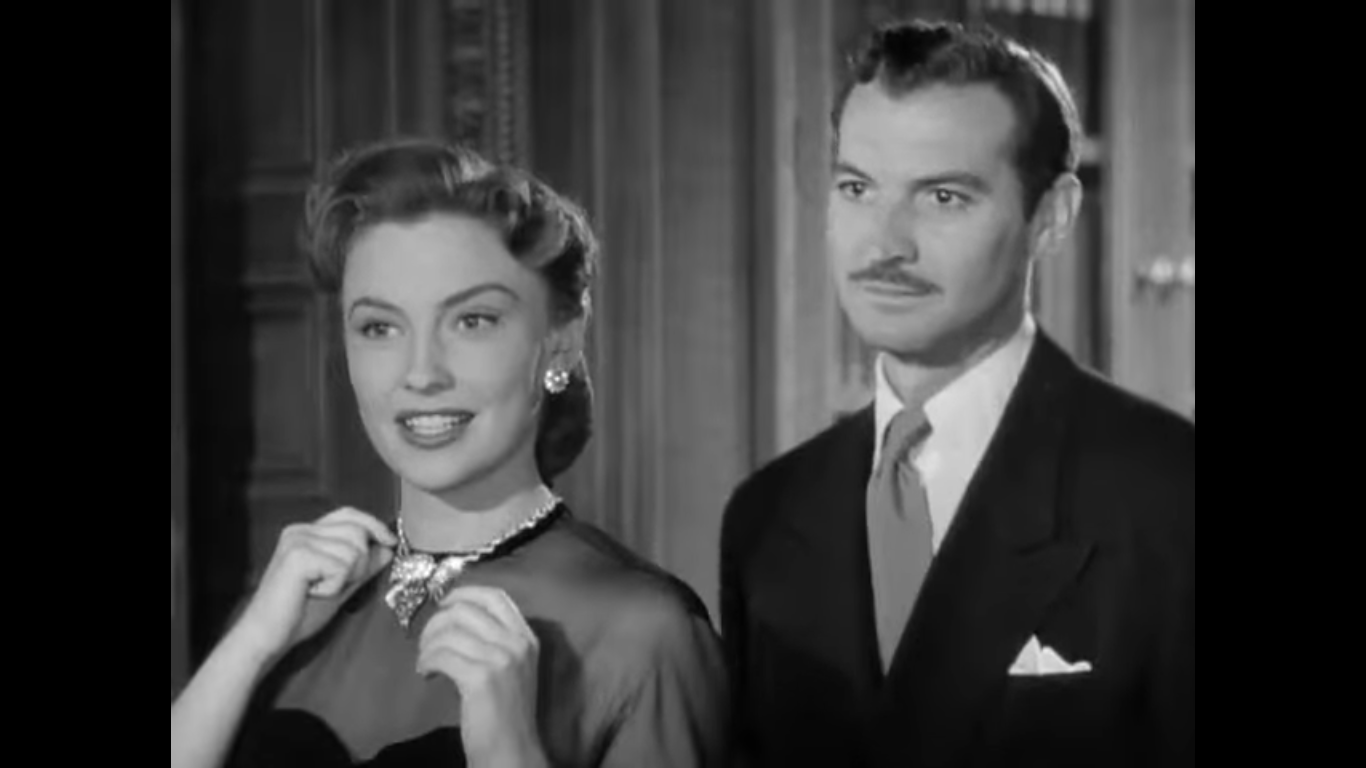
As Cristabel ingratiates herself into Donna’s good graces and initiates designs on her man, it’s almost easy enough to dismiss her actions as first. She wheedles her way bit by bit until it’s more and more evident her ingenue from Rebecca or Suspicion has gone sour and self-serving.

Even when he’s partially a victim, Zachary Scott manages to give off a smarmy veneer. Robert Ryan has his own curious introduction, berating Cristabel when she’s on the phone, but it’s not a party line. He’s in the house and she wanders into the kitchen to see the stranger raiding the icebox. At first, she’s indignant. Then she starts to fall for his blunt charms.

Ryan would join forces again with Ray in On Dangerous Ground, and he seems like the kind of actor the director can use well. There’s a raw incisiveness to him that can function durably without sacrificing certain levels of emotional honesty. Because he has an unsparing frankness about him that one can either appreciate or become royally turned off by. Very rarely does Ryan elicit an apathetic response.

Fontaine does her part beautifully — her eyes constantly flittering around. In one particular conversation between Scott and Ferrer, she casually listens as she takes in the scene around her, just happy to be in such a place. She manages to be so helpful and so helpless getting everything she wants as a result.

Donna’s preparing to storm off to London, her relationship with Curtis torn asunder. Her pointed remarks to her rival have a delightful sting: “Somebody should have told the birds and the bees about you.” I don’t know what to make of it, but there’s something in Joan Leslie’s eyes when she’s been slighted that’s reminiscent of Marsha Hunt — a glint that Fontaine never owned. Leslie provides her a fine foil as we continue to explore a variation on the All About Eve dynamic.

Two exemplary shots of juxtaposition happen in adjacent scenes with Fontaine’s sparkling features framed on the chest of her man as she reposes there and, of course, there are two of them. She’s so good at flitting back and forth between two men. They both speak to her in different ways or rather, they both offer something unique that she can benefit from.

The jilted lovers, Leslie and Ryan, fall in together as friends and business associates if not romantic partners because there is something more in the works. Cristabel finally gets caught in her lies, though Born To Be Bad has a fairly lightweight ending. No one gets tragically wounded and everyone seems to laugh it off or get their wrist slapped. It’s not noir, nor is it effectively weighty, but it’s an intermittent pleasure to watch if you’re fond of the players. It more than lives up to its title.

3.5/5 Stars
The Southerner (1945)

the southerner 1.png

It’s easy to infer there is an innate kinship between famed director Jean Renoir and the folks within this picture. Certainly, he was no peasant, by any means related to those found in Millet’s The Gleaners. However, like his painterly father Auguste Renoir (a figure I always find myself reverting back to) he had a penchant for people and nature underlined by a genteel eye for beauty.

That is not to say, Jean was exactly the same. His films can often be socially-minded, capable of both satire and commentary. But underlying such themes is always this same sense of natural and artistic pulchritude.

Though his output in the states is generally forgotten, upon closer analysis, efforts like The Diary of a Chambermaid (1946) and The Woman on The Beach (1947) have glimmers of his brilliance as an auteur. We can even see how the content often fit Renoir, though the system and in some cases, the performers might not have.  However, in its day, most everyone seemed to agree that of all his efforts as an expatriate, The Southerner was his finest achievement stateside. I don’t disagree.

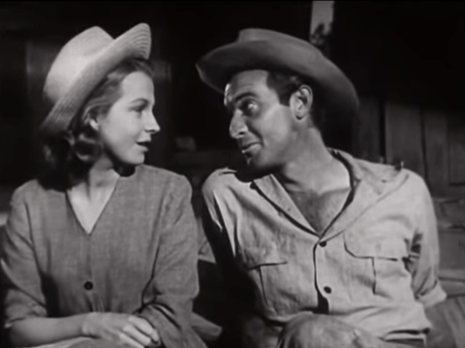
At its core, Zachary Scott gives an understated performance full of grit and common decency as the head of the Tucker clan. Right beside him, his wife, Nona (Betty Field) exhibits a stalwart character exuding both affection and maternal grace, a constant rock to steady her man. In an inciting event that feels strikingly similar to The Grapes of Wrath (1940), Gramps dies and the family sets out on a pilgrimage in search of a new life. This will eventually lead them to a strip of land to call their own.

While Scott’s no Henry Fonda, I’m pretty sure even John Ford would consider Jean Renoir his equal if not a superior director. Regardless, both are visual filmmakers of the most visceral kind. In fact, Poetic Realism was an attempt to put a label on Renoir’s exquisite naturalism, placing the human form in environments like modern day evocations of the Garden of Eden in an otherwise sullied world. A Day in The Country (1936) or even Toni (1938) stand as stunning earlier examples from his native France.

Compared to his other American efforts, The Southerner has the most straightforward and even conventional narrative. Because the story is simplistic and the dialogue unadorned; at it’s worst it’s throwaway. However, it effectively provides a bulwark for Renoir to capture strains of humanity with a truth that gleams with his usual sensibilities. Again, like Ford, such a minimal plot frees him up for digressions that are more lyrical and character based so by the end of the picture as short as it is, we feel like we have witnessed something full-bodied and singular.

The Tuckers have the most darling little kids. Beulah Bondi subverts her angelic image as the cackling, particularly ornery granny. Their new life is hard, their resources scant, and yet the Tuckers are cisterns full to the brim with indefatigable spirit. Sam is driven by the humble desire of Man to cultivate his own land. He never says it implicitly but God was a Creator and so it’s almost innate for him to want to do some of the same.

But Tucker, like Job, is born to trouble with backbreaking labor and constant devastation. His boy is stricken with sickness needing nutrition from vegetables, lemons, and milk that they either don’t have or can’t afford. The Tuckers live by a creed of family and neighborliness but they receive no such charity from those nearest to them. It’s like the gruff farmer next door is seeking to see them fail. Nature too is all but looking to sink them. There’s no amount of clemency

In one pleading moment, Tucker even walks out to his decimated crop he’s toiled over for so long and talks to God in the most candid of ways. It’s like a modern-day psalmist asking the honest questions. His resolution is to keep going and hold his family together thanks to the unremitting determination shared by his wife.

However, overlaid on this is also the struggle between the new urban centers and all the natural wonders of God’s green earth. We saw it in Renoir films such as The Human Beast (1938). In Sam’s case, his friend all but guarantees him a steady factory job and yet he continually balks at the chance. His calling is to be in the fields no matter how inexorable his opposition might prove to be.

The beauty is that we get a bit of a reprieve from the constant barrage of misfortune. It comes in the form of a wedding when two jolly old folks get hitched and it births the most joyous occasion. Partying ensues full of good-old-fashioned gaiety and square dancing brimming over with laughter and hilarious antics made 10 times more humorous in the company of others. Each and every one of them is a part of this grand joke. The Job-like assaults keep on coming and yet in the company of others they hardly seem as catastrophic. There you have a secret to life.

I rather like the conclusion Renoir’s film makes tacitly. It’s quite evident in the following aphorism voiced by one of the characters, “It takes all kinds to make up this world.” So this is not the Romanticist where everything mechanical and technological is inherently bad. Nor is farming or the land being tilled and cultivated any less important. They share equal footing and they need each other.

Again, it’s the humanism of Renoir fully realized. This is an American story, the most American narrative undertaken by the French director. However, in the waning days of WWII, you cannot help but see this as a universal rallying cry. Out of the ashes of destruction and international animosity, ill-will, and hatred, we need each other. Come to think of it, the credo is a timeless one at that. We could use these words now as much as we ever did. There you have a secret to the relevance of Jean Renoir.

4/5 Stars

Review: Mildred Pierce (1945)

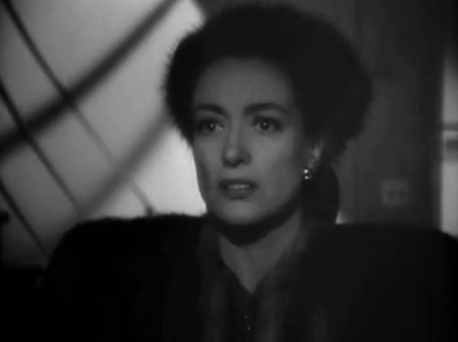
mildredpierce1Mildred Pierce is a hybrid between two genres in a way. It most certainly could be categorized as a weepie 1940s melodrama, a so-called “woman’s picture,” and yet it has the undeniable framing devices of a typical film-noir. It’s unique in other ways as well. It features a strong, independent woman as the lead, the eponymous Mildred Pierce and her aspirations and the struggles in her life become the focal point of this story.

Before any gun was fired or a dead body was found at a beach house or any of that happened, Mildred was a stay at home housewife with two daughters and a husband. It becomes all too clear that all is not right in the Pierce household as Bert becomes annoyed with Mildred, who spends so much time doting over eldest daughter Veda (Ann Blyth). It’s as if she needs to earn Veda’s love and Bert realizes the issue early on. They separate and soon after they watch their youngest daughter die of pneumonia suddenly.

What happens next is Mildred’s big break. She starts out all alone and discouraged before finding a job as a waitress, and ultimately, starting up her own restaurant with the help of the hapless Wally Fay (Jack Carson). She finds a loyal friend and employee in Ida (Eve Arden) and a rejuvenated love life thanks to the socialite Monte Beragon (Zachary Scott).

Veda on her part is ecstatic to finally have a life of nice things with the stream of income coming in from her mother, however, she still does not approve of her mother working in the restaurant business. Mother is so Philistine after all.

Thus, despite all the work and effort, she has put into holding onto her one remaining daughter, Veda begins to drift farther and farther away from Mildred until a fight causes Veda to leave home. Most people would say good riddance, but Mildred Pierce is not like that. She has an unhealthy, almost obsessive need for her daughter’s affection. She will do anything to get her back and most of it has to do with giving Veda stuff.

She is far from happy but finally marries Beragon, because she thinks it might bring Veda back to her home. It works but what she doesn’t know is that she is getting forced out of her own company by Bergaon. That evening she found her gun and then Beragon got murdered on the premises of his beach house.

Back in the station, the shadowy noir sensibilities are still present and Mildred abruptly finishes up her tale. Except for the police investigator and the audience know better. That was not the end of the story. There’s one last cruel twist.

In my mind, Joan Crawford is rivaled only by Bette Davis in giving me the shivers, except in this film her eyes are so expressive, giving off emotion without her even saying anything. Within this film, I find the character dynamics and gender conflict to be quite interesting and there are really 6 main characters we can look at:

Mildred: A strong woman who gains her independence the hard way by putting in work to earn her honest wage. She is not a bad person per se, but her weakness is an unhealthy love for her daughter, or rather, a need to have the affection of a girl who never can be satisfied. It leads to divorce, a loveless marriage and a lot of heartaches.

Veda is a little spoiled brat and most of the pain and problems in the film stem from her. She constantly plays on her mother’s emotions heartlessly and even goes so far as to steal her man. That is perhaps the ultimate slap in the face after all she has already done.

Ida: Along with Wally Fay, Ida is perhaps one of the more likable characters in the film, because she is a strong woman who also holds a lot of wit thanks to the performance of Eve Arden. She also utters the famous line that shines some light on the Veda situation (Alligators have the right idea. They eat their young).

Bert: Although he takes part in an affair and is not the perfect husband, I think Mildred and the audience realize how right he was. He saw all the drama with Veda coming, and he remained civil with Mildred through it all, continuing to look out for her.

Monte: He may not be a “villain,” but Beragon is ultimately another corrupt character who is driven by money and his social status. However, it is interesting to ponder whether it was his own avarice and playboy instincts that led him to do what he did, or was he wholly influenced by Veda?

Wally: Finally, we have Wally Fay played the always enjoyable Jack Carson. He too has his eye on Mildred, but although he can be forward and a little annoying, he ultimately looks out for her much like Bert. And yet to call him an angel would be an overstatement because he still has his own interests in mind.

That’s what makes these characters so fascinating since there are some obvious antagonists, but each character, at their core,  has faults. Thus, it makes sense that this film has melodrama brought on by familiar conflict and the like, only to descend down into the noirish world brought on by vice and greed. Whatever you label this film as, the fact of the matter is, it was a major hallmark for the fading Joan Crawford as well as the ever versatile director Michael Curtiz.

4.5/5 Stars