 This was not the film I expected from the outset, and oftentimes that’s a far more gratifying experience. Nostalgia was expected and this film certainly has it, even to the point of casting the legendary funny man and cultural icon Don Knotts in the integral role as the television repairman.
However, with this there was a degree of apprehension, because while paying homage to the past, Leave it to Beaver, Father Knows Best, Andy Griffith and so on, there seemed to be a certain amount of denigrating of such classics– a tongue and cheek way of approaching the quaint television past of the 1950s. There was little reverence for these admittedly quaint but still respected programs.
My fears were seemingly confirmed minutes later with black and white imagery being equated to repression as the beautiful colors of the town became unfurled with greater enlightenment and personal expression. But that’s not quite right. The story goes both ways. And to understand that we have to take a closer look at our two diverging main characters.
When Garry Ross’s film begins in the present day, David (Tobey Maguire) leads the life of a bookish TV nerd, watching old reruns and cataloging trivial factoids in the cavernous crevices of his mind. At this point he’s relationally stagnant and based on this social life, he looks to be going nowhere fast. His sister Jennifer (Reese Witherspoon) is on the complete opposite spectrum, infatuated with boys, imbued with sexual freedom, and dare we say a tad superficial.
But to make a long story short, these two siblings get thrown into the life and times of David’s favorite TV show Pleasantville, complete with black and white cinematography and vintage ’50s lifestyles. The interesting part is watching them learn how to find another part of themselves contrary to what they initially found their identity in. It means freedom of not only body but mind too and that extends to all the other people who they influence.
In a pinch, it also makes for a handy allegory on race, with literal color being of such a high concern among the paranoid townsfolk. Because as more people become “colored” it creates a degree of unrest in the community. They hold to the belief that “different” is not good — to be “other” is to be frowned upon. It’s Jennifer first and then David who begin to change the status quo, including their mother (Joan Allen), the local diner owner (Jeff Daniels) and many of the other teenagers.
So on second glance, Pleasantville is a film that says television reruns and nostalgia are quite alright, but then again, there’s so much to be lived and experienced in the present moment too. There will be bad just as there was bad before and there will be good things that will manifest themselves still more abundantly like previous generations. Those are the universal rhythms of life, and they should free us up to live with supreme confidence in who we are, breaking out of the tedium that is our comfort zone. And that’s a lesson that not only revels in the glories of previous generations but still gives us hope for the future millennium, now well underway over 15 years after Pleasantville was originally released.
It’s not a story without flaws, but it’s the fact that it has flaws that actually make it worth watching. We need a little bit of rain in our lives — the inconsistencies and the idiosyncrasies to add greater depth, not only to our character but in turn to our relationships. It then becomes absolutely necessary to come up with a clear definition of pleasant or even to concede that not everything can or should be pleasant. Because you need the darkness to bring out the full spectrum of colors — all those colors commonly referred to as human emotions.
4/5 Stars
 One of Jean-Luc Godard’s strengths is his capability of feigning pretentiousness, while still simultaneously articulating humor. His film opens with its first of many inter-titles, “A film adrift in the cosmos,” followed by the equally poignant “A film found in a dump.”
 Conflagrations engulf cars and human bodies while above the din comes the piercing screams of a woman bemoaning the loss of her Hermes handbag. We cannot take this anyway but humorous because it once again is yet another moment of utter insanity.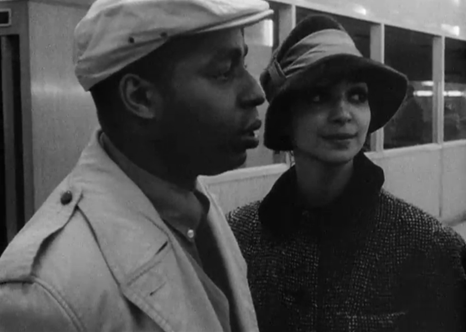


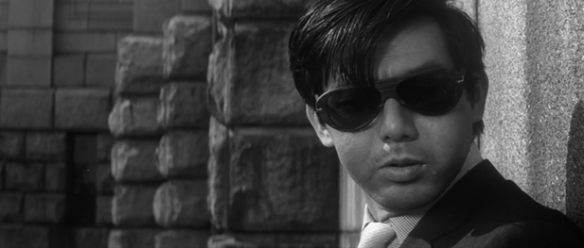 Branded to Kill is the stuff of legend inasmuch as director Seijun Suzuki offered up this wonderfully wacky, perverse, dynamic film and was subsequently dumped by his studio. At Nikkatsu they accused Suzuki of crafting an oeuvre that made “no sense and no money.” And if we watch it with the eyes of a rational, money-grubbing business mind, there’s a point to be made. Because this film is ridiculous on so many accounts, absurd in plot and action, starring an unlikely cult hero — a silky smooth hit man with prominent cheekbones and a hyper-sexualized penchant for steamed rice.
 Phase two follows Goro as he flaunts his tireless inventiveness as a hit man. Hiding inside a cigarette lighter advertisement and shooting his target through an adjoining water pipe for good measure. Then the femme fatale Misako slinks into his life and after a botched job, his life is in jeopardy, an unlikely adversary being his wife. She rightly characterizes them as beasts and their home life is pure chaos.
 By now we have the total dissolution of the character we have known as he begins to sink into an all-out state of sniveling paranoia. He finally meets the mysterious number 1 and far from being a tense showdown, it turns into a rather pitiful scenario. They go arm and arm to the toilet, not allowing each other out of sight as number 1 decides how to finish off his hapless foe.The final showdown comes and it’s all we could ask for. Brutal, perplexing and above all undeniably unique – accented with the brushstrokes of an utterly creative mind.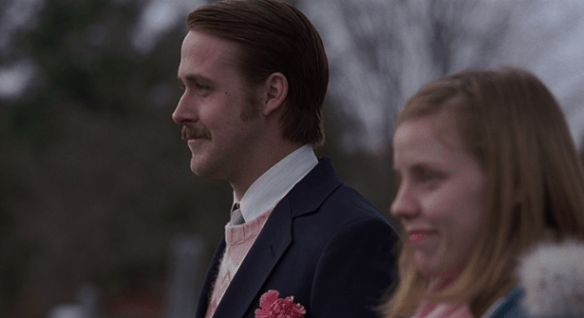
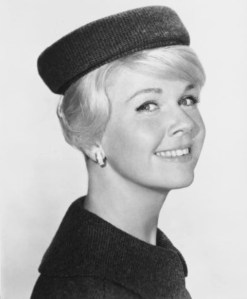 Here is another entry in our ongoing series of Classic Hollywood Stars who are still with us.
 Where to start with Liberal Arts? It’s one of those deep blue funk movies. Zach Braff tackled this issue in Garden State, and Josh Radnor does a similar thing here. Because the reality is that we live in a generation of early onset midlife crises. In the opening moments, 35-year-old Jesse Fisher (Radnor) has nearly every article of clothing he has aside from the shirt off his back stolen from a local laundromat when his back is turned. We can easily surmise that this single event epitomizes his life right now, and this is hammered home rather obviously when his unnamed girlfriend clears her belongings out of his flat. There’s no better symbol of isolation and alienation than a break-up.
 It’s crucial to note that at this juncture nothing substantive builds between these two acquaintances romantically, but they do foster an immense connection. While Jesse is taken by Zibby’s personality, she, in turn, is discontent with a contemporary culture where no one dates–everybody’s casual about relationships. She feels unequivocally millennial and yet she readily admits these areas of old-fashionedness.
 Inspired directors oftentimes do not make themselves known in grandiose flourishes but in the smallest of touches, and in his debut, Polish newcomer Roman Polanski does something interesting with the opening of Knife in the Water. Perhaps it’s not that unusual, but it’s also hard to remember the last film where the camera was on the outside of a driving car, looking in. We see shadows of faces overlaid with credits and then finally the faces are revealed only to be shrouded by the reflections of overhanging trees glancing off the windshield.
 Thus, it becomes an exercise of technical skill, much like Hitchcock in Lifeboat or any other film that limits itself to a single plane of existence. Polanski’s framing of his shots with one figure right on the edge of the frame and others arranged behind is invariably interesting. Because although space is limited, it challenges him to think outside the box, and he gives us some beautiful overhead images as well which make for a generally dynamic composition. That is overlaid by a jazzy score of accompaniment courtesy of Krzysztof Komeda, a future collaborator on many of Polanski’s subsequent works during the ’60s.
 However, at this point, as a young director, he is simply sharpening his teeth and getting acclimated to the genre a little bit. Knife in the Water builds around the three sides of a love triangle, creating a dynamic of sexual tension because that’s what tight quarters and jealousy do to people. This is less of a spoiler and more of a general observation, but the film does not have a major dramatic twist. Instead, there are heightened tensions, a bit of underwater deception, and finally a fork in the road.
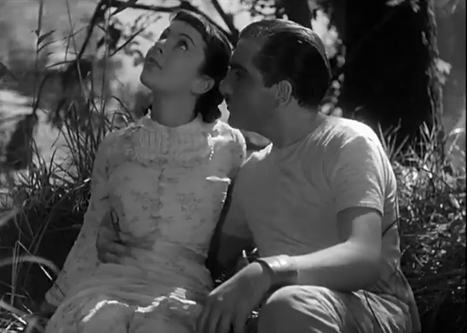 It’s only 40 minutes — hardly a feature film and more of a featurette, but Jean Renoir’s truncated work, A Day in the Country, is nonetheless still worth the time. Admittedly, I still have yet to venture to France and I hope to do that someday soon, but this film propagates marvelous visions of the countryside that resonate with all of us no matter where we hail from. Those quiet jaunts out in nature. Sunny days perfectly suited for a lazy afternoon picnic. Peacefully gliding down the river as men fish on the bank contentedly.
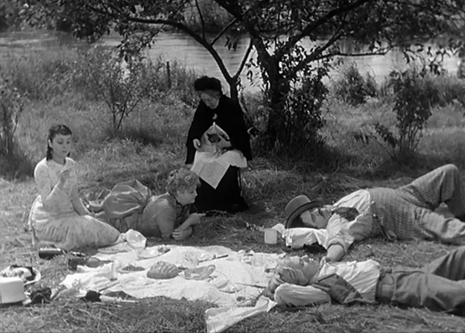 As always these characters set up Renoir’s juxtaposition of luscious extravagance with the earthier lifestyle of the lower classes. However, there is a geniality pulsing through this film, with Mrs. Dufour exclaiming how polite these young men are–they must be of good stock, obviously not tradesmen. Even Mr. Dufour is a good-natured old boy who gets fed up with the elderly grandmother, but he willingly takes the boys charity and advice when it comes to the prime fishing holes.
 We get the essence of what is there and we can still thoroughly enjoy Renoir’s composition. His is a fascination in naturalistic beauty where he nevertheless stages his narrative to unfold in time. But really this mise-en-scene created by the woods, and meadows, trees, and rivers really function as another character altogether. And when all the players interact it truly not only elicits tremendous joy but an appreciation for Renoir’s so-called Poetic Realism. Whether he’s capturing a woman swinging jubilantly on a swing or framing a shot within the trees, we cannot help but tip our hat to his artistic vision. If his father Auguste was one of the great painters of the impressionist era, then Jean was certainly one of the most prodigious filmmakers of his generation, crafting his own pieces of impressionistic realism. In fact, with father and son, you can see exactly how art forms can overlap on canvas and celluloid. They truly share a fascination in some of the same subjects. Universal things like nature and human figures interacting in the expanses of such environments. It’s beautiful really, even in its pure simplicity.
 “He spat on Balzac!”
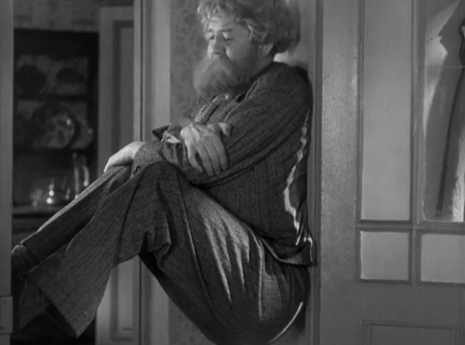 Soon Boudu is wrapped up in middle-class luxury that he didn’t ask for, at the behest of Edouard who takes an initial liking to this bushy-haired man he happened upon. After all, he is intent on playing savior and Boudu obliges. It’s in these forthcoming scenes that Renoir examines class in a satirical way, feeling rather like a precursor to some of Bunuel’s later work, without the religious undertones. And yet for some reason, we cannot help but like Boudu a lot more. True, he is loud, messy, rude and unruly, but there’s something undeniably charming about his life philosophy. There are no pretenses or false fronts. He lets it all hang out there. In this regard, Michel Simon is the most extraordinary of actors, existing as a caricature with seemingly so little effort at all. He steals every scene whether he’s propped up between two door frames or cutting out a big swath of his beard for little reason.
 Charity in a sense is met with scorn, but it feels more nuanced than, say, Bunuel’s Viridianna (1961). In many ways, Boudu seems like a proud individual or at least an independent one. He hardly asks for the charity of the wealthy, and he’s content with his lot in life, even to the extent of death. It’s also not simply chaos for the sake of it, and he hardly lowers himself to the debauchery of Bunuel’s unruly bunch. Still, he obviously rubs the more civilized classes the wrong way, by scandalizing their way of life and trampling on their social mores without much thought. It’s perfectly summed up by the last straw when a fuming Edouard incredulously exclaims, “He spat on Balzac.” The nerve!
 4 Star Films