Cleo from 5 to 7 (1962)

cleo-from-5-to-7It’s a joy to watch Agnes Varda dance. Or, more precisely, it’s a joy to watch her camera dance. Because that’s exactly what it does. Her film opens in color, catching our attention, vibrant and alive as the credits roll and a young woman (Corinne Marchand) gets her fortune read by an old lady. She’s worried about her fate. We can gather that much and this is her way of coping. Superstition and tarot cards but she’s trying and the results are not quite to her fancy.

And from that point on Varda’s camera continues to move dynamically but her film quickly turns to black and white as if to say something. Our main heroine, this young, attractive singer named Cleo has sunk into a sense of despondency. For the next two hours, she must wait it out to hear the news from her doctor. The news being whether or not she has been stricken with cancer. And if cancer then recovery or even….death. This is her existential crisis.

In the following moments, the camera falls back as an observer even donning her point of view from time to time and that’s the true enjoyment of this film. There are stakes laid out right from beginning and those remain in the back of our minds but it’s really about how we get there. How she gets there.

Cleo walks the streets of Paris browsing shop windows for hats, taking cab rides through the city, patronizing local establishments, resting at her flat with her assistant, and even calling on friends.

It becomes obvious that Cleo needs other people in her life whether she knows it or not. There’s an importance in solititude when she gets to examine the passing world and take in the serenity of running water in a park on a peaceful afternoon. But it’s the people that bring some color to her life. True, she does note that everyone spoils me, no one loves me, undoubtedly bemoaning the quick house call by her lover, the doting of her houskeeper, and the comical buffoonery of her pianist and lyricist duo.

But she also calls on her friend Dorothee who models by day in a sculptor’s studio taking in the bustling Parisian streets with all sorts of people but more importantly time for all sorts of conversation both superficial and sincere. They visit the local cinema and are treated to a silent comedy short (starring Nouvelle Vague power couple Jean-Luc Godard and Anna Karina). As the girl’s boyfriend rightly ascertains comedy is good for the soul. It can help alleviate a world of hurt.

Cleo’s final confidante comes quite by chance. A soldier on leave from Algeria as it turns out. He’s at first forward, then didactic, and finally utterly sincere. He’s perhaps just the type of person Cleo was looking for without even realizing it — someone who is perfectly obliging with conversation when she feels completely taciturn. Theirs is a quick friendship as he agrees to go with her to the hospital for the impending news and she, in turn, looks to see him off to the train station as he goes back from whence he came.

And does the film’s conclusion suffice? Not particularly. It’s abrupt and unsatisfying after all that prolonged wait but curiously Cleo seems at peace. Perhaps that is enough. What this film does impeccably is capture a moment as if it was pure and true and utterly authentic. It takes real world issues and a real world setting, synthesizing them into a fictional storyline that still functions as the every day would.

This is the world of the Cold War, war in Algeria, Edith Piaf in the hospital, Elmer Gantry, Bridget Bardot, and French pop music. It’s all melded together, bits and pieces, and moments and ideas and snapshots into a thoroughly engaging piece that becomes a sort of rumination on life and death and all those things that complicate living. If it all sounds like a jumbled mess of words it is and instead of trying to comprehend it by any amount of diction you should do yourself an immense favor and see Agnes Varda’s Cleo from 5 to 7 for yourself. If you are disappointed then I am truly sorry for you. Because it’s a wonderful film.

4.5/5 Stars
White Heat (1949)

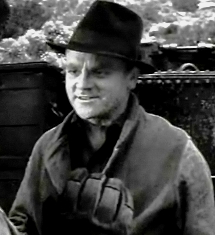
james_cagney_in_white_heat_trailer_cropWhite Heat burns like hot coals even today as the epitome of incendiary cinema. It’s a gangster picture from master Warner Bros. craftsman Raoul Walsh that’s volatile and intriguing, highlighted by the always fiery James Cagney as a crazed man-child with a mom complex.

Cagney had stayed away from gangster pictures that made him a star for nearly a decade and it’s true that now it’s easy to label this a film-noir given the sweeping tide of the times including other pictures like The Killers, Brute Force, and so on.

Still, everything that is truly inspired from this film stems from Cagney’s performance because we have seen gangsters before, bank jobs, inside men, gun molls, and the like but Cody Jarrett is one for the ages. He throws a twisted wrench into what is already a quality thriller by going absolutely ballistic and simultaneously jolting it in the most peculiar ways.

Before Norman Bates was even whispered on the lips of audiences Cagney burst onto the scene with his demonic characterization, very plainly evil personified as the psychotic Cody Jarrett. He smacks policemen, guns down the worthless, and schemes incessantly. However, he also has a strange sense of family and friendship. He’s prone to crippling migraines like his insane father and still parks himself on his mother’s lap. He even befriends a copper, except he doesn’t know it. He gets duped like a two-bit stooge.

Edmond O’Brien was on the rise at this point following such films as The Killers and The Web. He still owns a supporting role in the sometimes thankless job as the decent heartbeat of law and order. But he has so much more character than all the other stiffs with their fine looks and chiseled jawlines who simultaneously faded into the annals of history.

Although he’s playing support to Cagney, there are a lot worse gigs and the pair works well with each other. At one time strangers, confidantes, and finally bitter enemies in the constantly seesawing dynamic that comes when an undercover agent looks to get buddy-buddy with a certifiable psychopath. Not surprisingly it makes for a thoroughly engaging crime film because the characters actually have something to them.

The iconic Mess Hall sequence brimming with Cagney’s explosive bravado is representative of his flair throughout the entire picture. It just won’t let up. It never lets up. A line of “telephone” takes a message down the row of inmates (including sports icon Jim Thorpe) before reaching the waiting ears of the hardened criminal. Like a stick of dynamite, he goes off and becomes possessed by some unnamed force. It represents the manic, off the wall style of Cagney that still compels audiences today. It’s no longer a simple performance. This is not acting (or it doesn’t seem like it). This is feeling, hate, anger, rebellion, and violence all channeled into a transcendent moment where the man has completely lost himself in a role. No one can touch him. It’s fantastic.

Virginia Mayo finds herself portraying her particular sultry siren accustomed to mink and bubblegum. While Steve Cochran stands tall as the main crony with big ideas, the aptly name Big Ed who is looking to worm himself in on Jarret’s territory (and female company), while he’s incarcerated. Meanwhile, Margaret Wycherly who was previously known as the angelic mother of Alvin York takes on a maternal role on the complete opposite spectrum and she does a fine job as a woman modeled after the notorious Ma Barker.

Any great crime story needs a final set piece where everything can culminate in one ultimate crescendo. White Heat does not disappoint in this regard as Agent Hank Fallon looks to tip off his colleagues following the inception of a big heist of a chemical plant in Long Beach. What follows is a tense dragnet and shootout and it’s a fitting place for Jarrett to meet his maker or in his case his mother. He literally goes into the inferno, blowing up and entering the conflagrations of hell in the most startling of fashions — still clinging doggedly to his mom–his twisted guardian angel of death. It’s a curtain call worthy of such a performance and knowing it can do no better, the film ends there, no fanfare just a grimy picture where criminals aren’t as cut and dry as Hollywood once supposed.

5/5 Stars

The Big Sick (2017)

The_Big_Sick.jpgIn his opening introduction, Kumail (comedian Kumail Nanjiani playing a cinematic version of himself) explains what it was like to grow up in Pakistan with cricket and praying and arranged marriages. All those fun Pakistani traditions. There’s a bit of a matter-of-fact flippancy to how he recounts it all. Truthfully, it’s in stark contrast to much of what we’re used to. As he so rightfully points out, it also meant they got episodes of Knight Rider a lot later than everyone else. That’s before his parents made the decision to move to the States with their two sons.

America has always been a melting pot since the day of Alexis De Tocqueville and that’s part of what this film celebrates while never completely denigrating Kumail’s Pakistani roots. It so refreshingly provides a story told from a different point of view — one that we have not seen all that often — which is all illustrated so exquisitely in the opening moments.

But The Big Sick is also resonant in part because of the conflict of cultures that dwells at its core. A differing perspective usually causes chafing and it’s no different in this case. Still, at first, it must start out as a love story and it is or at least it evolves into one. This particular romance feels invariably relevant to the current world we find ourselves in. It’s a picture informed by a 21st-century worldview.

Kumail is making a go of it as a stand-up comedian in the Windy City and he makes ends meet with a bit of Uber driving. He meets a girl named Emily (Zoey Kazan) at his comedy club, a local grad student with aspirations to be a therapist. They go on a date and wouldn’t you know it, they sleep together. That is the culture after all as much as Uber, ethnic diversity, profanity, and irreligiousness.

Perhaps it’s more precisely put by Kumail who so candidly admits he hasn’t prayed for years because he does not know what he believes. That is the world that this movie occurs in, our world right here and now. They have their rounds of playful patter and time spent together watching Kumail’s favorite horror movies (he proudly has a poster of Shaun of the Dead up on his wall like any unabashed nerd). Still, they are equally noncommittal in how they never want to get too serious about relationships.

It makes sense that romances are about relationship but often those very things are also so closely tied to family. Both sets of parents play a significant role in the picture and certainly, none of them are perfect — exhibiting a wide range of idiosyncrasies — and yet the key seems to be that they are more than a pair of punch lines. It’s those very relationships too that seem to add even a greater depth and heighten the stakes. Because parental commitment more often than not is for the long haul even when their kids’ relationships don’t seem to be.

In case the title didn’t tip you off already, I’ll save you the trouble and let you know that Emily winds up sick in the hospitable. The people by her side are her mom (Holly Hunter), her dad (Ray Romano), and Kumail who feels bad even as their relationship was all but finished.

As we get to know them as people though, it really feels as if we are getting a better understanding of Emily and the same goes for Kumail. In the same way that Kumail feared telling his family that he was dating a white girl, we see another culture clash in her parent’s who fell in love years ago despite coming from two very different backgrounds, one a stiff New Yorker the other a southern belle in a football-loving family.

Kumail begins to gain a certain modicum of courage to stand up to his own parents, in particular, a mother who is always trying to set him up with a nice Pakistani girl like she did with his older brother. He’s weathered a long list of resumes and “drop-bys” by the most eligible Pakistani ladies. We sense the need for personal integrity. He needs to learn how to exercise it not only in dealing with Emily but his parents as well.

You can still be an American and embrace other cultures and that’s one of the keys to this story because navigating that can be utterly trying. Our differences far from encumbering us should bless us with life more abundant and humanity still proves that love can be a universal language that crosses many divides, cultural or otherwise.

Furthermore, could it be that this film too succumbs to that character trope formerly in vogue as the manic pixie dream girl? It’s a stretch since this is based on real events but it falls apart further still as we watch the film progress to its full conclusion. Because if you remember this fantasy character is meant to bring something out of the male character and cause a change in them. That does happen to Kumail to an extent.

The crucial development for the sake of Zoe Kazan’s character is the fact that she is allowed more growth than simply being the cause of Kumail’s growth. Thankfully she is more than a mere plot device. She is given the dignity of an actual human being meaning that she’s able to acknowledge that maybe she hasn’t changed as much as him — she’s not ready to just go back to the way things were before — and that’s okay because that feels authentic.

That’s not to say there can’t be a happy ending but as many of the greatest modern romantic comedies have managed this one leans into ambiguity and makes that a strength far more than a weakness. Kumail has gone onto to pursue his stand-up career. Emily no doubt continues her aspirations to become a therapist. Still, there’s such a thing as a fairy tale and this might be a good time to point out again that this is semi-autobiographical. Real life fairytale romances are possible. They just usually happen to be a lot messier than we’ve read about in books. A lot like this story.

3.5/5 Stars

Update: On September 16th, 2017 a man named Nabeel Qureshi passed away. And I bring up his extraordinary life because it was difficult for me not to see the parallels to this film.

Like Kumail, Nabeel was Pakistani-American. Like Kumail, Nabeel also faced the challenges of going against the wishes of his parents when it came to core aspects of his life. Like Kumail, Nabeel and his wife faced the malevolent onslaught of sickness. But in Nabeel’s case, the sickness struck him and he did not recover.

It sounds like a very sad tragedy and it is bittersweet but I reference it because Nabeel was a man who had tremendous joy and hope and he left such a lasting impact on his fellow man. It is a life worth sharing about. I enjoyed the Big Sick but even in the last few months and weeks, I have been inspired by Nabeel Qureshi’s life even more.

An Autumn Afternoon (1962)

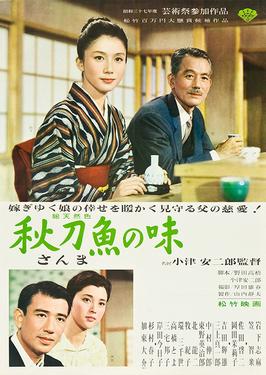
an_autumn_afternoon_filmposterThere’s something overwhelmingly soothing about Ozu, simultaneously slowing my pulse and calming my nerves. Yes, An Autumn Afternoon stands as his final film. Yes, he would sadly pass away the following year. But there’s a comfort to watching his films unfold — even his last one. The drama is everyday and somehow disarming and pleasant. We often take for granted that Ozu was not planning to end here. This was not supposed to be his last film. It just happened that way.

However, that is the way that the world turns and with such of an outcome we get one final candid view of the director at work — his confident and streamlined aesthetic that at this point is instantly recognizable. It’s not simply about content, though his film examines many of his usual preoccupations of years gone by. It’s really about the form.

His palette is by this point assured and at the same time vibrant and free. Everything is in its precise place, the colors bright and cheerful — a certain amount of authenticity married with simple visuals that take impeccable staging, facades, and a static camera to tell his narrative in a very particular way.

And he’s willing to break the rules of perspective that have forever been textbook Hollywood law and yet the way he does it is hardly off-putting. In fact, it’s rather reassuring. His figures always looking at us directly, carrying on conversations, sharing in pleasantries or even chortling together over some small trifle. And we get to be fully a part of that both the trivialities and the drama.

Still, I am constantly being drawn to different things around the edges of the screen. Distracted in a good way by various bottles placed throughout the frame, bowls placed in front of our figures, or Suntory logos that hang overhead. Important, certainly not, but still they mesmerize me for some unexplainable reason.

And I have long gotten over any amount of impatience in the pacing of Ozu. Shots of empty rooms. Seemingly pointless conversations. Eating and drinking. It’s all palatable. It’s more about savoring every little moment for what it is. Because that’s what Ozu was truly a master at capturing. So many people behind a camera can capture high drama with enough action, intrigue, and scandal. But it takes a fairly fearless individual to put a microscope (or a movie camera for that matter) up to the banality of life. Yet it’s the true irony, that it’s precisely in those places we kind find so much truth pertinent to our own existences.  Yes, it’s true.

Meals with friends. Family conversations. Husbands. Wives. Fathers. Daughters. Brothers. And so on. It’s no surprise that these are all things that Ozu looked at before and if he had continued making films he would have undoubtedly continued. The same social mores and familial relationships that while uniquely Japanese, still share enough with the rest of humanity to be oddly universal.

In this case, his favorite protagonist (Chishu Ryu) is a widower who lives with his grown daughter and son. It’s his buddies who chide him to let his daughter go so she can get married before she’s an old maid. And while in previous iterations Ozu looked deeply at the heartbreak, the emotional effects are slight. The daughter is relatively happy. The father is wistful but still resolved to live his life. The ever-changing aspects of life are felt but hardly earth-shattering. Instead, mankind is forced to continually wax and wane with the times. There is a time for a laughter, a time for tears, a time for work, a time for play, and so on.

Although the father-daughter relationship is the nucleus the film boasts a surprising depth of character. There are coworkers, old war acquaintances, former teachers, and the brother and sister-in-law. In fact, the venerable Mariko Okada is always one of my favorites in Ozu’s films and she picks up where she left off in Late Autumn with a certain spunkiness and vivacity.

If this must be our exit point from Ozu’s work, it’s a relatively easy place to leave. It’s a beautiful, warm portrait of modernity. Two old war buddies can assert that maybe it was for the best that the Allies won the war. A husband can really want a pair of golf clubs, though he doesn’t have the money to buy them. Old men can gather around a table for a party and joke about their old teachers. It’s a delectable slice of life.

4.5/5 Stars