Angel and the Badman (1947)

Angel_badman.jpg

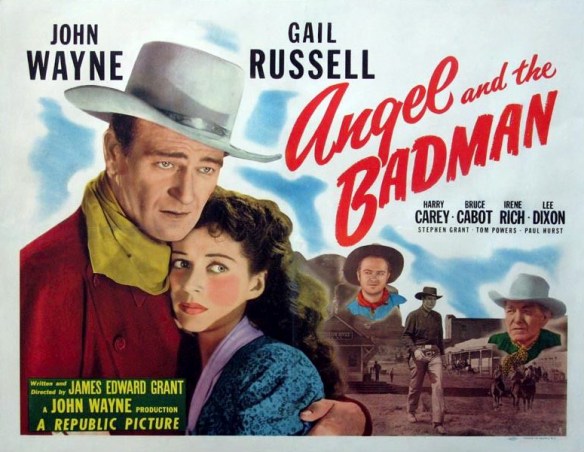
With John Wayne partnered with his longtime collaborator James Edward Grant (Hondo, McClintock!) it’s easy to see Angel and the Badman as an early vehicle for his conservative ideals but far from being heavy-handed, it goes down as a solid B-picture with a surprisingly unique perspective on the West.

In this instance, the western is used to construct a fairly simple parable that plays out over the frontier using figures that we know well from every cowboy picture we’ve ever seen.  The outlaws and the homesteaders, the sheriffs and the doctors, they’re all present.

But underlying their every interaction is a certain purpose. It’s not simply to entertain — though the film is adequate in that department and has it’s share of gunfights and showdowns. It foregoes most of the normal set pieces to carry out its main objective as a moral tale. Still, these established figures help draw up the themes by the very way they see the world.

Quirt Evans (John Wayne) has and always will be an outlaw as preordained by society until the fateful day when he finds sanctuary in the home of a Quaker family after incurring a wound. They take care of him and nurse him back to health but above all, they give him the benefit of the doubt — that he is not too far gone and he still has more than a fair chance to redeem his life if he so chooses.

The local apothecary functions as the main counterpoint to our angelic first family. He is very rational-minded, devoted to scientific thought and his cynicism leads him to begrudgingly patch up the outlaw all the while grumbling under his breath. It’s telling though that he holds this overtly religious family in high regard. But nevertheless, the parameters have been set. We must sit back and find out where John Wayne falls within the frames of this corral.

It’s true that he’s saddled with a past full of womanizing, guns, greed, and every other sin known to man. In fact, the local sheriff is bent on hanging a rope around his neck but the old veteran (Harry Carey) is a sly fellow ready to bide his time and let Quirk slip up somehow.

The main point of contention is a payload of gold that a band of glowering thugs is intent on getting a handle on. Quirt is all that stands between them and the prize but even in his injured state he still packs a gun — the bullets inside and his stellar marksmanship being the key deciding factors.

Playing against this very storyline is a parallel thread that bears equal importance if not more. Penelope Worth (Gail Russell) is the daughter of this Quaker family and she is tasked with taking care of this formidable outlaw. In any other scenario, they would be oil and water. Their lives and personalities should never mix and yet in this romance, they ultimately do. True, his lawless lifestyle chafes against the worldview of these religious Quakers who promote an existence of good will and pacifism. Still, people can change.

John Wayne notably disliked High Noon (1952) and his most famous denouncement of the picture can be seen in Rio Bravo (1959), viewed by many as a cinematic answer to its predecessor. However, in this earlier film, you see in Wayne’s character a man who also falls for a Quaker much like Will Kane (Cooper) does in High Noon. But here he comes from the wrong side of the law. Still, she redeems his very nature and far from throwing off the perceived shackles of her beliefs or simply tolerating them to stick to what he knows best (namely gunplay and showdowns) he does the fairly brazen thing and wholeheartedly embraces her way of life. Because he loves her.

It begs the question, which outcome is more believable: The sheriff who went against his wife’s pleas so he could uphold his personal convictions or the outlaw who gave up his old way of life even in the face of death because he was transformed by the love and lifestyle of his woman? Rather than drawing up which one is better exactly, it might suffice to say that Angel and the Badman, while lesser known, is still a diverting western with its own moral dilemma because westerns are and always have been horse operas.

3.5/5 Stars
Thor Ragnarok (2017)

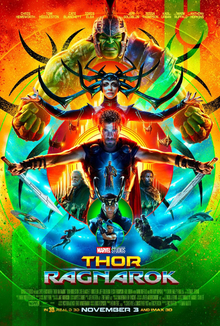
Thor_Ragnarok_posterMy heart lept in my chest when I heard that Taika Watiti (What We Do in The Shadows) was going to be helming the latest Thor movie. Because it’s hardly a well-kept secret that Thor has essentially been the weakest of all the Marvel threads (Hulk’s individual film excluded).
So once more Marvel has done an impeccable job of keeping lukewarm bandwagoners such as myself mildly interested. Benedict Cumberbatch as Doctor Strange. Brie Larson in the upcoming Captain Marvel movie — another personal favorite. Then, we have Ryan Coogler directing Black Panther with one of the most glorious casts in recent memory. They make their product so alluring despite my general lack of interest in the perennial juggernaut.

But back to Thor Ragnarok which goes far beyond the quip-filled, light-hearted humor that Marvel has often boasted, to great success, I might add. Even with its darker moments and strains of drama, there’s little doubting that Watiti’s brand of near insouciant humor is alive and well. Exhibit A is the very fact that we are reintroduced to Thor (Chris Hemsworth) as he swings precariously from a rocky prison encased in chains about to be executed by a fiery conflagration of a villain.

In case you haven’t realized it already what we are about to be served up is a comedy about an apocalypse. Oxymoronic as it may sound, the film all but pulls it off. Still, more explanation is in order.

Thor returns to Asgard only to begin quibbling with his black sheep of a brother Loki (Tom Hiddleston) just like old times. They call on their father (Anthony Hopkins) whose imminent death is less an ending and more a god-like dispersal. There are other asides involving Dr. Strange (Cumberbatch) and yes, we even found out a little bit more about the Hulk and what Bruce Banner (Mark Ruffalo) has been doing the last couple years.

Being the weasel that he is, Loki’s always betraying his brother and Thor winds up getting captured by a former Valkyrie (Tessa Thompson) who has taken on the life of a slave trader, bringing in fighters for the Contest of Champions. Thor is destined to be the newest attraction on center stage.

Watiti most obviously makes his general tone felt in the film through his own character Korg, a giant rock monster who is more like the Michelin Man than The Thing. Watiti’s understated voice coming through so clearly as he matter-of-factly talks about the not uncertain death that awaits nearly everyone. But he’s also handy for a few rock, paper, scissor jokes as well.

Jeff Goldblum is probably the film’s other finest creation for his own brand of oddly perturbing flippancy with gladiatorial violence and hedonistic relish of death matches. But in the same breath, The Grandmaster also happens to be probably the funniest addition to the cast for those very same reasons.

In fact, it’s these themes touched on briefly that are most crucial to drawing conclusions about Ragnarok. It’s deeply entrenched in issues of death and mortality, violence and warfare. By no small coincidence, the main villain brought to the fore is Hela (Cate Blanchett) who helped Odin build his kingdom and has come back to rule it as her own. It’s not a particularly inspired creation but what did we expect? It is what it is.

Meanwhile, Led Zeppelin’s “Immigrant Song” is the film’s favorite hard-hitting tune to conjure up for perfect trailer sound bytes to crosscut with the action at hand. Whether it serves any other purpose aside from just being a bit of retro-cool is probably beside the point.

There’s a line that seems apt for such a film that I couldn’t help recalling. It goes like something like this, “We laugh at death because we know that death will have the last laugh at us.” It’s one thing to make light of death as a coping mechanism and as an outlet to grapple with something we don’t completely understand, quite another to completely dismiss it. Because the far easier road is to try and evade dealing with it altogether.

The usual CGI extravaganzas and spectacle aside, there is something still to relish in this movie. What I’m trying to say is that Thor Ragnarok is a deathly funny superhero film. In spite of the usual tiresome amount of pyrotechnics, random cameos, and overzealous action sequences, there is an ephemeral and still a delightful enjoyment to be found in this picture. It no doubt bears the imprint of Watiti while still wearing some of the tiresome Marvel tropes.

The one theme it does suggest most overtly is that “Asgard” was built on past indiscretions, bloodshed, and violence. But moreover, the mythical nation is not simply a place. It’s the people that make it up. And in the wake of an apocalypse, it’s some amount of solace. That and Jeff Goldblum giving the commoners a pat on the back. It’s always good to undercut solemnity with another punchline following the credits.

3.5/5 Stars

Get Out (2017)

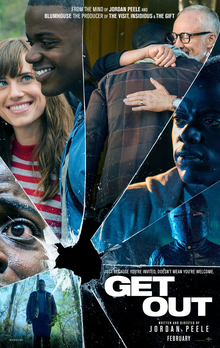
Teaser_poster_for_2017_film_Get_Out.pngGet Out seems like a simple enough premise. Ridiculously simple even. We’ve seen it millions of times in rom-coms or other fare. It’s the fateful day when the significant other is being taken to meet the parents. Whether they pass this test will have irreversible repercussions on the entire probability of the relationship’s success. Maybe that’s a tad over the top but anyways you get the idea as Rose (Allison Williams) drives her boyfriend Chris (Daniel Kaluuya) to meet her parents.

But if anything Get Out is the Anti-Guess Whose’s Coming to Dinner and I say that for a number of reasons. That picture was groundbreaking in its day because Stanley Kramer made an issue-driven film about an interracial couple coming to meet the parents in the age of Loving v. Virginia  (1967) still being on the recent record books. Miscegenation was still outlawed in numerous states across the country. Granted, it was set in California, that open-minded oasis in the West, but that doesn’t mean parents weren’t still skeptical about the union. It’s easy to be a champion of racial equality and quite another to have your daughter marry a man of a different race. At least in 1967. Now it shouldn’t be an issue at all. We are an enlightened people, after all, informed by a 21st-century worldview…

Yet Get Out works because it shows the flip side of the coin. You have that same forward thinking, liberal idealism that’s reflected on the surface for all to see. It’s a bit of the Hepburn and Tracy characters from the earlier picture that we see in these parents (Bradley Whitford and Catherine Keener).

Except here they’re not who they seem to be and their enlightened qualities only mask the ugliness that is hiding inside of them. Perhaps they are more nefarious and wily than the outright bigots because they hide their prejudice proclivities so well. Their racism is systematic and acceptable in the framework of modern society.

It’s nodded at and laughed off at cocktail parties because they are the folks who would have voted for Obama for a third term and their favorite golfer, of course, is Tiger Woods. He plays their civilized game and before his downfall, he played it well. As such, they can accept them without much hesitation because it’s these men who have seemingly conformed to their way of life.

A few other obvious cinematic touchstones to appreciate Get Out are The Shining (1980) because there’s an inscrutable nature to the horror that’s  underlined by dread more than fear in the accepted sense. It makes for an unsettling final act that lingers for a long time. Meanwhile, the entire conspiracy that’s going on under the surface brings to mind Rosemary’s Baby (1968), simultaneously unnerving and darkly comic to its final moments much like Get Out.

This is by no means a pop out at you horror movie which I admittedly don’t hold much taste for. Jordan Peele’s effort is far more than that. Slowly crawling under your skin insidiously looking at some unnamed problems of our society in the domain of race and it does it in such a way that’s perturbing and ultimately brings up some powerful questions on the front of a social commentary.

This is a movie that upends expectations starting out as one thing which we assume will be offered in the package of a horror picture and it morphs into something far more interesting that has the compelling power to stay with audiences long after the momentary shock value might dissipate in a typical film with few lofty aspirations.

If nothing else, it confirms that there is still so much progress that needs to be made in our nation and Peele positions himself as far more than a comedian but a fascinating creative mind behind the camera. Get Out is a shining reaffirmation that creatively potent and timely films are still being made today. It is not meant for everyone but there’s no question it has something new to offer.

4/5 Stars

Too Late for Tears (1949)

Too_Late_for_Tears_DVDA couple is driving along a desert highway when a bag loaded full of cash is tossed into the back of their convertible by a passing motorist. They’re a pair of everyday nobodies and yet this single act of fate throws their entire existence into chaos. Of course, it gets a little leg up thanks to Jane Palmer (Lizabeth Scott) as she takes the wheel to get away with the cash, convincing her husband Alan (Arthur Kennedy) that they hold onto the payload for awhile. Finally, he relents and leaves the briefcase in a Union Station locker.

It’s a tad of an unbelievable scenario but that’s what makes it so exhilarating as Lizabeth Scott plays all parties involved using her doe eyes and feminine wiles to great effect like the foremost of femme fatatles that she is. And the fact that she does it both unwittingly and with willful intent is crucial to her turn for the very fact that it creates the seesaw of emotions.

There’s a certain sense of ambiguity because we begin to invest in her story and like her in one sense, while simultaneously distrusting her motives that seem mostly driven by avarice more than anything else. There’s also this extraordinary quality about her where she somehow manages to look young and feel old all at the same time thanks to her memorable baritone. It’s a bit unsettling.

The next important figure is Danny Fuller, Dan Duryea donning one of his sleazeball roles as a drunk who nevertheless has a bit of a sympathetic side at least put up against the acerbic poison of Lizabeth Scott. She’s the epitome of that long-held expression that greed is the root of all evil. If she didn’t write the book on it, she at least tore through its pages voraciously. Initially badgered by Danny for swiping the payoff he believes is rightfully his, she soon has him roped into her plan. It’s almost too much for the cad to bear. He calls her “Tiger” sardonically at first but he doesn’t realize how right he is.

But the most interesting setup in the narrative are the contrasting couples and they might not pair up the way you first expect with Arthur Kennedy getting the short end of the stick. He starts out happily married and winds up out of the picture.

There’s the rapacious Jane matched with Danny boy as they both feed into each other with their distrust and vices. Then you have the ever-present “Good Girl” or guardian angel,  Alan’s sister, Kathy (Kristine Miller), a sensible,  prepossessing young woman who only begins to distrust Jane as circumstances become more and more strained.

Meanwhile, Alan’s old war buddy (Don DeFore) comes a calling on his old pal and finds himself spending time with the man’s sister instead. But they become our necessary counterpoints to balance out the film’s more corrupt characters.

The final reveal that we’ve been waiting for arrives and it spells the end of Jane’s charade as she’s brought tumbling down. But as noir has a habit of doing, it manages to paint a bit of a happy ending against this dark backdrop with Kathy and Don winding up with each other and a shoulder to lean on. Still, that final image cannot quite downplay all the deceit and murder that has gone down up until now.

Too Late for Tears resonates thanks to a pair of incomparable sordid performances by Scott and Duryea. Miller and DeFore make a lovely couple but it’s the moneygrubbing ones who make this a true noir delight because they represent the incorrigible vices often found in humanity. That’s a lot more fun in the movies.

3.5/5 Stars