Review: The Woman in The Window (1944)

woman in the window 1.png

The first time I ever saw The Woman in The Window it always struck me as odd. Here was the fellow who was known as a gangster through and through and yet he was playing a bookish professor buried in his work and obsessed about psychoanalytic theory. His idea for a fine time is conversing with his intellectual friends (Raymond Massey and Edmund Breon) at the Stork Club. He’s the epitome of middle-aged solidity and stodginess as he so aptly puts it.

But in confronting these very things, you realize Robinson might have enjoyed any opportunity to get away from what everybody seemed to peg him as — to exercise a certain amount of elasticity as an actor — to be the antithesis of his image. This is all mere conjecture, mind you, because as the story progresses, you realize the character is a bit mundane.

Regardless, veteran Hollywood screenwriter Nunnally Johnson spins a story of psychological intrigue as his first showcase for his newly founded production firm International Pictures. This Fritz Lang effort along with a handful of others would instigate the stylistic categorization of “film noir” by French critics in the post-war years. There’s little doubt it fits many of the fluid conventions of noir. Though overshadowed by the even more sinister Scarlet Street from the following year, it is a genre classic in its own right.

As alluded to already, it’s also steeped in psychology. In fact, it gets knee deep in it from the opening moments in such a fashion that we know it will remain all but integral for the entire run of the narrative. Professor Wanley is enraptured by an image, a portrait of a woman to be exact, and it elicits the same spell Gene Tierney would have in Preminger’s Laura (1944). But of course, it is the woman being animated for real that brings true life to the movie and it’s no different here.

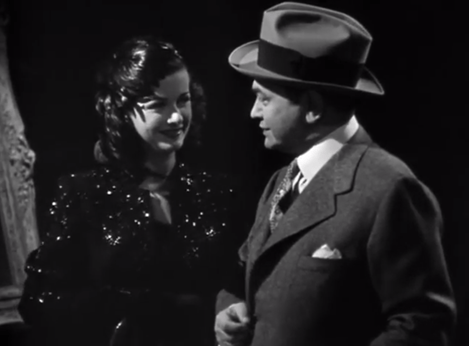
This brings us to the part that’s actually the most gratifying and probably would have been the most enjoyable to play. That of the eponymous woman staring back through the window. Joan Bennet is positively bewitching and grouped with Scarlet Street (1945), it remains some of the defining work of her career, which is hardly something to be dismissive of.

As best as it can be described, she has a pair of those coaxing, inviting eyes. Bennett, to a degree, seems to play up her Hedy Lamarr appeal with jet black hair but her looks are her own as is the spellbinding performance and it works wonders starting with the man on the screen opposite her.

He foregoes a burlesque show to engage in some “light” after dinner reading of Song of Songs. Though he’s probably looking at it from a purely academic perspective, one can gather that between his psychological theories and the fairly explicit poeticism of his reading, he’s got quite the cocktail brewing in his mind.

He gives the portrait another look as he’s about to head home, as is his normal tendency. In this particular instance, the woman is present in the flesh and they share some complimentary words. That leads to drinks and then a venture to her apartment to wind down the evening perfectly innocently.

However, instantly his life is transformed into a living nightmare as they are interrupted by a scorned boyfriend with a horrid temper going at Richard who has no recourse but to strike his adversary down in a frantic attempt at preserving his own life. It was self-defense but the damage has been done and the results are not-so-conveniently lying on Ms. Reed’s carpet.

Even with these turn of events, the professor takes them in stride, systematically and semi-rationally coming to a decision that while risky just might be the most beneficial plan of action, at least in theory. There is much that needs to be done. He enlists Alice to clean up the crime scene by both getting rid of blood and incriminating fingerprints. Any evidence that would implicate either of them must be done away with methodically.

He puts it upon himself to dispose of the body, which is no small task as the dead man has a massive frame. It takes up a lot of space and causes him some grief. He gets rid of it but not without incurring a cut and a rash of poison ivy while also leaving behind some clues that indubitably will have a bearing on the case.

However, he also has the rare privilege of being so close to the district attorney and the head of the homicide department to see first hand how they’re getting on with the case. If anything it unnerves him more assuming he will soon incriminate himself with a minor slip of the tongue or worse yet be found out in his clandestine activities due to the thorough investigation underway.

Dan Duryea has a small-time role playing what he was best at, a sleazy enforcer looking for blackmail or any other dishonest way to make a buck. Thankfully his part would be expanded upon in Scarlet Street as he came back for a second helping. His career is composed of an interesting trajectory even earning him a few starring spots in his later efforts like Black Angel. He’s an underrated talent who made classic Hollywood and noir in particular that much more engaging. One could wager it’s Bennett and Duryea who really clean up shop as they would do again the following year.

To mollify the production codes, Fritz Lang settled with the ultimate cop-out ending. While it would normally disgruntle me, the sheer lunacy of it all and the fact the picture is so embroiled with themes of the human psyche makes it marginally okay. If anything, the fact there was a superior followup the next year takes the sting out of it. Still, there’s no downplaying that Woman in The Window was crucial in laying the groundwork of what we now consider film noir, complete with murder, femme fatales, fatalistic heroes, and shadowy extremes courtesy of cinematographer Milton Krasner. What’s not to love? It’s certainly worthy of a second dose.

4/5 Stars
The Sea Wolf (1941)

sea wolf 1.png

“Better to reign in hell than serve in heaven” – John Milton in Paradise Lost

Though some noir film layered in London fog is probably up for contention, otherwise, there’s arguably no movie murkier than this atmospheric sea-faring delight from Michael Curtiz. But what puts it above and beyond some of its contemporaries, especially swashbucklers like a Black Swan, has to do with a variability and surprising depth of characterization for what feels like such a minor vehicle.

From the framework of Jack London’s novel, screenwriter Robert Rossen has cleverly repurposed the material and made it thoroughly well-suited for the cast at hand, expanding the roles for his stars. For most of its running time, in fact, the story is aboard the ominously named vessel, “The Ghost,” while maintaining an unwavering level of intensity.

Certainly the aforementioned climate plays into it because it can exude a level of impending menace. Still, you can only get so far on that. There needs to be legitimate emotional resonance and some amount of real even complex conflict at the core if a glorified chamber piece like this is to stay afloat. Thankfully, due to its characters, it does. At any rate, we are provided several fascinating figures to try and comprehend.

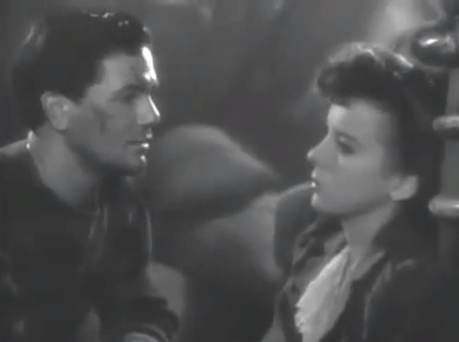
John Garfield is one of them, a fiery sailor named George Leach who is on the run and he doesn’t care where he ends up. In his case, he winds up a lowly cabin boy. Again, he doesn’t care.  Meanwhile, Ida Lupino is escaped from a woman’s reformatory and seeks the corroboration of a fiction writer named (van Weyden) as it ends up, their voyage is ill-fated following a collision that sets off a deluge of water leaving them hopelessly shipwrecked.

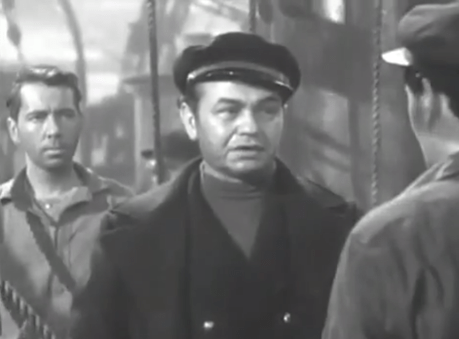
In the aftermath, they are picked up by the schooner “The Ghost,”  its tyrannical captain Wolf Larsen (Edward G. Robinson) leading a crew of no-good and hard-bitten seamen. Barry Fitzgerald excites as the knife-toting cook who’s as ornery as you’ve ever seen the plucky Irishman. The writer is brought on as cabin boy given the rude awakening that the captain has no designs to drop him off onshore. His vocation and unwavering monotone are perfect for conveying this impartial point of view for the benefit of the audience. Meanwhile, John Garfield embittered with a chip on his shoulder is forced to take on harder labor and his anger smolders against everyone.

sea wolf 2.png

The girl, Ms. Webster (Lupino) is deathly sick and the swacked and constantly unstable doctor (Gene Lockhart) seems to be of little help. His nerves as a physician look completely shot. By some miracle, he’s able to get sober enough to nurse the lady back to health, of course, when she makes her first public appearance looking to be the picture of propriety, the seafaring men are quick to see through her. She’s another unwanted sea rat just like all of them.

It’s plain to see she’s not about to earn any favors and the same goes for the other newly acquired deckhands. They have few rights as the sea captain runs the ship with a dictatorial hand. In all affairs he controls everything and he can be a ruthless taskmaster with his boys carrying out his every order with a rowdy mania, even turning against their own when given a chance.

However, although Wolf is a tough man, he nevertheless has an inscrutable side well-read in Milton and knowing a past of innumerable hardship. It’s these very traits that make van Weyden crucial as someone who is able to get closer than the others in order to try and tease out who Larsen really is.

A mass of contradictions, with a brain and a need for dignity in a harsh world but he also has a vengeful brother hanging over him, avowing to blow him to smithereens. If there is any regret in Larsen, he’s resolutely set his course and rarely looks back, making sure to maintain his supremacy over his men in all circumstances. His philosophy is purely self-serving.

But even he begins to crack. The film is laden with claustrophobic and seasick-inducing interiors depicting living hell on the waves with Larsen lording over it with an iron fist. Of course, with mutiny afoot instigated by Leach, finally able to exercise his lust for authority, there’s bound to be drama, even as he begins to carry a torch for Ruth.

Because later he, Ms. Webster, and van Weyden look to escape only to have their provisions sabotaged by Larsen, and “The Ghost” is ultimately ambushed by its mortal enemy. The hourglass is running out. But even as the captain goes down with his ship, a near pitiful figure now, he looks to take as many others down with him as he can. In opposition to such selfishness, a contrasting force of sacrifice is called for.

4/5 Stars

Note: The cut I watched was the shortened 1947 cut. The restored cut was reissued in 2017 at its full length of 1 hour and 40 minutes. This was the theatrical cut before it was edited to fit on a double bill with another Curtiz picture The Sea Hawk (1941).


Barbary Coast (1936)

barbary coast 1.png

The production itself was fraught with some turbulence thanks to the contentious relationship between Miriam Hopkins and Edward G. Robinson. The latter actor was irritated how his costar was constantly trying to increase her part and keep him off balance with frequent dialogue changes. Regardless, the talent is too wonderful to resist outright.

How Howard Hawks ended up directing Barbary Coast is anyone’s guess, somehow getting involved as a favor to his screenwriting buddies Ben Hecht and Charles MacArthur who spent numerous rewrites crafting something that the production codes might actually condone, overhauling the original novel’s plot points immensely.

Hawks has no major stake in the production and as such it hardly stands up with his most engaging works. Still, it does hold some merit demonstrating from the outset it’s a fast-moving, thick-on-atmosphere, period adventure set out in 49ers era California. That environment is enough to make a generally engaging yarn even if the narrative threads run fairly thin.

But the world is fully animated. Alive with honky-tonk pianos, crooked roulette wheels, and hazy city streets paved in mud. Just about what you envision gold country to be like, at least viewed through the inspired dream factory of old Hollywood. The blending of genre is a fine attribute as the picture is a mixture of historical drama, romance, comedy, adventure, and western themes sharing some relation to San Francisco (1936) and The Sea Wolf (1940), along with the lawless towns in Destry Rides Again (1939) or even The Far Country (1954).

A ship lands in the notorious San Francisco Bay, among its passengers a strangely out of place lady (Miriam Hopkins) and a gentlemanly journalist, Marcus Aurelius Cobb (Frank Craven). They are met with quite the reception committee of local undesirables.

Walter Brennan is a standout as the scrounging, toothless, eyepatch-wearing Old Atrocity preying on unsuspecting outsiders who happen to make their way to the streets of San Fransisco. Mary Rutledge is in town to join her fiancee who messaged her to come out and meet him as he’s struck it rich. She promptly finds out her man is dead, no doubt knocked off by the crooked Louis Chamalis (Edward G. Robinson).

With his restaurant the Bella Donna and adjoining gambling house, the ruthless businessman rakes in the profits by robbing prospectors of their hard-earned caches and getting tough when they object to his dirty practices.

Miriam Hopkins, both radiant and sharp, isn’t about to snivel about her lost prospects and heads straight away to the Bella Donna to see what business she can dig up for herself. There’s little question she causes quite the stir because everyone is taken with this newly arrived white woman — including Louis. As Robinson’s character puts it, she has a pretty way of holding her head, high falutin but smart. That’s her in a nutshell as she earns the moniker “Swan” and becomes the queenly attraction of the roulette wheels.

It’s there, an ornery and sloshed Irishman (Donald Meek in an uncharacteristic blustering role) gets robbed blind and causes a big stink. Louis snaps his figures and his ever-present saloon heavy Knuckles (Brian Donlevy) makes sure things settle down.

He’s sent off to do other jobs as well. In one such case, he shoots someone in the back but with a mere Chinaman as an eyewitness in a kangaroo court presided over by a drunk judge, there is little to no chance for legitimate justice. Then there’s the manhandling of free speech by forcibly intimating Mr. Cobb in his journalistic endeavors and nearly demolishing his printing press for publishing defamatory remarks about the local despot. Swan is able to intercede on his behalf as Cobb resigns himself to print droll rubbish and it seems Louis has won out yet again.

barbary coast 2.png

Joel McCrea has what feels like minuscule screentime and achieves third billing with a role casting him as the romantic alternative, a good guy and yakety prospector from back east who is as much of an outsider as Ms. Rutledge. He’s eloquent and strangely philosophical for such a grungy place. He’s also surprisingly congenial. It catches just about everyone off guard. First, striking up a serendipitous friendship with the woman and gaining some amount of rapport with Chamalis for his way of conversing.

Though the picture stalls in the latter half and loses a clear focus, the performances are nonetheless gratifying as Robinson begins to get undermined. Vigilantes finally get organized using the press to disseminate the word about Louis and simultaneously battle his own monopoly with an assault of their own.

One man must die for the right of freedom of speech to be exercised while another man is strung up like an animal. Our two lovebirds get over the lies they told each other looking to flee the ever-extending reach of a jealous lover. Chamalis is not about to let them see happiness together. The question remains if they can be rescued in time from his tyrannical clutches. The dramatic beats may well be familiar but Barbara Coast still manages to be diverting entertainment for the accommodating viewer.

3.5/5 Stars

Little Caesar (1931)

Little_Caesar.JPG

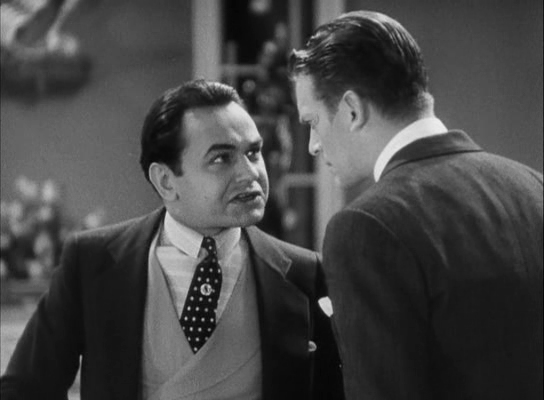
When I was a kid we had an old VHS of Bugs Bunny shorts and one of the caricatures in a gangster-themed storyline — although I didn’t know it at the time — was undoubtedly Edward G. Robinson. That voice. That mug. That smug self-assuredness. They’re inimitable. Even then I knew the image without knowing who this garbled-mouthed gangster actually was. Watch Little Caesar and it’s all right there. In fact, without Little Caesar, one could step out on a limb and say that Bugs Bunny cartoon would never have been made. Though, Robinson was an indomitable personality. One way or another he would have broken through.

As it was, Robinson made a lasting impression in his big break, the picture that would make him a star just as its contemporary The Public Enemy (1931) did the same for James Cagney also at Warner Bros. True, it served as both a blessing and a curse typecasting the stars with their audiences. Still, both men led impressive careers which, at least on occasion, allowed them to break out of the mold and really show who they were as actors. And the beauty of their successes had nothing to do with an imposing physical frame but rather a sturdiness and commanding tenacity that made them into electric performers full of captivating stage presence.

With an opening quotation from Matthew, “All who take the sword will perish by the sword,” we are immediately tipped off this will be a moral tale right from the outset, an act of condemnation not glorification. However, that cannot completely neutralize the unadulterated gangsterism of Litte Caesar. Far from it.

With all these early Warner Bros. crime films we can define the arc of the story by an ambitious lug who’s willing to do whatever it takes to rise to the top, showcasing both guts and gats when necessary. It takes both to get ahead. Rico (Robinson) is a little guy who’s not content with his lot in life so he resolves to change things. He heads to Chicago with his buddy Joe (Douglas Fairbanks Jr.) to see what they can make of themselves.

Already they are on diverging paths as Joe looks to return to his first love of dancing, even finding a capable ally and love interest at a local club. Olga (Glenda Farrel) makes a new lease on life possible for him. But such a life would never do for Rico. He’s already set his sights on big-time crime, moving up the ranks with local mobster Sam Vettori.

Joe is roped in for a job as the inside man and reluctantly he goes along with it. But on the same night, New Year’s Eve, Rico guns down the crime commissioner during an otherwise straightforward hold up of the Bronze Peacock. It has heady implications as the local authorities look to clamp down.

As best as I can describe it, there is a stripped-down unsentimental bent to the action line going through the movie. The talking pictures still feel like a new phenomenon recorded on Vitaphone — a bit rigid and visually unimaginative — but in some respects, it aids in the characterization of the gangster underworld. It’s hard-edged, lacking any sense of freedom of movement or ideals. They play by a “you’re either with us or against us” mentality and they are not about to let you forget who your friends are. Rico and Joe provide the diverging alternative lifestyles available as one tries to go straight and the other becomes more crooked by the hour.

The character of Tony is another convenient case study for the movie as the local mob’s getaway driver who begins to lose his nerve and have remorse for his part in it all. It is his saintly mother who not offers him spaghetti but tries to remind him of his former life when he was a good boy. Convicted to the very core of his being, he goes to the priest for confession. But Rico will have none of this blubbering. His retribution is sure and swift as it’s always been, culminating in an OG drive-by shooting.

A gang war erupts when a failed hit is instigated on Rico. Instead, he and The Big Boy are able to consolidate power and he continues to rise up the ranks. All throughout his ascension, Rico lives by streetwise slogans like, “I ain’t afraid of nobody.” “The resident bosses are getting so they can dish it out but can’t take it anymore.” And of course, “the bigger a man becomes, the harder he falls.” It’s all but inevitable.

His words are prophetic because at some time Rico’s got to face the music and he does. Like The Public Enemy and Scarface, what sets these pictures apart is not necessarily that they glorified crime because you can make the case each tries to hammer home the moral crime doesn’t pay. And yet with the exhibitions in violence and the uninhibited pursuit of power by antiheroes like Cagney, Muni, and Robinson, the public latched onto them and propelled them into being big stars. Without the pre-code era, we would lack some of the legendary mystique of Rico.

In the end, riddled with Tommy gun fire, he looks up into the heavens, exclaiming those now immortal lines, “Mother of Mercy, is this the end of Rico?” With that, he breathes his last. But the miracle of celluloid means that now 85 years onward Edward G. Robinson’s performance lives on.

3.5/5 Stars