Sergeant Rutledge (1960): Starring Woody Strode

“It’s alright for Mr. Lincoln to say we’re free, but that ain’t so. Maybe someday, but not yet.” – Sergeant Rutledge

Sergeant Rutledge rarely gets talked about with the greatest westerns or even the greatest westerns of John Ford. Without getting overly effusive with my praise, it should be heralded as an underrated gem worthy of far more scrutiny. History is more than on its side. The movie preceded To Kill a Mockingbird by at least a year while examining similar themes of a black man on trial for rape, albeit through the specific settings (ie. Monument Valley) and lens of its director.

As purely a courtroom drama, it’s probably more engrossing because the other film is just as impactful for its relationship outside the court’s walls. The familial relationship is the core of the story. In Sergeant Rutledge, Ford gladly builds up the atmosphere of the courtroom while allowing it to bleed out and color the rest of his narrative, set against the backdrop of apache raids.

Willis Bouchey stands out as the demonstrative head of the court marshall tribunal, Lt. Col. Otis Fosgate. The turn might be one of his most substantial and enjoyable roles on the big screen. Not only did he have an extraordinary career on the small screen, but he was an often called upon member of John Ford’s stable of actors. His foray in this picture makes it plain enough. Every time he asks for “water” or scolds his wife, it provides instant texture.

Because his wife, Billie Burke, is one of the goody-two-shoes in the peanut gallery, prepared to watch the court case in their finest clothes with their mouths agape and their eyes agog. Meanwhile, the rowdiest fellows stand impatiently in the back smoking their pipes and raising a brouhaha. The judge has enough gumption to clear them all out.

There’s no doubt Ford is in control of the courtroom scenes, from its initial clearing to the subsequent stage lighting to highlight witnesses on the stand. It’s quite extraordinary rather like when Hithcock worked through The Paradine Case breaking the stagnant sequences up with purposeful moments. These are bulked up through substantial flashbacks where we are allowed to invest in the drama firsthand, becoming involved more and more in something that feels like a traditional murder mystery.

The first to take the stand is Mary Beecher (Constance Towers), a quivering young woman who caught Sergeant Rutledge in a compromising and nevertheless now comes to intercede on his behalf, not to accuse him. She recounts how, left in a deserted town, it was the honorable soldier who willfully saved her life.

Next, Fosgate’s own wife (Burke) takes the stand with her usual tittering mannerisms, relaying the last time she saw spunky young Lucy Davenport alive, before she was brutally raped. She came to the general store and shared a conversation with Rutledge. This was no surprise as he was the man who taught her how to ride a horse and practically raised her. To the eyes of all those on the outside looking in, it leads them to burn with indignation.

The dialogue throughout is often curt if not altogether mundane, even overly twee in the lightweight moments, but the scenario itself and Ford’s interaction with it, make it worthwhile viewing. It’s what he’s able to build up around them, devolving into a fairly unheard of exploration of racial tensions on the range. When it gets talky and the message is made obvious, it loses its impact — looking all the more of its time.

What builds a lasting impression are the images — watching the 9th Cavalry of Buffalo Soldiers — appreciating their discipline and fortitude. Surely seeing these representations say enough about how American society treats non-whites, both in life and on celluloid. They are deserving of the same amount of human dignity and not having the burden of proof thrust upon them merely based on the color of their skin.

Because this is what it comes down to. Sergeant Rutledge (Woody Strode) is on trial to be hung, accused of rape and murder. This is not a pleasant affair whatever the outcome might be. As Jefferey Hunter headlines another Ford Western (following The Searchers), he holds a crucial stake in the case as both one of Rutledge’s superiors but also his defense counsel, and, ultimately, his friend.

Woody Strode might be buried in the credits, but there’s no doubting his prominence at the heart of the drama. It’s his stalwart characterization that allows it to stands out from the crowd of westerns from the era — and in Ford’s own lineage — because it gives him a place of cinematic significance. One scene, in particular, is easy to call upon.

In the dead of night, there’s a refrain of “Captain Buffalo” as Sergeant Rutledge stands on the ridge, the moon in the foreground behind him, looking down at his men; it’s only a brief aside, but something in me stopped still because these are the kinds of moments, if you’re lucky, you’ll see in a Ford picture. How do we quantify them? They’re a feeling, a sense, speaking to so much of who we are and what our country means. It’s history, both rich and also riddled with honor and disgrace. I look at Rutledge and I’m proud and a moment later ashamed for how a man such as this is treated.

Woody Strode was used quite well by John Ford on several occasions; he gained some repute for his role in Spartacus; but to my knowledge, he never had a role more extraordinary than that of Sergeant Rutledge. It’s indicative of the industry that Strode — once a football star alongside the likes of Jackie Robinson — was never a bigger movie star.

Here is a picture that allows him the opportunity to show his talents, and he does so with unsurpassed strength and dignity. Captain Buffalo, as eulogized, is a mythical figure surpassing John Henry in his larger-than-life gravitas, and Woody Strode is as close as we could have gotten to seeing him in the flesh.

Part of this is the man himself, quiet yet formidable, and of course, Pappy Ford does him the greatest service. He allows him to be great and sets him up in such a sympathetic yet empowering light.

I’m glad we have this movie, and I’m delighted Ford had the guts enough to make it. Woody Strode deserved many more pictures like this one. For that matter, so did the eminent Juano Hernadez and all these men. It has to do with what this film represents.

We rarely get to see eulogies to the Buffalo Soldiers and this one is as good as anything I’ve ever had the pleasure of experiencing. It’s captured as only John Ford can do it — enamored with the American myth — while still beholden to our own hardened reality. To come to terms with both is one of Ford’s great gifts.

4/5 Stars

The Music Man (1962): 76 Trombones and Robert Preston

In my youth, Robert Preston always struck me as a Hollywood superstar because he so lithely and unequivocally commands the center of this grand production. There is no movie without him, and he pretty much captures the imagination of the audience.

As I’ve grown older, logged more movies, it always surprises me that Preston was never a more prominent star, at least in the movies. Instead, you see him in the periphery in films like Beau Geste or This Gun for Hire, then later in his career in Victor/Victoria, but it’s never as much as I would expect, given his obvious talents used so effectively here.

We find him hop, skipping, and jumping through the movie with a winning vitality. Set aside his occupation for a moment, strip that away, and the performance itself is a thing of beauty indeed. There is no movie (or stage production) without his engine to drive the story and charm the audience. He has the task of making us like a cad, and he does it from the very first moment he steps off the train in River City, Iowa.

The first thing he does when he gets into the new town is meet an old friend (Buddy Hackett), then, right after that, he drums up the publicity for his latest scheme. He’s perfected it to a tee going from town to town. He’s confident it will work here as well as anywhere else. The youth of River City obviously need their own marching band — complete with instruments, uniforms, and all the trimmings. He’s going to give it to them.

As a side note, The Music Man plays as an oddly complementary piece to Elmer Gantry (also featuring Shirley Jones) if only to have con men try and peddle their trades to small, unsuspecting communities. Obviously, there’s not much nuance in this observation, and it fails to take into account the breadth of genres. This is what sets the pictures apart and allows them to excel.

If you wanted to simplify the story down to its essence, this is really what it’s about as Harold Hill convinces the mayor, his easily-flattered wife, and a whole host of others that their kids are all up-and-coming prodigies. For those already familiar with this classic from Meredith Wilson, the key is how Hill’s scheme turns into a source of joy and excitement throughout the town.

Their invisible performance of “76 Trombones” in the school auditorium is the movie at its best, showcasing this kind of “Emperor’s New Clothes” theme to its fullest. Meanwhile, I had all forgotten a crucial number like “Ya Got Trouble,” which sets Preston off on his whirlwind performance, tipping off all the mothers and fathers that pool tables spell the end of decent and upstanding living for their youth.

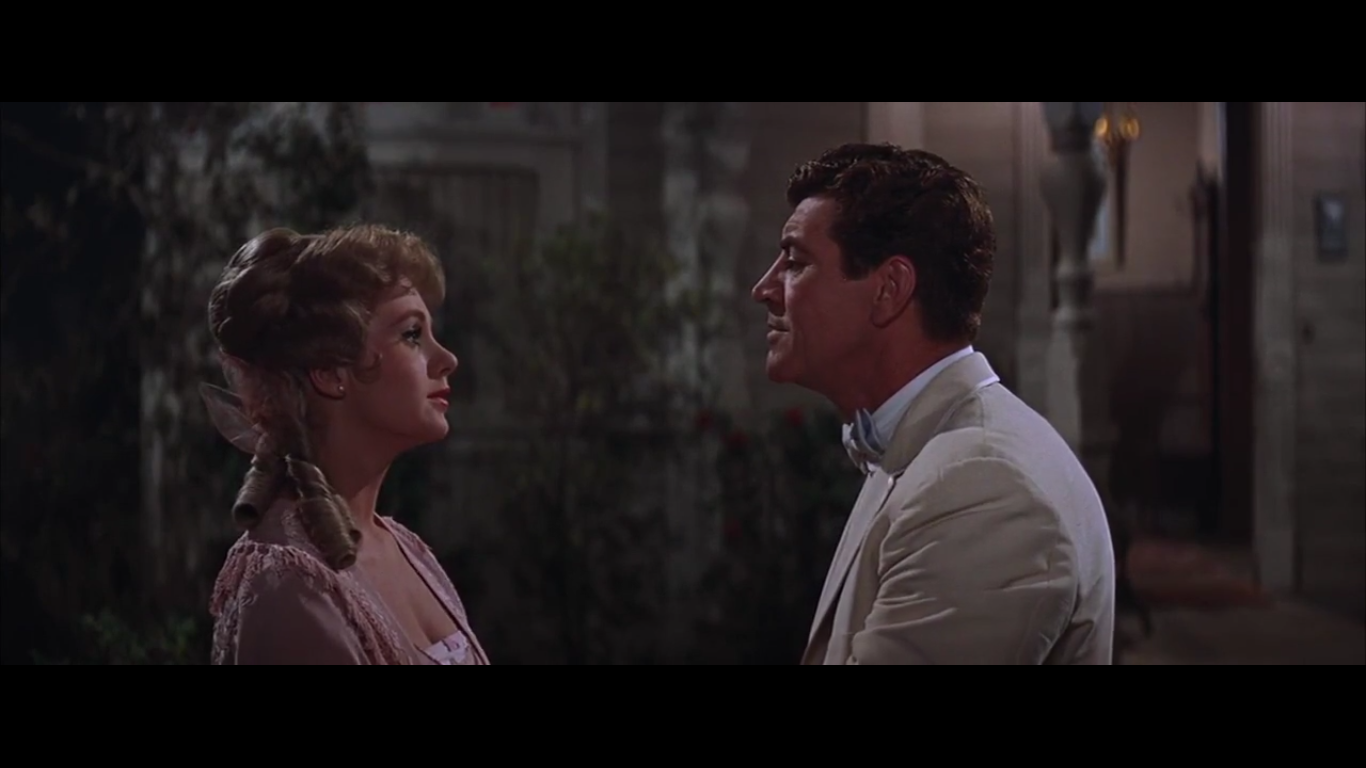
If Hill is able to distract, butter up, and pull the wool over on the general populous, Marianne Paroo (Shirley Jones), is the one person who is not about to be taken in by him. He makes a habit of ingratiating himself to librarians as part of his business model, and yet she’s not about to cave to his advances. They’re played up to their most marvelous extreme in “Marian The Librarian” as he cavorts and climbs all over, much to her chagrin.

But as she slowly watches her young brother (Ronnie Howard) gain a newfound confidence in himself and the whole town subsequently becomes reinvigorated and alive, she comes to realize that for all his put-ons, Harold really does have a knack for bringing people together. She comes to appreciate him and by proxy also fall in love with him.

Their grand moment comes during the summer sociable, hidden away at the secluded footbridge, where they share an embrace and Jones sings one of the most iconic tunes “Til There Was You.” Alas, it is the beginning of the end for Harold. He’s about to be ousted by another traveling salesman as a fraud, but instead of fleeing for the next train out of town, he vows to stay and stand trial. With Marianne in his corner, the final moments give us the kind of euphoric comfort and fantasia only musicals can offer up.

The Music Man runs at a hefty 2 hours and 35 minutes, and it’s true the musical genre often falls under criticism for being bloated or uncinematic. But at their best, they are characterized by passages of joy we can all appreciate as they swallow us up and allow us to become lost in the pure theatrics. This holds true after all these years as my youthful memories come flooding back in the wake of “Gary, Indiana” and several other tunes.

The show’s original director Morton DaCosta does an admirable job in translating the material to the screen without losing all the magic, and with a veteran cinematographer like Robert Burks, it’s hard to go wrong with the Technicolor.

For some, this might seem like a superfluous aside, but I am also indebted to this picture for what it did in the career of a little band from Liverpool. It’s true The Beatles recorded the ballad “Til There Was You” and as a counterpoint to their other material, it became crucial to them being signed to a record deal. They even performed it quite prominently on The Ed Sullivan Show along with more overt hits like “I Want to Hold Your Hand.” And we would have had none of their wonderful music if not for a flim-flam man stopping off in Iowa. At least, that’s what I like to think.

4/5 Stars

Two Rode Together (1961): The Community of a John Ford Western

With such a robust body of work, it’s no surprise John Ford often gravitated toward certain images to represent the West and Two Rode Together is little different with the director returning to familiar iconography. This time it’s Jimmy Stewart, not Henry Fonda, propped up against a railing with his feet kicked up casual-like.

As an aside, my mind wonders if it was Ford who made actors reputable because of his pictures, or were his pictures made better by the memorable actors — the John Waynes, Henry Fondas, and Jimmy Stewarts? Because it’s true they left an indelible mark on his filmography as he did on their movie careers. It’s not altogether surprising that the greats would get together — with their talents coalescing — since they were made greater through collaboration.

In this picture, Guthrie McCabe (James Stewart) is the town’s Marshall. He has a fairly cushy life to lead and his reputation does all the talking. Thus, he can live in relative peace. He has his drinks brought out to him on the veranda and the only grief he gets is from Belle (Annelle Hayes). The tough-talking, deeply perceptive proprietor runs the local saloon, which remains all but empty during its off-hours.

A group of Cavalrymen rolls into town done and dusted. McCabe welcomes them in and reconnects with one of his pals: Lt. Jim Garry (Richard Widmark). What becomes evident is how friendships exist outside the confines of the movie. This in itself is powerful. The reason they came to town was actually for McCabe. They have orders to take him on the 40-mile jaunt back to their outpost.

We still don’t have a point or a reason — an inciting incident for the movie — but by this point in this career, maybe Ford doesn’t have to explain himself. The secret to his success is making us revel in the experience, and I’m not just saying that.

There’s a camaraderie, a good humor, and a beauty in being thrust into his world. He obviously takes great care in photographing it, but he also cares deeply about his players. Hence the reason he always held onto his tight-knit stock company.

One of the defining moments plays out in an extended take with Widmark and Stewart sitting at the water’s edge. It’s the essence of the movie in a nutshell as they smoke cigars, chewing the fat, and enjoying one another’s company. The moment gained some notoriety as Ford, in his typically tyrannical manner, made his cast and crew work in the icy water all day rather than have a simpler set-up. However, the extended nature of the sequence adds to the relaxed atmosphere. Time slows down for even a few minutes.

The story arc itself isn’t much good or at least it pales in comparison to something as incisive as The Searchers that culls the depths of revenge and human vindictiveness. None of this is surprising. Stewart finds himself dealing with folks holding out that their loved ones, abducted years ago by the Comanche, are still alive and capable of being rescued.

In what feels like a holdover from his pictures with Mann, Stewart is individualistic and more cynical than some might initially recall. His explanation of what Comanche do to white men — a young woman’s little brother — is enough to make the girl squirm with grief, and there’s no tempered dose of sympathy in any of his words. He’s not aiming to assuage fears and play savior to a bunch of people.

Against this, you have the typical broad comedy. In this case, Ken Curtis and Harry Carey Jr. vie for the affections of Shirley Jones only for her to dump a liberal amount of flour in their faces. Widmark sets up an equally comical duel for the hand of his girl only to have Andy Devine come to his rescue, essentially bodyslamming the rivals into the drink with his substantial girth.

Still, it does revert back toward its dark and bitter inclinations. Stewart and Widmark make contact with the Native Americans, but completing their mission supplies only small comfort. They bring back one feral youth raised by Comanche and a timorous senorita (Linda Cristal) who was the wife of one of the buffalo warriors (Woody Strode).

Both become social pariahs to be gawked at for different reasons. For the woman, though her life was harsher, she was treated with more respect, and with more dignity, by the Comanche.

The showcase for all of this to play out is the typical affair cropping up in all Ford’s Cavalry pictures with a dance put on by the military at the outpost for all the soldiers and their wives. It’s a sumptuous event. However, Ford effectively subverts the usually sensible, civilized space creating the most traumatic of moods. Here even this kind of life-giving community has been sullied and soured by human bigotry.

There are few places to hide as prejudice is expressed so perniciously out in the open, between whispered gossip and disparaging looks. Meek Elena (Cristal) stews in it all under the weight of all their sidelong glances, cringing out of her skin. She knows she is unwanted, that she doesn’t fit in, and frankly, it becomes the most heartbreaking scene in the picture.

Oddly enough, the bookends of the story are probably for the best, consisting of the vistas and the world they help to accentuate — the journey and how we got there, opposed to the actual particulars. You wouldn’t be wrong in observing Stewart and Widmark are too old for their parts, but it’s easy enough to stop caring and drop it altogether. What they provide to the movie is something else.

Because even as Ford literally called the script “crap,” and it’s true the tale’s not exactly the most cohesive, taut foray in storytelling, between the actors and director, there is so much bounty to be appreciated. There are also some lingering questions. What will happen to Shirley Jones and Widmark? We hardly know if the Comanches have been satiated. Then, Belle Aragorn is back, and it feels like a whole different movie was going on with her and the deputy while we were away.

Still, we end up with Stewart propped up against that railing once again and my mind couldn’t help but drift back to my opening thought. Ford and his actors collectively made stories richer and more vibrant so they could add up to something more than fragments of narrative strung together. They operate on different levels, bringing together all these bits and pieces of pulchritude, relevance, and meaning.

Two Rode Together is downright venomous at times, but it never loses sight of its prevailing good-humor. With the likes of Andy Devine and Jimmy Stewart holding down the fort, how could you not? And all of this is very much in keeping with John Ford.

Ford was a paradox — the inexplicable cipher to the end — who played both the taskmaster and also deeply loyal friend to kith and kin. It’s that tension that holds this picture together. For all the hell he put his stock company through, he’s also the very same man who shut down production for a week so he could set up funeral arrangements for one of his dear friends: Ward Bond.

It’s quite simple, but really all you need to know about this picture and John Ford is in the title. It’s not about the individual so much as the collective unit. Only then do we get humor and progress and friendship. As much as he might have masked it, he desperately needed other people, and his films reinforce this.

3.5/5 Stars

Elmer Gantry (1960): Sinner & Saint

“You not only put the fear of God into them, you scared the hell out of them.” – Arthur Kennedy as Jim Lefferts talking about Elmer Gantry.

Elmer Gantry opens with a disclaimer, which no doubt plays as a defense tactic against the National Legion of Decency. However, taking a page out of some of the gangster pictures of decades gone by, while the filmmakers don’t condone the behavior, they find it within themselves to represent it. The caveat reads like this:

We believe Revivalism can bear some examination — that the conduct of some revivalists makes a mockery of traditional beliefs and practices of organized Christianity…Freedom of religion is not a license to abuse the faith of the people…due to the highly controversial nature of this film, we strongly urge you to prevent impressionable children from seeing it. 

Elmer Gantry is really the brainchild of writer-director Richard Brooks although it was adapted from the eponymous short story from years earlier by Sinclair Lewis. If you allow me to use the term, the picture boasts an embarrassment of riches, with actor-producer Burt Lancaster headlining, revered cinematographer John Alton, and the music of the much-esteemed Andre Previn. In most regards, they do not disappoint.

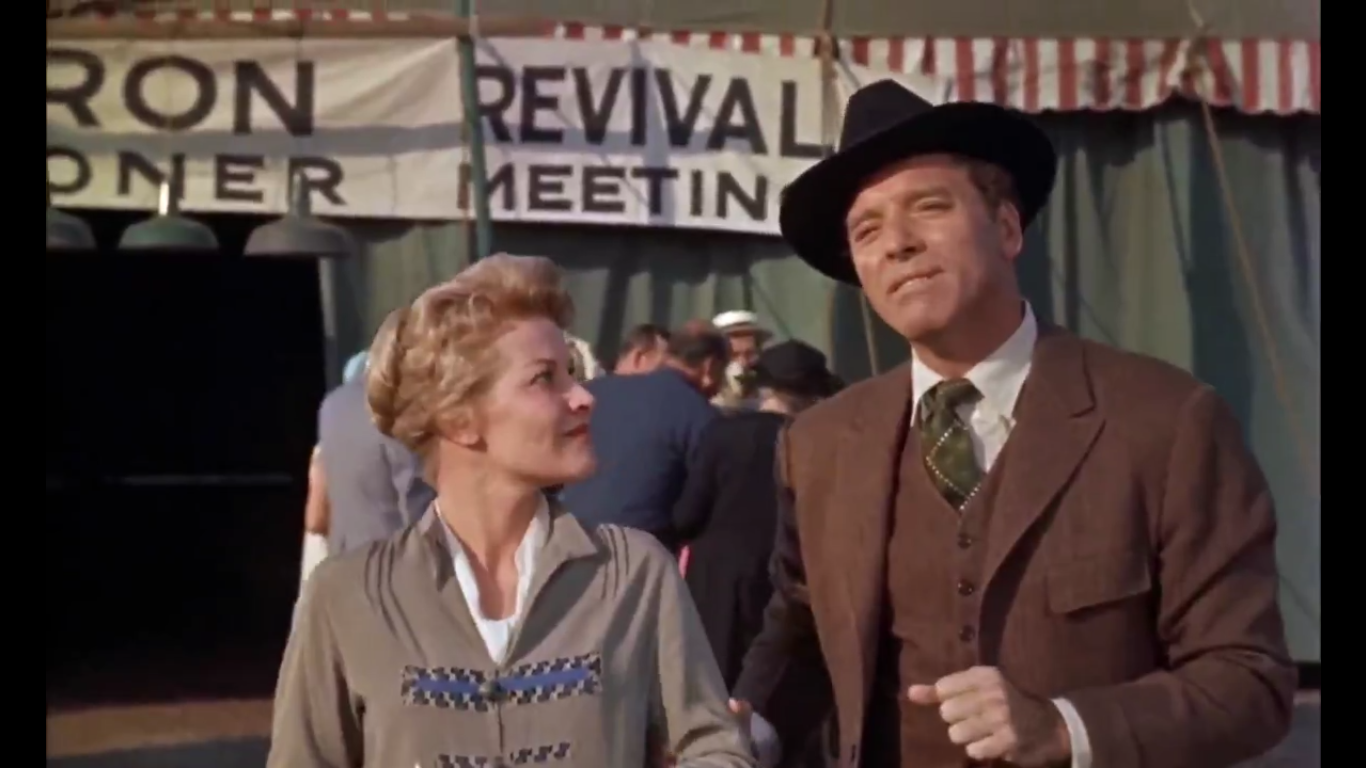
For his part, Lancaster delivers his most ingratiating, charismatic street preacher act. He seems to understand the inner anatomy of the character even as he seems to embody bits and pieces of Gantry himself. If you recall Robert Mitchum in Night of the Hunter, Lancaster does his own rendition or for that matter, he shares some small resemblance to Lonesome Rhodes from A Face in the Crowd.

By day, he makes ends meet as a traveling salesman — a tramp in a silk shirt — with a penchant for booze, women, and tall tales. As he sees it, his real calling is as a “Man of God,” though his definition seems pretty thin. Still, in the grassroots world he lives in, if you’re compelling, carry big ideas, and have a sprinkling of the Good Lord’s holy scriptures hidden away in your heart, it goes a long way.

Is it just me or do Lancaster’s eyes have a certain lecherous glint to them? It seems to rise up in him unsolicited, whether singing a gospel spiritual, looking around a big revival meeting, or quoting passages of scripture with extra panache. It’s true; he knows the hymnal by heart and the scriptures like the back of his hand, or at least just enough to use them effectively.

He gives us a little taste of his magnetism on one fine Christmas night, interceding on behalf of some Salvation Army charity workers as they call on the good graces of his fellow bar mates. However, after taking on a cattle car full of hobos, he ends up lugging his suitcases to the nearest town alongside the railroad track. Regardless of what he tells his mother over the telephone, he’s barefoot and, by all accounts, destitute.

In the very same moment, we catch a glimpse of some prominent signage, “Sister Sharon Falconer — can save you!” If Gantry is our wheeling-dealing main attraction, Sharon is his foil. Jean Simmons plays the role as a truly empathetic champion of the cause, who nevertheless runs her crusade like a business.

Patti Page is one of her devotees with the voice of an angel, while Dean Jagger, her right-hand man maintaining the facts and figures, ensures they stay on schedule. They also have their personal entourage of journalists, including Arthur Kennedy, who make quite sure they get the necessary press support. Everyone agrees she’s quite the lady, and it’s a well-oiled operation as they travel across rural America.

But Elmer takes them to another level. When he joins the team, his impassioned messages make the good people swell with emotion; his sights are on an urban revival. He wants to take religion to the cities. After all, that’s where the money is.

Soon they are courting the community leaders in the city of Zenith and all they have to offer. The name is apropos because it really is the pinnacle of what they are trying to accomplish. If they can succeed here, there’s no question where they might go.

The local leaders and ministers bandy about what they might do about the competition from entertainment industries, diminishing church attendance, and pervasive financial problems. They’re all real-world issues no doubt plaguing the church today and in most any generation. It’s a Mr. Babbit who opines that they need to get the young people back in church and keep the train on the tracks.

Arthur Kennedy might be the voice I appreciate the most. Because Elmer Gantry is born out of a deeply religious context. People have the rhetoric and a certain cultural liturgy down, but if I am aware of anything about Jesus Christ, so many of the people who call themselves Christians, don’t know him. They use his name, evoke his words, and then choose to live by their own standards.

Jim is one of the few characters in the movie who lives as a searcher. He’s still trying to find the answers to life’s questions. In a single moment, he turns the public against the sister and Gantry with his honest, albeit incisive news reporting. However, when he could embroil them in greater scandal, he elects not to. That’s not his game. When he lambasted for his lack of Christian faith, he says his doubt is not blasphemy. On the contrary, it makes him the most honest character in the picture.

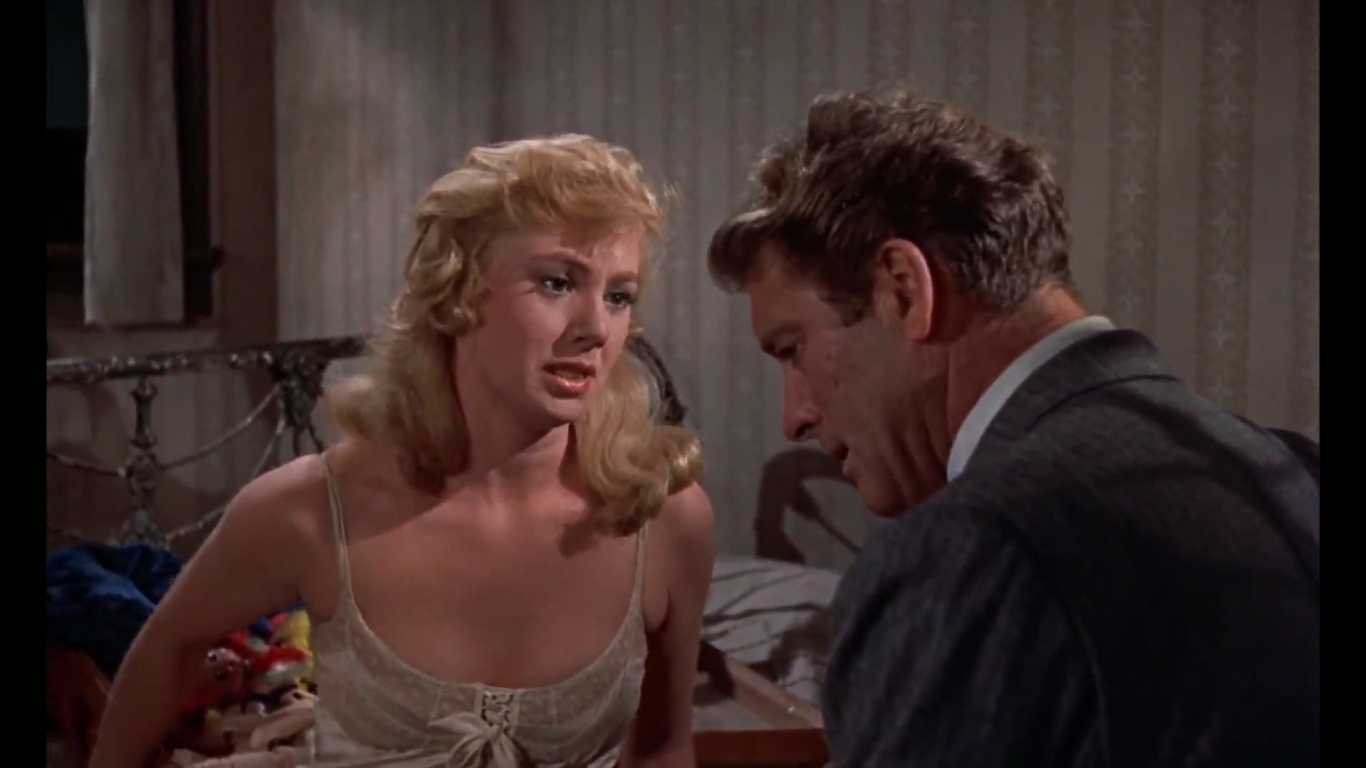
Shirley Jones doesn’t show up until well into a picture and yet soon enough Lulu Banes becomes what feels like the lynchpin character to the whole drama unfurling before us. She lives a life of ill-repute in a brothel, but she wears her profession as a badge. More importantly, she has a history with Elmer Gantry. In their earlier days, Gantry was kicked out of seminary and she was disowned by her ministerial father, for their indiscretions. She knows Gantry more intimately than most, and she can use it against him.

It’s a foregone conclusion that this religious empire must come tumbling down. The images when an ensuing scandal breaks out are some of the film’s most definitive. From the podium he once enraptured audiences, Gantry is pelted by fruit, eggs, and hot jazz under the big top. He’s ridiculed as a total hypocritical disgrace — and in a fit of irony, it’s the single moment where he feels the most Christ-like. No, he’s not sinless and not a saint; he is very human in that regard, but in this moment of immense humiliation, he’s forced to bear the brunt of all the shame.

This is only superseded in the final moments in what feels like a hellish conflagration as the tabernacle bursts into flames. it’s such an evocative image as holiness and hell meet in a fiery inferno with Sister Sharon and Elmer Gantry right in the middle of it. From dust, you came, and to dust, you will return.

Considering the historical moment and Burt Lancaster’s own religious leanings, there’s a sense he intended the movie to be his response to such stadium preachers as Billy Graham.

Lancaster relishes the opportunity of being a louse and also very easily undermining religious thought and rhetoric — telling half-truths and appealing to religious fervor — while conveniently looking after his own ambitions. He slinks his way into other people’s life like a worm (or a serpent) laughing and cajoling and spouting his own brand of religion. His tongue flatters all, and he’s good at it, but he’s always looking to gain something from others. Mind you, he’s not the only one. We all have that tendency.

I am by no means an authority on Graham, but despite any unpopular opinions he had, he was also a very faithful man of God and he had such a profound impact on generations of people, literally, millions of people all over the world. Thus, the parallels to Graham never were of a great deal of interest to me and feel mostly immaterial.

It’s easy to draw out the movie as an indictment of Gantry and to a certain extent maybe it is, but it says something more endemic to our society and our systems. Those people still exist today. Sometimes it’s fire and brimstone and sometimes it’s inverted into a prosperity gospel.

However, then scandals come out, lives unravel, churches schism, and hearts are hardened. We put these religious figures on a pedestal and almost without fail they let us down in some manner. Some have misguided beliefs in themselves like Falconer. Maybe they burn with the human lust and passions of Gantry.

Is it scandalous to say, I rather like him? He seems like a genuine fellow.  Like Sister Falconer, he seems to generally believe what he’s preaching; this I didn’t expect. But he’s hardly a saint. The fallacy comes with building him up to be one.

None is righteous, no, not one; and no one understands. Lefferts is getting there. We must seek after the truth. We would do well to not just cave to feelings and emotions. Still, intellect will only get us so far. We must have ears to hear. Because true wisdom, true discernment, is proved right by what we do. It’s up to each of us to figure out what that is.

4/5 Stars