Double Feature: Requiem for a Heavyweight (1956) and (1962)

Rooney, Gleason, and Quinn in the film version

Requiem for a Heavyweight was an early live television production that was so popular it garnered a feature-length adaptation a few years later.

It’s relatively easy to see the merits in both because although they enlisted the same director and screenwriter, the actors and the medium do quite a lot to make them feel textured and different. I couldn’t necessarily pick a favorite.

The original is bare-boned but intimate, and there’s a darker more caustic theatricality to the film version. It really comes down to preference. Here are my thoughts on the two versions:
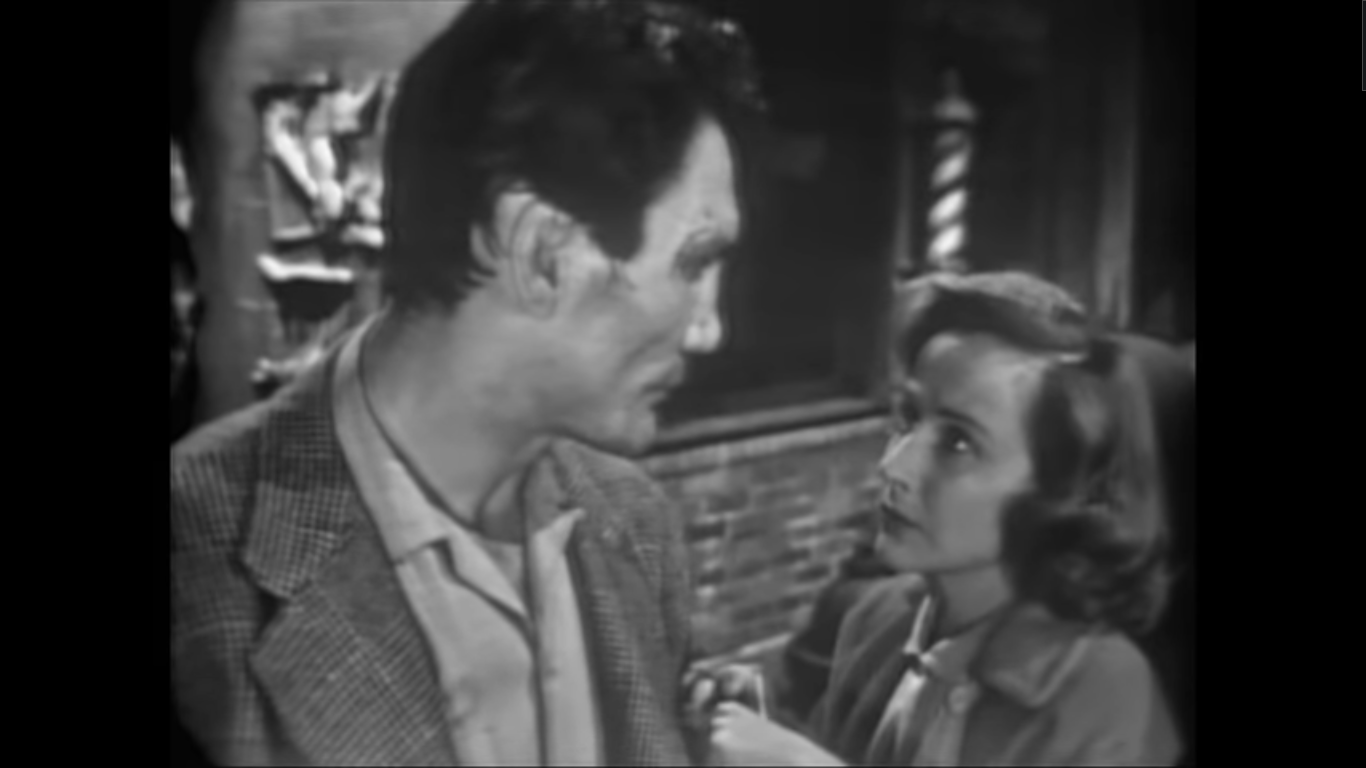
Palance and Hunter on Playhouse 90

Requiem for a Heavyweight (1956)

This early showcase of the Playhouse 90 live TV format introduced the fragile and most sensitive version of Jack Palance. He’s a hoarse and husky-voiced journeyman boxer named Mountain McClintock.

One of his greatest claims to fame was that he was almost heavyweight champion of the world. But he’s most proud of his integrity. In 111 fights, he never took a dive. That includes his most recent bout. He got pulverized and still managed to make it seven rounds.

Between Rod Serling’s script — the writer called upon his own memories as a one-time boxer — and Palance’s endearing performance, you have the emotional heart of the tale. Because Mountain is proud and principled in his own way. He didn’t get into fighting to murder people or make a ton of money. It’s just the only thing he’s ever known — the only thing he was good at — and he took solace in it.

Now he’s on the way out. The Doc says he’d better quit before he earns more permanent damage. Somehow he’s impressionable like Lenny in Of Mice and Men. Despite his physical presence, he needs protectors and others to look after him. There are certain people in his corner he deeply trusts just as all his words and pearls of wisdom come from the mouths of others.

The real-life familial bond of Keenan and Ed Wynn is equally key because they play the two most important people in Mountain’s life. There’s Maish, his manager, who’s currently in a bit of a bind. Then, Army, his cutman, who’s more resigned to the inevitably around him. He’s seen a lot.

Keenan can exhibit a kind of gruff intensity role to role, but since I know Ed Wynn as such a jovial figure, I almost didn’t recognize him. Both of them exhibit an earnestness in their respective parts. Maish has compromised his integrity and now feels bitter toward Mountain, a has-been fighter he sunk so much time and money into. How is he supposed to get any recompense?

Mountain looks a bit pitiful walking into a job agency with no work experience and a kisser as roughed up as his. However, the attendant behind the desk (Kim Hunter) sees his goodness and drops her business spiel for something more personal.

She responds with heart, tracking him down to his favorite watering hole and vowing to try and help him resurrect his life. The bar serves as the graveyard and burial ground for all the hard-up fighters who wither away inside their own heads. Mountain might easily be headed toward this end and worst yet, he might lose his dignity in service of Maish’s debts…

We must remember what the medium of television accorded the makers. Visually, they were working in fuzzy black and white with tiny boxes of composition but also a more familial viewership. This ultimately impacts the creative choices and the film takes on a hopeful final note.

It’s fascinating to watch the production since it was being taped live and throughout I only noticed one flubbed line rushed over by a mother on the train. Otherwise, around all the orchestrating and simple sets, there’s very little taking us out of the story and disrupting the primary performances. Given the restraints, it’s quite a startling achievement.

3.5/5 Stars

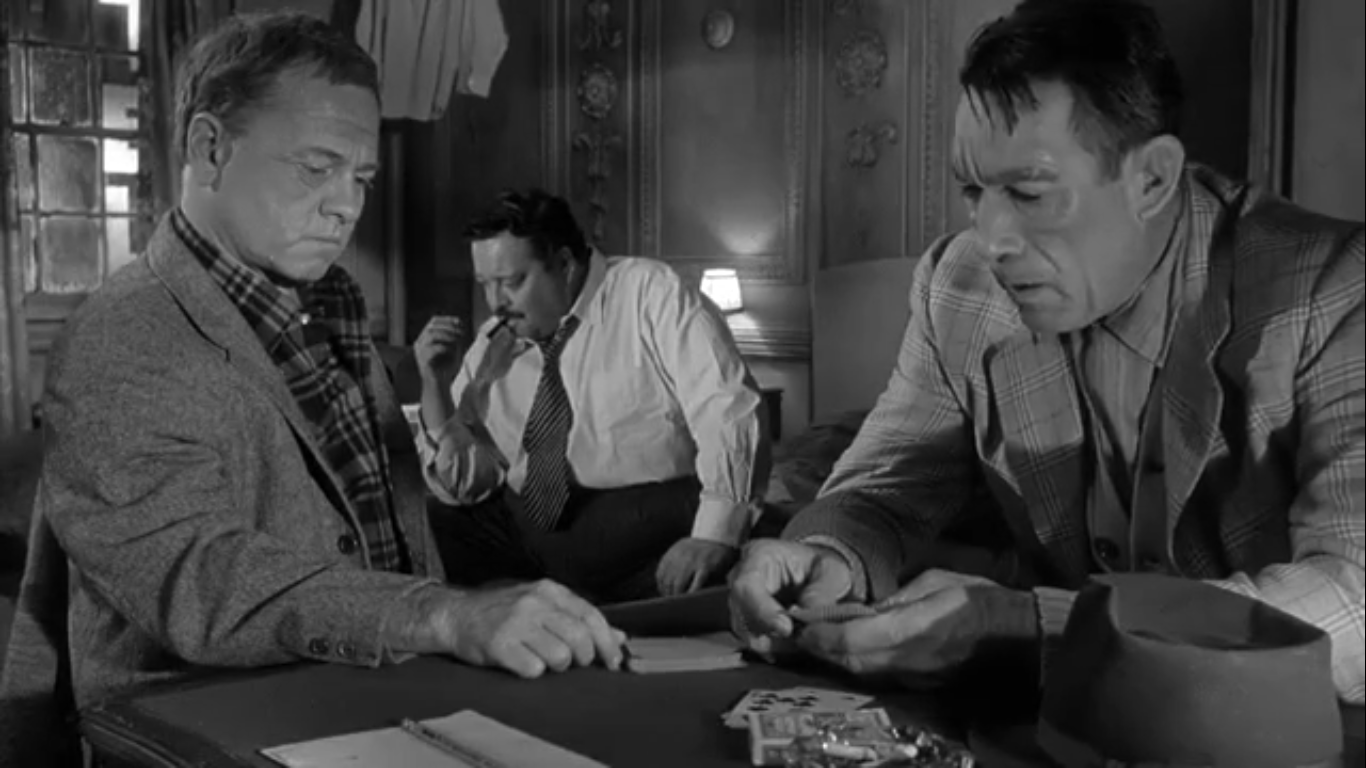
Quinn and Gleason

Requiem for a Heavyweight (1962)

Ralph Nelson was the same director who filmed the original TV version. Instantly the big screen is more cinematic thanks to the subjective point of view in the ring. We see a solemn Jackie Gleason, the yelling Mickey Rooney, both standing just outside the ropes.

Then, the announcer calls out the name Cassius Clay, and there he is in all his youthful glory beating back the camera! It does feel like a bit of a gimmick, but then we finally see the face of Anthony Quinn battered and bruised and we have our movie.

I assumed the older Gleason was Army and having just recently been introduced to what Mickey Rooney was capable of in The Comedians, it seemed only too reasonable that he would play the more mercurial Maise. How wrong I was.

Quinn seems especially old for his part, but it’s intriguing to see how his character mythology was altered to fit his own Hollywood legacy. Mountain Rivera came out of New Mexico, he ditched school in the 6th grade (instead of 9th), and he’s been fighting longer than Palance’s counterpart. Still, like Palance, Quinn’s larynx sounds like it’s been beaten out of him positively eviscerated by his years of punishment in the ring.

The movie’s milieu is not too far away from The Hustler (also featuring Gleason) or the sensibilities of a TV-to-film scribe like Paddy Chayefsky. The jump to film also means it owns a sharper even more melancholic edge than its small-screen counterpart.

Maish (Gleason) is tailed and tracked out into the ring reminiscent of The Set-Up, and he’s threatened into paying up on his recently accrued debts. He needs the cash fast. Later, he willfully gets his dwindling prize fighter drunk. It’s all part of a ploy to keep him from getting a real job so he can earn money as a sideshow attraction in some trumped up wrestling showcase.

This time it is Julie Harris, who is tasked with helping Mountain turn a new leaf in his life. Her character never shared consequential time with Maish in the original version, but here they share dialogue on a stairwell adding an alternate dynamic to the picture. He says, “The rich get richer and the poor get drunk.” Mountain’s finished, and he’s skeptical of any do-gooder looking to peddle their charity. The edge of cynicism is deeply entrenched.

Also, in the previous rendition, there’s this happy denouement as we recognize Mountain entering into his post-boxing career. It’s possible for him to make something of himself and gain fulfillment beyond the ring by imparting his knowledge to younger generations.

Here it almost feels like the movie has been shifted and the focal point is Maish. Because he is the person who must come to terms with what he has done by totally denigrating Mountain for his own desperate gain.

When he’s marched out into the ring, totally racialized and trivialized, it sears with a level of pain television would have never dared. And we realize all the self-fulfilling prophesies have come true. Mountain really has become the geek, a kind of carnival show attraction, but it’s not out of his own desperation. He’s doing it for someone else. Mountain willfully subjects himself to the ignominy, but Maish is the one who must live with his conscience. I’m not sure what’s worse.

3.5/5 Stars
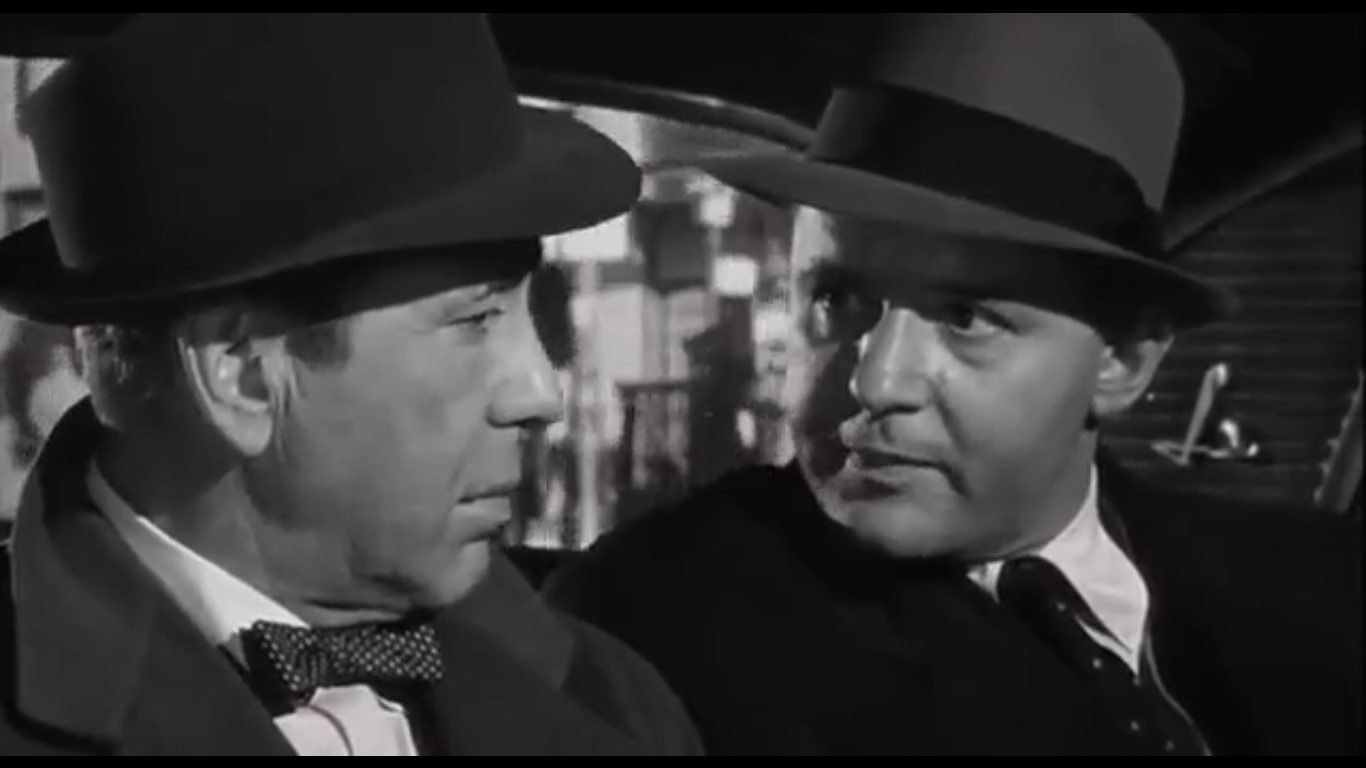
The Harder They Fall (1956): Bogey’s Last Film

As the saying goes, the bigger they are, the harder they fall and Toro is a big man. He’s a sculptable Argentinian bumpkin who will quickly be fashioned into a killer in the boxing ring. Rod Steiger plays Nick Benko, a shifty promoter looking to groom his latest talent and set him up for success. It has nothing to do with actual training.

First, he calls in a veteran sportswriter to stir up some good publicity. Things have changed. No one wants to fight anymore when they could go to college. It’s more like playacting than an actual sport. You’ve got to give the audience a show and that means publicity (and staging the results). Eddie Willis (Humphrey Bogart) has long been concerned with holding onto his self-respect in the journalistic profession. Now he’s finally caved to Benko’s racket because he wants to get ahead for once in his life. His coffers aren’t as full as they could be.

It becomes increasingly apparent, in spite of all of Nick’s high words and cajoling, he’s obviously no good. Eddie knows what it all means as he watches a dirty fight and the ensuing repercussions of each subsequent business agreement. Nick’s operation is taken care of by an army of hoodlums. All these faces pop up here and there, making appearances and showing up ringside or in hotel rooms. Bogart joins the king of the creeps by pocketing 10% for himself if he can keep them out of jams.

While Bogart carries the picture, I couldn’t help thinking about some of the intriguing sparring partners he has — not the big names but the likes of Harold Stone and Edward Andrews. Because the movie feels like an analysis of the entire ecosystem and why people do the things they do. An added tinge of realism is given by real-life fighters like Jersey Joe Walcott and Max Baer.

Jan Sterling appears in a role reversal playing the principled wife watching her husband slowly slip away from her as he’s swallowed up by his all-consuming job. At first, I was intrigued until she slowly evaporates in a part that does not avail her the opportunity to do anything substantial.

It’s necessary to take a brief moment to mention screenwriter Budd Schulberg too. Like A Face in the Crowd, it’s a story documenting the perils of television and media in general. Toro is no Lonesome Rhodes; he’s a bit of a stooge, but the men behind him are able to orchestrate everything to easily manipulate a response out of their target audience, and it’s all for monetary gain.

I’ve always heard mention of the collaboration between Schulberg and Spike Lee focusing on the bouts between Joe Louis and Max Schmelling. Although the younger director vowed to get the production made after his friend’s passing, it’s still reassuring to know Schulberg already had a portrait of the boxing world put to the screen. Not surprisingly, The Harder They Fall is unsentimental, and yet it still manages to humanize many of the fighters as victims of a system.

What strikes me about the film is what it decides to spotlight and what it leaves to our imaginations. We know the reason for all these back parlor deals — it’s to prop up the gambling — but the movie rarely pays this much heed. It’s simply understood. And also the movie focuses on the families and the business outside the ring. It’s as if everything between the ropes is already a foregone conclusion, and it is, so we hardly need to focus there.

Instead, it’s the drama beforehand: Chief (Abel Fernandez) won’t take a dive because his family is in the audience. Then, there’s Dundee (Pat Comiskey) an old journeyman dealing with head trauma from his last fight. He’s barely ready to face off against the new challenger, and it doesn’t bode well. Still, each fight paves the way for Toro’s chance at the champion (Max Baer) and some real promising money. This is what Nick has been striving for from the beginning.

There’s an abrasive whininess to Steiger’s whole performance that keeps everyone on edge. I can understand any complaints of the actor being too intense, but he’s also one of the primary attractions because his unscrupulous fixer personifies everything crooked about the racket. It’s always gangsters or businessmen in suits with all the power, but Steiger effectively makes these skeevy mugs into slimy parasites. He feels like a new, different brand of antagonist, and frankly, he makes Bogey and the audience sick. The movie wouldn’t work without him.

It comes off as one of the most bloodthirsty and unsentimental boxing pictures of the era because they let this boy get absolutely butchered in the ring — building him up — only for him to get annihilated. And it’s all for money.

By the end, it’s almost ludicrous. Like A Face in the Crowd or even Network. Toro gets his brains beat out; he’s fully commoditized and then sold like chattel, and he comes out on the other side with nothing and no one to look after his interests. He’s been cast to the pavement as disposable goods.

Eddie holds the only grain of decency left and with his moral character eroding, he must make the decision to finally stand up for something greater. It’s a nervy performance from Bogart because it never resorts to bravado or any grand showing. He’s an older, wearier man now, and it shows.

Cancer would take his life far too soon, but by relinquishing the gangster roles, he offers up a different side of himself that we could not have expected without an earlier movie like In a Lonely Place. He really is a great one. I realized part of the reason I was reluctant to see the picture was that I didn’t want to acknowledge his career actually came to an end. Even if it was well over 70 years ago, I still miss Humphrey Bogart to this day.

4/5 Stars

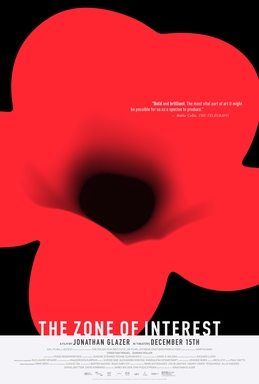
Zone of Interest (2023),The Banality of Evil, and Le Chambon

Zone of Interest opens with a blank screen and a collage of sound; it’s almost like it’s priming us for the movie ahead. Because it’s not a conventional movie by any stretch of the imagination. It’s difficult to put arbitrary labels like good and bad on it since it’s so different than what we normally get in the cineplexes. 

However, for some time the name Jonathan Glazer has become synonymous with singular visions often lauded and simultaneously prone to divisive reactions. There’s also the subject matter. Zone of Interest is loosely based on the eponymous novel by Martin Amis.

We effectively enter the movie by watching the daily life of Auschwitz commandant Rudolf Hoss (Christian Friedel) and his wife and kids. Observations become so key to the cadence of the movie because the entire film is built out of the structure of their lives and the world they have created. It just happens to butt up against one of the most horrendous atrocities known to man, and we have to contend with this as an audience even if they will not.

When you pick up various mundane insights, you appreciate the understatement of what is being portrayed and then instantly turn grim with each subsequent realization. There’s something disorienting about the shots within the home almost like surveillance footage and the angles are not human perspectives. Outside the tracking shots are more natural but no less perturbing. 

The mother Hedwig (Sandra Huller) is frumpy and flat-footed as she tends her garden and settles into a life mostly oblivious of everything around her. The kids play with their toys and have breakfast and dinner like any children. Except they examine human teeth by torchlight or mimic the unearthly humming thud of what can only conceivably be from the human ovens next door.

It’s all this inexplicable darkness that lives on the fringes of the movie’s frame denoted primarily by sound in the periphery, ashes laid down in the soil, remains in the river, even passing remarks about leftover clothes that have been picked over.

The metaphor is fairly obvious, but the family has built this garden as a buttress and an oasis against the camp next door. This is how they can celebrate their father’s birthday and have pool parties while people are being shot and murdered just meters away from them. This is not normal. Some kind of compartmentalization and moderate delusion has to be accepted for such localized dissonance to exist. 

Gardens and flowers are meant to represent beauty and cultivation in the natural world, and yet there is something distinctly afoul with this coming into being from the ashes of the murdered. Sometimes this cycle of life is spun and explained away as a natural process, but in this case, it’s a bald-faced lie.

Hedwig says this is their Lebensraum — the “living space” Hitler promised to his Aryan followers when he came to power. For her, be it ever so humble and grotesque, there’s no place like home. And so while Hoss gets a promotion to oversee the efficiency of the camps all over Germany, she asks to stay in her home. She’s happy there. Living off the detritus and skeletons of the dead. She wants to continue to tend to her garden.

On several evenings while Hoss reads fairy tales to his kids, there are otherworldly thermal vision sequences of a young woman leaving out apples and other gifts of sustenance for the prisoners to find. Purportedly this is based on a real-life young member of the Polish underground. It’s one solitary inkling of goodness amidst the queasy, uneasy status quo of the movie. Without it would be easy to suffocate under the pressure or worse still become apathetic.

It seems like there must be a caveat with Zone of Interest. We must be vigilant and careful because there is an insidious nature to the story, whether it’s intended or not. It’s possible to get caught up in the plans of these men in boardrooms and offices especially when we move away from the camp itself. Because even if we never get inside, there are touches and the grim noisescape that never allow us to lose perspective entirely.

But whether it’s Hoss and his wife having a marital tiff or him vying for greater status within the Nazi killing apparatus, these moments can draw us in with a kind of hypnotic power. I’m not sure if they are instructive unless they lead us to one particular end.

It’s easy to trot out the idea, but with the brief mention of Adolf Eichmann within the film itself, it feels even more imperative to evoke Hannah Arendt’s famed phrase from the Eichmann trial: The banality of evil.

By now it comes off the tongue so easily it can sound cliché, and yet it’s never been so true as watching this film. The efficient nature of the crematoriums is methodical if it weren’t so ghastly. It’s the first of many touches reminding us precisely what we are witnessing in real-time. I think we want it to feel worse or more extraordinary than it comes off. Somehow it would make it more comforting — that there is a large gulf between the predilections of my own self-serving heart and these people — still, there’s no such luck.

In one particular moment, the screen is momentarily enveloped in red. It might have many reasons, but all I could think about was the blood that has been shed. It’s almost second nature to see this as blood on the hands of others, and strictly speaking, this might be true. However, I’m not presumptuous enough to forget my own sins of commission as much as omission. It almost feels like a rite of passage for human beings. None of us are clean. We all have blood on our hands one way or another even if we were only born into it.

I was talking to a friend who mentioned how we get a ground view of what mechanized evil looks like when people work together for a collective purpose — in this case a horrific end. What would it look like instead if a community gathered together with this kind of collaboration and vigor for the sake of good? It’s an intriguing question and since my mind leans toward hope, I wanted to consider it.

I’m sure he meant it in a broader sense, but my mind went to Le Chambon. The particulars are a little murky, but from what I remember the French village worked together as a community to harbor and save 100s of Jewish lives. Now there may be nuance to the story — particular individuals who led the charge (see André Trocmé) — but that’s partially what it takes. It’s the captivating idea that small acts and decisions have a cumulative power. We can just as easily stand strong as we can capitulate and cave one day at a time.

Near the end of the movie we flash forward to the present day where museum attendants clean the exhibits, and there’s a different kind of sound design as we go through the cavernous spaces and see the scope of the destruction leveled against the Jewish people. This is our first and only glimpse of these spaces from the inside.

The movie does something curious by cutting back to Hoss as he straightens up after doubling over on a stairwell having just thrown up. Is it an ailment or is it somehow related to the work he is doing — the thousands of lives he will effectively snuff out echoing through the ages. It’s difficult to impute such sympathetic thoughts to a man we have watched in such a rudimentary light. I’m not sure what to make of it.

The movie goes out the way it came in with a blank screen and almost avant-garde sound design. But rather than put a label on it, it seems more conducive to express the emotions it elicits. It feels unnerving, a bit like you’re watching a horror film because there’s something layered and unnatural about the noise. But then that’s precisely the point.

4/5 Stars