Unknown's avatar

About 4 Star Films

I am a film critic and historian preserving a love of good movies. Check out my blog, 4 Star Films, and follow me on Twitter @FourStarFilmFan or Letterboxd. Thank you for reading!

Shadowlands (1993)

2bfce-shadowlands_ver2Starring Anthony Hopkins and Debra Winger with direction by Richard Attenborough, this film chronicles the romance of famed Christian professor and author, C.S. “Jack” Lewis with the American poet Joy Gresham. Jack is by now a respected professor at Oxford and a widely acclaimed lecturer who often speaks on the issue of human suffering. In his personal life, he is rather reserved. He lives with his older brother Warnie and spends times with his colleagues discussing topics of all sorts at the local pub in the evenings. 

It is not until he receives a letter from an American admirer named Joy Gresham that his life seemingly begins to change. He first accepts to meet her only to be gracious, but soon their relationship develops into a close bond. Jack meets Joy’s son Douglas who is enthralled by Narnia. He even offers them a place to stay during the Christmas season, since they have nowhere else to go. Lewis and Gresham are very different people, to say the least. He is a quiet intellectual with the sensibilities of an Englishman, while she is a plain -speaking American who does not mince words. However, these differences bring them closer together because they help each other to view the world in a radically new light.  Jack learns how Gresham’s marriage is going badly and he settles to marry her in a practical union so she and Douglas can stay in England. They do not speak of it much and it hardly seems real. Joy calls him on it realizing for herself that he allows no one to challenge him. There is no vulnerability to him whatsoever.

However, then Joy is diagnosed with bone cancer and slowly but surely she begins to deteriorate. For the second time in his lif,e Lewis understands the anguish that comes when a loved one is suffering. Because, the fact is, he most definitely loves Joy, and it simply took a tragedy to make him realize it. As with any inexplicable suffering, Lewis is tested in his faith, and the reality human suffering has new meaning to him. It is no longer just lecture material, becoming a far more personal process.

Although this film is not so much focused on C.S. Lewis as a Christian theologian or apologist, I think Anthony Hopkins does a wonderful job of portraying him as a kindly and gentle man of faith. He struggles with doubts and fears like every human, but he found something wonderful in his love for Joy which ultimately changed him.

Debra Winger must also be commended because she played well off of Hopkins and even though I have no picture of the real Gresham, Winger seemed to embody her. In some ways, I found her most beautiful when she was bedridden, absent of all makeup and seemingly so pure. It positively tears your heart out watching her son say a tearful goodnight or to look on as Jack stays up with her. This is a better picture of real, unadulterated love than most films can hope to manage because it very rarely becomes a sappy melodrama instead resorting to more deliberate means. As Jack says we live in the “Shadowlands,” but amidst the pain and suffering, love seems to shine through even brighter.

This was such an enlightening film for me because I always envision C.S. Lewis as a scholar and rational thinker, which he was. But he also had a vulnerable human side and this film, as well as A Grief Observed (written after Joy’s death), prove that point. It’s hard not to feel for him and that’s part of the beauty of this story.

4.5/5 Stars

A Room with a View (1986)

df65f-room_with_a_viewWith direction by James Ivory and a cast including Helen Bonham Carter, Maggie Smith, and Daniel Day-Lewis, the film opens in Italy where a well to do English woman is on holiday with her significantly older cousin. While staying in Italy she falls in love with the country and comes to appreciate the many different people you come across there. 

It could be a commanding author, a pair of kindly old women, or a father and son with a more open way of thinking. In fact the Emerson’s reflect the change that is coming to England while Lucy and her cousin Charlotte reflect the old Victorian way of England. They are so caught up in manners and etiquette that they never give much thought to their actual desires and feelings. This becomes extremely important when Lucy returns home to her family and the snobbish but well-meaning young man she is to marry. She believes she is in love, but then the Emerson’s come to live nearby and Lucy is in conflict, especially after an incident in Italy. 

Lucy continues to follow the norms of what she is supposed to do, and it is only after much lying to others and herself that she truly confesses her feelings. Things are not turning out the way she had expected and thanks to kindly Mr. Emerson she finally leaves the pleasantries behind for love. She returns to Italy with her love and is met with another group of colorful individuals and she once again has a room with a view. This film is obviously very English and it is made by the characters like Mr. Beebe, Charlotte, and the Emersons who all make this a pleasant film to watch. 

4/5 Stars

The Conversation (1974)

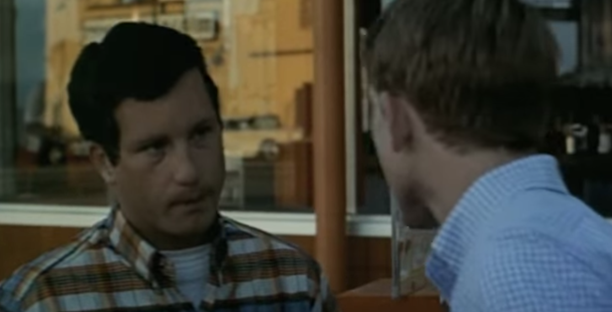
6d644-theconversationDirected by Francis Ford Coppola and starring Gene Hackman, this film begins with a commonplace conversation between a young man and woman in the relatively busy Union Square in San Francisco. As they make their way around their words seem of little importance and yet unbeknownst to them they are being followed and recorded. 

The mastermind behind it all is the surveillance expert Harry Caul who uses his know-how and a small team to track their words from a van.  As a professional and a highly respected member of his field, Caul is guarded and he tries not to concern himself with the reasons behind his surveillance. However, as he works his magic in his private lab space, Caul finally does become affected when he picks up on bits and pieces of the conversation. It deeply troubles him and he continually plays the tapes back. 

Because of his concern, Caul holds out on giving the tapes to the assistant of the Director, the man who commissioned the job. The aide pressures him more and more and then finally Caul finds the tapes are stolen. Fearing that the couple is in grave danger, Caul takes the room right next to theirs, but unfortunately despite his best efforts, his fears seem to be confirmed. After searching the empty room Caul goes to confront the Director only to find that things are not as they seem and Caul is the only one who realizes it. The disillusioned man is then threatened over the phone and informed that now the shoe is on the other foot and he is under constant surveillance. Little did he know the implications of the conversation… 

Gene Hackman may have played more memorable characters like Popeye Doyle, Lex Luthor, or even Norman Dale in the Hoosiers, however, I am not sure if he played a more complex character than Harry Caul. He is a detached man who has no telephone, tells white lies about his birthday, has multiple locks on his door, keeps his equipment caged and he has no significant relationships. The other side of him loves the saxophone and is a devout Catholic. He is no hero and not what we would normally call a villain. He is Harry Caul a lonely, confused human who has tendencies for good but still constantly struggles to reconcile that with his career. Above all, The Conversation is a thought-provoking psychological thriller which gives the audience lots to mull over.
 
4.5/5 Stars

Modern German Relationships Told Through Film

Here are two films in Summer in Berlin (2005) and Everyone Else (2009) that focus not only on romantic relationships, but interpersonal relationships between friends and couples. These social interactions in turn give a view into the hopes and aspirations of contemporary German individuals. The first film is a dramedy directed by Andreas Dresen that follows a pair of girlfriends who face hardships and a romance that nearly comes between them. Everyone Else directed by Maren Ade on the other hand focuses on a young couple who takes a trip to Sardinia and become strained in their relationship. Although quite different, both films place importance on a central relationship that becomes further complicated by other acquaintances. All of this in turn gives commentary on not just the state of mind of Germans but of humanity as well. Everyone wants to have friends and to be loved.  

           By the title it would be assumed that Summer in Berlin is light fare, and at times it is, but it also has something to say about the difficulties of relationships and the realities of life. Katrin is divorced, has a young son named Max and is trying to make her way in the world by finding a job. Her good friend Nike is single and works as a caregiver for the elderly. Their lives are far from ideal and that makes their friendship even more important to them. After the daily grind their sanctuary is the rooftop where they share a glass of wine, unwind and chat about whatever they feel like. However, after one especially long day Nike is not around when Katrin needs her. Their roof top oasis is rudely broken up and the fact is Nike now has a boyfriend, the gangly truck driver Ronald. This is an interesting turn of events since the main relationship that both these women really cherished is hurt, because of Nike’s desire for a boyfriend or at least intimacy. Here is the struggle that plagues everyone. There is a primal longing to be loved and accepted and sometimes that urge can become even more important than maintaining a strong friendship. If you give Ronald a quick going over, he really is not a desirable character to be in a relationship with. He can be friendly enough and he is willing to sleep with Nike but that’s about where his involvement stops. Even when he first meets her at the club Ronald does not really show any genuine interest or his only motive is self-gratification (Summer in Berlin). It’s as if he asked himself, what can she offer me? The answer was simple: Food, coffee, a bed, and superficial companionship. He was fine with that so he went along with it and was satisfied. Nike on the other hand is attempting to make something more out of their relationship. She desires something deeper and more genuine. It is only during a pit stop when she is accompanying Ronald on his route, that Nike finally sees his real side. The fact is, he is married and has children, but he told a little white lie to Nike before (Summer in Berlin). This situation brings to mind Katrin’s own failed marriage and whether or not it ended due to her husband sleeping around like Ronald. As far as career advancement goes Ronald is a Nobody who is simply excited to be shipping electronics instead of carpets soon. Despite these signs, Nike still stays with him. Finally, her relations get completely muddled when Ronald shows up at her empty apartment only to go down to wait at Katrin’s (Summer in Berlin). When Nike discovers this, she resentfully suspects that something is going on behind her back. Thus, a love triangle is created that never existed before and a man who is a tramp has gotten between two friends. Nike desired the same things that everyone else wants and it did not turn out in her favor. Ultimately, she wises up and renews the bonds that are truly important, with Katrin and Katrin’s heartbroken son Max.

            Fittingly Everyone Else is a film about a boyfriend who wants to be as happy as another couple and a girlfriend who does not want to be like everyone else. Whereas Nike’s relationship with Ronald seemed wrong from the beginning, the Chris and Gitti we grow accustomed to at the beginning of this film seem made for each other. Their relationship exudes intimacy, playfulness, and affection. They spend time in their beach attire soaking in the sun and they even have time for private inside jokes like the little ginger man “Schnappi.” In one sequence when they are sprawled out Gitti even puts eyeliner and makeup on a consenting Chris (Everyone Else). Interestingly enough, Chris has little interest in seeing his former schoolmate Hans and his partner Sana. At first it seems that it might be because he is annoying or a phony. That is far from the truth however as Hans turns out to be a genuine guy who is willing to poke fun at himself and he enjoy the company of others. His relationship with Sana is a mutual bond of love between people who are getting ready to have a child and continue a life together. They seem like an ideal mature couple and the type of couple Chris and Gitti might be a few years down the line. However, circumstances begin to change for the two vacationers. Their relationship begins to crumble slowly at first and it continues to unravel as they spend more time with Hans and Sana. It is almost as if Chris knew that this would happen if he was with Hans, because Chris realizes that he covets the type of life that Hans has. The reality is he is not quite as accomplished an architect. Furthermore, he and Gitti are nothing like the other couple and they probably never will be. Gitti for one wears her emotions on her sleeve, she is more of a clown, and she only wants his love. Chris on the contrary is often quiet and he has trouble reciprocating affection. He is the typical strong silent type who is content with books and not prone to share his feelings. This comes back to hurt them because he feels it is unnecessary to tell Gitti he loves her and he is more open about his vocation with Hans than with Gitti. Their evening exchanges over dinner become in some ways reminiscent of Who’s Afraid of Virginia Woolf. The conversations do not become shouting matches, but they are perhaps more realistic and in some ways more harmful. They quibble and then brush off their hurt feelings quickly only to move on without any acknowledgement that something is wrong. Thus, Chris and Gitti are not able talk through their relationship effectively and that’s where they fail. It worked initially, in the early stages, when it was all about intimacy, vacationing, and superficial laughs. But the reality of a full-fledged relationship seems unattainable for them and even by the end of the film it seems doubtful that they will get back together. Although they were initially in a better place than Nike and Ronald, they too fell apart, since they were not able to make anything substantial out of their relationship aside from the sex. So many people in our contemporary world desire to have deep, lasting relationships, because in many cases they have never been able to get past the surface level and they want more. In this way these two couples in Summer in Berlin and Everyone Else are perfectly imperfect examples of modern relationships. 

Persona (1966)

f15de-persona1“Persona: The image or personality that a person presents to other people” ~ Merriam-Webster Dictionary 

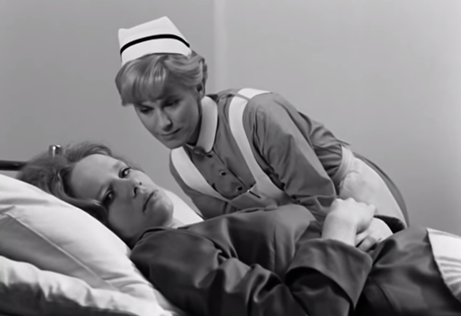
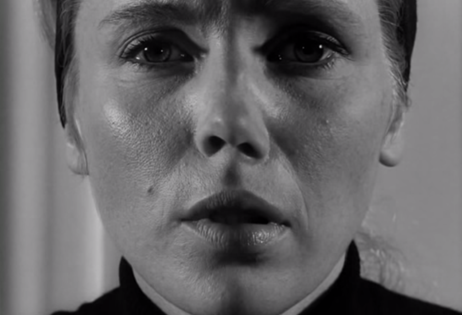
Ingmar Bergman’s Persona got me thinking. About what I’m not quite sure, but it did leave me confused and utterly perplexed which I suppose is a good thing. Since I am a fan of comparisons, I will go out on a limb and say I felt like I was watching the cross between L’Avventura and Repulsion. Persona is certainly befuddling psychologically and it has the crispest, most pristine black and white cinematography I have seen in a long time, courtesy of Sven Nykvist. 

The opening sequences in the hospital are noticeably minimalist with an accentuated sterile environment. The close-ups feel reminiscent of The Passion of Joan of Arc and the highly dramatic and unnerving score  sends twinges down our spine. To top it off, the takes can be excruciatingly long, focusing on an inert face or a solemn figure crouching in a doorway. Silence is just as prevalent as dialogue.

At its core, Bergman’s film is an examination of individual characters in space. Alma (Bibbi Andersson) is the young sprightly nurse who is called in to take care of catatonic actress Elisabet Vogler (Liv Ullmann). Their interactions quickly move from the plain hospital room to the seaside cottage loaned out to Mrs. Vogler for her recovery.

What begins as attendant watching over patient soon evolves into a vulnerable woman finding a silent foil to confide in. The Persona is changing. 

All of a sudden roles are reversed and when Alma discovers a letter Elisabet sent away to the administrator, things are never the same. She feels betrayed learning that the actress has been analyzing her in silence. All that’s left is bitterness and anger towards her mute companion. No words come out of her mouth. Only blank stairs and more silence. She remains strangely calm in juxtaposition with the agitated Alma who becomes more and more tormented. But it is at this point we have lost much of our grip on reality. The lines, as well as the images, are often blurred and warped.

Persona takes on some brazenly edgy topics with frankness that is often abrasive. A repeated monologue by Alma follows the discovery of a recovered photo of Elisabet’s little boy. In the sequence, Alma speaks the words on Vogler’s mind and we are forced to labor painfully over her words yet another time. In many ways, Alma becomes the stand in or understudy for the actress and the role is far from elegant.

By the time the film came to its conclusion I hardly knew what to think. It elicited powerful feelings and reactions of aching and apprehension. If nothing else Bergman certainly makes you think and his Persona is unquestionably a striking piece of cinematic art. He has the skill of riddling our minds like a Bunuel or even Godard. It’s powerful if not completely satisfying because we can never hope to fully understand it.  

4.5/5 Stars

Recollections and Flashbacks: Stories of German Heritage

How do you compare an epic shot in Africa with a hard-edged character study about a piano teacher and her pupil? The truth is, Nowhere in Africa (2001) and Four Minutes (2005) are two very different films in terms of time frame, point of view, and even tone, however both of these pieces of contemporary German cinema take a look back at the nation’s heritage in one way or another. Ultimately, both movies are fine representations of German film, because it is often very difficult to push forward culturally unless you fully acknowledge what has occurred in the past. In the case of Nowhere in Africa it is a Jewish family moving to Kenya before the outbreak of World War II. Then in contrast, the other film takes place in the present, but relates to the past through flashbacks. Both prove to work well within the context of the film and the tone which is trying to be conveyed. Thus, these differences were good because they mean there was an individuality that was created by the directors and teams behind each respective film.


The Oscar-Winning Nowhere in Africa, directed by Caroline Link is a semi-biographical film based on the recollections of Stefanie Zweig who was transposed to Kenya as a young girl with her parents in the 1930s. This makes the film not just a historical drama, since it is specifically following the recollections of someone looking back on a period in their life. Although we can assume that the protagonist is indeed remembering her childhood, the story does take place entirely in the past. As an audience we see the contrast between the harsh and prejudiced Nazi society and the peaceful beauty that seems to radiate out of Africa. They are two very different landscapes that truly shaped Regina’s adolescent years. The cinematography used to depict Nazi Germany for instance develops a dark mood through the depiction of the frosty snow-covered streets. The assumption is that this is a country that is cold towards Jews and although Regina is not old enough to know it yet her life in Africa will be much more welcoming. When the Regina and her mother arrive where her father is, their little home is situated on the sunny savannah. This is a stark difference from the harsh winters of their native land. Perhaps more noticeable than the change of climate, is the change in people and with that the mood changes as well. The African natives are depicted as generally kind, playful, and welcoming. Jettel, who has preconceived notions of other individuals, is initially guarded and callous towards the natives, because she is used to a hierarchal and racialized society. Little Regina on the other hand has a genuine openness at her young age and she embraces the people including the faithful cook Owuor. As he sensibly notes near the beginning and as they part ways, “You are wise. You must show [others] the way” (Nowhere to Africa). Paradoxically, despite the advanced age and experience of her father and mother, it is Regina who truly understands this life. She is not bogged down by racial and ethnic barriers. The first time she actually recognizes what anti-Semitism is occurs when the Jews get singled out during the recitation of the Lord’s Prayer at the school (Nowhere in Africa). It is these types of experiences back in Europe which have undoubtedly hindered her parents’ immersion into the African culture. Her mother for one is barely able to integrate into this humble lifestyle until the very end of the story. Even though Regina’s father has embraced the land of Africa, he still has very much to learn about the culture. Together the two of them struggle through a marriage that is plagued by emotional highs and lows which creates turmoil between them. Their daughter is truly the one with the “eyes and heart” like the Africans and she is the one in harmony with this new world, because the Nazis are just a distant dream to her (Nowhere in Africa). In other words, the parents and their daughter simply have different ways of viewing the world and it in turn influences how they allow history to affect them.

The angst-filled Four Minutes directed by Chris Kraus is a very different creature than its contemporary Nowhere in Africa and it is a film that looks at German heritage through a different lens entirely. The most obvious deviation is that Four Minutes is not a recollection of former memories, it is a film in the here and now. Sometimes it becomes painfully clear that we are not in Kansas anymore, or rather the 1930s Africa of the previous film. There is obviously no longer a need to flee from Fascism, but as we already know there are other problems to deal with. Prisons are hell holes, sexual abuse is a prevalent issue, and the specter of the past still hangs over some. This last instance is the situation for an elderly piano teacher named Ms. Kruger, because she was once a nurse during the Nazi regime and her past forever haunts her. She takes on the delinquent Jenny as her pupil and they have a rocky relationship to say the least. Although Jenny is much younger, she has a personal history all her own with a father who abused her and a baby who died inside of her (Four Minutes). For both of them their past experiences have shaped who they are and as a result both have become isolated social outcasts, and in many ways they were made for each other. Ms. Kruger’s past comes back through flashbacks and mundane conversations. These memories seep through in bits and pieces of her playing the organ at a hospital, perhaps spending time with her lover, maybe getting interrogated by the SS, or walking through the rubble only to find her lover dead. At first these images are very disorienting because we are not given any voiceovers as cues. However, this strategy seems to work well in this film since it suggests that these memories can come unexpectedly when she is alone and even in fits of sleep. It even comes out when Mrs. Kruger talks to people like the prison warden who she likens to her “first warden,” the “SS-Sturmbannfuhrer” during the war (Four Minutes). This is a quite outrageous and unfair comparison, but her mind always reverts back to the earlier times. In this way Jenny is good for Traude causing her to face reality. In one scene a hurt Ms. Kruger discloses her story to Jenny and then cries out, “Why do you think I’ve stayed here for 60 years.” Jenny’s answer is near perfect. Instead of showing sympathy, in her typical insensitive style she replies, “You’re a perverted freak, madam” (Four Minutes). This is so callous to be sure and yet the relationship they form causes not only Ms. Kruger but also Jenny to leave the past behind them. They share their love for music and allow it to shine through all the pain that has occurred in their lives, even if it is only for four minutes. That was enough. They proved that out of the ashes and out of the hurt beauty can still rise.

Gone Girl (2014)

b15ec-gone_girl_posterMy only advice for Gone Girl is to leave all your preconceived notions at the theater entrance because you are about to be blown out of the water. This is not the movie you were expecting–probably very few people were.
The story is based on the source novel of Gillian Flynn who also happened to be the film’s screenwriter. Behind the camera is mystery-thriller phenom David Fincher (Se7en, Zodiac) directing his two stars Ben Affleck (Argo) and Rosamund Pike (Pride and Prejudice).
From the beginning, we get a personal view into the married life of Nick and Amy Dunne. Back in 2005, the romance was just beginning to bud. Now on their 5th wedding anniversary, Amy is gone. Nick is the obvious culprit and we suspect him from the outset of the film, but why would he call in the police to search for his wife? He seems genuinely worried and befuddled by it all.
Soon the police are being taken on a treasure hunt while the whole town becomes frenzied behind the giant media carnival which is having open season on the find Amy campaign. The underlying tension of every present day sequence makes for a nerve-wracking procedural juxtaposed with the romantic journal entries of the gone girl. The race to find Amy is on with the days counting down and Nick collaborating with Detective Boney (Kim Dickens).
By this point, it is insanely difficult to catch up with the narrative because just when a conclusion seems certain a new wrinkle is inserted. There are no givens. Is Nick good? Who is Amy really? Who Knows?
Fincher’s film has one last grand ploy. It shows its hand earlier rather than later, feeding its audience one juicy twist. Far from being done, it continues to follow the fate of poor Nick and Amazing Amy. Gone Girl grows more and more uncomfortable as the days pass and not for the reason you would suspect. On the surface, life seems perfectly normal once more to the still clamoring media, but it’s not the first time that the cameras and reporters fail to see what is really going on.

This is one of the most intense dramas that has come out in years and it in many ways functions as a thriller, a black comedy, and even a satire of the media. The often grisly depictions of violence make the proceeding moments of laughter all that more uncomfortable. Fincher made thrillers before, but nothing quite like this. It’s fidget-inducing, spine-tingling, and utterly perplexing.
 
4/5 Stars

Paths of Glory (1957)

87e30-pathsofgloryposterStarring Kirk Douglas and directed by Stanley Kubrick, this war film with a twist follows a French Colonel Dax (Kirk Douglas) and his men during World War I. He is ordered to take part in a suicide mission by a general and everything soon goes awry. After they unsuccessfully go through with the mission , three of Dax’s men find themselves being court martialed as examples for supposed cowardliness. Despite a defense by Dax in court, the three men are found guilty and later executed by firing squad. This and other events cause Dax to openly question the decisions of his superiors. In a very touching final scene there seems to be a questioning of the inhumanity of war. In one of his earlier films Kubrick delivers a poignant piece.
 
4/5 Stars

Wages of Fear (1953)

2c3da-salairedelapeurr350Directed by Henri-Georges Clouzot, this international thriller stars a cast headed by Yves Montand. The film opens in a hell-hole of a town in South America where many jobless drifters spend their days. The joke is that it is really easy to get there, you just can never get out again. 

A Frenchman named Mario (Montand) is one of these vagabonds who has little to do except make eyes at a pretty girl (Vera Clouzot), and sit around the local hangout. Then a massive fire breaks out at a nearby oil field of the corrupt, American Southern Oil Company (SOC). In order to stop the devastation, the solution is to use explosions triggered by nitroglycerin. But the journey to the fields is extremely dangerous so there is the brilliant idea of finding four eager vagrants to transport two trucks of nitro on this 300-mile suicide mission. In need of a break, most of the town jumps at the opportunity. However, only four men actually get this “privilege.” 
One is Mario, another his jovial roommate Luigi, and then the closed off and menacing Bimba. The fourth man who eventually joins this trio is Jo who is an older French fellow who befriended Mario. Then, Mario and Jo leave in one vehicle followed by Bimba and Luigi with the fun just beginning. They must navigate the treacherous roads full of not only bumps but barricades and giant boulders. All the while they are worn thin physically and psychologically. 

Soon the confident Jo turns into a sickly coward, but the other three must keep on going if they want their payoff. In the end, this mission turns out to be too much for some. Eventually, Mario gets ready to return to his girl with $4,000 in toe, a deliriously happy man.
First off, when it is said that this film is a “thriller,” we are not talking about a Hollywood thriller here, with overwhelming action followed by twist after turn. What makes the Wages of Fear so powerful is the sustained intensity because every moment that the nitroglycerin is in the picture you half expect something to go wrong. As such a thriller, I almost came to expect the ending because I really do not think it could have ended any other way. In many ways, it is not simply a critique of the American oil industry, but also the American film industry, and it confidently defies both.

4.5/5 Stars

Review: American Graffiti (1973)

e38f5-americang3 The year was 1962. Cars were cool, the music was hopping, and teens were young and in love. It’s a simpler world, but it is not a world without your typical worries, especially since high school is over and college is just around the corner for some.

Curt (Richard Dreyfuss) is destined for college with a big scholarship under his belt, but he is still not convinced it’s the right fit for him.

Steve (Ron Howard) is also college bound, but he finds himself spending his last night patching things up with his girlfriend, Curt’s sister Laurie (Cindy Williams).

Their friend Toad (Charles Martin Smith) has the night of his life with Debbie (Candy Clark), leaving his puny Vespa behind after Steve’s loans his ride to the lovable geek.

Cool king of the strip John Milner (Paul Le Mat) gains an annoying co-passenger and winds up having an unorthodox but memorable night all the same.

It would be a pleasure to dive further and further into each arc, but it seems wholly unnecessary. The joy of American Graffiti is the ride it takes you on. The differing perspectives, varying experiences, and ultimately, a full realization of a certain time and place. True, I was never around in 1962, but it feels like I was. Some of Buddy Holly’s thunder has been stolen by the Beach Boys. JD (James Dean) is boss and Ozzie and Harriet can be seen on the picture tube. It goes without saying that the hottest pastimes are cruising and necking.

Understandably, George Lucas pulled from his own past love of cars and music to transport us back in time. That would have been impossible without the music that acts as the ultimate jukebox and it is pervasive wherever the night takes us. With that nostalgia comes Wolfman Jack who highlights the lightness of the age while also making a more somber cameo which contrasts with the image that he created on the radio waves.

This is a story about young adolescents, and it certainly is a comedy as life is often a comedy. There are memorable moments, fights, and times where we just need to puke. Through it all we learn a little about ourselves and those around us. Dreams can be made and re-imagined as they were for Steve and Curt. However, when it all comes down to it, each one of us has our own path we must carve an existence out of. For each individual it looked a little different. However, one of the reasons I always come back to American Graffiti is the timelessness or rather the way it so wonderfully freezes time. I feel like I’m there in the moment with these characters. I laugh, cheer, and empathize with them. Perhaps the time and place of their world differs from mine, but their worries and aspirations are universal.

No one wants to fade into the past and we all are looking for our girl in the white T-Bird. Only time will tell what actually happens. We just have to live life and see what kind of ride we get taken for.

5/5 Stars