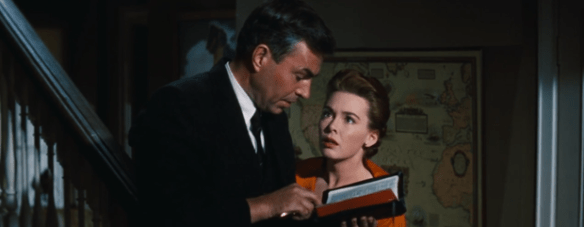
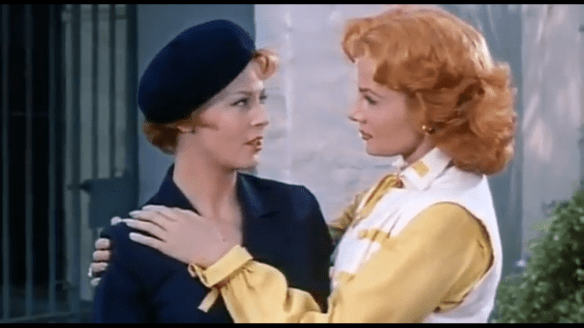
Love in The Afternoon (1957): The Wilder Touch

220px-Love_in_the_afternoon_(1957)_-_movie_poster.jpgBilly Wilder, more than any screenwriter I’ve ever known, has a knack for voiceover narration. What other novices consider a crutch to feed us information, he uses as an asset to set tone, story, and location, while offsetting the image with the spoken word.

Take the beginning of Love in The Afternoon, for instance. The voice is unmistakable. The place too. The tone, typical Wilder. We are given a tour of the Left Bank, The Right Bank, and in the in-between, where men and women can be seen in the throes of “amour,” as it were.

The presence of Maurice Chevalier is unquestionably a nod to Wilder’s hero Ernst Lubitsch who utilized the dashing Frenchmen in many of his most successful operettas. Now, although graduating to a more mature part, he nevertheless maintains a similar persona. He is suave, charming, and still embroiled in romantic trysts, albeit on the outside looking in, literally — as a highly adept private investigator.

Already in the opening sequence, although this might be the closest Wilder ever got to his idol in content, it becomes obvious their definitive styles could not be more diametrically opposed. “The Lubitsch Touch” was very much trying to put a name to an impeccable sense of visualizing comic situations with a kind of shorthand, provided the audience is in on the joke as well. Not that Lubitsch’s work with screenwriter Samson Raphaelson lacked verbal wit or that the younger filmmaker’s oeuvre lacked visual flair. Far from it.

However, Wilder’s style is predominantly devoted to the written word, imbuing the comic situations with a bite and wittiness, which under other circumstances might be stale. The beauty is one approach is not inherently better than the other and as time has been fairly good to both men, it’s needless to pick favorites (though I do love Wilder).

John McGiver, by all accounts, is in his debut, but he’s got the flustered British husband down, fully intent on finishing off his rival who has stolen away his wife from him. He called on the services of Claude Chavasse (Chevalier), and the man’s almost too successful.

Legendary international playboy extraordinaire Frank Flannagan (Gary Cooper) almost ends up shot to bits, if not for Chavasse’s own daughter. His pride and joy, Arianne (Audrey Hepburn), is currently attending a music conservatory, and her father has kept her shielded from his sordid work life. This has hardly kept her from sneaking into his files and being enraptured by the romantic trysts and fairytale romances found within his records.

The cream of the crop is Flannagan who is experienced in the ways of the world and romancing — an attractive existence she can only dream of. It tickles her fancy and so she goes to save him. It’s her good deed, to allow his life to continue as is.

One invaluable component of his seduction is the four-piece ensemble “The Gypsies” and their tune “Fascination” becomes a bit of a code word for the certain je ne sais quoi that happens between two people caught up in passion.

Billy Wilder has an equally astute ability in using music to punctuate his comedy through frenzied strings, featured in everything from Love in The Afternoon to Some Like it Hot and One, Two, Three. If those tactics don’t quite pan out, he inserts a handy bit of Americana like Mickey Mantle’s batting average.

The greatest development in this rom-com occurs when Flannagan finds himself enthralled by the peculiar girl who wound up on his balcony and saved his neck. She is so sensitive, a wisp of a girl, so different than the women he has known before. He also knows very little about her but desires to entertain her along with his other conquests.

Not to be outdone, Ariane strives to play a part worthy of his reputation. She takes on the facade of a femme fatale with rows of lovers of her own to rattle off in her dictaphone for his bemusement — completely turning the tables on him. Truthfully, she couldn’t be more in love with him, but she suspects a man of his reputation is not quick to change his womanizing ways.

Before getting to the goods, it seems necessary to mention the elephant in the room. Gary Cooper was about 56 years old when this picture came out, and Audrey Hepburn was 28. Just looking at the numbers makes one cringe a bit, and the most uncomfortable thing is how it shows up onscreen.

I do adore Audrey Hepburn. She’s so innocently sweet with the same demure eloquence and pristine diction exhibited in every one of her pictures. Crawling around in her elegant attire looking for her lost shoe is as endearing as any moment she has. It makes us appreciate her all the more. Because she is so very lovable.  And Gary Cooper is usually fine — everyone knows him as the 20th-century representation of All-American manhood — but together it does feel a bit stiff and uninspired.

Our star does his best but he was never a romantic comedy lead in the manner Cary Grant was. There you have part of his problem. Because even the two Lubitsch comedies he appeared in — Design for Living and Bluebeard’s Eighth Wife — were hardly the preeminent offerings from either man.

In some cases, one plus one does not always add up sufficiently. Although it’s the greats who often transcend such equations to give us something of exponential worth. Unfortunately, Cooper plus Hepburn is fine but never enters any purely magical, uncharted territory. Like she did with Gregory Peck or maybe even Cary Grant. It’s not simply a matter of the uncomfortable age discrepancies. It has to do with out and out compatibility.

There is another major qualm too. Namely the mammoth length of the narrative seemingly dragging leaden in the middle. Because it relies on the chemistry of our leads more than any other element or supporting character, the subsequent weaknesses become all the more evident.

However, you might remember a few years after starring with Audrey Hepburn, Cary Grant had one of his first non-romantic rolls playing matchmaker in Walk, Don’t Run. Maybe it’s a thankless job, but without the piece (seen also from Charles Coburn on occasion) you would not have the glue to hold the movie together. Here Maurice Chevalier swoops in lithely again to bring the story to its closure.

He puts the ball in Cooper’s court, to evoke an American sporting metaphor, giving the man his daughter is in love with the license to play with the dramatic irony. Their relationship is only resolved in the last possible moment. In the nick of time, Frank Flannagan saves his reputation — maybe he’s not a bad sort after all — though the final kiss is still a bit disconcerting. (What I wouldn’t give for Jack Lemmon right about now.)

We can concede Love in The Afternoon comes in for a final landing tying everything together along those two lines, with the Parisian passion shrouded by the Wilder malaise and yet supplied a touch of tearful sentimentality. In the end, Ariane and Frank spend a life sentence together of the best sort. If you’ve been in love you know what it’s like. You don’t need this movie to show you.

3.5/5 Stars

Friendly Persuasion (1956): Gary Cooper’s Quaker Clan

220px-Poster_-_Friendly_Persuasion_01The when is 1862. The where is Southern Indiana. We find ourselves in the throes of Quaker country as envisioned by novelist Jessamyn West and brought to the screen by his eminence, William Wyler.

What follows is a lovely opening gambit with a goose about as anthropomorphic as they come without completely shattering the sense of movie realism. He nips our little narrator, a Quaker lad named Jess (Richard Eyer) in the seat of the pants to punctuate our mellow tale on a comical note.

Authenticity, historical, religious, or otherwise, is not what Friendly Persuasion is concerned with. We might call it into question on any number of accounts. Still, it is packed full with enough tweeness for every “thee” uttered by the kindly Quakers who exist within the frames.

The gentle satire is of a certain warmth and unassuming candor, we cannot help but smile at because unadulterated goodness leaves behind a luster. Indeed, it is one of the finest attributes of the picture. Their matriarch (Dorothy McGuire) is zealously religious and abhors violence, but we can hardly label her unkind. Meanwhile, the man of the house (Gary Cooper) is about as genial as they come.

As with most small-town communities, about the most exciting experience you can possibly partake in is a traveling carnival. Imagine you’re a Quaker and then every stray stimulus and forthcoming attraction becomes 10 times more novel.

The ascetic folks pushing the boundaries of their normal sensibilities is played for a bit of humor. It might be dancing a jig gaily with a handsome beau, trying a hand at a musical instrument a salesman is trying to peddle, or a young boy getting the itch for gambling in the form of the ever-dubious shell game.

Cooper winds up winning a pair of sleeve holders, which look eerily similar to a pair of garters, while a stocky Quaker boy gets caught up in a wrestling match only to back down as it begins to impinge on his beliefs. He has vowed like all his brethren never to hurt anyone. From an outsider’s perspective, it is perceived as weakness and worse yet a dereliction of duty when it comes to fighting for your country. Because the Civil War is on everyone’s mind.

Friendly Persuasion becomes a diluted effort due to its length, which, while giving adequate time for many asides and quaint observations, takes away from the import of the material. It’s not quite capable of navigating the straights between social issues and jocularity — it’s never quite assured — settling for a rocky path.

The young soldier, Gard (Peter Mark Richman), is the force tying the family to the war directly as he has eyes for their daughter, while still maintaining his duty toward the Union Army. It stays in the periphery for a time. However, it’s inevitable, with the extent the war is spreading, they must make decisions of their own. This is what is being set up for each individual character, and they must react accordingly.

However, this is not solely about a message of pacifism, but in a society split up of many religious sects and political factions, it is a film with some sense of continued relevance. It even dabbles with the same dichotomy as Sergeant York (1941), having to do with the commandment entreating the adherents not to murder. The question remains: is there a semantic difference between murder and killing? More important still, is there a difference in the hearts of men. The film has to forge its own path.

Separately, Gary Cooper and Dorothy McGuire appear suited for the material as they both bring a certain sensibility and ingrained honesty to nearly every part. Side by side, the chemistry between the two of them seems relatively absent and not simply because of their mundane temperaments. It could do with the fact Coop never wanted the actress to play opposite him, to begin with. Ingrid Bergman was his choice, but she passed on it.

Anthony Perkins’ role is slight in the way all his performances seem to be, and yet their unassuming skittishness somehow imbues them with their own brand of resonance. It’s true, after only his second film, the writing on the wall said he was destined to be a great star. They weren’t wrong; his career just didn’t end up quite as people might have expected. Of course, Norman Bates was a jarring subversion of his image, simultaneously redefining (and typecasting) it for all posterity.

While it’s easy enough to think of them as being on different strata, Perkins feels like he could easily be an earlier version of Tommy Kirk from Old Yeller (1957). Where a boy is put through the gauntlet and must come to terms with harsh realities of life. Of course, McGuire would again play the maternal figure in the latter Disney production.

In this picture, she gets her moment with the homestead being overrun with Rebs. Doing her best to keep her composure through hospitality, she nevertheless lets one of them have it over the head with a broom for going after the family goose. Cooper’s own confrontation with a Rebel soldier occurs in an open clearing, serving as his final test and a bit of a case study the film puts in front of us.

He passes, and it’s not what we usually expect from Cooper. Not only were audience expectations undone, but Cooper himself seemed to think the hero he was, and played on-screen, would have normally acted differently. We can make a judgment call on whether or not he was right.

One is reminded High Noon (1952) succeeded in its storytelling with a lean running time featuring a very concrete progression of scenes. Coop was an archetypal hero, even one of the western greats in Will Kane, but we also know where we will be going when the clock strikes 12. There is not the same urgency to Friendly Persuasion — it’s much looser  — ultimately too good-natured to hammer home its themes with any amount of authority. There’s no fault in a lighter tone per se, but it could have amounted to a whole lot more providing there was tauter plotting.

3/5 Stars

The Holly and The Ivy (1952): More Than a Christmas Tune

holly and the ivy.jpgGrowing up in a household indebted to British everything, you get accustomed to certain things. Numerous everyday knickknacks and antiques imported from The U.K. Muesli Cereal in the pantry with copious amounts of English Breakfast Tea. Beatrix Potter, P.G. Wodehouse, and Postman Pat become household favorites.
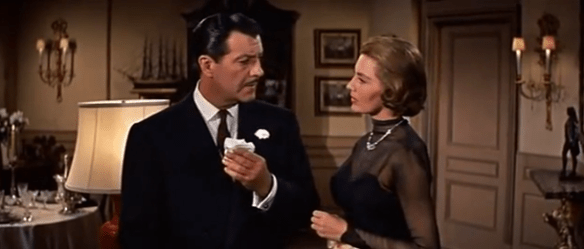
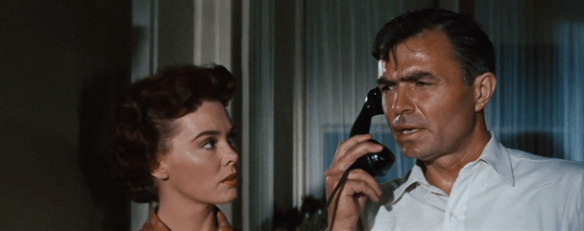
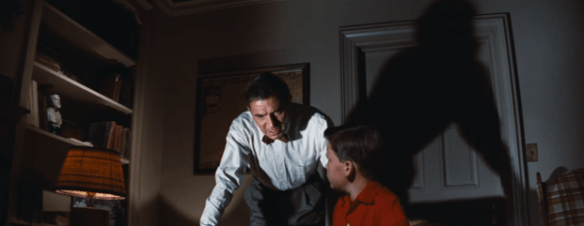
Particularly at Christmastime, this meant, no, not figgy pudding, but British Christmas Carols on record. Some of my personal favorites are probably “Sussex Carol,” “Ding Dong Merrily,” “Past Three O’Clock,” and of course, “The Holly and The Ivy.”

This is where the film gets its namesake as it follows the Gregory family during the holidays. It’s that time of year with everyone convening for Christmas at a vicarage in the cozy town of Wyndham, nestled in Norfolk.

It sounds like a delightful experience, and it gains even more prominent meaning for a lonely old matron — airy and grandiose of tone — as she’s grateful for the letter from her brother-in-law confirming she will not have to spend the holidays alone. Cue the swelling music.

At this point, if you assured me The Holly and The Ivy wasn’t a sentimental movie I probably would have disregarded you. This is before the rug is literally pulled out from under us. For now, we still have a ways to go.

Quite by chance, during the pilgrimage aboard a train, she bumps into the other aunt, the acerbic and proud Aunt Lydia a world-class misanthrope. Despite they’re differences, they do well to cancel each other out. You can only imagine what might happen if you put them with others.

Sure enough, there’s a philandering young soldier who is caught by his superior with a girl and winds up in a whole lot of hot water. However, by some curious circumstance, he’s able to worm his way out and get leave to see his family for Christmas. This rapscallion is, of course, Michael Gregory (Denholm Elliot). It is his father who runs the local vicarage in Wyndham.

Jenny Gregory (Celia Johnson) is the devoted daughter who runs her father’s home and takes care of all his affairs. She feels this is her duty while he is still working and his other sister lives away in London all but detached from the rest of her family. The main complication is the man Jenny loves is about to realize his lifelong dream of working in South America. It will be five long years and though Jenny is dying to go with him, her hands are tied.

When we finally meet Reverend Martin Gregory (Ralph Richardson), it becomes apparent he’s a bit absent-minded and quite the chatterbox. He goes on and on about his fascination with the Incas and their ingenuity in using Guano (bird droppings). He, of course, knows nothing about his daughter’s situation because no one has told him anything and so he remains oblivious going off to view the nativity play at his church (a fine precursor to Charlie Brown’s Christmas).

This is one of the great tragedies running through the story. The reverend himself bemoans the fact parsons are set apart and isolated because of their vocation. There is an inherent awkwardness going out into the world as a man of the cloth. People don’t want you around. It makes them feel uncomfortable and yet in the same breath, they hold you to a different standard because you are meant to represent religious piety for all.

But there is also an undercurrent in his home. His children never tell him how they are really doing. They equivocate and keep things hidden in order to not upset him or receive his scorn. Because that is how they see him. He is a killjoy, someone put in their life to chide them and scold them for every one of their individual sins. The fear is if he actually knew what his children were like, he would be unbearable. It certainly is a problem in conservative environments where exteriors don’t mesh with interior issues.

It comes to a head when the sister Margaret straggles in late to the festivities. They made up a lie about why she wouldn’t be able to come and yet the real truth is she did not want to see her father. But the wounds and the hesitance run deeper still. She is an alcoholic and something else happened to her. Those who love her, note she crackles like ice — a frozen ice queen out of a Hans Christian Andersen story.

Reverend Gregory has reason to be dismayed that Christmas in merry ol’ England is now ruled by the boars and the retail traders who have gotten hold of the season. He laments, “It’s all eating and drinking and giving each other nicknacks…No one remembers Jesus Christ.” It teeters along the precipice of righteous indignation.

Because he looks at the same people and sees how little use they seem to have for him even when he sees, what he deems to be, great need. He’s there to marry and bury them only. His church is only an architectural center, not a spiritual one. This right is reserved for the local movie house with all its enticing bells and whistles.

While he might have a point, he is just as implicated in the problem; he has exasperated society. The case study is found in his family. We see it in so many cases. The religious figure is measured by a separate set of principles and yet because of what we place on them, they feel distant and unreachable. They make us feel dirty and ashamed of our improprieties.

David blasts his father telling him, “You can’t be told the truth. That’s the trouble!” It’s films such as these that make me realize how difficult it would be to be a religious leader. Likewise, it’s just as difficult to have to live life alongside them — at least in a case like this.

Where “every conversation goes back to the creation of the world” and our only way to keep up appearances is lies and concealment — a life of false pretenses just in time for the holidays. The holidays only serve to magnify the tensions brooding for so long.

Because sons find the faith and fairy stories antiquated. Fathers are vexed that everything must be seen and touched in this generation before it can be believed (Can you touch the wind?)

The beauty of the exploration is in how both sides are given some credence. How can parsons expect to be told the truth when one can’t even talk to them like ordinary human beings? How can common, everyday people who make mistakes be free from guilt and shame when the most common judgments are full of condemnation?

While not of the same technical prowess, it nevertheless reminded me of Ordet another film based on a stage play with deep recesses of spirituality. There are a myriad of relationships undone by doubts and perceived areas of incompatibility. In fact, it falls somewhere between Ordet and Calvary because it has a dose of empathy for both the parson and his family.

The miracles revealed are ultimately conversational and sweet, reviving family relationships and salvaging the season through reconciliation. Wounds and secrets so long harbored and festering are finally allowed into the light. The extraordinary thing is, far from sowing more discord, the honesty gives way to the first true peace they’ve had for years.

My only qualm is I rather am curious to hear Ralph Richardson’s sermon. Like David Niven in The Bishop’s Wife, there’s a sense it might have been something magical and deeply impactful to behold. More powerful still, his words live on in the imagination.

The ending comes rapidly but it is reassuring to get one final image of the church with the newly minted couple destined to be together — most everything restored. Because filling in the ending, especially under such jocund circumstances, is often one of the greatest gifts that can be extended to the audience.

4/5 Stars

Party Girl (1958): Sumptuous Visuals for a So-So Gangster Flick

party girl 1.png

Party Girl is yet another sumptuous Metrocolor feast from Nicholas Ray though the circumstances were admittedly less conducive for another masterpiece. In need of money, Ray took the job but instead getting his accustomed input on the script, he found himself being partnered with a producer he had no history with (Joe Pasternak) and two musical numbers he had little control over.

For someone like Ray, used to taking such middlebrow fare and making it inherently more interesting, the only plane he could really play on was the visual. So Party Girl is a minor success continuing his forays in expressionistic color schemes.

The film sets the scene in 1930s Chicago falling a few tiers under the Warner Bros. gangster flicks of the 30s or a hilarious homage like Some Like it Hot (1959). In this particular scenario, worldly-wise dancing girl Vicky Gaye (Cyd Charisse) is always ready to impart wisdom, and she’s too tough to get hurt by love.

While it can’t necessarily keep company with Ray’s most captivating works in terms of personified emotion or intensity, there are still elements to be thoroughly enjoyed. Cyd Charisse for one is as sultry as ever and if it weren’t for their almost abrupt nature, crammed into the story as they are, her two dance numbers do immense justice to her iconically svelte form. She’s still extraordinary.

Robert Taylor for another is compelling as a defender of criminals, capable of getting mobsters off the hook and willingly working for a big-time kingpin named Rico (Lee J. Cobb). Tommy Farrell’s major calling card is a debilitating limp that forces him to use a cane. But it never feels like a mere gimmick.

Ray consequently praised Taylor’s commitment to the role, gladly studying up on his part so he could convincingly play a cripple. The director even said the older man was on par with any of the Method adherents he had ever had the pleasure of working with. There you have commendation enough.

In trying to categorize Party Girl, you quickly realize it’s a bit of a disconcerting hybrid of a film. Some might say discombobulating more than anything, as it plays at the crossroads of different genres, not to mention different eras.

Taylor and Charisse were purportedly the final two contract players signed to MGM in 1958 and so more than anything, the picture was a justified excuse to put them to use before their contracts expired. But all things considered, their chemistry isn’t bad per se, and they both look lovely under the gaze of the camera.

Meanwhile, Lee J. Cobb is capable as a thinly-veiled Al Capone facsimile. He’s not uninteresting, but the part seems to have nothing surprising to boast. By the finale, the story has run its course and most of the air has left its sails. Aesthetically, the harsh colors somehow don’t play against onslaughts of gunfire the way black and white did in the days of yore.

Maybe unfairly it’s easy to criticize the film because it doesn’t quite stand up to the gangster flicks of old and yet, there’s no way to call it a full-fledged musical. But for any aficionados of the director or his starring players, they might be reason enough to revisit this minor cult favorite. Be assured, it’s by no means a cardboard, cookie cutter piece of work.

3/5 Stars

Bigger Than Life (1956): Nicholas Ray and George Mason Fit The Bill

bigger than life 1.png

James Mason gleaned the idea for Bigger Than Life from a contemporary article featured in The New Yorker by a medical writer named Berton Roueché. He detailed the side effects of the drug cortisone featured in real-life horror stories.

The title is certainly far from a misnomer and James Mason gives a performance to fill up the expanses of the screen bursting off it with furious abandon in all sorts of unwonted ways.

If my memory serves me correctly, there’s a shot at the entrance of the school where he’s being dropped off by his wife (Barbara Rush) who demurs that he’s always been 10 feet tall to her. The shot following has to be about the lowest angle conceivable with Mason positively towering over us until he walks forward and things become normalized.

It’s almost playful and still a disconcerting manipulation of the typical visual field. It’s indicative of much of the film. On the top layer, it’s the portrait of 1950s suburbia seen over and over again. There’s even an inadvertent connection to the quintessential nuclear family thanks to a pint-sized cameo from Jerry Mathers. But there’s also something pernicious gnawing away at our protagonist.

The film readily brings back the palette of Rebel Without a Cause we know and love, using the up-and-coming widescreen Cinemascope format, typifying the luscious productions of its era.

Ed Avery (James Mason) is a school teacher, one of those shining beacons of pedagogy and some things certainly have not changed. For such a noble profession, he can’t claim to be affluent. In fact, he’s moonlighting a couple nights a week in a cabbie service to make a bit more money. His wife Lou has a sneaking suspicion he might be cheating but how could he? He’s an utter angel.

His relationship with his best friend is borne in an introductory shot. Wally is played by none other than Walter Matthau. If that’s not enough, we meet him in a school corridor with a catcher’s mask strapped over his head and baseball gear filling up his hands. It’s a fairly slight part but as Matthau had a lengthy pedigree ahead of him, it’s a satisfying morsel to start.

Meanwhile, Barbara Rush gets few laurels as an actress, but she works handily as the loving spouse who Ed returns home to every evening. It feels strangely ironic because I almost unconsciously traced the line between Magnificent Obsession. It lies in their deep abiding roots in medical melodrama.  The first features Rush as a grown daughter and now she has progressed to a maternal figure, but the trauma remains constant.

bigger than life 3.png

Because, as it turns out, Avery is a fairly sick man with the clock ticking away on his life. Thank goodness there’s a miracle drug, “Cortisone,” which while still widely unknown has been used with some success on such cases as his. At first, the unassuming pills seem to be doing the trick.

Riding a generous streak, he takes his wife out to a dress shop to buy her the finest things and then gets his son a shiny new bicycle. James Mason is a riot in the store leaving his family speechless. He’s walking on cloud nine. Positively the picture of good health and yet every bit of heightened euphoria is a hint of something far more ruinous working underneath the surface.

Because the changes are no longer comical or imperceptible for that matter. It comes to tossing the football in the living room chiding his son’s lack of ability and resolve. There are unwarranted mood swings to follow and the broken shards of a mirror blatantly suggest what is to come.

Back to school night is highlighted by an uncharacteristic rant about the woes of childhood and the claptrap of modern education, which has parents in a huff. It’s the most recent sign of coming attractions. Megalomania begins to overtake him with ensuing ravings about new missions and leaving matrimonial shackles behind with increasingly radicalized rhetoric injected with delusions of grandeur.

Now his only resolve is to rear his son in the pursuit of self-efficacy as he begins to enact a dictatorial behavior over all his domain, berating a wayward milkman, turning an uninterested eye on food, sleep, feelings, or anything else that might get in his way. To get psychological, he blatantly disregards Maslow’s hierarchy of needs leaping straight to the pinnacle.

Meanwhile, his wife is scared stiff. Worried for her husband’s well-being as much as she is for her boy. And yet, if it gets around about mental trouble in the family, there will be no reprieve and so she tries to weather the storm. It becomes a suburban horror tiptoeing along an impossibly sickening tightrope. You couldn’t contrive something more calamitous if you tried.

Would you cope living with an utter tyrant if it meant your spouse and father could go on living? If pain was the only issue, then the answer seems ridiculously simple, but sometimes those conundrums are the most devastating to crack. In fact, it makes me sick in the stomach watching the mental breakdown exacerbate.

bigger than life 4.png

Overwhelmed by his psychosis, Ed begins spouting off scripture, one moment contemptuously, the next clearly intent on following Abraham’s lead by sacrificing his son without a second thought, twisting the words into another perverse commitment. He states his sentiments quite bluntly in one sequence as his wife hopelessly pleads in favor of compassion, “God was wrong.”

Turgid melodramas grow tiresome by the minute, and yet that fails to be the case when a film has far more to offer us whether it be artistry, irony, or social commentary. Equally compelling is a stirring dramatic situation at the core of Bigger Than Life.

Like the best films of Douglas Sirk, Nicholas Ray is able to pull off the histrionics of such a derided mode of filmmaking and allow it to remain enduringly interesting — even resonant today — to the extent possible. Far from wearing it thin, the passage of time makes it seem more horrifying by the hour.

However, as comes with the territory of such ludicrous dramaturgy, it easily becomes a hit or miss proposition. It will go too far for some and for others just far enough to make it compelling. I think I fall in the latter category because this is not just a sitcom episode. It surpasses those rhythms for something more substantial.

In its final moments, Bigger Than Life morphs into a frenzied Hitchcock thriller in a weird, insane way as we watch a banister snap like matchwood in the midst of chaos and a deranged man is caught in a frantic confrontation with his best friend.

And as inauspiciously as it began, it comes to an end like the lingering remnants of a bad dream, resolved and forgotten just as quickly. The status quo falls back into place in the culminating shot and wife and son reaffirm faith in their family unit, cradled in the loving arms of the man of the house.

James Mason is generally remembered as a suave villain, but he proves his merits equally so as a family man gone off the rails. His performance seamlessly hits all these beats that are simultaneously heightened, while still ringing with some note of inner truth. He is a tragic hero of the post-war, suburban age.

All of a sudden, evil comes not from within man himself but from outside stimuli. Though one could easily infer that such behavior indicates the perversity lying dormant, just waiting to be unleashed. It simply takes certain chemical triggers to send him hurtling back toward his darkest inclinations. Regardless, it’s a terrifying portrait of instability in technicolor. Often real-world nightmares are the worst of all.

4.5/5 Stars

The Lusty Men (1952): Nicholas Ray Transcends His Material Again

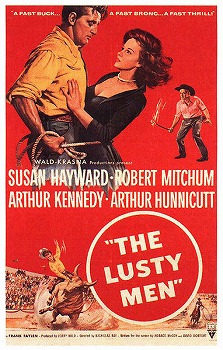
TheLustyMen7.jpgThe connotation of the film’s lurid title feels slightly deceptive. Because The Lusty Men might have basic elements of men who desire after women but it’s fairly restrained in this regard. At least more than I initially conceived. However, it is a film characterized by a zeal or a lust for life. The male protagonists are intent or were formerly driven in the pursuit of high living with all the benefit such a life affords.
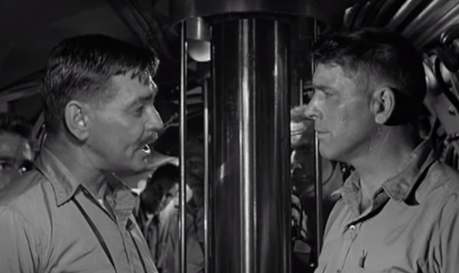
We recognize this outright from a parade rolling down main street and then “The Wildest Show on Earth” that features the finest rodeo entertainment the world over. It’s high stakes and highly dangerous but also invariably lucrative. Many men are drawn to it greedily like moths to a flame.

Nicholas Ray sets up a high-octane environment of thrills that proves hardly as straightforward as one might imagine. Because the first man we meet is Jeff McCloud (Robert Mitchum), a lifelong rodeo man who, after his latest throw, has decided to take a break and leave the tantalizing life behind while he’s ahead. It’s a young man’s dream, but only the veterans live to make it a profession.

Coming from restless stock, he returns to his dilapidated childhood home now owned by an old homesteader (Burt Mustin) only to find the old tin can he buried two coins in when he was a kid. They’re still there and they’re also the only true assets he has to his name. Instantly we have a read on him. He has no possessions, a drifter, laconic in speech. You know the type and better yet you know exactly who he is with Robert Mitchum playing him — his true bread and butter.

He meets a pair of newlyweds, the Merritts, and manages to grab a job as a ranch hand. The husband Wes (Arthur Kennedy) is taken with the aura of the older man who has quite the reputation. For the time, Jeff takes it in stride.

It seems every film I see Susan Hayward in has managed to slip past me for a long time. But she fills the screen with an undoubted strength of her own. There’s something about her upper lip that I can’t quite put my finger on, but together with her near imperious gaze, you have a face capable of supreme expressiveness. She and McCloud both latched on to something. For her its a husband striving after what she wants. For him, its a man who can help him. It’s reciprocal.

This dynamic makes Kennedy’s character the most obvious and least interesting though, like Rancho Notorious, he’s meant to be playing a young man and manages to imbue the part with a cocky ebullience. He’s intent on a certain life and even if he seems a straight enough arrow, his way gets clouded by these aspirations.

We received glimpses early on, but The Lusty Men is also the most visceral and intensive rodeo movie I can recall. What follows is an ugly evolution in our characters; Wes most obviously. The distinction being, everything he is happens right before our eyes as he calls on the expertise of McCloud to help him conquer the rodeo circuit.

Everything Jeff exists as finds its origins outside of the frame, based on years and years as a rider with an unspoken history we can never completely comprehend. Mitchum carries the onus of time well, and it makes him continually intriguing.

We can’t quite get a line on him. He seems to go around as nice as you please. Maybe a fresh word or two but that’s just his personality (Hasta Luego. That’s Spanish for, “If the shower don’t work call McCloud”). There’s hardly an advance and yet you half expect him to be working a David & Bathsheba angle, except a battlefield has become a rodeo. He keeps the cards close until the last possible moment.

There’s a pool of weathered supporting players he reunites with including the broken but resolutely chipper Arthur Hunnicut, who maintains a taste for the rodeo even though he’s long since left the corral behind. Then, you have the likes of Al (Frank Faylen) and Rosemary, a match made in heaven, as they have all but resigned themselves to the life. It might as well be in their blood. The beauty is how their characters are almost contours but we want to know them more than we have the chance to.

Whenever you have a group of people who have bought into some sort of madness whether the stage, aviation, rodeo, or anything else, there is a near-insane amount of devotion put into the lifestyle. Look at Stage Door, Only Angels Have Ways, or West Side Story to see have a certain mentality easily pervades the world to create a collective consciousness of sorts.

This lifestyle becomes the status quo, and they have become so used to it and callous to the hardship, any trauma can hardly shake them out of it. Not unsurprisingly, such a dangerous profession comes with deadly repercussions. These hardships are what shake a person out of their reverie to decry the hazards at hand. It seems inconsequential to document them here because you can probably imagine them already.

With every person, it becomes a matter of weighing the pros and cons. There’s the choice of getting out of the cycle and ridding yourself of the dangers or otherwise willingly submitting yourself to the consequences.  Mitchum is such a curious individual because he seems to have made his peace and yet a woman he’s only pursuing half-heartedly leads him to take uncharacteristic risks.

But far from being regretful, in the end, he takes the tragedy thrust upon him with his usual coolness and casual indifference. Bitterness is not in his vocabulary, and he goes out just as he came into the film, aloof and yet somehow still showing a certain vulnerability. Because he allows affection to best him. There’s nothing shameful in that.

Rather than let the same lifestyle savage their souls, the Merritts get away too. Wes is shaken free of his bull-headedness, realizing in an instant there are far more important things than fast cash. What springs to mind are the care of a loving wife and the ability to grow old and gray together without the fear of constant peril.

The resolution is almost expected, but the actors shine as Nicholas Ray guides us through yet another outsider’s tale infused with authentic emotional longing. The film is constantly shifting between what we might easily call tropes or commonalities until it comes away with something different. It helps when you have three leading stars more than capable of playing the scenes with resonance, emoting when its called for and providing their characters with a greater tangibility.  Ray is one of those directors who continually manages to transcend his material.

The Lusty Men predates many similar films that spring to mind from Giant (1956) to The Misfits (1961) and even Hud (1963). Each one details a modern depiction of the West — having totally relinquished its glorious image and succumbed to real-world issues of aging, isolation, and decay. If you can believe it, The Lusty Men just might be the least ostentatious of them all, but it’s equally ripe for rediscovery.

4/5 Stars

Run Silent, Run Deep (1958): A Streamlined Submarine Drama

run silent run deep 1.png

Run Silent, Run Deep features what amounts to a cold open, set in the Bungo Straits, near the coast of Japan in 1942. The foreboding sonar-infused score by Franz Waxman suggests this will be a no-nonsense war drama and sure enough, within the first 5 minutes, a submarine commanded by one P.J. Richardson (Clark Gable) has been sunk in its mission to destroy an enemy ship, leading to the capsizing of the entire crew.

As Richardson looks back at his receding enemy, we see the film’s objective right before us. He is bent on revenge. Given the situation, this is not a film so much about survival but returning to finish a job no matter the circumstances, dangers, or counter-orders standing in the way.

After a short leave of action, Richardson talks his way into another command, this time taking over from Jim Bledsoe (Burt Lancaster) who has already formed a close-knit rapport with his men. They don’t look too kindly on a new man taking over and Bledsoe broaches the subject bluntly with his new superior.

Richardson is hardly going to be dissuaded by a minor thorn in his side and his new crew begrudgingly take to the grueling regiment of drills he has them on. No one is looking to make any friends. This is hardly a film about buddy, buddy or camaraderie. There isn’t time. The one thing the commander does instill in them is discipline and well-oiled efficiency. It’s probably the greatest gift he can give them based on the circumstances.

The stakes are obvious as the death trap, Area 7, has led to the loss of four separate Allied subs, including Richardson’s previous command. What the story devolves into is a fairly straightforward WWII drama which is nevertheless riddled with tension as they knowingly enter perilous waters.

It’s true a submarine serves as an impeccable locale because its very form functions in constraining the action and ratcheting up emotions. There is no release valve and all these crewmen are literally submerged underwater for hours at a time. If that isn’t nerve-wracking I’m not sure what else qualifies.

Combine this environment with men who are already in tight quarters only to become more contentious over a major distaste in their commanding officer. It’s easy to envision him as a modern-day Captain Ahab. His white whale is the infamous Japanese Akikaze, Bungo Charlie, that he’s already has a deadly history with. The seafaring setting and power dynamics also hint at the traditions of The Mutiny on The Bounty though the story foregoes this exact demarcation.

While there are few flourishes or subsequent surprises from director Robert Wise’s film, there’s no question in labeling Run Silent, Run Deep an immersive experience, even for such a streamlined endeavor. In fact, that more than anything plays to its advantage. This allows it to be compact actioner extremely aware of its outcomes and not content until its mission has been accomplished. While it does not leave a great deal of leeway in the area of character development, our cast is a varied and compelling ensemble.

Obviously, the central figureheads are Gable and Lancaster, two hard-bitten battlers who are also consequently, far too old to be playing their parts. But this is Hollywood, after all, so it’s easy enough to make allowances when you’re getting top tier talent.

However,  surround them with the likes of Jack Warden, Brad Dexter, Don Rickles (in his film debut), and Lancaster’s long-time collaborator Nick Cravat, and you have something quite engaging.

The key to the success of both the mission and the film is that it ends as quickly as it begins. It gets in and gets out with striking precision, taking little time to rest too long on its laurels. Between the flurry of malfunctioning torpedoes, the barrage of enemy depth charges, and bombs raining from up above, there is plenty of flack to provide antagonistic interference. By the end, it seems a miracle our men get through at all but of course, it’s not without a toll, both physically and mentally.

Because even when you cannot see the enemy in the flesh, the capability to do harm hardly slackens. In some cases, it proves even worse. What is easier to exterminate, an enemy who lacks any type of form or personage or one that is living and breathing? In this regard, Wise’s picture is sterile and impersonal. It’s not so much a flaw as it is a sobering reality.

3.5/5 Stars

I Want to Live! (1958): The Anomaly of Barbara Graham

220px-I_Want_to_Live!I Want to Live! calls upon the words of two men of repute to make an ethos appeal to the audience. The first quotation is plucked from Albert Camus. I’m not sure what the context actually was but the excerpt reads, “What good are films if they do not make us face the realities of our time.” This is followed up by some very official-looking script signed by Edward S. Montgomery, Pulitzer Prize winner, who confirms this is a factual story based on his own journalism and the personal letters of one Barbara Graham.
So the film asserts its authenticity right off the bat before even showing an image. It’s obviously hewn out of the tradition of the real crime docudramas popular at the time. And yet with any type of project, perhaps especially those that make such a claim, we must still call details into question and take them with a grain of salt.

Director Robert Wise is at it again handily developing an environment that feels lived in, opening with dutch angles to give us a slightly disconcerting introduction to a jazzy hole-in-the-wall joint. The crime maestro is at his best when he is working with locales he can play around with and in this case, the world gives way to character.

Meeting Susan Hayward in this picture is reminiscent of meeting Burt Lancaster’s Swede in The Killers. They’re in an upper room, a bedroom, cloaked in shadow and we know they have a tragic end in sight. Where we find them is almost as important as the characters themselves because it acts as an extension of who they are.

Graham is a different type of flawed figure who we find not in a lover’s room but some random bimbo. Though the word is never said outright, she’s undoubtedly a prostitute with police looking to nab her. This is our initial image of her, and it is telling.

However, the rest of her story is sutured together with whirling whip pans and mementos from photos to newspaper clippings to TV coverage, providing snapshots of a life through intermittent scenes. What we are given is admittedly jarring and not altogether cohesive, though one could easily concede no life is ever straightforward to piece together. So it is with this one.

Before seeing either film, I always mentally confused Caged and I Want to Live! because of the superficial similarity of women criminals behind bars. However, there is a substantial difference in Eleanor Parker who is able to lead her character through a visible transformation. With Hayward its more about reconciling and portraying the varying entities of this befuddling human being: Barbara Graham.

Soon she is styled as “Bloody Babs” by the media, initially lambasting her as a brazen killer with a past full of criminal activity and impropriety. But at least one man, Ed Montgomery (Simon Oakland), begins to change his tune and crusades tirelessly for her innocence. His help, along with the support of a benevolent psychologist (Theodore Bikel), just might turn the tide. Maybe…

Again, the most enjoyable aspect seems to be the mimetic world that has been evoked because to recall the Camus quote, “Here is the reality of our time, and we have no right to be ignorant of it. The day will come when such documents will seem to us to refer to prehistoric times.”

The people (including a young Gavin MacLeod), their clothing, the interiors of rooms, the press, and the mechanisms of the criminal justice system, are all touchstones of some kind. There’s always something we can learn from each even as we must be suspect of how authentic they really are.

Thus, the real star is the direction, featuring some of the most visual flourishes I recall in a Wise picture, further complemented by the jazzy scoring of Johnny Mandel. But its all elemental in creating a backdrop for the story.  Black & White serves Wise particularly well.

The final act initially stalls because the story is played from a waiting game angle, trying to ratchet the tension, although the ending is an already foregone conclusion. Everyone is waiting around. I would have thought the ending would go to Susan Hayward. Because until those foreboding final moments, her character hardly feels established even after all we have witnessed. But sometimes one scene can be galvanizing and emblematic of an entire picture.

However, this is not a boisterous exclamation point but an oddly entrancing death scene and this seemingly purposeful decision proves consistent with most of the picture. It foregoes dramatic and visual hyperbole for leaner more understated beats that bear markers of truthfulness. In the end, life doesn’t go out with an explosion but a drop off into somber nothingness.

With such a conclusion we certainly feel sorry for Barbara Graham. However, I’m not sure if we can completely empathize with her. Nevertheless, like any such high stakes story, I Want to Live! calls into question the American justice system, the death penalty, and our understanding of guilt in this country. So was Graham guilty or innocent? I would have to do more outside research to corroborate the facts though the film implies its own position quite overtly.

Regardless, maybe the picture is about larger themes altogether. Issues that go deeper still into the very fabric of how we enact justice, how we perceive it in the media, and even socially, how certain people seem to get raked over the coals.

Why Barbara Graham? Why not someone else? Why like this? It’s an issue that goes beyond superficial terms like good or bad. As a people, I think we are fascinated by individuals who are layered anomalies not to be understood with a cursory glance. Barbara Graham seems like such a person. We cannot write her off with a convenient stereotype.

3.5/5 Stars

Somebody Up Their Likes Me (1956): Starring Paul Newman and Pier Angeli

somebody up there likes me 3

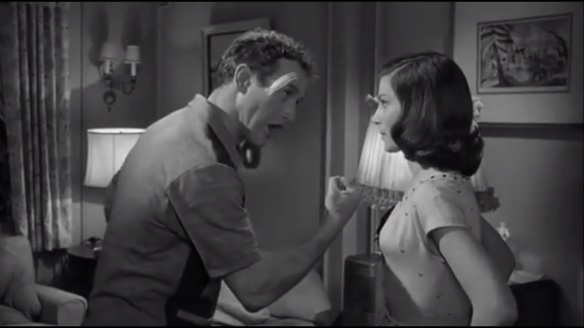
Here is the first of two purported instances where Paul Newman wound up taking on roles earmarked for the recently deceased James Dean. Dean even had a fairly visible relationship with Pier Angeli who would have been his co-star. At one point, there was even talk of marriage swirling around though Angeli’s mother disapproved of Dean. Because it’s true he was “the rebel,” and she the angelic ingenue. It served them both well on screen, and the saintly image works well opposite Newman here.

While Dean had the angst and a sturdy enough frame to have at Rock Hudson in Giant, there’s no doubt his slight build doesn’t seem like the physique of a boxer. In this physical regard alone Newman might have proved to be a fine choice and in consideration of the performance itself, he showcases a glint of many of the traits that would turn him into a beloved box office attraction.

Watching his big break in the context of his illustrious career is gratifying for just those reasons. Because we know the successes waiting for him. Somebody Up There Likes Me finally gave him a shot to put himself out there so people could take note.

Due to the aura of The Sound of Music and to a lesser extent West Side Story, they are two films that effectively misrepresent the career of director Robert Wise. At the very least, they can be deceptive.

True, West Side Story gives us a glimpse into gangland New York, albeit touched up in vibrant color. But we only need look to Wise’s early noir works, a pedigree including the boxing classic The Set-Up; or even Odds Against Tomorrow, to see what he was capable of in terms of grungy atmospherics. This one occupies a seedy dive world akin to something like On The Waterfront (1954) or even Love with a Proper Stranger (1963).

Coincidentally, Steve McQueen has an early part in this one and Sal Mineo, a Dean compatriot leftover from Rebel Without a Cause, gives a crucial supporting role. Because Rocky incurs a childhood of abuse only to grow up as a hoodlum on the streets terrorizing the neighborhood with his band of cronies. Romolo (Sal Mineo) is the most important because they have the same life experience but wind up in completely different stratospheres.

It does take Rocky a long time though. He lands himself in a reformatory and gets thrown around the social reform structures implemented by society, all to no avail. He gets upgraded to a Penitentiary and still, his brutish intensity is never cowed.

Picking a fight with everyone big or small. It doesn’t matter if they’ve got stripes on their shoulders, suits, college educations, or police badges in their pockets. He’s ready and willing to wail on anyone. To say he has a blatant disregard for rules and authority is a gross understatement.  It’s part of what makes Newman’s turn entertaining in the earliest segments.

We wonder when he’s ever going to hit an upswing as he’s on the lamb, then dishonorably discharged, and awarded a stint at Leavenworth. Could that be a bit of Luke Jackson that we see?

somebody up there likes me 1

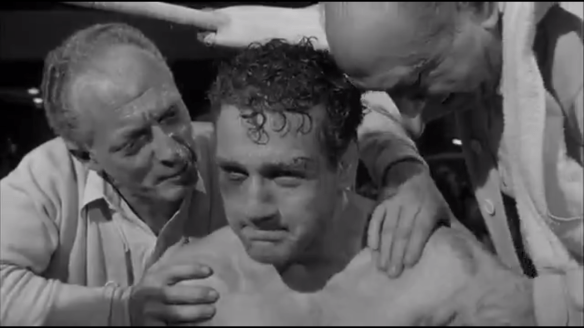
Even as he reluctantly agrees to jump in the ring for a promoter (Everett Sloane) to earn some desperately needed cash, he never has a taste for fighting. It seems like for once in his life the newly minted Rocky Graziano (like the wine) is looking to get away from fighting. And yet over time, he is convinced to train and to channel his hate into his right hand, like a charge of dynamite, so it can benefit him in the confines of the ring.

Also, about this time, he is introduced to his sister’s friend Norma, a sweet, reticent girl who is taken with romantic movies, butterfly kisses, and nice words spoken out of a place of kindness. Rocky’s entire upbringing has left him with the impression “love is for the birds.” They shouldn’t be together and yet, for some unexplainable reason, they are.

Soon, with the help of Irving (Sloane), Rocky has made a name for himself as the most popular Italian in the world, aside from Frank Sinatra and Michelangelo. Still, Norma can’t stand his fighting believing it is all, “meanness and blood and ignorance.”

On the surface, it seems true. However, Graziano is a curious force. So brutal and antagonistic and yet in his own gruff way, he’s so capable of love. He loves his mother (Eileen Heckert) dearly even as he tears her apart. He loves his wife, never laying a hand on her. He only has tenderness in his heart for them.

Still, in the ring he is ruthless and outside it, he’s plagued by fixers (Robert Loggia in a slimy debut) and a horde of journalists looking to smear his past all over the tabloids.

The climactic bout versus incumbent champion Tony Zale personifies how chaotically communal boxing is. An assortment of POV shots with punches aimed right at the camera, a flurry of edits, and a boisterous brand of intimacy makes us feel like we’re living right inside the ring. The beauty of it has to be the fact Rocky seems like he’s losing the entire time. Sometimes that doesn’t matter. Grit alone sustains. It’s a delightful finishing point, but the film is not won in the ring.

somebody up there likes me 2

I’m trying to come up with concrete justifications for why I enjoyed this experience so much. A few have been offered up but on the whole, I’m at a loss for words. Certainly Wise is no stranger to this street corner aesthetic, which he develops with such assured conviction, but the beats of the story are nothing new. They come to be expected; what takes you by pleasant surprise in such a context is a performance or a bit of dialogue from Ernest Lehman.

Because the boxing ring is only ever an arena for the life outside the ropes to play out and thankfully a rapport is built with the characters that comes to more than a few fights to prove oneself. In fact, until the final showdown in the ring, most of what we know about Rocky occurs outside of the ring with the gloves off.

Newman invests himself in the part readily showing a young punk evolve into a broken man with hatred in his blood, delinquency, and rage at the core of his being. Yet by some miracle, he’s able to gain a life and a beautiful girl to bless him with an existence worth living. Yes, he wins a big fight in the end, but we get the sense we leave him on a firm foundation. When the inevitable comes and he’s taken down, there’s still something and someone to return home to. Until that day he can relish what he was bred to do. But it’s not his all.

Then, of course, there’s Pier Angeli who is a minor revelation not because of any amount of flamboyance but the exact opposite. She is gifted with a grace and a poise that is positively enthralling. Her voice, quiet even hushed, flows with a peacefulness — an unassuming dignity even — so very unlike the ravishing vivacity of our Italian movie star archetypes. She is a discovery to be sure though her life was unfortunately cut tragically short. This role might be the finest testament to her presence as a performer.

It’s admittedly almost hokey witnessing Rocky riding down a cheering street, staring into the heavens noting exuberantly, “Somebody up there likes me.” Certainly, that’s true, but his wife reminds him, “Someone down here does too.” That’s how he knows The Big Man Upstairs was looking after him, putting such a calming force into the turbulence of his own life.  The scene is so easy to forgive because we’ve witnessed how very true it is.

This boxing biopic would be something of lesser note without Paul Newman’s star-making turn and what is an anti-hero without a companion to salvage their brokenness and turn them into the best person that they can be? Accordingly, comparable praise must be heaped on Angeli too.

4/5 Stars

Classic Movie Beginner’s Guide: 1950s Film Noir

We follow up last week’s guide to classic film noir of the 1940s by continuing into the 1950s with 4 more entries. With the new decade came new progressions in realism, location shooting, and heightened character psychology.

As Paul Schrader wrote, the noir hero started to “go bananas.” What remained were graft, corruption, and the depravity of the human heart. True, gumshoes and femme fatales were never cut-and-dry. Now they were even less so. Enjoy!

Gun Crazy (1950)

Image result for gun crazy 1950

B movies form the backbone of this often down and dirty genre. There are few better than Joseph H. Lewis’s Gun Crazy an exercise in inventive economy. It tells the tale of a romance-fueled crime spree with verve and violent passion. Although mostly forgotten today, John Dall and Peggy Cummins do a fine rendition as a latter-day incarnation of Bonnie and Clyde

The Big Heat (1953)

Image result for The Big Heat

It’s a cops and robbers procedural with Glenn Ford as the straight-arrow family man going against the local mob. What Fritz Lang does is boil it over with newfound vindictiveness. We soon find out the good guys aren’t always untarnished nor the noir dames (Gloria Grahame) always the villains. True to form, Lee Marvin plays an incorrigible heavy.

The Killing (1956)

Image result for the killing 1956

It’s early Stanley Kubrick so some might find it a stark contrast to his later works. Regardless, it’s one of the finest heist films of all-time. Because the best-laid plans — even the most meticulous — always have a habit of going awry. The set-up is gritty and no-nonsense with a cast headed by a fitting protagonist: Sterling Hayden. Likewise, it’s ending just about sums up film noir fatalism.

Touch of Evil (1958)

Image result for touch of evil 1958

It’s often cited as one of the final signposts of classic film noir. With its tale of below the border corruption instigated by a portly Hank Quinlan (Orson Welles) against a Mexican policeman (Charlton Heston) and his wife (Janet Leigh), it more than fits the parameters of the genre. The extended opening shot is just one stunning testament of Welles’ vision as a director.

Worth Watching:

Sunset Blvd., In a Lonely Place, Night and The City, Where The Sidewalk Ends, Ace in The Hole, The Narrow Margin, Kansas City Confidential, Pickup on South Street, Night of The Hunter, Kiss Me Deadly, Bad Day at Black Rock, Murder by Contract, and so many more.