Detective Story (1951)

detective story 1

“Who are you, God? Didn’t you ever make a mistake?” – Cathy O’Donnell as Susan Carmichael

Counselor at Law (1933) was an early William Wyler film from the 1930s that shares some cursory similarities with this feature. Along those lines, Detective Story proves to be an exploration into the life of a cop much as the earlier film allowed us to look through the keyhole at the life of a lawyer (John Barrymore). Fundamentally they also both provide the same cross-section of society with Wyler navigating the space in such a way to tie the threads together while keeping things engaging.

Detective Story proves to be a stage play and a morality play in one fell swoop and that is decidedly both good and bad. It’s true that the crossroads of so many films and talents meet here and all share a room together.

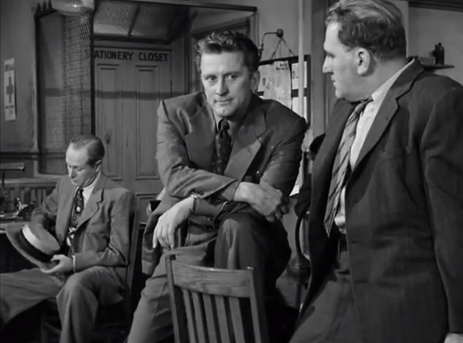
There’s another fiery role for “Mr. Instensity” himself Kirk Douglas as Jim McLeod, a man who strives to rid the streets of criminals and put them where they belong: The electric chair. He wants to be judge, jury, and executioner if at all possible. His all-out war on crime can be traced back to his lousy father. Ever since those days, he’s vowed to be everything his old man never was — not tolerating any kind of infraction of the law. It’s a thoroughly intense portrayal though it jumps off the emotional deep end a few times too often.

It’s his supporting cast that steadies him and guides the film toward something more authentic and attainable. William Bendix was potentially slated for a reunion with Alan Ladd before Douglas ultimately took the role. However, he trades out his image as a heavy for a policeman with a decent dose of humanity.

Frank Faylen is the acting desk clerk who fields all the incoming calls that come his way. Meanwhile, Lee Grant is a skittish young purse snatcher who winds up at headquarters for her first offense. Cathy O’Donnell (wife of screenwriter Robert Wyler) plays her always immediately likable ingenue role as the young woman trying to bail out her childhood friend on a charge of theft.

There are a number of others including journeymen cops, journalists, and four-time losers and then there’s McLeod’s wife Mary (Eleanor Parker). I’m not sure what to evaluate Eleanor Parker on but in the recent months, I have gained an appreciation for the fact that, good or bad, she will fearlessly commit to a role and pour her all into it. She owns a very eclectic body of work as well but Detective Story sees her succumbing to histrionics much like her onscreen husband.

Because at its best Detective Story is a slice-of-life drama that gives us insight into humanity much as Counselor at Law (1933) did. But this picture is high on the dramatics and whether or not they are completely believable is up for contention.

It’s also a fairly frank picture at that — at least for its day — though it does point out the duplicity that’s so blatantly clear.  Here a taboo is utilized as the fodder for melodrama as something so despicable. Yet in the heart of Hollywood itself, there were undoubtedly many women who did similar covering up jobs to save their reputations.

The Hays Code could try and keep taboos under raps but in doing so they were ignoring an unfortunate reality. It is necessary to remove the shrouds and let these things live on in the light.

But far from seeing this film with our enlightened postmodern sensibilities and condemning it for making such a frank subject seem sullied and unseemly, I would contend that this picture leaves me melancholy. Not for the reasons you might expect either.

I feel sorry for women ostracized and labeled as “tramps” like Mary is. I’m ashamed that there is a standard that everything must be good and pure. There is no room for grace. It’s this hypocritical nature that’s blatantly obvious in McLeod with the bitter irony coming to fruition. He became the very person that he was striving never to become.

The depressing depths of the drama suffocate any chance of a laugh by the film’s latter half and so while I’m all for fatalistic even tragic denouements in the right context, this film is so utterly discouraging and it has nothing to do with desiring a happy ending. It’s more closely related to the lens in which the film seems to use. There’s no integrity left in humanity. A world where beating hearts of flesh have been transformed into hearts of stone. That’s a very dark world to try and reconcile with.

Worst yet it does try by heaping on more drama and last minutes heroics to right all the wrongs in a matter of seconds. So we lose on two accounts. The picture doesn’t have the guts enough to dig into its disconsolate inclinations and still for almost its entire runtime it’s focused on those precise conflicts making it supremely difficult to enjoy Detective Story as much as we could have.

3.5/5 Stars
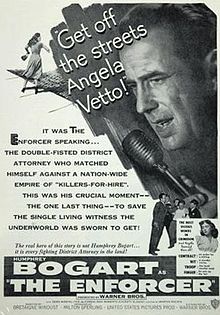
The Enforcer (1951)

220px-The_Enforcer_1951.JPGNot that this should deter you completely but The Enforcer isn’t a particularly unique crime film by any stretch of the imagination. Still, we have Humphrey Bogart headlining the police procedural not unlike a Call Northside 777 (1948), The Naked City (1948), or Panic in the Streets (1950).
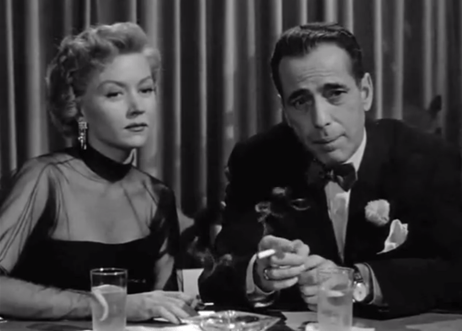
He’s the acting district attorney entrenched in the war against syndicated crime in the city. And the case he has topples like a house of cards when his one key witness is terminated. All the efforts behind four long years of tireless legwork go out the window.

They knew that it was an expansive operation with a multitude of contracts, a laundry list of hit men, and an undertaker on the payroll. They subsequently unearthed abandoned cars, drained marshes for the dead bodies, and questioned countless others who were purported to be involved. And yet it all seemed all for naught. No one knew enough or else they weren’t talking.

But Martin Ferguson (Bogart) is not about to let his case against the wanted crime boss Albert Mendoza (Everett Sloane) crumble that easily. There’s got to be another way to nab him. The script from Martin Rackin spends the majority of the time filling in all the details. In fact, he probably spends too much time before finally tacking on Bogart`s last-minute hunch almost as if it were an afterthought.

Ultimately, The Enforcer could almost be called a Raoul Walsh picture as the veteran director and friend of Humphrey Bogart took over the project when the incumbent Bretaigne Windust was taken seriously ill early in production.

No disrespect to Mr. Windust at all but the film got a leg up thanks to Raoul Walsh who directed many of the film’s more volatile sequences, capturing the action with bullets flying and fists flailing — brought to us with his usual dynamism. That counteracts some of the faulty storytelling that bogs the plot down.

The narrative structure is strikingly similar to aspects of The Killers (1946) but it’s hardly executed in the same gripping fashion. In fact, the layering of the flashbacks is hardly ideal even if it feels canonically very typical of what we often term noir. By the film’s end, whether or not the story gets told feels beside the point but nevertheless, Walsh manages to provide us with a decently tense climax that satiates some of our clamorings for a quality ending.

The film’s better assets are a few of the supporting cast members that help to add color to the procedural. We are treated to the typical menagerie of seedy characters including Ted de Corsia, Jack Lambert, and Zero Mostel. But the kingpin of them all is Everett Sloane. I can’t decide if it’s simply an uncharacteristic role for the actor or simply a poor bit of casting for the role of the boss of Murder Inc. But no matter, it is what it is.

There are also no femme fatales and very few female characters to speak of at all. For one moment, a woman is important: one Angela Vetto. Otherwise, it’s pretty bleak going. Even Bogart is not particularly interesting per se but he is still Bogart, making his scenes worth watching at the very least because he’s more than believable in any incarnation as a tough guy.

3/5 Stars

Review: In a Lonely Place (1950)

in a lonely place 1.png

Director Nicholas Ray customarily takes his material and subverts our expectations or better yet deconstructs the conventions that we often take for granted. But this is also matched with his penchant for showing a very raw and honest percolation of emotion. It causes every one of his movies to leave a perceptible toll on the audience because it’s difficult to have any other response. In a Lonely Place is another textbook example.

Here is a film with a murder plot which would normally be of primary concern. Instead, it ends up falling by the wayside to become nearly unimportant. It sounds almost callous to make such a claim since a life is at stake but then there is a bit of a detached quality permeating the picture.

A brooding Humphrey Bogart is at his most explosive as screenwriter Dixon Steele, a man with some talent, but a very odd way of exercising it. He’s an exasperating case for many in the industry, including his agent. Art Smith provides a wonderfully vivid performance as the agent nursing his ulcers while still faithfully standing by his client despite the turbulent nature of his temper. (Coincidentally Smith was featured in the earlier Dorothy B. Hughes adaptation Ride the Pink Horse).

It’s true “Dix” can be a tough man to figure out. Bogart may have played more appreciated, more iconic characters but there’s something especially raw about him here.

On top of Bogart’s performance, this is Nicholas Ray’s own examination of the Hollywood industry’s mechanisms, spitting out has-beens and flops as much as fame and fortune. There’s the continuous inner conflict between making a smash — the kind of trashy stuff that sells — and then trying to create something of worth on the spectrum of art.

If we had to draw up thematically similar films, All About Eve is a more flamboyant choice and Sunset Blvd. boasts the cynical edge but In a Lonely Place probably deserves to keep the same company with these noted classics from 1950 as a film of truly morose sentiments. It’s not simply cutting through the artifice of Hollywood. It’s trying to provide a deeper study of the people who are cogs of the industry.

After a precocious hat check girl (Martha Stewart) is found murdered it sets off an investigation by the police force. As Steele had requested the girl come over to his home to give him the plot summary of the low brow novel he is meant to adapt, just hours before her demise, he is placed on the top of the lists of suspects.

Conveniently, his neighbor across the courtyard, a bit part actress (Gloria Grahame at her most aloof and restrained), who he hardly knows, is brought in and vouches she saw him and it’s not a lie. He really was at home and he did not commit the crime.

If we wanted to, we could leave the story right there but that’s not all the film is working away at. It unravels in other ways too. In another world, this almost voyeuristic setting could have been made for Rear Window (1954) but this is not that film either.

Frank Lovejoy is the average cop with a thoughtful wife (Ms. Jeff Donnell) — a genuinely nice guy who knows “Dix” from back in their war days. He takes orders but he also has an inherent confidence in Steele as a human being. At any rate, he wouldn’t be prone to killing girls and so Brub helps to humanize this man in the eyes of the audience.

And yet there are still some troubling caveats on Dixon Steele. He owns a history of violent outbreaks but it goes beyond this. There’s a raging darkness that is part of his makeup as a character. He is tortured by hatred and by his own accompanying desolation. We can chalk it up to a number of things. His own personality. His lack of consistency. The often cruel industry that became his livelihood. It could be any number of these things or all of them.

In fact, for a film noir, the outcomes prove to be unique. It has murder but we never see it. There’s an actress who played countless femme fatales playing a slightly different iteration here. Even Bogart, though carrying a simmering temper that goes off on several occasions, is generally not a hardboiled heavy. Just a tormented screenwriter with demons to exorcize.

Beating up a college kid doesn’t go with the glorified and gritty brutality that might crop up in a Maltese Falcon (1941) or The Big Sleep (1946). It’s just callous barbarity in the normal world. Throwing phones or beating up friends in public is not normal behavior. There’s no other conventional excuse for it.

But this is Dixon Steele for you. He’s just a troubled man. Not an archetypal noir antihero. As much as we fear for the people in his stead, there’s also a mild pity reserved for him. He shows himself capable of love. He simply proves to be very ill-equipped for the endeavor.

The layers go deeper still and more personal as Gloria Grahame’s marriage with director Nicholas Ray was splintering and was finally absolved quietly during filming.

Beyond that, you get the sense, Bogart who financed the picture is playing someone, not unlike himself. Perhaps it’s the closest he ever got. Like the film, he found love in a woman, Lauren Bacall, many years his junior who nevertheless made him very happy. Sure Bogey was a success but it took him a long time to get to the top of the summit. He was a hard-drinker with a notoriously white-hot temper to match. Still, he was a romantic and an idealist in such a way we sympathize with. He’s ardently beloved today as he was in his heyday.

The contents of the story take on an entirely new spectrum of meaning with this personal context. In a Lonely Place wasn’t just an examination of Hollywood and the lives of people who could be real. In a Lonely Place feels far more transparent. It is Hollywood and these are the very people who find themselves caught up in its disillusioning grip.

Loneliness is there’s to have and to hold. They don’t need the prototypical genre conventions of graft and crime — the brand we conveniently label as film noir. There’s really little need for the more darkly cinematic overtones. They have themselves. That’s dismal enough already.

4.5/5 Stars

“I was born when she kissed me. I died when she left me. I lived a few weeks while she loved me.”

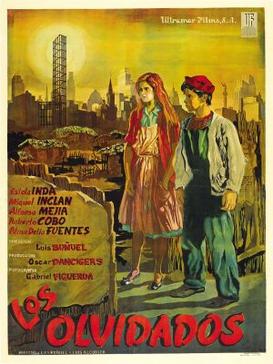
Los Olvidados (1950)

Los-Olvidados-Poster.jpg

The opening narration of Los Olvidados asserts that the great modern cities of the world including New York, Paris, and London all mask issues of poverty and delinquency amid their magnificent structures. This is a universal problem that plagues Mexico as well.

In Los Olvidados a test case is being proposed and the solution left open-ended because change is still necessary. There’s still need for some kind of resolution. Whether it’s completely true word for word is nearly beyond the point because it feels authentic. There’s little need to make up a world as dire and ugly as this one unless there’s at least a grain of reality in every frame.

Where boys break out of reform school, stone blind beggars in retaliation, and form gangs as a kind of social safety net to lash out at their environment. Beating up the poor and the helpless. They too are poor but this band of theirs allows them to be less helpless and prey on others instead. That’s their main tactic of survival in their life of impoverished vagrancy.

It proves to be a harrowing exhibition in social realism and though defamed in its day, its candid and at times brutal depiction of juvenile delinquency has gained it a spot as one of Mexico’s most prestigious pictures. There’s no doubt that it’s a violent picture seething with adolescent rage. The only question is how much is environmental and how much is a product of the individuals?

As much as this film is disquieting and repulses me to the core of my being, I cannot deny its place as an important commentary and cinematic landmark from Luis Bunuel. The Spaniard is a master who always makes my skin crawl and challenges my very convictions. Los Olvidados succeeds in doing the very same thing again by forcing us to acknowledge the loathsomeness in the world that we so often want to brush under the rug. It’s there. There’s no denying it. Man left to his own devices will send the world hurtling towards malicious chaos.

There’s an intent to every moment with action streamlined but never feeling rushed or forced in its everyday rhythms that provide a seamless illusion of real life. Luis Bunuel still finds space to imprint Los Olvidados with his own surrealist vision as a young boy, Pedro, is haunted by a grinning corpse to mirror the dead body now laying in a ditch where he served as an accomplice. However, his disquieting nightmares are compounded by a mother complex. He wants her love and yet seems to do everything to receive her ire.

In a world such as this where we see the brokenness and the sheer depths of poverty, it seems like it would be easy to empathize and yet this film makes it rather difficult. Because some of these boys are so boorish. So violent and dirty-minded. There’s no sense of decency even if they wanted it and their leader Jaibo is the worst of the lot.

But there are two boys that I do have some lingering sympathy for. Pedro is not unlike the others. Out on the street getting into trouble and the like. And yet there’s something in him that is trying to reform. He looks to find work and he wants the love and affection of his mother once more. The problem is she’s already given up on him. There is no love in her heart. And his pals are constantly impeding his road to reform. That’s as much as an indictment as the city that has no effective system to give these boys a better life or the boys themselves who live wayward existences.

The second sympathetic figure simply goes by “Eyes” and he’s been waiting patiently for his father to return. He hasn’t. Instead, he becomes the guide to the ornery street musician who makes a living in the town square when he’s not accosted by young gangsters. “Eyes” gets pulled into the drama too but there’s an innate integrity that’s lacking in most of his contemporaries. He generally treats the old man well and respects the pretty young ingenue Meche. That cannot save any of them from an awful existence.

The final image is grotesque. Not for the graphic nature of the imagery but the metaphoric juxtaposition. A body thrown into a trash ditch like a bag of flour. There’s no value to it and the people who do it while not the perpetrators are further implicated in this societal problem. They trade pleasantries with the mother as she searches for her son — a son she never seemed to love — until he’s in trouble. The issues run so deep it hurts to watch. The finger can be pointed in any direction.

The problems must fall on the parents, adults, and peers who do not find it within themselves to speak up or to continue loving or fighting for change. Complacency and hard hearts are just as bad a problem as juvenile delinquency. Put them together and you sow nothing but generations upon generations of human beings damned before they even have a chance at a decent life. It’s over 60 years on and we’re probably still searching for many of the answers to these very same issues. As much as I would like to admit that this film is outdated, to make such a statement would be heedlessly ignorant.

Because of course Los Olvidados in English is literally translated to “The Forgotten.” There’s part of your problem right there. As humans we so easily forget. We brush problems under the rug, pass the buck, and so on. Before you know it years have gone by and a new generation of youths are all but forgotten. The deadly cycle begins again and never ends until someone champions radical change. Until that day they will continue as the unnamed, unwanted, forgotten foes of society. Los Olividados.

4.5/5 Stars

All I Desire (1953)

all i desire 2.png

Douglas Sirk films almost by design seem to always revolve around the most uncomfortable thematic ideas that you can think of. Whether that is Sirk’s own wry sense of irony or more so the material that was provided him, there’s always something to be gleaned from what he does.

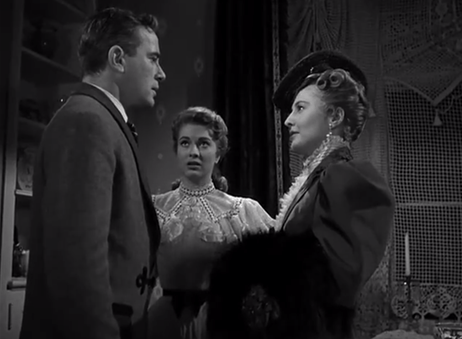
With every story, there must be a hook that reels us in and an event to establish the premise. Has-been actress and glorified showgirl Naomi Murdoch (Barbara Stanwyck) is sitting in the dressing room after one of her middling shows only to receive a letter from her teenage daughter. It catches her off guard because you see, she left home many years ago abandoning her husband and their three children. She had her reasons certainly but she was hardly expecting this.

But in a moment she decides to get dressed up and make her triumphant return to Riverdale, Wisconsin. What draws her there is the letter from Lily (Lori Nelson) entreating her to see her role on the high school stage. She just can’t resist the opportunity and as advertised she thoroughly enjoys her daughter’s performance. It captivates her beyond words.

Naomi unwittingly makes the play a major attraction in the small town not so much for the content of the production but due to her own attendance. They want to see the beautiful scandal maker returning to the scene of the crime after so many years. Among them is the local shop owner Dutch (Lyle Bettger) who once had a thing for Naomi that’s still steadily burning.

It’s true that she throws her former husband (Richard Carlson) for a shock and her disapproving eldest daughter (Marcia Henderson) still resents their mother for leaving them — rightfully so I might add. And yet Naomi didn’t come back to humiliate them. On the contrary, she’s ready to leave on the midnight train and she’s well aware of the need to make a good impression and consider what others will think around town. She hardly cares and yet she does care for the sake of her family. That’s part of the reason she stayed away for so long. People can be ruthless; it’s true.

Still, Lily in her winning way begs her mother to stay for the festivities and conveniently aids in her missing the outbound train. As the housekeeper Lena (Lotte Stein) puts it, Naomi is a woman with “sense enough to enjoy a party when there’s a party.” And everyone loves her for it, not because she’s a sideshow attraction but a truly genial personality.

First, it’s Joyce’s beau Russ Underwood (Richard Long) who asks her for a dance. Another highlight involves the future Yale boy summing up the courage to ask Ms. Naomi to dance and she takes him up on it without hesitation. Above all, it is her impassioned interpretation of Elizabeth Barret Browning that leaves the whole house mesmerized. It’s true that in only her few hours in town she’s already left a new indelible impression on the younger generations.

The entire town, her former husband, even her daughters and son all must grapple with their feelings toward her now. Henry is slowly realizing he is still in love with her and Joyce still harbors a bit of anger toward her mother when they go out riding with Russ.

But the character of Dutch seemingly transforms into an animal for the sake of creating a repeated scandal which looks like little more than fodder for the plotline. However, that’s not the true scandal or at least the true embarrassment. It replays itself in a different way this time. That cannot destroy someone as resilient as Naomi. She fights against it.

Barbara Stanwyck wins me over in every film I see her in each time anew because when words come off her lips they cease to be dialogue torn from a script but actually develop a life of their own as living breathing emotions coming out of her. She gives every performance an authenticity and charisma that’s forever disarming and the same goes for this picture. If any other actor might be flat or uninteresting there’s little else to do but let her command the scene and enjoy it.

There are so many moments we could note where she draws us in. One that spoke to me is during a tearful goodbye to her son (Billy Gray) who is hurt by what she did and she, in turn, tells him in all sincerity that people do bad things and they hurt people that they never meant to. Continuing to hate only leads to more hurt.

A darker Sirkian ending as he was set to make would have been more realistic but no matter. How can we hate All I Desire? Barbara Stanwyck and Douglas Sirk do wonders with it and they would do it again a few years later with There’s Always Tomorrow (1956).

3.5/5 Stars

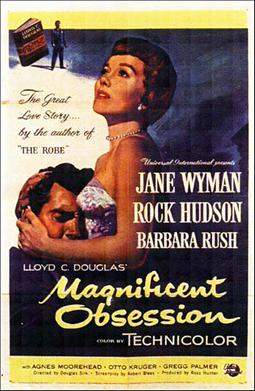
Magnificent Obsession (1954)

Magnificent_obsession.jpeg

This is the type of film that when the inevitable happens and a character mentions the title phrase a swell of angels voices begin to murmur and in one sense Magnificent Obsession is a sentimental even spiritual endeavor wrapped up in a soapy melodramatic morality tale.

But the key is that if you know anything about Douglas Sirk, you easily get a sense that this is not the director getting on his soapbox unabashedly. He is using the very material he is given and finding some of the ironies within it.

The story unfurls rather like a modern age parable. There were two men. One man died — a good man — so that another might live and that other man is Bob Merrick (Rock Hudson) a conceited, frivolous playboy only out for a good time.

The unseen, deceased Dr. Phillips left behind a recently wedded wife Helen (Jane Wyman) who was madly in love with him and a grown daughter Joyce (Barbara Rush) who was equally delighted with her new mother.

All of that was torn away from them by the selfish jerk of a man who unwittingly left Dr. Phillips without a resuscitator because the foolhardy Merrick got in a boating accident.

The film begins the long winding road of a soap opera as Merrick begins to change. First, he wants to buy Mrs. Phillip’s sympathy which he will never acquire that way. But he feels like wherever he goes he is somehow haunted by the sacrificial love and anonymous charity which seemed to dictate Dr. Phillips life. He can’t seem to get away from it. It makes him feel awful.

Of all places, he gleans wisdom from one of Phillip’s closest friends a sagacious artist (Otto Kruger) who imparts him with knowledge on how to pursue a life of true purpose. He’s warned by Randolph in one moment, “This is dangerous stuff, one man who used it went to the cross, died at the age of 33” but Merrick begins to go through a radical transformation — to take on this so-called magnificent obsession. Hudson gets the situation which allows him to exhibit his changing attitudes toward his fellow human beings and ultimately his own change in heart.

Anyways the plot spins and jumps in the most inconceivable and unlikely ways that have no other purpose but to set up the dramatic moments that fail to take heed of how absurd everything seems. It’s laid on slightly thick even for me with a few eye-rolling moments no less. Absolute poppycock if I might be so bold.

Still, there’s no doubting the potential impact of this emotional manipulation. You might suspect a crescendo courtesy of the Little Tramp except in lieu of Chaplin we have Rock Hudson in his first leading role. There’s no comparison but he and Wyman do prove to be a compelling romantic team.

I had never quite thought of it like this but sometimes it’s truly a joy to watch some visionary directors work cinematic magic in spite of the material they’ve been given. Currently, if you make a movie it’s usually on your own volition. Either you wrote it or you signed on knowing full well what you are getting involved with (at least in most cases).

But in Classic Hollywood you have so many more examples of great or at least interesting directors saddled with mediocre material. But the truly great ones took that material and made something fascinating out of it whether it was through mise-en-scene, shot selection, or simple choice of tone.

After seeing the works of Douglas Sirk it’s easy to wager that he was such a filmmaker. Originally from Germany and only transplanted to Hollywood in the 1940s, very late compared to many of his contemporaries, he was a very intellectual man and it bleeds into how he approaches his films.

Sometimes to grasp what he is getting at is an exercise in near extrasensory perception. Because he works in irony but very often it gives the pretense of mere melodrama if taken at face value. And that’s what he did, taking that standard so-called women’s picture of the 1950s and giving it a further dimension that allows it depth even today.

So is Magnificent Obsession a masterpiece? Not necessarily. But should that even matter and what does that subjective label mean anyway? Might we just be happy that there are directors like Douglas Sirk who made enduringly riveting films that we can go back to again and again? The idyllic shots of Lake Tahoe would easily make nostalgic souls yearn for the images found in this film alone.

3.5/5 Stars

Will Success Spoil Rock Hunter? (1957)

will success spoil rock hunter.png

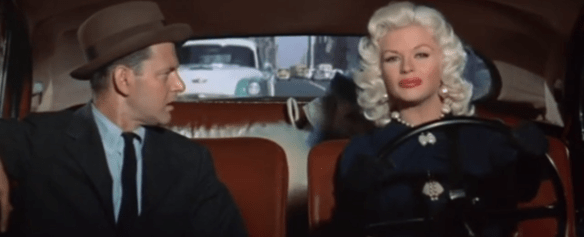
From a corny title comes a  wonderfully corny opening complete with Tony Randall playing the opening notes of the 20th-Century theme and reading off a few cue cards to introduce the film.

What follows is much in the same vein. I sense this is all the doing of Frank Tashlin — the man who found his origins in the animated shorts of the 1940s and subsequently partnered with Jerry Lewis as well as Bob Hope in some of their best pictures.

Here he creates a zany world indeed. I feel inclined to play the comparison game: It’s part Bye Bye Birdie (1963), part Doris Day-Rock Hudson Rom-Com (contemporary numbers like Lover Come Back or  The Thrill of It All both spring to mind), and yet it manages to be a cut above of all of those subsequent contenders.

Tashlin in writing the script and directing has given the film a truly inventive lifeblood which is part satire, part romance, and all comedy in the traditions that he knows best — namely visual comedy. There’s the pomp and circumstance of getting a key to the executive washroom or the appalling unsightliness of some of the garish interiors, not to mention Jayne Mansfield’s prized poodle.

It seems important to start with Rock Hunter since his name is in the title of the picture. Rock (Randall) is a middle-range partner in a New York advertising agency. His aspirations aren’t too grand. He’s in love with his secretary and hopes to be wed soon and his niece lives with him. That’s important.

But everything changes the day that this little man has a big idea that could propel La Salle Agency to the top of the game. Why not get that beloved bodacious personality Rita Marlowe (Mansfield) to promote their “Stay Put Lipstick” brand with her trademark “Oh so kissable lips” and shrieking sigh?

The only problem is getting in contact with the clandestine star who has gone into hiding following a nasty breakup with her latest boyfriend. Although it doesn’t prove overly difficult as Rock has a key in — his niece is the president of the Rita Marlowe fan club and that means something.

Soon he finds himself face-to-face with the superstar lounging in the bathtub on the telephone with her old beau. At the behest of Rita, Rock masquerades as her boyfriend over the phone (as the first living, breathing male who walks through the door). Then she proceeds to give him a smooch on the lips that causes the already popped popcorn in his back pockets to pop again. Amazing.

Rock Hunter’s a little woozy from the experience bringing traffic to a standstill as if he’s just seen a goddess or something. Tabloids get a hold of it and the media frenzy kicks up the dust once the news breaks out about “Lover Doll” aka Rock Hunter who watches his stock skyrocket overnight. What makes it even funnier is the fact that this is no Conrad Birdie. This is a nobody middle-aged executive played by the always lovable often despondent-looking Tony Randall.

His new life involves being accosted in back alleyways by teenyboppers and a row of new public appearances with Rita in order to get her involvement in backing the company’s product. It’s all in a day’s work but to say it strains things with Jenny is putting it lightly.

The narrative is chock full of shameless plugs and bits of self-referential commentary be it Jayne Mansfield’s own The Girl Can’t Help It (1956), Elvis’s “Love Me Tender,” and the romantic hit Love is a Many Splendored Thing (1955). Meanwhile, Rita reads lurid Peyton Place in the bubble bath and the inimitable Groucho Marx makes a prominent cameo as Rita’s long lost love. The best phrase by far is the liberal use of “The poop!” It pretty much sums up what you are in for.

Undubitably this is Mansfield’s most notable role and it works because she’s really playing a version of herself, the tabloid icon that she was and one of the purported answers to Marilyn Monroe’s movie stardom. As such she does a fine job with the wacky comedy and it’s true that she too exudes that certain brand of innocent sexuality though she never was in the high caliber films that Marilyn could claim.

Wisecracking Joan Blondell is at it as well as Marlowe’s assistant who still finds a moment or two to wax philosophical about lost love. Tony Randall is just as enjoyable as he’s ever been except he’s a lead instead of a third wheel which proves to be a delightful change of pace.

Possibly the best gag involves an extended intermission or commercial break with Randall lauding the remarkable invention of television which subsequently turns him black and white and cuts off most of his face in its limited 21 inches before readjusting and being overtaken by static.

In just a few seconds of film Tashlin effectively shreds the industry that was slowly taking over for sheer convenience and making the picture shows of old a near dying breed. And of course, not to be outdone there has to be some lip service paid to radio enthusiasts who in themselves were all but dead. Here is a movie that doesn’t take itself too seriously and that plays to its strengths.

3.5/5 Stars

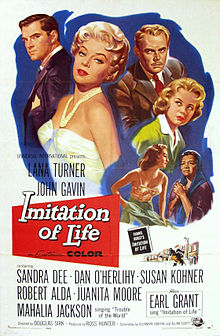
Imitation of Life (1959)

220px-Imitation_of_Life_1959_posterWhen I was watching the film I distinctly remember one instance I threw my head back in the air and just smiled to myself. How I love Douglas Sirk. He gives us something seemingly so superficial and decadent that plays so perfectly into those expectations and simultaneously steamrolls them with a not-so-veiled indictment unfurled on multiple fronts.
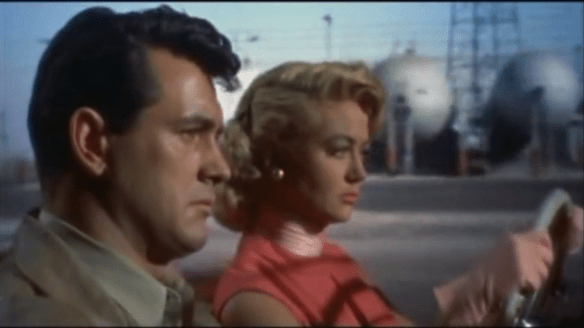
This was Douglas Sirk’s final film in his U.S. career. It’s another gorgeously rendered picture. A harsh social satire of the ambitions of an American Dreamer but also the inherent fissures that run through our society to its very roots. These issues have hardly changed with time or if they have changed, it’s simply the same problems given a facelift. The core wounds remain the same.

Imitation of Life is a story that starts in New York, of all places, at the beach. For the first time, Lora Meredith (Lana Turner) crosses paths with the kindly, God-fearing Annie Johnson (Juanita Moore) who looked after Lora’s daughter when she got lost in the crowd of vacationers.

In less than a comfortable position herself, Lora nevertheless offers her home up to Annie and her fair-skinned daughter Sarah Jane who strikes up a fast friendship with Susie while showing early signs of vehemently despising her African-American identity.

Those are the core aspects of the story as the glamorous single mother follows her aspirations to star on Broadway first with commercials and then small parts that lead her to something more. She finds an agent (Robert Alda) and ultimately earns the respect of a noted playwright (Dan O’Herlihy) who soon writes all her roles. The demands on her time mean that a fledgling romance with a photographer  (John Gavin) falls to the wayside and she hardly sees Susie.

Meanwhile, Annie remains a faithful friend by her side who keeps her house in order and looks after the girls as they slowly begin to mature into womanhood. And as they grow into women their own personal crises come to fruition. Sarah Jane (Susan Kohner) continues to try and pass as white while denouncing her mother. It gets so bad that she leaves home and changes her name to perform at dive bars where her mother hopefully won’t follow.

Susie’s (Sandra Dee) problems are of a different nature. She feels so alienated from her mother, the lady so often absent in her life, that she decides to attend college far away in Colorado. When Steve Archer (Gavin) drifts back into Lora’s life things are complicated by Susie’s obvious crush on him.

On both fronts of mother-daughter relationships, the film showcases its many themes playing out in vivid fashion. In fact, Imitation of Life feels all too resonate given the state of affairs in Hollywood and our world right now.

There’s this ongoing temptation to cheapen who you are for the sake of success. In this case, it applies to the theater and the career of Lora Meredith (Turner) but it could be in, let’s say, Hollywood or the corporate sector or any other endeavors. The jobs change but the people do not. Where you are forced to feel awful for not lowering yourself to other people’s level of sleaze and impropriety.

It’s a film about the fame monster and the industry dominated by a patriarchy where you are coaxed into making certain concessions so that people will like you and give you what you want. Just to maintain a career and your ambitions, your familial relationship, in this case, with a daughter is led to the point of deterioration. To this day, money and opulence, nice things and social standing, do not make up for an actual relationship. There’s no contest.

Ironically, only after the good fortune strikes and you have years of success do you begin to realize amidst the rush that the pinnacle has been reached and still something is missing.  That’s Lora’s realization. But just as fervently this can be a film of idealism and dreams. Seeing things the way they are and making them more and more into what you want them to be. Being the change. That’s Annie’s part.

It is also a film about racism — a fixture of society — and a troubling one that is still opening up innumerable wounds in the fabric of our society and they are wounds that must be acknowledged. There is a painful scene that while a girl is being berated and slapped by her alleged boyfriend a playfully jazzy score dances in the background and it’s this disconcerting contradiction — the kind of contradictions that are often easy to pick up on if you’re willing to see them.

People loathe themselves for the color of their skin and the stigma society puts on their personal identity. Someone’s life is driven by shame instead of an unswerving pride in who they were created to be. And whether we like to admit it or not, we’re all part of the problem where being white is seen as being normal or the status quo or what have you.

One of the most striking moments in the film for me is when Annie is recounting the Christmas story to the girls and they ask a very honest question. “Was Jesus White?” or “Was Jesus Black?” Because it seems like a question that devises some way of relating to this historical figure. But it also forces you to see the astronomical error in such ideologies of a  “white savior” or a “white man’s burden.” It simply cannot work. Nor does it work the other way.

Of course, as Annie sees so clearly, neither of these distinctions matter or any type of distinction because this was not a figure concerned with race or wealth or gender or respectability or any of that, at least in the sense that it holds importance to us. For him, as she sees it, it seems to have no negative effect on the relationship you could have with him. It doesn’t seem to matter and yet simultaneously it does immensely. Because it reflects our unique human identity.

Annie reflects those same types of ideals all throughout the film. You might take aim at her for being subservient or have qualms with something she does but it’s hard to question her sincerity or goodness. She has a prodigal daughter but just like the parable her maternal arms are always open and her daughter is never too far away for her to love Sarah Jane unconditionally even unto death.

I must admit it rubbed me the wrong way because Annie felt like yet another iteration of the mammy stereotype. One of Sarah Jane’s colleague even notes, “You had a mammy,” led to believe that the woman was simply an old housekeeper. But that’s the key. Annie Johnson is actually her mother. Aside from adding a searing undercurrent to the scene, it confirms she is not just a sideshow attraction for some southern charm. She is a parent and a friend and a person. In fact, the best scenes in the entire film belong unequivocally to Juanita Moore and Susan Kohner.

The original story the film is based on came out of a very different time in American history during the 1930s. Here it is updated and aware of the changing mores and difficult roads still to traverse thanks to the likes of Thurgood Marshall and his landmark case Brown v. Board in 1954 and the increased rumblings of the Civil Right Movement with the Bus Boycott and other peaceful initiatives spearheaded by Dr. King.

In the film’s closing moments Mahalia Jackson brings down the Lord’s house with her mournful dirge for Annie. And it is a bitter, heartwrenching moment of agony but that is not the final word. Because Annie was a tremendous person with an extravagant capacity for love.

Like Dr. King once orated in vivid Biblical imagery, “[I have gone] up to the mountain. And I’ve looked over. And I’ve seen the Promised Land. I may not get there with you. But I want you to know tonight, that we, as a people, will get to the promised land!” That is the hope. Even in this embittered world of ours there is still something to be longed for.

4.5/5 Stars

Tarnished Angels (1957)

tarnished angels 1.png

With the name Douglas Sirk, Technicolor opulence no doubt springs to mind but his black and white pictures are no less diverting and still extremely attractive to look at with photography once more courtesy of longtime collaborator Russell Metty.

The cinematography is crisp monochrome filmed in voluptuous cinemascope. It’s hardly as flamboyant as we are accustomed to but then again, The Great Depression was far from a decadent time and the visuals suggest that malaise especially in the film’s latter half when the cracks and the dirt begin to show a little more.

The inspiration for the narrative’s morality play comes from a William Faulkner story, Pylons, an aptly chosen title if it weren’t true that “Tarnished Angels” is more in line with Sirk’s oeuvre and the director glides forward with his usual flair.

The year is 1932 and Mardi Gras festivities seem to be taking over the town as a traveling airshow makes its latest pitstop headlined by those intrepid barnstormers WWI flying ace Roger Shumann (Robert Stack) and his wife LaVerne (Dorothy Malone). Subsequently, the stars involved make this picture a reunion of the previous year’s success Written on the Wind (1956).

Tarnished Angels is a picture that documents the morbid curiosity that often overcomes humanity with such feats of insanity as Shumann does crazy eights in the sky and his wife performs perilous stunts as a daredevil parachuter. The locals eat it up until it all goes terribly awry and then they want nothing to do with it.

A horrendous crash during the gripping race sequence is captured in surprisingly graphic fashion as the planes zoom around the course and from that point on the film goes into a tailspin that the characters can never really recover from.

The sheer pandemonium is underscored by the fact that the announcer continues to entreat the viewing audience to stay off the field and yet in the mayhem no one pays him any heed. It’s their gut emotions that are driving them now, not their rationality.

But despite the tragedy, Shumann is desperate to have his wings back and he reluctantly goes to veteran backer Matt Ord to pilot his plane. His wife agrees to go to the man’s apartment. Although it’s never explicitly stated, we know what it is for. It’s written on the faces of every man who is complicit or privy to the incident and stands by complacently.

Newsman Burke Devlin (Rock Hudson) finds himself enthralled by Roger’s story as a fallen man while faithful mechanic Jiggs (Jack Carson) is about fed up with all that Roger puts LaVerne through and yet she goes to Ord and they do little to stop her.

But it’s true that Devlin also finds himself falling for the other man’s wife after she gives him insight into her life thus far. An intimate moment is burst in upon by a drunkard in a skeleton mask. You have to see it to understand the utter tension that is felt and the collected sigh of relief because we are part of this.

But this is far more than a film about an illicit affair or a man who doesn’t know how to love his family. It gets far more tragic than that and Sirk dramatizes it with a pair of images. A boy helplessly trapped on a carnival ride, a mother restrained by local bystanders, one disconcertingly still wearing a mardi gras mask. And tragedy strikes again with a second crash landing.

Shumann was a  man so obsessive with flying that it literally drives his entire life. He cannot love his wife and child as much as he relishes being in the air performing daring feats of aerial acrobatics. Take away his wings and it’s like a man addicted needing his fix. Driven to such levels of indelicacy he willingly sacrifices family or, more specifically, his wife for a flying machine. But in his final moments for a brief instant perhaps he rises above his past failings to shed his former self and show something else.

Rock Hudson gives a drunken monologue in the newsroom that silences any dissenters and naysayers at least for a minute because he developed an almost intimate relationship with this man’s life.

I can’t help but draw up comparisons between this picture and Billy Wilder’s Ace in the Hole (1951). Distinctively both films use journalism and a member of the profession to get at the material but their actions couldn’t be different.

Certainly, both are interested in stories. They are drawn to the spectacle. In the earlier film a miner is trapped in a mine shaft and in this picture Devlin is intrigued by that crummy carnival of death as it is so eloquently christened. But Hudson character hardly seems to be taking advantage of the situation because he offers up his home and proves himself a stalwart defender of children and women.

If he’s interested in a mere story at first, ultimately the whole ordeal takes hold of him so personally that it transcends any of that and proceeds to overshadow everything else. Kirk Douglas in his role might provide a harsher indictment of journalism’s capacity for creating a media circus. Sirk’s film is an equally telling portrait of human frailty as much as it chronicles callous indiscretion.

4/5 Stars

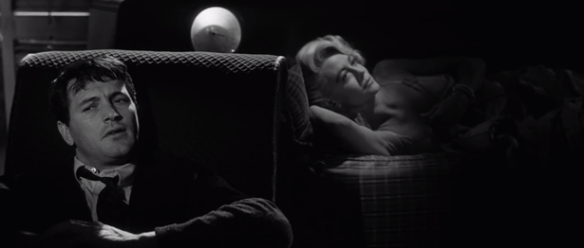
Review: Written on the Wind (1956)

written on the wind.png

Douglas Sirk’s films are always lovely to look at, almost to the point of making you sick. The panoramas swell with color. They’re too perfect. The sets are gaudy — the cars the same — to the point of almost being unsightly in their over the top artificiality. Try to find any amount of authenticity and you will most likely fail.

The people within the frames are even more glamorous than the rooms they fill and arguably more colorful.  Namely the dashing Rock Hudson, a Sirkian mainstay and then Lauren Bacall, Dorothy Malone, and Robert Stack, all Hollywood talents playing character types with names and dialogue straight out of a trashy romance novella. We wouldn’t have it any other way. It’s exquisite.

Because everything is played with the utmost of seriousness from starting credits to the closing shot and yet it just doesn’t take. Sirk seems to be working against his material and that’s where the enjoyment of this picture really lies. It makes Written on the Wind the zenith of the soap opera tradition.

Like any good melodrama, it begins with a shooting, it ends with a murder inquest and the in between is filled in with drunkenness, romantic interplay, familial strife, impotence, fist fights, childhood dynamics, and anything else you can imagine in such a sleazy affair. Still, when everything has run its course, our leading man and his leading lady are able to drive through the pearly mansion gates off on a perfect life together.

Though Rock Huson and Lauren Bacall are arguably our stars, it is their fairly typical and straightforward roles lay the groundwork for the true show put on by Malone and Stack as the Hadley siblings.

Malone sheds her librarian role in The Big Sleep (1946) for the performance of her career as the uninhibited, diabolical, sex-crazed platinum blonde. And Stack is a far cry from Elliot Ness. He lives like he’s never even heard of prohibition as he lets his characterization go completely off the rails in a fantastic manner.

Their father (Robert Keith) is one of the richest oilmen around and they’ve grown up as brats accustomed to wealth and yet their lives are an utter shambles with flings, booze, and personal demons leaving a wake of tumult that rips through the tabloids.

Mitch Wayne (Hudson) and Lucy Moore (Bacall) meet in a boardroom as nice as you please. You would guess that romance is kindling except that the impetuous Kyle (Stack) inserts himself in the situation trying to win her over with jet flights and a steady stream of charm. Somehow it works and they are wedded soon thereafter. It has all the signs of a trainwreck given Kyle’s track record but miraculously it works for a while. But he’s devastated by some news from his local doctor (Ed Platt) which drives him back into a constant stupor and drunken tirades.

Meanwhile, his sister relishes watching him falter because they’ve never seen eye-to-eye on anything. Her main focus is seducing Mitch their lifelong friend who has never allowed himself to fall prey to her wiles. In retaliation, she looks to search out any man who can show her a decent time. She doesn’t much care who it is. But Mitch is hardly jealous for her, only protective, and his eyes are set on Lucy nee Moore anyways. If the entanglements aren’t clear already they present themselves obviously enough.  It’s gloriously sensationalized nonsense.

Still, so many others owe an undying debt to this film and those like it. Fassbinder came from here as did Todd Haynes. Dallas, Dynasty, or any other 80s soaps found their roots right here too. After all, this is the original version of “Who Shot J.R.” Thus, the debt must be paid to Sirk’s films and people have.

Because his style is very easy to admire. Contemporary audiences undoubtedly ate it up and we do now years later. The artificial interiors and the airbrushed Technicolor palette helps define what many people deem to be 1950s Hollywood. It’s luscious, easy on the eyes, decadent, all those apt superlatives. But if that was all that he had to offer, Sirk wouldn’t be as interesting to a great many people now.

It’s the very fact that he seems highly self-aware and he’s so wonderful at staging and creating this environment, beautifully photographed by his longtime collaborator Russell Metty, that the whole composition tells us something more. It’s rear projections and painted backdrops. Sets and stages that accentuate this piece of drama. It’s all sending us a collective wink to see if we get the joke. Those who do will be greatly rewarded.

4.5/5 Stars