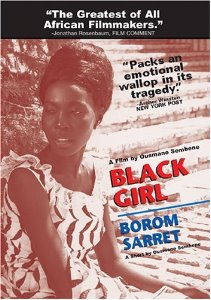
 What’s fascinating about this film is how it manages to give voice to those who are normally silenced and even in her subservience this narrative powerfully lends agency to a young Senegalese woman’s perspective. Because even when she is silent and words are not coming out of her mouth and her status ultimately makes her powerless, the very fact that her mind is constantly thinking, her eyes observing and so on mean something. Inherently there’s a great empowerment found there even if it’s only known by her and seen by the outside observer peering into her life. That’s part of her. We are given a view into what she sees. We can begin to understand her helplessness and isolation. Where she came from and the life she left behind. Giving up the master narrative of the entitled and shown the flip side of the world for once.
And the fact that this viewpoint comes from an African filmmaker casts the film in an even more profound light because just as this character is from one of the marginalized castes, the same could be said for the director Sembane Ousmane. My knowledge of African filmmaking is admittedly poor and that’s precisely the point. For me, this film is an entry point, a representation, a portrait of a lineage that I know very little about and that makes Black Girl extremely exciting. Because if this picture found its way to me, there’s a chance that it can represent something to others as well–namely the import that African cinema can have on the world at large if given half a chance.
With this picture, Ousmane makes a visual statement using the medium of film to offer yet another, broader perspective to the patchwork of world cinema that can be decidedly bland and monochromatic at times. Here is a story that even in its simplicity guarantees that more voices will be heard and at the very least more perspectives will be empathized with.
Diouanna is at best a servant and exotic sideshow attraction for party guests and at worst a prisoner who gets her job as a live-in nanny and de facto housekeeper rather like a slave off an auction block. Sadly, it doesn’t feel that much different. There’s a little more free will involved but that’s what humble circumstances can do. She has a choice but not much of one.
She looks at France as an extravagant promise land and a job is a gift of providence that she will gladly take. Still, once she arrives on the Riviera she soon becomes disillusioned. It’s hard not to blame her given the circumstances. She no longer is able to mind kids as she knows best and rarely is allowed to explore the beautiful country she lives in–if at all.
She doesn’t want the husband’s money or the patronizing kindness of the wife which demands every amount of deference and even most of her freedoms. It’s the high position that takes on the role of savior and expects a certain response whether it is fully deserved or not. That is what hangs in the balance of Black Gir signified by the ceremonial mask that Diouanna gifts her benefactors at the outset of her employment.
First relinquished as a gift and taken as an exotic souvenir exhibited on the wall for all to see–a symbol of charity, generosity, and simultaneously colonialism. But soon, as Diouana grows discontent she realizes she doesn’t want this. She will willingly give up this “lavish lifestyle” and whatever perks come with it to retain her identity. That’s too great a price to pay as she realizes and this job isn’t worth the toll. Her cultural identity and the identity represented by this film are vitally important. Because they represent yet another member of humanity.
4/5 Stars
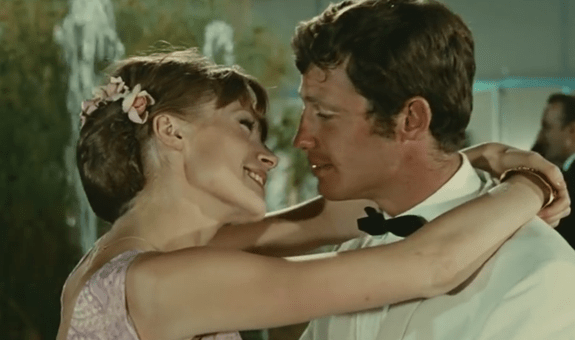
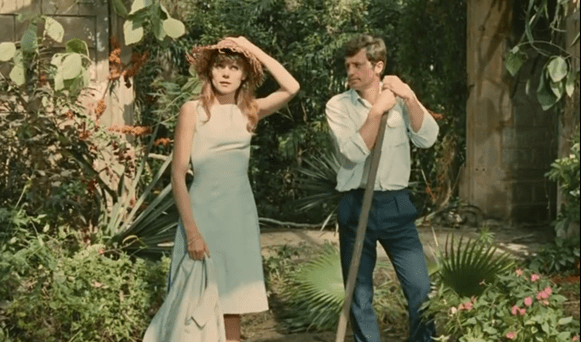
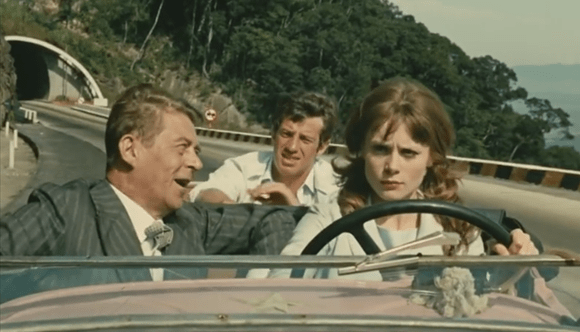
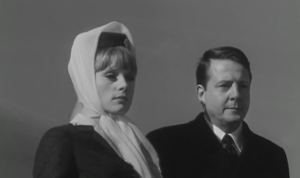 There might be an initial predilection to call The Soft Skin Francois Truffaut’s most conventional film to date, but for me, it shows at this fairly early point in his career he seems to have grasped the main tenets of traditional filmmaking. Because his first films are full of life, energy, and idiosyncratic verve that easily charm their audience but here we see a film that in most ways looks like other classic works, well constructed and still quite engaging. Because within this very framework Truffaut is able to play around with issues that in themselves are still quite compelling. Love, intimacy, infidelity, and the like. Even with familiar names like Truffaut and Raoul Coutard, it feels very un-Nouvelle Vague. And that’s okay.
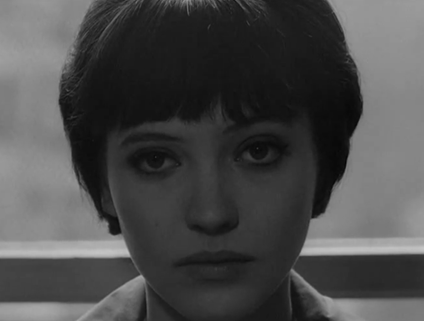 The opening credits of Vivre sa Vie commence with the opening note “dedicated to B-movies” and indeed many of Jean-Luc Godard’s best films could make the same claim. They’re smalltime stories about little people living rather pathetic lives if you wish to be brutally honest. This isn’t Hollywood.
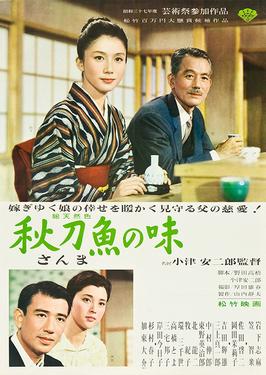 There’s something overwhelmingly soothing about Ozu, simultaneously slowing my pulse and calming my nerves. Yes, An Autumn Afternoon stands as his final film. Yes, he would sadly pass away the following year. But there’s a comfort to watching his films unfold — even his last one. The drama is everyday and somehow disarming and pleasant. We often take for granted that Ozu was not planning to end here. This was not supposed to be his last film. It just happened that way.
 Are you a mod or a rocker? ~ reporter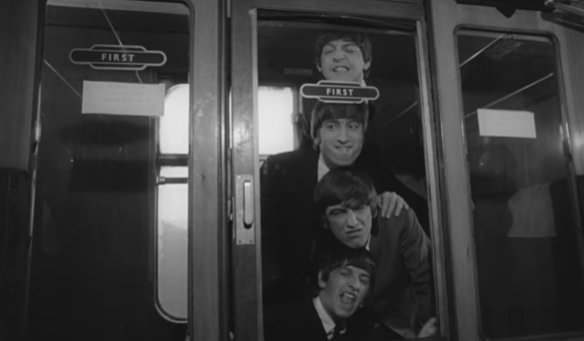
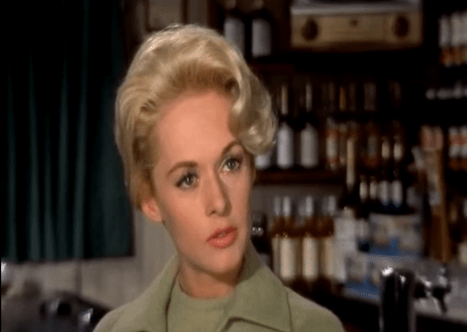 The Birds is about all sort of birds. The ones we are acquainted with initially are actually a pair of humans. Lovebirds you might call them. Except they don’t know it quite yet, but the moment Melanie Daniels (Tippi Hedren) and Mitch Brenner (Rod Taylor) meet in a pet shop, the sparks are already flying — the birds too.
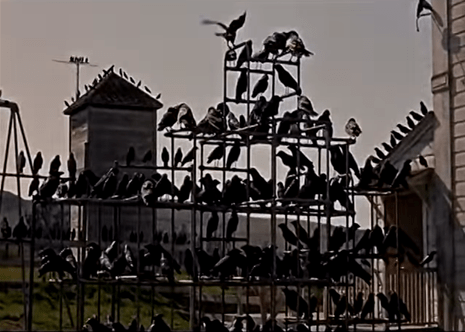 Most assuredly, the film benefits from long stretches of wordless action. The most striking example involves a murder of crows gathering on a jungle gym near the schoolhouse. Never before was the name of their posse more applicable. And while the narrative lacks a true score, the unnerving screeches from the birds is sound enough to send chills down the spine of any audience.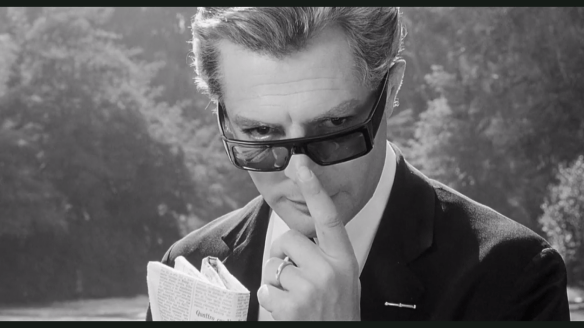
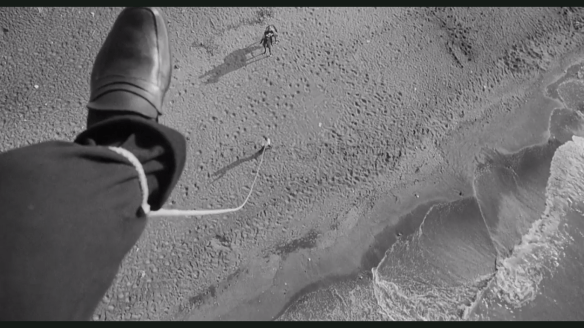
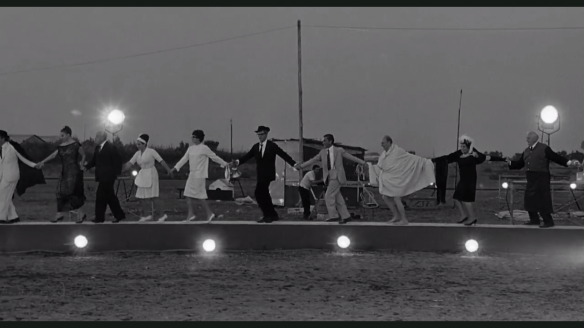
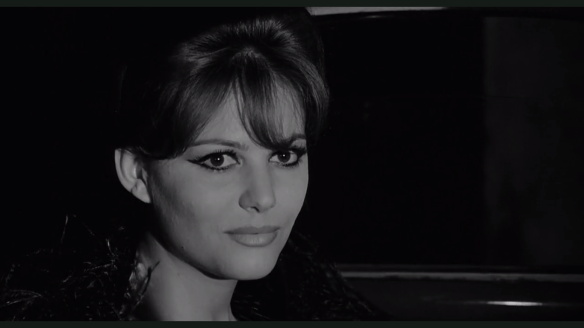
 I never thought I’d get so fed up with hearing the name “Fefe.” But it’s true. There’s a first time for everything. In fact, Fefe is the name of our main character played so magnificently by Italian icon Marcello Mastroianni. In my very narrow view, he still very much epitomizes Italian cinema for me.
 4 Star Films