Le Cercle Rouge (1970)

LecerclerougeDirected by Jean-Pierre Melville and starring a cast including Alain Delon and Yves Montand, this crime film hearkens back to heist films such as The Asphalt Jungle, back in the 1950s.

In a cold open, two storylines are introduced. One man, Vogel, is in custody and is handcuffed to a policeman as they board a train. At the same time, a man named Corey is let out of prison, on good behavior, and he is tipped off on a possible heist job. In both cases, we have little background information to go on. Then, Corey pops in unexpectedly on an old mob boss and forcibly “borrows” some money from the man, who has also stolen his girl. He buys a new car and throws off a couple of thugs who were sent after him. As the morning dawns, the captive on the train makes a daring escape and flees into the nearby forest. Soon roadblocks are set and the manhunt begins. He desperately gets into an open car trunk to hide, ironically it is the same car of the man, who was recently released.

However, he was noticed and Corey tells him to get out of his hiding place.  Vogel is tense but his cool and collected acquaintance helps him sneak through a checkpoint noting that Paris is his best chance of escape. Corey is chased down once again by Rico’s henchmen, but Vogel sneaks out and comes to his aid. They head to Paris and find a sharpshooter to case the jewelry store and help them with their plan. The police detective is still searching for his quarry, and he tries to enlist the help of a crooked club owner. Meanwhile, the plans are made, and the heist is pulled off with great precision and efficiency. They get away with the jewels smoothly enough. However, the marksman settles to take no part of the plunder, and their initial buyer falls through. Relatively quickly there is a new person interested, so Corey takes the goods to him. Only too late Vogel comes to warn him, and just like that, they must flee the premises with police all around.

Much like Le Samourai, this film gives off an extremely cool vibe, and it makes it all the more enjoyable to watch. Alain Delon is such a smooth operator, and whether it is the way he dresses, talks, smokes, or pulls off the heist, it cannot be easily dismissed. However, the other main players give serious and nuanced performances of their own, which cannot be overlooked. Melville makes all of his scenes so interesting, through the setup and the fashion in which his characters go through the world of the film. His characters act in the mode of behavior that they believe is correct and most are rather taciturn and guarded. I cannot decide if I like Le Samourai or Le Cercle Rouge better, but it must be said they are in a special class of crime films.

4.5/5 Stars
Being There (1979)

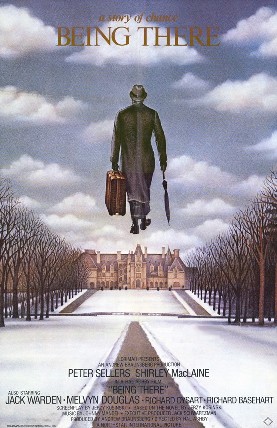
Starring Peter Sellers, the film revolves around a gardener named Chance who gains all his social skills from watching television. When his unknown elderly employer dies Chance is forced out of the only world he knows and he just begins to aimlessly walk through Washington D.C. In a freak accident, he is hit by a limo taking a parking space. In a miscommunication he finds himself going to the residence of an influential couple to get medical attention with them thinking his name is Chauncey Gardiner. He quickly gains their admiration because he has such a calm demeanor and Chauncey quickly becomes a respected confident of the sickly Ben Rand. Chauncey even finds himself meeting the president and giving him sagely advice about garden work which is interpreted as an allegory for the economy. The pithy statement finds itself in the president’s speech and there is a buzz about this mysterious figure named Chauncey Gardiner. This new found fame leads to Chauncey ending up on television for an interview and the American public is captivated by his simplistic wisdom. As Ben begins to slowly die, Eve becomes even closer to Chauncey in her grief. At Ben’s funeral, the president gives a speech and those carrying the coffin decide Chauncey should be the potential candidate for president. At the same time Chauncey is walking nearby in a forest by a lake and then in a final dreamlike moment he literally walks on water off into the distance. I think Peter Sellers should be lauded for his performance because he could be comedic and then play it straight like in this film. He is like a cross between Harvey and Forrest Gump with a love of T.V. I must say though that the bloopers at the end take away from the illusion that is created by the film as a whole.

4.5/5 Stars

Young Frankenstein (1974)

Directed by Mel Brooks and starring Gene Wilder with Marty Feldman, Peter Boyle, and Teri Garr, this comedy films parodies old horror films like the original Frankenstein. However, it also functions as a drama in its own right much like the original Frankenstein films. Wilder is a professor and the grandson of Victor Frankenstein. The thing is, he wants nothing to do with his infamous relative, even going so far as pronouncing his name differently. However, when he inherits the family estate he must face his ancestry head on. There temptation takes over and he begins to build a creature of his very own, with horrifyingly funny results. This film has memorable moments including “Putting on the Ritz” and the Inspector’s arm. I still cannot believe that Feldman’s eyes get that big either! Wow. Wilder plays well off his Creature and Garr and Cloris Leachman both have important roles in Mel Brooks’ comedy.

4/5 Stars

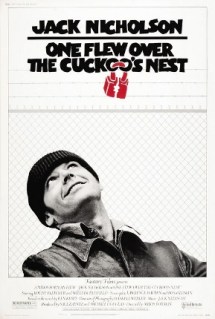
One Flew Over the Cuckoo’s Nest (1975)

This is a powerful film from the 70s that has such an intriguing conflict between Jack Nicholson and Louise Fletcher. There have been many chilling villains in the annals of cinema, but Nurse Ratched was arguably the coldest and yet understated of them all. She makes this a true battle for supremacy. Nicholson is supported very nicely by the rest of the cast who he helps to rile up.
*May Contain Spoilers

Originally adapted from the novel by Ken Kesey, the film tells the story of a criminal interned in a mental hospital, because he thinks it will be “life on easy street” with a bunch of crazies. Jack Nicholson plays this Randle McMurphy, who goes in ready to live easy and challenge authority whenever he can.

Meanwhile, the doctors observe him seeing if Randle really belongs. As he grows accustomed to the institution, he becomes the instigator of the other patients. Whether they are playing cards, talking with the group, taking medication, getting their exercise, or taking a fishing trip, he always looks to get his way and have the other patients rally around him. However, he must deal with Nurse Ratched, a cold and iron-fisted woman, who keeps everyone at bay believing it is for their own personal well-being.

In fact, she chooses not to send McMurphy away because he is their problem and Ratched is ready to deal with him in the way she sees fit. Not even McMurphy seems able to prevail over Ratched and her tactics in the end. He starts a riot in the ward after they are not allowed to watch the World Series, and as the final straw, he holds a wild Christmas party with girls and alcohol. He plans to get away in the aftermath with his new-found friend “Chief,” only to wake up in the morning to a very displeased Ratched. Her pressure causes one unstable young man to commit suicide, and with the opportunity to escape right in front of him, an enraged McMurphy strangles the nurse, only to be subdued. Things quiet down and the patients revert back to their old ways with “Mac” nowhere to be seen.

One night he is returned and in a Deja Vu moment, the Chief goes to talk to Randle, only to see a blank look on his face. Ratched’s methods have seemingly won. However, Chief is able to use Randle’s plan to escape and keep the hope alive. Nicholson was backed by a stellar cast including Louise Fletcher, Danny Devito, Christopher Lloyd, Brad Dourif, Will Sampson, Sydney Lassick, and William Redfield.

Although this film is rougher around the edges, it reminds me of the earlier dramatic classic 12 Angry Men, because both films have wonderful casts that are able to create such tension through their collaborative performances. Much like Henry Fonda, Nicholson is the undisputed star, but all the other players make this movie truly extraordinary. Early on there are some definite comedic moments, but the film begins to get darker as the story progresses, and Ratched gets more and more strict.

Furthermore, this film is shot in a realistic almost bleak documentary-like style that really adds to the film. It is almost difficult to watch the scene where Randle chokes Ratched because it is up-in-your-face and graphic. Despite, the fact that the ending is depressing, there is still a hint of hope. It is one of the things that makes One Flew Over the Cuckoo’s Nest so riveting. Much like many of the patients that inhabit the facility,  the mood constantly swings like a pendulum from humorous, to calm, to bleakness, and finally hopefulness.

5/5 Stars


Annie Hall (1977)

Starring Woody Allen and Diane Keaton, the film begins with Alvy Singer (Allen), a comedian with a good career and two unremarkable romantic relationships. That all changes when his friend (Tony Roberts) introduces him to the lively Annie Hall (Keaton). Over time they begin to grow fond of each other and they spend lots of quality time together in New York. However, after a trip to Los Angeles, they decide to split up and Annie stays in California. Alvy realizes his love and goes to see her again. His proposal of marriage is rejected, however after some time passes he comes across Annie in New York and they remember all the good times. This comedy romance is a quirky Allen movie that uses sight gags, breaks the fourth wall, utilizes voice over, and has lengthy camera shots.This film is a lot about simply talking and it certainly has its moments of brilliance.

4.5/5 Stars

Nashville (1975)

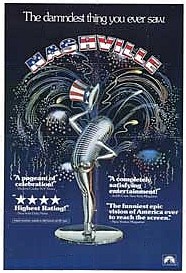
Directed by Robert Altman, this musical, comedy, drama has an ensemble cast made up of 24 different people. The film’s story takes place over several days in Nashville, Tennessee during the political season. From the beginning we follow the politics, music, and most importantly the folks who inhabit and visit this place. They come from all backgrounds, some are in Nashville for musical careers and others for their own personal reasons. You have shaky relationships, an ill country singer, a British BBC journalist, and many other characters who are all interrelated. All their stories culminate in one tragic moment at a show. However, they all quickly move on with their lives. This film was enjoyable because there were so many different people. Even if it made the story more difficult to follow, that did not really matter. By the end everything seemed relatively cohesive. True, the conclusion is abrupt but I think that is how the story was meant to end.

4.5/5 Stars

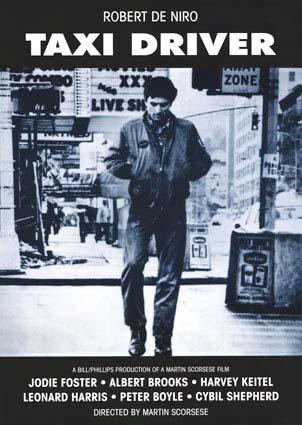
Taxi Driver (1976)

d184d-taxi_driver_posterDirected by Martin Scorsese, the film stars Robert De Niro with Jodie Foster and Cybil Sheppard. The story opens with a Vietnam vet, Travis Bickle (De Niro) who takes a job as a taxi driver. Travis is a quiet and lonely man who is turned off by the scum and filth he sees on the streets of New York. He becomes enthralled with a beautiful campaign worker who eventually turns him off. Then he also comes in contact with a young girl who makes her living working the streets. His frustration deepens and he begins to work out and collect weapons. It becomes obvious he is about to explode and after an initial failed attempt he does  just that. However, ironically the aftermath leaves him as a hero. Travis is an interesting character because you feel sorry for him and yet he does things that are truly wrong. I found Bernard Hermann’s score, the voice-over narration, and the cryptic ending all to be interesting parts of this film.

4.5/5 Stars

Chinatown (1974)

89858-chinatownposter1Starring Jack Nicholson with Faye Dunaway and John Huston, this skillfully written neo-noir is a nod to the work of Chandler and Hammet. J.J. “Jake” Gittes is a P.I. in the L.A. area during the 30s who specializes in marital cases. When a woman calling herself Mrs. Mulwray asks Gittes to watch her supposedly cheating husband, he enters something he does not understand. Soon he meets the real Mrs. Mulwray (Dunaway), learns Mr. Mulwray is dead, and discovers Mrs. Mulwray’s father is the powerful water tycoon Noah Cross (Huston). As he tries to uncover the truth behind some odd events, Gittes meets with opposition, more confusion, and eventually some answers. The mystery is twofold and he begins to understand the plot over the L.A. water, however he does not figure out the secret kept by Mrs. Mulwray right away. When he finally does find out he is too late and tragedy ultimately comes in Chinatown. This film was enjoyable in the buildup and the ending was okay if not tragic. However, it did seem that the mystery surrounding the water was predictable.

4.5/5 Stars

Dirty Harry (1971)

2daf4-dirty_harryStarring Clint Eastwood as San Francisco police Inspector Harry Callahan, the film opens with a sniper knocking off a young woman. The self-proclaimed Scorpio says he will keep killing a person everyday until the city pays him off.  They go on high alert and Callahan stakes out with his new rookie partner Chico. However, Scorpio escapes once again and he is just begun. He kidnaps a young girl and threatens to kill her. Callahan runs all across town to deliver the ransom where upon a confrontation occurs. After they recover the girl they track down the killer but he is released because they had no warrant. A furious Callahan finally hunts down the conniving killer one last time after Scorpio kidnaps a bus load of children. In the ensuing chaos Harry finally gets his man. This is one of the great action films and it spawned a memorable character in Dirty Harry.

4.5/5 Stars

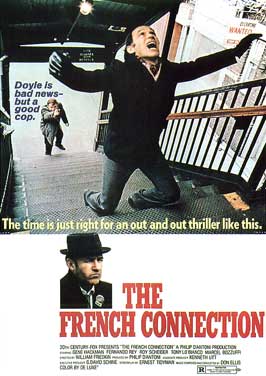
The French Connection (1971)

af50c-thefrenchconnectionIn this crime thriller starring Gene Hackman and Roy Scheider, two detectives, Popeye Doyle and Cloudy Russo, work the grimy, tough streets of Brooklyn. They think they have happened upon a narcotics job and they use tapping and tailing to close in on the suspicious activity with a french connection. With no real results, they get pulled off the special assignment. That all changes after an unexpected twist followed by a wild chase. Doyle and his partner are finally close to cracking the case but it still takes more work and even more waiting. Finally, they seem to have the culprits but it ends far from perfectly for them. Up to the end Doyle is bent on finding “the frog” who has eluded him for so long. The ending felt a little too abrupt for my liking. However, this film did a good job at portraying the ugly and dirty side of New York realistically.

4.5/5 Stars