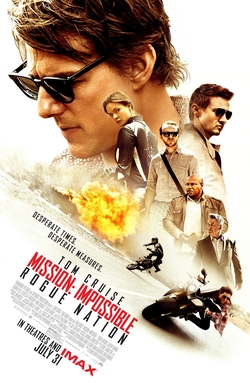
Mission Impossible: Rogue Nation (2015)

Imission_impossible_rogue_nation_postern the last decade or so arguably the greatest action/spy/thriller franchises have been Jason Bourne, James Bond, and Mission Impossible. To their credit, each series has crafted several passable films fortified by a few real stalwarts of the spy thriller genre. Although many of these series thrive on gadgetry, set pieces, and a cynical tone more at home in the modern millennium, one thing that set some of the better films apart were interesting female characters.

James Bond is an icon. Jason Bourne is a modern icon. Tom Cruise as an action hero is an icon on his own merit. But we expect that to a certain degree. What the cinematic world has not had for as long are phenomenal female action heroes and the parameters seem far more complicated than simply being adequate at kicking butt. For instance, Casino Royale boasted Vesper Lynd (Eva Green) arguably the greatest of the Bond Girls because she was far from simple eye candy — a throwaway sidekick — she actually was witty and interesting and tragic. All those things.

It’s also no surprise that writer-director Christopher McQuarrie teamed up with Tom Cruise yet again to follow up the surprising success of Edge of Tomorrow which showcased another strong female lead in Emily Blunt.

Thus,  in some ways, it makes sense that Rebecca Ferguson steals the show in Mission Impossible: Rogue Nation. But it’s not any less surprising. There are numerous other major names. Obviously, Cruise first and foremost then Jeremy Renner, Simon Pegg, Alec Baldwin, and Ving Rhames. But they’re all playing the parts that we’ve seen before. Computer geniuses. CIA Operatives. Rogue agents. Program Directors. There’s a shadowy villain played by Sean Harris and yet another organization with vague but nevertheless ominous intentions called “The Syndicate.” You get the picture.

But for the simple fact that female action stars are often few and far between on the big screen, Rebecca Ferguson is a true scene stealer. And she starts off quickly by subverting our expectations as an audience. She’s very pretty indeed but her role is not necessarily about her looks which is terribly refreshing. She’s smart, clever, enigmatic, and she seemingly has the most complicated trajectory in the entire film. As an audience, we don’t know where her loyalties lie although we have our suspicions. But more powerfully, she does not quite know herself. Best of all there are no overtly provocative scenes crammed into the story line with the sole objective to sell tickets.

Tom Cruise proves he can still carry a great action movie yet again and that’s because he’s playing it smart — surrounding himself with great talent — and benefiting from his supporting cast. Rogue Nation is not groundbreaking by any means but it’s wonderfully diverting with all the impossible missions, double crosses, and intrigue that we could want. What it sets out to do it does quite well and keeps us entertained in the process.

As a caveat, the fact that our main heroine is named Ilsa and because the film found its way to Casablanca amid its jet-setting, it made me eager for a little bit of Bogart & Bergman. Also, I wouldn’t mind catching a few reruns of Peter Graves. But that’s not to take away from this film. Enjoy it unabashedly. It really is a great deal of fun.

3.5/5 Stars

20th Century Women (2016)

20th_Century_Women.pngIn his noted Crisis of Confidence Speech, incumbent president Jimmy Carter urged America that they were at a turning point in history: The path that leads to fragmentation and self-interest, down that road lies a mistaken idea of freedom. It is a certain route to failure.

This also serves as a viable entry point into Mike Mills’ intimate, pensive eulogy, 20th Century Women. This is a film on the verge of so many things. It frames its story in the context of the time and the people that existed in one particular moment. Mills floods his canvas with natural light but also paints it with bold colors and plants us in this world that’s somehow tangible and present while still only being a memory to look back on.

It’s 1979. Nixon is slowly fading. Reagan is coming with his conservative boon. You have the Talking Heads. You have hardcore punk. Feminist novels and the woman’s movement. Skateboarding down the empty Santa Barbara roadways. It feels less like a time of change and more of a moment on the brink of something new.

But this very self-awareness in the era is provided by the characters who live within that context because this is their life, these are their memories, and they connect them together delving into the past and soaring forward to all that is yet to come. They recount the world they know through matter-of-fact voice-over to match the images that undoubtedly play in their own heads. This is for them. Namely a son and his mom, Dorthea and Jamie. There’s is a generational difference but not so much a divide.

Dorthea (Annette Bening) is an eccentric, dynamic, empathetic woman who cares deeply about life and others. She believes in each individual person’s rights and volition–you might even say she’s progressive in some ways. But she’s also a mom and a woman bred in a different age. Her son Jamie (Lucas Jade Zumann) makes a point of the fact that she’s from the Depression.

Giveaways include her chain smoking habit, a penchant for Bogart, and a predilection for show tunes. She was an aviator and draftswoman in a male-dominated world. But She came out of a time where the community was expected to look after everyone and she searches out the same framework for her son because he’s of a certain age.

If you were pressed to pick out the story’s inciting incident it might be the moment where Dorothea gathers the instrumental women in Jamie’s life around her kitchen table to enlist their help. Because the men around him either don’t resonate (Billy Crudup as William) or they only make their presence known on birthdays (namely Jamie’s father).

She takes a near death experience to mean he’s going through his adolescent phase and she doesn’t believe she can be all things for him anymore. As she notes later, they are better suited for the role because they get to see him in the world as a person. She will never get that. Oh, the heartaches of parenthood–being so invested–while simultaneously trying to be hands-off.

And so in some sense, her tenant Abbie (Greta Gerwig) and their teenage neighbor Julie (Elle Fanning) make a concerted effort to press into his life. Julie is the one who sneaks up through his window sometimes, not to sleep with him, though they often share the same bed, for mere companionship, someone to feel safe around and to talk to. Because he’s someone she knows can be trusted amid the fray of highschoolers.

In one particular sequence, Elle sits on the bed her eyes looking sullenly at Jamie as she tries to talk through their relationship. She concludes, “I think I’m too close to you to have sex with you.” In one sense, it’s touching because it shows that their connection goes beyond this physical act that all the kids are doing, she holds too much respect for him, but it also points to the sorry state of affairs when something like sex is seen as dirty and degraded. That’s part of what she is wrestling with. That and the fact that her therapist mother tries to conveniently label her every action.

Elle Fanning leaves a startling impression casting herself in this film in a light that in one sense is the prototypical edgy, angsty teenager but there is also an undeniable vulnerability and genuine caring quality there that steeps her in unknown depth. That top layer is nothing new but that latter aspect is a testament to Mills’ characters.

Meanwhile, Gerwig provides her exorbitant supply of charismatic energy and panache that allows her to hold some of the most memorable scenes in the film in comedic terms and yet she also proves that there still is a certain tenderness in the red-haired, photography-loving, punk listening, new age modern woman, Abbie.

At the behest of Dorthea she tries to invest some of her artistic spirit into Jamie’s life, showing off the punk scene, introducing him to seminal feminist texts, and helping him to be comfortable around women but, of course, he’s more comfortable than most which is a sign of a certain amount of maturity. In fact, he impacts these women as much as they speak to him and that’s a testament to everyone involved, all flaws aside.

Even if Jamie is, in truth, our main character, perhaps a stand- in for Mills or for us, this film succeeds in crafting stalwart female characters with actual contours that are worth dissecting and with inherent worth denoted by their actions and what they care about.

I don’t know a great deal about Mike Mills but watching a film like 20th Century Women I feel like I know him better–not all of him certainly–but there are pieces here that are no doubt personal and give us a slight view into his experiences.

It’s intimate and there’s an unquestionable amount of vulnerability in his story that must be admired for its sheer honesty. It comes off as purely genuine and real. Because the bottom line is the fact that it never runs on agenda. It never tries to overtly get us to think something or feel something else. If it comes to any overarching conclusions at all it’s that life can be hard and confusing and the same goes for people.

Each one of us can come off as a complex enigma. Even the ones we know and love. It’s possible that we will never know and love them as much as we wish we could. It’s possible we cannot help them or guide them as much as we would like. Still, that’s okay.

For some, this will be a maddening, rudderless picture but to each his own. However, if I may be so bold, 20th Century Women is the kind of film I would want to make–a film wrapped up in its cultural moment in a way that feels so authentic–where the events playing out even if they’ve been made cinematic have real resonance for me as a human being.

Yes, it’s the kind of effort that won’t be received by everyone but a film so very personal rarely is. A film like this you don’t necessarily make for other people anyway. You make it for yourself and the ones you love and leave it at that. This is a love letter.

3.5/5 Stars
Spider-Man: Homecoming (2017)

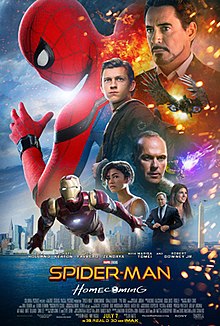
220px-Spider-Man_Homecoming_posterThis was yet another pleasant surprise. Just when I think I’ve finally washed by hands of superhero movies the cineplexes are blessed by two pictures like Wonder Woman and then Spiderman: Homecoming. And they couldn’t be more different. Still, as much as Wonder Woman was invested in its heroine, you get the sense that the crew behind this film care some about Peter Parker too.

Peter (Tom Holland) is living the dream. He got to do battle with the Avengers and Tony Stark has taken him under his wing and he has video proof of it all. He’s expecting great things. He’s expecting to leave the drudgery of high school classes, band, and academic decathlon behind.

Except for most of the film, he is relegated to thwarting small-time crime and he never gets to fight extra-terrestrials or other unearthly beings from outer space. It’s precisely this point that suggests there’s something profound about this character without any of that added white noise.

It’s the very fact that Peter is struggling with his own identity, how to be Spiderman and keep it a secret while simultaneously trying to realize the full extent of his abilities. He’s walking a tightrope because he wants to tell his Aunt May (Marisa Tomei) and he wants Mr. Stark’s right-hand man Happy (Jon Favreau) to call him up for his next assignment so he can prove himself. And yet nothing happens like he wants. No one takes him quite as seriously as he wants. After all, he is a teenager. As some famous philosopher once noted, “with great power, comes greater responsibility.”

But Tom Holland imbues Peter with a genuine likability that lights up his performance from end to end. This guy isn’t a jerk or a moody loser. He falls somewhere in the middle, making idiotic decisions but always because he believes them to be right in that wayward teenage brain of his; he only gets distraught because in his world Spiderman is all he has. Without it he is nothing. That’s his own insecurity speaking.

In one scene that’s undoubtedly meant to be impactful and which subsequently gets referenced later, Tony Stark takes away Peter’s suit after a debacle with an ocean liner and in so many words he says that if Peter needs his suit to be someone then he doesn’t deserve it. Maybe this and the related scenes are needlessly overt in reflecting our hero’s fall and redemption but if nothing else they cast our protagonist in a positive light. He is one of us.

Another thing that constantly reminds us of this fact, has to do with the world and characters he is surrounded by. First of all, the writers do something fairly refreshing and they give him the honor of fighting a villain who is grounded on earth — a man (Michael Keaton) just trying to provide for his family. He is vengeful when the government (Tyne Daly) cancels his contract in favor of the affluent private corporation of Stark Industries. It’s a very real issue wrapped in a superhero film similar to Civil War’s antagonistic dilemma, part of what made that previous film and this one compelling.

But whereas that was a battle among friends, this picture is understandably a high school story. In fact, I couldn’t help noticing the John Francis Daley/Jonathan Goldenstein writing credit not to mention the inclusion of a certain decathlon advisor (Martin Starr) making it hard not to draw up a minor Freaks & Geeks connection.

Honestly, it’s hard to put Spiderman on that level but it does begin to tease out the high school experience as Peter is forced to live a double life while chasing after Adrian Toomes and his clandestine arms operation all across town. Because just as important are his friendship with his Star Wars-loving best bud Ned (Jacob Batalon), teenage crushes, parties, National Decathlon Championships, and, of course, Homecoming.

That’s the beauty of this story. It never tries to take on some epic agenda but far from settling it finds the importance in both the hero’s journey and the growth of someone in the throes of their adolescence. Peter knows that his nighttime activities are hurting his relationship with his aunt and hindering anything that could be between him and his amiable dream girl Liz (Laura Harrier).

The film’s greatest twist (which I’ll consequently omit)  is a beautiful bit of storytelling because it links together Peter’s two worlds so openly. Before they were two entities crisscrossed and tied together like chords of his spider webbing. But there comes a point where they are so closely connected he can no longer keep them separate. He must face it all even if it can’t be resolved as he would like.

So as the Marvel Universe rolls ever onward this picture turns out to be a rewarding entry because in some respects it chooses to tell a smaller story. Still, that story has some lovely touches and a rich cast that more than carry our attention.

The fact that the school outcast (Zendaya) wears a Sylvia Plath t-shirt cracked me up as did a bit of shameless Star Wars product placement, not to mention Captain America fitness videos. But there’s also some sentimental nods as well, namely to Ferris Bueller and the war memorabilia in the Principal’s office honoring his relative who fought alongside Cap during WWII (played by Kenneth Choi in both films).

Michael Keaton turns in a surprisingly sympathetic performance as a “villain” and everybody from Marisa Tomei to Donald Glover are enjoyable in their admittedly small parts. Of course, we have the laundry list of cameos from Robert Downey Jr., Jon Favreau, Gweneth Paltrow, and Stan Lee too as expected.

I won’t harp on this topic too much but it’s obvious that Spiderman is making a concerted effort to be ethnically diverse with its cast which is awesome and refreshing on so many levels. Whether they’re trying too hard with this perfect spectrum of ethnicity is not something to criticize at this point in time. Still, it does suggest that surrounding your typical characters with a lot of diverse individuals in cameos and supporting roles is good enough. Rather than forcing these smaller roles to meet public outcry, there’s a necessity for a better solution.

If the recent Hawaii Five-O pay equality news is any indication, the current state of affairs often has more to do with how the parts were initially created whether in Spiderman or Hawaii Five-O and not how they are interpreted. What might be more radical still is creating these same types of stories and standalone parts for actors who have normally been relegated. I would love to see a Donald Glover movie (on top of Community of course), a Kenneth Choi movie, or even a Jacob Batalon movie. But while we wait, go enjoy Jon Watt’s film for all it’s worth without an ounce of reluctance.

4/5 Stars

Baby Driver (2017)

Baby_Driver_poster.jpgEdgar Wright has a reverence for movies, he knows his movies, and when he makes his own movies there’s always an inherent understanding of the cinematic landscape–taking what’s already been done and proceeding to add his own affectionate spin on it.
There are aspects of his filmography from Shaun of the Dead (2004), to Hot Fuzz (2007), and Scott Pilgrim (2010) that are familiar but you can never accuse him of being derivative because he seems fairly incapable of that mode of filmmaking. Coming from such a tradition of off-kilter modern classics, it’s no surprise that Baby Driver is far from your typical heist film though it boasts both cars and crime in equal measures.

Part of what sets it apart is a soundtrack, something that has been put back in vogue recently by films such as Guardians of the Galaxy. It reflects how popular music can replace a score by tying itself so closely to the plot and the most important elements of its characters so much so that it becomes vital even to the narrative arc.

In this case, it involves Baby (Ansel Elgort) a young getaway driver plagued by the memory of a life-shattering car crash, one of the many traumas being tinnitus, a ringing in the ears that he helps to alleviate by constantly blocking it out with music. Thus, he can be found with a ubiquitous pair of earbuds tucked into his auditory canals ready with an iPod Classic full of tunes for every occasion (He even has a pink one with sparkles).

Of course, his driving songs prove to be the most important and he uses music to keep himself in the zone when he’s making the getaway. What helps him concentrate proves to be an equally thrilling experience for the audience, immersing us in the action in the most utterly electrifying and crowd-pleasing way possible. Cars swerving this way and that down the busy urban jungle of Atlanta with retro tunes blasting in surround sound. If that doesn’t epitomize a summer blockbuster than little does.

Criminal types including a psycho killer named Bats (Jamie Foxx) and an armed and dangerous couple Buddy & Darling (Jon Hamm and Eliza Gonzalez respectively) are only a few of the colorful figures Baby falls into company with. Doc (Kevin Spacey) is their contact who runs all their operations with a plethora of inside contacts and a dry no-nonsense precision. He trusts Baby because he’s never steered him wrong. But it does beg the question how did this young man get himself into this life?

Because when he’s off “work” he spends time caring for his deaf foster father (CJ Jones), mixes audio cassette tapes out of his bedroom and frequents the local cafe that his mother used to work at. There’s also a waitress (Lily James) in said diner who intrigues him and brings him out of his shell with genial vivacity.  They share music as much as they share aspirations and mundane conversations.

But the danger is that the soundtrack becomes a gimmick and it’s true that Wright does a couple of no-nos including having his characters meet and subsequently fall in love over music, namely Carla Thomas’s 1966 hit “BABY” and Beck’s “Debora.” That’s an unforgivable cliche and yet we still want it and in his very best sequences he builds around the cadence and rhythms of the complementary songs that fit immaculately with the editing too. Whether a jaunt to grab coffee, the mundane creation of a peanut butter sandwich or a car chase, each becomes like a musical dance that’s surprisingly fresh.

If the genres of musicals and chase films ever had a point of intersection it would be Baby Driver. These opening moments have the energy of a Gene Kelly musical or even this past year’s La La Land pulsing through them. But it’s equally indebted to the heritage of The Driver (1978), Drive (2011), and of course the king of the heap, Bullitt (1968). The bottom line is that there is a care to deliver the goods as expected and have fun while doing it. There’s something refreshing about practical stunts that don’t utilize CGI and nevertheless manage to feel all the more exhilarating and real. There’s no question that this is an action film. But an action film set to the beat of the music.

Unfortunately, after setting such a fascinating groundwork for a film and delivering on a concept that seems admittedly absurd at times, it does feel that Baby Driver descends into utter chaos–action film hell if we want to coin a term–full of profane violence. No longer does it fully utilize the concept that it was built around or the engaging methods it initially used to draw the audience into yet another colorful creation of genre fiend Edgar Wright.

It’s as if the final act of the film doesn’t quite know where to go. The characters start to deviate from the axes that they have been moving on thus far. Not unsurprisingly Buddy is bent on getting revenge on Baby but Baby also shows a darker side without much provocation and Doc suddenly becomes a romantic sticking his neck out for the young lovebirds. There’s a certain amount of confusion on what direction to go next.

However, you could easily make the case that these developments are simply mirroring reality for a getaway driver, especially one as young as Baby. This is partially a tale of maturation. Losing innocence and trying to find it again without completely blocking out the world around you. In the end, the film settles down just enough into a conclusion that fits the parameters set up in the beginning. It’s lifted from the bloody wreckage and actually slows down long enough to ground itself in its characters once more as stylish and satisfying as ever.

4/5 Stars

Wonder Woman (2017)

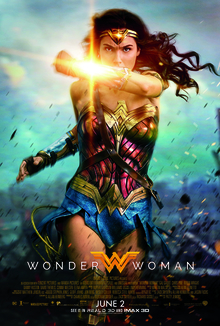
Wonder_Woman_(2017_film)It might sound like meager praise but Wonder Woman is the most engrossing DC offering thus far. It also seems almost unfair to compare across the aisle against main rival Marvel with its terribly lucrative cottage industry or for the very fact that any comparison might suggest how derivative this feature must be.
Yes, Man of Steel and Batman V. Superman cannot hold a candle to most of their competition and Suicide Squad was an atrocious misfire. But this is a film that stands on its own two feet — on the feet of its director Patty Jenkins (Monster) and its heroine Gal Gadot.

Jenkins’ Wonder Woman is ripe for praise and adulation on multiple fronts.  Its closest equivalent would be Captain America: The First Avenger (2011) with its period setting as a stunning backdrop for a superhero narrative. In this one, Diana Prince (Gadot in her first true starring role) is joined by a ragtag band of renegades including Steve Trevor (Chris Pine) and his eclectic compatriots including a drunken sharpshooter, a failed actor with a penchant for linguistics, and a resourceful Native American of formidable stock. They look to sneak into the heart of enemy territory to bring a decisive end to the war (in this case WWI).

But the film also plays a bit like a fish out of water comedy. Diana is the girl born of the Amazons in antiquity and isolation living out the legacy of Greek mythology  — which consequently also seems fused with the Judeo-Christian God and the Fall depicted in Genesis.

Like Thor, she too is god-like, a being outside the realm of humans, trained by her aunt Antiope (Robin Wright) and shielded from the outside world by her mother (Connie Nielsen). Thus, when she actually enters into their world it’s ripe with humorous cultural incongruities. Casual conversation about ancient treatises on sex, sporting the latest fashions which are a bit more modest than her typical attire, learning how to dance, and getting her first taste of an ice cream cone. Each brings a smile to our faces as an audience.

Still, despite her immense skills and innumerable abilities, Diana like Agent Peggy Carter from Marvel is faced with a culture that is not ready for someone who is simultaneously beautiful, strong, independent and wholly unencumbered by normal male patriarchy.  Someone who will not be repressed, blasting through the glass ceilings and cathedral steeples for that matter.

Diana can hardly comprehend how these discrepancies exist. In her eyes secretaries are only glorified slaves and powerful men who sit together in rooms making decisions have no honor whatsoever as their men are brutally slaughtered. It’s ludicrous and it many ways she’s not wrong. We begin to empathize with her character and the problems she sees in the world — the innate desire she holds to make everything right.

Because that gets to what is really truly phenomenal about Wonder Woman. For even the mild superhero enthusiasts she is emblematic of the entire genre with everyone from Batman to Superman, Captain America, Spiderman, Hulk, and all the others. But the one thing that puts her in a class entirely her own is that she is a woman. And this is not meant to single her out but to suggest how important this film is. Lynda Carter gave a landmark performance on the television airwaves in the 1970s but this is the first time this monumental icon has made it to the big stage and it is long overdue.

As such this film becomes a fitting parable reflecting the struggles of women in a callous industry and an oft callous world. Diana becomes a champion of all those women thoroughly capable of living life with individuality, confidence, and above all love for their fellow human beings. Diana comes at life from what some narrow-minded folks might call a woman’s perspective caring deeply about the helpless and their suffering but for the rest of us, it’s a very human point of view.

However, it’s equally important to note that in an attempt to make Diana of great import does in no way relegate the other characters and Steve (Chris Pine) becomes one of the most enjoyable supporting blokes in recent memory.

Gadot and Pine play complementary roles that perfectly mesh together. They’re both brave, they’re both extraordinary, they both care deeply but it can be in different ways. Steve finds himself rescued by Diana and protected by her immense powers as he continues his espionage activities behind German lines. Still, he’s able to explain the intricacies of the world to her and lead her to realize that humanity is not as black and white as she assumed it to be. That is big. In Diana’s eyes, the whole arc of the film is like so. If she can kill Ares, war will be over and mankind will fall back into unity as Zeus had originally ascribed.

Wonder Woman supplies a final twist that while somewhat understandable from a cinematic point of view still manages to take a little of the meaning out of Diana’s realization. Since this is also a love story, that in some ways slightly salvages an ending that succumbs to the usual superhero tropes and pyrotechnics. It’s this further discovery that while Diana may not be to blame for all this chaos, humanity despite their faults is still worth fighting for. What Steve calls “truth” I would probably call “grace” and it’s semantics really but it simply suggests this idea that we do for others what they do not deserve, out of love, the highest noblest form of sacrificial love — always seeing others before yourself even those you disagree with — even when it comes at great cost. For Steve and Diana, those mean two entirely different things again as he tries to thwart the Germans nefarious intentions and she battles it out with someone with powers, not unlike her own.

Despite an admittedly clunky framing device to set up its narrative, the film does learn something from the Suicide Squad as well by focusing on origin story over a mere objective or mindless action. Wonder Woman begins to falter when it simply gets caught up in the normal rhythms of superhero films with villains, explosions, and the like.

What’s interesting are these characters, the wounds that they carry with them, their environments and how that shapes the world that they find themselves in. In this case, Gal Gadot proves to be a winsome heroine with an impeccable blend of innocent beauty, boldness, and heart that’s completely disarming. Meanwhile, Pine’s as charming as ever but let’s not forget whose film this is because we’ve waited long enough. Wonder Woman has made a triumphal return and not a moment too soon for DC.

4/5 Stars

Happy Independence Day!

Guardians of the Galaxy Vol. 2 (2017)

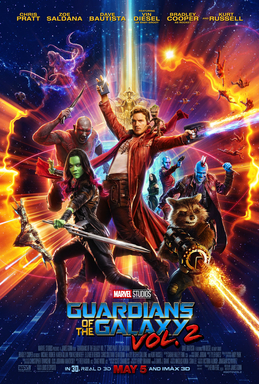
GotG_Vol2_poster.jpgI find that my own life was greatly influenced by my father during my most formative years, in particular in the realm of music. I grew up on the classics of the ‘60s. But there’s that juncture in time perhaps during middle school where you begin to branch out and you latch onto other sounds for some inexplicable reason. And it doesn’t have to be modern artists but even those who your parents never imparted to you. That is to say that “Brandy” by Looking Glass is such a song for me. I loved it the first time I heard it and not on any provocation of my parents. I consider it one of my own personal favorites.
Thus, when Guardians of the Galaxy opens in Michigan in 1980 “Brandy” blaring on the radio of a sleek convertible I resonate with the moment. The man and the woman are unknown to us but that familiar Dairy Queen Middle America matched with that paradoxically joyfully melancholy love song pulled me into Guardians of the Galaxy Vol. 2 in an instant.

In this way, the film still plays to its strengths namely a retro vibe that’s in perfect cadence with the tongue in cheek tone and explosive sci-fi storyline. Writer-Director James Gunn is back in the driver’s seat delivering his expected riff off the Marvel blockbuster that at this point is both irreverent and violent with persistent zingers and mild touches of heart. It’s the kind of entertainment that will easily find a broad audience because once more he delivers the goods while simultaneously making light of them. We generally like him for not taking his subject matter too seriously, even if sometimes it, ironically, feels like the story dips too quickly into melodrama.

Still, at its core is a misfit hero that we love to cheer for in Peter Quill (Chris Pratt). This film examines in greater depth his own identity as a part human part spaceman. He’s still reeling in the shadow of his mother’s death many years ago and then he meets the man purported to be his father (Kurt Russell) the charismatic Ego.

Meanwhile, there are his other relationships to be parsed through and in many ways, they get pushed to the fringes. Baby Groot (Voiced by Vin Diesel) definitely ups the cute factor and Rocket (Voiced by Bradley Cooper), as well as Yondu (Michael Rooker), are there to play their crusty curmudgeon roles that nevertheless are given a bit of definition. We like them better by the film’s end as might be expected just as we are made to consider the dynamic between Gamora and her vengeful sister Nebula.

So Guardians is not only grounded by Walkman and classic tunes and a very human sense of humor but these relational moments. True, they’re not played out to the best degree as Quill tries to figure out his “Sam and Diane” thing with Gamora (Zoe Saldana) or reconcile his feelings for his father but that’s okay. 

My only qualms are the fact that sometimes Gunn seems to play too much into the jokes and tries to delve into the conflict too quickly so it comes off a little shoddy. The laughs are funny initially and the drama compels us at first but at times Guardians seems to stretch itself too far tonally. It was not meant to do that much.

But the characters are still an endearing ragtag band of misfits, the music is spot on (ie. Sam Cooke, Glenn Campbell, Electric Light Orchestra, Fleetwood Mac, etc.), and there are some purposeful references to Cheers, Mary Poppins, and Knight Rider that come off wonderfully as nods to a bygone era and an earth that we know and love. Brandy’s place at the center of the film’s narrative helps in in the nostalgia department as well. Whereas, in a film like The Martian you get the sense that disco was considered a cool addition, in Guardians music is often so closely tied to the storyline and the tones created in each scene visually. It uses its soundtrack incredibly well. 

An interesting caveat is the fact that in the rather unexpected arena of a superhero film, spiritual issues are briefly touched on. Namely ideas of a god complex, this idea of paneverythingism as coined by Francis Schaeffer, and even the idea of duality of persons compared to a trinity. It’s all perfectly introduced to us as we enter Ego’s creation with the sounds of George Harrison’s “My Sweet Lord” wafting over the landscape.

Even if it only scratches the surface we are in some small ways asked to consider the true purpose of man, a being that while fallen is certainly meant to live in fellowship with others. What that’s supposed to look like is another issue altogether. If that’s a little too heady then there’s enough anarchy and joyous eye candy to fall back on. Enough said.

3.5/5 Stars

Blue Jay (2016)

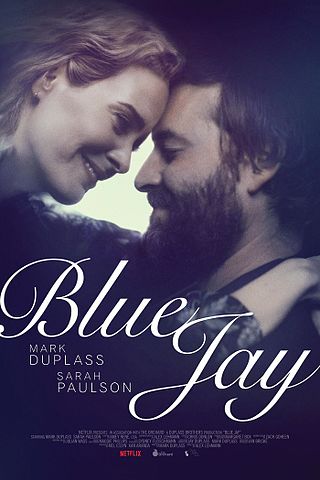
Blue_Jay_film_poster.jpgAre you leaving room for Jesus?~Amanda

You know it. Catholic school forever.~Jim

Is it true that nostalgia always feels like it should be in black and white? If that sentiment is true there’s a rooted purpose in Blue Jay’s muted black and white tones that run deep. So often we consider it as a gimmick in the modern film spectrum but here it works.

This is a story of boy meets girl again. Now they are both 20 years older no longer naive high school sweethearts and he’s lost his mother and she’s now married to a man many years her senior. They’ve moved on you might say as is customary with those living life. But this day they run into each other at the local market. The stage is set for a fulfilling reunion.

However, in the opening interludes, we don’t know anything about either of them. Jim (Mark Duplass) with his scruffy ensemble and Amanda (Sarah Paulson) with her knit cap. For us, both of them have a clean slate but for the two of them meeting again is a mixed bag of emotions.

In these moments, it seems like all parties involved with the film are trying to make everything as unbearably awkward as possible. Is this the way movies work? A script must always acknowledge the sheer awkwardness of it all, creating certain pretenses, and piddling around with what characters are actually thinking. Is it simply a mean trick of a screenwriter to try and pull us into his story, in this case, Mark Duplass, or is there actually some truth to it all?

Are people actually this awkward in real life? Heaven forbid we actually act like this when we’re together or worse yet with someone we have a crush on. I can answer that rhetorical question almost instantly as a multitude of cringe-worthy moments surge to the fore. So yes, there’s probably some truth here and yes, Duplass is drawing us in. Of course, the final joke is that the film utilized no script at all only simple character arcs to arrive at its conclusions.

Still, these moments are only the setup. It’s not Blue Jay at its best. The film comes into its own as time progresses and the contours of the two characters become more evident with every memory they manage to conjure up and every little thing they do together that takes them through their old routines. They stop at the local liquor store and the proprietor (Clu Gulager) with his cowboy hat welcomes them in like old times. Whether or not they know his unassuming roots in western television lore is another thing altogether.

Then, they make the rounds of Jim’s old family home, the house of his deceased mother which is left pretty as it was when he was still a teenager. Piled high with treasures, clothing, trinkets, romance novels, and other artifacts from that long bygone era known as the 1990s.

They let the nostalgia waft over them as they reminisce together, playing their admittedly dorky version of “House” as Mr. and Mrs. Henderson and exhibiting the funkiest ’90s dancing as two of the whitest kids you know. But they accept their quirks and how dorky they are. That’s the fun part as they remember their younger days.

It’s in these wistful and yet still somehow carefree moments that the film recalls one of my favorite lyrics,

Here’s to the twilight
here’s to the memories
these are my souvenirs
my mental pictures of everything
Here’s to the late nights
here’s to the firelight
these are my souvenirs
my souvenirs

I close my eyes and go back in time
I can see you’re smiling, you’re so alive
we were so young, we had no fear
we were so young, we had no idea
that life was just happening
life was just happening

In the final stretch there some big reveals, there’s some of the drama we were expecting, some of the histrionics that we were wary of from a film such as this. After all, they’re in a confined space together with so many emotions still dwelling inside. You wonder about the old dichotomy that men and woman can either be married or unmarried. They’re never just friends because the boundaries become too difficult to maintain. The self-restraint too difficult to manage even in the most self-controlled of us all. After all, metaphorically speaking, a man can’t scoop burning coals into his lap without burning himself.

But we’ve come to care about the characters enough that’s there no sense that this is some shallow attempt to play with our emotions and get a rise out of us. Somehow it feels like a less flawed iteration of Your Sister’s Sister because it’s frank but never purposely crass and more than its predecessor Blue Jay feels true blue and sincere. It’s a more intimate even heartfelt drama that wins its audience over.

These characters deservedly earn our respect and even in the modicum amount of time they do well to build a rapport with their audience. They do the heavy lifting by opening up and we are called to respond accordingly. The tears and the laughter are intermingled. The regrets with the reality. The way we perceived things would look farther down the road and how they look now. I guess you could say that it’s the blue jay way–reflected precisely by the path this film takes.

It’s the memories and the dashed hopes it starts to pull out of the closets back out into the open. It’s joy. It’s laughter. It’s pain. It’s heartbreak. And as is usually the case with life the ending is unwritten. That’s why they’re still making films like this, now until the end of time.

3.5/5 Stars

La La Land (2016)

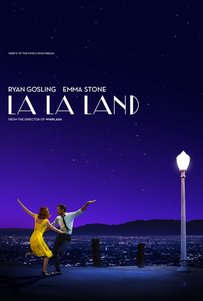
La_La_Land_Poster.jpgAfter watching this film two things become astoundingly obvious. Damien Chazelle has an equally unquenchable passion for film and for jazz. He’s also extremely bold, going all the way when it comes to choices as a director with everything from camera set-ups, lighting, staging, even casting. In fact, let’s start right there.

Emma Stone and Ryan Gosling do not initially pop as performers. They’re not song and dance entertainers equal to the likes of Astaire & Rogers or Gene Kelly or Judy Garland. There’s no contest. But the brilliance of this decision is the very fact that these two beloved stars are one of the few remnants of the bygone Hollywood era where romantic stars were paired up together for more than one movie. Bogey & Bacall, Tracy & Hepburn, Loy & Powell, yes even Fred & Ginger.

And in a generation that’s often lacking that kind of history, Emma Stone and Ryan Gosling still have a bit of that cinematic romance tying them together not just in one film but in multiple allowing the audience an even greater connection with them.

It makes the musical thoroughly modern and yet most certainly takes cues from the past and the rich tradition that it was born out of. The film’s knockout opening sequence is a far grander more audacious riff off of The Young Girls of Rochefort’ while the film’s ending reflects Chazelle’s deep affection for Umbrellas of Cherbourg wedded with the fantasy scapes of An American in Paris.

But sandwiched in between those obvious touchstones is a film that’s at moments mesmerizing, beautiful, and engaging on its own merits. Chazelle’s sheer boldness behind the camera is thoroughly impressive because he commits to telling his story in the most extraordinary way possible. It dares to dream, succumbing to the glories of the movie musical, taking risks that generally pay off in a big way. Like Jacque Demy he plants his film in the real world, in this case, contemporary Los Angeles, but he also stylizes it through elements such as production design, color, and lighting.

Beginning with the extended artistry of the initial traffic number, cinematographer Linus Sandgren’s camera is about as fluid as they come, even overtly so, bringing such attention to itself that in many respects it becomes another figure, shaping how we view every one of these environments. Its conspicuous ways generally help to turn dance sequences and musical numbers into dynamic spectacles but there are individual moments where we might still question if a more static perspective is in order.

Still, it’s easy enough to disregard this as the camera is constantly casting its gaze on the world painted with the vibrant tones that brighten Los Angeles and allow it to enter a stylized awe-evoking state of eye-popping energy. Likewise, the storyline mixes and matches real-life locales with the artistic and the magical. It succeeds in becoming a diverse patchwork of lights and staging that sets the tone for every moment our stars are on the screen as everything from the backdrops to the very clothing that the actors wear is an extension of their current state.

Emma Stone is a real winner, genuinely hilarious and cute while still being overwhelmingly compelling as she struggles through her acting career balancing her “real job” as a barista with her true aspirations as an actress. And to his credit, although I wasn’t all that sure about Ryan Gosling in this film, with Stone by his side somehow it works rather magically superseding any other objection we might have about his performance. Like Astaire & Rogers, the song and dance routines become the galvanizing moments in the film as they should be. True, they hardly have the same caliber but their chemistry is what it holds it all together.

The minor influences of The Band Wagon can also be seen when they dance together in the night air overlooking Los Angeles. Meanwhile there gravity-defying routine at Griffith Observatory leaves behind simple references to Rebel Without a Cause and becomes its own spectacle entirely.

In all the other nooks and crannies you see the affection for film. The Killers poster on the wall, Ingrid Bergman’s face plastered up in the bedroom, and movie nights watching Bringing up Baby and Notorious with Grandma. But that’s only matched by the infatuation with jazz that similarly surges through the narrative. In this case, Sebastian is the vehicle for this passion. As far as criticisms the only one that I have heard voiced and I too can call into question is the very fact that a Caucasian male wants to resurrect jazz in its purest sense.

If nothing else it’s highly ironic because tradition says that this is an African-American art founded in those roots. That’s not to say that others cannot take the mantle necessarily but in some ways, Sebastian seems to think that people like Keith (John Legend) have sold out on their culture. I suppose that issue is still up for debate long after the credits roll.

Although “City of Stars” might be the most noted number developed by Justin Hurtwitz and Chazelle for this film, I must admit my personal favorite had to be “Audition” because Emma Stone delivers the song with such an earnestness that it’s mesmerizing to watch as all else disappears and we are left to watch her sing in empty space. Perhaps the film is often lacking the minimalistic moments and the juxtaposition of a scene such as this becomes especially striking. It’s so simple.

The final question to be asked is, what is La La Land or closer yet, what is Chazelle trying to say about fame and pursuing your dreams? Because in the end, it feels like a mixed message. The film is constantly a seesaw back and forth of following your passion, versus just making ends meet, to selling out or turning to alternative paths entirely. And when it’s all said and done and the movie has wrapped up we don’t know quite what we think.

We leave both characters in a place where they are undoubtedly better off than we found them in some respects. Still, there’s a wistfulness that hangs in the air, a bittersweet quality that lingers a moment longer and that gives La La Land a certain power that feels more complex than a simple musical fairy tale. That is yet another thing Chazelle borrows from Demy that works so well.

In some ways, it’s a very “un-Hollywood” ending and though the film does spend a lot of its time infatuated with that very industry, that doesn’t mean it can’t still be conflicted in the same breath.  In fact, that’s probably the most honest conclusion it could have arrived at. Dreams are good, the world can be a magical place if we let it be, but that does not mean for one instant that we will not be met with heartbreak or difficulties along the way.

I found myself unconsciously asking myself, What does the title La La Land even mean? I had not fully considered the implications of the phrase. Yes, it’s having your heads in the clouds, maybe even existing in an ethereal world of fanciful dreamscapes as much as it is a moniker for those who live the Hollywood lifestyle.  And it’s in both these places where the film dwells. Partially in the magical realms of dreams but also in those extremely human moments of confusion and failure. That is La La Land in a nutshell.

4.5/5 Stars

Mustang (2015)

Mustang_posterThere’s something inherently striking about the title Mustang. It signifies something about the title girls, their free-spirits, billowing brown locks, continually running in a type of a herd, constantly full of life, movement, and motion. But with a mustang and any other creature full of life and vitality, there’s always an opposite force looking to impede, tame, and prod the spirit into some sort of submission. Because being free, being wild is constantly challenged in the world that we live in and this story is a prime example.

The film opens when what can be called little else except for a “tribe of girls” leave their school to go traipsing along the beach with a group of boys. In these moments we begin to understand quite well since frolicking, laughing and playing chicken are the same in every culture. But that’s not how their elders see this seemingly innocent act. Instead, it’s full of passion, lust and moral depravity.

In many ways, although it’s set in Turkey, Mustang plays with some of the same themes of Sofia Coppola’s Virgin Suicides but it is a film that surges with vim and vigor rather than wistful detachment. And even though it has those aloof moments at times, they feel more personal because most of the time instead of being on the outside looking in, we’re constantly being shown the perspective of these girls, a far more frightening point of view.

Furthermore, this isn’t simply about one fundamentalist family that’s the outlier but an entire culture that holds women in a certain regard. There’s obviously something amiss in cultures that lack social mores and a sense of reality, but there’s something equally frightening in those cultures that are utterly repressed. Life is literally driven by fear and shame. Bringing dishonor and gaining the respect of your neighbors. A life like that can be nothing aside from taxing because you can never possibly measure up to the societal standards.

The television, the media, and everything else seems to reinforce exactly these points. Meanwhile, the girls go sneaking out to a football match only to miss the bus, only to hitch a ride with an unfortunate bystander who gets them there in time for the excitement.The images at the football match carry an almost infectious backbeat, hyperactive and frenetic with hair flying, hands flailing and bodies going every which way, but still, every action has a consequence. Every moment of freedom is met with an equal event of restraining power.

In this case, the girls are prepped and prepared for marriage, arranged between families like a shrewd business deal to save face. Their fearful grandmother and domineering uncle think it’s the best for everyone and the girls have little say in their fate.

The youngest girl, Lale, is a tomboy, a perpetual climber but she like the others feels trapped. And they are, as first one sister than another are hitched up in a marriage. But it’s when marriage no longer becomes a joyful union but a suffocating prison of unhappiness, something that it was never meant to be at all. True, one girl gets a bit lucky, the other is utterly unhappy. Still, two down and three to go. That’s the way grandmother thinks of it.

By this point, the three remaining girls are forced to find any little piece of rebellion they possibly can whether it be snickering at the dinner table or something altogether more audacious. Grandma and uncle are unrelenting in their matchmaking and finally, Lale and the only sister she has left are at a crossroads. They must take a plan of action or resign themselves to their impending fate. You can probably guess what their decision is but that doesn’t make executing it any easier.

Mustang is certainly a cultural commentary and you get the sense that it’s a very personal work by writer-director Deniz Gamze Erguven. However, within its portrait of youth, womanhood, and marriage there are also some universal truths to be gleaned. There’s something to be said for freedom — in youth and adulthood. To take it lightly is to commit a grave error

4/5 Stars

Tu dors Nicole (2014)

Tu_dors_Nicole_POSTER“Nicole, you’re sleeping…”

I admire a film that is able to linger and I’ve read enough scripts to know that there is a difference between filling up scenes with mindless dialogue and slowing the action down in a way that’s inherently more lifelike. In fact, I now have an increased fascination with the films that don’t rely so much on plot points at all but characters and the everyday situations that they encounter. Because, if I’m honest, everyday situations often make up most of my life and they are most relatable to me. They’re the stories that feel the most genuine.

Just looking at Stephane Lafleur’s Canadian drama, Tu dors Nicole, a little bit of the mundane is evident. Sorting racks in a clothing store. Lazy afternoon bike rides. Lifeless neighborhood streets. Long summer days with the sound of crickets outside the window. Hot nights where you can hardly keep your eyes clamped shut due to the miserable heat that keeps you tossing and turning.  It might all seem of little consequence and in many ways it is. But in the modern arena where every film must be the next big thing, the greatest spectacle imaginable and so on, it’s actually quite refreshing when someone dares to tone it down a notch.

There are some oddly weird moments throughout the film. Namely, Martin, a boy who has the vocal range of a 30-year-old man. And the traces of harp music whenever something especially enchanting comes to the fore. Then, there are the closing images of water spouting off into the atmosphere.

However, what’s at the core of Nicole is a story of adolescence coming into adulthood. It’s not so much a coming of age narrative as emblematic of that period of transition. And if Nicole had the fragments of a prototypical plotline it would be this.

The eponymous young woman (Julianne Cote) has recently graduated college and is working a menial job. Her parents have gone away for a little vacation leaving her behind with a list of tasks to complete in their absence. She would have the house to herself if it wasn’t for her older brother who is always jamming away with his bandmates in the living room and all throughout their house. Their backbeat is constantly reverberating through Nicole’s life. She hardly gets any peace and quiet.

And yet even in the tranquil moments, our protagonist still seems a bit melancholy. Mini golf isn’t as fun as it used to be. A trip to Iceland is more fun to plan for than it is to actually go through with. Nicole gets in a row with her best friend. She loses her job after taking a few articles of clothing home with her. But life continues like it always has.

In this case, black and white is not simply an aesthetic choice but an appropriate palette to reflect the underlying tone of this film. There is a listlessness, an apathy to Nicole’s life at the moment.  The thing is it’s due to nothing in particular, at least nothing spoken aloud or seen overtly onscreen, but like life, it just is.

Our main hint comes from the title itself. Could it be that Nicole is asleep? She cannot sleep at night, because, perhaps she does her sleeping during the day–going through the motions without a great deal of purpose — without a goal to drive her. We’ve all been there. Maybe even a few moments ago. Growing up in this fashion is not always all it’s cracked up to be.

The question to ask at the end of this particular narrative is this: Have things changed? Not really. But so it is with the vicissitude of life. There will be highs and lows. Moments of vibrant colors and grayish doldrums. Quarter life crises and galvanizing flashbulb moments. Still, we keep on living, latching onto what gives our confusions and doubts even a shard of meaning. We aren’t meant to live life asleep.

3.5/5 Stars