Mickey 17 (2025)

It was my pleasure to see Mickey 17 and it was because I was in the company of new friends. The film itself comes with complex feelings. 

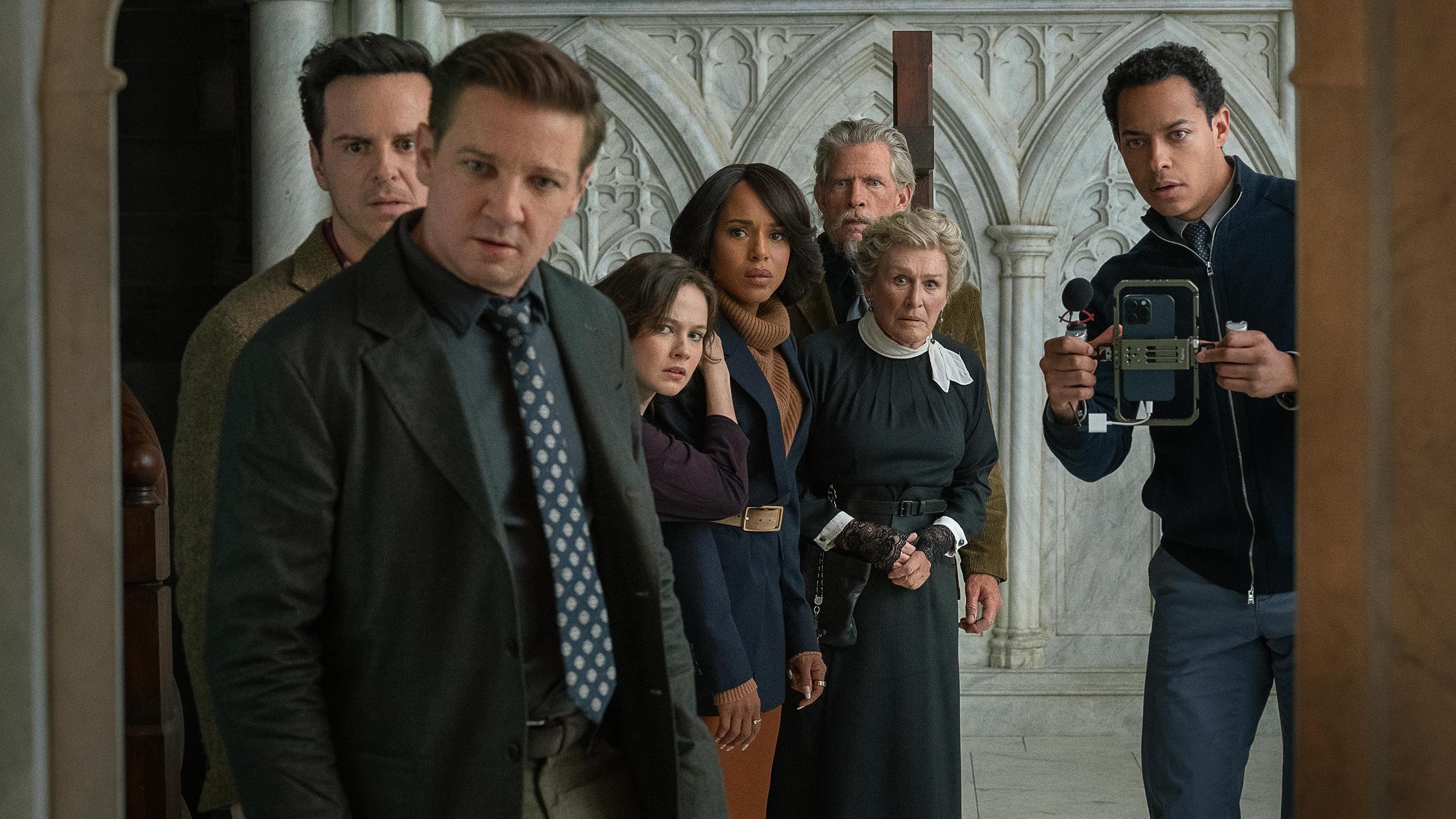
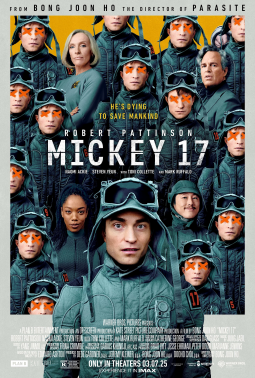
Bong Joon Ho joins forces with Robert Pattinson for a story that defies easy categorization. It’s full of a myriad of ideas in line with the South Korean’s usual preoccupations including class and pervasive humor. There are some potentially cute creatures and, if not cute, then they are decidedly more sympathetic than many of the humans we come in contact with. 

While watching the film following Mickey Barnes, a schlub of a man who signs his life away for an excursion to outer space, I couldn’t help but return to two reference points. The first being Star Wars: The Empire Strikes Back and then Ridley Scott’s Blade Runner.

We meet Mickey as he is discarded in a snow cave on an icy planet — ostensibly left for dead. Given his costume and the circumstances, it’s difficult not to see echoes of a frozen Luke Skywalker facing imminent danger in a Wampa’s lair. Except we are dealing with a drastically different world.

Because this is actually the umpteenth iteration of Mickey, and he is part of a program that prints copies of human beings to do the morally dubious dirty work no one else is willing to undertake. 

After all, since he can just come back as a new version of himself every day, what’s it to him if he contracts a deadly virus or gets eaten alive by a snow creature all in the service of the greater good? Most of the early montage is made up of Pattinson being moved around like a ragdoll Frankenstein constantly being tested and incinerated when his utility is used up. 

As you might imagine the connection I see to Blade Runner are these fundamental questions of what it means to be human and who we give dignity to. In other words, is this an inalienable human right? Because although he was a nobody back on earth, on the run with a wily conspirator Timo (Steven Yeun), Mickey still is a human with thoughts and feelings even as he’s relegated to second-class citizenship. He doesn’t want to die any more than anyone else, but he resigns himself to the cycles of life. 

Pattinson channels an accent like you’ve never heard from him before that has a bit of a young Steve Buscemi in it. It’s a bold choice but then for the entire movie, Pattison just goes for it because there’s no vainglory in a part like this if you’re squeamish about taking it to bizarre ends. 

For me, Bong’s latest film works best as a cosmic character piece with Pattinson front and center. There could be a version following his existential arc in outer space as he comes to terms with his station in life while falling in love.

However, because it’s 2 hours and 15 minutes, Mickey 17 attempts to be about a lot more with an epic scale. The primary problem is there doesn’t seem to be a compelling narrative thrust even as Mickey is part of a vague expedition to colonize a distant planet. 

The film’s most obvious villain is the failed political figurehead Kenneth Marshall (Mark Ruffalo), who now has aspirations to colonize space with a superior race of human beings no doubt made in his image; he’s no Marcus Garvey, and I won’t even begin to guess if he’s a caricature of other political figures as Ruffalo hams it up with all the self-aggrandizing buffoonery he can muster.

Toni Colette plays his wife who is primary confidante and probably the brains behind the operation a la Angela Lansbury in the Manchurian Candidate. However, the deficiency here is that they do feel too much like cartoons. What are their genuine motivations besides being easy to tear down and be infuriated by?

On a positive note, Naomi Ackie plays a security officer on the ship who, for some inexplicable reason, falls for Mickey becoming his advocate and protector. It is an ongoing theme in the movie that the women are strong, but with Nasha we would like to believe she sees something genuine and unsullied in Mickey’s personhood.

However, when she’s on screen it feels like Nasha stands for something as both a romantic being and a person of principle who heroically champions good. In the fashionable parlance of the age, she speaks truth to power. Still, Ackie plays it in such a way that the performance feels modulated and not simply driven by a platform or plot mechanics but by her genuine affection for Mickey. 

Two other notable heroines are the timorous scientist Dorothy, who becomes an ally with her chosen expertise, and then Kai, a grieving security officer who comes to Mickey’s aid when he goes before Kenneth Marshall for an arranged dinner. Marshall wants her for her superior genes, perfect for colonizing his new planet, but she turns out to be a person of compassion too — something he couldn’t care less about. It feels like a turning point in the story even as she all but disappears from much of the final act. 

The great leader has deigned to have this expendable at his table where he feeds him raw meat, and they pray and sing hymns with a bombastic faux religiosity. He prays only to be heard by others thinking he will be heard because of his flowery words.  

It’s one of many moments where we see this state-sanctioned religion derided for what it is by Bong. There is an irreverence that is prototypical for Bong, but it seems as if it is directed at what we might call “Christendom” or in this case the accouterments of religious culture that feels disingenuous and more about propping up leaders to accrue power than any kind of piety or true virtue. 

However, much like Parasite, if we dig under the surface, the framework of the world still functions on logic that we all comprehend. There are the aforementioned questions about what it means to be a human and whether or not that should ascribe us a certain dignity. 

And in the same sense, while Marshall and his wife prove to be a pernicious, narcissistic tandem as they look to eradicate the endemic ‘creepers’ in a contentious standoff, they fall into the age-old fallacy.

Because their whole economy is predicated on showmanship and creating fear around the “other.” Mickey knows these creatures have more to them because he has come face-to-face with them. In a weird way he is an intercessor so even as the humans cause destruction and needless death, there is a requirement for a scapegoat. Someone to atone for the blood that has already been shed…

So while Bong’s latest film is not without merit and there’s plenty to quibble about, it feels like the film falls admittedly short in one primary department. It languishes in telling a focused story even as there are plenty of individual performances to single out.

As an Asian-American, it seems like Steven Yeun has currently cornered the market on these kinds of skeevy or despicable characters which feels like his well-won prerogative to upend a generation of model minority stereotypes. He’s played ceaselessly interesting characters of late. Even Steve Park gets a chance in the limelight as he continues to build a wonderful second act for himself thanks to Wes Anderson. 

Mickey 17 gets his happy ending and in a sense, it feels well-deserved. In this way Bong allows himself to be a romantic at heart even in a world beholden to his comically dark proclivities. I commend the movie more for its themes than its storytelling and given Bong’s track record it seems a shame because he’s one of the foremost genre smugglers working today. 

3/5 Stars

Dreamin’ Wild (2022)

I’m a sucker for a good jukebox biopic and Dreamin’ Wild is one of the films that might fly under the radar just like its subjects. And yet when you actually come face to face with it you find something tender and sentimental in the most endearing of ways.

There’s something to be said of a contemporary movie that unabashedly focuses on a close-knit family that loves each other dearly and celebrates them. For whatever reason, contemporary cinematic culture almost feels averse to certain topics because they feel staid and formulaic. Subversion and cynicism win the day on most occasions.

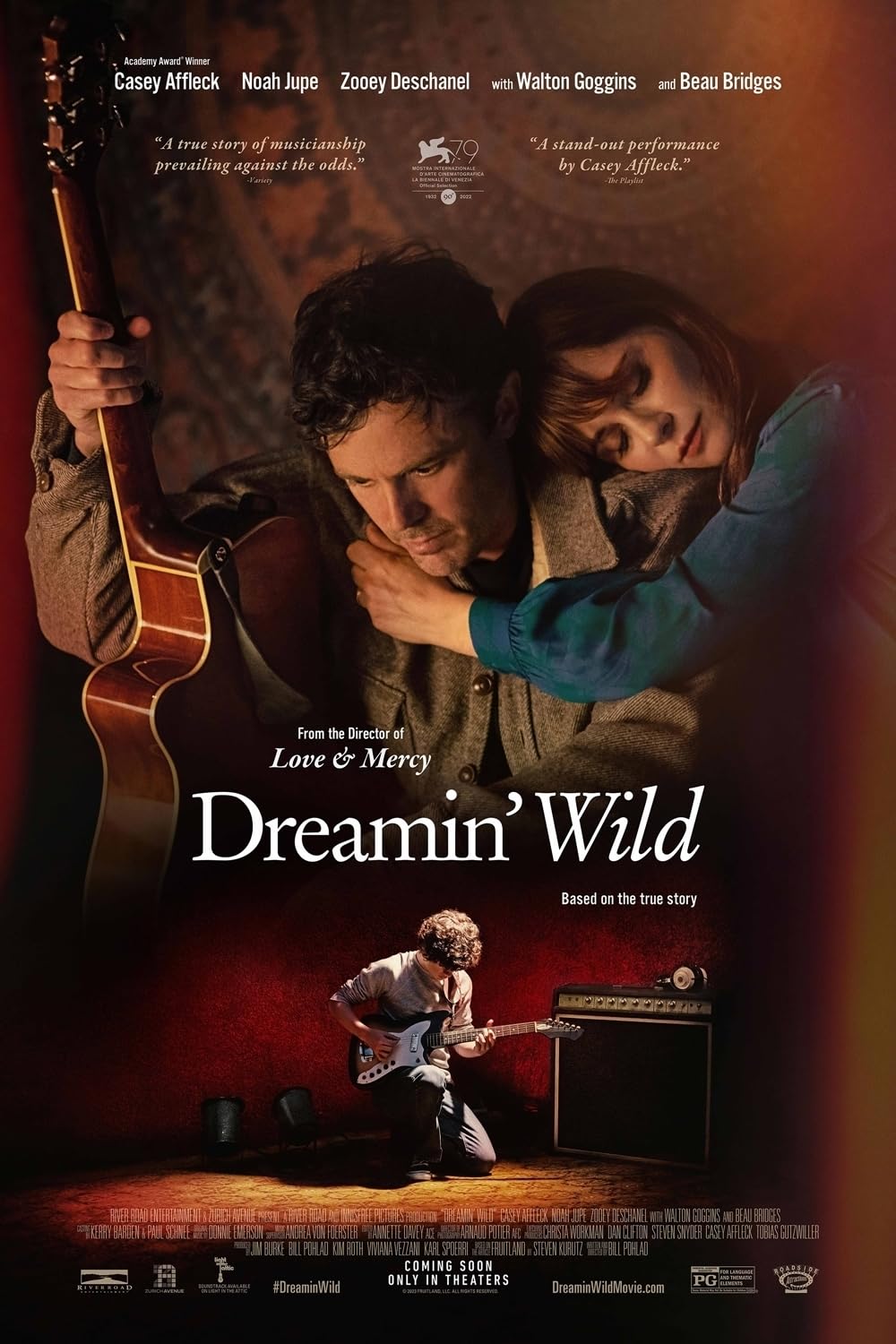
Dreamin’ Wild almost feels radical because the film is buoyed by so much goodness and it’s part of what makes this adaptation of the Emerson brothers’ story worth felling. The fact that these teenagers made music, and it only made a dent 30 years after its release is astounding. In the same breath, it feels like something worth championing without a lot of fabricated drama — at least in the beginning.

The ascension and the celebration of the success in itself is the kind of underdog story that still can grip us as human beings. Dreamin’ Wild reminds us why. Matt Sullivan (Chris Messina) has been trying to find them because he wants to reissue their work on his record label. There’s a sincerity to him that’s disarming and genial. You can tell he’s genuinely glad to be brought into this family’s orbit and do this for them.

Donnie (Casey Affleck) and Joe (Walton Goggins) find out the internet is blowing up about their record. Pitchfork gives them a fantastic review and The New York Times comes out to do a profile on the family. Matt says there’s high demand for some concerts to get them out there in front of fans. The upward trajectory is rapid and yet so thrilling to watch unfold because we get to live vicariously through the brothers’ joy deferred after so many years.

In the face of this overnight stardom, Affleck does his trademark mopey, despondent role, but in all fairness, he does it quite well. We wonder what it is buried in his past that might conceivably get in the way, but it’s a story engaged with the artist and the creative genius coming up against familial obligation. And in this regard, it seems pertinent to highlight the movie’s writer and director.

Bill Pohlad’s other most prominent project as a director was Love & Mercy about Brian Wilson, and it’s easy enough to try and thread these stories together. They share similar architecture with two contrasting timelines. This one throws us back into Donnie and Joe’s boyhood with small swatches of time and interactions reverberating into the present.

You begin to see what might have drawn the writer-director to this pair of stories because they examine someone with such an uncompromising creative vision, but for whatever reason this single-mindedness can somehow derail the relationships you hold most dear. Things around you suffer for the sake of the art.

And whereas Brian was struggling against his own demons and the authoritarian presence of his father, Dreamin’ Wild almost has the answer to that. Donnie’s father as played so compassionately by Beau Bridges is the picture of generosity and unconditional love. So much so it almost crushes Donnie with his own guilt and shame — the inadequacies he feels with his failed music career thus far. He’s dealing with some issues analogous to Brian in some ways, but they develop in a very different kind of creative environment.

Joe (Goggins) is such a pleasant person and it becomes evident he’s always been a champion for Donnie, his creativity and his talent. They’re close-knit and always ready to  support one another. And Joe knows he’s not going to be some great artist and he’s contented in that; Joe takes each new develop with a wonder and genuine appreciation. He’s pretty much happy to be along for the ride, but he’s present through it all.  His younger brother struggles to do the same because he’s terrified about making the most of his opportunity and with it comes debilitating angst.

In a movie enveloped and incubated in so much goodness, it’s ultimately this that threatens to derail the whole uplifting narrative. One crucial scene involves the rehearsal process. Joe is just getting back into it. He’s rusty, and so to compensate Donnie brings in some back up musicians including his talented wife Nancy (Zooey Deschanel).

Donnie’s tormented perfectionism will not condone his brother’s mediocre playing and so he lashes out. It’s true maybe he’s not John Bonham, but something has been lost and the magic of the moment is in danger of evaporating amid this kind of creative tyranny.

Joe feels awkward; he can’t defend himself and so Nancy stands up for him and calls out her husband for his distorted expectations. What is this big triumphal success, this grand rediscovery if Donnie cannot enjoy it with his brother playing drums by his side? It would feel hollow any other way. Those of us who are not musical savants understand intuitively.

It’s about being present and appreciating the moment. Sometimes less than perfect is okay if it means getting the most out of what’s in front of you and being fully present with the people you love. Because what does perfection profit you? We always fall short. Still, if you have family in your corner who know and love you in spite of your faults, that is a supreme a gift.

The movie’s most fundamental themes are about brothers, fathers and sons, and so more that I resonate with. I won’t try to put words to them all so that you might be able to experience them of your own accord. Even a momentary prayer before a big show feels emblematic of a quiet revolution.

Ultimately the boys do reconcile and they have one final performance. It’s not a big triumphant show (like before), and although I enjoyed hearing the music again I questioned the necessity of the moment.

Then Pohlad did something I wasn’t expecting; it took my breath away. He shows his two actors. They’re on guitar, drums, and singing.  The audience, including their parents, looks on, and then when he cuts back. Now staring back at us are the real Emerson brothers in the flesh.

I can’t quite articulate it, but there’s something so powerful about this subtle shift as the make-believe of the movies becomes reality, and we see those people there making music together and enjoying one another’s company with their real parents looking on. It’s a full-circle culmination of everything we could desire.

I think it’s the intimacy I appreciate it. You can tell the people making this movie — just like Chris Messina’s character — are doing it because they are captivated by this story. It moves them. I feel the same way, and for whatever the flaws or tropes of Dreamin’ Wild, I was immediately rooting for it. Of course, the first thing I did after the credits rolled was to search out this little record from 1979 by two rural teenagers. Pretty remarkable.

3.5/5 Stars

Licorice Pizza (2021)

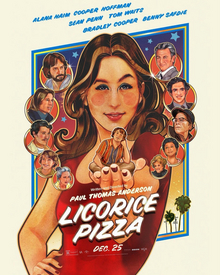
It’s apparent Paul Thomas Anderson lovingly pinches his opening shot from American Graffiti as his boyish hero Gary Valentine (Cooper Hoffman in his debut) primps in front of a bathroom mirror, a toilet all but exploding behind him. The whole movie is born out of a chance meeting at a school picture day, but it would come to nothing if Alana Kane (Alana Haim also in her debut) does not take him up on the proposition to meet at a local watering hole. Why does she do it? She’s 25, at least. He’s 15.

It seems suspect, and the film never tries to explain. It feels like a bit of nostalgic, rose-colored wish fulfillment, and yet we come to understand Alana doesn’t know what she’s doing with her life. Perhaps it’s Gary’s charisma that draws her in. He’s got a lot of nerve, but he also knows how to hustle and people gravitate toward him. She acts as his chaperone on a press junket back east for one of his adolescent TV credits.

They get into the water bed business, and there are the expected hijinks involving deliveries; Gary even gets arrested momentarily. It’s the 1970s. Gasoline shortages have been hitting everyone hard. Although Anderson draws early comparisons to Graffiti, his film lacks the same fated structure. Graffiti is roving and far-ranging, yes, and yet it’s focused on one night in one town. Once it’s over, we know each of our characters will have changed in very specific ways. The moment is gone forever.  

Licorice Pizza looks deceptively disorganized and free-flowing. It continually combs in these vignettes bringing in other personalities like Sean Penn, Tom Waits, Bradley Cooper, and Benny Safdie. Here it’s no longer solely about our leading “couple” and comfortably pushes their relationship to the periphery to play out against this wacky, narcissistic, and sometimes tragic world around them. It’s a world that Anderson waxes nostalgic about because it effectively resurrects the periphery of his childhood and old Hollywood haunts. 

As time passes, it feels more and more like a Hal Ashby flick – a filmmaker who remains emblematic of the seventies – whether the politics, the music, or even for providing a precursor to our somewhat cringe-worthy leading couple. There’s also the hint of political intrigue along with the menace of Taxi Driver that suggests the paranoia of the contemporary moment.

Still, what prevails is the mimetic tableau and the warmer tones. Anderson’s film is also bathed in the glorious golden hues of the bygone decade. As Licorice Pizza progresses (or digresses), at times I felt like it had lost me. Where was our denouement and where was this serpentine trail leading us beyond its impressive display of period dressings?

Even Quentin Tarrantino’s somewhat analogous Once Upon a Time in Hollywood… has an inevitable ending that we know is coming like Graffiti before it. In Anderson’s film we do get something…eventually. It involves a lot of running, pinball machines, and our two leads reunited again.

Given the turns by Haim and Hoffman, it’s a testament to what they’re able to accomplish together that we do feel like we have some form of resolution. Boy oh boy, is this a casual movie and that’s generally a compliment. Thankfully our two leads are full of so much winsome charm and good-natured antagonism to make it mostly enjoyable.

The movie relies heavily on a killer soundtrack, and the era-appropriate humor feels uncomfortable at best. I like John Michael Higgins as much as the next guy. However, even if his oafish Japanese restaurateur with his revolving door of Japanese wives is based on a real entrepreneur in the valley, it doesn’t mean the casual racism doesn’t still feel queasy.

Especially when you can’t discern if the audience is laughing at him or with him. Because the implicit punchline could easily be misconstrued to be that Japanese culture feels foreign and weird without appreciating the cultural subtext of these scenes. 

Still, there are ample moments to appreciate the film and cheer for Gary and Alana. We need their charisma and they more than come through. I will say that Blood, Sweat, and Tears’ “Lisa, Listen To Me” might be my favorite deep cut of the year. It’s so good, in fact, that Anderson uses it twice. 

4/5 Stars

Note: This review was originally from 2022

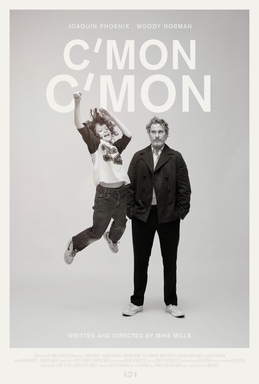
C’mon C’mon (2021)

I was thinking about how although Joaquin Phoenix has steadily become one of the most admired actors at work in film today, I don’t necessarily enjoy him or closer still I’ve never felt a kinship for him when he’s onscreen. Ethan Hawke, Andrew Garfield, Adam Driver, even Leonardo DiCaprio have offered performances where I sense their humanity and empathize with them.

I forget Phoenix’s capable of the kind of mundane naturalism that also defines a certain mode of acting. C’mon, C’mon is a reminder he can be a rudimentary person, a normal human being, and when he’s playing Joker or Napoleon, it’s not better just different (Why does everyone have to be eccentric? It’s okay to be normal too).

Mike Mills’ stylized black and white movie follows a radio journalist named Johnny (Phoenix) who is enlisted by his sister (Gaby Hoffman) to watch over her 9-year-old son Jesse (Woody Norman) as she attends to a family emergency. He’s an unattached working professional who’s hardly equipped to be a caregiver, but who is?

It’s a learning experience for both uncle and nephew as they get used to each other in Los Angeles. The movie takes them all across the country as Johnny conducts interview with youth across the country. Jesse becomes his boom man learning what it is to do sound.

Those of a certain generation will know about Art Linkletter and “Kids Say the Darndest Things.” Johnny and his team seem to give us an update on this; sometimes adolescents have a wisdom we would all do well to tap into for simple, clear-sighted lucidity about the future. From time to time, sans the coarser language from the adults, it’s a Mr. Rogers movie. There’s a mild sense of wonderment and an appreciation of what the younger generations can teach us.

They have ways of asking the most searching and honest questions. Jesse questions why his mom is away. Johnny explains she had to check in on his father (he’s a composer going through a nervous breakdown). Why does his dad need help? It’s not an easy answer that’s cut and dry. And suddenly you appreciate the tightrope walk it is to be a parent and also the unprepossessing honesty kids maintain.

Adults are fractured and imperfect often hurting the ones we love. Divorce, the problem of evil, why bad things happen to good people, adults struggle with these issues for most of their lives. Kids are not immune to any of this and are affected by it all.

C’mon C’mon is not so much a road movie as it is about impressions and impressions in particular about familial relationships. Brother and sister hold a two-way conversation for most of the picture from different states keeping a dialogue going. It provides a very loose framework.

With The Velvet Underground acting as an auditory transition the story shifts to New York. It’s more Noah Baumbach than Woody Allen but the West Coast, East Coast juxtaposition is real, and it plays well in the movies. Meanwhile, New Orleans offers up its own unprecedented aesthetic to the patchwork.

Otherwise, the film takes an observational approach as uncle and nephew experience life together. It’s not a raw-raw, grab-life-by-the-horns pump-up piece; it’s smaller, from the ground up about moments and the kind of trifles you catch if you stop long enough to appreciate them.

I’m still trying to decipher if there is enough here for a conventional movie, but of course, I answered my own question because this is not a movie you get every day. It just needs to find the right audience and Mike Mills no doubt has a tribe of followers ready and waiting.

In a particular interview, a young man is asked what happens to us when we die. He offers up that he and his mother are Baptist so he believes in heaven. Pressed further he says he imagines it as a meadow with one big tree where you lay on the grass with the flowers and stare up at the sun relaxing; it wouldn’t be too hot.

The interviewer marvels that it sounds beautiful. Yes, it does. There’s no agenda or politics or vanity. The response feels so genuine. Does anyone remember what Keanu Reeves said in response to the question of what happens when we die? After a pause, he answered, The people who love us will miss us very much…I feel like we’re all searching for those shards of wisdom.

One of my favorite bands actually has a deep cut that’s called “C’mon, C’mon” and the lyrics go like this:

So c’mon, c’mon, c’monLets not be our parentsOh, c’mon, c’mon, c’monLets follow this throughOh, c’mon, c’mon, c’monEverything’s waitingWe will rise with the wings of the dawnWhen everything’s new

These words don’t speak to Mike Mills’ movie precisely, but in an impressionistic way, I can tie them together in my mind. There’s something generational about it — this youthful sense of wonder and optimism — and the desire to spur others on.

When I hear the phrase C’mon, C’mon, there’s a playfulness welcoming someone else in, whether it be into a kind of life or an uncertain future, even a game of tag or a bit of make-believe. C’mon, C’mon is an open hand. I want this kind of posture.

Because there is a not-so-subtle difference between childish and childlike. I want the latter for my life. Actors, directors, writers, creatives, I feel like they never quite lose this spirit at their very best, and it’s something worth fighting to hold onto. Sometimes our youngest members can give us so much if we have the humility to learn from their example.

3.5/5 Stars

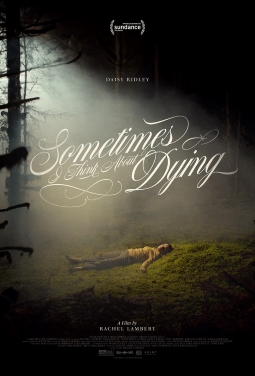
Sometimes I Think About Dying (2023)

Sometimes you start a film and there’s such a specific sense of place, rhythm, and tone you perk up in anticipation. I felt that sensation from the opening credits of this new film starring Daisy Ridley.

The score is replete with a few murmuring voices and a harp, and there’s the muted color palette of a certain sleepy town in the Pacific Northwest. There’s an instant sense of where we are and what end we might be converging on. That is, besides death.

Sometimes I Think About Dying is directed by Rachel Lambert from a screenplay co-written by Kevin Armento, Stefanie Abel Horowitz, and Katy Wright-Mead. It’s easy to pigeon-hole it as a project filling the quirky indie fix and the proof of concept seems littered with a minefield of tropes.

Fran (Ridley) works in an office — the dreaded 9 to 5 desk job — and between emails and spreadsheets her mind will drift away to far off places in her subconscious. It’s also a movie with plenty of inserts of contorted posture. At times it’s uncomfortable watching her exist.

Robert (Dave Merheje) is the new guy. He’s personable and a little dorky in a charming sort of way. Make him a cinephile and you have a perfect movie character. He feels like the Yin to Fran’s Yang and somehow that bodes well.

They don’t so much have chemistry as stunted, awkward interactions. They go see a movie at the local art house theater. They have pie afterward as one does. One wouldn’t label them a couple so much as they’re two people looking for a connection; he’s just moved to town and well, she’s not the most sociable human being.

In this depicted life of dreary and at times surreal isolation, human connection is such a moving balm. They meet up again and she sees his new home, gets the tour, and learns he has his own past; he’s been divorced, not once but twice.

Ridley’s performance does feel like a performance, but the act of playing something so stunted and repressed and yet giving the sense of a charming person just trying to get out is such a meaningful focal point. Because in another movie it would vie to get bigger, but she never allows it to get into a cartoonish heightened reality of indie purgatory.

A distinction must be made. Fran doesn’t hate her life. She’s good at her job and in her own way is a part of the ecosystem in the office. Whereas Excel sheets and requisition forms are soul-crushing for someone like me, Fran seems to thrive in such a regulated environment. But that doesn’t mean she doesn’t also feel the pangs of loneliness. It’s not like they are mutually exclusive; people are nuanced.

Within the context of the film, budding feelings are meager but precious. Her personal hurt and even her greatest transgression are never extended blow outs but these contained moments thoughtfully developed within time and space by the filmmakers.

Fran and Robert get invited to a get together and they both oblige. The subsequent gathering of murder in the dark is a nice evocation on the movie’s primary theme. It’s a visualization of death for a character who does consider its headiness from time to time. The best parts of these scenes is that they feel like a rambunctious good time. That is one of the movie’s strengths: balancing these emotions of warmth and affability with real melancholy.

Robert tells her later in the car, “You’re secretly good at a lot of things. You just don’t let anyone know.” It’s true. Introverted people like this do exist in the world. I feel like I know at least a few of them. On the surface, they seem so taciturn and unassuming but there interior lives or even what they do in their off hours are so vibrant. They offer so much, but they don’t need to tell everyone about it. Selfishly I wish we knew about more of them because we would do well to learn from their example.

My primary critique of the movie initially might have been its opening runway. It felt like for a fairly truncated film, it took a lot of time to get to Robert’s introduction; we even watch as they give a going away party to his predecessor who is set to retire and go on a cruise with her husband.

But even this is paid off when Fran stops by a local coffee shop to get donuts for the office. She’s going through a different kind of pain and regret because she said something regrettable that she cannot take back; she wants to acknowledge her remorse; tell Robert how she feels. But how can she do that if she can barely string two sentences together?

There Fran bumps into her retired co-worker surprised. She was supposed to be on a cruise. Except her husband had a stroke; she couldn’t bear to tell anyone and so now she drinks her coffee alone and looks out the window at the harbor wistfully. Fran could have traded pleasantries and left it at that. There is no personal utility to stick around, and yet she stops and sits down. She makes the decision to listen and her reactions feel real.

Somehow these feelings make her empathy and concern genuine. The action of getting something for her coworkers — a learned altruistic behavior is one thing — but there is also another turn. For one of the first times, we see her sympathy on display for another human being. She connects even if it’s just a little thing.

Later, she asks Robert genuinely, “Do you wish you could unknow me?” What a question, but it comes from such a place of honesty and fear. It fits hand in hand with the hypothetical question, “If you died tomorrow, would anyone care?” Could the lie be true? The voices in our own heads can be vicious.

There’s probably an HR caveat in here somewhere, but a movie is a movie. What lingers is this reverberating optimism. Human connections are worth the risk and effort. I left the film thinking, “Me too, Fran. Me too.” I resonate with this title though not because of some kind of ideation. From dust we come and from dust we will return. 

In the final embrace of the movie, it’s in a copy room. But within seconds it’s transformed into a garden-like greenhouse — a little slice of paradise. The imagery seems only fitting. We were not made to be alone.

3.5/5 Stars

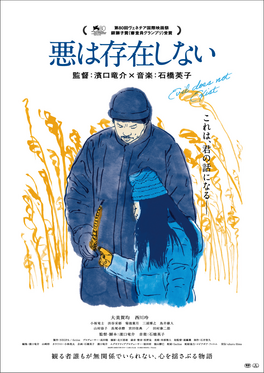
Evil Does Not Exist (2024)

From watching one of director Ryusuke Hamaguchi’s interviews, it’s made clear he started Evil Does Not Exist by using the music of Eiko Ishibashi as inspiration. There’s a swelling breadth to it augmenting everything it touches. At times doleful and then evolving into a plinking intensity looking for release.

It plays against a backdrop of austere forests, trickling streams, and fresh dustings of snow outside the prying eyes of the Tokyo metropolis. The score becomes a viable metaphor for the movie itself.

The film’s relationship with its characters is also distinct. There’s something Bressonian about it. Because the famed French director famously envisioned his actors as models and often cast non-professionals. He wasn’t looking for performances in the conventional sense.

I don’t know Hamaguchi’s filmography all that well, but it doesn’t feel like he has a stock company. Rather he likes to use different actors for what they offer in each distinct context. We spend the opening minutes watching this man named Takumi (crew member Hitoshi Omika) exist and act, though not in the way we normally think of it in film.

It is slow cinema in the sense that we watch him in the paces of his life from collecting stream water to chopping wood. This tells us more about him than any amount of dialogue might, but it also signals to us what kind of movie we’re in for.

Hamaguchi is prepared to steady your heart rate, and I could use much more of this amid the daily grind. However, it is a tightrope because it’s so easy to lose your audience as they grow potentially disillusioned by the pacing and elongated editing schemes. Seeing as Drive My Car was over 3 hours and Happy Hour over 5 hours, there’s something about Evil Does Not Exist that feels, if not economical, at least more contained.

Takumi’s relationship with his quizzical daughter is rather reminiscent of Leave No Trace (2018). So much of their affection and relationship is facilitated through their shared love of nature with the father passing down his knowledge to his girl.

The movie’s dramatic conflict comes with an impending land development. A Tokyo-based talent agency has plans to install a Glamping site, which ostensibly is little more than a ploy to get a coveted tax subsidy.

Like any conscientious Japanese company, they do their due diligence by holding an open forum for the locals to voice their concerns. The subsequent extended community scene is trademark Hamaguchi with a sprawling dialogue exchange. While it’s not a Park and Rec episode, maybe it’s the Japanese alternative.

There’s something tight-knit about this small community rubbing up against the wary encroachment of the Tokyo firm. Their concerns are well-founded and measured. They see through everything with a clarity that no formal Japanese double-speak can totally obfuscate.

Their opposition, if you will, are the archetypes of a veteran salaryman and his deferential associate who hasn’t quite detached from her empathy. The audience I sat with was mostly quiet if attentive, but there was more than one occasion I found myself chuckling to myself, either from a line of Japanese dialogue or an interaction.

I found this section of the movie especially rich with behavioral humor. There’s a youthful rebel in baggy pants who tramples over the typical decorum and has to be held back. The ritualistic bowing is met with contempt and even Takumi is brusque. They want to try to recruit him as an advisor for their glamping endeavor. He has no business card to give them as is customary, nor does he want their token gifts or pleasantries.

These might be subtle, but it’s a pleasure to watch how these locals eschew what feels like traditional norms. Because so much of Japanese life feels like a tug of war between exterior and interior identity. We say don’t judge a book by its cover and here it holds true on more than one occasion. Many of these characters seem perceptive and ultimately nuanced.

One of the other surprises is how Hamaguchi turns the “enemy” into real people over an extended car ride back to the countryside. They know they’re not dealing with idiots, but their superior encourages them to return and ensure they stay on schedule. It feels like an untenable mission. Having seen both sides, we feel for them. Their hearts aren’t in it.

They trade their hopes, aspirations, and dating prospects in a way that you rarely see in Japanese work culture without alcohol as a social lubricant. Despite the modest scope, I’m not sure if others are aware of how radical this feels.

Takumi takes his guests out into the natural world and allows them to walk alongside him in his daily tasks. Later that same evening his daughter disappears and darkness is closing in. There’s something dismal and inevitable about it as the entire population mobilizes to try and find her.

Without drawing it out too much, they do discover the girl as well as a fawn and doe who feel like semiotic creatures. It’s no coincidence there was a movie called The Deer Hunter. He lives on the fringes of the frame here with his bullets flying in a game of offscreen roulette.

The willfully oblique ending is inexplicable, but I could not look away. You can take it one of two ways: either with mystified displeasure or a contentment in not understanding everything. I fit in the latter category. It was like staring at a mesmerizing spell.

Somehow it feels like a pleasure and a privilege to get these moments in time slowed down for us — sequences that are purposefully meditative. I couldn’t help thinking how much of a backward society we live in that it takes a screen in the dark projecting images in front of us to draw a person out of the hubbub and back into nature. Are we so removed that moving pictures are one of the last vestiges of the natural world in the urban jungle? Because it’s not the real thing.

I would find it instructive for the director to expound on his themes at length — that’s what I want — and yet the movie leaves the results up to us. Still, if nothing else, Hamaguchi gives us a reminder of our imperative ties to the natural world lest we forget where we originate. As much as we try, life cannot always be domesticated comfort. There’s wild beauty out there we would do well to remember.

I think we share an appreciation of the natural world. Maybe it’s semantics or a mere positive affirmation, but if evil does not exist, we could also conjecture, like The Deer Hunter, that interpersonal discord, war, and death are natural in a chaotic world. 

However, I would not say that humans nor beasts are inherently good. For the time being, we live in a broken, fallen world and this is just a reality. Our world is full of entropy, but this is not meant to be our resting state.

It’s all the more reason to do our utmost to look after our environments, be kind to our neighbors, and work toward human flourishing. Of course, that’s easier said than done, but like Thomas Aquinas posited I would like to believe that good can exist even without evil. We’re not there yet, but I’m still hopeful.

3.5/5 Stars

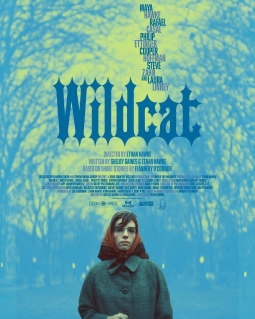
Wildcat (2024)

A version of this article was published in Film Inquiry.

“I am always highly irritated by people who imply that writing fiction is an escape from reality. It is a plunge into reality and it is very shocking to the system.” – Flannery O’Connor

As someone fascinated by story structure the biopic form is often a tough nut to crack. Cradle-to-grave entries in covering the breadth of a life, can either feel like rushed simulacrums or stodgy overlong hagiographies nailed to the floor.

The very best movies of this ilk inevitably evoke the spirit of their protagonist with the very sinews and bones of their structure. Hence a movie on Mishima that’s wild with heavily striking mise en scene. A Brian Wilson story that is empathetic, hallucinatory, and musical to the nth degree.

Director Ethan Hawke and his co-writer Shelby Gaines have found their own way to do service to famed southern Catholic author Flannery O’Connor. Because her life was famously banal — she lived in her Georgia town with her mother writing before her death at 39 — they tackle her formative years through the vivid imagination of her own literary works.

It’s important to note while this movie is full of fanciful and often humorous and grotesque portraits of humanity, it never feels like the escapism the author abhorred (One can imagine she would have choice words for a hothouse melodrama abruptly featured at the outset). O’Connor always was concerned with depicting the life she knew by unorthodox and often startling means. There was nothing conventional about it.

A Good Man is Hard to Find is case and point, one of her startling works where a self-righteous old hag ends up being shot to death by a wanted fugitive and in this precise moment she becomes a gracious person for the first time in her life. In the film when the gun shot goes off, we watch a young O’Connor (played by the director’s daughter Maya Hawke) go flailing backward from behind her typewriter. She feels her stories so profusely.

We watch her life during her early years as a young woman. There are stints at the illustrious Iowa Writer’s Workshop under the tutelage of Cal Lowell (Philip Ettinger). She pays a visit to a publisher who tries to tactfully give her feedback on her first novel Wise Blood. She’s quick to retort that she’s “amenable” to criticism but only if it does not attempt to neutralize her artistic vision.

There are segments of her returning to live with her mother Regina (Laura Linney) in a society where people want her to be the next Margaret Mitchell, penning the next Southern nostalgia lost cause classic like Gone With The Wind. Meanwhile, Flannery seems antithetical to this entire idea.

It’s evident she is a singular mind who will not settle when it comes to her writing. She tells the truth as spiny and ugly as it might be. This is my own experience with her work. I rarely enjoy it. I feel scandalized and assailed by it at every turn.

It’s difficult going and then she turns a story around and uses her characters and the bizarre scenarios to ambush me. Ironically, the saving grace of her stories are how they all revolve around the scandal of grace — our need to recognize and accept it in our own lives.

The threads of the movie’s narrative are tied together with earnest excerpts from her prayer journal and many of her most notable short stories. One that was my introduction to Flannery was “Revelation” where a self-righteous southern woman gets tackled in a waiting room by an indignant girl named Mary Grace. This comes only after a dream where Jesus comes to her and says she can only enter heaven as a negro or white trash. Perish the thought…

The other is “Parker’s Back” where a profligate covered in tattoos marries a devout woman and gets the image of Christ tattooed on his back to please only for his wife to beat him. He’s tossed out of the house, bloody and bruised, brought to the lowest point imaginable. Is this idolatry or as we watch the picture of Christ being bloodied in front of us, what are we to do with it exactly? It feels uncanny and uncomfortable, a perfect evocation of O’Connor’s sensibilities.

Delving into their conversations, it’s apparent Maya and Ethan Hawke have an abiding appreciation for this woman and her writing. There would be no other reason to make a movie like this with so much tender loving care. And so any mild criticism feels like putting kindred spirits under the chopping block. It need not be so. They feel like dear friends.

John Huston’s adaptation of Wise Blood has an intuitive handle on the Southern milieu and the absurd humor found in O’Connor’s work. She’s darkly funny. It seems to thrive while still getting to the perplexing themes at the core of a story that feels scandalizing as she tears through the Southern mentality with her incisive quill.

What Wildcat has is something so often absent from both film and art these days. It’s not squeamish about the tough conversations nor does it skirt over the most prickly issues, not only of America’s legacy but the very essence of the human experience.

There’s a weight and a gravity to it that’s felt in almost every frame. The only reprieves come from O’Connor’s own wit. This is all in service to its subject because Flannery was a young woman sincerely struggling to balance her aspirations to be a great writer and a devout person of faith in communion with God.

So often we are told these creatives and religious life are mutually exclusive. Which of course feels preposterous to O’Connor in the face of her Creator-God. It’s easy to be moved when she sits among her cohort at the writer’s workshop in Iowa — a midwestern institution that nevertheless maintains a reputation for the literati — and she says religion is not an electric blanket; it’s the cross.

It’s so difficult to take stories that live in our mind’s eye and bring them to the screen because then they are tangible and concrete. Endless possibilities of imagination are distilled down to distinct creative choices. Hawke’s film tailors its palette to a tempest-like existence that roils O’Connor’s soul as she seems to battle for life and death with her typewriter as her only weapon.

Is this a bit much? Perhaps and yet anyone who does write and cares about art or has suffered and struggled, recognizes that it doesn’t feel like hyperbole. It feels real and affecting — like something we understand intimately. In O’Connor, we see reflections of our own struggles in our creative endeavors.

Because we believe our words mean something and that life matters and questions of death and religion are not ancillary topics for dinner parties. They are the crux of our entire existence.

Cal, Flannery’s pen pal and hinted love interest, gives her Thomas Merton, and in this reference and watching her tumultuous struggle depicted on film, it’s difficult not to draw lines between Hawke’s performance and her father’s protagonist in First Reformed (Ettinger who plays Cal also had a crucial role in that film).

For that matter, one of the other integral scenes involves a priest played by Liam Neeson. It feels almost like a reprieve after his apostasy in Silence. He pays Flannery a visit as she’s bedridden, stricken with the lupus that killed her father, and currently unable to write.

Here he enters in to provide Flannery comfort and in all her internal struggles remind her of grace and grace abundantly — something given to her through the death and resurrection of the Jesus they believe in. There is immense power in this scene, even in its simplicity.

Because the storm outside her bedroom widow or even the lupus that’s ravaging her body almost feel like outward manifestations of the real struggle going on. Why does hardship often make us more aware of grace and our need for it in our lives whether we want to accept it or not. Pain is not easy. Happy, warm, affable stories are a lot more palatable.

O’Connor would never dare to be so disingenuous about her faith or her storytelling. And judging from her life and premature death, she was more than acquainted with troubles. She had an intimate relationship with them. Certainly this was not the life she had envisioned for herself.

Still, she ran the race of life even if it was on crutches. Perhaps not dissimilar to that hapless chicken walking backward. What’s more, she blessed all of us with her stories — signposts to help us along our own paths — shocking us back to reality.

I couldn’t get the image out of my head — first as Flannery picks up her new peacock from the train station and then the remarkable moment where its tail feathers fan out behind her in a glorious display. If other people saw her as that measly chicken, in the eyes of her Creator she really was that glorious peacock. What a gift it is.

4/5 Stars

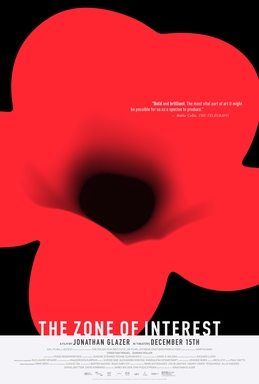
Zone of Interest (2023),The Banality of Evil, and Le Chambon

Zone of Interest opens with a blank screen and a collage of sound; it’s almost like it’s priming us for the movie ahead. Because it’s not a conventional movie by any stretch of the imagination. It’s difficult to put arbitrary labels like good and bad on it since it’s so different than what we normally get in the cineplexes. 

However, for some time the name Jonathan Glazer has become synonymous with singular visions often lauded and simultaneously prone to divisive reactions. There’s also the subject matter. Zone of Interest is loosely based on the eponymous novel by Martin Amis.

We effectively enter the movie by watching the daily life of Auschwitz commandant Rudolf Hoss (Christian Friedel) and his wife and kids. Observations become so key to the cadence of the movie because the entire film is built out of the structure of their lives and the world they have created. It just happens to butt up against one of the most horrendous atrocities known to man, and we have to contend with this as an audience even if they will not.

When you pick up various mundane insights, you appreciate the understatement of what is being portrayed and then instantly turn grim with each subsequent realization. There’s something disorienting about the shots within the home almost like surveillance footage and the angles are not human perspectives. Outside the tracking shots are more natural but no less perturbing. 

The mother Hedwig (Sandra Huller) is frumpy and flat-footed as she tends her garden and settles into a life mostly oblivious of everything around her. The kids play with their toys and have breakfast and dinner like any children. Except they examine human teeth by torchlight or mimic the unearthly humming thud of what can only conceivably be from the human ovens next door.

It’s all this inexplicable darkness that lives on the fringes of the movie’s frame denoted primarily by sound in the periphery, ashes laid down in the soil, remains in the river, even passing remarks about leftover clothes that have been picked over.

The metaphor is fairly obvious, but the family has built this garden as a buttress and an oasis against the camp next door. This is how they can celebrate their father’s birthday and have pool parties while people are being shot and murdered just meters away from them. This is not normal. Some kind of compartmentalization and moderate delusion has to be accepted for such localized dissonance to exist. 

Gardens and flowers are meant to represent beauty and cultivation in the natural world, and yet there is something distinctly afoul with this coming into being from the ashes of the murdered. Sometimes this cycle of life is spun and explained away as a natural process, but in this case, it’s a bald-faced lie.

Hedwig says this is their Lebensraum — the “living space” Hitler promised to his Aryan followers when he came to power. For her, be it ever so humble and grotesque, there’s no place like home. And so while Hoss gets a promotion to oversee the efficiency of the camps all over Germany, she asks to stay in her home. She’s happy there. Living off the detritus and skeletons of the dead. She wants to continue to tend to her garden.

On several evenings while Hoss reads fairy tales to his kids, there are otherworldly thermal vision sequences of a young woman leaving out apples and other gifts of sustenance for the prisoners to find. Purportedly this is based on a real-life young member of the Polish underground. It’s one solitary inkling of goodness amidst the queasy, uneasy status quo of the movie. Without it would be easy to suffocate under the pressure or worse still become apathetic.

It seems like there must be a caveat with Zone of Interest. We must be vigilant and careful because there is an insidious nature to the story, whether it’s intended or not. It’s possible to get caught up in the plans of these men in boardrooms and offices especially when we move away from the camp itself. Because even if we never get inside, there are touches and the grim noisescape that never allow us to lose perspective entirely.

But whether it’s Hoss and his wife having a marital tiff or him vying for greater status within the Nazi killing apparatus, these moments can draw us in with a kind of hypnotic power. I’m not sure if they are instructive unless they lead us to one particular end.

It’s easy to trot out the idea, but with the brief mention of Adolf Eichmann within the film itself, it feels even more imperative to evoke Hannah Arendt’s famed phrase from the Eichmann trial: The banality of evil.

By now it comes off the tongue so easily it can sound cliché, and yet it’s never been so true as watching this film. The efficient nature of the crematoriums is methodical if it weren’t so ghastly. It’s the first of many touches reminding us precisely what we are witnessing in real-time. I think we want it to feel worse or more extraordinary than it comes off. Somehow it would make it more comforting — that there is a large gulf between the predilections of my own self-serving heart and these people — still, there’s no such luck.

In one particular moment, the screen is momentarily enveloped in red. It might have many reasons, but all I could think about was the blood that has been shed. It’s almost second nature to see this as blood on the hands of others, and strictly speaking, this might be true. However, I’m not presumptuous enough to forget my own sins of commission as much as omission. It almost feels like a rite of passage for human beings. None of us are clean. We all have blood on our hands one way or another even if we were only born into it.

I was talking to a friend who mentioned how we get a ground view of what mechanized evil looks like when people work together for a collective purpose — in this case a horrific end. What would it look like instead if a community gathered together with this kind of collaboration and vigor for the sake of good? It’s an intriguing question and since my mind leans toward hope, I wanted to consider it.

I’m sure he meant it in a broader sense, but my mind went to Le Chambon. The particulars are a little murky, but from what I remember the French village worked together as a community to harbor and save 100s of Jewish lives. Now there may be nuance to the story — particular individuals who led the charge (see André Trocmé) — but that’s partially what it takes. It’s the captivating idea that small acts and decisions have a cumulative power. We can just as easily stand strong as we can capitulate and cave one day at a time.

Near the end of the movie we flash forward to the present day where museum attendants clean the exhibits, and there’s a different kind of sound design as we go through the cavernous spaces and see the scope of the destruction leveled against the Jewish people. This is our first and only glimpse of these spaces from the inside.

The movie does something curious by cutting back to Hoss as he straightens up after doubling over on a stairwell having just thrown up. Is it an ailment or is it somehow related to the work he is doing — the thousands of lives he will effectively snuff out echoing through the ages. It’s difficult to impute such sympathetic thoughts to a man we have watched in such a rudimentary light. I’m not sure what to make of it.

The movie goes out the way it came in with a blank screen and almost avant-garde sound design. But rather than put a label on it, it seems more conducive to express the emotions it elicits. It feels unnerving, a bit like you’re watching a horror film because there’s something layered and unnatural about the noise. But then that’s precisely the point.

4/5 Stars

Favorite Films of 2023

I was a bit behind on my movie-watching for 2023, but here is a list of a few movies I enjoyed from the past year. I’ve either linked to a previous review or included a short capsule. Enjoy!

Past Lives

Writer-director Celine Song’s use of time is self-assured and brazen. She’s loose and elastic with it, bravely allowing her story to cut 24 years into the past before fast-forwarding 12 years and then 12 years again. But these jumps in time feel subtle and right with the perfectly applied sense of space and context. We never feel like we’re being rushed. The elliptical nature of a single cut is imbued with so much power. The movie is the epitome of contemplative cinema as it tells a fated love story.

Greta Lee is such a phenomenal conduit of this drama, and she takes every scene with a composure full of warmth and feeling. Teo Yoo has a forthright candor morphing from a boyish heartthrob to a man still grappling with unresolved feelings. John Magaro could easily be a whiny-voiced annoyance — the white evil of the movie — and yet it’s a credit to his humanity that we like him and even empathize with him (especially if we don’t speak Korean like this viewer).

As humans, we’re always looking to discern what our future will be. Religious people question God’s plan for their lives. And often we have the nagging thoughts of what-ifs and how things could have been. Perhaps I’m the only one who thinks like this. But Past Lives seems to suggest this is not the case.

Perfect Days 

It feels almost too convenient to evoke Jim Jarmusch’s Paterson from a few years back when considering this new film from Wim Wenders, but I can find no other alternative. They both focus on individuals who live contented analog lives with daily rhythms that feel almost radical in the face of the world around them. It doesn’t matter if it involves bus driving or in the case of Hirayama (Koji Yakusho), cleaning toilets in Japan under the watchful eye of the Tokyo Skytree.

Jarmusch, much like Wenders, has always felt like a sojourner with an insatiable curiosity, and both men seem to be continually expanding the cultural canvas of cinema through their travels and observations of a wide swath of humanity. Of course, Wenders started out first and has been doing sustained work for many years. It seems fitting that a film like this, while focusing on a very specific Japanese milieu, with the help of co-writer Takuma Takasaki, still boasts some of Wenders prevailing passions from photography to rock and roll music.

But what could feel like a mere gimmick gives rise to a man, thanks in part to Yakusho’s disarming performance, who has so much to offer the audience and others within the frames of the film. Because there’s something so quietly instructive about him. We can learn so much and appreciate so much more if we only observe the people and things around us. I found it charming, and it was a stirring reminder of why I love Japan (and the films of Wenders).

The Taste of Things

Babette’s Feast is a film that was a revelation to me from the very first time I watched it. I’m no gourmet and yet such sumptuous delights are hard to resist wrapped up in a Danish parable as it is. The Taste of Things is much the same – coming out of the same lineage – and the unbroken introduction to this tactile, delicious world of food in a 19th-century French kitchen is equally entrancing. There’s something so compelling and equally remarkable about these epicurean delights being created before our eyes. How something can have an extravagant simplicity to them requiring the utmost amount of tender loving care (and the freshest ingredients plucked straight from the garden).

While it’s not quite as thematically rich as its predecessor, it does rest on a love story brought to the screen by the incomparable Juliette Binoche and Benoît Magimel, a pair of performers with a real-life history albeit one in the past. Food is their undisputed love language. It buoys their romance in such a rapturous way paired with the delicious cavalcade of eateries and a vow to train up another generation of chefs who have the intuitive gifts and the innate passion for food that can be further cultivated. There’s something quiet, beautiful, and melancholy about Tran Anh Hung’s film that I greatly relished. 

Killers of the Flower Moon

There’s something more fundamental here. You see it in many of Scorsese’s movies from Goodfellas, Wolf of Wall Street, or any of his gangster pictures showing the traditional villains in an intimate if not entirely sympathetic light. He always seems to return to this because this was his childhood — he grew up in a neighborhood with these sorts. By the world’s standard are they corrupt? Yes, but they aren’t personified evil. They act as complicated characters full of charisma, humor, and whatever else.

It feels like this is his gift as a filmmaker. Because we don’t always like these people, but he was never interested in a black hat and white hat morality. Perhaps that’s why he did not make Killers a more traditional Western because this would not be true to the ethos he’s had since the very beginning.

Lily Gladstone is such a powerful emotive force in this movie because if Leo’s performance is so pitiful, she is his perfect scene partner by maintaining an equilibrium; there’s a regality to her that’s not easy to break and yet she’s not an unknowable stoic. She loves deeply and with Ernest and her family, we see both her affection and her deep sorrow when they are ripped away from her one by one. The movie requires her strength to hold it together and instill it with resonance. Scorsese never asks easy questions, and I believe that comes with honesty, and it’s part of the reason he’s still one of our premier filmmakers. He’s still curious and the questions he asks with his films are ones he’s still wrestling with now 80 years on. They’re universal.

Oppenheimer 

It’s easy to cast Oppenheimer as one of the most important figures of the 20th century since he was the “Father of the Atomic Bomb,” but he was also one of its greatest tragedies. There’s a scale and scope to this narrative woven right into the very fabric of history. A whole movie could be borne on Cillian Murphy’s face and it is. Between his vivid eyes, gaunt contour, the porkpie hat, and pipe, there’s something instantly iconic about him. He’s haunted and profound even before he says or does much of anything.

It’s also dizzying watching Christopher Nolan develop the rich world around Oppenheimer packed with substance — a real world of real people and events we get to experience firsthand. This immediacy is key and although I’ve read the book, I don’t think you’re required to keep it in your back pocket. Nolan has done the unthinkable by making a potentially stodgy historical piece into a gripping blockbuster. In the age of superhero movies, studios have mostly assumed historical genres are dead.

Likewise, by shaking up a prosaic biopic form, the director alights on something that’s narratively audacious even when it falters. That’s why he’s remained one of our most beloved filmmakers over the last decades. He makes big movies for thinking people, and if nothing else, I hope Oppenheimer acts as a clarion call for more thoughtful tentpoles in the industry. The audience seems to be more than rewarding his efforts.

The Boy and The Heron

I was thinking how grateful I am that filmmakers like Martin Scorsese and Hayao Miyazaki are still giving us their art. How lucky are we? The Boy and The Heron gleans some inspiration from the 1937 book How Do You Live? and also the annals of Japanese history and Ghibli Studio’s own lineage. Watching the film there are many echoes of Miyazaki’s favorite topics and also the influence of his mentor Issao Takahata.

For a Western audience, it has the tinges of Narnia where the war is an everyday tragic reality, and thus a world outside our own gives space for respite and marvelous things that can break in and heal our hurts so we might make peace with them. I was reminded of Petitte Mamam where the magical can somehow bring a parent and child closer together, even forge them by fire and trials of many kinds. 

All this fits for the simple reason that the film is very much a fairy tale. I couldn’t get away from this idea that Miyazaki’s film is so beautiful to look at, absolutely resplendent (he also has a penchant for the cutest creatures), and yet it has these pointed moments of ugliness even terror that feel like a necessity. The contrast is key to making the magical world feel in a sense real because we recognize both the good and evil from our own lives. It’s within this space where children can grow and thereby enter back into their lives ready to face the challenges ahead. It occurs to me that Scorsese, Miyazaki, and others like them maintain the curiosity and wonderment of youth. The years they’ve been on this earth belie their child-like spirit. It makes their movies still so accessible and universal to the masses, well worth our time and consideration. 

Afire

I appreciated Afire because, like many of the director’s earlier films, it’s deep in conversation with the vast annals of cinema. This one in particular feels like a paler, pudgier version of an Eric Rohmer movie. Something in the vein of La Collectionneuse, Pauline at the Beach, or even A Summer’s Tale. I felt vindicated hearing that Petzold was in fact consuming some Rohmer films during the pandemic, but that was only part of his inspiration. Unlike Hollywood, Germany doesn’t have a lineage of summer movies about the last day of school or hanging out at the beach with no adult supervision. The summer had vanished not only from their filmographies but from Germany as a whole. The nation rarely got this opportunity with the ascension of the Nazis and this historical backdrop gave rise to many of the specters which have haunted most of Petzold’s oeuvre.

If you wanted to make a case, Afire is actually Petzold’s most comedic film to date and his closest to romantic comedy thanks to its lead. I’m still trying to get my feelings in order, but Afire delivered like the director always seems to. It’s deeply observed and engaging with its perceptive vision of humanity and interpersonal relationships. But what makes it richer comes with how the writer-director takes a simple premise and simultaneously imbues it with all this intertextual meaning. His references are not always overt, but couched within his stories are the echoes of his nation’s films as well as literature and mythologies – many of his projects over the years have been adaptations of much older work. In our current age of cursory knowledge and vapid fads, he’s a refreshingly thoughtful filmmaker.

Godzilla Minus One

I found Godzilla Minus One feeling like this year’s Top Gun for what it teaches us about sequels. Obviously, Godzilla is an institution in Japan, but here we see a film that takes the very specific context of the original film amid the nuclear age — reminding us of the context of a post-war world — while building on the past in new ways. Top Gun: Maverick did much the same as its predecessor, and it was oddly such a human and intimate film in the same way that this giant monster movie with tinges of Jaws (and The Dark Knight Rises) feels even least nominally invested in interpersonal relationships beyond mere kaiju eye candy.

This new film is a spectacular bit of construction blending period drama with solid special effects, a quintessential demolition of Tokyo, and deep sea confrontation that brims with menace and personal stakes. Perhaps what’s most spectacular is how director and general mastermind Takashi Yamazaki was able to offer up a low-budget tentpole full of invention and a stirring message of hope. In a film full of devastation and general destruction, the narrative bends refreshingly toward a message promoting the sanctity of human life. This feels like a radical position for a genre that feels almost antithetical to this kind of sentiment. 

Godland

It’s the kind of taxing epic that is not for everyone. Positioned somewhere between Carl Theodor Dreyer and Werner Herzog, it’s both gloriously desolate with the raw beauty and power only nature can attain. It also brims with the kind of existential weight one feels when your attempt at Christian faith is found lacking and all your pride and human vigor are laid bare.

Our protagonist cuts a gaunt figure. He’s the most ascetic and joyless man of the cloth, but out of many striking images in the film, there is a sequence that feels emblematic of the trail he leaves in his wake. First, an interpreter who must be buried, and then his horse which is left for dead, followed by a final summative death. Seasons change and yet in our limited capacity we are so insignificant in comparison to God’s creation and his majesty and it is arrogance and folly to think otherwise. I am reminded of the verse: “What is man that you are mindful of him, and the son of man that you care for him? Yet you have made him a little lower than the heavenly beings and crowned him with glory and honor.”

This is a spectacular perspective, and it is something to be held with a loose rein of humility. Grace is something to be cherished because it changes your outlook and how you treat others. Meanwhile, colonialism is something we still feel the repercussions of here, and we see it here in the cultural and linguistic tension between Denmark and Iceland. Condescension has no place in the supposed Christian way of life; it’s ultimately a pernicious force. 

Across The Spider-Verse

As we watch the live-action Marvel comic book movies show what feels like signs of slightly waning dividends, it makes the animated iterations all the more intriguing. They exhibit a meshing of style and storytelling. It’s exquisite to look at, but they’re not simply empty animated images. The form fits the content and we get a sense of atmosphere, even emotion through the way they are distilled through the visual palette. There’s an invention and a sense of craft that takes into consideration the modern landscape while still staying true to the form of split panels or even the evolving painterly watercolor aesthetic of Gwen’s world. Somehow everything is all but typified by our hero fighting a Renaissance vulture with Jeff Koons balloon sculpture left as collateral damage. 

I still remember when they made Star Wars literature legends and they were no longer canonical. That was probably one of the first instances I began to understand the term. Now it’s pervasive across fan culture. Canon events form the building blocks of the spider-verse world, but they also say something about our search to make meaning out of circumstances. It may be entertainment but it could probably spawn a whole conversation about predestination, free will, reincarnation, and the afterlife in general.

Part of me wonders if the reason these concepts are so intriguing to us or even comforting is that we are longing for something more (or something else) — something beyond the life that we lead. Surely this can’t be all there is. Why else would the world continually clamor for sequels and ever-expanding universes? My only qualm about the movie is my problem with all these “metaverses.” We can never leave well enough alone. But then again, they never satiate us. 

Documentaries: Beyond Utopia, The Mission, The League, Still: A Michael J. Fox Story, Being Mary Tyler Moore

Honorable Mentions: Are You There God? It’s Me Margaret, Earth Mama, Suzume, Flora and Son, and Fallen Leaves

Killers of the Flower Moon (2023), Martin Scorsese, and Robbie Robertson

We just lost Robbie Robertson and being an avid fan of The Band, I was genuinely affected by the loss. The relationship between Martin Scorsese and Robertson is hardly a secret from The Last Waltz to their many film score collaborations, but Robertson also has Native American heritage through his mother.

He’s not Osage — his mother was Cayuga and Mohawk — and yet there is a sense he’s as close to this material as anything his friend has ever made. The film is instigated by oil gushing out of the Osage land instantly making them the wealthiest people per capita in 1920s America. Robertson’s composition punctuates the moment taking center stage with a driving blues riff. It announces the introduction of the movie onto the scene and Robertson’s influence is felt over the entire picture.

The Osage murders have never been a focal point of history, but thanks to David Grann’s book and Martin Scorsese’s subsequent film hopefully more people become aware of this searing chapter of American history.

I heard Scorsese talking about coming at the story from the inside out, and I think what he means by this is finding the core of the story. He was not interested in an FBI procedural from the point of view of the good guys, although Jesse Plemons shows up about 2 hours in to help rectify the miscarriage of justice.

There’s something more fundamental here. You see it in many of Scorsese’s movies from Goodfellas, Wolf of Wall Street, or any of his gangster pictures showing the traditional villains in an intimate if not entirely sympathetic light. He always seems to return to this because this was his childhood — he grew up in a neighborhood with these sorts. By the world’s standard are they corrupt? Yes, but they aren’t personified evil. They act as complicated characters full of charisma, humor, and whatever else.

It feels like this is his gift as a filmmaker. Because we don’t always like these people, but he was never interested in a black hat and white hat morality. Perhaps that’s why he did not make Killers a more traditional Western because this would not be true to the ethos he’s had since the very beginning.

We meet Ernest Burkhart (Leonardo DiCaprio) as he comes to live with his uncle (Robert De Niro) who encourages him to get close and marry into an indigenous family so he might gain access to their oil head rights. Soon after Burkhart develops genuine feelings for the local Osage Mollie (Lily Gladstone). It’s this weird dance — this strange tension — between a traditional love story and people who seem to be taking advantage of a situation, whether it be a paternal influence or just a twisted, morally bankrupt constitution.

Also, I was considering how the movie does become a kind of woman-in-peril movie like we used to see in Old Hollywood albeit with a slight wrinkle. Because of course, the dramatic question revolves around how all of Mollie’s family members become sick or die under dubious circumstances.

There is nothing to stop the onslaught, and there’s an inclination that Ernest is bringing her downfall even as he seems to want to insulate his wife from harm. He also has no qualms about admitting his weakness for money or further capitulating to his uncle’s bidding whenever he’s called upon. If that sounds needlessly ominous, that’s because it is.

Watching DiCaprio is an experience. I was trying to figure out if he was chewing up the scenery, and yet he makes up for any moment that feels like acting through his utter lack of vanity. He could have played the white knight Texas Ranger, and yet here he is as this money-grubbing ignoramus who fumbles his way through criminal activities while still resolutely loving his wife in his sad and dismal way.

Certainly, it’s richer with subtext, but it requires someone prepared to eschew glamour and Hollywood masculinity. Ironically DiCaprio represents all these things and still manages to upend them so we forget them even momentarily. His hair frames his head like Alfalfa and his lips are almost permanently in a downward pout. We don’t know what WWI did to him only that he has a busted gut, and he’s looking to his uncle for work.

De Niro is such an unsettling figure with his insidious brand of charity-turned-malevolence. King is one of those individuals who claims to love these people and is set up in their community doing nice things for them while simultaneously taking advantage of them at every turn.

He’s not purposefully evil; instead, he feels a God-given justification to acquire their wealth because he is spiritually and racially superior — at least this is what he’s deluded to believe. It’s not spoken so much as felt with every undertone of his being.

It strikes me that Scorsese had Joe Pesci in The Irishman go softer and quieter and he thus became menacing in an altogether new light after years of being mercurial and bellicose. Here De Niro does much the same, toning down his usual fire or even the anger of his and Marty’s youth into something more subtle and still equally effective. It’s a role for an actor who is fully confident in his instrument and his abilities.

It’s this kind of villainy that’s so unsettling because it feels so real and present. It lives in the ambiguity, and it does feel like Scorsese has made a wise film for the 21st century. However, don’t think for a minute that I’m saying that this evil is ambiguous. Much of what we witness is abhorrent, and yet how these people in the same breath can commit murders and somehow live in community becomes the queasy soil we must contend with. There are the active transgressions that feel the most egregious, but there’s something equally pernicious about complicity, sins of omission, if you will.

Lily Gladstone is such a powerful emotive force in this movie because if Leo’s performance is one way, she is his perfect scene partner by maintaining such a calm equilibrium; there’s a regality to her that’s not easy to break and yet she’s not an unknowable stoic. She loves deeply and with Ernest and her family, we see both her affection and her deep sorrow when they are ripped away from her one by one. The movie requires her strength to hold it together and instill it with resonance.

On a side note, there’s a scene early on where Mollie shares a moment talking with her sisters — they’re laughing and observing her man Ernest from a distance. She affectionately nicknames him a “coyote,” but through the whole scene, they laugh and chitchat in their native tongue. There’s something so meaningful about it.

Oddly enough, it reminded me of how John Ford hired the Navajo as extras in The Searchers — a film with an incisive and controversial reputation. I have no way of corroborating this, but apparently, they cursed and made jokes in their native language on camera. Of course, the primary audience in 1950s America wouldn’t know this. Killers of the Flower Moon is a very different sort of movie, and here the Native actors are brought closer to the center (if not entirely) so we all can be in on the joke.

There is an uneasy joke of a different kind when the film’s epilogue is summed up by an old-timey stage production out of the age of serialized radio shows. Normally we see these moments played out in stunted lines of courier text over black, and yet Scorsese and screenwriter Eric Roth make them visual and somehow native to the film’s world.

Until this moment we’re still invested in the story, and it’s difficult to recognize what Scorsese is doing, but he uses the meta moment to comment implicitly on framing such tragedy as entertainment. Isn’t that what he’s doing after all in so many words? If you wanted to be pragmatic, you could make the case he’s created a $200 million project to sell tickets.

However, it becomes more than a technique or an intellectual treatise when he steps out on the stage in the flesh. It’s not merely a cameo, but a cornerstone of the picture as Scorsese himself utters its final lines. There he stands in all sincerity letting the studio audience and all of us know that Molly died in 1937 and no mention of the murders was ever made. They were effectively erased from historical memory by the dominating culture. We’re so good at doing this.

The final shot feels like a Busby Berkeley aerial, but it focuses on the Native Americans pounding their drums in an emphatic ceremony. It’s a drum for Robbie Robertson. A drum for Mollie. And a drum for all the Osages who lost their lives in utter anonymity without justice. I will miss Robbie Robertson dearly, but it’s a fitting film for him to take a bow on. He receives a remembrance in the credits.

If Killers of The Flower Moon is not Scorsese best then it is still a film rich with emotion and deeply important stakes. I’m not sure I’ve ever seen a story put to screen like this on this kind of scale. In his hands, you can sense the care and this means a lot. Somehow he always finds this imperceptible line between the profane, violence, and some core truth. The first two repulse me, and yet in his films, their depiction often leads to an inherent awareness of our broken natures as human beings.

He never asks easy questions and I believe that comes with honesty, and it’s part of the reason he’s still one of our premier filmmakers. He’s still curious and the questions he asks with his films are ones he’s still wrestling with now 80 years on. They’re universal.

4/5 Stars.