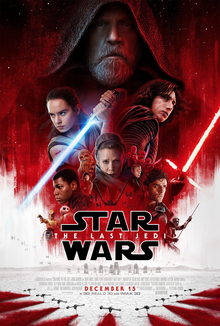
 “Let the past die.” – Adam Driver as Kylo Ren
I left the theater feeling completely taciturn. It’s an onerous task to begin articulating all the jumbled fragments circulating through my mind but I will try my very best. Certainly, there is a great deal to be enjoyed and to be relished about Episode VIII and you would be served well to go into The Last Jedi not searching out its faults but reveling in the successes that are there. Let it be known that there are many and Rian Johnson is a fine maker of movies as he guides us through the Resistance’s latest evasion of The First Order still up to their old business of quashing anyone who dares defy them.
True, I did not necessarily find it a narrative of revelatory reveals or epic showdowns in the vein of what I initially envisioned. However, I can see the picture separating itself from all of its predecessors — subverting the norm and drawing away from all that we knew before. That gels with much of what was said in the wake of The Force Awakens. It could not simply be another Empire Strikes Back if the new franchise was to flourish. In that regard, there’s no doubt Johnson’s film is an undisputed success building on the character arcs instigated in J.J. Abrams’ effort.
Yet my feelings are somehow conflicted. Kylo Ren’s (Adam Driver) call to action to Rey (Daisy Ridley) midway through was never more pointed. “Let the past die. Kill it if you have to.” And that’s much of what has been done here. Not simply in a single film or to the Jedi order or the legacy of a character but in some respects to an entire franchise.
I am realizing that though I cherish Star Wars as my own, the many aspirations and fantasies of my childhood, it is a communal narrative. It might seem odd to get so thoroughly introspective but I can’t help it. Star Wars is almost inbred into my DNA.
Watching this film might topple the white knights. For one, the Jedi order as we know it. They lose much of their mythical stature that they always evoked. We already lost Han Solo and it’s little surprise that Luke and Leia (with Carrie Fisher’s passing) will most likely not be returning either. The old guard has been all but removed from their posts (with the exception of R2, C3PO, and Chewbacca though Anthony Daniels is the only other returning core cast member).
But it’s no surprise that I often savor the past — the way things used to be. That’s part of what made The Force Awakens such an enjoyable ride. There was an innate sense that this was something new, yes, but it was also squarely centered on the glories of the original trilogy. If I said it once I said it a thousand times, it was like returning to the company of old friends.
Now the old is gone and don’t get me wrong the new additions were greatly appreciated. Once more Rey (Ridley), Fin (John Boyega), and Poe (Oscar Issac) are indubitably winning personalities and fine action heroes. It’s easy to become immersed in their individual journeys along with the newcomers such as Rose (Kelly Marie Tran). However, that doesn’t take away my wistfulness at the conclusion of The Last Jedi.
It wasn’t even the kind of bittersweet conclusion we saw in earlier installments either but a plaintive ending without a giant climax. Harrison Ford received a venerable though tragic send off. His contemporaries not so much. There is still hope and events have been prolonged for Episode IX but not in some monumental cliffhanger fashion.
Whenever I take in a new film I am also constantly filtering it through the reference points that I already know. Obviously, Star Wars has such a vast lineage that must be sorted through but this latest film also can be read through various other archetypes. It strikes me that Luke Skywalker, the Star Wars hero I always aspired to emulate, was like Welles’ Harry Lime in The Third Man — waiting in the wings until he finally stepped out of the shadows.
Though I enjoyed that moment and the pure rush of adrenaline when he came back to the fore, expectations do not always correlate with reality. Although we get to see Luke Skywalker and there are some enjoyable moments, the best of them come as all too brief reunions with his faithful astromech pal and his sister followed by a showdown with his main adversary — The nephew who turned to the Dark Side — again it was this wistful sense of an anticlimax.
We see in Luke what Obi-Wan (Alec Guinness) once was at least in a visual sense. A hermit who has removed himself from society. Cloaked, bearded, and detached. But whereas Old Ben was a wise, eccentric, and even a fatherly wizard, Luke has become a world-wearied, surly misanthrope. A far cry from the man we dreamed about.
The reverberations of the past echo down in other ways too from the inciting distress signal from his sister that started him off on this cinematic adventure all those many years before and then a visitation from a furry friend.
Likewise, the final showdown is somehow more reminiscent to the archetypal lightsaber battle of A New Hope than all the fanciful epic showdowns we imagined of Jedi Master Luke Skywalker tackling every conceivable villain with his green lightsaber. The old man’s words even mirror the final lines of his late mentor (Strike me down in anger and I’ll always be with you. Just like your father).
Even briefly with lightsaber in hand facing down the greatest forces in the universe as we always thought possible in our mind’s eye, there’s a momentary catharsis. Though the full satisfaction of the moment is stripped from us. Luke is not quite how we remembered him, nay, maybe not even the same man Mark Hamill embodied all those years ago.
It does bring to mind the mythological line out of John Ford’s The Man Who Shot Liberty Valance. “When the legend becomes fact, print the legend.” And it’s still true of Luke Skywalker for those in the galaxy far, far away and right there he can remain a hero.
The film’s most intriguing dynamic reveals itself in the perceived connection between arguably our two most crucial characters in Rey and Kylo Ren also known as Ben Solo. But that core struggle between the two of them — literally the dissonance between the Light and Dark sides of the Force — is rudely disrupted. It’s such an ambiguous dividing line between good and evil and though it still remains, the character of Supreme Leader Snoke, equally implicated in this web comes off as little more than a ploy. All the potential grand conspiracies around it are gone in a puff of improbable smoke.
Intertwined with this is Rey’s familial identity which has been of paramount importance to everyone ever since these new pictures were conceived. It’s not so much that I minded what the revelation was (minor as it was) but it was more the fact that this bit of seemingly crucial exposition was so quickly cast aside as well. It felt once more a bit like a bait and switch — as if the Star Wars saga was somehow rewriting its own mythos in counterintuitive ways.
Maybe for once, Star Wars has become a bit more pragmatic; it has sought out realism and the things of this world more than a galaxy far, far away. Here I will admittedly contradict myself but I am not sure how to deal with this development because Star Wars was always a fantasy, always a science fiction fairy tale built out of imagination and dreams. Now it seems to be inching more and more toward the real world. Not because there are any fewer lightsaber battles or blaster fights or fewer alien species and star systems to explore, but the makeup of the new generation of characters is somehow different.
It is a pipe dream to believe that Star Wars could always be the same because it was not created in a vacuum, it is no longer George Lucas’s, and it has so many other parties invested in it. I for one must come to accept that. The film ends on a rather odd beat with young children getting rapt up in tales of the Last Jedi and looking off into space empowered by the hope brought by the Resistance before the credits roll. Though it felt very un-Star Wars it’s somewhat fitting given this new direction.
Hopefully, younger fans eat up this latest installment and conceive adventures and worlds of their own like I once did, feeding on the visions of the screen as fuel for countless Lego lightsaber battles and made up assaults on the enemy forces with their ragtag band of Rebel Scum. These new films don’t mean so much to me but maybe they can mean something to the current generation. Maybe that’s what they’re meant to do.
Will I see The Last Jedi again? I wouldn’t be at all surprised but unlike The Force Awakens, this isn’t so much an extension of the original trilogy. This is a breaking of the chain. This is something starkly different and it’s taken the galaxy into uncharacteristic territory.
I resolutely admire Rian Johnson for his choices because it seems like he’s made a Star Wars film that is hardly cookie cutter in nature and the fact that it will not please everyone is a marvel (no pun intended) given the usual reality that blockbusters are supposed to be easy on the eyes while hardly divisive. Though flawed, it’s a relatively bold movie in running time, in how it utilizes its characters, and ultimately how it chooses to depart from its longheld traditions. But the boy inside of me still yearns for the Luke Skywalker of my youth as naive as that might sound. I suppose I’ve never been much of a realist.
4/5 Stars
 The finest compliment that can be paid to Blade Runner 2049 is that it is indubitably the most enigmatic film I have seen in ages. Typically, that’s newspeak for a film that probably deserves multiple viewings, because its intentions, much like Ridley Scott’s Blade Runner (1982) are not always clearly laid out. Especially in this day and age when we often expect things to be given to us and our hands to be held as an audience.
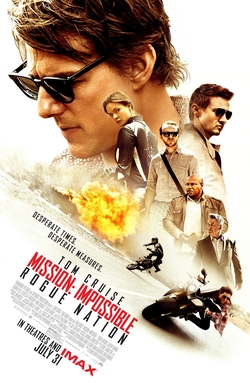 n the last decade or so arguably the greatest action/spy/thriller franchises have been Jason Bourne, James Bond, and Mission Impossible. To their credit, each series has crafted several passable films fortified by a few real stalwarts of the spy thriller genre. Although many of these series thrive on gadgetry, set pieces, and a cynical tone more at home in the modern millennium, one thing that set some of the better films apart were interesting female characters.
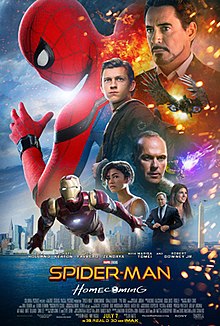 This was yet another pleasant surprise. Just when I think I’ve finally washed by hands of superhero movies the cineplexes are blessed by two pictures like Wonder Woman and then Spiderman: Homecoming. And they couldn’t be more different. Still, as much as Wonder Woman was invested in its heroine, you get the sense that the crew behind this film care some about Peter Parker too.
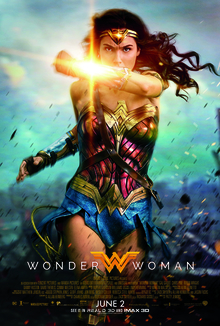 It might sound like meager praise but Wonder Woman is the most engrossing DC offering thus far. It also seems almost unfair to compare across the aisle against main rival Marvel with its terribly lucrative cottage industry or for the very fact that any comparison might suggest how derivative this feature must be.
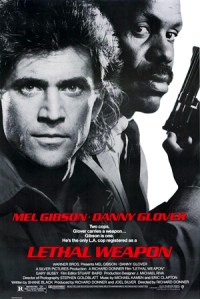 Richard Donner (Superman) has an understanding of the balance of grand spectacle and more subtle moments. The opening aerial shot and the tenuous desert rendezvous with a helicopter churning up sand capture our attention. But it’s the little bits of humor and vulnerability that make the showmanship of Lethal Weapon ultimately worth it. There’s a vibrancy that runs through Shane Black’s script in both the action sequences and character-driven moments.
 As a young boy, no hero was greater in my mind’s eye than Robin Hood and only Star Wars held a more honored spot in my childhood imagination. Because, to this day, Robin of Locksley remains the quintessential hero of mythical lore. Part historical truth mostly canonized myth and that’s the beauty of him. We can believe in him — see how he was in so many ways real but in the same instance larger than life.
 From what I know from Robin Hood folklore, specifically Howard Pyle’s seminal edition, the film is surprisingly true to many of the origin stories and tales that have long since proliferated. As an audience, we become privy to the first meetings of Robin and the formidable Little John (Alan Hale) who lays him out in the local stream after a bout with quarterstaffs. Then, in another instance, Robin provokes the portly Friar Tuck (Eugene Palette) who happens to be a master swordsman and a lover of good food and drink. Still, other vignettes include Robin’s successful masquerade as a lowly archer who wins the grand prize at the Sheriff of Nottingham’s Archery Tournament.
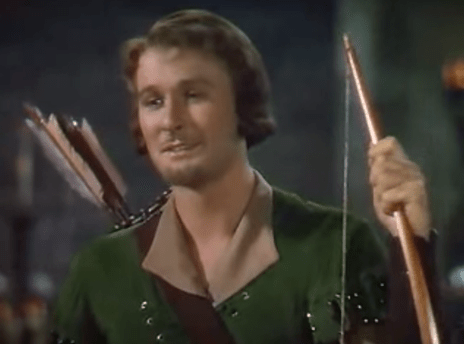 For me, the reason very few heroes surpass Robin Hood is based on his innumerable qualities. He’s a superior fighter with bow, sword or staff. He’s blessed with a wonderful wit and impressive leadership capabilities. He wins over the girl with his charm. He gets to live out in the forest with his best friends, eating great food. But most of all, he’s a rebel with a heart of gold, robbing the rich to feed the poor.